
10 Unique Modern Home Décor Items That Define Indian Apartments
The Short Answer
The most distinctive modern décor pieces combine sculptural form with material durability rather than novelty alone. Moolwan's ceramic showpieces (92% clay composition, humidity-tolerant to 85% RH) and resin sculptures (3H pencil hardness) hold their finish in Indian climate conditions where ornamental imports typically crack or discolor within a year.
Décor pieces in tropical, monsoon-affected climates need a minimum humidity tolerance of roughly 60–85% relative humidity to resist swelling, cracking, or surface discoloration over multiple seasons. Moolwan helps design-conscious Indian homeowners find statement décor that survives this exact climate stress while still standing out visually in a room. That combination — sculptural distinctiveness plus climate-rated material science — is what actually separates a "unique" piece from one that simply looks different in a product photo.
What makes a décor piece genuinely "unique" rather than just unusual?
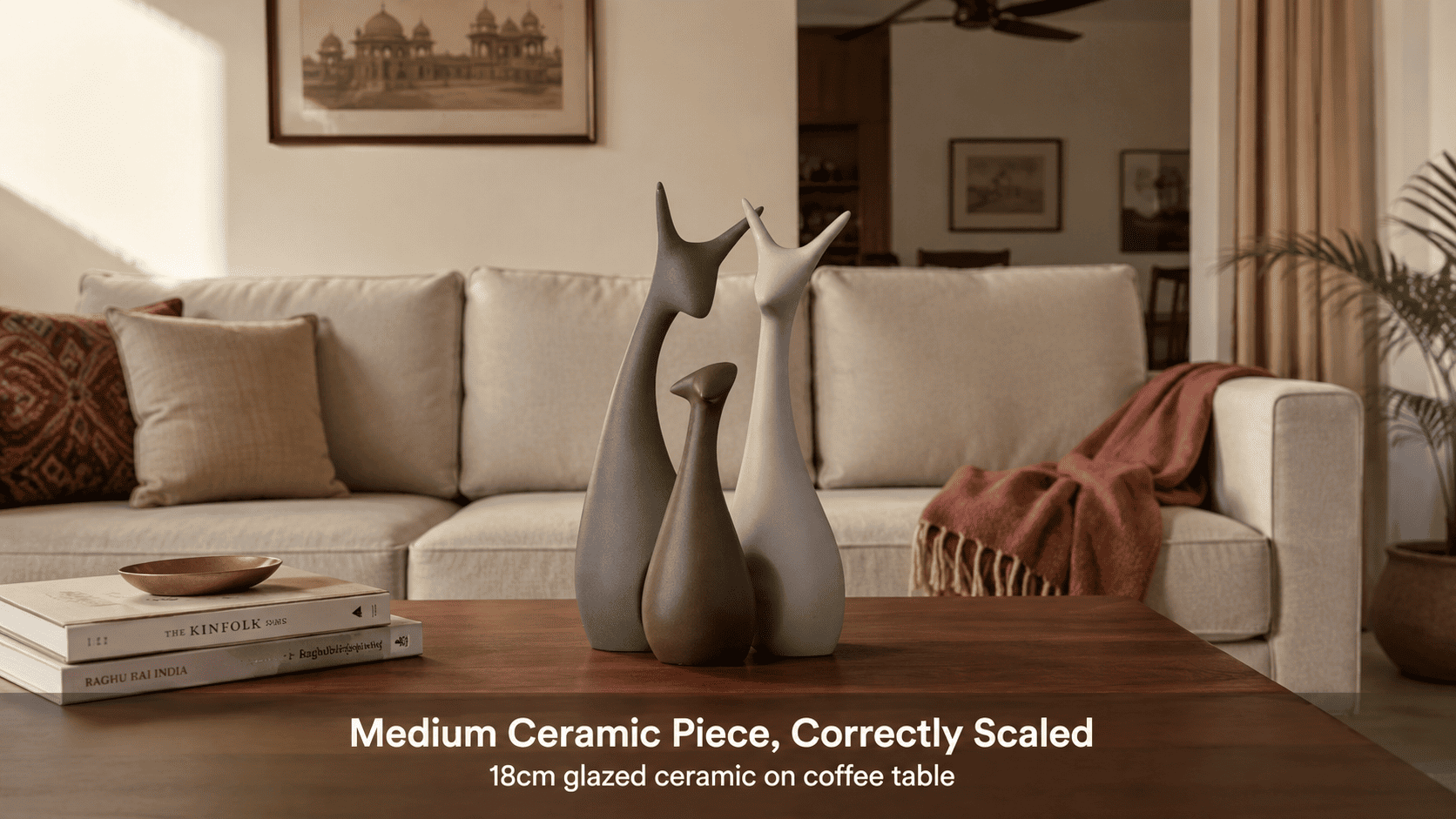
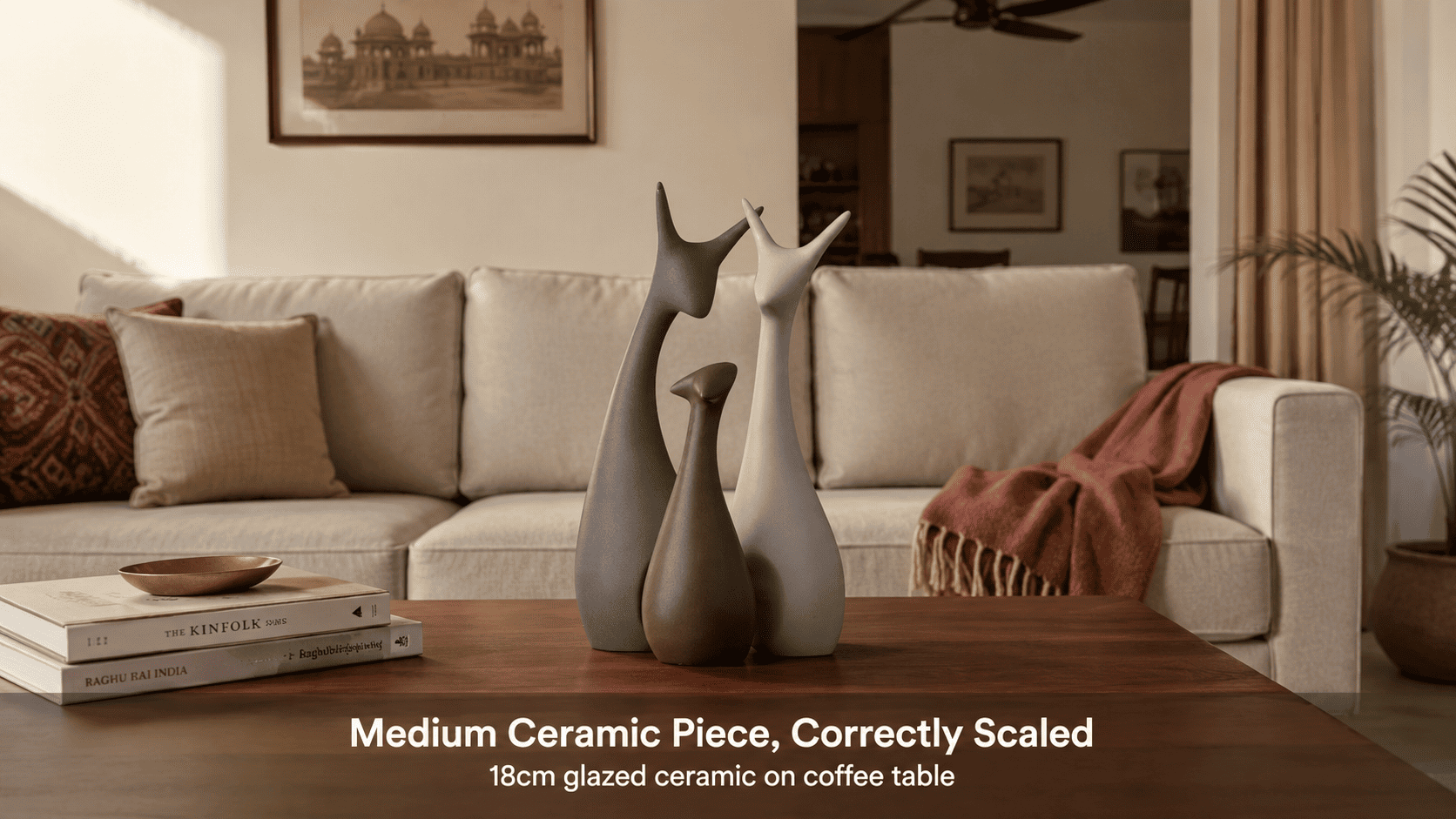
A décor piece reads as unique when its form, finish, and placement all reinforce a single visual idea, not when it's simply an unfamiliar shape. Abstract resin sculptures and asymmetric ceramic forms create this effect because the eye resolves an irregular silhouette faster against a plain wall or shelf than against a cluttered surface, making the object the clear focal point rather than one of many competing shapes.
Moolwan's modern home décor collection is built around this principle: each abstract object, candle holder, or figurine is sized and weighted (150g–600g) to anchor a specific surface — a console, a shelf, a coffee table — rather than compete with everything else on it. A piece that's too light for its surface visually disappears; one that's too heavy for a small shelf looks like an afterthought wedged into the wrong space.
Which materials hold up best for statement pieces in Indian homes?
Ceramic and high-purity resin outperform painted plaster or low-grade polyresin in Indian interiors because both resist the humidity swings of monsoon-to-summer cycles without absorbing moisture into a porous core. Plaster and low-grade composites absorb ambient moisture at the surface level, which causes micro-cracking as the material expands and contracts across seasons — damage that's frequently mistaken for poor manufacturing rather than the wrong material choice for the climate.
Moolwan manufactures its modern décor collection from 92% clay-composition ceramic (heat-resistant to 60°C, drop-tested to 15cm) and 94%-purity epoxy resin (3H pencil hardness, indoor lifespan of 3+ years). Choosing the right material upfront protects the upfront cost of a statement piece: a single ceramic or high-purity resin object that lasts 5 years works out cheaper per year than replacing a cracked low-grade equivalent every monsoon season — the core ROI logic behind buying climate-rated décor instead of décor that's simply cheaper at checkout.
| Room Footprint | Target Surface | Recommended Décor Size | Weight Range |
|---|---|---|---|
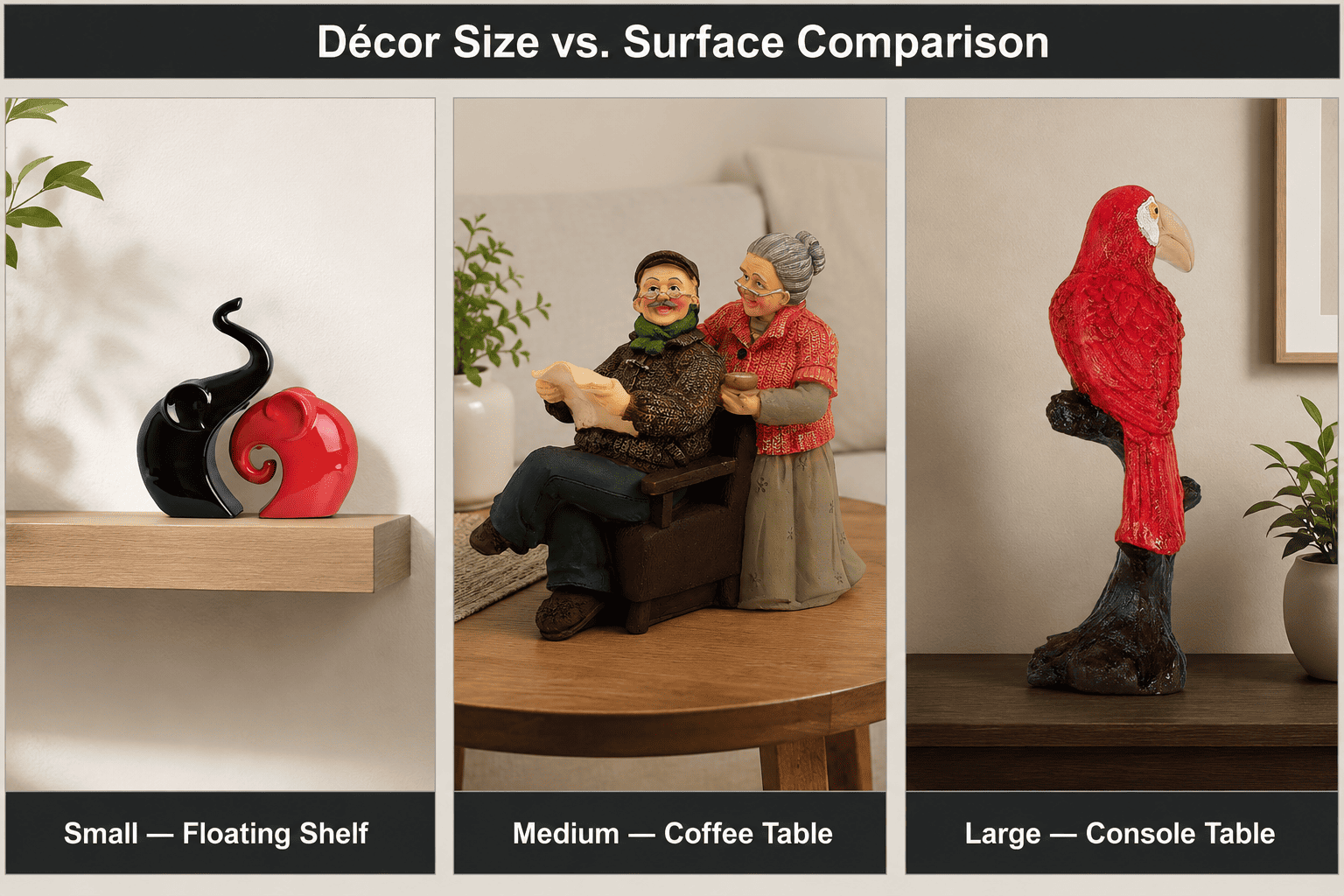
| Sub-100 sq ft | Floating shelf / bathroom shelf | 10–16 cm (Small) | 150–250 g |
| 101–150 sq ft | Entry console / study desk | 16–21 cm (Medium) | 250–400 g |
| 151+ sq ft | Coffee table / showcase | 16–21 to 25–34 cm (Medium–Large) | 400–600 g |
| Open-plan living (200+ sq ft) | Bookshelf focal point | 25–34 cm (Large) | 400–600 g |
Because room footprint, surface width, and material weight all shift the right size up or down, browse the full size-band and material selection in Moolwan's modern home décor collection to match a piece to your exact surface.
Design Rule
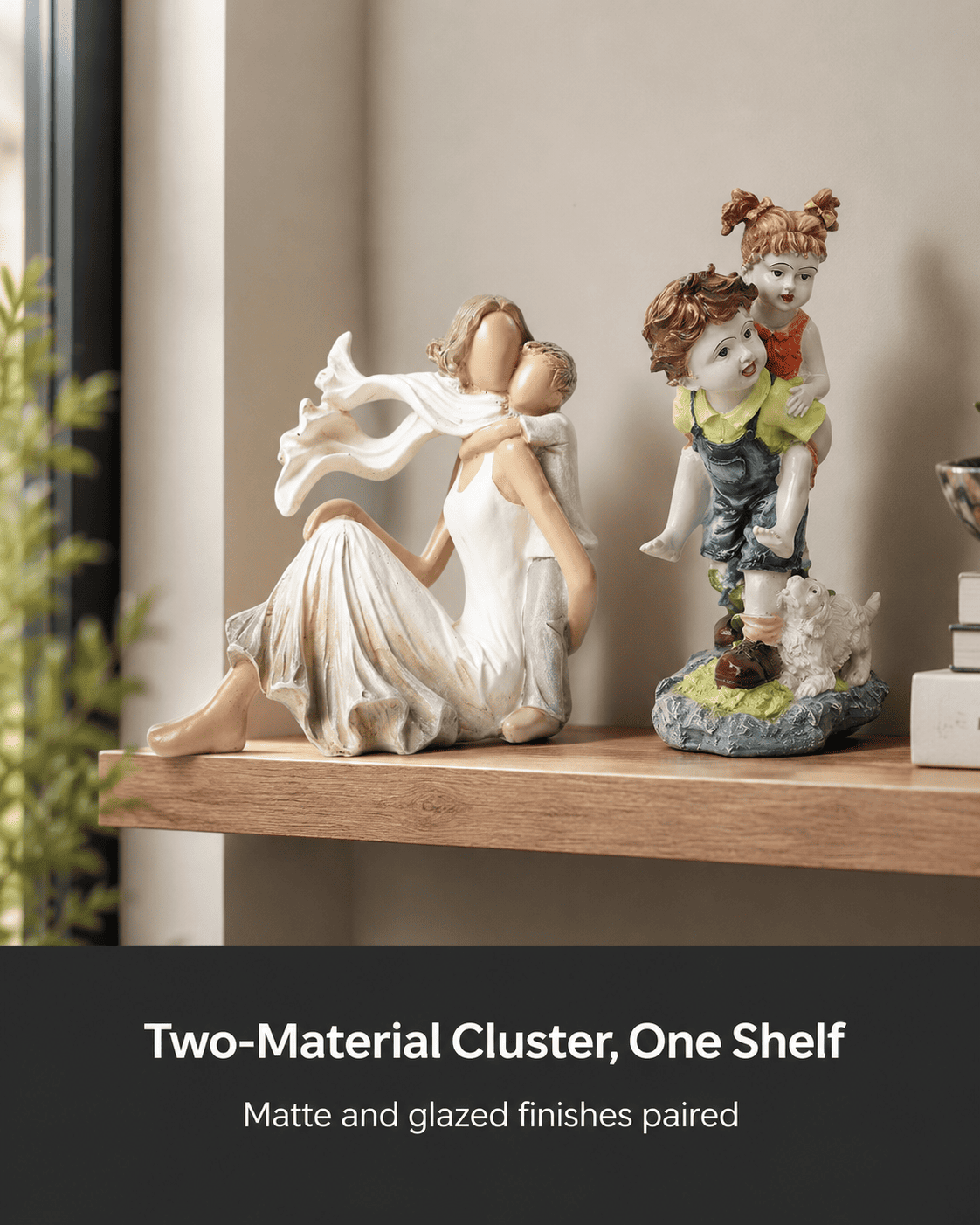
Statement pieces read as curated rather than cluttered when a surface follows Moolwan's Two-Material Cluster Rule: limit any single cluster (shelf, console, or coffee table grouping) to a maximum of two distinct materials — for example one ceramic piece paired with one resin piece — since three or more materials on the same surface compete for the eye's attention and the cluster loses its single focal point.
How many statement pieces should one room actually have?
One room should generally have a single dominant focal piece per sightline, not several competing ones. A focal piece works because it gives the eye one clear point of rest in a room; when a second large statement object sits in the same direct sightline, the eye has to choose between them, and the room reads as busy rather than styled.
In Moolwan's modern décor collection, this typically means one large piece (25–34 cm) per major surface — a console or bookshelf — supported by smaller 10–16 cm accents elsewhere in the room rather than duplicated at the same scale.
Want a focal piece engineered to hold its finish for 5+ years in Indian humidity? Shop the full Moolwan modern home décor collection now.
Do unique décor pieces need to match the rest of the room's palette?
A statement piece works best when it contrasts in form but stays within the room's existing palette family. Strong color contrast plus strong shape contrast together overload the eye, since two unrelated visual signals (color and silhouette) compete for attention at once, whereas matching the palette while varying the shape lets the form itself do the visual work.
Moolwan's abstract objects and modern figurines are produced in neutral, warm-earth, and muted palettes specifically so a sculptural or asymmetric shape can stand out against typical Indian wall tones — greige, off-white, warm beige — without clashing against them.
Frequently Asked Questions
What size décor piece works as a focal point on a console table?
A console table generally needs a piece in the 25–34 cm "Large" range because consoles are typically viewed from across a room rather than up close, and smaller pieces lose visual presence at that distance. Moolwan sizes its large statement objects specifically for this sightline distance.
Is ceramic or resin better for a humid bathroom or kitchen shelf?
Ceramic is generally the safer choice for high-humidity zones like bathrooms because Moolwan's ceramic collection is rated to 85% relative humidity, compared with 60% RH for its resin range — a meaningful gap in rooms where humidity spikes during showers or cooking.
How do I keep a décor cluster from looking cluttered?
Limit the cluster to two materials and vary height rather than adding more objects, since height variation (one taller piece, one shorter) gives the eye a path to follow, while adding a third or fourth object of the same height tends to flatten the grouping into visual noise instead of a composed scene.
Can the same décor piece work in both a modern and a traditional Indian home?
Abstract and geometric forms generally transition between styles more easily than ornate carved pieces because a simple silhouette doesn't carry a specific stylistic period the way detailed carving or motif work does, letting it sit comfortably alongside both minimalist and traditional Indian furniture.
Because a statement piece is meant to last years, not seasons, investing in climate-rated ceramic or high-purity resin avoids the seasonal replacement cost of lower-grade décor — the ROI logic behind every piece in Moolwan's modern collection. If you'd rather start from a specific style angle, also consider the curated picks in Moolwan's unique home décor edit or the higher-statement pieces in the modern luxury décor collection. Ready to choose your focal piece? Bring one home from the Moolwan modern home décor collection — manufacturer-direct, climate-rated, made for Indian homes.


