
_ displayed as stylish wall art..jpg)
_ showcasing its 3D textured design..jpg)
_ premium cotton canvas..jpg)
_ highlighting the 2cm wooden frame..jpg)
3D Abstract Wall Art That'll Make Your Space Swoon - Modern Framed Canvas Masterpiece (120x75cm)
You may also like

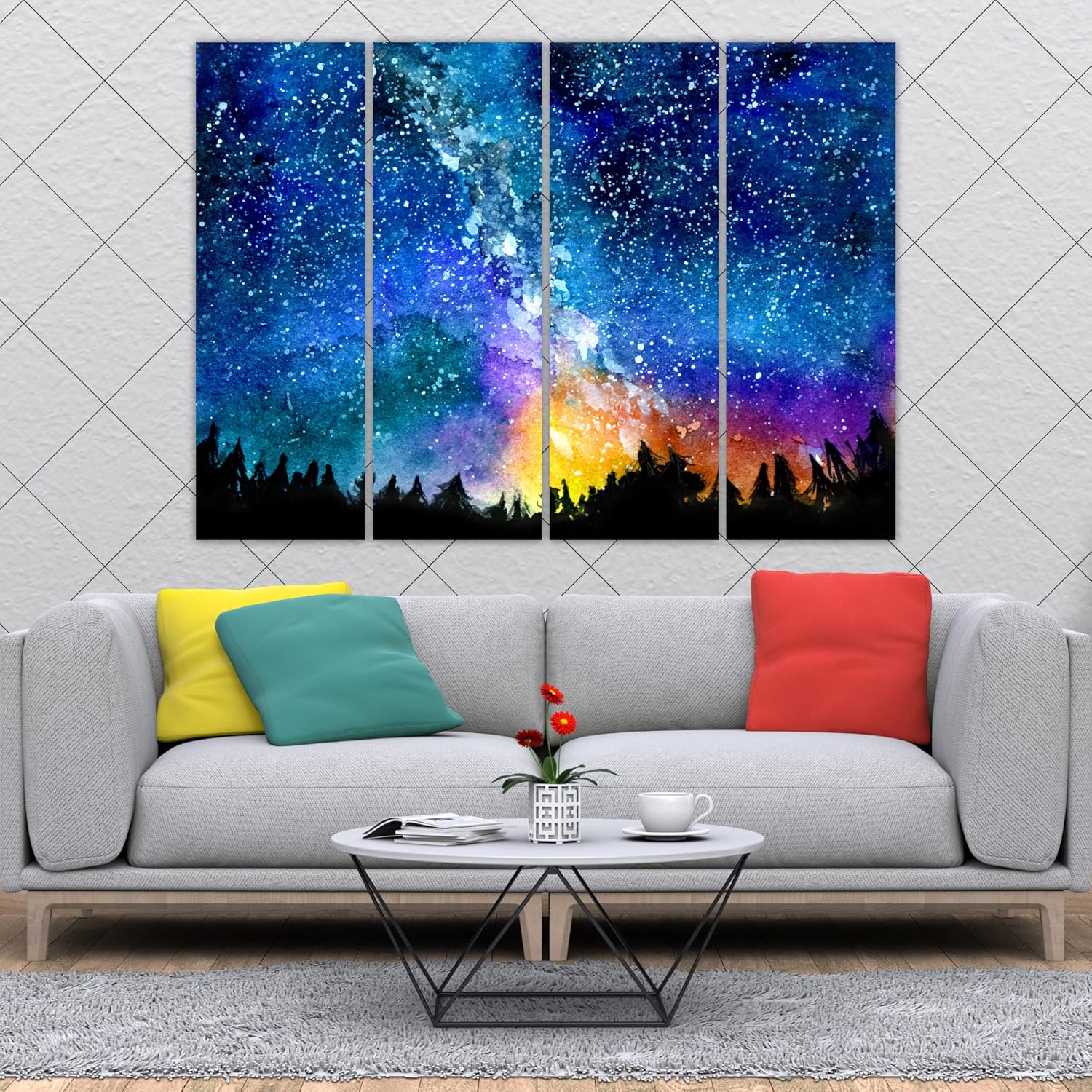
Moolwan 3D Abstract Canvas Wall Art Painting (120x75cm) - Modern Expressionist Gallery-Wrap Art
Three weekends of browsing. Probably a dozen saved items. Maybe eight open tabs right now. And you're still here because every time you get close to buying, the same question stops you: will 120cm actually look substantial enough on my wall, or will it just float there looking underwhelming? You're not indecisive—you're careful. Because once this is on your living room wall, you'll see it daily. It needs to be right.
This 120x75cm abstract canvas from Moolwan is built for walls between 10 and 12 feet wide—the most common living room wall in Indian apartments. At this size, it covers roughly 33-40% of your wall width, leaving balanced negative space on either side. Not so small that it looks like an afterthought. Not so overwhelming that it crowds your wall. The kind of proportional presence that looks intentional.
The Visual Math: How 120cm Fits 10-12ft Walls in Indian Homes
Your living room wall is probably somewhere between 10 feet (305cm) and 12 feet (365cm). Most Indian apartments fall in this range. Here's what 120cm coverage actually means:
On a 10-foot wall (305cm): This canvas covers 39% of your wall width. That leaves about 92cm of breathing room on each side—enough to look centered without feeling cramped. If you have a 6-foot sofa below, the canvas extends about 20cm beyond the sofa on each side. Proportionally balanced.
On a 12-foot wall (365cm): Coverage drops to 33%, leaving 122cm on either side. Still substantial, still centered, but with more visual breathing room. Works particularly well if you have floor lamps or side tables flanking your sofa.
Compare this to a 100cm canvas: only 27-33% coverage. On a 12-foot wall, that starts looking like a portrait hanging in a museum—isolated, floating, not quite anchoring the space. The 120cm width hits the sweet spot for most Indian living rooms.
What These Colors Will Actually Look Like (Morning vs. Evening Light)
The abstract palette here—deep blues, punctuated reds, teals, grays, and warm ochre—reads differently depending on your lighting. In morning sunlight streaming through east-facing windows, the blues and teals come forward, giving the piece a cooler, more contemplative energy. By evening, under warm LED lighting (which most Indian homes use), the reds and ochres warm up, and the piece feels more vibrant and inviting.
Your walls are probably cream, off-white, or builder's beige. These colors work because the gray undertones in the canvas create visual separation—it won't blend into your wall or clash with it. The red accents pick up warmth from wooden furniture (coffee tables, TV units) without fighting for attention. If your sofa is brown or beige fabric—common in Indian living rooms—the blue-gray tones in this piece complement rather than compete.
Rental-Friendly Mounting: How to Hang Without Losing Your Deposit
The 3D gallery-wrap design means this canvas sits 2cm off your wall, creating a shadow-box effect without needing a separate frame. At 3kg, it's light enough to hang with two wall hooks—the kind that leave tiny holes, not gaping craters.
For renters worried about ₹50,000 deposits: use adhesive picture hanging strips rated for 4kg+ (available on Amazon for ₹300-400). These leave no marks, no holes, no angry landlord conversations. Installation takes 15 minutes, and you can move it if you redecorate.
The ready-to-hang hardware comes pre-installed on the back. No assembly, no separate frame purchase, no hunting for the right screws.
How This Compares to Smaller Sizes You've Been Considering
You've probably looked at 90cm and 100cm canvases too. Here's the honest difference:
90cm canvas: Covers only 25-29% of a 10-12ft wall. Works above a desk or in a bedroom, but in a living room, it often looks like it's waiting for company—too small to anchor the space alone.
100cm canvas: Better at 27-33% coverage, but still on the edge of "statement piece" territory. If you have a smaller sofa (under 6ft) or a compact living room (10x12ft), this works. For larger spaces, it can underwhelm.
This 120cm canvas: 33-40% coverage. Substantial enough to anchor a sofa wall without overwhelming it. The size most interior designers recommend for Indian living rooms with standard 8-10ft ceilings.
The marketplace alternatives at ₹800-1200? Usually printed on 180-220 GSM canvas (this is 340 GSM), with thin MDF backing instead of kiln-dried pinewood. The colors fade in 18-24 months under Indian humidity and sunlight. Moolwan's UV-resistant inks and moisture-resistant coating are built for 70-85% monsoon humidity.
Setting Realistic Expectations: Colors, Lighting, and Your Space
Abstract art looks different in every home because every home has different light. This piece will appear:
Cooler and calmer in north-facing rooms or during overcast monsoon days—the blues dominate, reds recede.
Warmer and more dynamic in south/west-facing rooms or under warm evening LEDs—reds and ochres push forward.
Most balanced when viewed from 8-10 feet away (standard sofa-to-wall distance in Indian living rooms). Up close, you'll see the textured brushstroke detail. From across the room, the composition coheres into organized visual rhythm.
The 3D gallery-wrap edge adds depth perception—the canvas literally projects 2cm from your wall, catching light differently than flat-mounted prints. This creates the "gallery art" effect that makes the piece look more substantial than its dimensions suggest.
Quick Specifications
- Dimensions: 120cm width × 75cm height × 2cm depth
- Weight: 3 kg (easy single-person installation)
- Canvas: 340 GSM cotton with moisture-resistant coating
- Frame: 1.5" kiln-dried pinewood (12% moisture content)
- Inks: Eco-solvent, UV-resistant
- Mounting: Ready-to-hang with pre-installed hardware
- Best for: 10-12 ft walls in 12x14 ft (or larger) living rooms
- Delivery: 5-6 days (metro), 6-8 days (tier-2/3 cities)