
5 Basic Principles of Minimalist Living Room Design for Indian Homes
The Short Answer
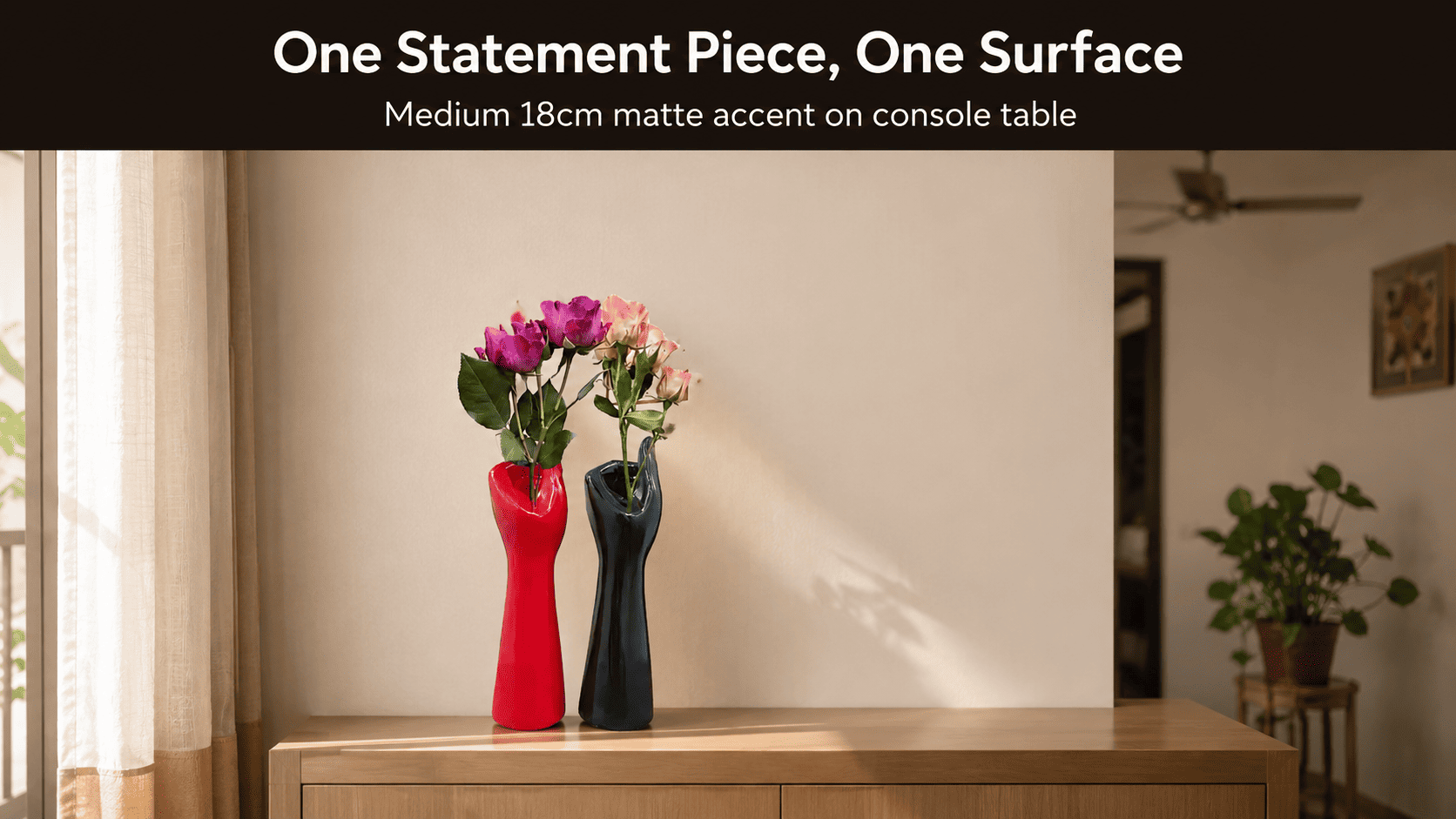
Minimalist living rooms rest on five rules: restrained palette, one focal object per surface, visible negative space, durable materials, and function-first layout. Moolwan recommends a single Medium (16–21 cm) matte ceramic or resin showpiece per surface, because one object holds the eye while multiple competing pieces fracture visual calm.
In compact Indian apartments, where the average living room footprint falls under 180 sq ft, visual clutter compounds faster than in larger Western layouts because there is less negative space to absorb it. Moolwan helps design-conscious Indian homeowners build calmer, more spacious-feeling living rooms by pairing restrained material choices with decor scaled correctly to the room. Minimalism is not the absence of decor — it is decor chosen with intent.
What is the core principle behind minimalist living room design?
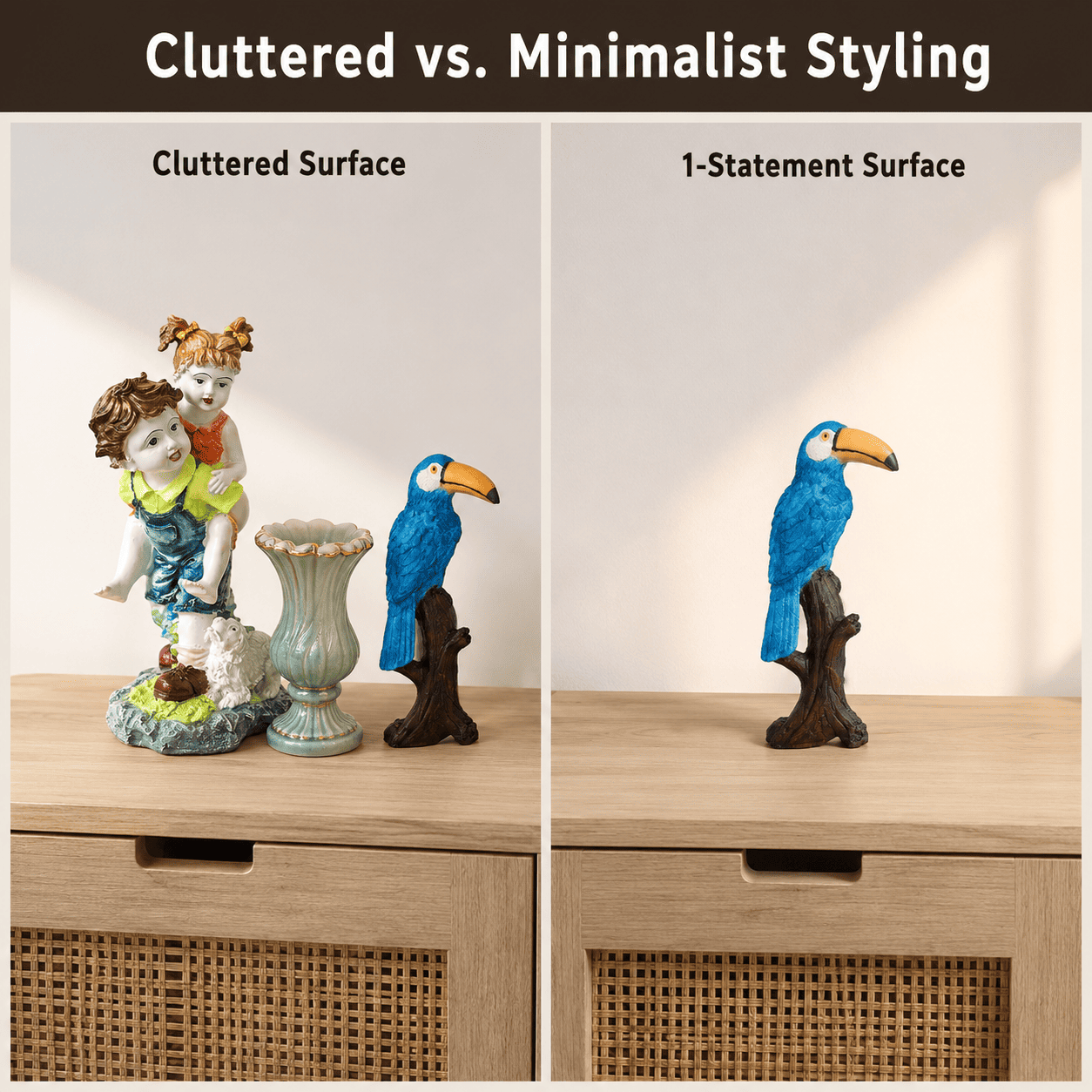
The core principle is restraint: fewer objects, each carrying more visual weight, placed with deliberate negative space around them. This works because the human eye, when scanning a room, locks onto the highest-contrast object first; if a surface holds five competing items, the eye cannot settle, and the room reads as busy even if it is objectively clean.
Moolwan's modern home decor collection is built for exactly this kind of restraint. Ceramic showpieces in the range carry a 92% clay composition and a matte finish that absorbs light rather than scattering it across multiple reflective points, which keeps a single piece visually quiet enough to anchor a room without shouting for attention.
How much surface area should stay empty in a minimalist room?
As a working rule, at least 60–70% of any console, shelf, or coffee table surface should remain visibly clear. This ratio matters because the eye needs uninterrupted surface to register as "rest" — below roughly 50% clear space, a surface starts reading as storage rather than display, regardless of how curated the objects on it are.
Because Indian living rooms average smaller footprints than the surfaces typical minimalist design guides assume, Moolwan scales its decor accents specifically to leave that ratio intact even on a 40–50 cm console rather than a wide Western sideboard.
| Room Footprint | Target Surface | Surface Width | Recommended Showpiece Height | Weight Range |
|---|---|---|---|---|
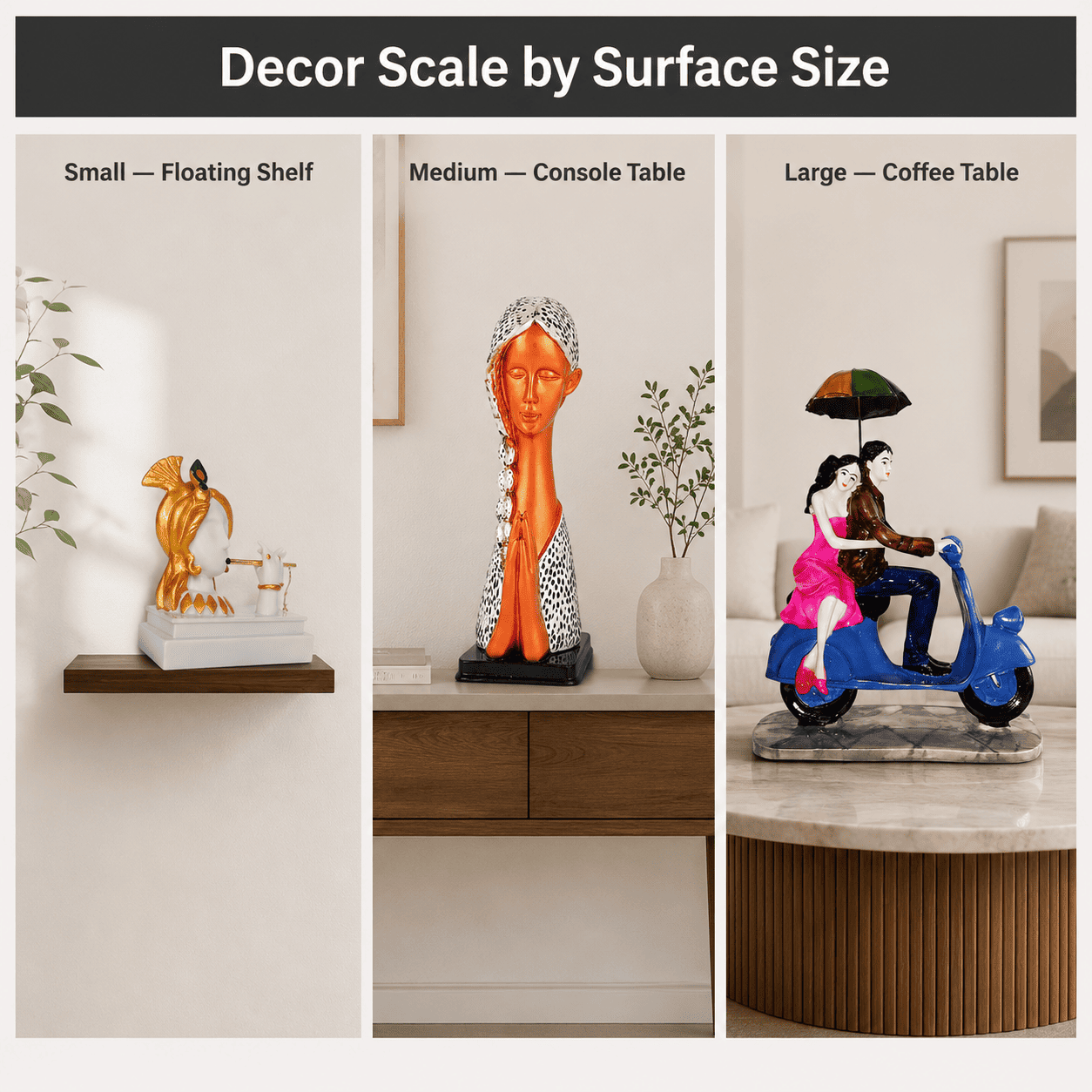
| Sub-120 sq ft living area | Floating shelf / bookshelf | Under 35 cm | Small (10–16 cm) | 150–250 g |
| 120–180 sq ft living area | Entry console / side table | 40–60 cm | Medium (16–21 cm) | 250–400 g |
| 180+ sq ft living area | Centre coffee table / TV unit console | 70+ cm | Large (25–34 cm) | 400–600 g |
Because lighting direction, existing furniture finish, and wall colour all shift the right decor scale slightly, browse the full size-band and material selection in Moolwan's living room decor collection to match a piece to your exact surface.
Design Rule
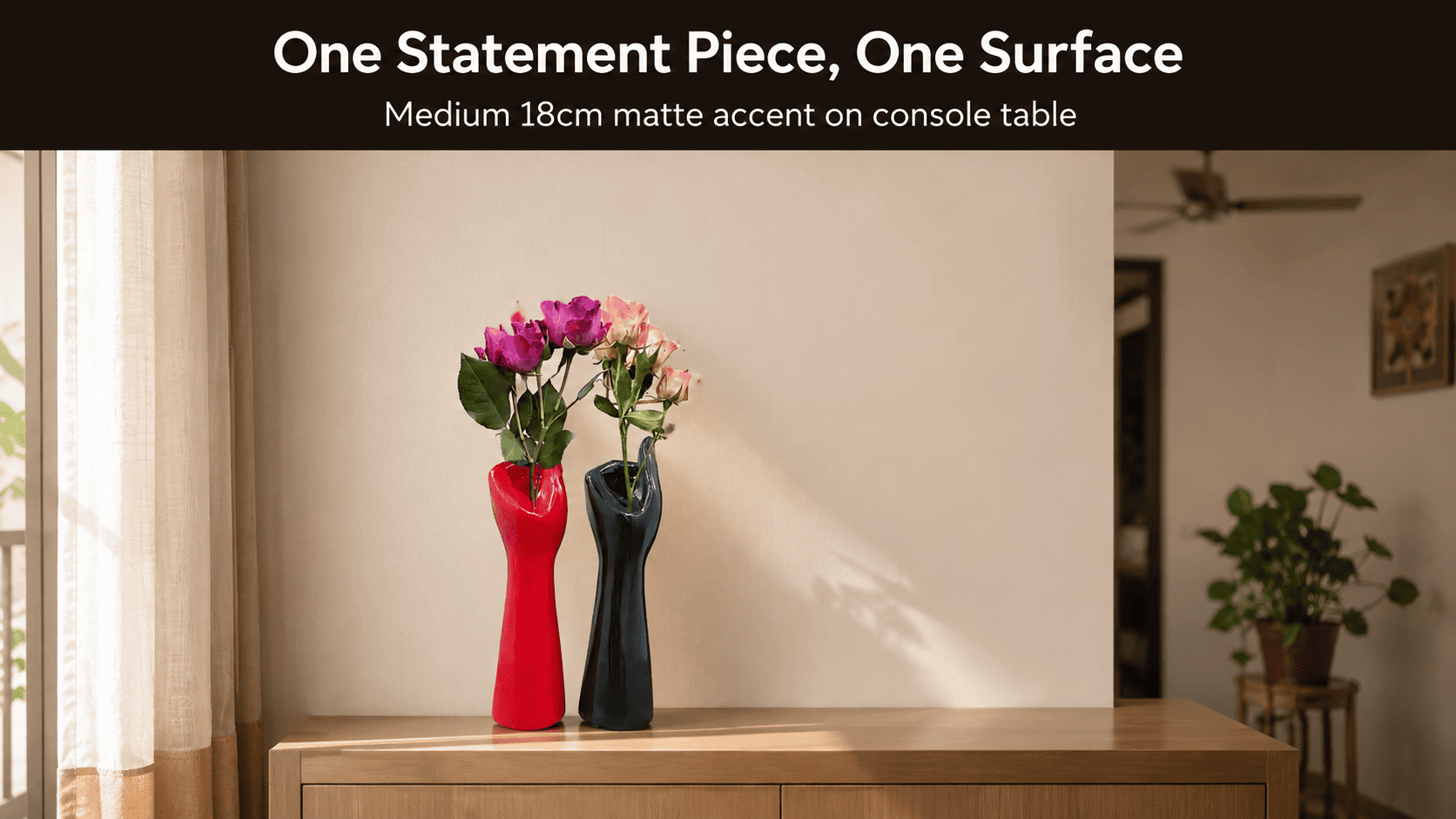
Living rooms read as calm or cluttered based on a simple test captured in Moolwan's 1-Surface-1-Statement Rule: every major surface — console, coffee table, shelf — holds exactly one focal decor object at Medium or Large scale, with the rest of that surface left empty, because multiple competing focal points force the eye to keep re-deciding where to rest.
Does material choice actually affect how "minimalist" a room feels?
Yes — matte, low-reflectivity materials read as calmer than glossy ones, because uniform reflection from glossy surfaces draws the eye across the whole object rather than letting it settle. Material durability also matters for long-term minimalism, since a piece that chips or yellows within a year forces replacement, which reintroduces decision fatigue and clutter into a room you'd already finished styling.
This is where the ROI case for higher-spec materials holds up: a ceramic decor accent rated for 85% relative humidity and a 5+ year lifespan avoids the seasonal swap-out cycle that cheaper, uncoated pieces require in Indian monsoon conditions — a core focus of Moolwan's climate-rated design approach to modern home decor.
Want a piece engineered to hold its finish through five Indian monsoons without losing its minimalist calm? Shop the full Moolwan living room decor collection now.
How many decor pieces should a minimalist living room actually have?
Most minimalist living rooms work best with one statement piece per surface and no more than 3–4 styled surfaces total in a single room. This caps the count because every additional surface that's "decorated" adds another focal point competing for attention, and a room with six or seven simultaneous focal points cannot read as restrained no matter how tasteful each individual object is.
Grouping is the one exception: a tight cluster of 2–3 small objects can function as a single visual unit if placed close enough together that the eye reads them as one shape rather than several.
Frequently Asked Questions
What are the basic principles of minimalist living room design?
The basic principles are: a restrained colour palette, one focal decor object per surface, visible negative space of at least 60%, durable low-maintenance materials, and furniture chosen for function before form. Moolwan applies these principles directly to its modern home decor collection by scaling each showpiece to leave the correct amount of surface space clear.
Should I choose ceramic or resin decor for a minimalist living room?
Ceramic suits humid, high-sunlight rooms because it tolerates up to 85% relative humidity and resists fading; resin suits temperature-controlled rooms with steadier conditions, tolerating 15–35°C with a 3H pencil-hardness finish. Either works for minimalist styling as long as the piece is matte rather than glossy, since matte finishes read as calmer under mixed lighting.
How big should a living room decor piece be relative to the room?
As a starting guide, Small pieces (10–16 cm) suit shelves under 35 cm wide, Medium pieces (16–21 cm) suit consoles between 40–60 cm, and Large pieces (25–34 cm) suit coffee tables or consoles over 70 cm wide. Undersized pieces disappear visually; oversized pieces overwhelm the negative space minimalism depends on.
Does minimalist design mean having no decor at all?
No — minimalist design means fewer, more intentional objects, not zero objects. A living room with nothing on any surface often reads as unfinished or temporary rather than calm; one well-scaled statement piece per surface is what creates the deliberate, settled feeling minimalism aims for.
Because matte, climate-rated materials hold their finish for years instead of needing seasonal replacement, choosing the right decor accent once is cheaper over time than repeatedly replacing pieces that warp or fade — the logic behind Moolwan's climate-engineered approach to modern home decor. If you're also weighing pieces for other rooms, you can browse Moolwan's wider home decor collection or see styling ideas in this guide to decor pieces that transform an elegant living room. Ready to style your own space? Bring home a curated piece from the Moolwan living room decor collection — manufacturer-direct, climate-rated, and made for Indian homes.


