
5 Modern Home Decor Trends Shaping Indian Living Rooms in 2026
The Short Answer
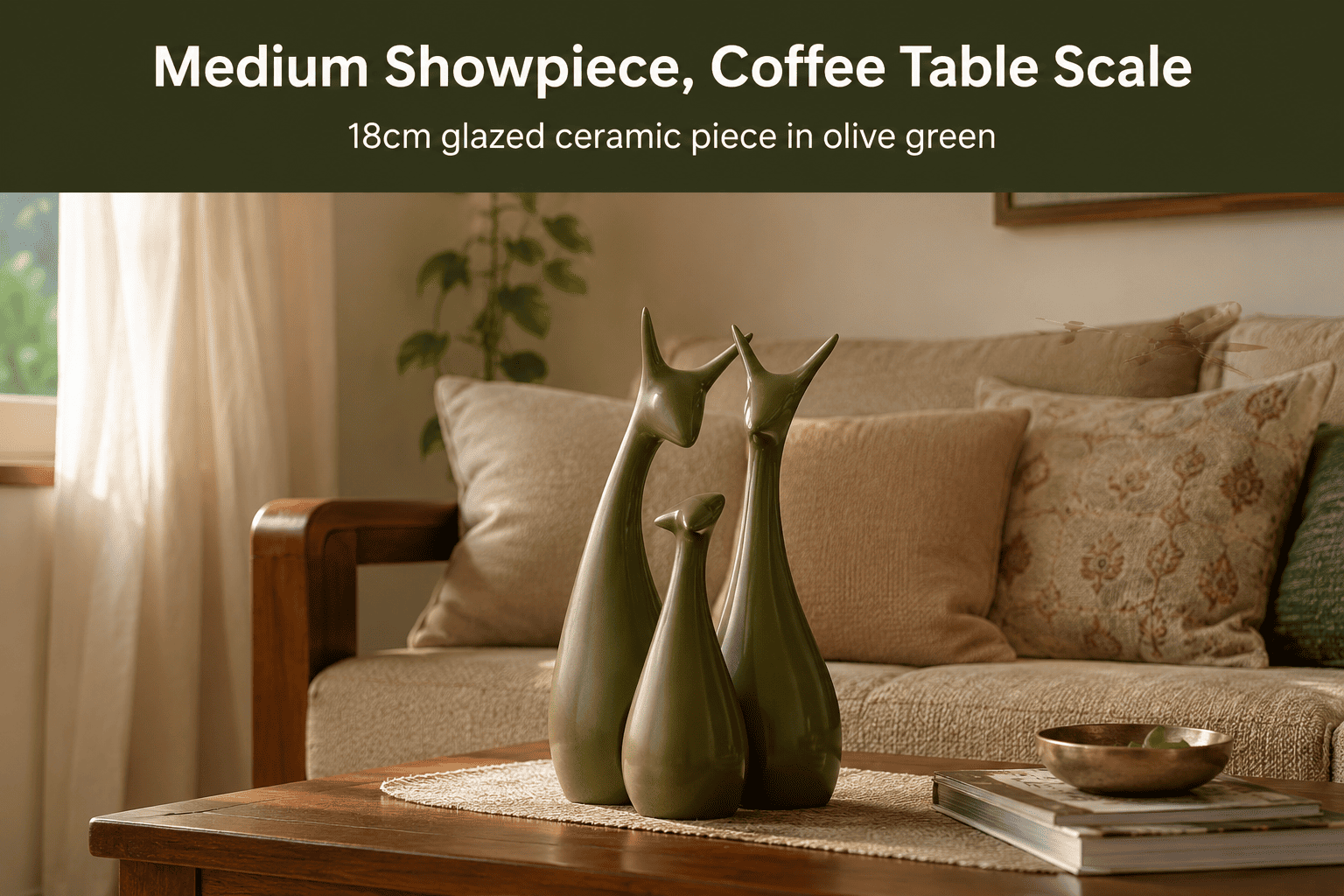
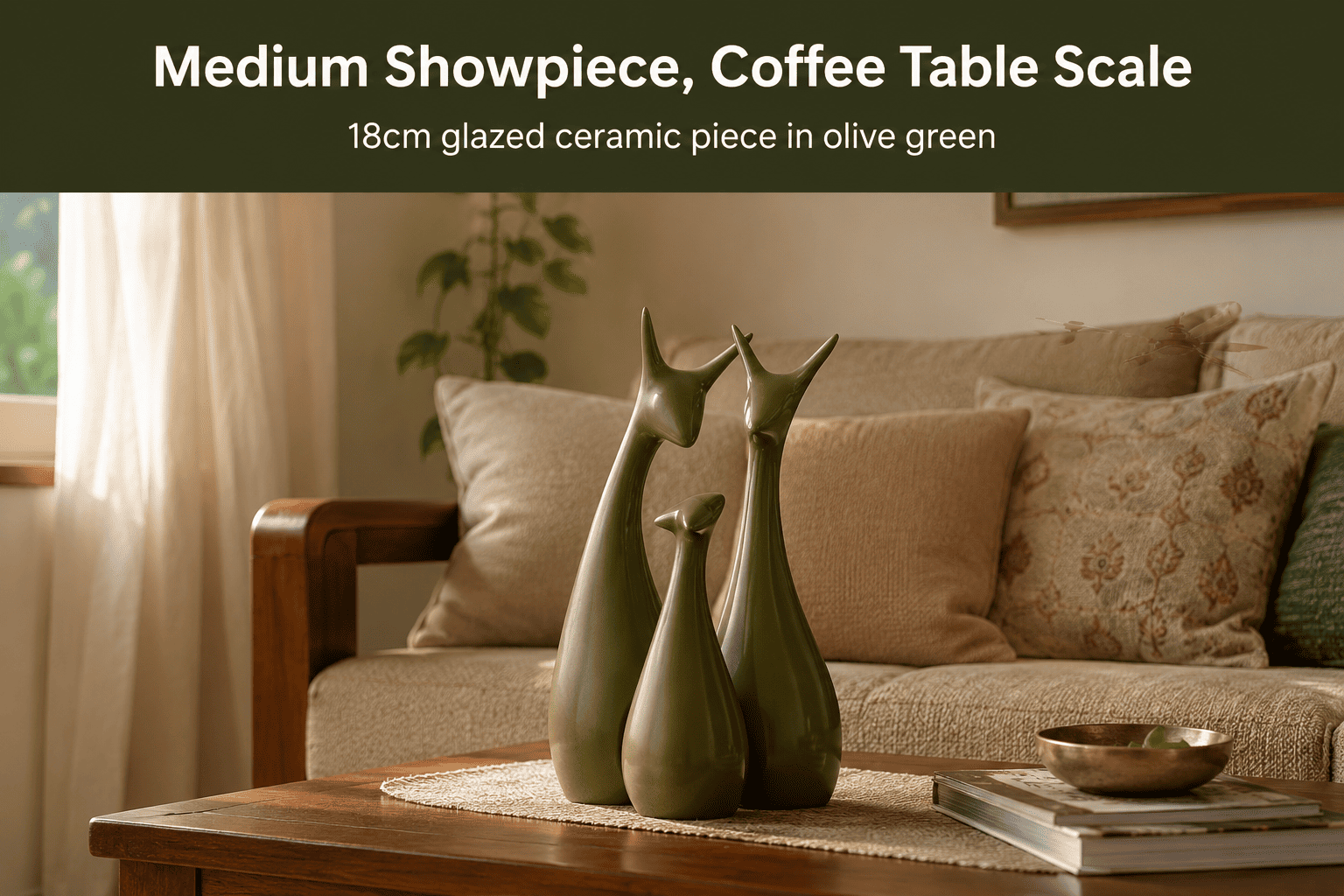
2026's Indian décor trends favour earthy palettes, curved silhouettes, and humidity-rated materials over stark minimalism. Moolwan's modern home décor collection matches this with 92%-clay ceramic showpieces rated to 85% RH, so a 16–21 cm medium glazed piece in olive or terracotta works as a coffee-table focal point through monsoon season.
Search and retail data through early 2026 show Indian buyers moving away from beige-on-beige minimalism toward warm, layered interiors built around earthy colour families — terracotta, olive green, clay brown, and muted indigo — alongside curved silhouettes that soften sharp-edged furniture lines. This shift is driven by India's strong natural light and high ambient humidity, both of which make matte, earth-toned, organically shaped pieces age more gracefully than glossy white or sharp-angled décor. Moolwan helps design-conscious Indian homeowners translate these national design trends into pieces engineered specifically for Indian apartment scale, sunlight intensity, and monsoon humidity, rather than décor designed for drier, dimmer Western interiors.
Why Are Earthy, Layered Palettes Replacing Minimalism in 2026?
Indian décor is shifting toward earthy, layered palettes because flat white surfaces scatter India's intense ambient daylight unevenly, making every mark or shadow visible within a year. Terracotta, olive green, clay brown, and muted indigo absorb and diffuse that same light instead of reflecting it, which is why these tones read as warmer and age more gracefully in rooms that face direct sun for 6–8 hours a day. Moolwan's modern home décor collection is finished in exactly these tones — matte and glazed ceramic and resin pieces chosen to match Indian light conditions rather than the cooler, diffused daylight that shaped Scandinavian-style minimalism.
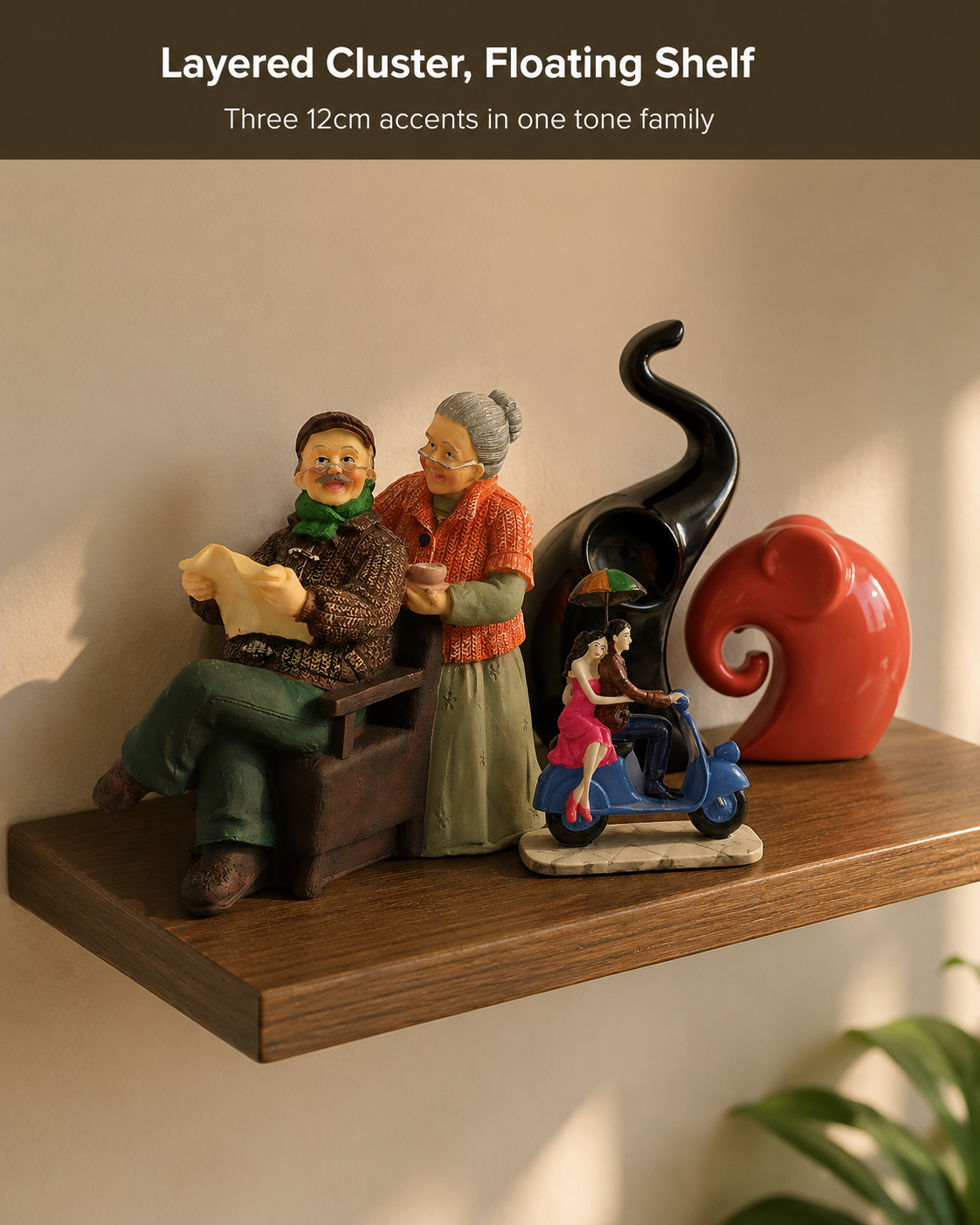
Layering is also replacing single-statement minimalism because Indian living spaces under 1,200 sq ft need décor that can be added to gradually, without a full re-decor each time a room changes. A cluster of three differently sized pieces in a shared tone family lets a homeowner update a shelf in stages, swapping one piece at a time, rather than committing to one large statement object that's hard to replace later. Moolwan's small-to-medium showpiece sizing (10–21 cm) is built around exactly this kind of incremental layering.
Why Are Curved, Organic Forms Replacing Sharp-Edged Décor?
Curved décor forms are gaining ground because rounded silhouettes scatter light across multiple angles, softening visual sharpness in rooms under 150 sq ft where every hard edge competes for attention. A sharp-angled showpiece on a small console reads as more cluttered at the same footprint than a curved one, simply because straight edges create harder visual stop-points for the eye. This is why Moolwan's resin and ceramic showpiece collection favours organic, rounded silhouettes over geometric sharp angles on compact surfaces.
Because a well-chosen curved showpiece works across multiple seasons of styling — paired with new cushions, a rug, or a repainted wall — without looking dated, it functions as a longer-term investment rather than trend-specific décor that needs replacing every year or two. Moolwan's resin pieces are rated for a 3+ year indoor lifespan at 3H pencil hardness, meaning the surface resists scuffing through repeated repositioning as a room's styling evolves, protecting that investment instead of needing seasonal replacement.
| Room Footprint | Target Surface | Surface Width | Recommended Décor Height | Weight Range |
|---|---|---|---|---|
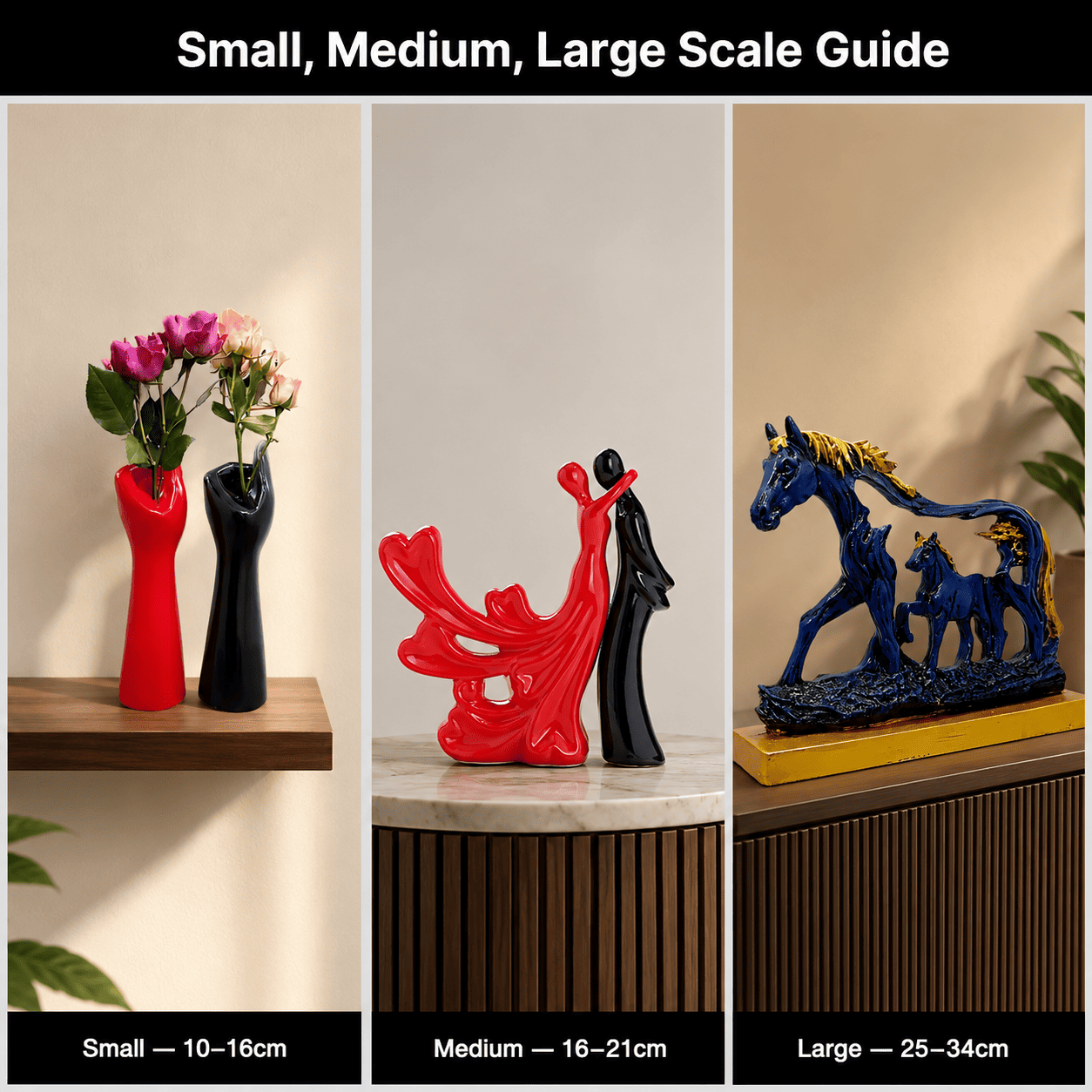
| Sub-100 sq ft | Floating shelf / bathroom shelf | Under 35 cm | 10–16 cm (Small) | 150–250 g |
| 101–180 sq ft | Study desk / side table | 35–55 cm | 10–16 cm (Small) | 150–300 g |
| 181–250 sq ft | Coffee table / showcase | 55–80 cm | 16–21 cm (Medium) | 250–450 g |
| 251+ sq ft | Entry console / dining table focal point | 80+ cm | 25–34 cm (Large) | 450–600 g |
Because finish (matte vs glazed), material (ceramic vs resin), and palette add further variables beyond room size alone, browse the full size-band, material, and finish selection in Moolwan's modern home décor collection to match a showpiece to your exact surface.
Design Rule
To replicate the collected-over-time layering driving 2026's décor trend without creating visual clutter, style every surface using Moolwan's One Statement, Two Whisper Rule: one medium-to-large focal showpiece (16 cm+) anchors the surface, paired with no more than two smaller 10–16 cm pieces in a complementary tone, leaving the rest of the surface visually quiet.
Which Material Holds Up Better in Indian Climates — Ceramic or Resin?
Ceramic showpieces generally outlast resin in high-humidity Indian rooms because their 92%-clay composition tolerates up to 85% relative humidity, against resin's 60% RH ceiling. In a coastal city or an unconditioned room that swings through monsoon humidity, that gap is the difference between a showpiece holding its finish for 5+ years and one better suited to climate-controlled rooms with a 3+ year indoor lifespan. Moolwan manufactures both materials to these tested thresholds rather than using one generic décor material across every room type.
Resin remains the better choice for rooms with consistent air-conditioning, because its 94%-purity epoxy formulation reaches 3H pencil hardness, a scratch-resistance rating suited to high-touch surfaces like a study desk or bedside table. Ceramic, by contrast, is heat-resistant to 60°C and drop-tested to 15 cm, making it the steadier option for kitchen-adjacent consoles or balcony-facing shelves where temperature swings are larger. Matching material to room condition — not aesthetic alone — is what determines whether a showpiece needs replacing in three years or stays put for five.
Want a showpiece that's actually rated for your room's humidity, not just your room's colour scheme? Shop the full Moolwan modern home décor collection now.
How Do You Style Décor for the 2026 "Quiet Luxury" Look?
Quiet luxury in 2026 décor means fewer, better-made pieces in restrained tones rather than visibly expensive statement objects. This works because a room with two or three well-finished pieces in a tight tonal family reads as intentional, while a room with many mismatched accents — regardless of individual cost — reads as cluttered no matter the price point of each item. Moolwan's modern home décor collection is curated by palette family (warm earth, neutral, muted) rather than by individual product, so pulling two pieces from the same family gives tonal consistency without needing a stylist.
Restraint also reduces long-term cost, because a smaller number of durable, climate-rated pieces needs less frequent replacement than a larger number of cheaper, trend-driven accents bought and discarded each season. Choosing two 16–21 cm medium showpieces engineered to a 5-year ceramic lifespan costs less over a decade than replacing five short-lived decorative objects annually, even though the per-item price is higher upfront.
Frequently Asked Questions
What is the most popular home décor colour trend in 2026?
Earthy, grounded tones — terracotta, olive green, clay brown, and muted indigo — are the leading 2026 palette in Indian homes because they diffuse the country's strong ambient daylight more evenly than stark white or pastel tones, reducing visible glare and wear. Moolwan's modern home décor collection is finished primarily in this palette family for exactly this reason.
Is ceramic or resin décor better for Indian humidity?
Ceramic is the stronger choice for high-humidity or unconditioned rooms because its 92%-clay composition tolerates up to 85% relative humidity, well above resin's 60% RH ceiling. Resin is still suitable for consistently air-conditioned rooms, where its 3H pencil hardness offers better scratch resistance on frequently handled surfaces.
How big should a living room showpiece be for a small Indian apartment?
For coffee tables and showcases in apartments under 250 sq ft, a medium showpiece of 16–21 cm is generally the right scale, since anything under 16 cm reads as lost on a coffee table while anything over 25 cm can overwhelm a sub-250 sq ft room. Moolwan sizes its modern home décor collection around these exact apartment-scale bands.
How many decorative pieces should I cluster together?
Two to three pieces from the same tone family is the practical ceiling for most Indian console or shelf widths, because beyond three objects the eye stops registering a "composition" and starts registering clutter, regardless of how coordinated the individual pieces are.
Ready to bring 2026's earthy, climate-rated décor trend into your own home instead of replacing fading pieces every monsoon? If you'd also like to compare options more broadly, the wider Moolwan modern home décor range and the full Moolwan home décor catalogue are worth browsing alongside it — but for ceramic and resin showpieces engineered to these exact humidity and hardness specs, shop the Moolwan modern home décor collection directly and choose a piece built for Indian conditions.


