
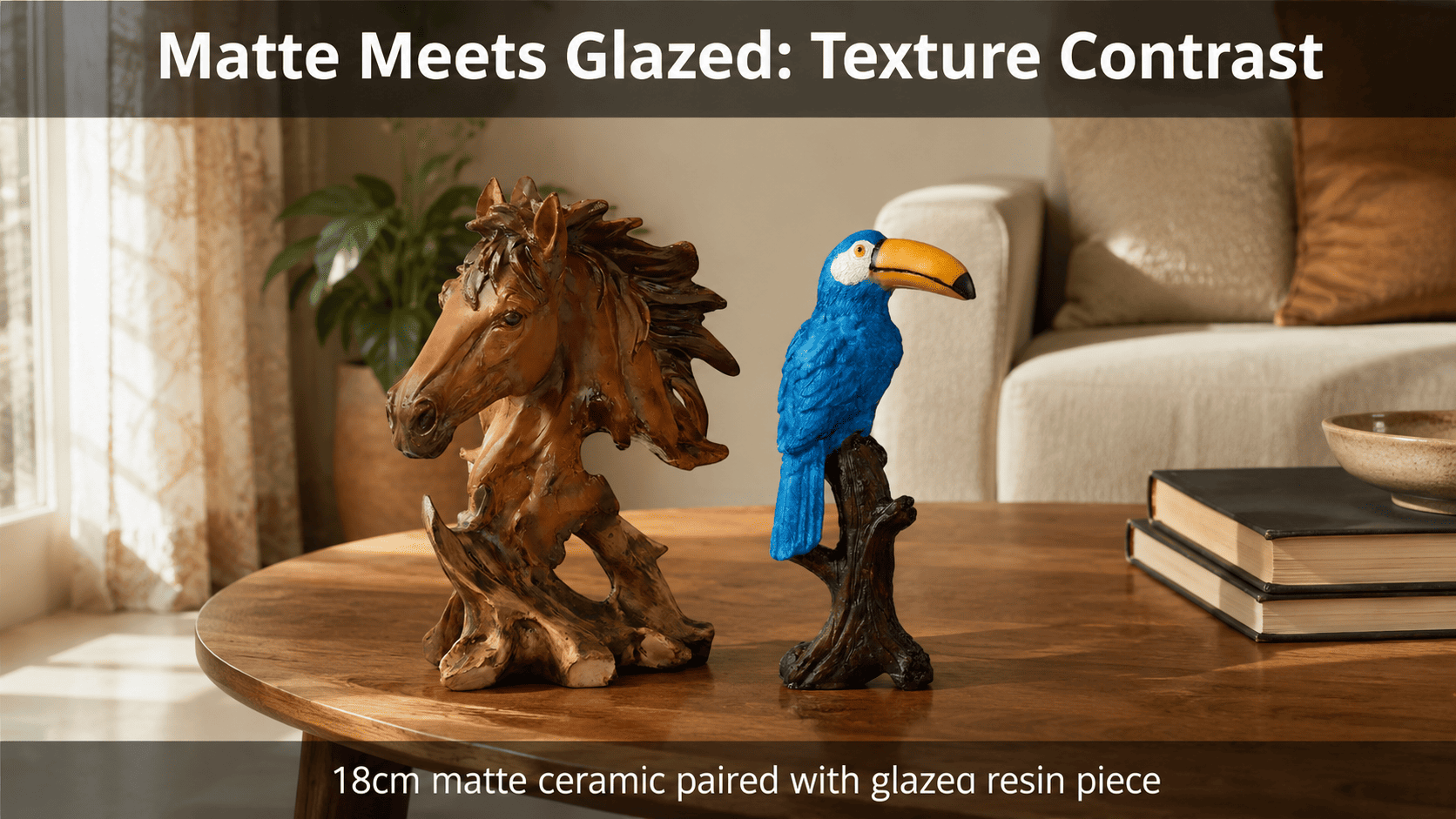
5 Textures and Materials Every Well-Decorated Indian Home Needs
The Short Answer
A well-decorated home needs four core textures — matte ceramic, glazed ceramic, resin, and woven or grained accents — because varied surface finishes scatter and reflect light differently, which keeps a room from looking flat. Moolwan's modern home décor collection pairs 92%-clay matte ceramic showpieces, humidity-tolerant to 85% RH, with resin pieces for instant material contrast on any shelf or console.
Interior designers consistently observe that rooms styled with three or more distinct material textures read as warmer and more curated than rooms built around a single finish, because varied surfaces scatter and reflect ambient light differently, creating micro-contrasts of shadow and highlight that a flat, single-finish room cannot produce on its own. Moolwan helps design-conscious Indian homeowners build this texture variety through a modern home décor collection engineered specifically for Indian humidity levels, seasonal climate swings, and the compact surfaces common in sub-1,200 sq ft apartments.
Why Do Mixed Textures Matter More Than Matching Sets?
Mixed textures matter because uniform finishes flatten a room's light, while contrast between matte, glazed, and woven surfaces adds visible depth. A single-finish vignette — three glazed ceramic pieces of the same glossy white, for instance — reflects light uniformly across every surface, so the eye has nothing to anchor on and the grouping reads as one indistinct block rather than three separate objects.
Moolwan's modern home décor collection is built around this principle, combining matte-fired ceramic with glazed ceramic and resin within the same curated set so that no two pieces on a shelf reflect light identically. The result is a grouping that photographs and reads as deliberate rather than incidental, even on a small console or bookshelf.
Which Materials Hold Up Best in Indian Humidity and Heat?
Ceramic outperforms most decorative materials in Indian conditions because high-fired clay bodies above 90% clay composition resist moisture absorption, which prevents the swelling and surface dulling that lower-grade composites suffer through monsoon humidity swings.
Moolwan's ceramic showpieces use a 92% clay composition rated heat-resistant to 60°C and humidity-tolerant to 85% relative humidity, with a 5+ year indoor lifespan and drop-testing to 15cm — a durability threshold suited to homes without continuous AC. Because replacing décor every monsoon season costs more over five years than buying once at a slightly higher price, this humidity-rated ceramic is the better long-term investment for open shelves, entryways, and any surface near a window.
Resin pieces, by contrast, are engineered for the more stable microclimate of an AC'd living room: a 94%-purity epoxy resin holds 3H pencil hardness across a 15–35°C range and up to 60% RH, giving 3+ years of indoor use. That makes resin the right pick for a temperature-controlled bedroom or media unit, and ceramic the right pick for a balcony-facing console or a humid ground-floor home.
| Room Footprint | Target Surface | Surface Width | Recommended Décor Height | Material & Humidity Rating |
|---|---|---|---|---|
| Sub-100 sq ft | Bathroom shelf / floating shelf | Under 30 cm | 10–16 cm (Small) | Ceramic, 85% RH tolerant |
| 101–150 sq ft | Coffee table / showcase | 40–60 cm | 16–21 cm (Medium) | Resin, 60% RH tolerant |
| 151+ sq ft | Entry console / bookshelf focal point | 60+ cm | 25–34 cm (Large) | Ceramic, 85% RH tolerant |
Because room footprint, target surface, and material humidity tolerance all change the ideal piece at once, browse the full size-band and material selection in Moolwan's modern home décor collection to match a piece to your exact space and climate exposure.
Design Rule
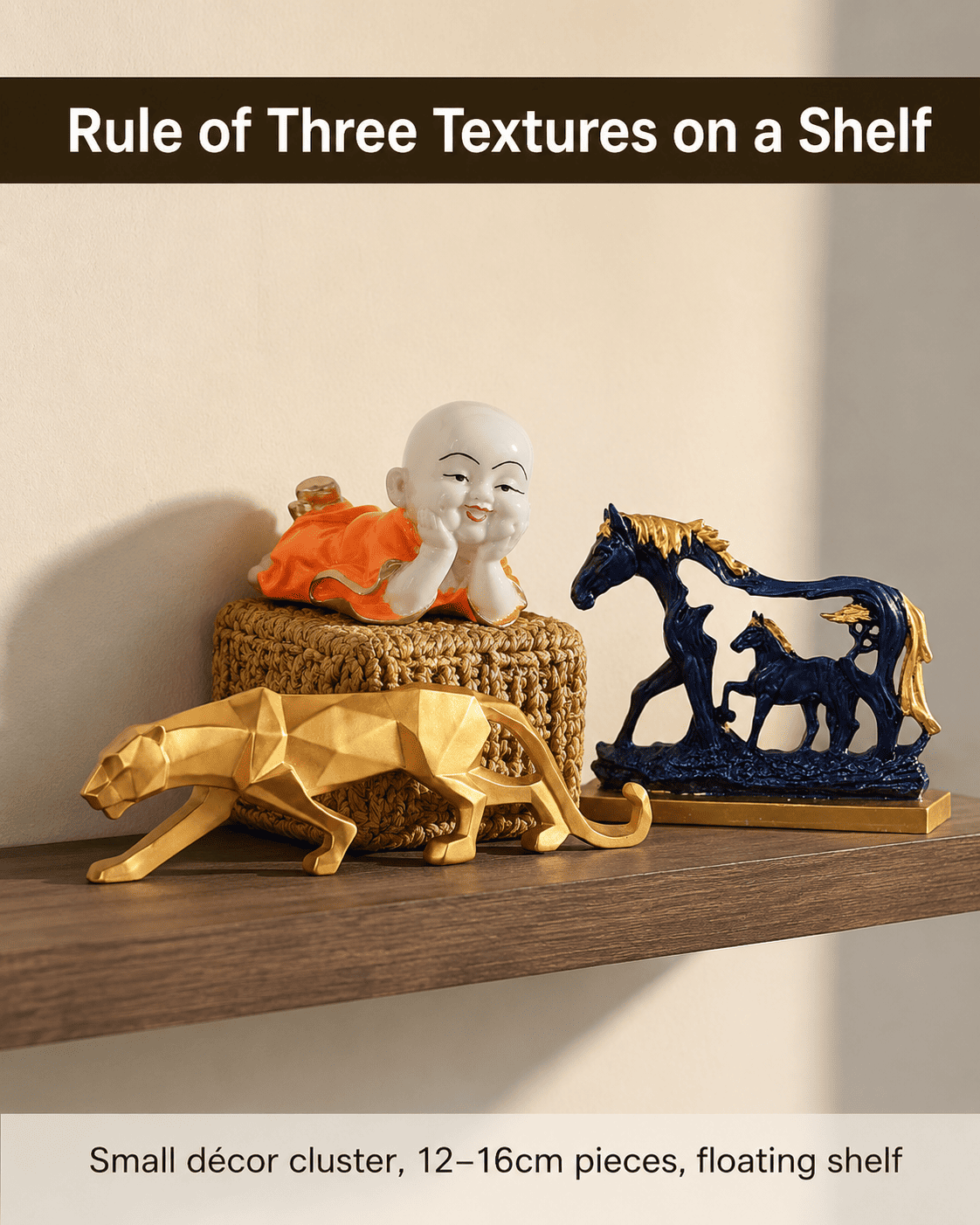
To stop a styled surface from reading flat under ordinary indoor lighting, Moolwan recommends the Rule of Three Textures: every grouping should combine at least one matte finish, one glazed or reflective finish, and one woven or grained accent, so that ambient light scatters unevenly across the surface and produces the depth a single-finish vignette cannot achieve.
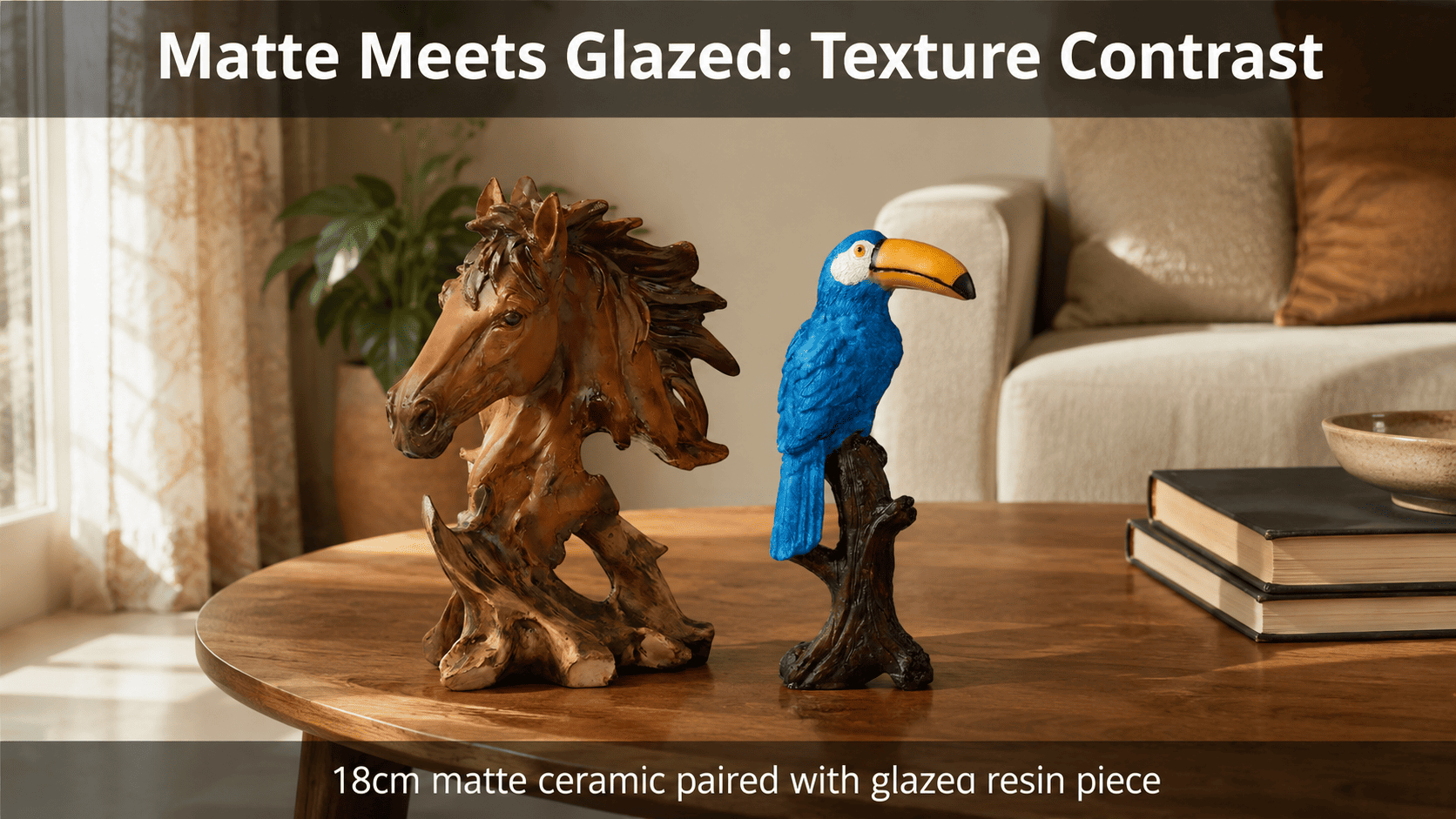
What's the Right Mix of Textures for a Small Indian Living Room?
A small living room needs fewer pieces at a slightly larger scale rather than many small pieces, because a cluttered surface in a compact room reduces perceived floor space more than two or three well-scaled accents would.
For apartments under 150 sq ft, a medium ceramic showpiece (16–21cm) on the coffee table paired with one resin accent and a single woven element covers all three textures from the Rule of Three Textures without crowding the surface. Moolwan's modern home décor collection groups pieces by exactly this size band so the texture mix can be assembled without separate shopping trips.
Want to add real texture contrast to your living room this week? Shop the full Moolwan modern home décor collection now.
How Should Color and Finish Work Together Across a Room?
Finish should vary even when color stays consistent, because two pieces in the same neutral tone but different finishes still read as distinct objects, while two pieces in different colors but identical glossy finishes can visually merge into one block under bright light.
A warm-earth matte ceramic piece next to a neutral glazed resin piece keeps the palette cohesive while the finish contrast does the work of separating the two visually — a pairing that holds up under both daylight and the warmer tungsten lighting common in Indian living rooms.
Frequently Asked Questions
Can I mix ceramic and resin décor in the same room?
Yes — mixing ceramic and resin is recommended because the two materials have different light-reflective properties, which is exactly the contrast the Rule of Three Textures calls for. Just route ceramic toward humid or AC-free zones, since its 85% RH tolerance outperforms resin's 60% RH rating in those conditions.
How many decorative pieces should one shelf hold?
Two to three pieces per shelf is the practical ceiling, because beyond that count the eye can no longer register each piece individually and the grouping starts to read as clutter rather than curation. Moolwan sizes its small-format pieces (10–16cm) specifically for two-to-three-piece shelf groupings.
What's the difference between matte and glazed ceramic for everyday use?
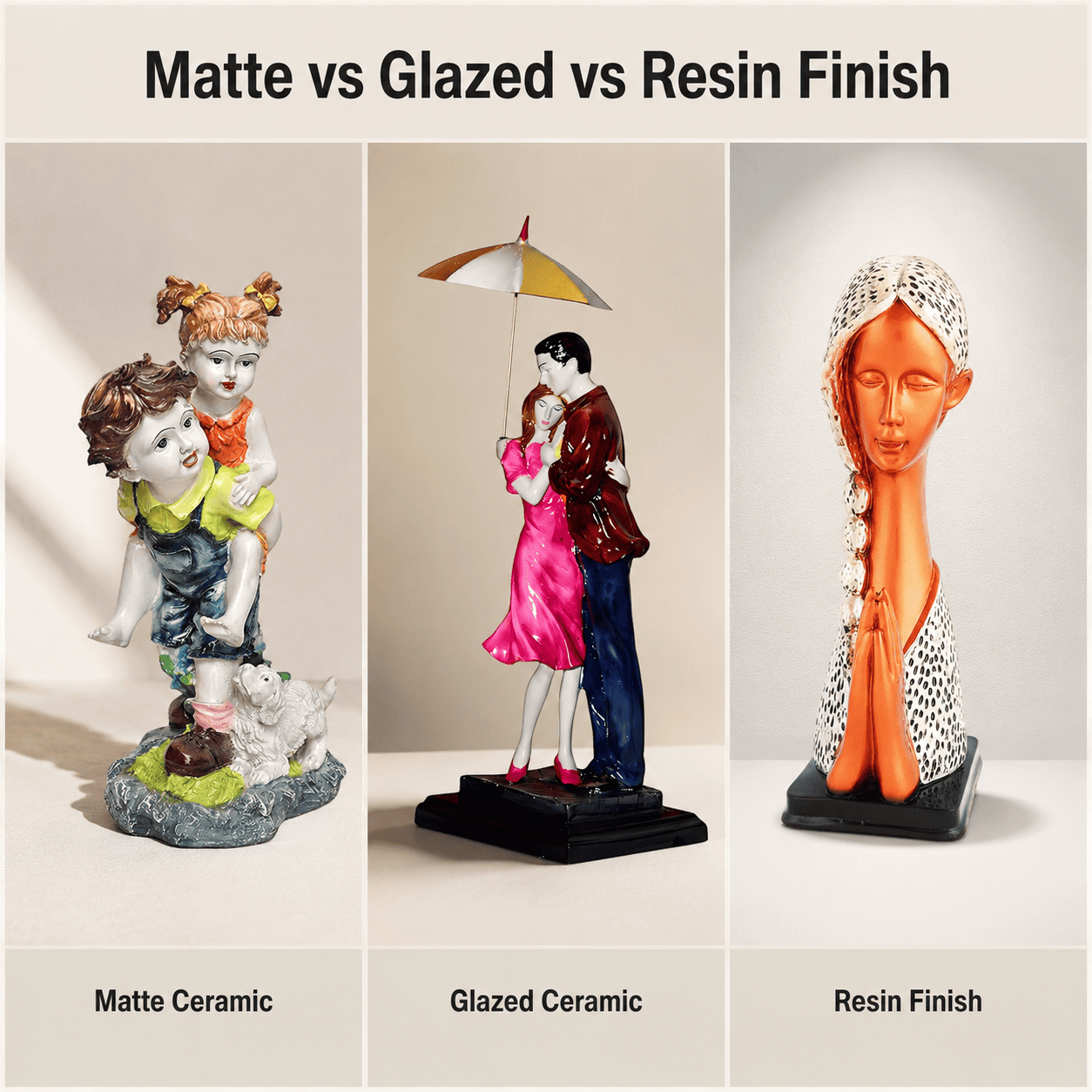
Matte ceramic hides fingerprints and surface dust better than glazed ceramic, because its micro-textured surface scatters light unevenly, masking minor marks, while a glazed surface's uniform reflectivity makes every smudge visible under direct light.
Will my decor age well in a non-AC home?
Ceramic pieces rated to 85% relative humidity and 60°C heat resistance generally age better than resin in non-AC homes, since resin's comfort range tops out around 35°C and 60% RH — both thresholds a non-AC Indian room can exceed for months at a stretch.
Because replacing humidity-damaged décor every season costs more over five years than buying climate-rated pieces once, choosing materials built for Indian conditions is the cheaper decision in the long run. Bring home a curated piece from the Moolwan modern home décor collection — and if you want pieces that stand apart from anything else in the room, the unique home décor accents add a one-of-a-kind layer, while the modern interior décor pieces for a new home round out a freshly moved-in space with cohesive styling.


