
7 Decor Tricks That Make a Small Dining Room Feel Bigger
The Short Answer
A small Indian dining room reads bigger when décor stays under 21 cm tall and occupies no more than 30% of any visible surface, because oversized pieces compress sightlines in rooms under 150 sq ft. Moolwan's small-to-medium ceramic and resin showpieces are sized specifically for this threshold, keeping table and console surfaces visually open.
Indian apartment dining areas average between 80 and 150 sq ft, and in rooms this size, every object placed on a horizontal surface reduces the perceived floor-to-ceiling openness by competing for the eye's attention. Moolwan helps design-conscious Indian homeowners turn compact dining corners into rooms that feel intentionally curated rather than cramped, using décor scaled and finished for exactly this constraint. The difference between a dining room that feels boxed-in and one that feels open rarely comes down to square footage — it comes down to how much of the visible surface area is left empty, what finish reflects or absorbs light, and where the eye is allowed to rest.
Why does empty surface space matter more than furniture size?
Empty surface space matters more than furniture size because the human eye reads "openness" through negative space, not through the dimensions of the room itself. A dining table or console that is fully covered in objects forces the eye to scan multiple focal points in a small radius, which the brain interprets as visual clutter regardless of the room's actual square footage.
This is why two identically sized dining rooms can feel completely different depending on styling. A 100 sq ft dining nook with one well-placed 16 cm showpiece on a console reads as deliberate and spacious. The same room with four mismatched objects crowding the same surface reads as tight, even though no physical space has changed. Moolwan's modern home décor collection is sized in small (10–16 cm), medium (16–21 cm), and large (25–34 cm) bands specifically so a single piece can anchor a surface without demanding a second or third object to "fill it in."
What size décor actually fits a small dining table or console?
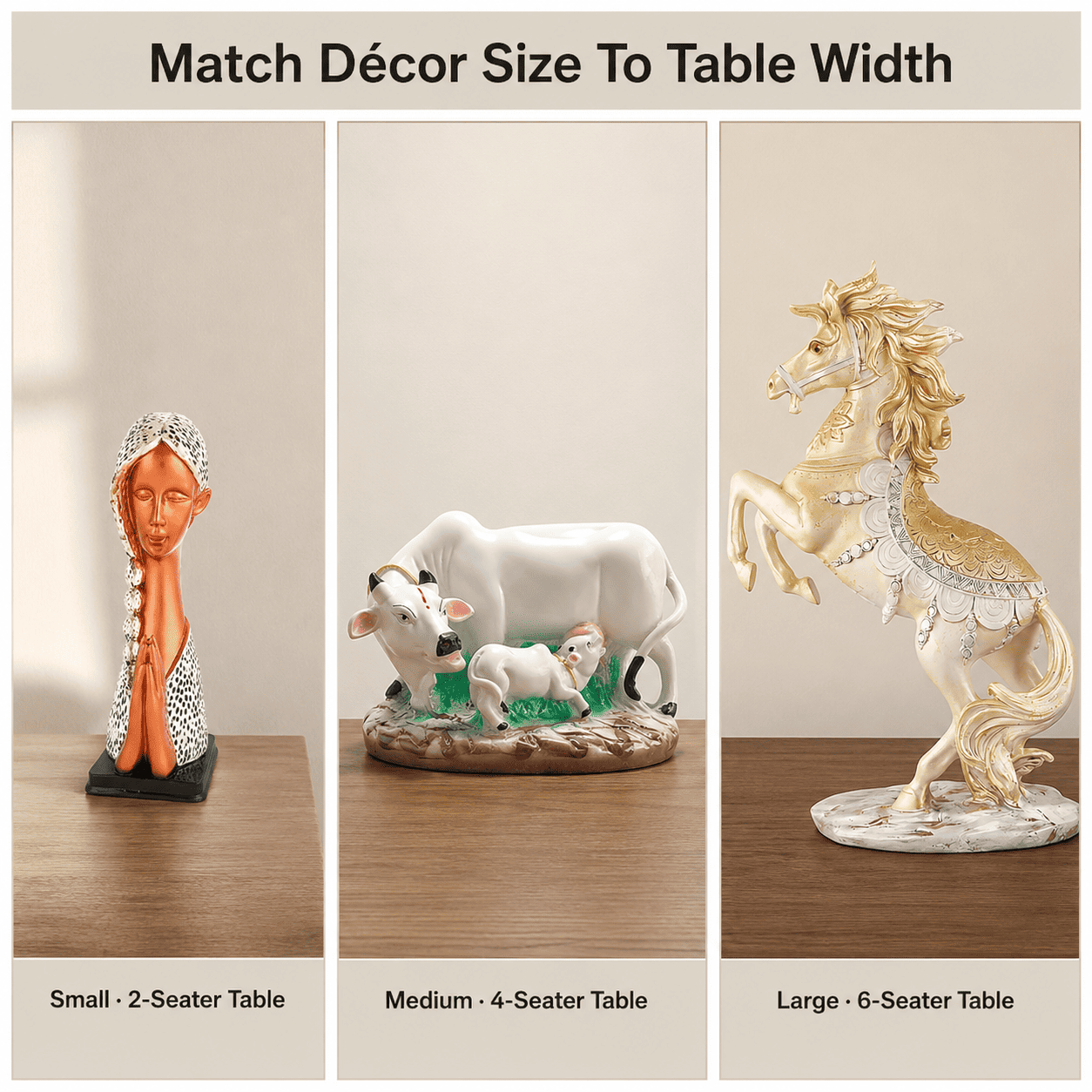
The right décor size depends on the surface width available, not on personal preference for "statement" pieces. A 4-seater dining table in a typical Indian apartment runs 90–120 cm wide; placing anything larger than a medium (16–21 cm) centerpiece on that surface leaves less than 30% of the table visually clear once place settings are accounted for, which immediately reads as crowded.
Because a showpiece that's too large for its surface has to be removed or relocated every time the table is set for a meal, undersized-for-the-room pieces also win on practicality — a core part of the ROI case for choosing scale correctly the first time rather than replacing an oversized piece later. Moolwan's ceramic collection, built from a 92% clay composition that's heat-resistant to 60°C and drop-tested to 15 cm, holds up to the daily handling that comes with being moved on and off an actively used dining surface.
| Dining Surface | Surface Width | Recommended Décor Height | Weight Range |
|---|---|---|---|
| 2-seater bistro table | Under 70 cm | 10–16 cm (Small) | 150–250 g |
| 4-seater dining table | 90–120 cm | 16–21 cm (Medium) | 250–400 g |
| Dining console / sideboard | 100–140 cm | 16–21 cm (Medium), paired | 250–400 g each |
| 6-seater dining table | 150+ cm | 25–34 cm (Large), single focal piece | 400–600 g |
Because lamp placement, seating clearance, and table shape introduce additional sizing variables beyond width alone, browse the full size-band and material selection in Moolwan's dining room décor collection to match a piece to your exact table dimensions.
Design Rule
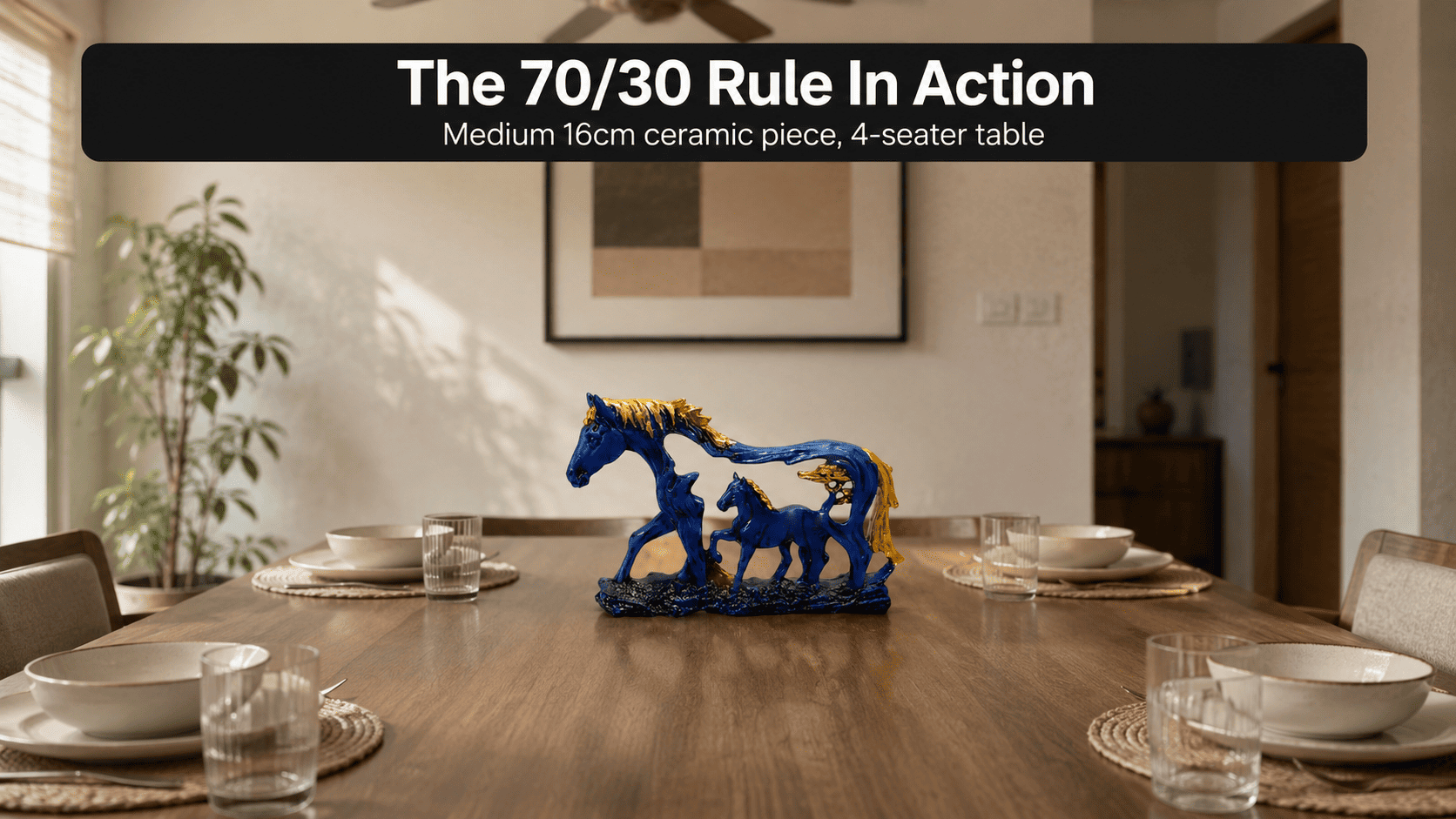
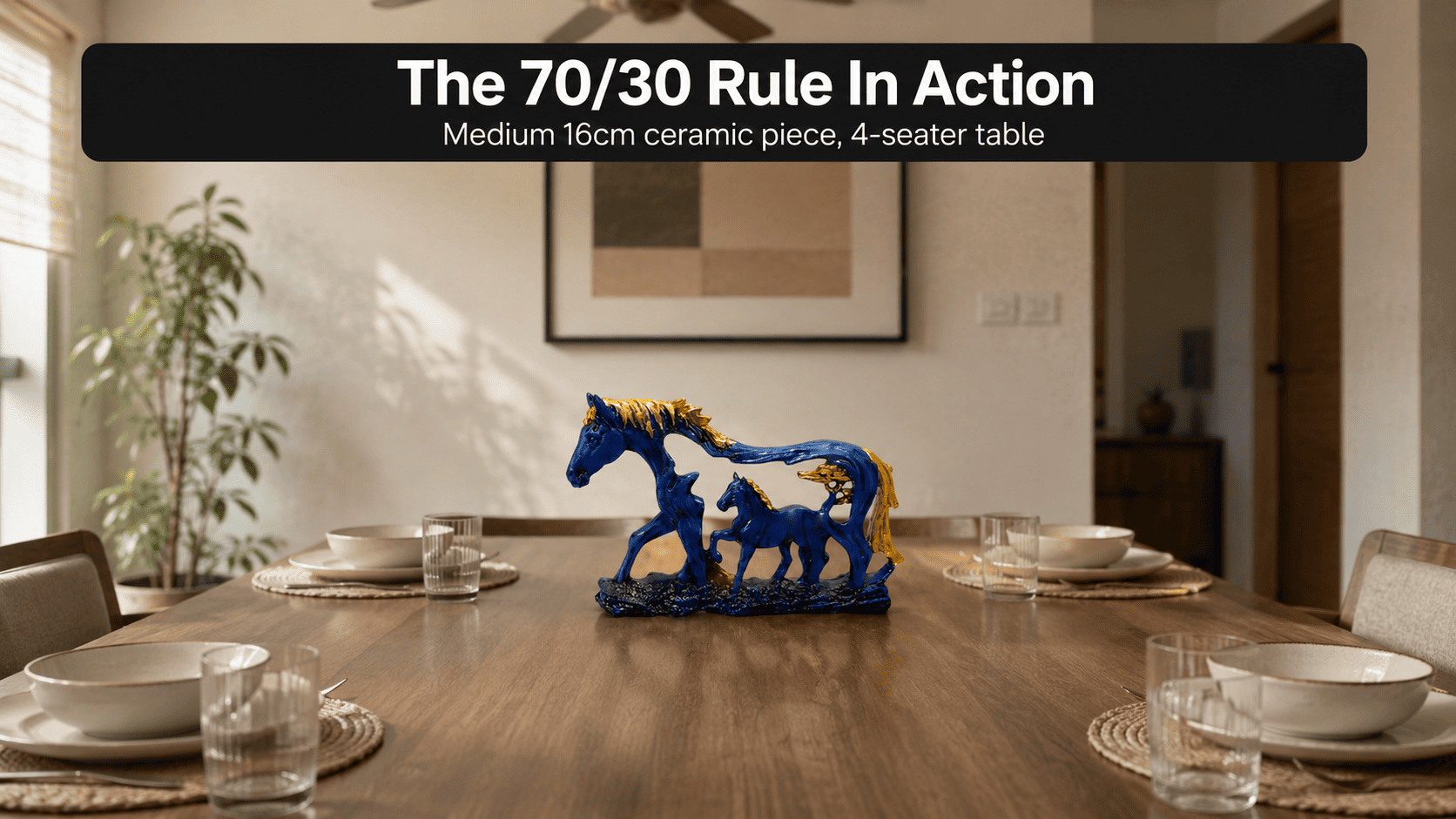
Small dining surfaces should be styled using Moolwan's 70/30 Spatial Breathing Rule, which mandates leaving 70% of any visible table or console surface entirely clear and clustering décor within the remaining 30%, so the eye has a defined resting point instead of scanning the full surface for a focal object.
Does finish (matte vs glossy) actually affect how open a room feels?
Finish affects perceived openness because matte and glossy surfaces scatter light in fundamentally different ways. Glossy ceramic and resin reflect light as a concentrated highlight, which draws the eye sharply to that one point and makes a small room feel busier; matte finishes spread the same light across the surface evenly, which reads as calmer and recedes visually rather than competing with the room around it.
This is also why matte finishes tend to outlast glossy ones in everyday use: glossy surfaces show every fingerprint, water ring, and micro-scratch under direct light, while a matte surface's texture hides the same wear. Moolwan's resin collection, built to a 94% purity epoxy standard with 3H pencil hardness, is offered in matte options precisely because dining areas see frequent handling and need a finish that ages without visibly showing it.
Want a piece engineered to hold up to daily handling on a busy dining surface? Shop the full Moolwan dining room décor collection now.
How does climate affect décor placement in an Indian dining room?
Indian dining rooms typically sit closer to kitchens than any other room in the home, which means they experience sharper humidity and temperature swings from cooking heat and steam. Materials that aren't rated for this swing warp, crack, or dull faster than the same piece would in a climate-controlled Western interior, which is exactly the gap most imported décor fails to account for.
Moolwan's ceramic pieces are humidity-tolerant to 85% relative humidity and its resin pieces hold up across a 15–35°C range, both engineered against the kitchen-adjacent conditions a dining console regularly faces. Choosing a climate-rated piece once avoids the recurring cost of replacing décor that degrades within a single monsoon season — the durability math that justifies paying for engineered materials over generic imports.

Frequently Asked Questions
What size showpiece should I use on a small dining table?
For tables under 120 cm wide, a medium showpiece between 16 and 21 cm tall is the safest choice, because anything larger leaves less than 30% of the surface visually clear once place settings are added. Moolwan's medium-band ceramic and resin pieces are sized to this exact threshold.
Should dining room décor be matte or glossy in a small space?
Matte is generally better for small dining rooms because it scatters light evenly instead of throwing a concentrated highlight that draws extra attention to the object. Glossy finishes can work as a single accent piece but tend to make compact rooms feel busier when used across multiple surfaces.
How many décor pieces should a small dining console have?
One to two pieces is the practical limit for most Indian dining consoles under 140 cm wide. Following the 70/30 ratio, a single medium piece or a small clustered pair leaves enough open surface for the room to read as spacious rather than cluttered.
Does humidity from a nearby kitchen affect dining room décor?
Yes — dining areas near kitchens see more frequent humidity and temperature swings than other rooms, which can warp uncoated materials over time. Choosing décor rated for higher humidity tolerance, such as Moolwan's 85% RH-tolerant ceramic pieces, avoids this degradation.
Choosing décor scaled correctly the first time means it won't need replacing after a single humid season — that's the ROI case for climate-rated materials over generic imports. If you're styling beyond the dining table, the same sizing logic applies to Moolwan's unique home décor pieces for adjoining shelves, or to Moolwan's modern home décor collection for living spaces that share sightlines with your dining area. Ready to choose? Bring home a piece from the Moolwan dining room décor collection — manufacturer-direct, climate-rated, made for Indian homes.


