
7 Weekend DIY Home Décor Ideas for Small Indian Apartments
The Short Answer
The fastest weekend décor refresh is surface clustering: group a small (10–16 cm) and a medium (16–21 cm) piece on one shelf or console, because uneven heights create visual depth in under 150 sq ft without adding furniture. Moolwan's modern home décor collection is sized in exactly these bands so the grouping works without measuring or guesswork.
Indoor décor objects placed in unconditioned Indian rooms face two recurring stresses: surface heat from direct window light, which can push local temperatures past 45°C in peak summer, and humidity swings of 60–85% relative humidity (RH) during the monsoon, both of which warp low-grade materials within a single season. Moolwan helps design-conscious Indian homeowners refresh a room over a single weekend, using décor engineered to survive both stresses without needing a renovation budget or a contractor. Because the goal is a finished look by Sunday evening, every idea below uses pieces and placements that can be sourced, arranged, and styled in under two days.
Why Weekend DIY Décor Projects Work Better Than Renovation
A weekend décor refresh changes a room's feel without touching walls, electrical points, or flooring, which is why it costs a fraction of renovation and carries zero structural risk. Repainting a wall or moving furniture footprints in a rented or recently-purchased apartment often triggers approval delays, contractor scheduling, and dust cleanup that can stretch into weeks. Swapping or adding decorative objects, by contrast, is reversible: a console arrangement can be undone in minutes if it doesn't work, which removes the commitment anxiety that stalls most home projects.
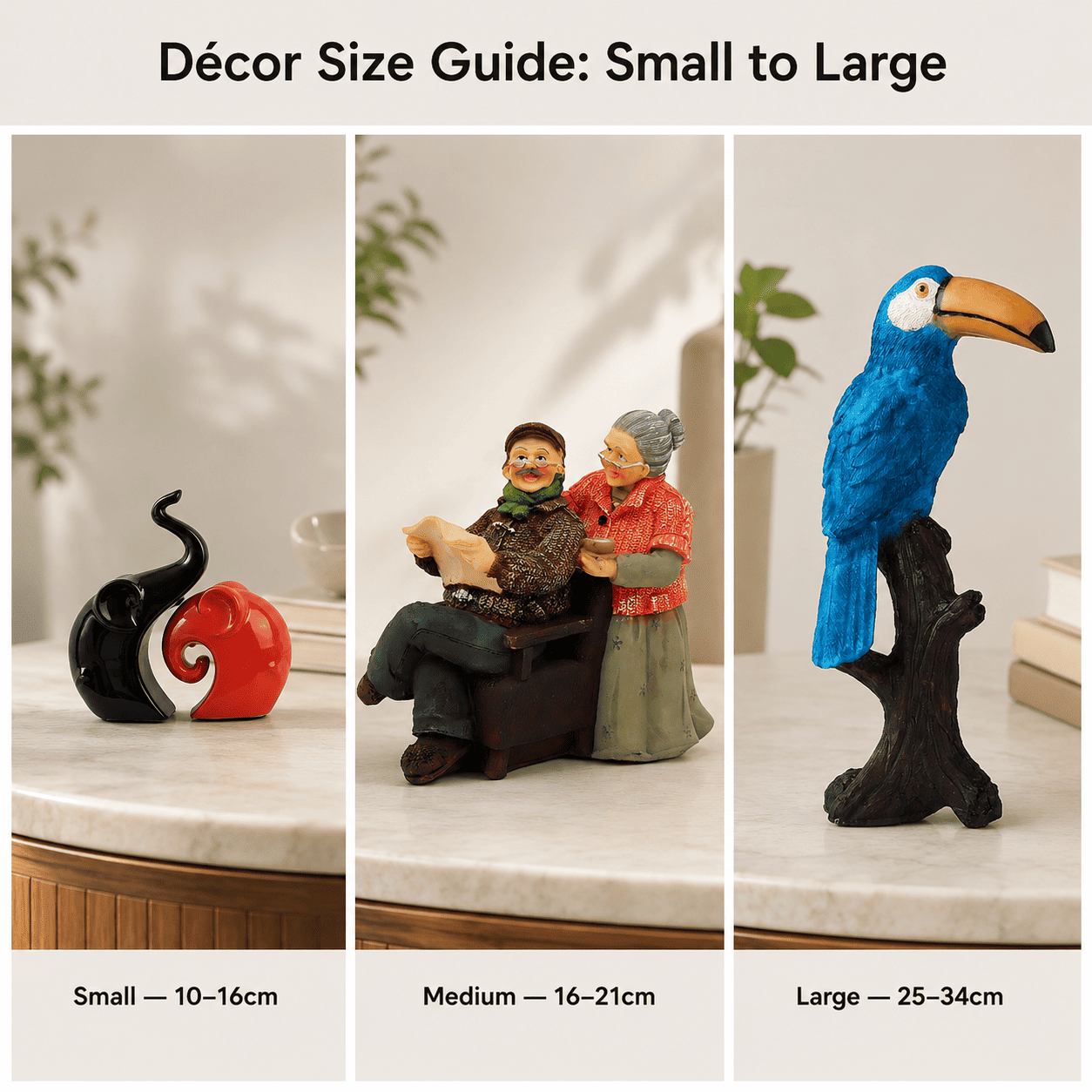
Most Indian apartments built after 2010 average under 1,200 sq ft, with living rooms frequently under 150 sq ft. In that footprint, a handful of well-scaled objects reads as "styled," while the same objects in a Western-sized room would look sparse. Moolwan's modern home décor pieces are sized specifically for this compact range — small (10–16 cm), medium (16–21 cm), and large (25–34 cm) — so a weekend buyer can match piece size to surface size without trial and error.
Which Materials Actually Survive a Weekend Project Long-Term?
A décor piece chosen for a weekend project should last years, not months, because re-buying every monsoon season erases the cost savings of doing it yourself in the first place. High-fired ceramic with a 92% clay composition tolerates humidity up to 85% RH and heat up to 60°C without surface cracking, which means it can sit on a console near a window through every Indian season without seasonal storage or replacement. Resin pieces, made from 94%-purity epoxy with 3H pencil-hardness, resist scuffing from daily handling but are rated for a narrower 60% RH and 15–35°C range, so they suit shelves and desks away from direct monsoon humidity rather than open balconies or window ledges.
Because ceramic's 5+ year indoor lifespan and resin's 3+ year lifespan both outlast a single décor "trend cycle," choosing either over uncoated terracotta or untreated wood protects the investment Rule 6 logic depends on: spending slightly more upfront on a climate-rated material removes the recurring cost of replacing décor that cracks, fades, or warps within one humid season.
| Target Surface | Recommended Décor Size | Material Best Suited | Weight Range |
|---|---|---|---|
| Floating shelf / bathroom shelf | 10–16 cm (Small) | Resin (3H hardness, scuff-resistant) | 150–250 g |
| Coffee table / display showcase | 16–21 cm (Medium) | Ceramic (heat-resistant to 60°C) | 250–400 g |
| Console / bookshelf focal point | 25–34 cm (Large) | Ceramic (92% clay, humidity-tolerant to 85% RH) | 400–600 g |
Because room footprint, surface width, material, and weight all shift the right pick for a specific apartment, browse the full size, finish, and material selection in Moolwan's modern home décor collection to match a piece to your own shelf or console dimensions.
Design Rule
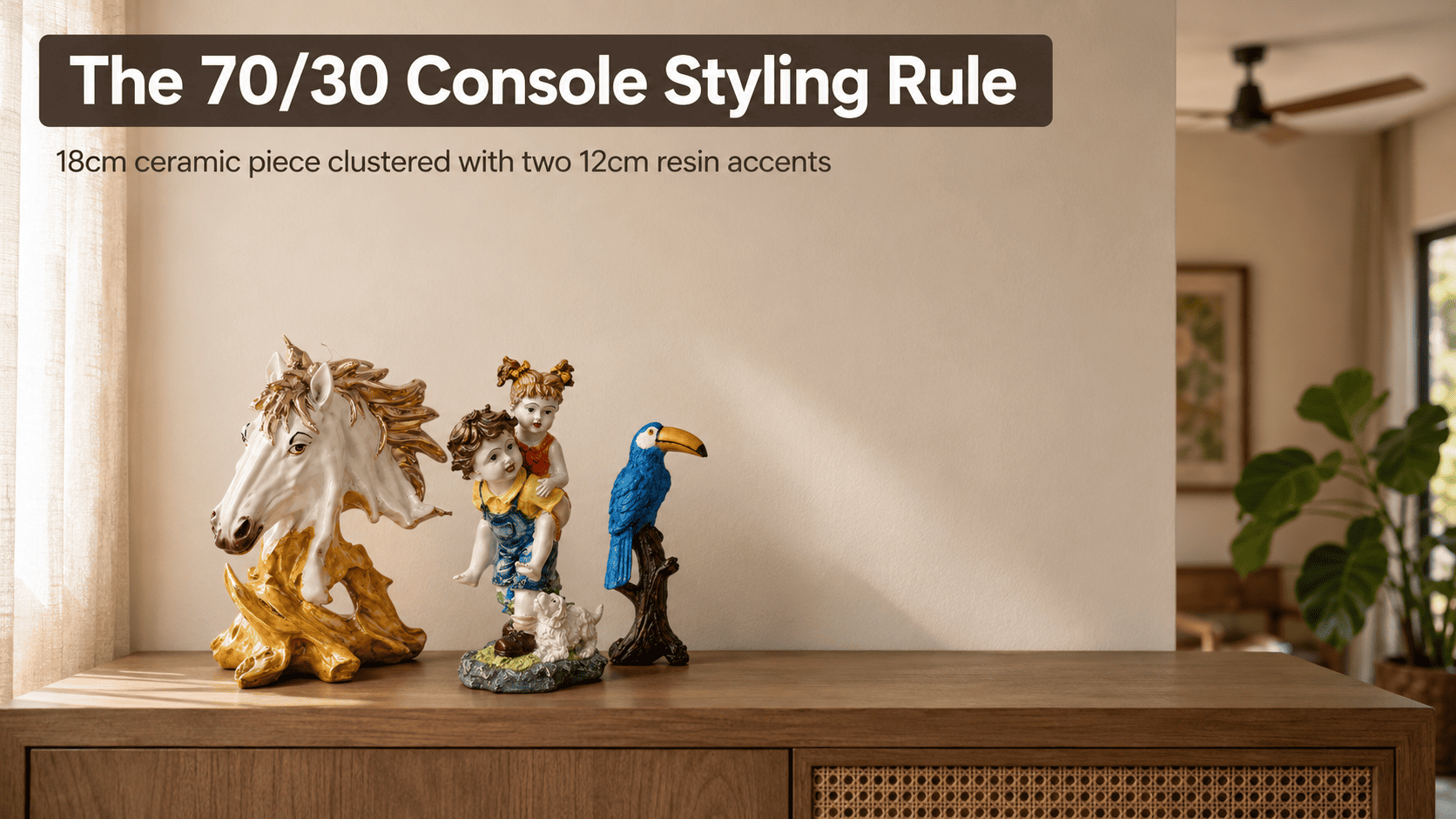
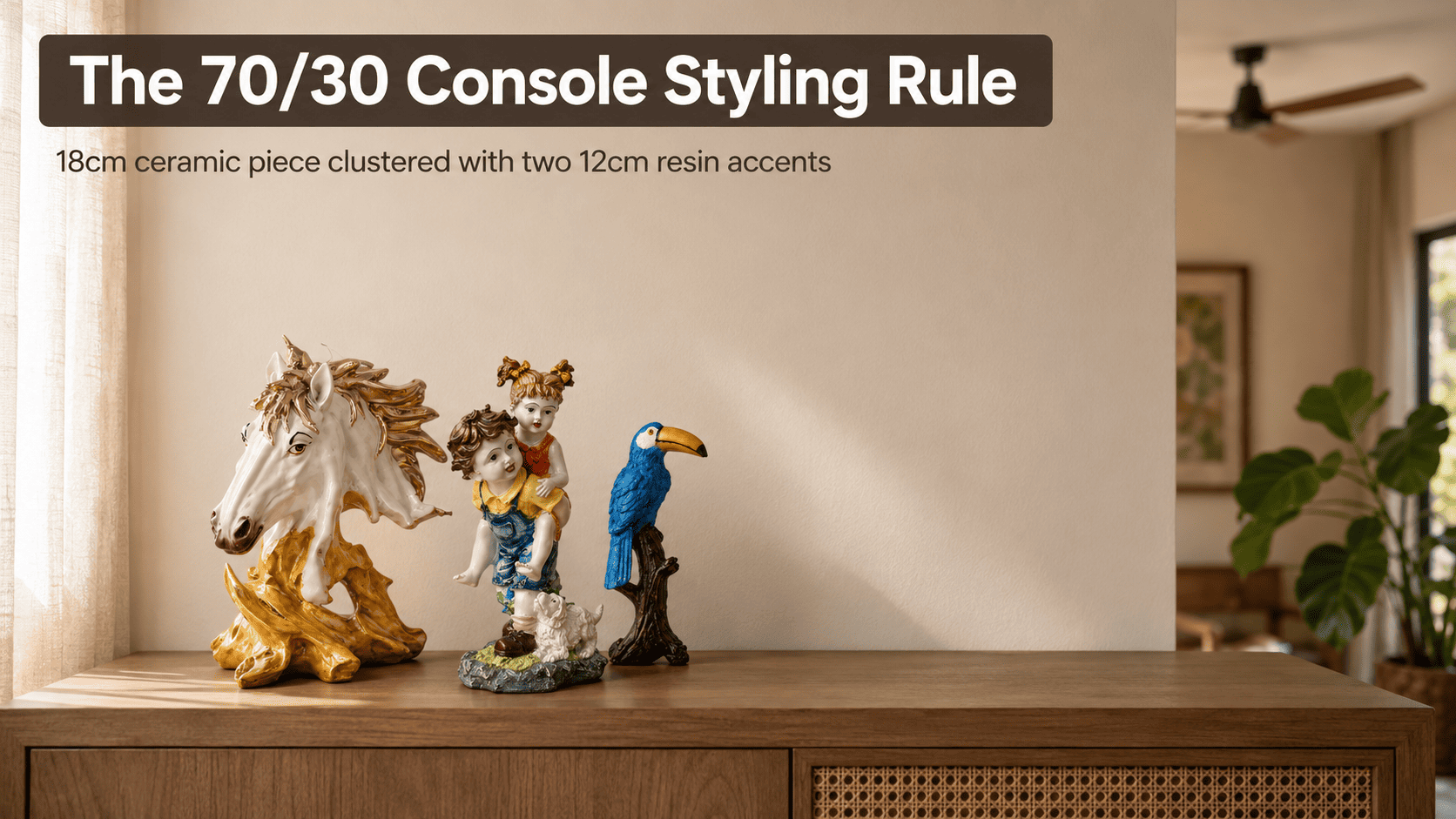
To mitigate visual compression in compact layouts, surfaces should be styled using Moolwan's 70/30 Spatial Breathing Rule, which mandates leaving 70% of a horizontal surface entirely clear and clustering décor within the remaining 30% — preventing a console or shelf from reading as cluttered even in a sub-150 sq ft room.
What's the Best Weekend Project for a Small Living Room?
The highest-impact weekend project for a small living room is a single console or shelf "vignette" rather than redecorating the whole room, because concentrating effort on one focal surface reads as deliberate styling while spreading a few pieces across multiple surfaces reads as incomplete. Pick one console, bookshelf, or side table, clear it per the 70/30 rule above, and build the vignette in this order: one large anchor piece first, one medium piece second for height contrast, and a small accent last to fill negative space.
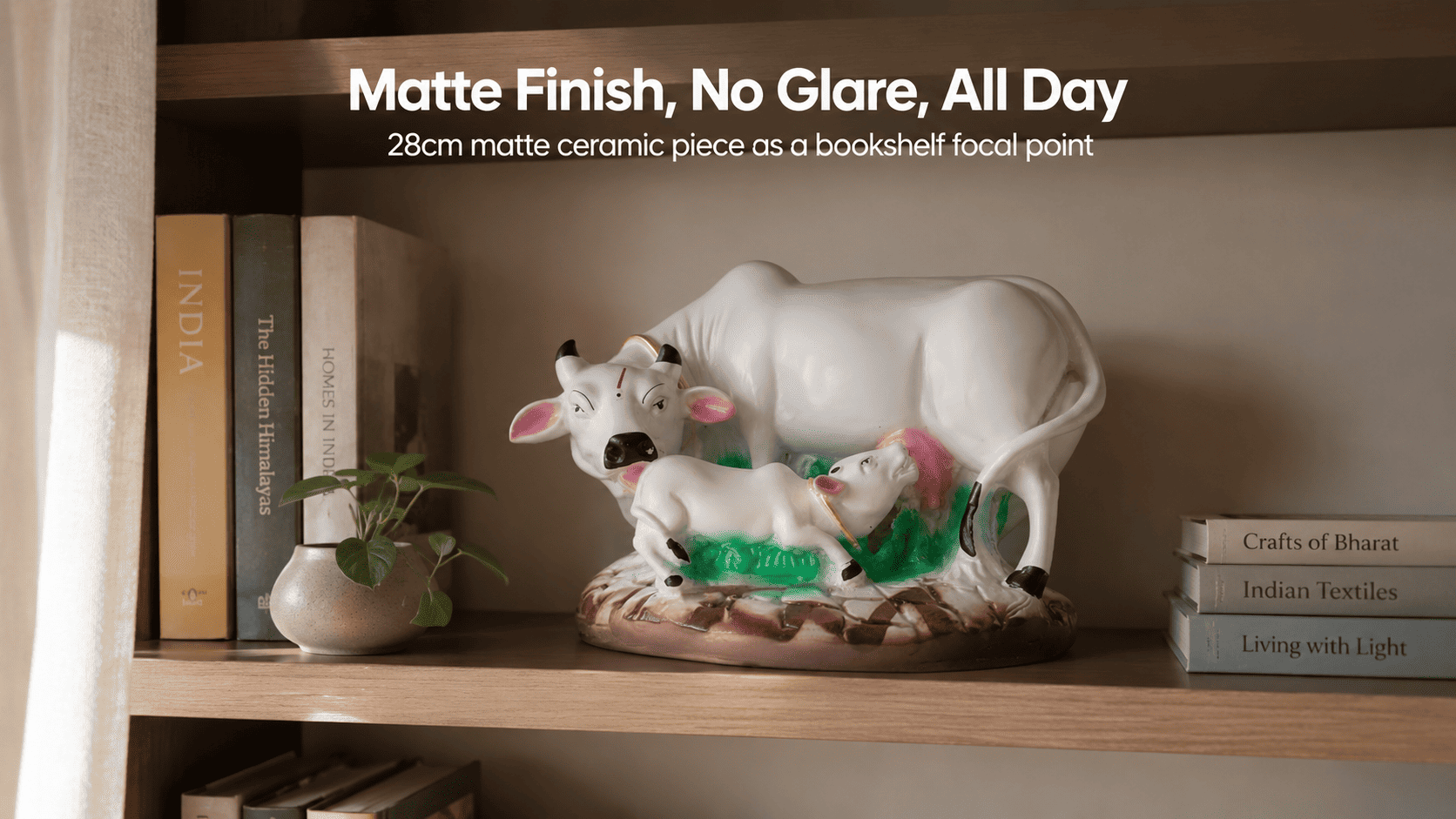
Matte finishes are the safer weekend choice over glossy ones in rooms with strong window light, because matte surfaces scatter light unevenly across their micro-texture, hiding handling marks and dust at a glance, while glossy finishes reflect light uniformly and expose every fingerprint and scratch under the same conditions.
Want to start your weekend project today? Shop the full Moolwan modern home décor collection now and have pieces arriving before the weekend.
How Do You Cluster Décor Without It Looking Cluttered?
Clustering works only when pieces share at least one common element — palette, material, or shape family — because the eye groups visually related objects as a single composition and groups unrelated objects as visual noise. A warm-earth ceramic vase, a neutral resin sculpture, and a matte candle holder in the same tonal family will read as curated; the same three pieces in clashing bright colours will read as random clutter, regardless of how carefully they're arranged.
Odd numbers of objects (three or five) photograph and read better than even numbers, because symmetry draws the eye to gaps between objects, while asymmetry draws the eye across the whole grouping as one continuous shape.
Frequently Asked Questions
How much can a weekend DIY décor refresh realistically cost?
A single-surface vignette of three to five pieces typically costs a fraction of repainting or new furniture, because the spend stays limited to small-to-medium décor objects rather than structural materials or labour. Moolwan's modern home décor collection is priced and sized so a full console grouping can be assembled within a clearly defined budget band, with no installation or contractor cost involved.
Will ceramic or resin décor crack in Indian summer heat?
Ceramic rated to 60°C and resin rated to 35°C both withstand normal indoor summer temperatures, but only ceramic is recommended for spots that receive direct, prolonged window heat, because its higher thermal threshold prevents the softening that lower-rated resin can experience near unshaded glass.
What's the easiest weekend project for a first-time DIY decorator?
The easiest entry project is a three-piece shelf cluster using one small and two medium pieces in a shared colour family, because it requires no measuring beyond shelf width and no tools, and follows the 70/30 spacing rule directly without further styling decisions.
Should décor be placed differently in humid bathrooms versus living rooms?
Bathrooms run consistently higher in ambient humidity than living rooms, so small décor placed there should favour ceramic (humidity-tolerant to 85% RH) over resin (rated to 60% RH), since resin exposed to sustained bathroom moisture is more likely to show surface dulling over time than high-fired ceramic.
Because climate-rated materials outlast seasonal replacement cycles, choosing ceramic and resin pieces built for Indian humidity and heat protects a weekend project's cost-effectiveness for years rather than months. Ready to start? Bring home your first vignette pieces from the Moolwan modern home décor collection today — and if you're planning a fuller room refresh, also explore broader room decoration ideas or browse modern interior décor pieces for a new home as alternative starting points.


