
 creating a focal point over a minimalist desk in an office space.jpg)
 displayed above a contemporary sofa in the living room.jpg)
 in multicolor, brightening a neutral hallway with splash-proof durability.jpg)
 with hooks ready for effortless hanging on a bedroom wall.jpg)
 showing vibrant vinyl colors and sleek wooden frames.jpg)
 highlighting the slim 0.6 cm depth of each frame.jpg)
Abstract-tastic 4-Panel Wall Art That'll Make Your Walls Pop - Modern Framed Multi-Frame Splash-Proof Set (33x24 inches)
You may also like

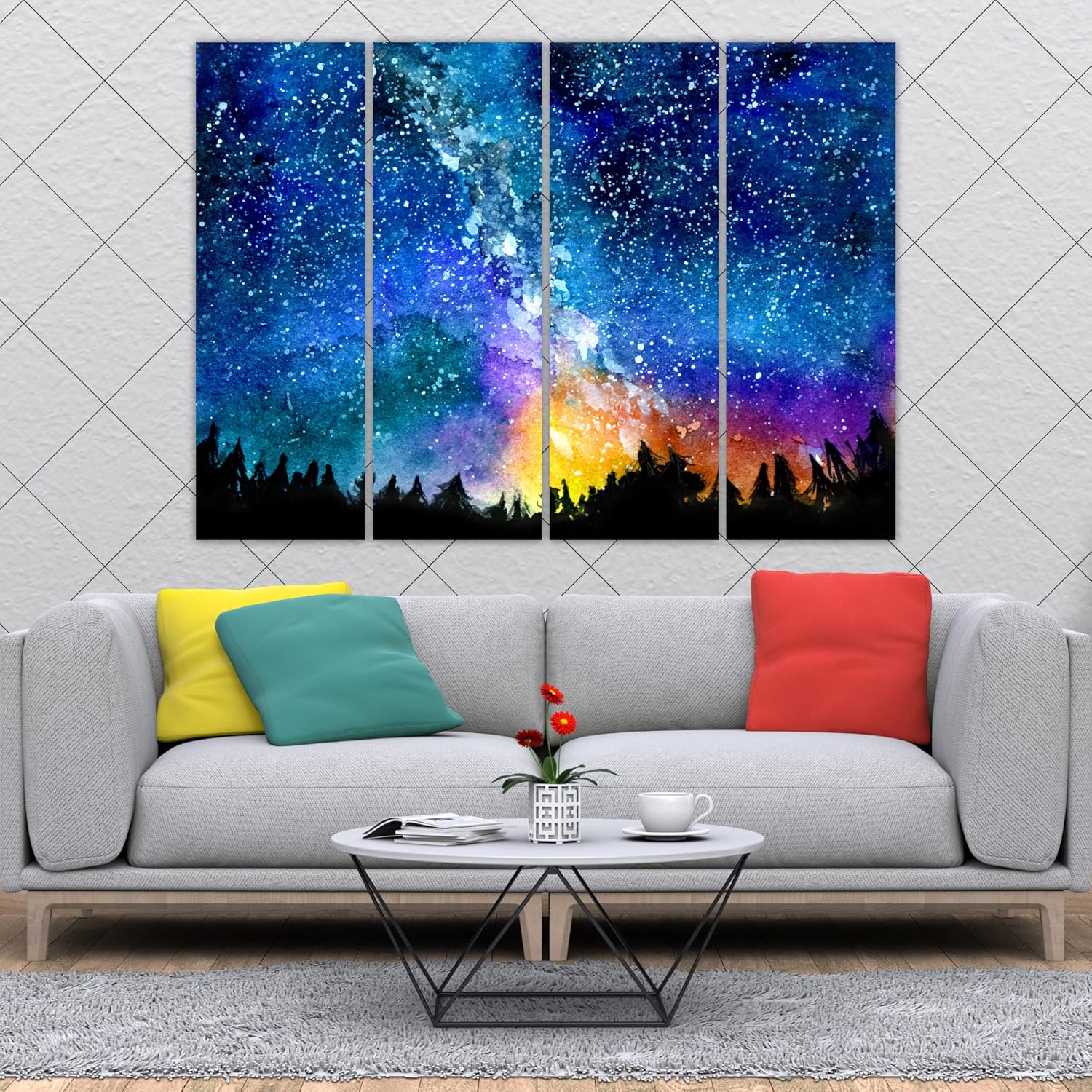
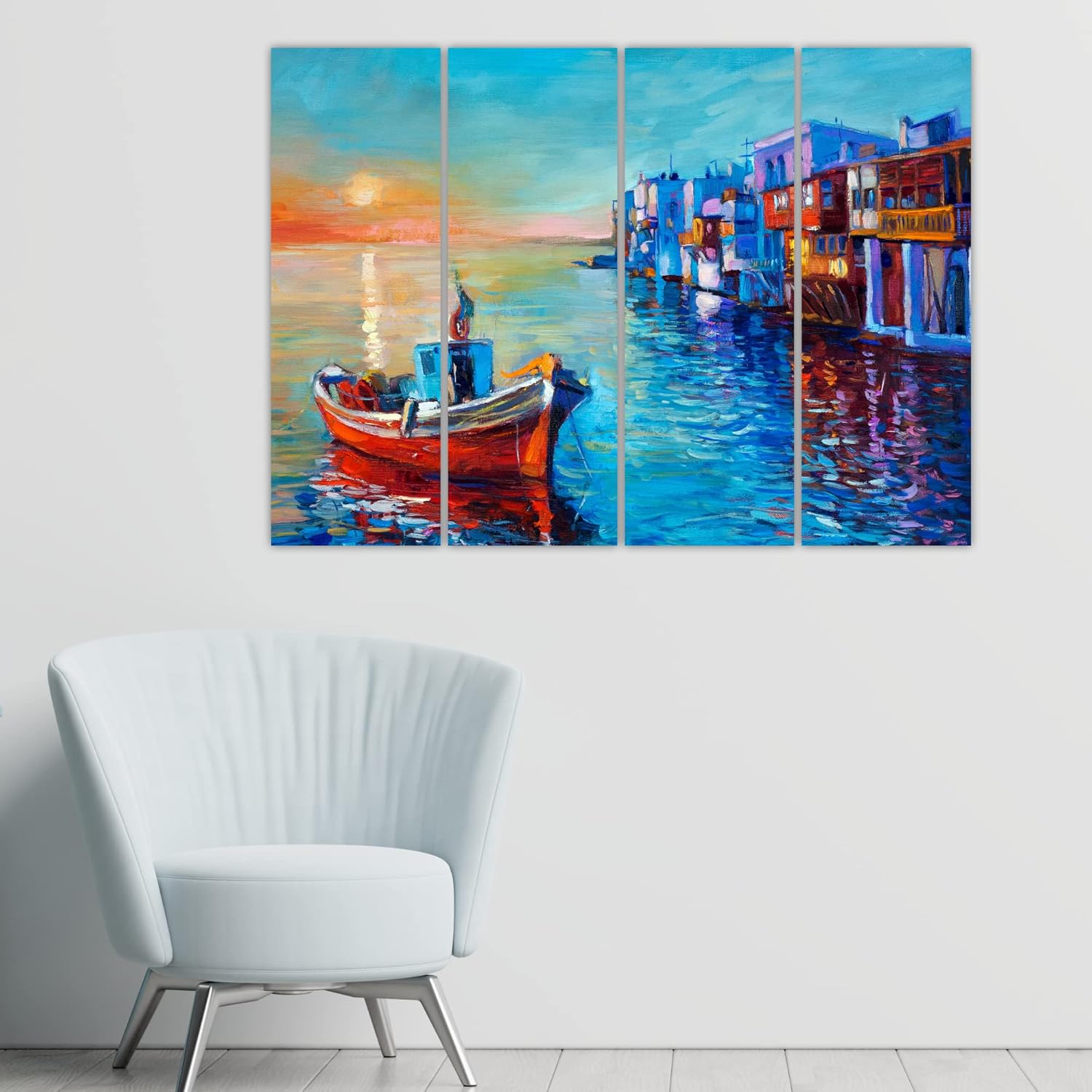
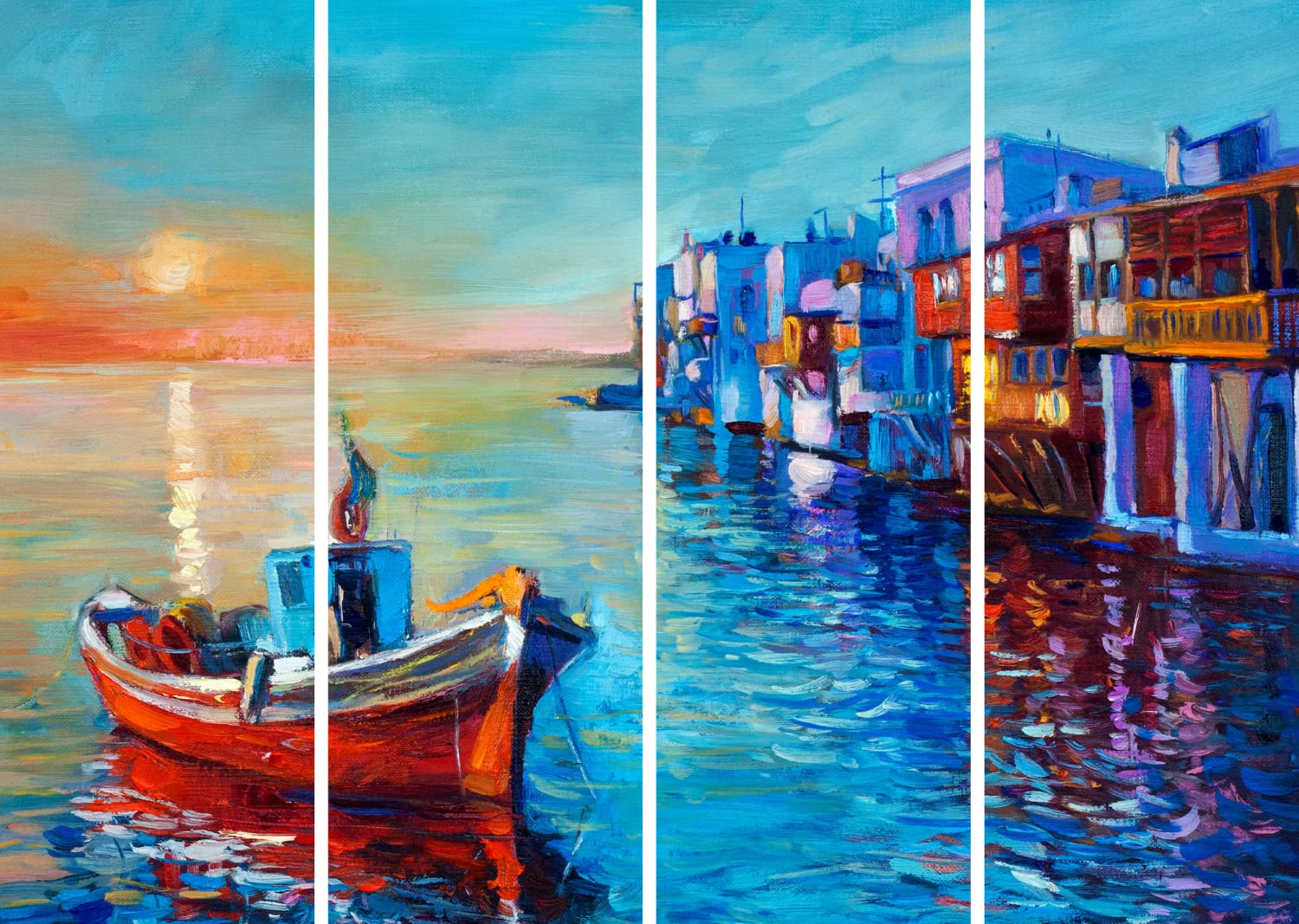
Moolwan 4-Panel Abstract Splash Canvas Wall Art Painting (84x61cm) - Multicolor Fluid Art Set
You keep opening the product page, trying to mentally place this on your living room wall. But it's impossible to know for sure, isn't it? 84cm looks perfect in mockups, but your wall has that window on one side and the TV unit below. You need to know this works in your specific space, not just styled photos.
Here's what actually happens when you hang this 4-panel abstract set: the combined 84cm width sits comfortably above most Indian sofas (typically 180-210cm wide), leaving roughly 48-63cm of breathing room on each side. The 61cm height places the artwork at eye level when you're seated—which is where you'll view it 90% of the time. And those teal, coral, yellow, and magenta swirls? They don't fight your cream walls. They create deliberate contrast without overwhelming a room that's probably 10x12 feet.
The Visual Math: How 84cm Fits 10ft Walls in Indian Homes
Your living room wall is probably around 10-12 feet (300-360cm) wide. Let's work with a 10ft (300cm) wall—the more common scenario in 2BHK and 3BHK apartments.
This 4-panel set spans 84cm combined width. That's 28% coverage on a 300cm wall—meaning 108cm of empty space on each side. Visually, this creates the "breathing room" that makes art look intentional rather than cramped. At 61cm height, you're looking at artwork that sits comfortably in the upper third of your 8-9ft ceiling space.
Now, what if you went smaller? A 60cm canvas would cover just 20% of that wall—it would look timid above an 8ft sofa, like an afterthought rather than a focal point. What if you went larger? A 120cm piece would cover 40%—striking, yes, but potentially overwhelming in compact Indian living rooms where the sofa, TV unit, and maybe a pooja shelf all compete for attention.
The 84cm sweet spot works because it's large enough to anchor the room but restrained enough to let your furniture breathe.
Why Teal, Coral, and Yellow Work in Indian Living Rooms (Not Just Online Photos)
Your walls are probably cream, off-white, or that distinctive builder's beige that comes standard in most Indian apartments. Good news: those neutral backgrounds are exactly what makes multicolor abstract art pop without clashing.
The teal-turquoise dominates this piece—a colour that reads "sophisticated" against warm cream walls. The coral red and magenta create visual tension without aggression. The yellow-gold accents add warmth that ties into wooden furniture you probably already have. And those black veining details? They ground the whole composition, preventing it from looking like a colour explosion.
In morning natural light, the teals appear more vivid and the coral softens. Under evening LED light (the 3000-4000K range most Indian homes use), the yellows warm up and the magentas deepen. Neither lighting condition makes this look washed out or garish—the fluid art technique creates enough tonal variation that the piece adapts to changing light throughout the day.
Rental-Friendly Mounting: How to Hang Without Losing Your Deposit
Here's the rental reality: your security deposit is probably ₹50,000-₹1,00,000, and you're not about to risk it on massive wall anchors. This 4-panel set weighs 3kg total—light enough that standard picture-hanging hooks (the kind that leave tiny, fillable holes) work perfectly.
Each panel comes ready-to-hang with back-mounted hardware. Total installation time: 15-20 minutes. You'll need a measuring tape, a pencil, and four small hooks—available at any hardware store for under ₹100. The 1.5cm depth means panels sit flush against the wall, not protruding awkwardly.
For the 4-panel layout, keep 3-5cm gaps between each panel. This creates the gallery effect you see in styled photos. Alternatively, hang them touching edge-to-edge for a more unified, single-canvas appearance—both work depending on your preference.
How This Compares to Smaller Sizes You've Been Considering
You've probably looked at 60x40cm single-panel abstracts (around ₹1,500) and thought, "That's more affordable." Here's the honest comparison:
A 60cm single panel on a 10ft wall creates 20% coverage—visually, it floats. It works above a small console table, but above an 8ft sofa, it looks like you couldn't decide what to put there. This 84cm 4-panel set creates 28% coverage with visual complexity—the multi-frame layout reads as intentional curation, not a placeholder.
Price difference? About ₹1,200-1,500 more. But you're getting nearly 40% more coverage, four coordinated frames instead of one, and the splash-proof coating that single-panel budget options typically lack.
What about going premium? A 120cm custom-framed piece runs ₹8,000-12,000. You'd get more wall coverage, but in rooms under 150 sq ft, that scale often overwhelms rather than impresses. This 84cm set hits the balance point—substantial enough to anchor the room, restrained enough to work in real Indian apartments.
Setting Realistic Expectations: What This Looks Like in Your Space
Let's be honest about what you're getting—and what you're not.
What you'll see: Rich, saturated colours with visible texture from the fluid pour technique. The 340 GSM cotton canvas has a slight matte finish, not glossy, which reduces glare from windows and tube lights. The pinewood frames are functional, not ornate—clean edges, no baroque flourishes.
What varies by space: If your living room gets harsh afternoon sunlight, colours may appear more washed out during peak hours—this is true of any artwork, not a product flaw. If your walls are dark (grey, deep green), the teal-heavy palette will blend rather than contrast. This piece performs best against light neutral walls.
Viewing distance matters: At 2-3 feet, you'll see the fluid art details—the way colours blend into each other, the black veining, the texture variations. At 8-10 feet (typical sofa-to-wall distance), those details merge into an overall impression of movement and colour harmony. Both viewing experiences are intentional.
Quick Specifications
- Combined dimensions: 83.8cm (W) × 61cm (H) × 1.5cm (D)
- Panel count: 4 framed panels
- Weight: 3000 grams (3kg total)
- Material: 340 GSM cotton canvas, kiln-dried pinewood frame
- Finish: Splash-proof, moisture-resistant coating
- Colours: Teal, coral red, magenta, yellow, orange, black, white
- Style: Abstract fluid/pour art
- Installation: Ready-to-hang with back-mounted hardware
- Best for: 10-12ft walls, living rooms, bedrooms, offices
- Ships: 5-6 days metro cities, 6-8 days tier-2/3 cities