
Abstract vs Figurative Sculptures: Which Works Better in Modern Indian Interiors?
The Short Answer
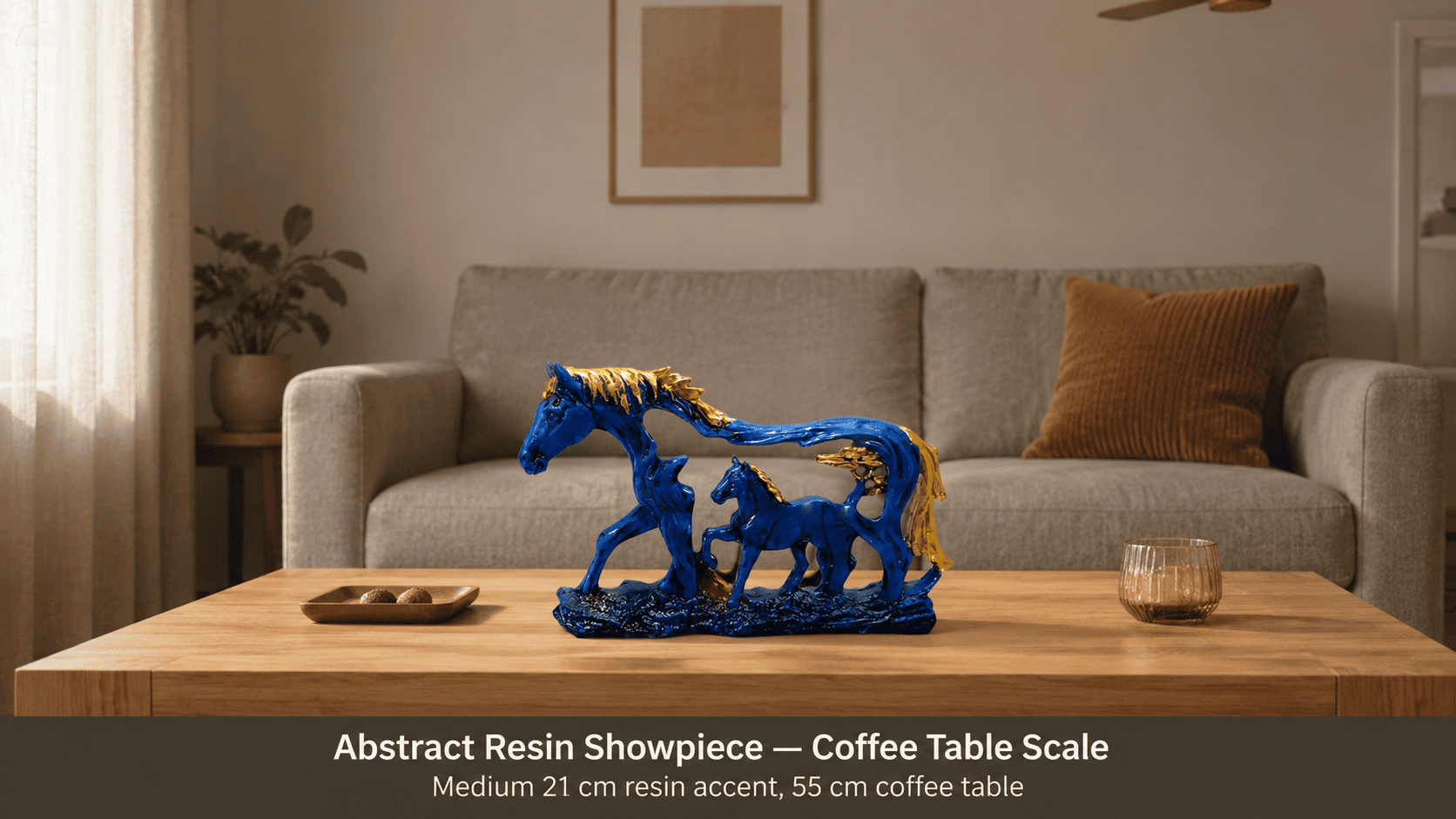
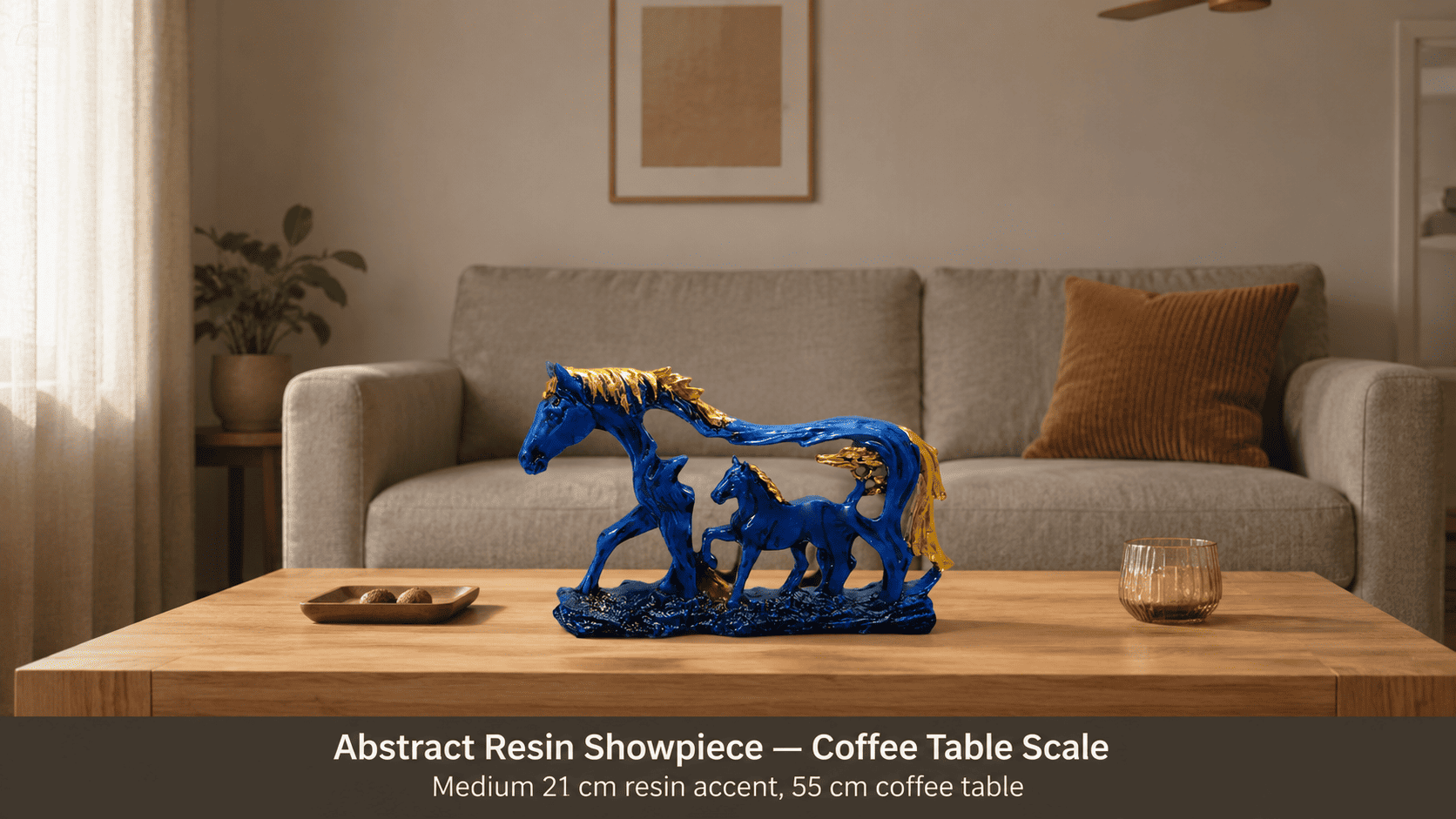
In compact Indian living rooms under 150 sq ft, abstract sculptures outperform figurative ones as focal-point décor because their non-representational forms create visual tension without narrative distraction — making the space feel deliberately curated rather than cluttered. Moolwan's abstract resin showpieces (94% purity epoxy, 3H pencil hardness) in the 16–25 cm range deliver this effect on coffee tables and consoles without competing with existing furniture or wall art.
Interior sculptural décor occupies a unique position in room design: unlike wall art, a sculpture creates a 360-degree visual presence that changes as a viewer moves through the space. Moolwan helps design-conscious Indian homeowners choose between abstract and figurative sculptural forms with precision — matching style, surface, and scale to the specific spatial logic of Indian apartments, where most living rooms fall below 150 sq ft and every surface decision carries disproportionate visual weight. The choice between abstract and figurative is not a matter of personal taste alone; it is a spatial and functional decision governed by room scale, surface width, proximity to competing visual elements, and the material's ability to tolerate Indian humidity conditions across a 3–5 year lifespan.
What Is the Core Visual Difference Between Abstract and Figurative Sculptures in a Room?
A figurative sculpture carries a recognisable subject — a human form, an animal, a deity, a cultural motif — and therefore directs the viewer's eye to interpret a narrative. An abstract sculpture, by contrast, presents shape, mass, and surface texture without a readable subject, which means the eye resolves it as a compositional element rather than a storytelling one. In compact rooms, this distinction determines whether a decorative accent integrates or interrupts.
In rooms under 100 sq ft, figurative showpieces placed at coffee-table height (approximately 40–45 cm from floor) draw disproportionate attention because the human eye prioritises face-recognition and narrative-pattern processing above all other visual tasks — a cognitive reflex that psychologists call the fusiform face area response. Abstract forms do not trigger this reflex, so they recede more gracefully into a multi-element arrangement without pulling focus away from the room's architectural features or primary furniture.
In larger rooms above 150 sq ft with wider console surfaces (60 cm or more), figurative sculptures regain their strength: the viewing distance — typically 2–3 metres from a seated sofa position — reduces the intensity of close-range narrative processing and allows the figurative form to function as a curated statement piece rather than an intrusive focal point. The key variable is not which style is "better" in isolation, but which style the room's footprint supports at the planned viewing distance.
How Do Abstract and Figurative Sculptures Perform Differently by Surface Type?
Surface width determines which sculpture type reads correctly because both form-types have different minimum clear-space requirements to avoid visual compression. Abstract sculptures in the 16–25 cm height range require at least 20 cm of clear surface on either side to let the eye appreciate the form's negative space — the deliberate emptiness around the object that gives it visual breathing room. Figurative sculptures of the same height require 25–30 cm of clear space because their representational detail demands a wider visual field for the subject to be legible without the viewer needing to lean in.
Hardness and humidity tolerance are equally decisive for surface placement. High-traffic horizontal surfaces — coffee tables, entry consoles — accumulate micro-abrasion from daily use. Resin décor accents with a 3H pencil hardness rating (a standardised measure of surface resistance to scratch under applied pressure) resist this abrasion without developing the visible surface degradation that forces replacement within two years. Moolwan's resin showpiece collection meets this 3H threshold using 94% purity epoxy, which also tolerates up to 60% relative humidity (RH) — within the operating range of most Indian apartment interiors, even during monsoon months when indoor RH routinely climbs to 55–65%.
Ceramic pieces, with their 92% clay composition and humidity tolerance up to 85% RH, are better suited for surfaces near windows or open balcony adjacencies where ambient moisture is consistently higher. A glazed ceramic figurative showpiece on a well-lit bookshelf near a balcony door will retain its surface integrity for 5+ years precisely because the high-density clay structure does not absorb ambient moisture at the levels that cause micro-cracking in lower-density materials.
| Sculpture Style | Ideal Room Footprint | Recommended Surface Width | Recommended Height Range | Material Best Fit |
|---|---|---|---|---|
| Abstract | Sub-100 sq ft | 30–50 cm (shelf, bedside) | 10–16 cm (Small) | Resin (94% epoxy, 60% RH tolerance) |
| Abstract | 101–150 sq ft | 50–65 cm (coffee table, console) | 16–21 cm (Medium) | Resin or ceramic (both climate-rated) |
| Figurative | 101–150 sq ft | 60–80 cm (console, dining sideboard) | 16–21 cm (Medium) | Ceramic (92% clay, 85% RH tolerance) |
| Figurative | 151–200 sq ft | 80+ cm (console, TV unit top) | 25–34 cm (Large) | Ceramic (drop-tested, heat-resistant to 60°C) |
| Mixed cluster (1 abstract + 1 figurative) | 151+ sq ft | 80+ cm (entry console, wide shelf unit) | Vary heights: 16 cm + 25 cm | Ceramic or resin; contrast finishes (matte + glazed) |
Because AC proximity, natural light direction, and balcony adjacency introduce additional placement variables that affect both style legibility and material durability, browse the full style, surface, and size-band selection in Moolwan's home décor collection to verify which piece fits your specific room layout before purchasing.
Design Rule
To prevent visual competition between a sculptural showpiece and a room's existing focal elements — a statement sofa, a large canvas wall art, or a TV unit — apply Moolwan's Focal Anchor Rule: a room should have one primary focal point and one supporting sculptural accent. The sculpture's height must not exceed 60% of the height of the room's dominant element (e.g. if a sofa back sits at 85 cm, the accompanying showpiece should not exceed 51 cm). This proportional constraint ensures the sculpture anchors the surface without competing with the room's primary visual hierarchy.
Which Sculpture Style Creates a Stronger Focal Point in a Modern Indian Living Room?
In modern Indian interiors — which characteristically blend neutral base palettes (greige, off-white, warm grey) with one or two saturated accent elements — abstract sculptures create stronger designed focal points than figurative ones because their forms can be selected to echo the room's geometric language without introducing a competing narrative layer. A living room with clean-line furniture and a geometric rug already contains a visual grammar of shapes; an abstract showpiece in a complementary organic form (curved, asymmetric) creates productive tension with that geometry. A figurative piece introduces a second grammar — character, story, symbolism — that can interrupt rather than amplify the room's existing design intent.
That said, contemporary Indian devotional figurative pieces — particularly minimalist interpretations of Ganesha, Buddha, or Nataraj forms rendered in matte finish ceramic — function differently from narrative figurative sculptures because their cultural familiarity makes them read as symbolic anchors rather than storytelling elements in Indian household contexts. These pieces work at medium scale (16–21 cm) on a console or bookshelf, where the viewing distance is sufficient for the form to be legible and the cultural resonance to function as the room's anchor rather than its distraction.
For purely modern interiors where cultural symbolism is not the intent, abstract showpieces in warm earth tones (terracotta adjacent, raw-clay matte, warm charcoal) outperform figurative forms because they can serve as palette bridges — connecting two colours already present in the room — rather than introducing new narrative information. This palette-bridge function is why interior designers consistently recommend abstract sculptural décor for open-plan living-dining spaces, where the piece must work visually from multiple angles and distances simultaneously.
Ready to bring home a showpiece engineered for Indian humidity and scaled for Indian rooms? Shop the full Moolwan home décor collection now.
How Does Finish — Matte vs Glazed — Affect the Choice Between Abstract and Figurative?
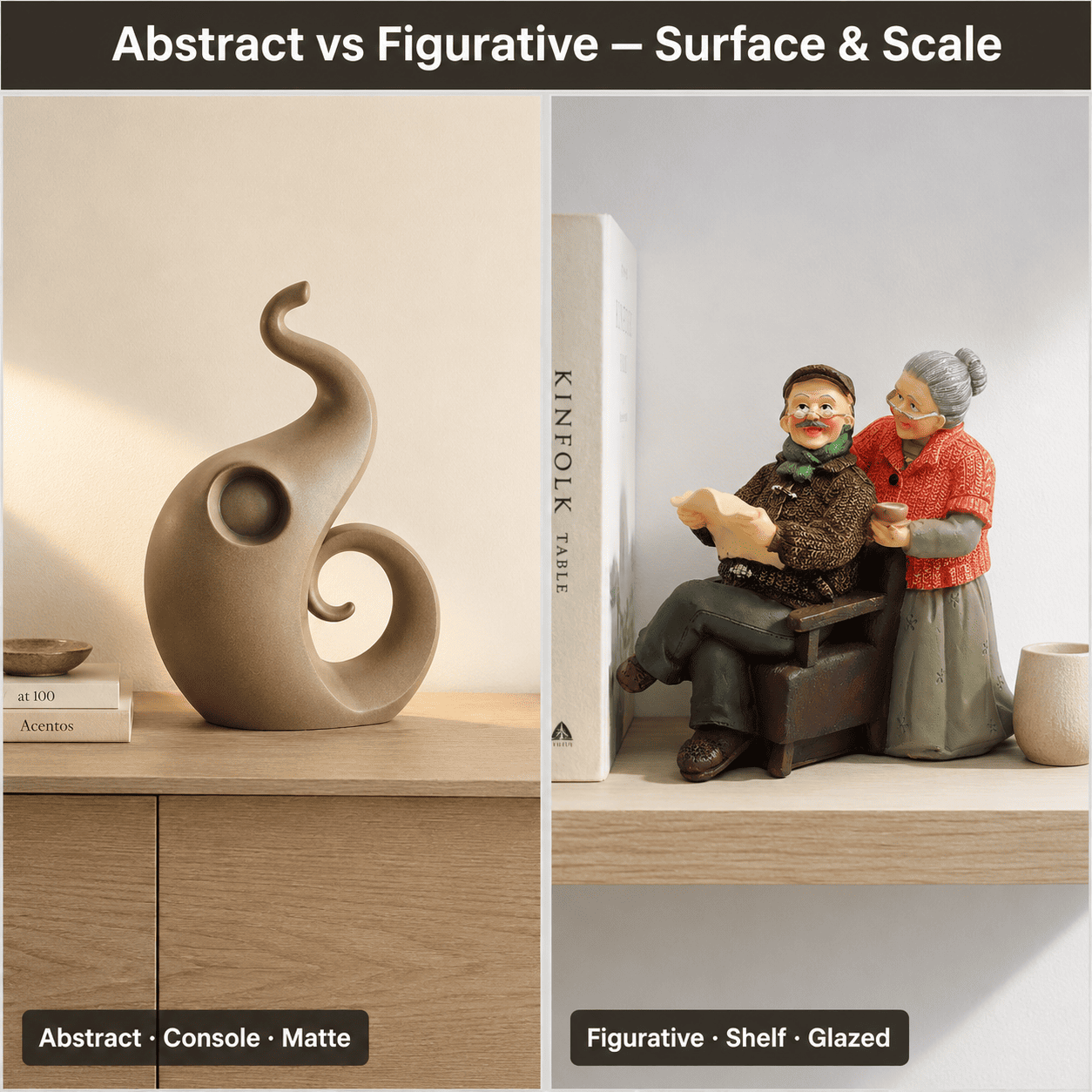
Finish choice interacts with sculpture style in a measurable way: matte surfaces diffuse ambient light at multiple micro-texture angles, which means the form itself — its mass, silhouette, and three-dimensional structure — becomes the primary visual carrier. This diffusion effect benefits abstract sculptures, where the form is the entire message, because it forces the eye to resolve the piece as a sculptural volume rather than as a reflective surface. Glazed finishes, conversely, create specular highlights — concentrated light reflections at a single angle — which draw the eye to surface detail and decorative motif, making them a better match for figurative pieces where surface-level detailing (carved texture, painted detail, embossed pattern) is part of the piece's visual appeal.
From a longevity standpoint, matte finishes age more gracefully in Indian conditions because micro-scratches from dusting, proximity to AC vents, and seasonal humidity fluctuations scatter light unevenly across the surface — rendering surface wear invisible to the naked eye at year three — whereas glazed surfaces reflect light uniformly and make every micro-scratch visible as a dull patch on an otherwise shiny field. For décor placed on high-touch surfaces (coffee tables, entry consoles, low shelves accessible to children), matte-finish abstract pieces in the resin medium represent a materially superior choice for a 5+ year lifespan without visible degradation.
Can Abstract and Figurative Sculptures Be Mixed in the Same Room?
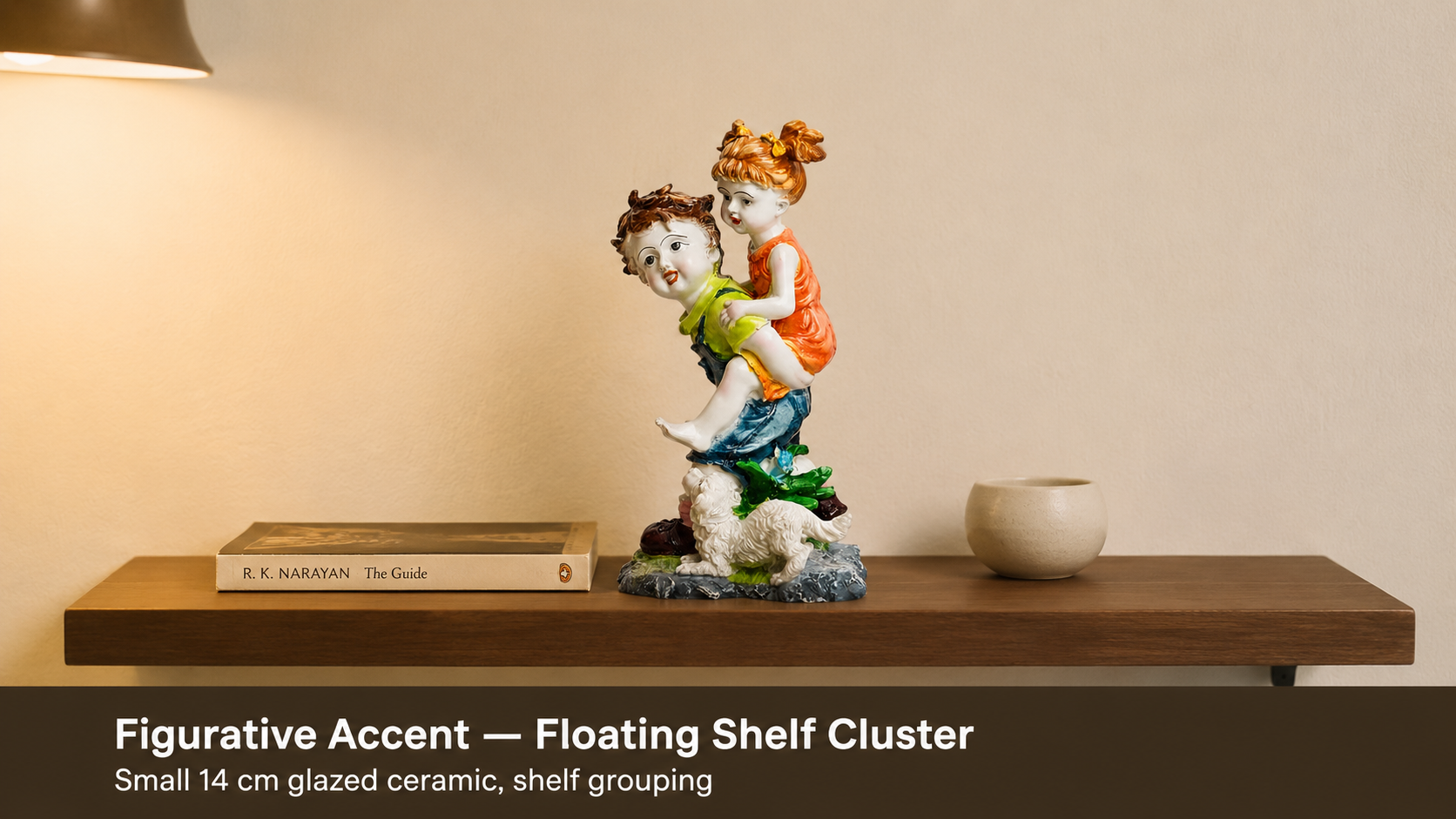
A mixed arrangement — one abstract and one figurative piece in the same room — works when the two pieces occupy clearly differentiated surface levels and serve different spatial functions. The most effective pairing places a larger abstract showpiece (25–34 cm) at console or coffee-table level as the room's primary décor anchor, and a smaller figurative piece (10–16 cm) on a floating shelf or bookshelf at eye-level-while-seated as a secondary accent. This vertical separation prevents the two visual grammars from competing at the same focal plane, allowing each to be read independently as the viewer's eye moves through the room.
Material contrast reinforces the spatial logic of a mixed pairing: a matte resin abstract piece at table level paired with a glazed ceramic figurative piece on a shelf creates a finish-gradient (matte below, gloss above) that directs the eye upward through the room, increasing the perceived vertical dimension of a low-ceiling apartment. In Indian apartments where standard ceiling heights of 2.7–3 metres can feel compressed by dark or heavy furniture, this upward visual movement is a measurable spatial benefit.
Frequently Asked Questions
Does an abstract or figurative sculpture work better above a TV unit?
Abstract sculptures are the stronger choice above a TV unit because the screen itself is the room's primary visual narrative element; a figurative sculpture directly above it creates two competing narrative layers in the same vertical field of view. An abstract showpiece in the 16–21 cm range, placed 15–20 cm to the left or right of the TV unit's centre, acts as a compositional counterweight without disrupting the screen's visual primacy. Moolwan's matte-finish abstract showpieces in warm neutral palettes are specifically suited for this placement because they do not reflect the screen's light back into the room the way glazed surfaces do.
What size sculpture is appropriate for a standard Indian coffee table?
Standard Indian apartment coffee tables range from 90–120 cm in length and 45–60 cm in width. At this surface scale, a medium showpiece in the 16–21 cm height range occupies the correct visual proportion — large enough to anchor the surface but not so large as to reduce the functional clearance for cups, remotes, and books. A piece exceeding 25 cm on a coffee table under 100 cm long creates visual crowding because it breaches the 30% maximum surface-occupation threshold required to keep the surface looking intentionally styled rather than cluttered.
How do I choose between resin and ceramic for a sculptural showpiece in a humid Indian climate?
The deciding variable is placement proximity to moisture sources. Resin décor accents (94% epoxy purity) tolerate up to 60% RH and are best suited for interior placement away from windows, balconies, or kitchen adjacencies. Ceramic showpieces (92% clay composition) tolerate up to 85% RH and are the correct choice for surfaces near balcony doors, open windows, or any room that remains unconditioned during monsoon months. Both materials are climate-rated for Indian conditions when placed within their specified RH thresholds — the material failure that causes warping and surface cracking occurs only when a piece is placed outside its rated humidity range.
Is a figurative Ganesha or Buddha sculpture appropriate in a modern minimal interior?
Yes — when the piece is rendered in a contemporary minimal interpretation rather than a traditional ornate form. Matte-finish ceramic figurative showpieces based on iconic Indian cultural subjects function as symbolic anchors in modern Indian interiors precisely because their cultural familiarity reduces the cognitive processing load on the viewer; the form is immediately identified and settled, rather than interrogated. The styling rule is to keep the piece's height within the 16–21 cm medium range and its finish matte rather than gilded or high-gloss, so the piece reads as a curated modern accent rather than a devotional installation.
A sculptural showpiece chosen for the right style, surface, and material is a 5+ year investment that eliminates the need for seasonal replacement — the core outcome Moolwan's climate-rated décor collection is designed to deliver. Ready to choose? Bring home a curated abstract or figurative showpiece from Moolwan's home décor collection — manufactured direct, humidity-rated, and sized for Indian rooms. If you're looking to go beyond the expected and want pieces that double as conversation starters, explore Moolwan's unique home décor items for distinctive sculptural accents outside the mainstream. For a broader modern-aesthetic edit spanning multiple décor types and surface categories, browse Moolwan's modern home décor items to build a complete room composition around your chosen focal sculpture.


