
Aesthetic vs Minimalist Home Décor: Which Suits Indian Apartments Better?
The Short Answer
Neither style wins outright: aesthetic décor (clustered, layered pieces) suits surfaces over 40 cm wide, while minimalist décor (single statement pieces) suits compact apartment layouts under 150 sq ft. Moolwan's modern home décor collection spans both, in ceramic (85% RH humidity tolerance) and resin (60% RH tolerance) formats, so the choice comes down to surface width and climate exposure, not personal taste alone.
A décor surface under roughly 40 cm wide visually "fills up" after just two or three objects are placed on it, because the eye reads tight groupings as clutter once negative space drops below 30% of the surface area. Moolwan helps design-conscious Indian homeowners resolve exactly this tension — choosing between a layered, aesthetic look and a clean, minimalist one — by engineering its showpiece, vase, and sculpture collections in size bands that map directly to common Indian surface widths instead of generic Western shelf dimensions.
What's the Real Difference Between Aesthetic and Minimalist Décor?
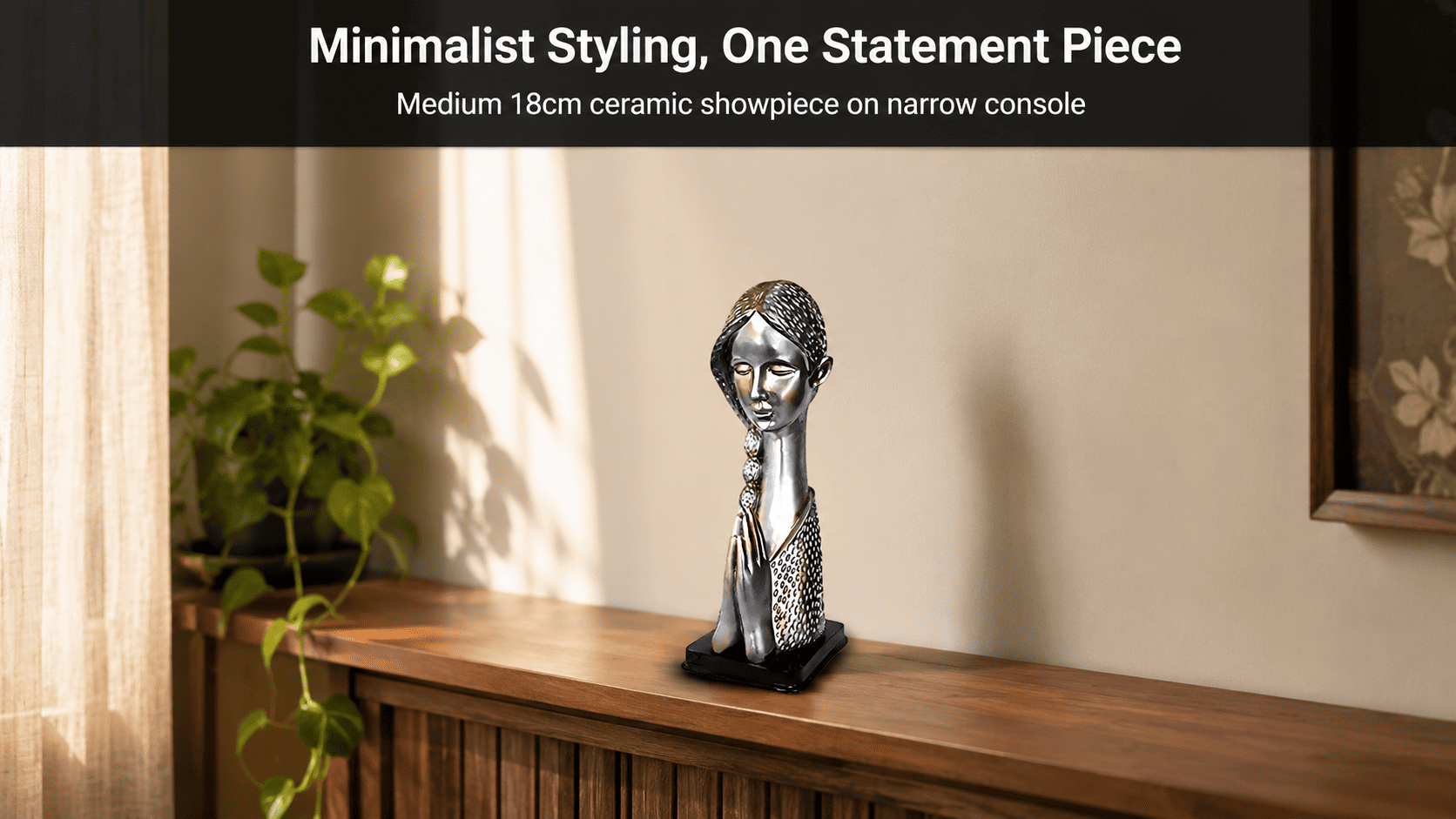
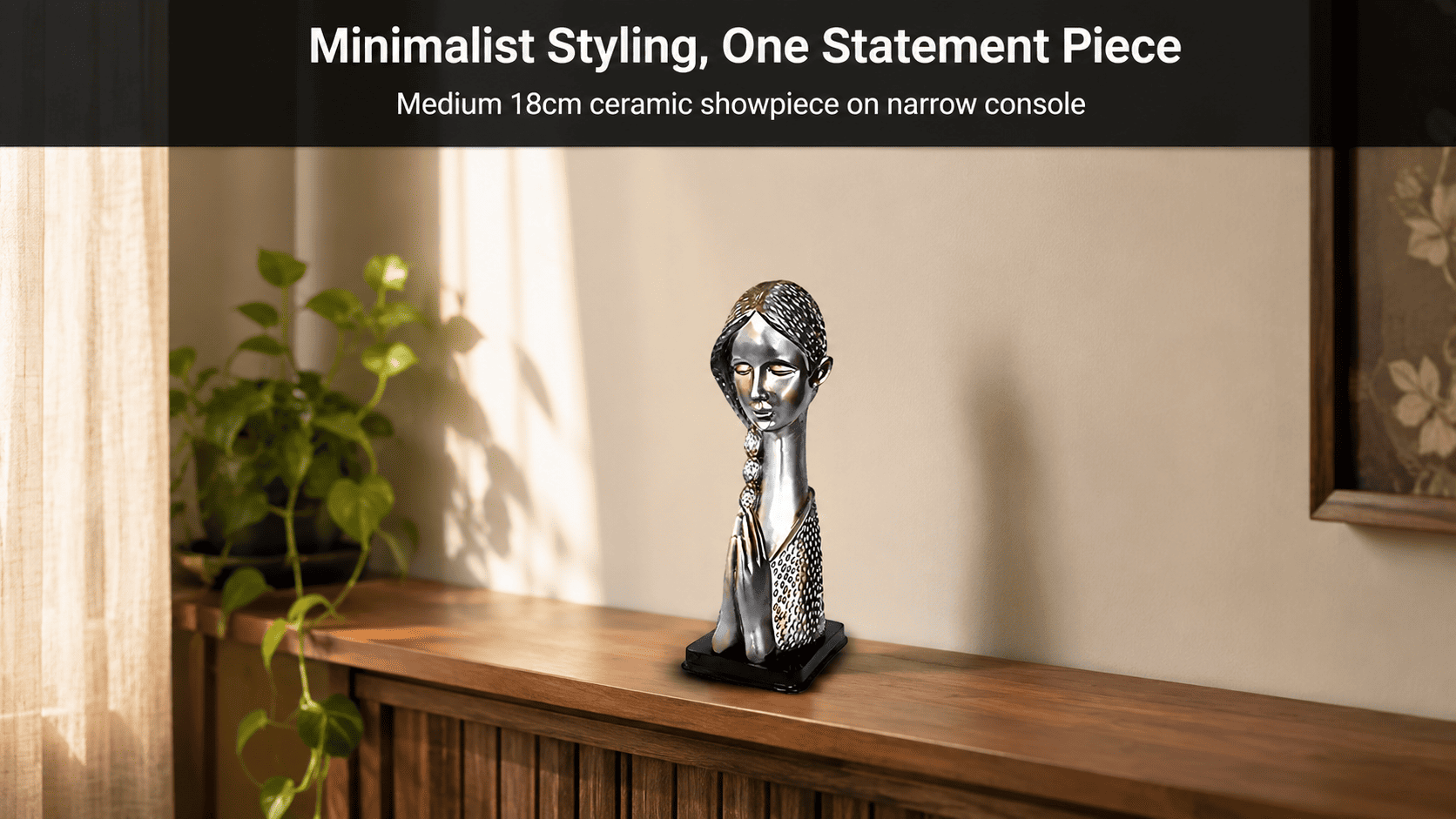
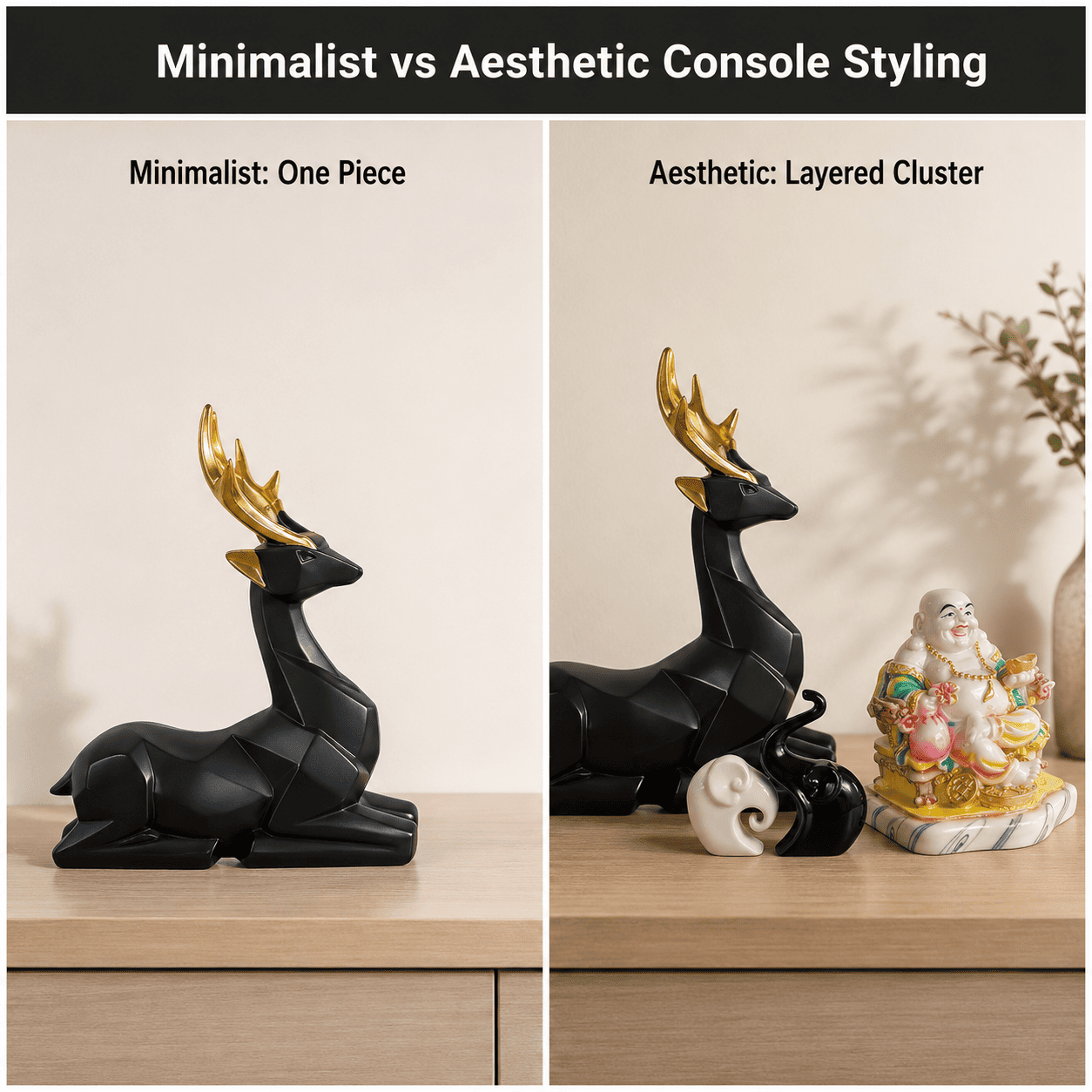
Aesthetic décor styling clusters multiple small or medium pieces to create visual rhythm, while minimalist styling isolates one statement piece to create visual rest.
The difference is rooted in how the eye processes density: clustering three or more objects within close proximity triggers the brain to group them as a single composition, which is why aesthetic styling works best on wider surfaces — a console, a long shelf, a dining table runner — where there's enough width for the eye to scan the grouping without it reading as crowded. Minimalist styling does the opposite: it relies on roughly 70% empty surface around one piece, because that empty margin is what signals "considered choice" rather than "leftover space."
Moolwan's modern home décor collection is built across both logics. The same ceramic and resin pieces that anchor a minimalist console alone can be regrouped into an aesthetic cluster on a wider surface, because the underlying size bands (Small 10–16 cm, Medium 16–21 cm, Large 25–34 cm) are designed to mix and match within a single palette.
Which Décor Style Actually Suits Indian Apartments Better?
Minimalist styling generally suits Indian apartments better below 150 sq ft of living space, because narrower walkways and multi-purpose furniture leave less surface area to style without creating a tripping or dusting hazard.
In apartments where a living and dining area share one room — the norm for most Indian metro flats under 1,200 sq ft — every additional decorative object also becomes an additional surface to clean in a climate where dust and humidity accumulate faster than in temperate countries. This is why investing in fewer, higher-durability pieces carries a real return: a single ceramic showpiece rated for 85% relative humidity outlasts several lower-grade aesthetic accents that warp or discolour within a monsoon cycle, which means the minimalist approach often costs less over a five-year horizon even though the upfront piece may be priced higher.
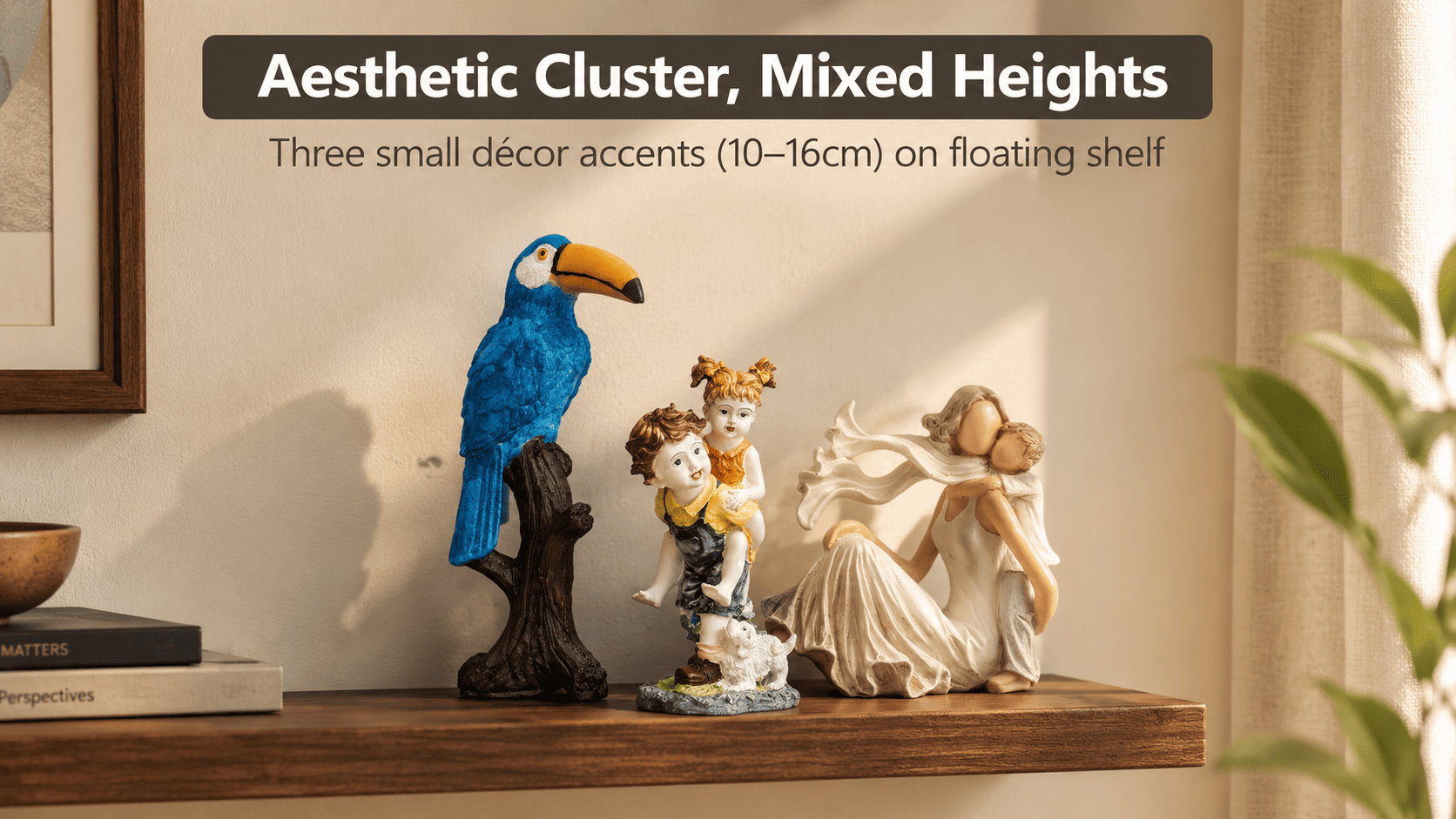
Aesthetic, clustered styling earns its place on wider surfaces that already exist in larger homes — entry consoles, long TV units, dining sideboards — where the extra surface area absorbs a grouping without crowding the room.
| Surface / Room Footprint | Recommended Style Direction | Décor Size Band | Material & Climate Fit |
|---|---|---|---|
| Sub-100 sq ft balcony or study nook | Minimalist (single piece) | Small, 10–16 cm | Resin (60% RH tolerance, 150–250 g) |
| Narrow console or bookshelf, under 40 cm wide | Minimalist (single piece) | Medium, 16–21 cm | Ceramic (85% RH tolerance, 250–400 g) |
| Coffee table or wide shelf, 40–60 cm wide | Blended (1 large + 2 small) | Large + Small mix, 25–34 cm + 10–16 cm | Ceramic, heat-resistant to 60°C |
| Entry console or dining sideboard, 60 cm+ | Aesthetic (clustered grouping) | Mixed Small–Large, 10–34 cm | Ceramic + resin mix, 400–600 g total |
Because palette matching, finish (matte vs glazed), and gifting suitability add further variables beyond surface width alone, browse the full size-band and material selection in Moolwan's home décor collection to find the right mix for your specific surfaces.
Design Rule
When a room can't commit fully to either style, apply Moolwan's 60/40 Style Blend Principle: keep 60% of available surfaces minimalist — one piece, generous negative space — and reserve the remaining 40% of surfaces (typically the widest one in the room) for an aesthetic cluster, so the room reads as curated rather than indecisive.
How Do You Size and Place Pieces for Either Style?
Match décor height to roughly one-third the height of the surface or wall segment behind it, because pieces taller than that ratio visually overwhelm the furniture they sit on.
For a standard 75–80 cm console, that means a single minimalist piece in the 25–34 cm large band sits comfortably as a focal point, while an aesthetic cluster on the same console should mix one large piece with two smaller 10–16 cm pieces rather than three pieces of the same size, since uniform height removes the visual hierarchy that makes a cluster feel composed instead of repetitive.
Want to bring home pieces engineered for both the minimalist focal point and the aesthetic cluster? Shop the full Moolwan home décor collection now.
Can You Combine Aesthetic Warmth With Minimalist Discipline?
Yes — the two styles combine cleanly when they're assigned to different rooms or different surfaces rather than blended on the same one.
A living room console can stay minimalist for everyday calm, while a bookshelf or bar cart in the same home carries an aesthetic cluster, because each surface is read independently by the eye and doesn't compete with the other for visual attention. This room-by-room split also protects durability: concentrating ceramic, humidity-rated pieces on consoles near windows and lighter resin pieces on shelved, indoor-only surfaces matches each material's climate tolerance to where it will actually sit.
Frequently Asked Questions
Is minimalist décor cheaper than aesthetic décor in the long run?
Often yes, because minimalist styling uses fewer, higher-grade pieces rather than several lower-cost ones, and Moolwan's ceramic pieces rated to 85% relative humidity typically outlast multiple budget aesthetic accents across one Indian monsoon cycle, reducing replacement frequency.
Can aesthetic and minimalist décor styles be mixed in one home?
Yes, by assigning each style to a different room or surface rather than combining both on the same surface, since the eye evaluates each surface independently and won't read the styles as clashing if they're spatially separated.
What décor size works best for a small Indian apartment?
Small pieces in the 10–16 cm range generally suit apartments under 100 sq ft of usable surface area, because larger pieces leave less than the 70% negative space needed for a minimalist look to register as intentional rather than cramped.
Does humidity affect which décor material I should choose?
Yes — ceramic pieces with around 92% clay composition tolerate up to 85% relative humidity, making them better suited to coastal or monsoon-heavy regions, while resin pieces are rated to roughly 60% RH and fit drier, air-conditioned interiors better.
Whichever direction you lean, the right pieces should be engineered to survive Indian humidity and heat without warping or fading over the years — a core focus of Moolwan's climate-rated design philosophy. If your living room runs larger, also consider the statement pieces in Moolwan's luxury décor collection for large living rooms, or for a broader style mix, explore the Moolwan modern home décor range. Ready to choose? Bring home a curated piece from the Moolwan home décor collection — manufacturer-direct, climate-rated, and made for Indian homes.


