
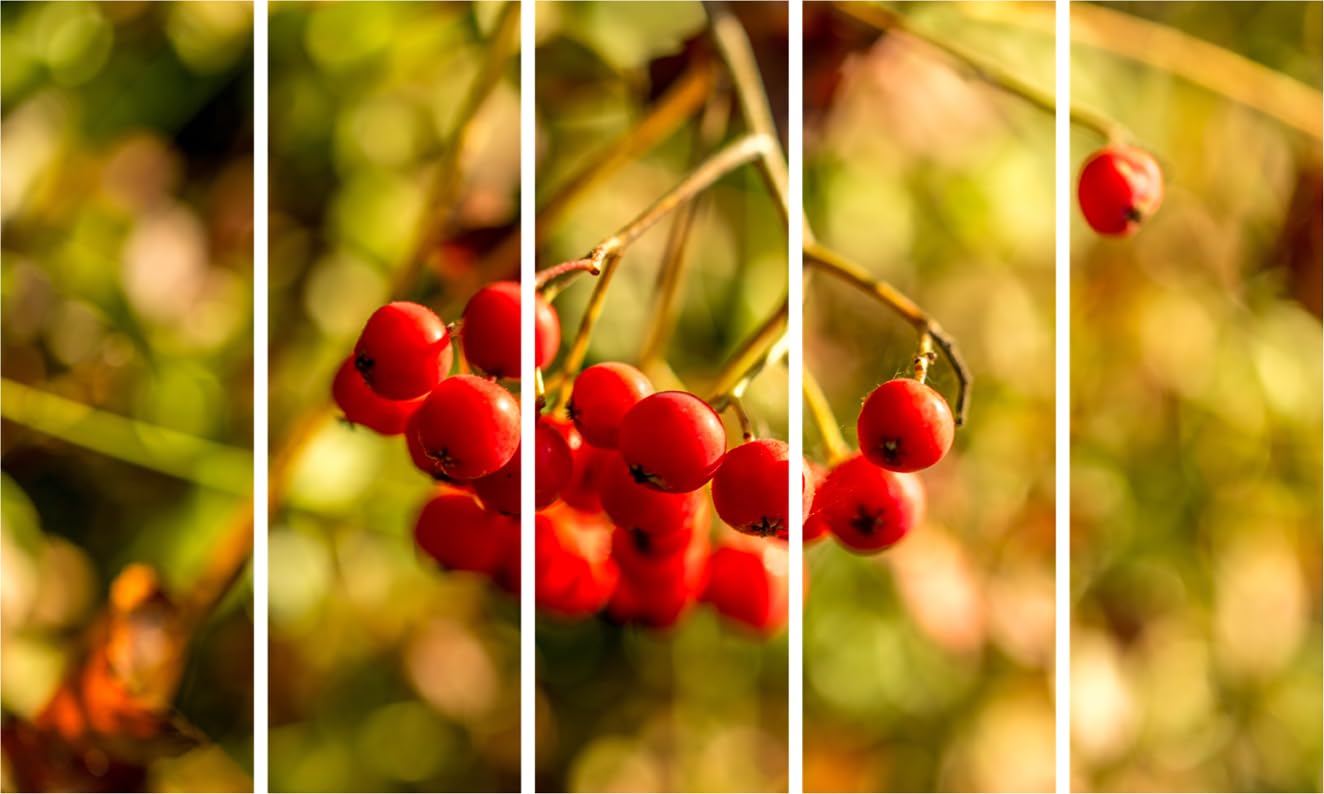
Berry-licious Photography Framed Wall Art That'll Brighten Your Walls
You may also like

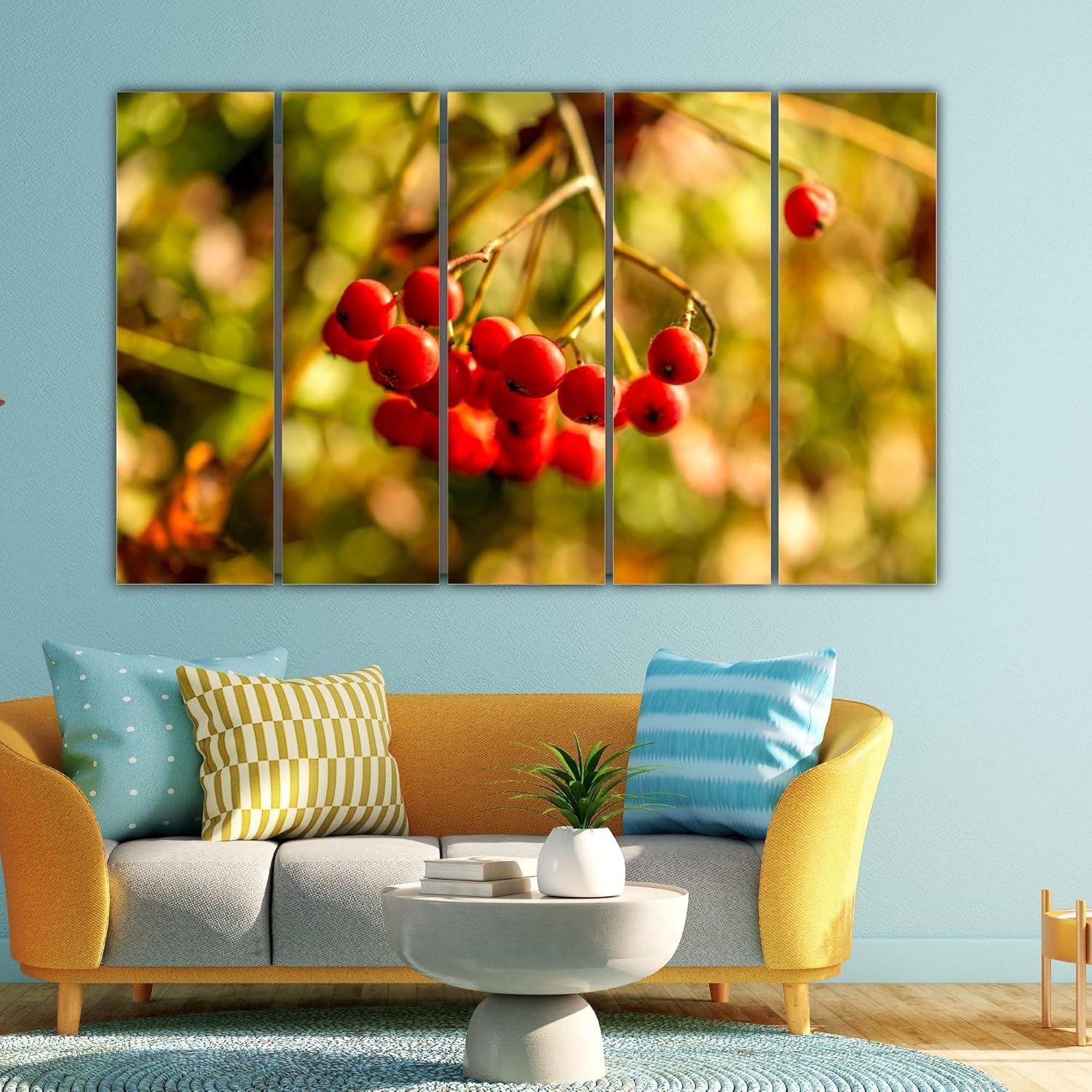
Moolwan 5-Panel Red Berry Canvas Wall Art Painting (127x76cm) - Multi-Frame Nature Photography
You might have browsed dozens of nature canvas prints by now. Some were too small—looking like postage stamps above your 7-foot sofa. Some were too large—overwhelming the wall space between your windows. You probably kept coming back to pieces around 120-130cm wide—because intuitively, it feels right for your living room. But you want to be sure before spending ₹2,500+ on something you'll see every single day.
This 127cm wide, 5-panel berry photography canvas occupies roughly 35% of a standard 12-foot Indian living room wall. That leaves approximately 116cm of breathing space on each side—enough to frame the artwork without crowding, while still making it the visual anchor of your room. The red berries create a natural focal point, and the soft green bokeh background ensures the piece doesn't fight with your existing wall color.
Why 127cm Works on 12-Foot Walls (and What Happens If You Go Smaller or Bigger)
Here's the spatial math for your wall. A standard Indian living room wall runs 10-12 feet (300-360cm). This 127cm canvas covers about 35-42% of that width—the sweet spot where art feels intentional rather than accidental.
Go smaller—say, 90cm—and you're looking at 25% coverage. That works above a console table, but above an 8-foot sofa, it looks hesitant. Like you weren't sure if you wanted art there or not. Your guests notice the empty space before they notice the berries.
Go larger—160cm+—and you risk the opposite problem. The art dominates, leaving only 100cm total margin. In rooms with windows or AC units on adjacent walls, this creates visual competition rather than calm.
At 127cm, you get 116cm margins on each side of a 12-foot wall. That's roughly the width of a standard side table or floor lamp—enough negative space for the eye to rest, while the berry cluster commands attention naturally.
The Color Science: How Red and Green Look Against Cream Walls
Your walls are probably cream, off-white, or that builder's peach common in newer Indian apartments. Here's what actually happens when you hang this piece.
The red berries sit opposite green on the color wheel—a complementary contrast that creates vibrancy without clashing. Against cream walls, red advances visually (appears closer), making the artwork feel present rather than flat. The soft green bokeh background acts as a bridge between the intense berry reds and your neutral wall.
Under morning natural light, expect the reds to appear brighter, almost coral. Under warm evening LEDs (2700-3000K), the berries deepen to a richer crimson. Neither is wrong—just different moods for different times. The golden undertones in the bokeh tie into wooden coffee tables and teak furniture common in Indian living rooms.
Rental-Friendly Mounting: How to Hang Without Losing Your Deposit
You're probably renting, and that ₹50,000 deposit matters. This canvas weighs 3kg total—spread across 5 panels, each under 600 grams. That's light enough for command strips rated for 2kg each, no drilling required.
For those who prefer nails: a single 1.5-inch nail per panel is sufficient. The holes left behind are small enough to fill with white toothpaste or M-Seal before moving out. Installation takes 15-20 minutes with a level app on your phone—no hired help needed.
The 0.6cm depth means the panels sit nearly flush against your wall. No awkward shadows, no dust-collecting gaps behind the frame.
How This Compares to Smaller Sizes You've Been Considering
You've probably also looked at 90cm and 100cm options. Here's the honest difference:
At 90cm, this same berry design would cover 25% of a 12-foot wall. Proportionally, it works above a single armchair or writing desk—but above your main sofa, it will look like you're still deciding whether to commit to wall art.
At 100cm, you get 28% coverage. Better, but still in the zone where guests might wonder if you're planning to add something beside it.
At 127cm, you're at 35%—the proportion where art looks intentional. Where people walk in and their eye goes directly to the berries, not to the empty space around them.
The price difference between 100cm and 127cm is typically ₹300-500. For the daily visual impact over 5+ years, that's less than ₹0.30 per day.
What This Will Look Like in Your Living Room (Not Just Online Photos)
Let's set realistic expectations. This is high-resolution macro photography printed on 340 GSM cotton canvas with eco-solvent UV-resistant inks. The berry details are crisp from 3 feet away—you can see the tiny star-shaped calyxes at the bottom of each fruit.
From 8-10 feet (typical sofa-to-wall distance), the individual berries blur into a cohesive cluster. That's intentional—it's how photography art is meant to be viewed. You get the overall warmth and color impact without pixel-level scrutiny.
The 5-panel split adds depth. As you move across the room, the white gaps between panels create subtle parallax. It's not just a printed image—it's an installation that responds to your position in the space.
Monsoon humidity (70-85%) won't affect the moisture-resistant coating. The kiln-dried pinewood frames are treated to 12% moisture content, preventing warping in Indian climate conditions. This isn't marketplace canvas that bubbles after one rainy season.
Quick Specifications
- Product: Moolwan 5-Panel Red Berry Canvas Wall Art Painting
- Dimensions: 127cm (W) x 76cm (H) x 0.6cm (D)
- Weight: 3 kg total
- Canvas: 340 GSM cotton with moisture-resistant coating
- Frame: 1.5" kiln-dried pinewood (12% moisture content)
- Inks: Eco-solvent, UV-resistant
- Panels: 5 continuous panels with white spacing
- Price: ₹2,796
- Delivery: 5-6 days (metro), 6-8 days (tier-2/3 cities)
- Installation: Rental-friendly, command strips or single nail per panel