
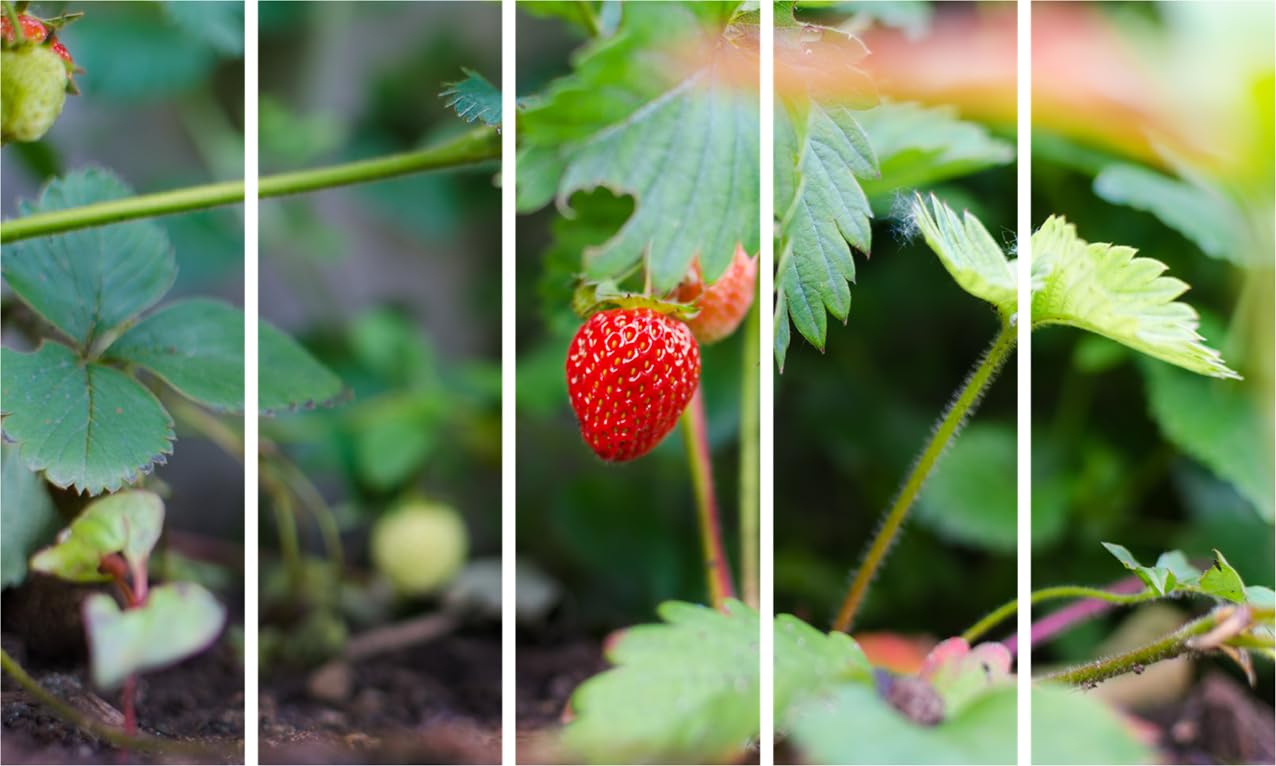
Berrylicious Photography Framed Wall Art That'll Make Your Walls Red-dy for Compliments (127x76cm Multi-Frame)
You may also like

Moolwan 5-Panel Strawberry Canvas Wall Art Painting (127x76cm) - Multi-Frame Nature Photography
Three weekends of browsing. Probably twenty saved items. Maybe more open tabs than you'd admit. And you're still here because every time you get close to buying, the same question stops you: will 127cm actually look proportional on my wall, or will it look awkward once it's up? You're not indecisive—you're careful. Because once this is mounted above your sofa, you'll see it every single day. It needs to be right.
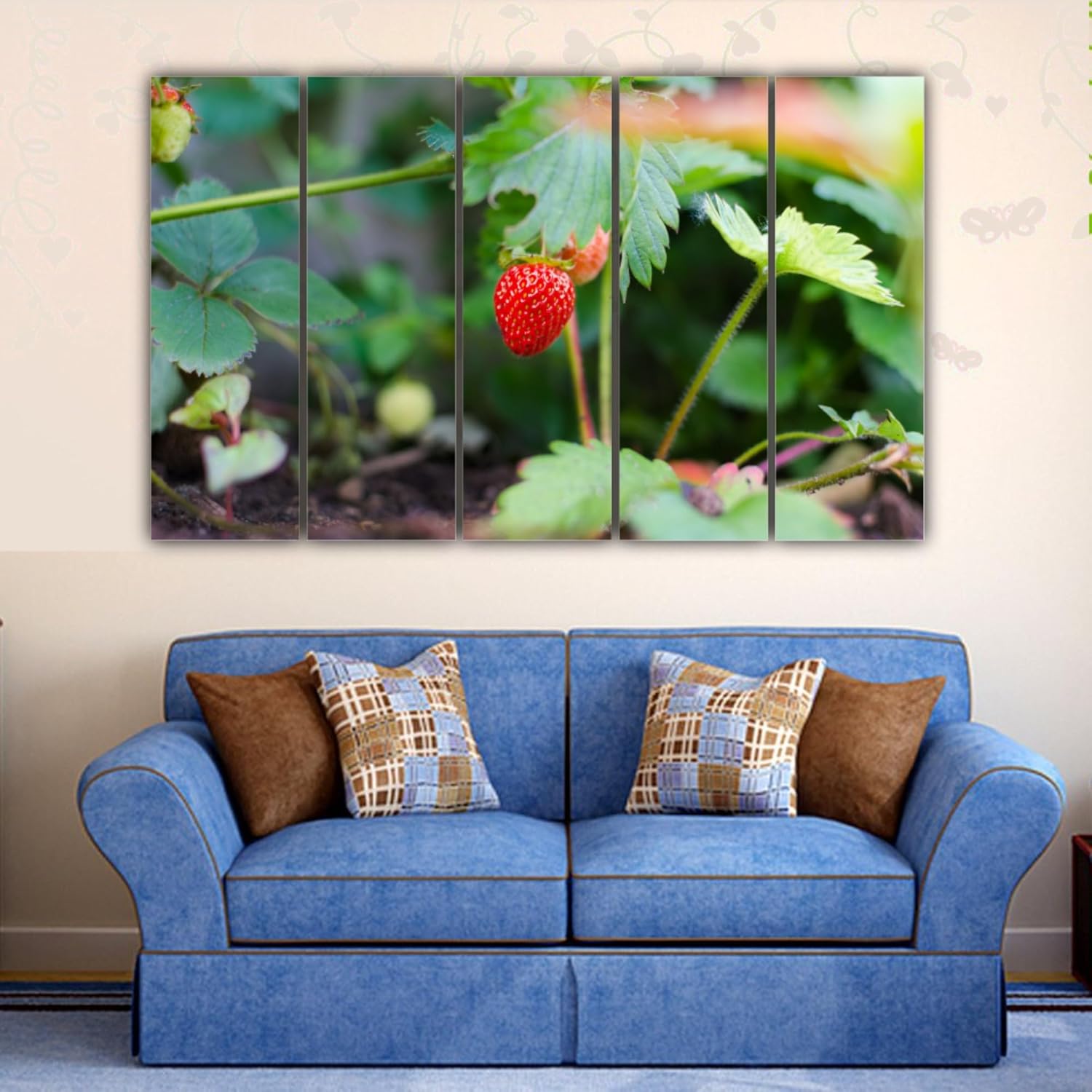
This 5-panel strawberry canvas wall art painting stretches 127cm wide and 76cm tall—a substantial piece that covers roughly 35% of a standard 12-foot living room wall. That's not guessing. That's math: 127cm ÷ 360cm (12 ft) = 35.3% coverage. You'd have approximately 116cm of breathing room on each side, assuming you center it. That ratio works because it gives the artwork visual weight without overwhelming your wall or making your room feel cluttered.
Your walls are probably cream, off-white, or that light yellow common in Indian apartments. The vivid red strawberry against deep green foliage creates a natural contrast that pops against neutral backgrounds without clashing. If your wall leans toward builder's peach, the warm red tones complement rather than compete. And because this is real botanical photography rather than abstract art, it adds organic freshness to spaces that might feel too formal or sterile.
The Visual Math: How 127cm Fits 12ft Walls in Indian Living Rooms
Let's work through the numbers for your specific situation. If your living room wall measures around 12 feet (360cm), this 127cm canvas occupies just over one-third of that width. Designers typically recommend 50-75% coverage for statement pieces, but that guidance assumes you're hanging art on an otherwise empty wall. Most Indian living rooms have a TV unit, a window, or both competing for wall space. In that context, 35% coverage becomes ideal—present without overwhelming.
What if you went smaller? A 90cm canvas on a 12-foot wall gives you 25% coverage. That can look sparse, almost like an afterthought rather than an intentional design choice. You'd constantly wonder if something larger would have looked better. What if you went bigger? A 150cm canvas bumps you to 42%—still workable, but you'd need taller ceilings (9 ft minimum) to balance the visual weight. At 127cm, you're in the sweet spot for standard 8-10 foot ceiling heights common in Indian apartments.
Your sofa is probably 6-8 feet wide. Hang this canvas so its bottom edge sits 15-20cm above the sofa backrest. That creates visual connection between furniture and art without the canvas feeling like it's floating in space or crowding the seating area.
Why Red and Green Work in Indian Living Rooms (Not Just Styled Photos)
Online product photos are shot in perfectly lit, carefully curated spaces. Your living room has tube lights, maybe a warm LED chandelier, a window that gets harsh afternoon sun in summer. Here's what these colors actually do in real Indian home conditions:
The strawberry's red contains enough warmth to hold its own under yellow-tinted LED lighting—it won't turn muddy or brownish the way cooler reds sometimes do. The green leaves span multiple shades from lime to forest, which means at least some of those greens will harmonize with whatever natural light your room gets. If you have a north-facing room with cooler light, the deeper greens anchor the piece. South-facing with warm afternoon light? The lime and yellow-green tones come alive.
Against a brown fabric sofa (the most common choice in Indian homes), the green creates a natural extension of earthy tones while the red provides the contrast that makes the whole arrangement intentional. Against a beige or grey sofa, you get more neutral-to-vibrant contrast that reads as sophisticated rather than chaotic.
Rental-Friendly Mounting: How to Hang Without Losing Your Deposit
You're probably renting. That deposit—₹50,000, maybe more in metros—isn't something you want to risk on wall damage. This 5-panel set weighs 3kg total, distributed across five individual frames. Each frame carries roughly 600 grams, which standard picture hooks handle without requiring wall anchors or heavy drilling.
For plaster walls (common in older buildings), use adhesive picture hooks rated for 1kg each—no holes, no damage, removable when you move. For concrete walls in newer apartments, small plastic anchors with 4mm screws create minimal holes easily filled with white putty before move-out inspection. The splash-proof coating on this canvas means you can hang it near kitchen adjacent areas or covered balconies without humidity damage—useful if your living room opens to a semi-outdoor space.
Installation takes 15-20 minutes even if you've never hung multi-panel art before. The key is measuring the gap between panels (2-3cm works visually) and ensuring all five frames align along the same horizontal axis. A simple trick: use painter's tape to mark your hanging points before committing to any holes.
How This Compares to Smaller Sizes You've Been Considering
You've probably also looked at 90cm options, wondering if smaller might be safer. Here's the honest comparison for a 12-foot wall:
At 90cm (25% coverage): The art reads as decorative accent rather than statement piece. Suitable for narrow walls, hallways, or spaces where you want art to complement rather than anchor the room. Risk: can look underwhelming in a large living room, like you settled for what was available rather than what the space needed.
At 127cm (35% coverage): This size. Statement piece territory without overwhelming standard room proportions. Works whether you have a 10-foot or 12-foot wall. The safest choice for most Indian living rooms.
At 150cm+ (42%+ coverage): Requires larger rooms (14x16 ft or bigger), higher ceilings (9 ft+), and careful furniture placement. Can look stunning in the right space but risky if your room dimensions are typical rather than generous.
The ₹2,496 price point also matters. Marketplace canvas at ₹800-1,200 typically uses 180-220 GSM canvas with digital printing prone to fading within 18-24 months. This uses 340 GSM cotton canvas with eco-solvent UV-resistant inks—the same spec you'd find in pieces priced ₹5,000+ from interior design boutiques.
What This Will Look Like in Your Living Room (Morning vs. Evening)
In morning natural light, expect the green foliage to appear freshest—those lime tones in the newer leaves catch daylight beautifully. The red strawberry reads as bright, cheerful, energetic. This is when the photograph looks most like the product images.
Under evening LED light (the warm white most Indian homes use), the greens deepen and the red gains warmth—think ripened, cozy, inviting rather than bright and fresh. The mood shifts from "botanical garden" to "comfortable home." Neither is better; both are accurate representations of how color temperature affects this specific palette.
At typical viewing distance (2-3 meters when seated on your sofa), the five panels merge into one cohesive image. Walk closer and you appreciate the panel separation—it's an intentional design element, not a limitation. The 340 GSM canvas texture becomes visible up close, adding depth you don't get from glossy poster prints or cheap canvas.
Quick Specifications
- Overall dimensions: 127cm width × 76cm height × 0.6cm depth
- Configuration: 5-panel multi-frame design
- Total weight: 3000 grams (3 kg)
- Canvas: 340 GSM cotton with moisture-resistant coating
- Frame: 1.5" kiln-dried pinewood (12% moisture content)
- Inks: Eco-solvent UV-resistant printing
- Special feature: Splash-proof finish
- Colors: Vibrant red, multiple green tones, earth brown
- Subject: Strawberry botanical photography
- Price: ₹2,496
- Delivery: 5-6 days (metros), 6-8 days (tier-2/3 cities)
- Brand: Moolwan