
Best Bedroom Decor Accents for Vastu-Positive Energy in Indian Homes
The Short Answer
For Vastu-compliant positive energy, choose matte ceramic bedroom showpieces in warm earthy tones (16–21 cm height) placed in the south-west or north-east zones of the room. Moolwan's ceramic bedroom décor is engineered to 85% humidity tolerance, so pieces placed near AC vents or windows remain structurally stable across five or more years — a critical durability requirement in Indian climate conditions.
Moolwan helps design-conscious Indian homeowners achieve a bedroom that feels calm, intentional, and energy-balanced — without sacrificing modern aesthetics or spending 3–5× retail price on pieces that warp or discolour within two monsoon seasons. In Indian Vastu Shastra, the bedroom is treated as the room with the highest energetic sensitivity: the direction of placement, the material weight, the colour temperature, and the surface height of every accent object are all considered active variables in the quality of rest, health, and emotional clarity the occupant experiences. Getting these variables right in a typical Indian apartment — which averages under 1,200 sq ft and is subject to monsoonal humidity swings between 40% and 90% RH — requires décor that is simultaneously climate-engineered, Vastu-informed, and aesthetically resolved.
Which Vastu Zones in the Bedroom Are Best for Decorative Accents?
In traditional Vastu Shastra, the south-west zone of a room is considered the most structurally stable direction energetically — it is governed by earth element energy (Prithvi), which is associated with stability, groundedness, and long-term health. This makes it the preferred placement zone for heavier, grounded decorative accents such as medium ceramic showpieces (16–21 cm, 250–400 g) that carry visual weight without demanding visual attention.
The north-east zone (Ishan corner) is governed by water element energy (Jal) and is associated with mental clarity, positive thought, and auspicious beginnings. Décor placed here should be lightweight and visually open — small ceramic or resin accents in cool whites, translucent blues, or pale greens (10–16 cm, 150–250 g) are the traditional recommendation because lighter objects in this zone do not disrupt the energetic flow associated with clarity and openness.
The south-east zone is associated with fire element energy (Agni) and should generally be kept clear of large decorative mass, because heavy objects in this corner are believed in Vastu to create heat-related imbalance (restlessness, conflict). If décor is placed here at all, small accent pieces in warm copper, terracotta, or red-toned finishes are considered compatible with the zone's inherent energy signature.
What Materials and Finishes Support Vastu Energy — and Last in Indian Conditions?
In unconditioned tropical interiors subject to seasonal monsoon humidity cycles, bedroom décor requires a material capable of tolerating 80–90% relative humidity (RH) without warping, cracking, or discolouring. Moolwan engineered its ceramic bedroom décor collection to exactly this threshold — using a 92% high-density clay composition that has been tested to 85% RH tolerance, providing a structural stability buffer that prevents micro-fractures caused by repeated humidity expansion and contraction across Indian monsoon and winter cycles.
From a Vastu standpoint, natural materials — fired earth (ceramic), natural stone, and untreated wood — are preferred over synthetic materials because they are composed of primary earth elements rather than petroleum-derived compounds. Moolwan's ceramic pieces satisfy both the material preference of Vastu (earth-origin composition) and the durability requirement of Indian climate conditions (5+ year indoor lifespan at 85% RH), which is why the collection's ceramics represent the strongest intersection of traditional principle and modern engineering for Indian bedrooms.
Matte finishes, in particular, carry a specific Vastu advantage over glossy finishes: highly reflective surfaces are believed in Vastu theory to "deflect" and scatter energy rather than allow it to settle, which is considered disruptive in a rest space. This aligns with a physical material property — matte surfaces scatter incident light at multiple micro-surface angles, reducing the mirror-like specular reflection that glossy pieces produce, resulting in a visually quieter surface that does not compete with the eye's natural resting state. Moolwan's matte ceramic pieces thereby satisfy both the energetic and the visual calm requirements of a Vastu-compliant bedroom.
How to Size Bedroom Décor Accents for Correct Vastu Proportionality
Vastu Shastra prescribes that décor objects in a bedroom should never exceed the height of the resting body (lying down) — a rule that practically translates to keeping bedroom accent heights below 35 cm and avoiding statement-scale floor objects in the sleeping zone entirely. This proportionality principle is also materially sound: objects taller than 34 cm placed on bedside surfaces create a visual mass in the peripheral field of vision during rest, which can interrupt the parasympathetic nervous system's capacity to achieve full visual relaxation.
| Vastu Zone | Target Surface | Surface Width | Recommended Décor Height | Weight Range & Material |
|---|---|---|---|---|
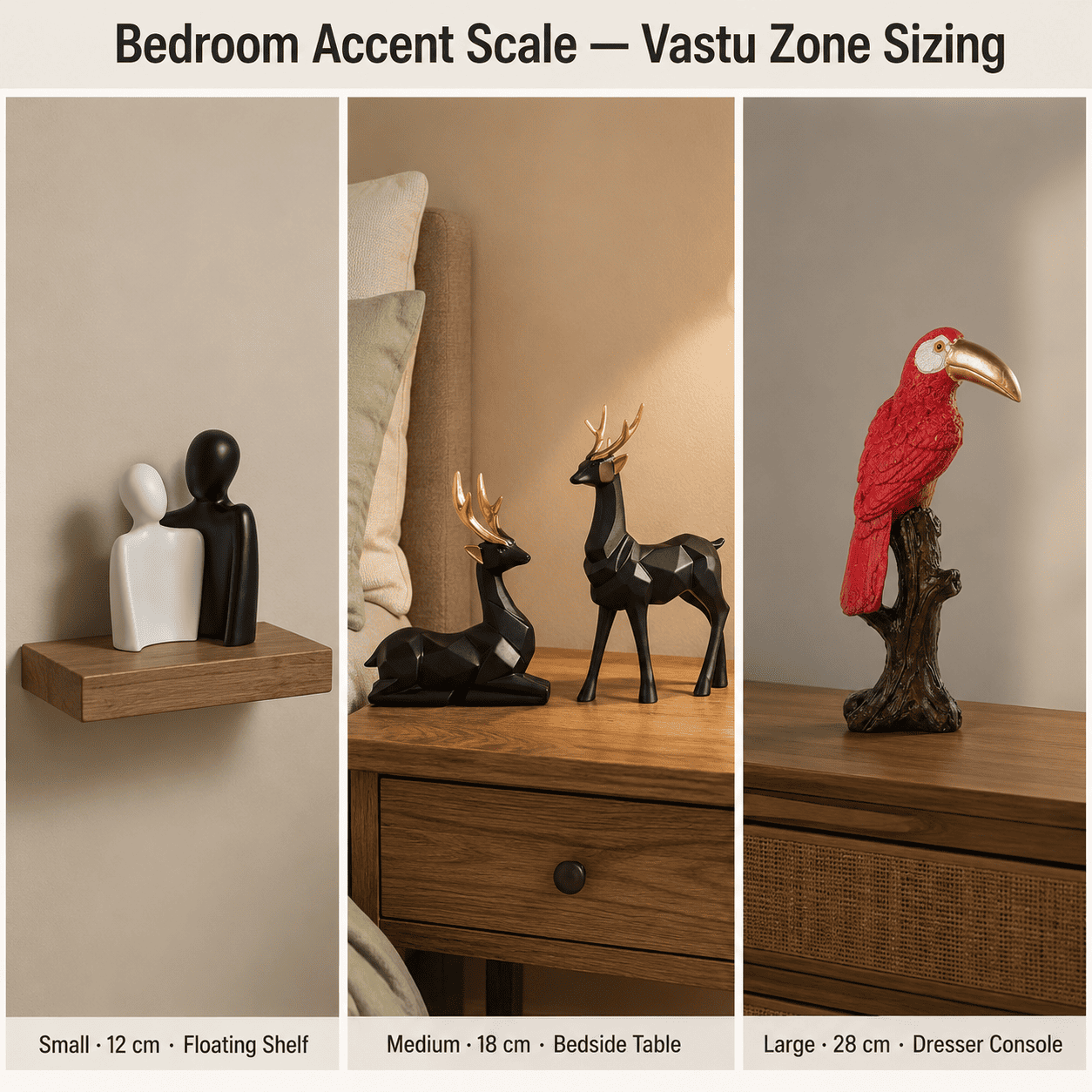
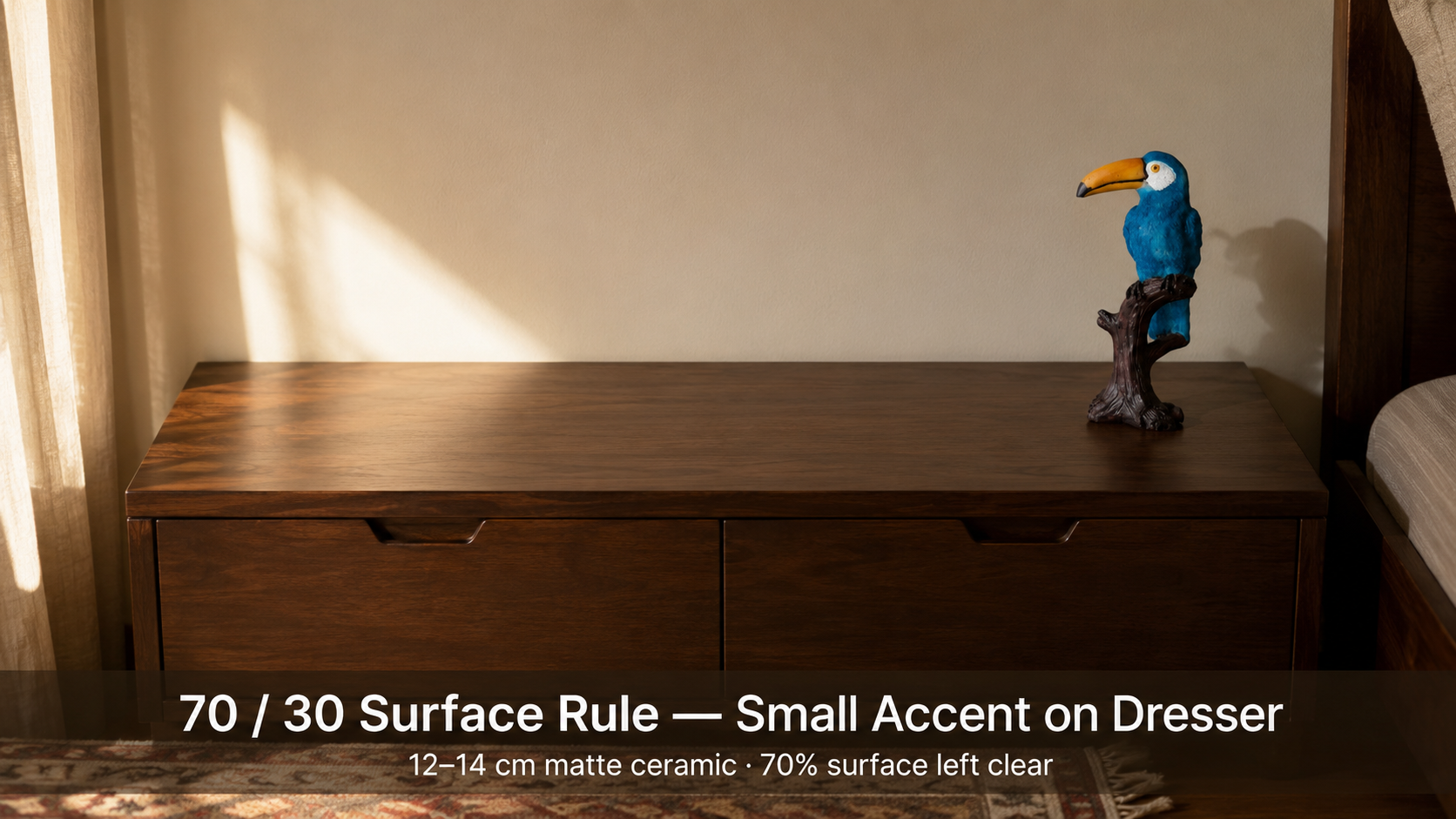
| South-West (earth / stability) | Dresser console or low shelf | 60 cm+ | 25–34 cm (Large) | 400–600 g; matte ceramic |
| North-East (water / clarity) | Floating shelf or corner ledge | Under 30 cm | 10–16 cm (Small) | 150–250 g; ceramic or resin |
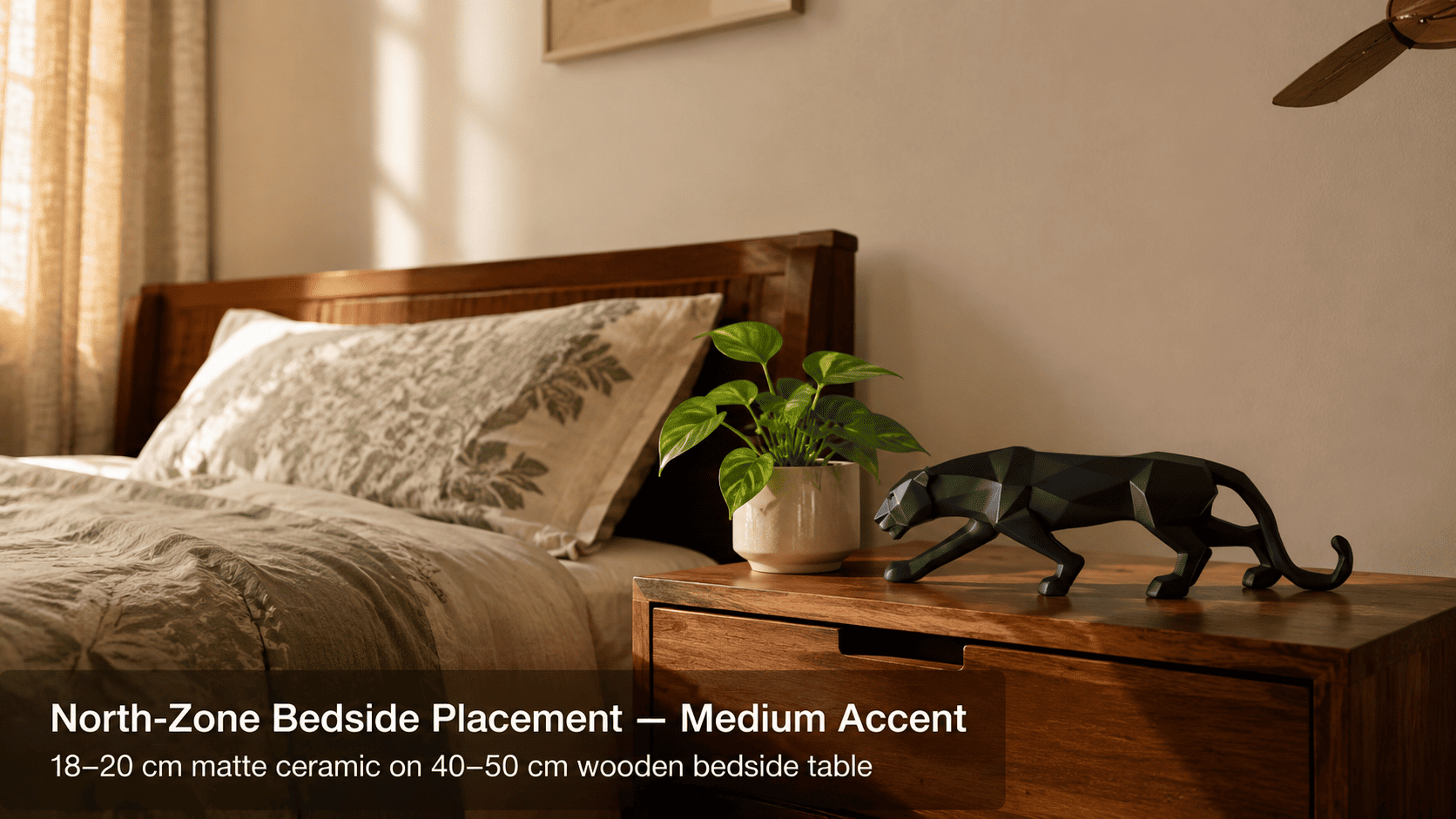
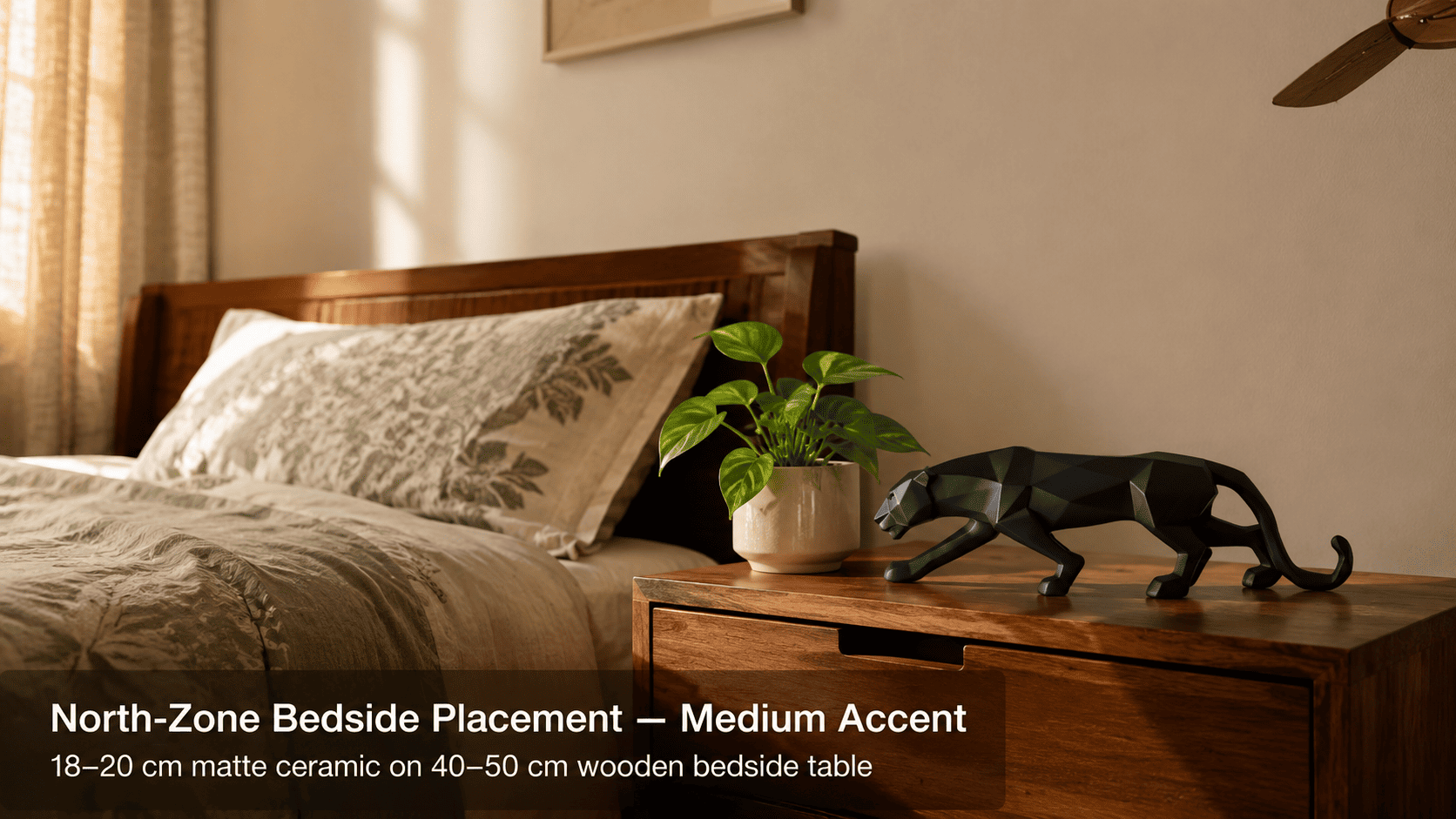
| North (prosperity / movement) | Bedside table | 40–50 cm | 16–21 cm (Medium) | 250–400 g; matte ceramic |
| East (health / sunrise energy) | Above-headboard wall or low console | 50–70 cm | 16–25 cm (Medium–Large) | 250–500 g; ceramic, warm earth tones |
| South-East (fire / energy) | Corner accent surface | 30–40 cm | 10–16 cm (Small only) | 150–250 g; terracotta or copper-tone finish |
Because individual bedroom layouts in Indian apartments vary in ceiling height, AC airflow direction, and bedside surface depth, browse the full size-band and material selection in Moolwan's bedroom décor collection to verify that your chosen piece fits both the Vastu zone and the physical surface you have available.
Design Rule
To maintain energetic openness in compact Indian bedrooms while still placing meaningful décor, spaces should be styled using Moolwan's Vastu Triad Placement Rule: identify the three Vastu-active zones of your specific bedroom (south-west, north-east, and one additional directional zone suited to your room's orientation), place one appropriately sized accent object in each zone only, and leave all other surfaces entirely clear — a maximum of three accent objects per bedroom ensures that no zone's energy is visually overwhelmed or cancelled by an adjacent object's mass.
Which Colour Palettes Are Vastu-Compatible for Bedroom Showpieces?
Vastu Shastra assigns elemental colour associations to each directional zone of a room, and these associations carry a physical rationale that modern colour psychology has independently validated. Warm earth tones — terracotta, ochre, warm beige, dusty rose — are prescribed for the south-west zone because earth-element energy is associated with consolidation and rest; warm-spectrum colours in the 580–700 nm range are also measurably associated with reduced sympathetic nervous system arousal in low-luminance environments, which is the precise physiological state required for quality sleep.
Cool neutrals — muted white, pale celadon, soft grey-blue — are prescribed for the north-east zone because water-element energy is associated with mental openness and clarity; cool-spectrum hues below 500 nm are associated with reduced visual cortex stimulation, which supports the meditative stillness and mental quietening that the north-east Ishan corner is intended to facilitate. Selecting décor that reinforces these zone-colour associations therefore produces a bedroom that is simultaneously Vastu-correct and neurologically supportive of rest.
Ready to bring home a bedroom showpiece that is Vastu-zoned, climate-rated, and engineered for 5+ years in Indian humidity? Shop the full Moolwan bedroom décor collection now.
Does the Placement Height of a Bedroom Accent Matter in Vastu?
In Vastu Shastra, energetic flow in a room is conceived as moving along horizontal planes at the level of human activity — standing (eye level, approximately 150–165 cm from the floor), seated (80–95 cm), and resting (0–60 cm from floor level). Decorative objects placed below the resting plane — at floor level or low to the ground — are considered to "ground" energy in the earth element, making them suitable for south-west zone placement. Objects placed at seated level (bedside height, approximately 60–80 cm) are considered to interact with the room's ambient energy field at its most active horizontal band.
This translates practically to a precise sizing discipline: medium bedroom showpieces (16–21 cm) placed on bedside tables at 65–75 cm height are the correct intersection of Vastu horizontal-energy theory and physical scale comfort, because their visual mass is proportionate to the surface they occupy without protruding into the standing eye-line zone. Moolwan's medium ceramic bedroom pieces in the 250–400 g weight range have been designed to this specific bedside-height proportionality — lightweight enough to remain on a 40–50 cm surface without creating visual top-heaviness, substantial enough to register as a meaningful energetic anchor in the zone.
How to Create a Vastu-Compliant Above-Headboard Wall Arrangement
The wall directly above the headboard corresponds to the zone behind the sleeper's head, which in Vastu Shastra is treated as the most energetically sensitive wall surface in the bedroom because it is the point of closest energetic contact between the human body and the room's structural boundary during rest. Vastu prescribes that this wall should carry soft, calm visual mass — not bare (which creates an energetic void) and not overloaded with large or multiple frames (which creates visual pressure on the unconscious resting mind).
A single medium-format canvas wall art piece (20–24 inches in height for standard Indian double beds, centred and hung 6–8 inches above the headboard top) in a calm palette — warm neutrals, soft botanicals, abstract earth-tone compositions — satisfies both the Vastu prescription for above-headboard wall treatment and the visual-rest requirement of the space. The key is that the piece's colour temperature should align with the directional zone the headboard wall occupies — warm earth tones if the headboard faces south or west, cool neutrals if it faces north or east.
Frequently Asked Questions
Can a Vastu-compliant bedroom showpiece also function as a meaningful gift for a new home?
Yes — and the two requirements align naturally. A medium matte ceramic bedroom showpiece (16–21 cm, 250–400 g) in a warm earthy or neutral palette is simultaneously Vastu-appropriate for south-west or north-zone bedside placement, universally sized for the standard Indian apartment bedside surface (40–50 cm wide), and visually considered enough to function as a curated housewarming or anniversary gift. The material durability (85% RH tolerance, 5+ year lifespan) means the gift retains its finish and structural integrity well beyond the gifting moment — a practical reinforcement of its symbolic value as a lasting home offering. Moolwan's bedroom décor pieces are packaged for gifting at the point of fulfilment.
What is the Vastu rule for mirrors or reflective surfaces in the bedroom?
Vastu Shastra prescribes that mirrors should not face the bed directly — the traditional explanation is that reflected images of the sleeping body create energetic duplication, which is considered disruptive to rest. The physical parallel is that high-luminance reflective surfaces in the peripheral visual field trigger alerting responses even at low light levels, because the human visual system is neurologically primed to respond to movement and luminance change. This means that reflective or high-gloss décor accents placed on bedside surfaces — even small ones — can produce micro-interruptions to sleep quality. Moolwan's matte ceramic bedroom pieces are selected specifically to avoid this problem because their unglazed surfaces produce zero specular reflection under standard bedroom lighting conditions.
Does Vastu specify which shapes are beneficial for bedroom showpieces?
Vastu Shastra favours rounded or organic shapes for bedroom accents over sharp angular geometries, because sharp angles are associated with Vaastu "Sha" (arrow-like energy projections that are considered inauspicious when directed at the sleeping body). Practically, rounded shapes in ceramic pieces — ovoid vases, curved figurines, spherical or dome-form accents — also distribute physical mass more evenly at their base, making them less prone to tipping on the slightly uneven stone or tile surfaces common in Indian apartments. Moolwan sources and curates bedroom décor pieces with this dual requirement — Vastu-compatible organic forms and stable physical base geometries — as part of its selection framework for the bedroom category.
Are resin showpieces Vastu-compatible for Indian bedrooms?
Resin pieces are generally considered less energetically aligned with Vastu's material hierarchy (which prioritises earth-origin and natural materials) than ceramic. However, high-purity resin (94% epoxy) in organic forms and earthy or neutral palettes is widely used in contemporary Indian homes as a practical substitute, particularly in the north-east zone where lighter-weight accents (150–250 g) are preferred and ceramic pieces of the correct small size can sometimes be harder to source. Moolwan's resin accents are rated to 60% RH tolerance and 3H pencil hardness — sufficient for standard air-conditioned Indian bedrooms, though the ceramic collection remains the preferred choice for south-west zone placement due to its higher material density and 85% RH tolerance.
Bring home a bedroom showpiece that is built to the 85% RH tolerance Indian monsoon conditions demand, sized precisely for your room's Vastu zone, and designed to hold its matte finish for five or more years without seasonal replacement. Order directly from the Moolwan bedroom décor collection — manufacturer-direct, climate-rated, made for Indian homes. If you are also considering marble-finish accents for a bedside or dresser surface, browse Moolwan's marble-finish bedroom showpiece selection for pieces that carry the cool-stone visual quality of natural marble with the humidity tolerance and weight-stability needed for Indian apartment conditions. For the full range of bedroom-specific décor including wall accents, figurines, and surface pieces across all finish types, explore Moolwan's complete bedroom decorative items range.


