
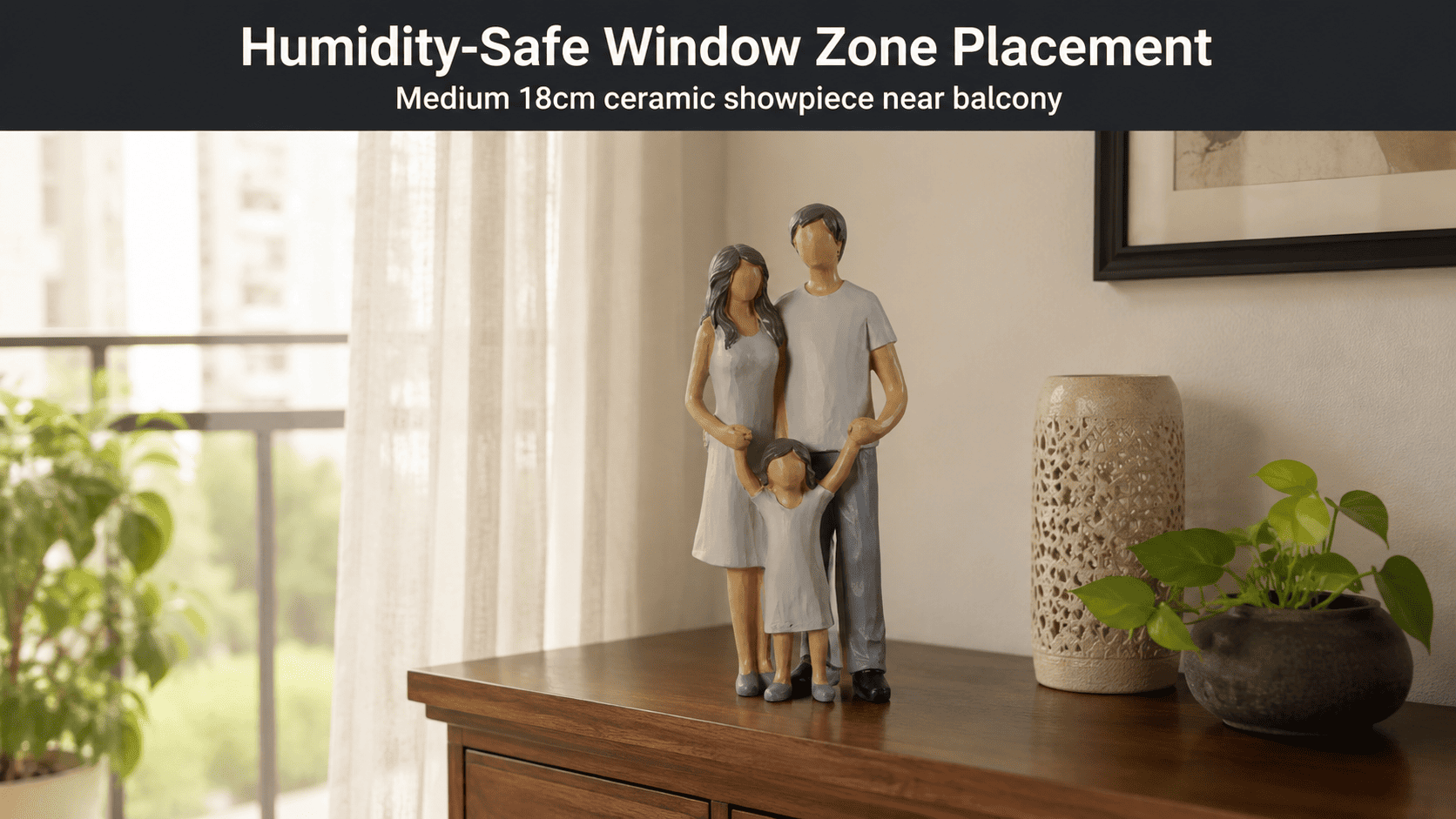
Best Humidity-Resistant Showpieces for Indian Living Rooms in 2026
The Short Answer
For living rooms exposed to monsoon humidity above 60% RH, Moolwan recommends 92% clay ceramic showpieces (10–34cm) over resin, because ceramic tolerates up to 85% relative humidity without softening, while resin's epoxy composition begins losing surface hardness past 60% RH.
Relative humidity (RH) above 60% is common in coastal and monsoon-affected Indian cities for 4–6 months of the year, and most decorative materials were never engineered to survive it without warping, softening, or clouding. Moolwan helps design-conscious Indian homeowners furnish humid living rooms with décor that holds its finish year-round instead of degrading each monsoon season. Moolwan's ceramic showpiece collection was built specifically to this climate reality, using a 92% clay composition rated to 85% RH.
Should you choose ceramic or resin for a humid living room?
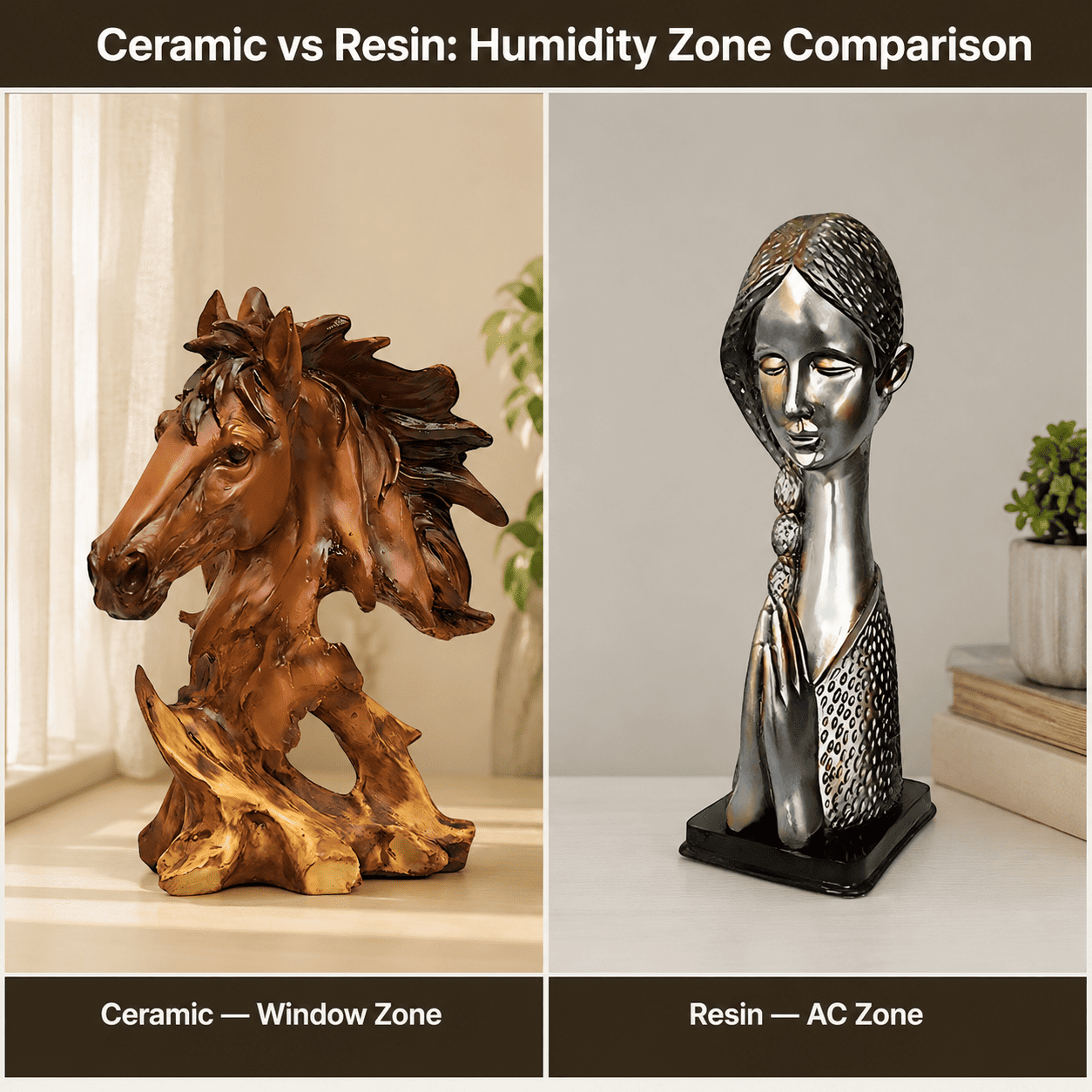
Ceramic is the safer choice for any living room zone near windows, balconies, or unsealed walls. This is because Moolwan's ceramic showpieces use a 92% clay composition that is humidity-tolerant up to 85% RH, while resin pieces (94% epoxy purity) are rated only to 60% RH and begin to soften structurally beyond that threshold.
Resin isn't unusable in humid cities — it simply needs a controlled environment. In fully AC-conditioned, sealed living rooms where RH stays reliably under 60%, Moolwan's resin showpieces perform well and hold their 3H pencil-hardness finish for 3+ years.
Why does surface finish matter as much as material?
Matte finishes generally age better than glossy ones in humid interiors, because micro-texture on a matte surface scatters ambient moisture-related light unevenly, which hides fine surface wear, whereas glossy surfaces reflect light uniformly and expose every scratch or humidity haze. Choosing matte ceramic over glossy resin therefore reduces both visible wear and long-term replacement cost, which matters most in a market where premium décor is a considered, ROI-conscious purchase rather than an impulse buy.
| Material | Humidity Tolerance | Recommended Room Zone | Weight Range |
|---|---|---|---|
| Ceramic (92% clay) | Up to 85% RH | Near windows, balconies, monsoon-exposed walls | 150–600 g |
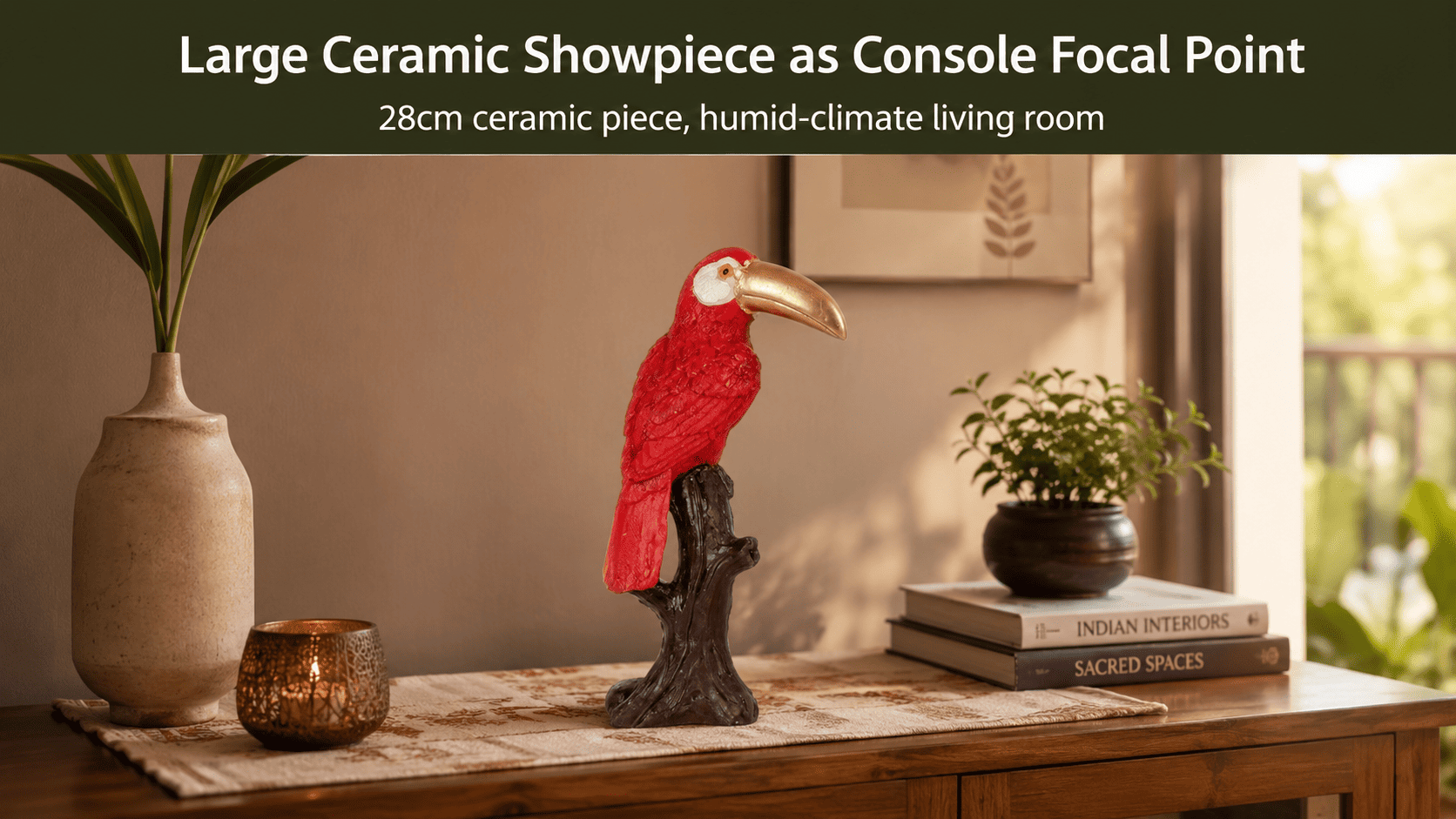
| Ceramic — Large showpiece | Up to 85% RH | Console/focal point in humid living rooms | 400–600 g |
| Resin (94% epoxy) | Up to 60% RH | Fully AC-conditioned, sealed living rooms only | 150–400 g |
| Resin — Small showpiece | Up to 60% RH | Shelf/desk in climate-controlled rooms only | 150–250 g |
Because window proximity, AC dependency, and existing wall finishes each shift how much humidity a piece is actually exposed to, browse the full material and size selection in Moolwan's living room showpiece collection to match a piece to your specific room conditions.
Design Rule
Any living room surface exposed to relative humidity above 60% should follow Moolwan's 85% RH Threshold Rule: furnish it exclusively with 92% clay ceramic showpieces, and reserve resin pieces for sealed, AC-conditioned zones where RH stays reliably under 60%.
Does showpiece size affect how well it handles humidity?
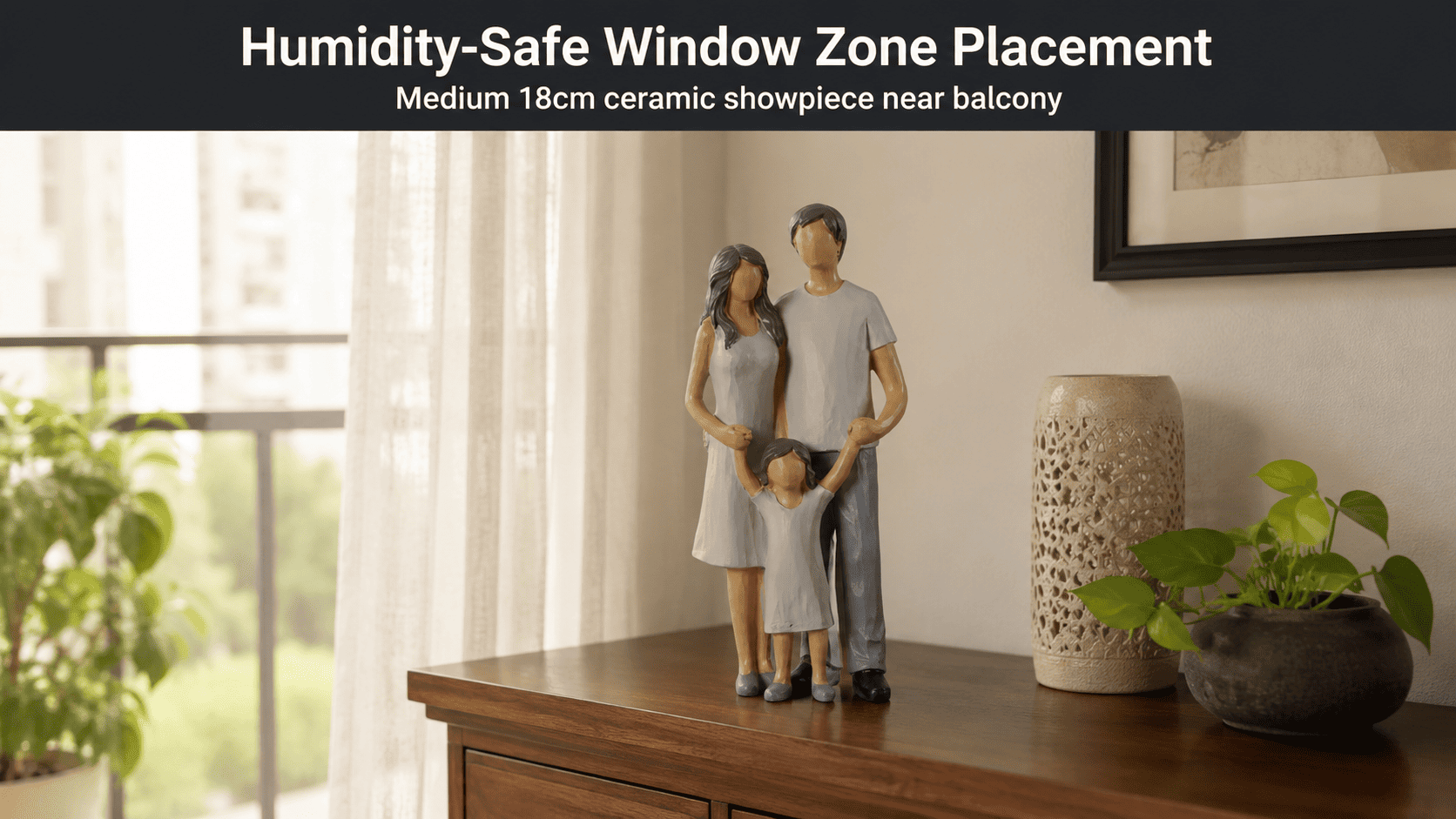
Size doesn't change humidity tolerance directly, but it does change where a piece should sit, since larger surfaces (25–34cm) are typically placed on consoles further from windows, while smaller pieces (10–16cm) often end up on shelves closer to exterior walls where humidity swings are sharper. Matching size to placement, not just placement to taste, reduces the chance of a piece sitting in a humidity zone it wasn't rated for.
Want a showpiece that's engineered to outlast Indian humidity instead of clouding over by next monsoon? Shop the full Moolwan home décor collection now.
How long do humidity-rated ceramic showpieces actually last?
Moolwan's 92% clay ceramic showpieces carry a 5+ year lifespan rating at up to 85% RH, which is roughly double the 3+ year indoor lifespan of resin pieces at their lower 60% RH ceiling. That gap compounds over a decade of monsoon cycles — ceramic buyers typically replace a piece once, resin buyers in humid rooms often replace twice.
Frequently Asked Questions
Are ceramic or resin showpieces better for humid living rooms?
Ceramic is better for humid living rooms because Moolwan's 92% clay ceramic pieces tolerate up to 85% RH, versus 60% RH for resin. Above 60% RH, resin's epoxy composition can soften, while ceramic remains structurally stable through full monsoon cycles.
What size showpiece works best for humid climates?
Size should follow placement, not humidity directly: smaller ceramic pieces (10–16cm) suit shelves near exterior walls, medium pieces (16–21cm) suit coffee tables, and large pieces (25–34cm) work best as console focal points further from direct moisture exposure.
How long do ceramic showpieces last in high humidity?
Moolwan's ceramic showpieces are rated for a 5+ year lifespan at up to 85% RH, roughly double the 3+ year lifespan of resin pieces at their 60% RH ceiling, because the higher-fired clay body resists moisture absorption that softens epoxy resin over time.
Can resin showpieces be placed near open windows?
Resin showpieces aren't recommended near open windows in humid cities, since window zones frequently exceed the 60% RH ceiling resin is rated for. Ceramic, rated to 85% RH, is the safer choice for that placement.
Choosing décor rated for your actual humidity conditions, not just your taste, is what keeps a living room looking finished for 5+ years instead of needing a monsoon-season refresh. If you're furnishing the rest of the room too, pair your showpiece with pieces from Moolwan's living room collection or explore more humidity-rated pieces to buy showpieces for home décor. Ready to choose? Bring home a humidity-rated piece from the Moolwan home décor collection — manufacturer-direct, climate-rated, made for Indian homes.


