
Best Lighting Types for a Cozy Living Room Ambiance in Indian Homes
The Short Answer
A cozy living room needs three layered light sources — ambient (2700–3000K), task, and accent (1800–2200K) — because a single overhead bulb flattens shadows and makes a room feel clinical, not warm. Moolwan pairs this layering with matte ceramic and resin decor accents sized 10–34cm, which diffuse warm light instead of bouncing it harshly off glossy surfaces.
Color temperature, measured in Kelvin (K), determines whether a room feels warm or sterile: light below 3000K reads as warm and amber-toned, while anything above 4000K reads as cool, blue-white, and closer to office lighting. Moolwan helps design-conscious Indian homeowners translate this lighting science into a living room that actually feels lived-in, not showroom-lit, by pairing the right light layers with decor accents engineered to scatter — rather than reflect — that warmth.
Why does layered lighting feel cozier than a single ceiling light?
Layered lighting feels cozier because it eliminates harsh, single-source shadows that a lone ceiling fixture creates. A single overhead light casts shadows straight down from furniture and faces, which the human eye unconsciously associates with stark, institutional spaces rather than relaxed ones.
Three layers solve this: ambient light (floor lamps, wall washers) fills the room's base glow at 2700–3000K; task light (table lamps near reading or seating zones) adds localized brightness at a slightly cooler 3000–3500K; and accent light (candle holders, small uplighting) creates warm focal points at 1800–2200K, the same range as actual candle flame. Each layer also needs a decor surface to land on — without a matte, light-diffusing object nearby, even warm bulbs throw a flat, sourceless glow instead of a soft pool of light.
Which decor materials make warm lighting look intentional instead of accidental?
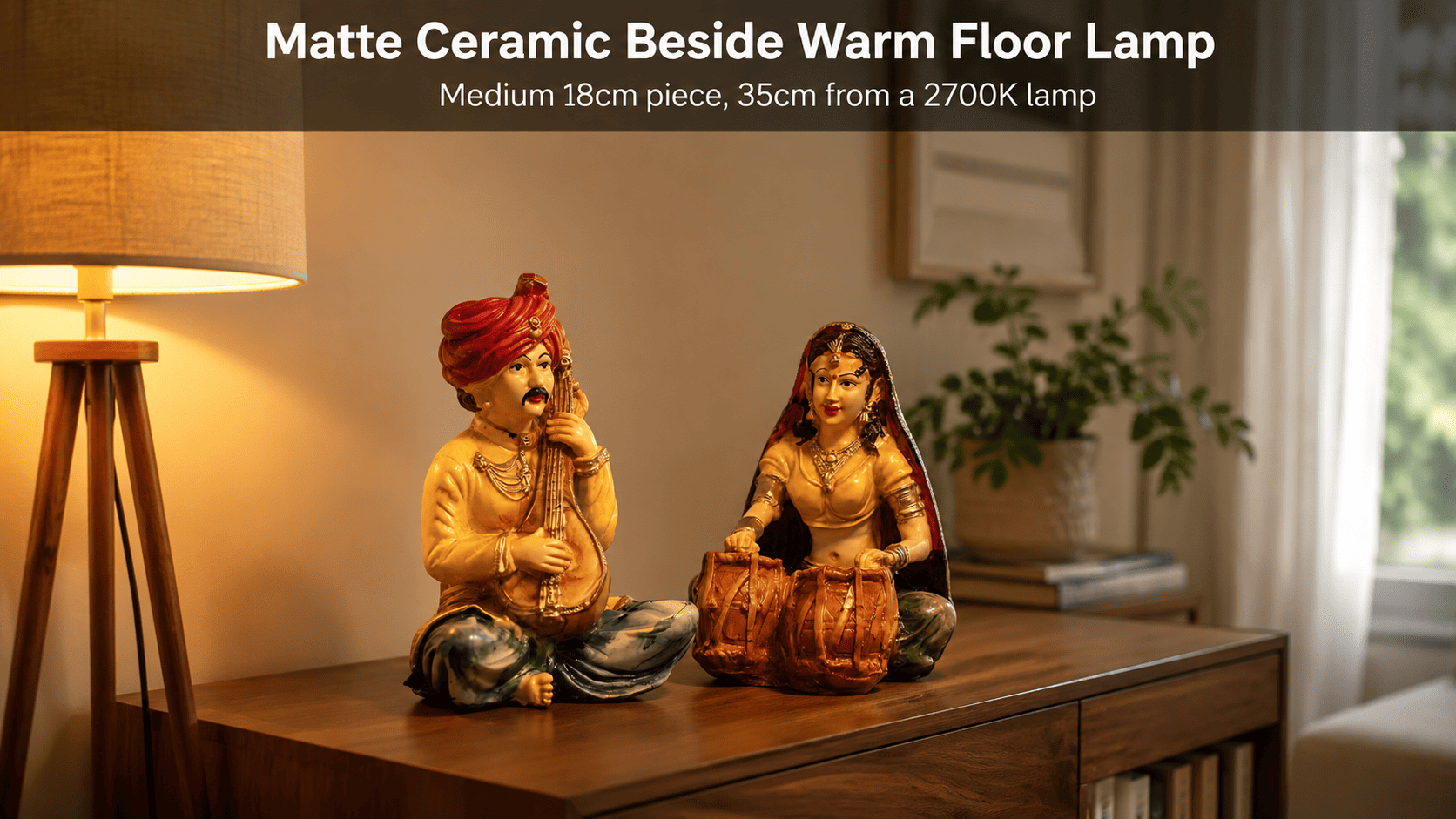
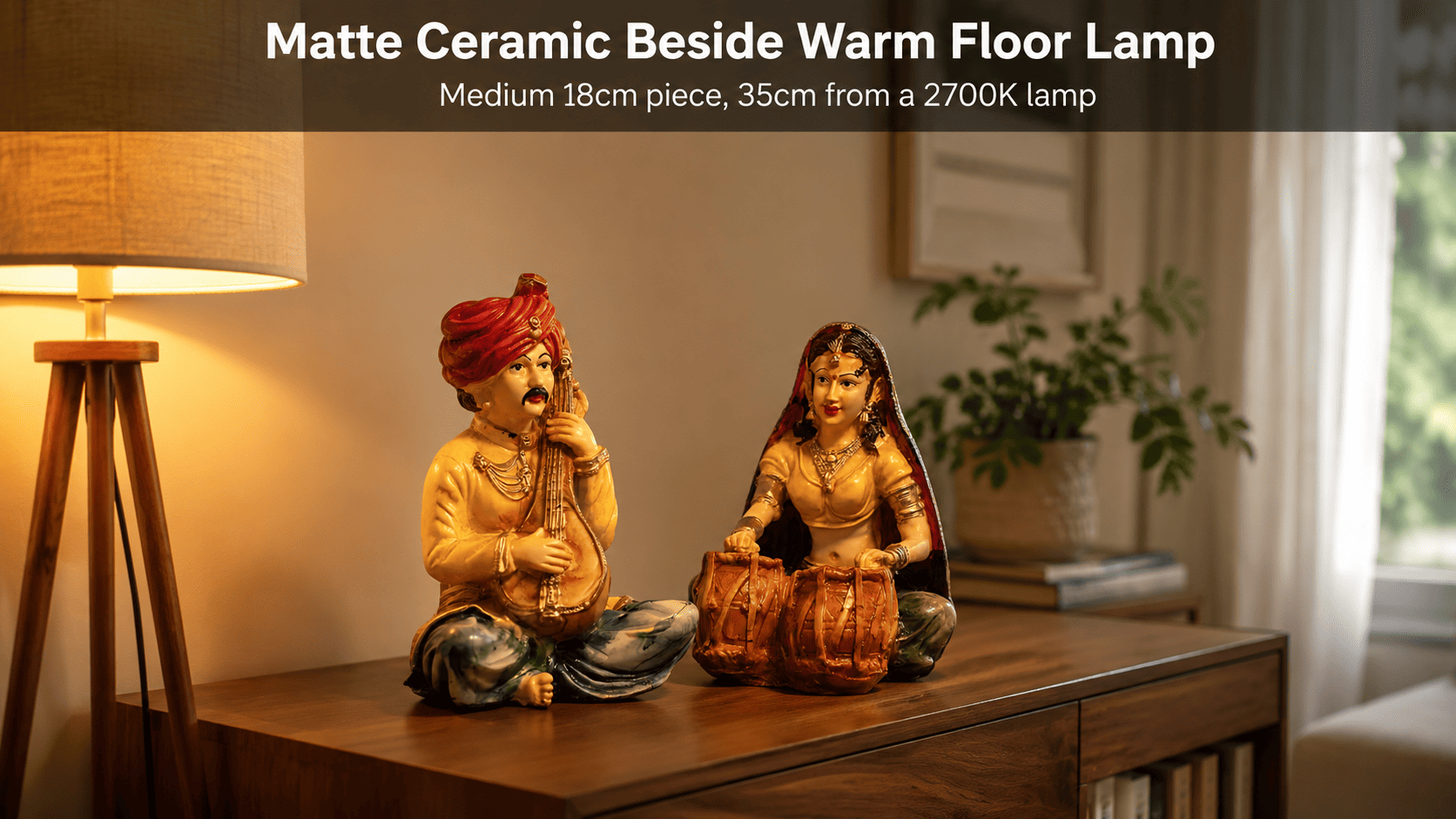
Matte-finish ceramic and resin accents make warm lighting look intentional because micro-textured surfaces scatter light unevenly in multiple directions, producing the soft, glowing falloff associated with high-end interiors. Glossy or highly reflective surfaces, by contrast, bounce light in a single uniform direction and create a harsh glare spot rather than ambient warmth.
Moolwan's modern home decor collection is built specifically around this principle: ceramic pieces use a 92% clay composition with a matte fired finish, and resin pieces use a 94%-purity epoxy with a soft-touch surface — both engineered to diffuse light rather than mirror it. Because Indian living rooms also run through 60–85% relative humidity swings across monsoon and summer months, this same matte composition is heat-resistant to 60°C and humidity-tolerant up to 85% RH, so the piece you place beside a warm lamp today still looks and performs the same three monsoons from now.
| Lighting Type | Color Temp (K) | Recommended Decor Material | Decor Size Range | Placement Distance |
|---|---|---|---|---|
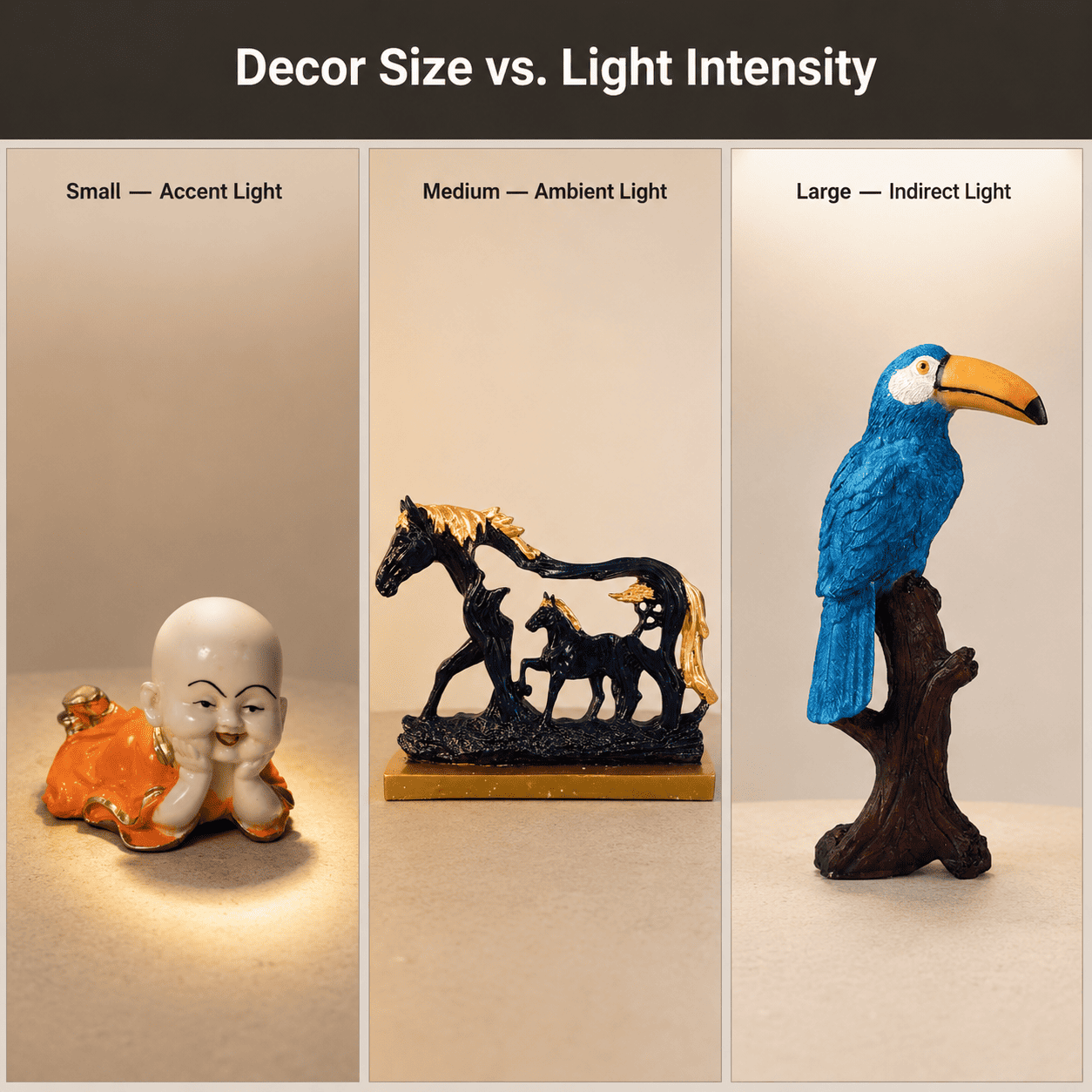
| Ambient (floor lamp) | 2700–3000K | Matte ceramic | 16–21 cm (Medium) | 30–45 cm from base |
| Task (table lamp) | 3000–3500K | Glazed resin | 10–16 cm (Small) | 15–25 cm from source |
| Accent (candle holder) | 1800–2200K | Matte ceramic | 10–16 cm (Small) | 20–30 cm clearance |
| Indirect (cove/LED strip) | 2700K | Textured resin sculpture | 25–34 cm (Large) | 50–70 cm from wall |
Because lamp wattage, room footprint, and sofa-side clearance all change which decor size actually works for your layout, browse the full size, finish, and material selection in Moolwan's living room decor collection to match a piece to your specific lighting setup.
Design Rule
To avoid a living room that feels either flat-lit or overdone, follow Moolwan's 3-Layer Light Rule: every seating zone should have exactly one ambient source, one task source, and one accent source, each anchored by a decor piece sized to its light's intensity — small accents for candlelight, medium pieces for floor lamps, and large statement sculptures only for indirect or cove lighting.
What's the right decor size for a small Indian apartment living room?
For apartments under 1,200 sq ft, the safest decor scale is small to medium (10–21 cm) because larger statement pieces compete with limited floor and console space rather than complementing it. A piece that's too large for its surface also blocks more of the light layer it's meant to highlight, undercutting the entire point of placing it there.
This is also where ROI logic matters: a 150–400g matte ceramic piece, drop-tested and rated for a 5+ year indoor lifespan, costs less over time than replacing a glossy or untreated decor item that scratches visibly under direct lamp light within a year or two. Spending slightly more upfront on a climate-rated, light-diffusing finish is what actually lowers the cost of "redecorating" a living room every monsoon season.
Want a piece that's actually built to sit beside a lamp for years, not months? Shop the full Moolwan living room decor collection now.
Where should accent pieces go relative to each light source?
Accent pieces should sit close enough to a light source to catch its glow but far enough to avoid heat exposure or visual crowding — typically 20–45 cm depending on the source, as shown in the matrix above. Placing a piece directly under a lamp's bulb concentrates heat on one surface area, while placing it too far away leaves the light with nothing to diffuse against, which is the exact "sourceless glow" problem layered lighting is meant to fix.
A useful clustering habit, drawn from Moolwan's modern home decor collection, is to group one small and one medium piece per light source rather than spacing single items evenly across a console — the height variation between the two pieces is what creates the soft shadow gradient that makes warm lighting look layered rather than flat.
Does the same lighting approach work for every Indian living room palette?
The 2700–3000K warm range works across most Indian wall palettes because warm light amplifies earthy and neutral tones (terracotta, greige, sage) without washing out richer accent colors the way cooler 4000K+ light does. Cooler lighting tends to desaturate warm wall paints, which is part of why many Indian living rooms lit with standard cool-white bulbs feel less inviting than the same room under warm bulbs.
Pairing that warm light with a muted or warm-earth-toned decor finish, rather than a stark white or jet-black glossy finish, keeps the room visually cohesive instead of creating a single high-contrast accent that pulls the eye away from the seating area.

Frequently Asked Questions
What color temperature is best for a cozy living room?
2700–3000K is best for general ambient lighting because this range matches the warm, amber tone of incandescent and candle light that the eye associates with relaxation. Moolwan recommends pairing this range with matte-finish decor accents, since glossy finishes reflect even warm light unevenly and create harsh glare instead of a soft glow.
How many light sources does a small living room actually need?
Three is generally enough: one ambient, one task, and one accent source per main seating zone. Adding more sources beyond this in a sub-150 sq ft room tends to overlap pools of light rather than adding usable warmth, so the limiting factor is layering, not sheer quantity.
Can ceiling lights alone create a cozy ambiance?
Not on their own. A single ceiling fixture casts light from one direction only, producing flat downward shadows that read as functional rather than warm. Cozy ambiance comes from combining a dimmed or warm ceiling light with at least one lamp-level and one accent-level source, each anchored by a light-diffusing decor piece.
Do decor materials really affect how warm lighting looks?
Yes — material finish changes how light scatters off a surface. Matte ceramic and resin diffuse light across a wider angle, softening it, while glossy or metallic finishes reflect light in a concentrated direction, often producing glare rather than ambiance.
Because a climate-rated, light-diffusing decor piece outlasts the seasonal scratching and fading that glossy alternatives suffer under direct lamp exposure, choosing the right finish is really a durability decision dressed up as a style one. If you're also weighing pieces for other rooms, the broader Moolwan home decor collection and the curated picks in this guide to statement pieces for an elegant living room are worth a look. Ready to layer your lighting properly? Bring home a piece from the Moolwan living room decor collection — manufacturer-direct, humidity-rated, and made for Indian homes.


