
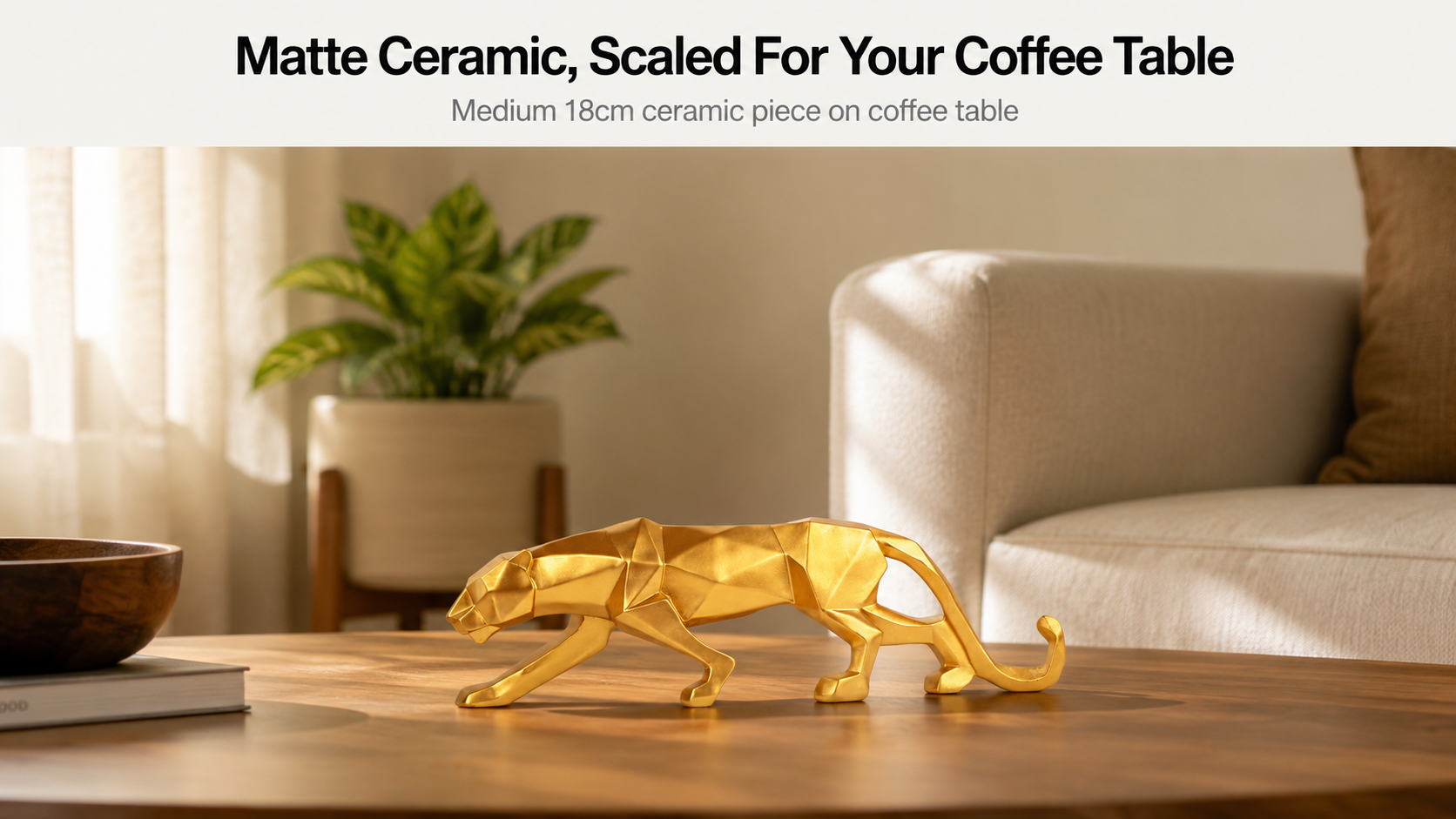
Best Materials for Indoor Decorative Sculptures in Humid Indian Homes
The Short Answer
High-density resin (94% purity epoxy) and high-fired ceramic (92% clay composition) outperform plaster, raw wood, and unfinished metal for Indian interiors because both resist warping and surface degradation up to 60–85% relative humidity. Moolwan's modern home décor collection is built specifically to these two material standards, so the right choice usually comes down to finish preference rather than durability trade-offs.
Across India's coastal and monsoon-affected cities, indoor humidity regularly swings between 60% and 85% relative humidity (RH) for four to five months a year, and this moisture cycling is the single biggest cause of décor degradation — not sunlight, not dusting, not handling. Moolwan helps design-conscious Indian homeowners choose sculpture materials that survive this cycle without cracking, warping, or losing finish, by manufacturing every piece in its modern home décor collection to a tested humidity and temperature tolerance rather than guessing at it.
Why does material matter more than style for indoor sculptures?
Material determines whether a sculpture survives five years of Indian interior conditions, while style only determines whether it survives this season's taste. Plaster of Paris sculptures, common in budget décor, absorb ambient moisture because the material is porous at a microscopic level, which causes slow swelling, surface chalking, and eventually cracking within 12–18 months in humid cities like Mumbai, Chennai, or Kochi. Raw or thinly-lacquered wood faces a similar problem: wood fibers expand and contract with humidity, and in AC-cycled rooms where humidity swings daily, this repeated expansion eventually splits grain lines.
Ceramic and resin avoid this failure mode because both are engineered as dense, low-porosity materials rather than fibrous or chalk-based ones. Moolwan's ceramic pieces use a 92% clay composition fired to a density that limits water absorption to a negligible fraction, which is why the same piece that would degrade in a plaster equivalent stays structurally stable through repeated monsoon seasons.
How do ceramic and resin actually differ in daily use?
Ceramic and resin diverge mainly on heat tolerance, weight, and breakage risk — not on humidity resistance, where both perform well. Ceramic sculptures in Moolwan's collection are heat-resistant to 60°C, which matters specifically for pieces placed near west-facing windows that receive direct afternoon sun, or on console tables near kitchen pass-throughs where ambient heat is higher than the rest of the home.
Resin sculptures, by contrast, are lighter at the same size and harder to chip — Moolwan's resin pieces carry 3H pencil hardness, a standard measure of scratch resistance, making them the better pick for high-traffic surfaces like entryway consoles where a sculpture might get brushed by keys, bags, or sleeves multiple times a day. The trade-off is that resin's recommended lifespan (3+ years indoors) is shorter than ceramic's (5+ years), because resin's polymer structure degrades slightly faster under UV exposure than fired clay does. For a budget-conscious buyer this is a real ROI question: ceramic costs more upfront but amortizes over a longer usable life, while resin costs less but is replaced sooner — both can be the "right" choice depending on how long the room's décor scheme is expected to last.
| Material | Heat Tolerance | Indoor Lifespan | Humidity Tolerance |
|---|---|---|---|
| Ceramic (92% clay) | Up to 60°C | 5+ years | 85% RH |
| Resin (94% epoxy) | 15–35°C ideal range | 3+ years | 60% RH |
| Plaster of Paris | Below 40°C | 1–1.5 years | Under 40% RH |
| Raw/lacquered wood | Below 45°C | 2–3 years (grain-dependent) | Under 50% RH |
Because room orientation, AC cycling patterns, and surface placement all shift which material performs best for a specific home, browse the full ceramic and resin selection by finish, size, and weight in Moolwan's modern home décor collection to match a piece to your actual room conditions.
Design Rule
For any room with a window facing direct sun for more than three hours a day, follow Moolwan's 60/40 Material-Climate Rule: allocate 60% of sculptural pieces in that room to ceramic (for heat and UV stability) and no more than 40% to resin (reserved for shaded corners, shelves, or AC-conditioned zones), because mixed-material rooms age more evenly than rooms built entirely around a single material's weak point.
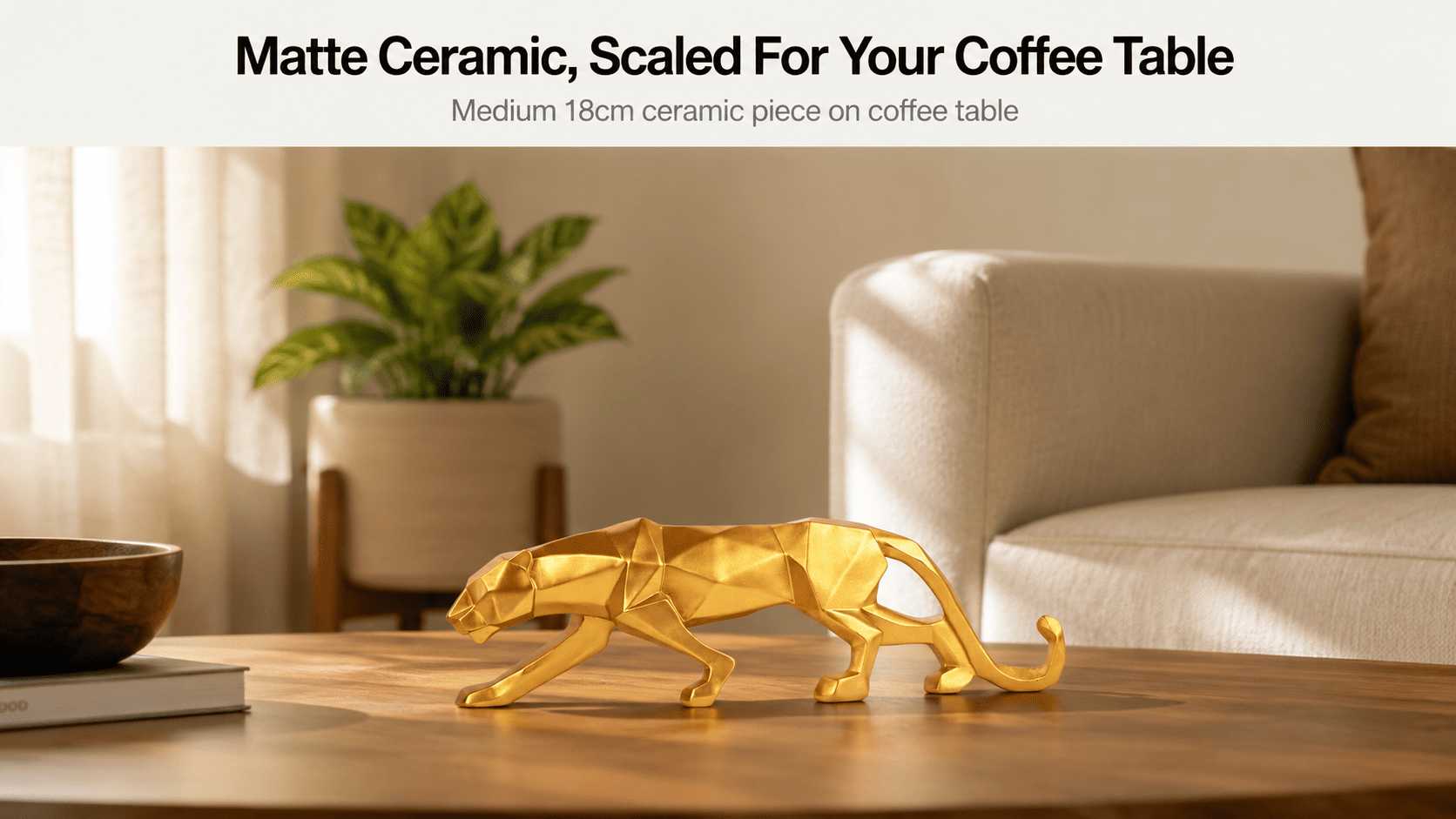
Does finish (matte vs glazed) change how long a sculpture looks new?
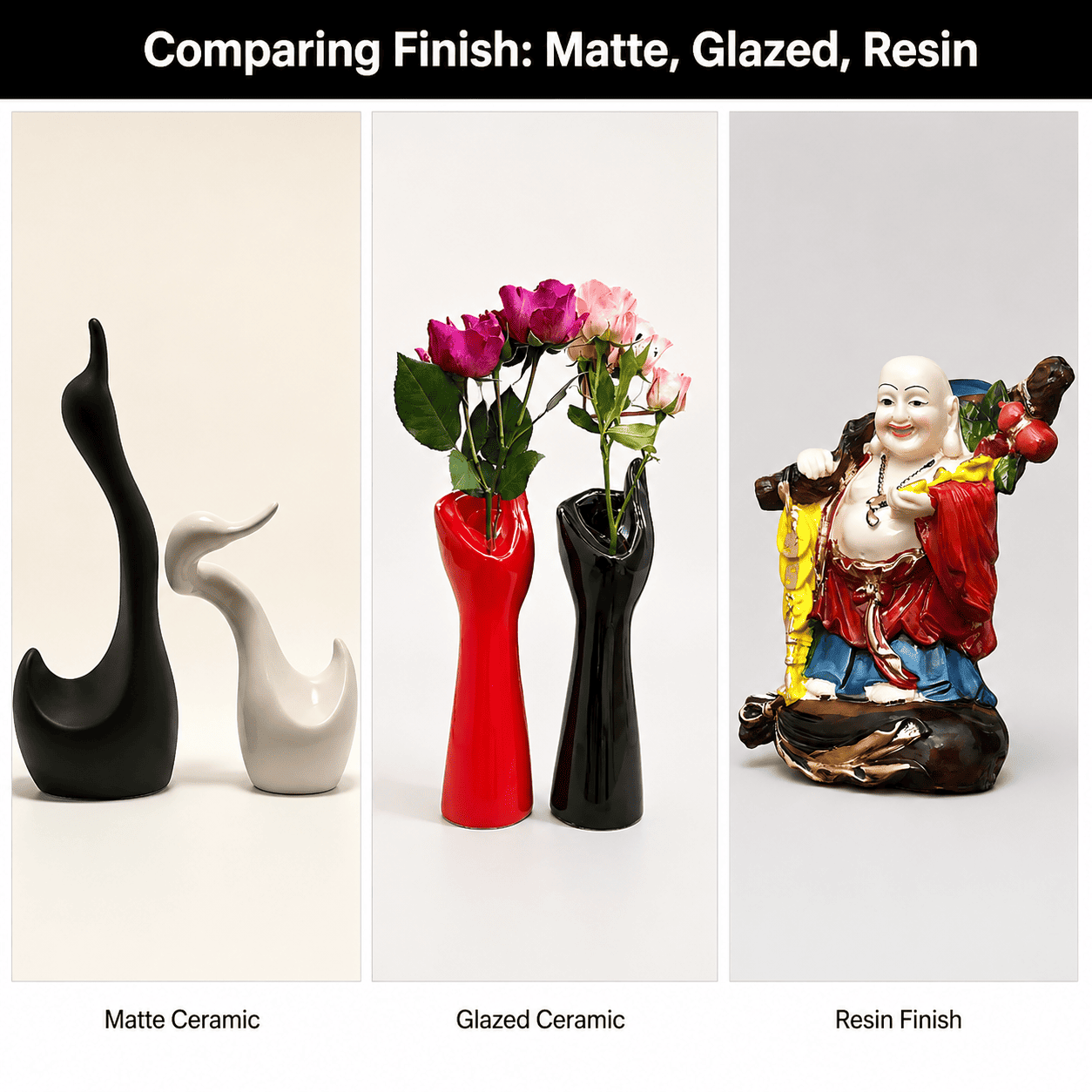
Matte finishes hide wear longer than glazed finishes do, because the same physical principle that helps with sunlight also helps with everyday handling: an uneven micro-surface scatters light in many directions, so small scratches and fingerprint oils don't catch a single reflective angle the way they do on a glossy, glazed surface. This is why a glazed ceramic piece on a frequently-touched console table can start showing visible wear within a year, while a matte piece in the same spot still looks new at three years.
This doesn't make glazed finishes a bad choice — glazed surfaces are easier to wipe clean of dust and food splatter, which matters more in dining-adjacent placements than in living rooms. The right call depends on whether the surface is touched often (favor matte) or simply needs to be wiped down often (favor glazed).
Want a sculpture that's actually engineered to outlast five Indian summers without losing its finish? Shop the full Moolwan modern home décor collection now.
What size and weight should a sculpture be for an Indian apartment?
Sculpture size should scale to surface width, not to room size, because most sizing mistakes happen when a piece is chosen to suit the overall room rather than the specific shelf, console, or table it will actually sit on. A 25–34 cm large sculpture overwhelms a 30 cm floating shelf regardless of how spacious the living room around it is, while the same piece looks intentional on a 60 cm dresser console.
Weight matters for a related but separate reason: heavier pieces (above 400g) need a stable, non-wobbling surface, since vibration from nearby foot traffic, doors, or even ceiling fans on lower floors can walk a top-heavy piece toward an edge over months of repeated micro-movement.

Frequently Asked Questions
Is ceramic or resin better for a humid coastal city like Mumbai or Kochi?
Ceramic is the safer default in coastal cities because its 85% RH tolerance covers even unusually humid monsoon stretches, whereas resin's 60% RH comfort range can be exceeded during peak monsoon months in non-AC rooms. Moolwan recommends ceramic for any room without consistent air conditioning in coastal or high-humidity zones.
Can plaster or terracotta sculptures still work in an Indian home?
Terracotta and plaster pieces work well in low-humidity, AC-conditioned rooms but degrade faster in naturally humid spaces, because their porous structure absorbs ambient moisture over time. They're a reasonable budget choice for a controlled-climate bedroom but a poor choice for an entryway or balcony-adjacent living room.
How do I know if a sculpture is too heavy for a shelf?
As a rule of thumb, a sculpture's base footprint should sit within roughly half the shelf's depth, because anything wider risks tipping if the shelf isn't perfectly level — a common issue in older Indian apartment construction where shelves can be off by a few millimeters.
Does sculpture material affect cleaning and maintenance?
Yes — glazed ceramic and resin can be wiped with a slightly damp cloth, while matte ceramic should be dusted dry, since moisture can settle into the micro-textured surface and leave faint water spots over repeated wiping.
Choosing the right material is what determines whether a sculpture still looks intentional in five years or needs replacing within one — and that durability difference is exactly why Moolwan engineers every piece in its collection to a tested humidity and heat standard rather than a generic finish. If you're also considering smaller accent pieces or one-off statement objects, Moolwan's showpiece collection and unique home décor pieces are worth browsing alongside this range. Ready to choose? Bring home a piece built for Indian conditions from the Moolwan modern home décor collection today.


