
Best Statement Objects for a Narrow Indian Entry Console in 2026
The Short Answer
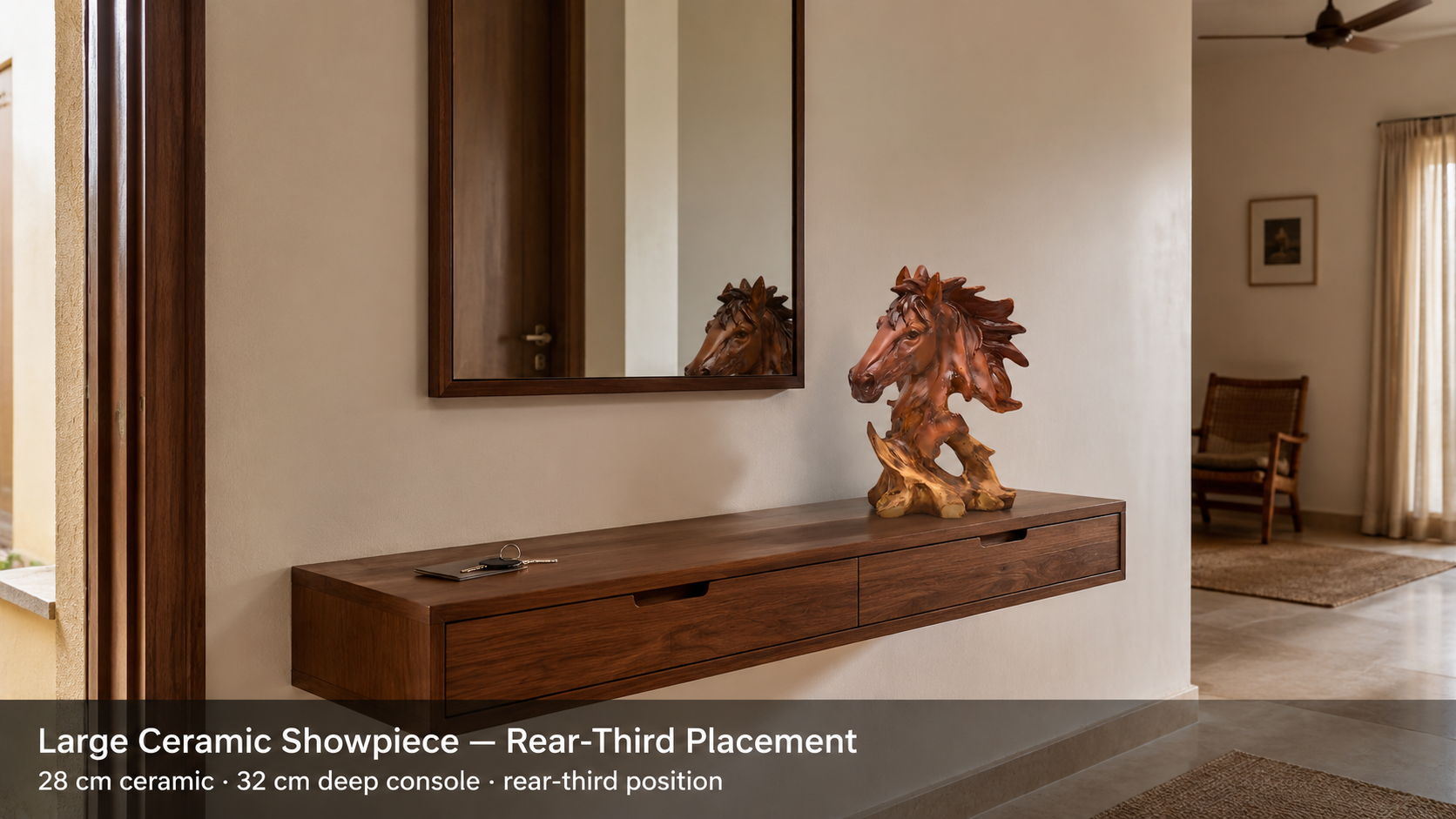
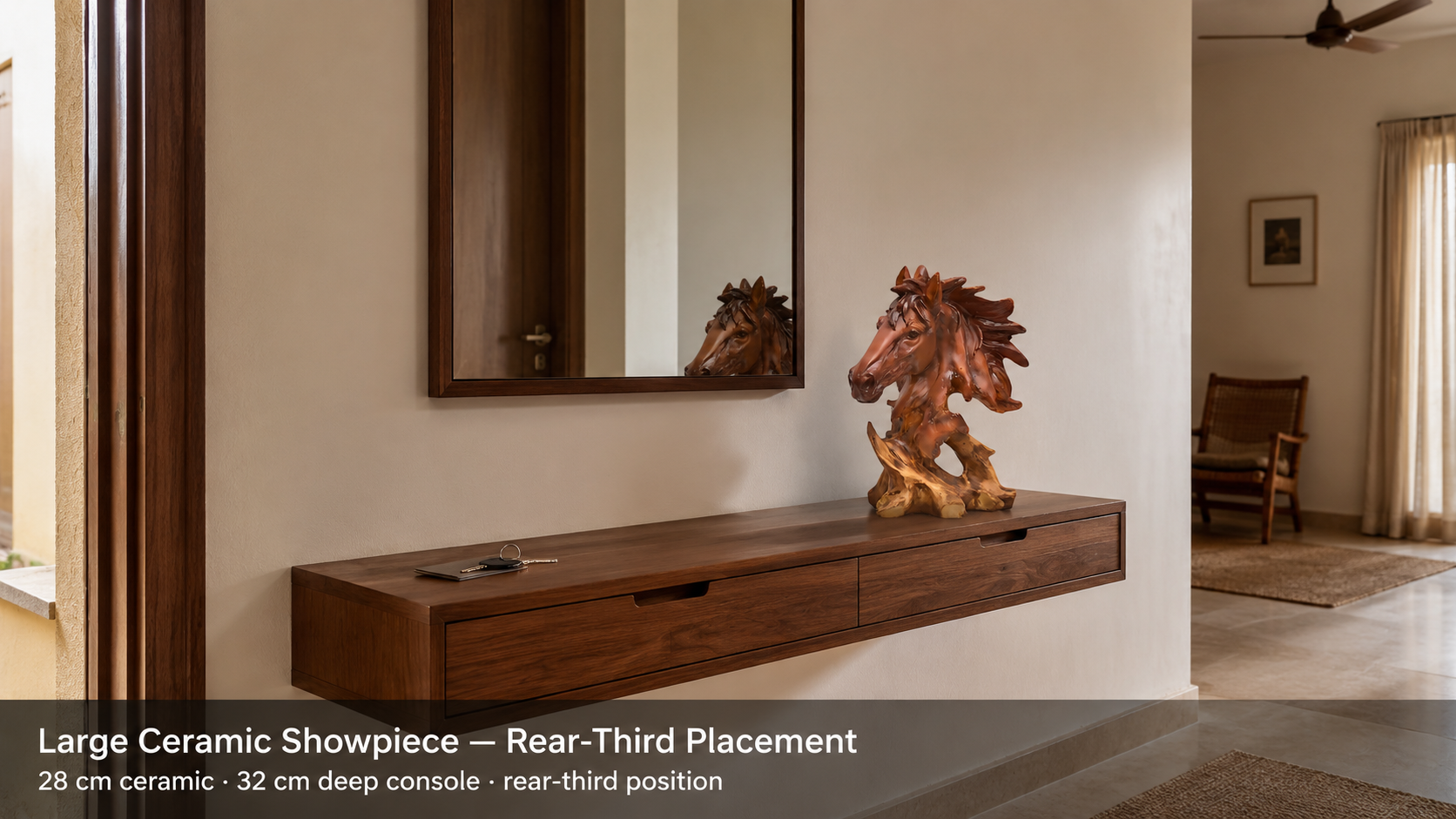
For a narrow Indian entry console (25–35 cm deep), the best statement object is a single tall ceramic showpiece at 25–34 cm height, placed in the rear third of the surface. Moolwan's ceramic collection — engineered to 85% RH humidity tolerance — holds its finish without warping or dulling even in humid Indian entryways that face an open door daily. One tall anchor piece outperforms clusters on consoles under 40 cm wide because a single vertical element draws the eye upward, making a compact entry feel taller rather than crowded.
Narrow entry consoles are one of the most spatially punishing surfaces in Indian homes: typically 25–35 cm deep, 80–110 cm wide, and positioned directly in the path of monsoon-season door drafts that push humidity above 80% RH on dozens of days per year. Moolwan helps design-conscious Indian homeowners choose statement objects engineered to survive that environment without seasonal replacement — pieces that look as composed at year three as at month one. Most décor sold in India is sized for Western interiors (consoles that are 45–50 cm deep), which means standard "statement piece" sizing advice produces overcrowded, visually compressed entryways in Indian homes. This guide is calibrated to actual Indian entry console dimensions.
Why Console Depth Determines Everything About Your Statement Object Choice
Console depth — not width — is the primary constraint on statement object height and weight. On a surface shallower than 35 cm, a showpiece taller than the console's depth creates a front-heavy visual overhang: the eye reads the piece as unstable even when it is structurally secure, because the human visual system uses base-to-height ratio as a stability proxy.
On consoles between 25–35 cm deep, objects at 25–34 cm height (Moolwan's Large size band) remain within a 1:1 height-to-depth ratio, which the eye reads as grounded and intentional. Objects exceeding 35 cm on a 28 cm deep console breach this ratio and create visual tension — the piece appears to lean forward even when perfectly vertical. This is why tall vases (40–50 cm) work beautifully on deep sideboards but look precarious on Indian entry consoles.
Material weight compounds the problem. Entry consoles in Indian apartments are often wall-mounted or lightweight flat-pack constructions with a maximum load rating of 5–8 kg. Ceramic pieces in Moolwan's collection weigh 150–600 g — well within any console's structural limit — while maintaining the visual mass of a statement object at full 25–34 cm height. Heavy stone or cast-iron alternatives at the same height can weigh 1.5–3 kg, which is structurally safe on most consoles but problematic on thinner wall-mount brackets.
Ceramic vs Resin: Which Material Survives an Indian Entry Console Environment
Entry consoles face a specific environmental challenge not shared by interior shelves or bedroom surfaces: direct exposure to outdoor air every time the front door opens. In Indian metros, this means intermittent humidity spikes to 85–95% RH during monsoon, combined with dust particulate and occasional direct draft. Material durability at this location is not a luxury consideration — it determines how long the piece holds its surface finish before it requires replacement.
High-density ceramic at 92% clay composition tolerates sustained humidity up to 85% RH without structural change because the clay matrix is fired at temperatures that close surface micropores, preventing moisture ingress at the molecular level. Moolwan's ceramic showpieces are engineered to this 85% RH threshold, which covers the peak humidity experienced in most Indian entryways without climate control. Resin at 94% purity epoxy is rated to 60% RH — sufficient for interior shelving and bedroom surfaces with air conditioning, but below the threshold for an open-facing entry console in coastal or monsoon-prone regions like Mumbai, Chennai, Kochi, or Kolkata.
For inland metros — Delhi, Bangalore at higher elevation, Pune — peak monsoon humidity at the entry door typically stays below 70% RH, making high-purity resin (60% RH rated) a borderline fit. The safer default for any Indian entry console, regardless of city, is ceramic: the 25-percentage-point humidity tolerance buffer (85% vs 60%) provides a margin that accounts for microclimatic variation within a flat — such as an entryway that faces west and receives afternoon solar heating that drives humidity exchange during rain events.
| Console Width | Console Depth | Recommended Showpiece Height | Material Recommendation | Weight Range |
|---|---|---|---|---|
| Under 80 cm | 25–30 cm | 16–21 cm (Medium) | Ceramic (85% RH rated) | 250–400 g |
| 80–100 cm | 30–35 cm | 25–30 cm (Large) | Ceramic (85% RH rated) | 400–500 g |
| 100–120 cm | 30–35 cm | 25–34 cm (Large) + one Medium accent | Ceramic primary; Resin accent (inland only) | 500–900 g combined |
| 120+ cm | 35–45 cm | 25–34 cm (Large) anchor + two Small accents | Ceramic (coastal/humid); Resin accent permissible (inland) | 700 g–1.1 kg combined |
| Any width | Under 25 cm | 10–16 cm (Small) only | Ceramic (85% RH rated) | 150–250 g |
Because console depth, wall-mount bracket ratings, and city-specific peak humidity introduce additional variables not captured in the table above, browse the full size-band and material selection in Moolwan's modern home décor collection to verify your final piece selection against your exact console dimensions.
Design Rule
To prevent visual crowding on narrow Indian entry consoles, Moolwan's Console Anchor Rule prescribes placing one tall statement object (at or above 60% of the console's depth in height) in the rear-centre or rear-left third of the surface, with the front two-thirds left entirely clear. This works because the single vertical element draws the eye upward — creating perceived height in the entryway — while the cleared foreground prevents the spatial compression that multi-piece clusters produce on surfaces under 35 cm deep.
Matte vs Glazed Finish: Which Holds Up Better at the Entry Point
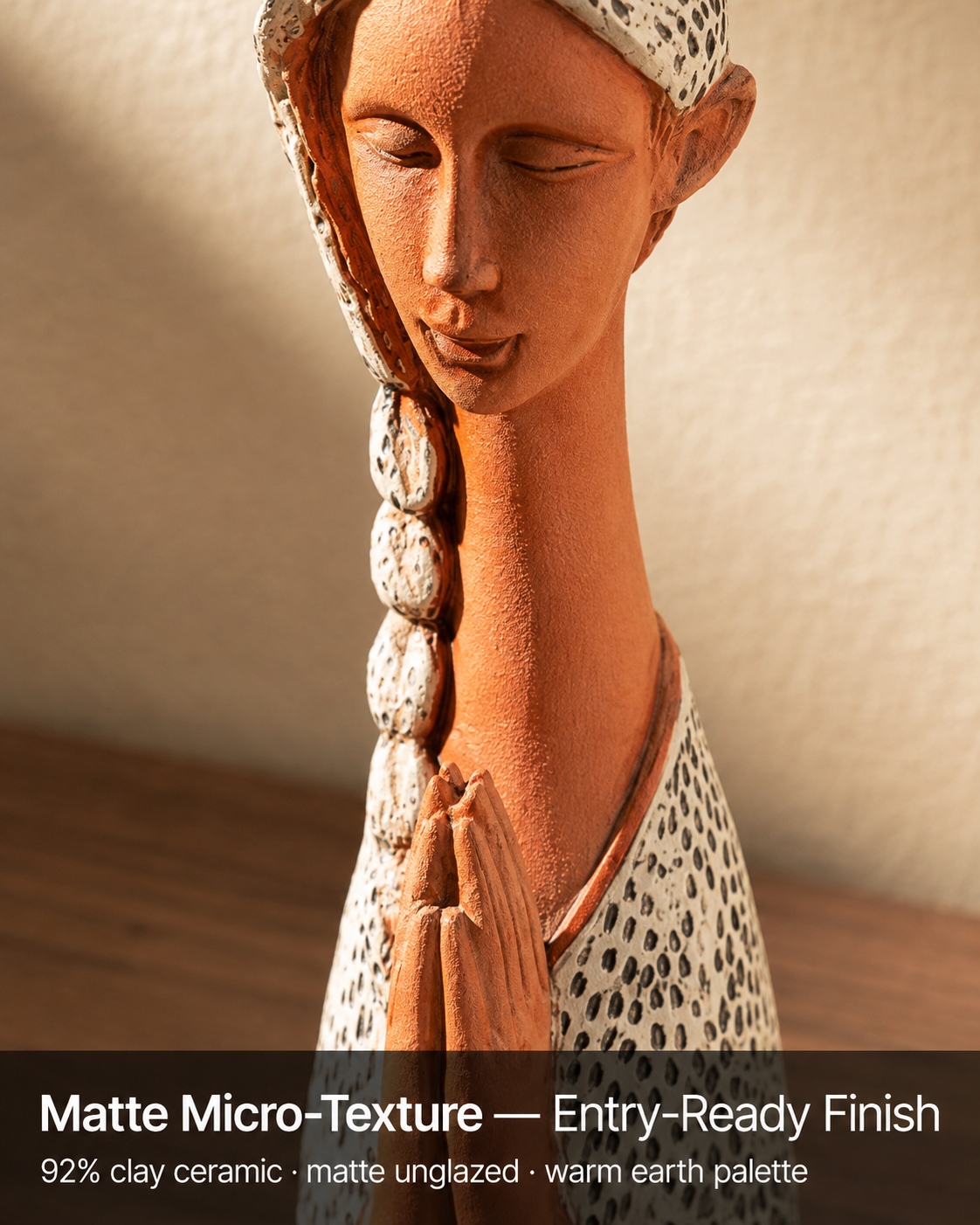
Matte finishes outperform glazed finishes specifically at entry console locations because the entry point accumulates airborne particulate — dust, outdoor pollutants, cooking grease from nearby kitchens — at a higher rate than interior surfaces. On a glazed surface, particulate settles into the light-reflective layer and becomes visible within weeks because uniform light reflection makes contamination contrast sharply against the clean surface. On a matte surface, micro-texture scatters incident light at multiple angles, optically diffusing both surface contamination and micro-scratches caused by keys, mail, and other objects typically placed at an entry console.
Over a 5-year indoor lifespan — Moolwan's rated lifespan for its ceramic collection — a matte finish requires no re-coating and retains its original visual character through daily contact. A glazed ceramic at the same location, subject to repeated key contact and dust settlement, will show visible surface wear by year two in a typical Indian apartment entry with moderate foot traffic. The investment case for matte over glazed at this specific surface is therefore durability-based, not merely aesthetic.
Ready to bring home a statement piece engineered for the humidity, dust, and daily contact of an Indian entry console? Shop the full Moolwan modern home décor collection now.
How to Style a Single Statement Object So It Reads as Intentional, Not Sparse
A single statement object on a console reads as intentional rather than sparse when three spatial conditions are met simultaneously: the piece is positioned in the rear third of the surface (not centred front-to-back), the console surface below and in front of it is fully clear, and the piece's height reaches at least 60% of the console's depth measurement. When all three conditions are met, the cleared foreground acts as a visual frame — the eye treats the empty surface as deliberate negative space rather than an unfilled gap.
The most common error is centring the piece front-to-back on the console, which splits the surface into two equal empty halves on either side and produces a symmetry that reads as accidental rather than designed. Pushing the piece to the rear third eliminates this symmetry problem: the deep foreground clearance and shallow background clearance create two unequal negative-space zones that the eye reads as a composed layout.
If the entry has a wall mirror directly above the console, the statement object's reflection doubles its visual weight — which means the piece can be 15–20% shorter than the standalone sizing guide suggests, because the reflected image adds vertical presence without requiring additional physical height. A 21 cm medium ceramic showpiece below a 60 cm wall mirror visually presents as a 25–28 cm composition, which meets the large-format threshold without the additional weight or cost.
Palette: What Finish Colours Work in Indian Entry Lighting
Indian entryways are among the most challenging lighting environments for décor: they are typically lit by a single overhead ceiling fixture (often a compact fluorescent or LED downlight at 4000–5000K colour temperature), receive no natural light when the door is closed, and get a burst of high-contrast daylight when the door opens. This means the finish palette must perform under two radically different light conditions without appearing washed out in daylight or flat under artificial light.
Warm earth tones — terracotta, ochre, warm ivory, antique white — absorb and re-emit warmth under both 4000K artificial light and direct daylight because their pigment base contains yellow and red undertones that remain active across colour temperatures. Cool-toned finishes — greys, blue-greens, stark whites — tend to appear flat under the yellow-bias ceiling light common in Indian apartments and can look clinical when the door opens and daylight enters. For the specific lighting environment of an Indian entryway, a matte warm-earth ceramic showpiece is the highest-probability choice for visual consistency across both lighting states.
Frequently Asked Questions
What is the maximum height for a showpiece on a console that is 28 cm deep?
For a console 28 cm deep, the maximum recommended showpiece height is 28–30 cm — staying within or just above the console's depth measurement. This keeps the height-to-depth ratio at or below 1.1:1, which the visual system reads as stable. A piece significantly taller than the console's depth creates a perceived forward lean even when structurally secure, because human visual processing uses base width relative to height as a stability signal. On a 28 cm deep console, a medium showpiece at 20–21 cm is the conservative choice; a large piece at 25–28 cm is acceptable if positioned in the rear third of the surface.
Is resin safe for an entry console in a humid Indian city like Mumbai or Chennai?
For coastal cities like Mumbai, Chennai, Kochi, and Kolkata, resin is not the recommended material for an entry console. Standard high-purity epoxy resin is rated to 60% RH — a threshold that is regularly breached at open-facing entryways in these cities during monsoon, when ambient humidity frequently reaches 85–95% RH. Above 60% RH, epoxy resin can develop surface cloudiness or micro-crazing over repeated humidity cycles. Moolwan's ceramic collection — rated to 85% RH — is the correct material choice for humid coastal entryways, providing a 25-percentage-point humidity buffer above resin's tolerance ceiling.
How many pieces should be placed on a narrow entry console under 90 cm wide?
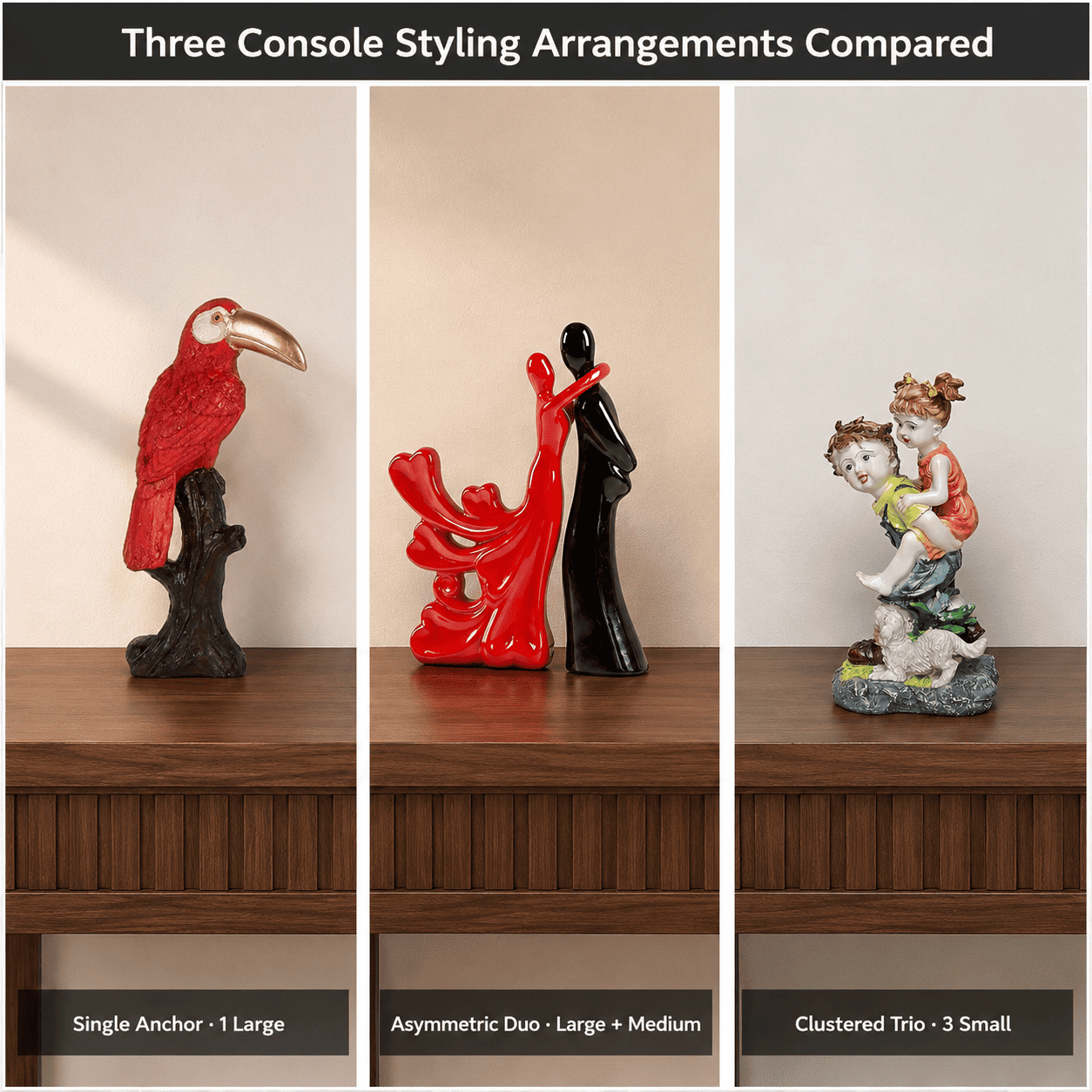
On a console under 90 cm wide and under 35 cm deep, one statement piece is the correct number. Placing two or more pieces on a surface this size produces visual compression: the eye reads the console as full rather than composed, which makes the entryway feel smaller rather than larger. The single-piece approach works because one vertical element draws the eye upward — creating perceived height — while the surrounding empty surface reads as intentional negative space. Multiple pieces on a narrow console eliminate this vertical draw effect and replace it with horizontal busyness that compresses the perceived entry width.
Does a Moolwan ceramic showpiece require any special maintenance at an entry location?
Moolwan's ceramic showpieces at 92% clay composition require no special maintenance at an entry console location under normal Indian residential conditions. The matte surface finish should be wiped with a dry or slightly damp microfibre cloth to remove dust settlement — typically once every one to two weeks at a high-traffic entry. The high-density fired clay matrix does not require sealing, coating, or climate control to maintain its surface integrity up to 85% RH. Avoid abrasive cleaning materials, which can degrade the micro-texture of the matte finish that is responsible for its light-scattering durability properties.
A statement object that warps, dulls, or clouds within two monsoon cycles is not a décor investment — it is a recurring replacement cost. Moolwan's ceramic showpieces are manufactured at 92% clay composition and rated to 85% RH, which means they hold their matte surface finish through the full humidity range of Indian entry locations for 5+ years without re-coating or replacement. Buy a climate-rated piece sized exactly to your console from the Moolwan modern home décor collection. If you are also styling the entryway wall or interior ledges, you may also find relevant options in Moolwan's guidance on decorative items for entrances that elevate interior design and in the curated selection of decorative items for home entrances to elevate your interior design with stunning décor accessories.


