
Bird Bonanza Multiframe That'll Have Your Walls Chirping - Framed Bird Wall Art Flying High (127x76cm)
You may also like

Moolwan 5-Panel Coot Bird Canvas Wall Art Painting (127x76cm) - Nature Wildlife Multi-Frame Art
You might have browsed dozens of bird wall art paintings by now. Some were too small—those 60cm pieces that disappeared above your sofa like an afterthought. Some were overwhelming—150cm canvases that made your 12-foot wall feel cramped rather than decorated. You probably kept coming back to something around 127cm—because intuitively, it feels right for the space above your furniture. But you want to be sure before spending money on something you'll see every single day.
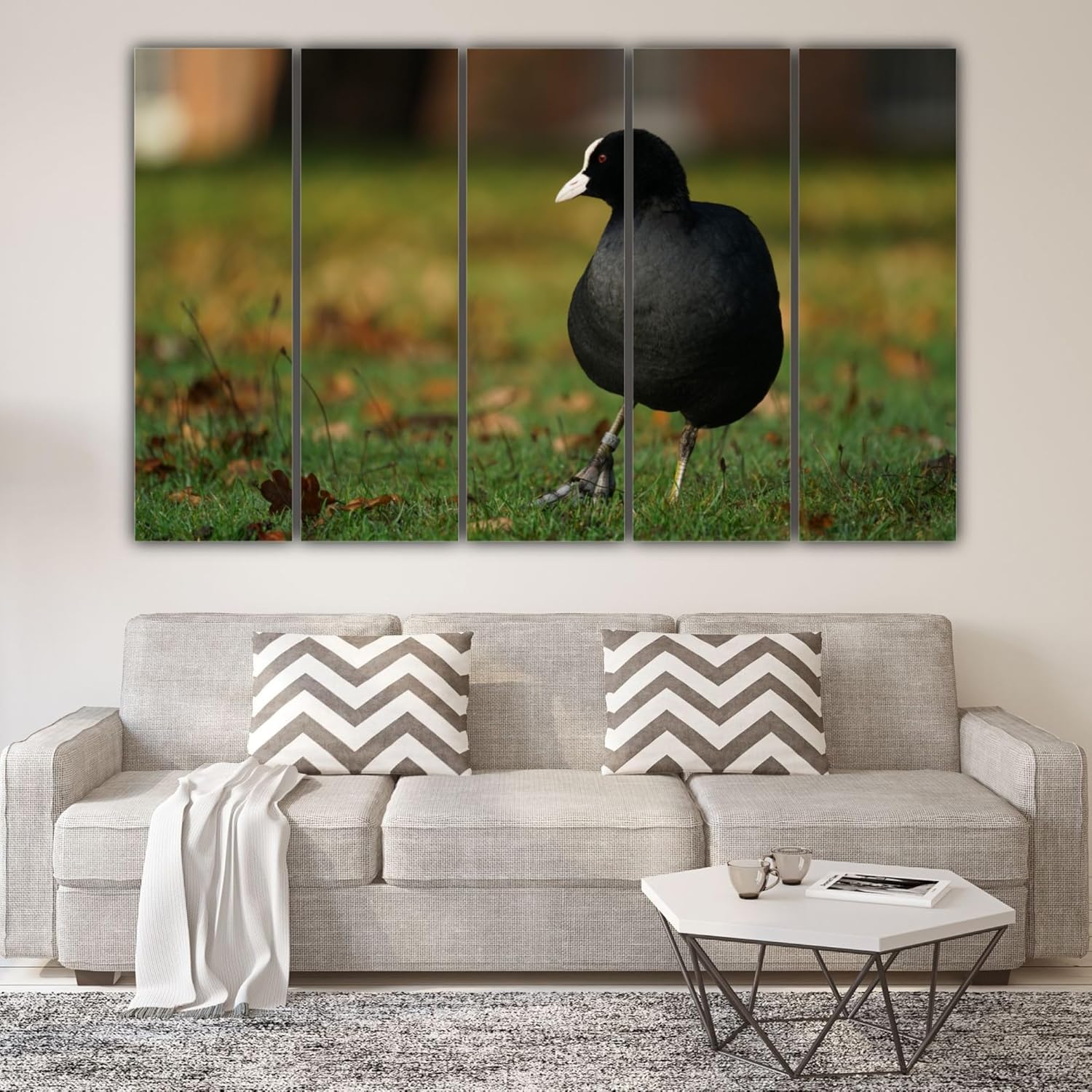
This 5-panel Coot bird canvas wall art painting measures 127x76cm, and there's a reason this size keeps catching your attention. On a standard 12-foot Indian living room wall (roughly 360cm), this piece covers exactly 35% of the width—leaving 116cm of breathing room on each side. That's the proportion interior designers recommend: enough presence to anchor the wall, but enough negative space to let your room feel open rather than cluttered.
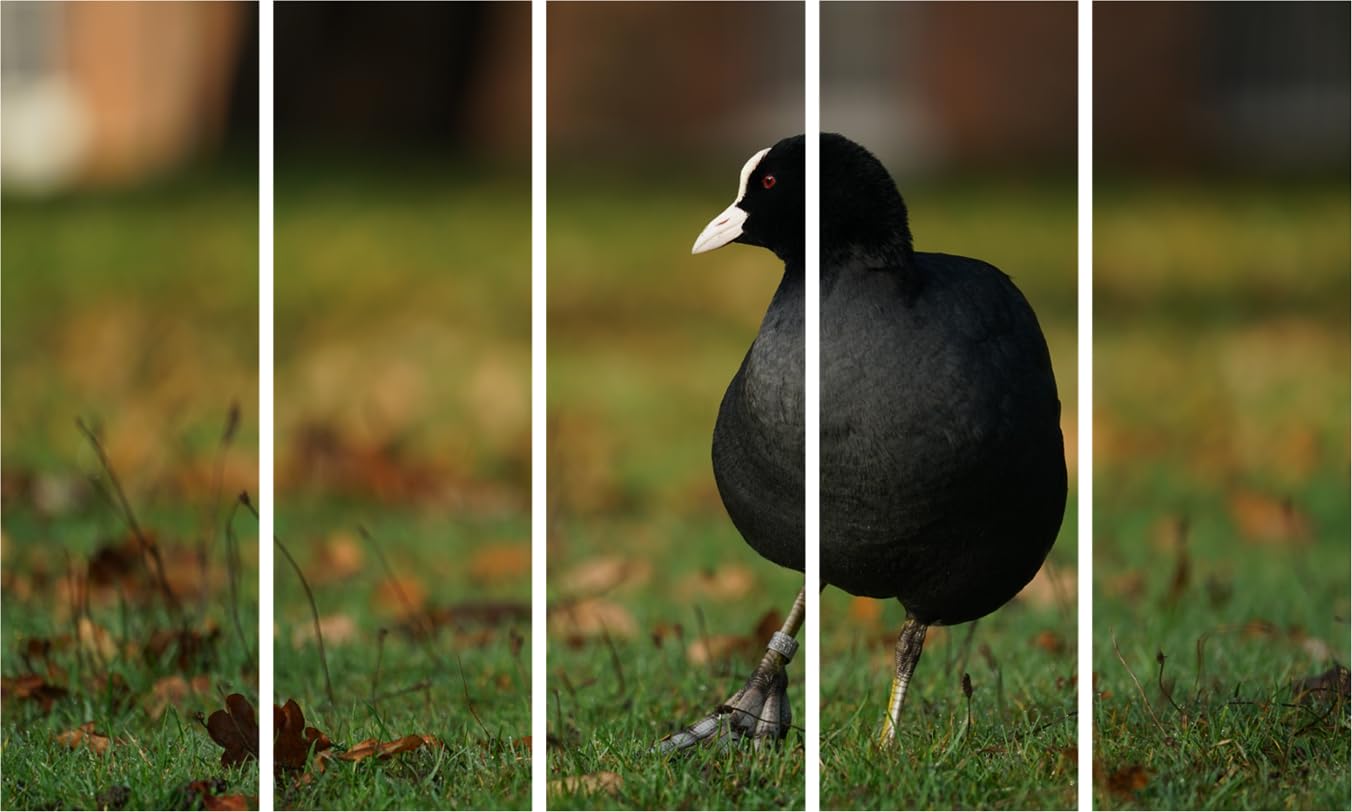
The image itself captures a Eurasian Coot mid-stride across autumn grass—a moment of quiet natural beauty. The bird's deep black plumage contrasts against golden-brown fallen leaves and vibrant green grass, with a distinctive white beak that draws the eye naturally to the center panel. It's wildlife photography transformed into wall-worthy art.
Why 127cm Works on 12-Foot Walls (And What Happens If You Go Smaller or Bigger)
Your living room wall is probably around 12 feet (360cm) wide—that's the standard in most 2BHK and 3BHK apartments across India. Here's what different canvas sizes actually look like on that wall:
A 90cm canvas covers just 25% of a 12-foot wall. Mounted above a 7-foot sofa, it leaves 135cm of empty space on each side. That much negative space makes the artwork look accidental rather than intentional—like you forgot to buy something bigger.
This 127cm canvas covers 35% of the same wall. With 116cm on each side, the proportions feel deliberate. Your eye registers the artwork as the focal point without feeling overwhelmed.
A 150cm canvas pushes to 42% coverage. That's still workable, but starts competing with your furniture rather than complementing it. And if your sofa is on the shorter side (6 feet), the canvas begins to feel like it's swallowing the seating area.
The 127cm sweet spot works because it acknowledges Indian apartment realities—furniture that's substantial, walls that are cream or off-white, and rooms that need to breathe.
What These Green and Black Tones Will Actually Look Like Against Your Walls
Your walls are probably cream, off-white, or that builder-standard light yellow that comes with most Indian apartments. Here's why this particular color palette works in those spaces:
The dominant colors here are deep forest greens and earthy golden-browns, anchored by the striking black of the Coot itself. Against cream walls, these natural tones create what designers call a "grounded" palette—colors that feel organic rather than jarring. The green doesn't compete with your wall color; it complements it.
That black bird becomes a natural focal point. In a room full of neutrals—beige sofas, wooden coffee tables, cream curtains—the deep black creates contrast without screaming for attention. And the white beak and forehead shield add just enough brightness to keep the artwork from feeling heavy.
In morning light, the greens will appear more vibrant, almost emerald. In evening LED light (the warm 3000K bulbs most Indian homes use), they'll shift toward olive and sage. Both versions look intentional. This isn't artwork that only works in studio photography—it's designed for how Indian living rooms actually look at 7 PM with the AC running.
Installation Takes 15 Minutes (Even If You're Not Handy)
The 5-panel design arrives with each panel ready to hang. Total weight is 3 kg—light enough that you won't need heavy-duty wall anchors for most applications. The 0.6cm depth means panels sit nearly flush against the wall, creating that seamless multi-frame effect.
For renters worried about deposits (and those ₹50,000 advances aren't small), here's the reality: each panel needs two small nails, and those holes can be filled with ₹20 wall putty in 30 seconds when you move out. We've had customers in rented Bangalore apartments hang these without losing a rupee of their deposit.
Standard spacing between panels is 2-3cm. Wider than that, and the panoramic effect breaks. Tighter than that, and the white gaps that define the multi-frame aesthetic disappear. The sweet spot is about as wide as your thumb.
How This Compares to What Else You've Been Looking At
You've probably seen bird art in three categories during your search: cheap marketplace prints around ₹800-1,200, mid-range framed options at ₹2,500-4,000, and gallery pieces above ₹6,000. Here's where this Moolwan canvas sits and why:
Those ₹800 prints use 180 GSM paper and basic inkjet printing. Colors fade within 6-12 months, especially if your wall gets any afternoon sun. The frame (if included) is usually hollow plastic that warps in monsoon humidity.
This Moolwan canvas uses 340 GSM cotton canvas with eco-solvent UV-resistant inks—the same grade used in professional photography prints. The 1.5-inch pinewood frame is kiln-dried to 12% moisture content, which means it won't warp when Pune's August humidity hits 85%. Colors stay true for years, not months.
Gallery pieces use similar materials but charge for the showroom experience. You're paying for their rent, their salespeople, and their designer packaging. The actual product difference? Marginal.
What This Will Look Like in Your Living Room (Not Just Our Photos)
Let's set realistic expectations for how this artwork performs in actual Indian homes:
Viewing distance matters. From your sofa (probably 8-10 feet from the wall), the 5-panel design reads as a cohesive image. The individual panels blur into one continuous scene. Walk closer than 4 feet, and you'll notice the panel gaps and canvas texture—that's normal and intentional for this art style.
The Coot's black plumage will appear slightly different depending on your lighting. Under warm LEDs, it'll have subtle brown undertones. Under cooler daylight, it'll read as true black. Both versions work—this isn't a flaw, it's how dark pigments interact with light.
If your wall gets direct afternoon sun, the colors won't fade noticeably for several years. But if you're placing this on a west-facing wall with 3+ hours of direct summer sunlight, expect very gradual warming of the greens over 3-4 years. That's true of any canvas art, regardless of price point.
Quick Specifications
- Product: 5-Panel Coot Bird Canvas Wall Art Painting
- Dimensions: 127cm (W) x 76cm (H) x 0.6cm (D)
- Weight: 3 kg total
- Canvas: 340 GSM cotton with moisture-resistant coating
- Frame: 1.5" kiln-dried pinewood (12% moisture content)
- Inks: Eco-solvent UV-resistant
- Panels: 5 pieces, ready to hang
- Delivery: 5-6 days (metro), 6-8 days (tier-2/3 cities)
- Brand: Moolwan