
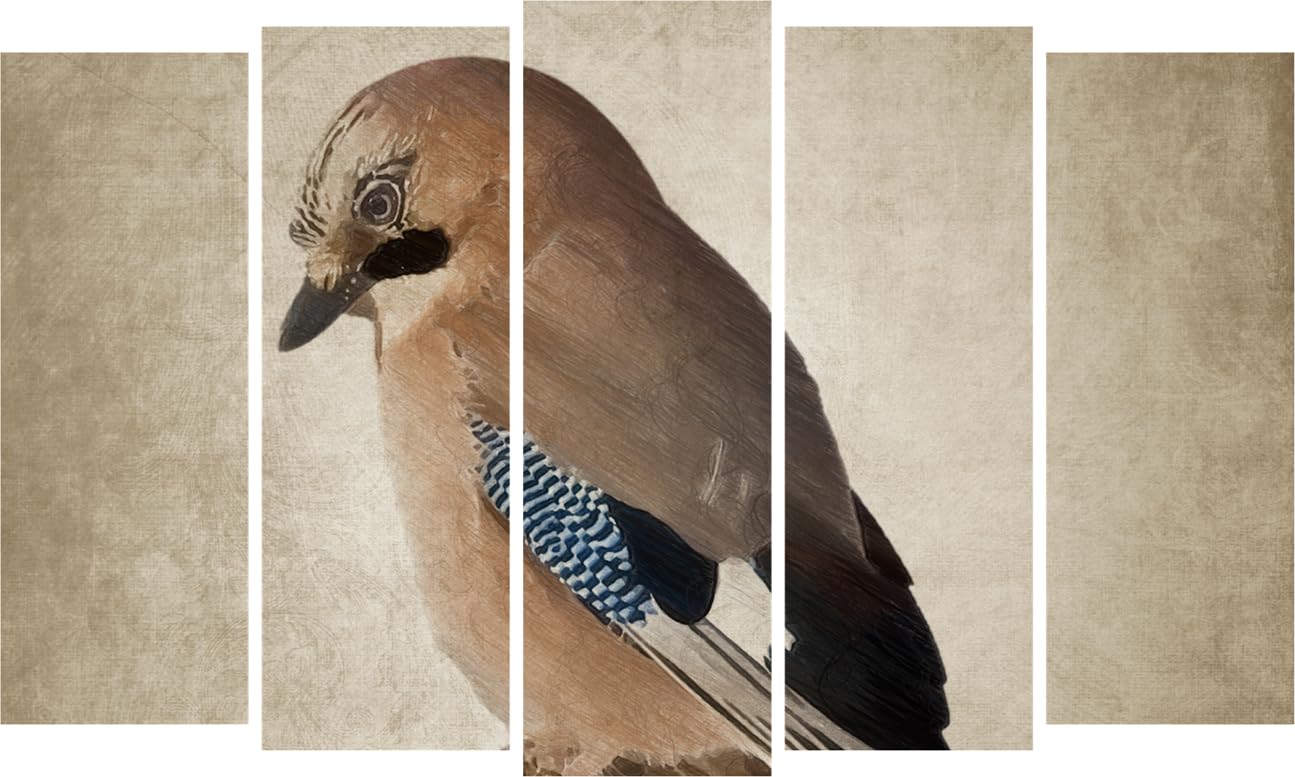
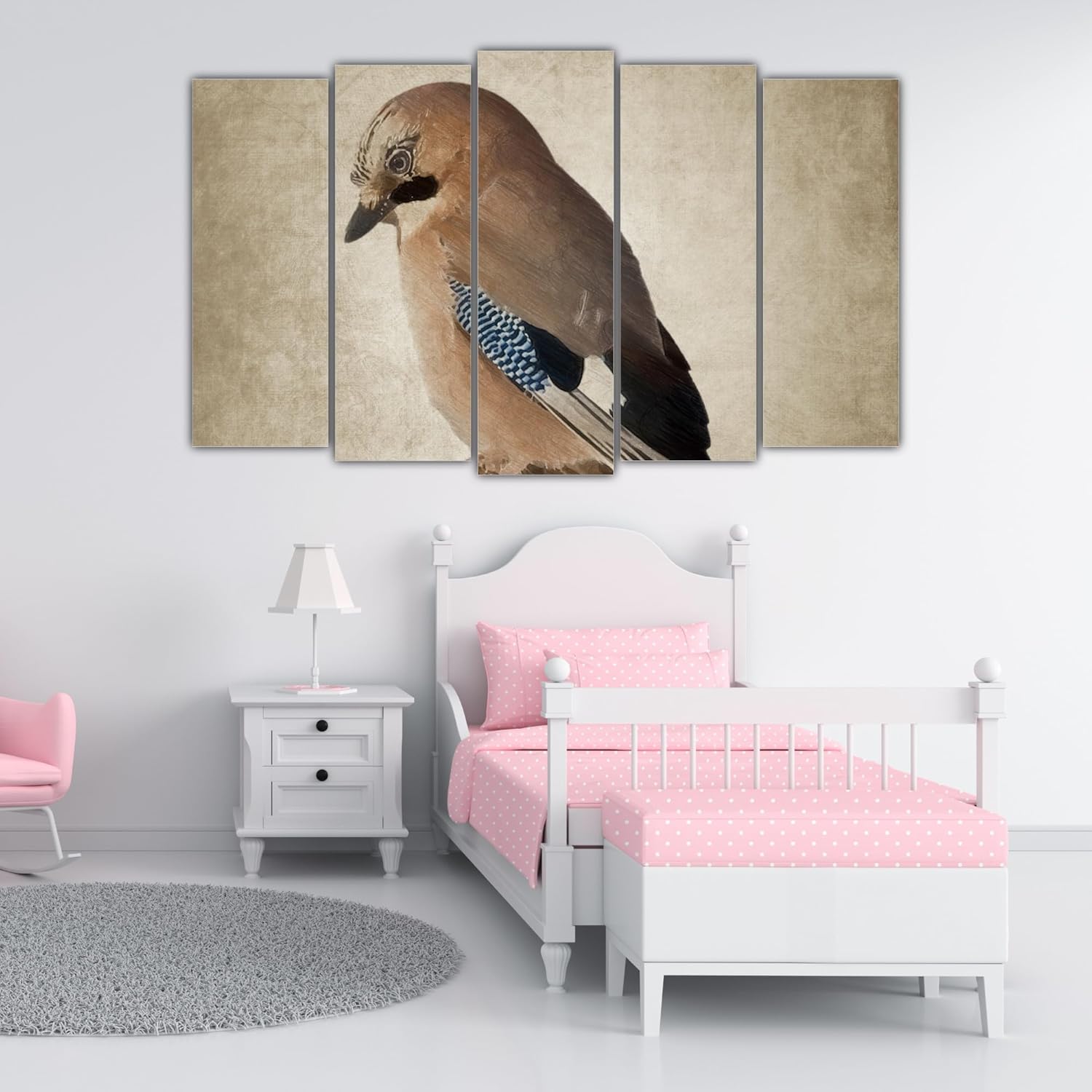
Bird-tastic 5-Panel Feathered Friends Framed Wall Art That'll Make Your Walls Chirp with Joy (150x76cm)
You may also like

Moolwan 5-Panel Bird Portrait Canvas Wall Art Painting (127x76cm) - Artistic Nature Decor for Indian Homes
Three weekends of browsing. Maybe fifteen saved items. At least eight open tabs. And you're still here because every time you get close to buying, the same question stops you: will this actually look proportional above my sofa, or will it seem awkward once it's up? You're not indecisive—you're careful. Because once this is on your living room wall, you'll see it daily. It needs to be right.
This 127cm bird portrait canvas wall art painting exists precisely for walls like yours. If your living room wall measures around 12 feet (360cm), this piece covers roughly 35% of that width—leaving approximately 116cm breathing space on each side. That's not accidental. Interior designers call this the "visual anchor" ratio: substantial enough to command attention, restrained enough to let your wall breathe. Your cream or off-white walls will frame the warm browns and subtle blues naturally, creating depth without overwhelming your existing furniture arrangement.
The Visual Math: How 127cm Fits 12-Foot Walls in Indian Living Rooms
Here's what the numbers actually mean for your space. A standard 12-foot (360cm) wall with an 8-foot sofa pushed against it leaves your eyes searching for a focal point. This 127cm canvas wall art painting fills that visual gap precisely.
Coverage calculation: 127cm ÷ 360cm = 35.2% wall coverage. Design principles suggest 50-75% of your furniture width for artwork above it. If your sofa measures 8 feet (244cm), this 127cm piece hits 52%—right in the sweet spot.
What happens with smaller options? A 90cm canvas covers only 25% of a 12-foot wall. It floats awkwardly, looking like an afterthought rather than a deliberate design choice. What about larger? A 150cm+ piece pushes past 40% coverage, potentially overwhelming rooms under 14 feet wide.
The 76cm height matters too. With standard 9-10 foot ceilings in Indian apartments, hanging this piece 8-12 inches above your sofa puts the center at eye level (approximately 57-60 inches from floor)—where your gaze naturally rests when entering the room.
Why Warm Browns and Muted Blues Work Against Cream Walls (Not Just in Photos)
The bird portrait features a naturalistic palette: warm sandy browns, subtle cream undertones, and those distinctive blue-black wing accents. This isn't the saturated, artificial colouring you've probably seen on marketplace listings.
Against your cream or off-white walls (the standard builder finish in most Indian apartments), these earth tones create what designers call "tonal harmony." The beige background of the artwork nearly disappears into your wall colour, making the bird itself appear to float forward—a depth effect that photographs can't fully capture.
The blue wing bars add controlled contrast. They'll pick up accent colours if you have blue cushions, curtains, or decorative pieces, creating visual continuity across your room. Against brown leather or fabric sofas (common in Indian homes), the artwork's warm palette feels intentional rather than clashing.
Morning natural light will soften these colours further. Evening LED or warm white lighting deepens the browns slightly. Neither lighting condition will make this piece look dramatically different from what you see here—unlike highly saturated artwork that can appear garish under artificial light.
Rental-Friendly Installation: 20 Minutes Without Losing Your Deposit
You're probably concerned about wall damage—especially if you've paid a ₹50,000+ rental deposit. The 5-panel design actually works in your favour here.
Each panel weighs approximately 600 grams (total 3kg distributed across five frames). This means smaller mounting hardware per panel—typically two small nails or picture hooks each, creating holes barely 2mm wide. Compare this to a single-frame 127cm canvas that would need heavy-duty anchors leaving 6-8mm holes.
Installation involves:
- Measuring 8-12 inches above your furniture
- Marking five points with 2-3cm gaps between panels
- Light hammer taps for small nails (no drilling required)
- Hanging each panel sequentially from centre outward
Total time: 15-20 minutes with basic tools. If you move apartments, those tiny nail holes fill with toothpaste or wall putty in seconds—a trick most tenants already know.
The 1.5-inch pinewood frame provides enough depth that panels sit slightly away from the wall, creating shadow lines that add dimension while preventing that flat, poster-like appearance.
How This Compares to the 90cm and 150cm Versions You've Probably Considered
If you've been comparing sizes, here's the honest breakdown:
90cm (3-panel) version: Costs roughly ₹500-800 less. But on a 12-foot wall, it covers only 25%—functional for accent walls in bedrooms or smaller study rooms, but underwhelming as a living room centrepiece. You'll likely wish you'd gone bigger within months.
150cm (5-panel) version: Approximately ₹400-600 more. Covers 42% of a 12-foot wall—impressive, but demanding. Works beautifully if your living room exceeds 14 feet wide. Below that, it can make standard Indian apartments feel smaller. The visual weight competes with your furniture rather than complementing it.
This 127cm version: The middle ground that actually works for 10-14 foot walls (the most common living room width in Indian metros and tier-2 cities). Substantial presence without spatial compromise.
Against generic marketplace canvas at ₹800-1,200: those options typically use 180-220 GSM canvas with inkjet printing that fades within 18 months. This Moolwan piece uses 340 GSM cotton canvas with moisture-resistant coating—relevant when your city hits 80% humidity during monsoons. The eco-solvent UV-resistant inks maintain colour integrity for years, not months.
What This Will Actually Look Like in Your Space (Setting Realistic Expectations)
Let's be direct about what you're getting—and what you're not.
You are getting: A painterly, artistic interpretation of a bird portrait. The brushstroke texture visible in this artwork adds depth and sophistication that flat digital prints lack. The muted, naturalistic colour palette suits traditional and contemporary Indian interiors equally. The 5-panel split creates visual interest without the gimmicky feel of overly segmented designs.
You are not getting: A photograph-quality realistic bird image. A vibrant, saturated colour explosion. A piece that demands attention through brightness rather than subtlety.
Viewing distance matters: From your sofa (approximately 8-10 feet away), the five panels merge into a cohesive composition. The bird's details—the expressive eye, the textured feathers, the blue wing bars—remain visible and engaging. Walking closer reveals the artistic brushwork and texture that sets canvas apart from paper prints.
Colour accuracy: What you see in this image represents the actual piece within 90-95% accuracy. Slight variations occur based on your device screen, but you won't receive something dramatically different. The warm brown-beige palette is consistent across production batches.
Quick Specifications
- Dimensions: 127cm (width) × 76cm (height) × 0.6cm (depth)
- Weight: 3000 grams (3 kg total, approximately 600g per panel)
- Panels: 5-panel split design with 2-3cm recommended gaps
- Canvas: 340 GSM cotton with moisture-resistant coating
- Frame: 1.5-inch kiln-dried pinewood (12% moisture content)
- Inks: Eco-solvent, UV-resistant
- Ideal wall width: 10-14 feet (300-420cm)
- Ideal room size: 12×14 feet and above
- Delivery: 5-6 days (metros), 6-8 days (tier-2/3 cities)
- Brand: Moolwan