
Bird-tastic Multi-Frame Artwork That'll Chirp Into Your Heart - Premium Framed Wall Art (127x76cm)
You may also like

Moolwan 5-Panel Seagull Canvas Wall Art Painting (127x76cm) - Multi-Frame Bird Photography Art
You might have browsed dozens of bird wall art pieces by now. Some were too small—barely visible above an 8-foot sofa. Some were too abstract, looking more like a colour experiment than actual art. You probably kept coming back to something around 127cm—because intuitively, it feels right for your wall. But you want to be sure.
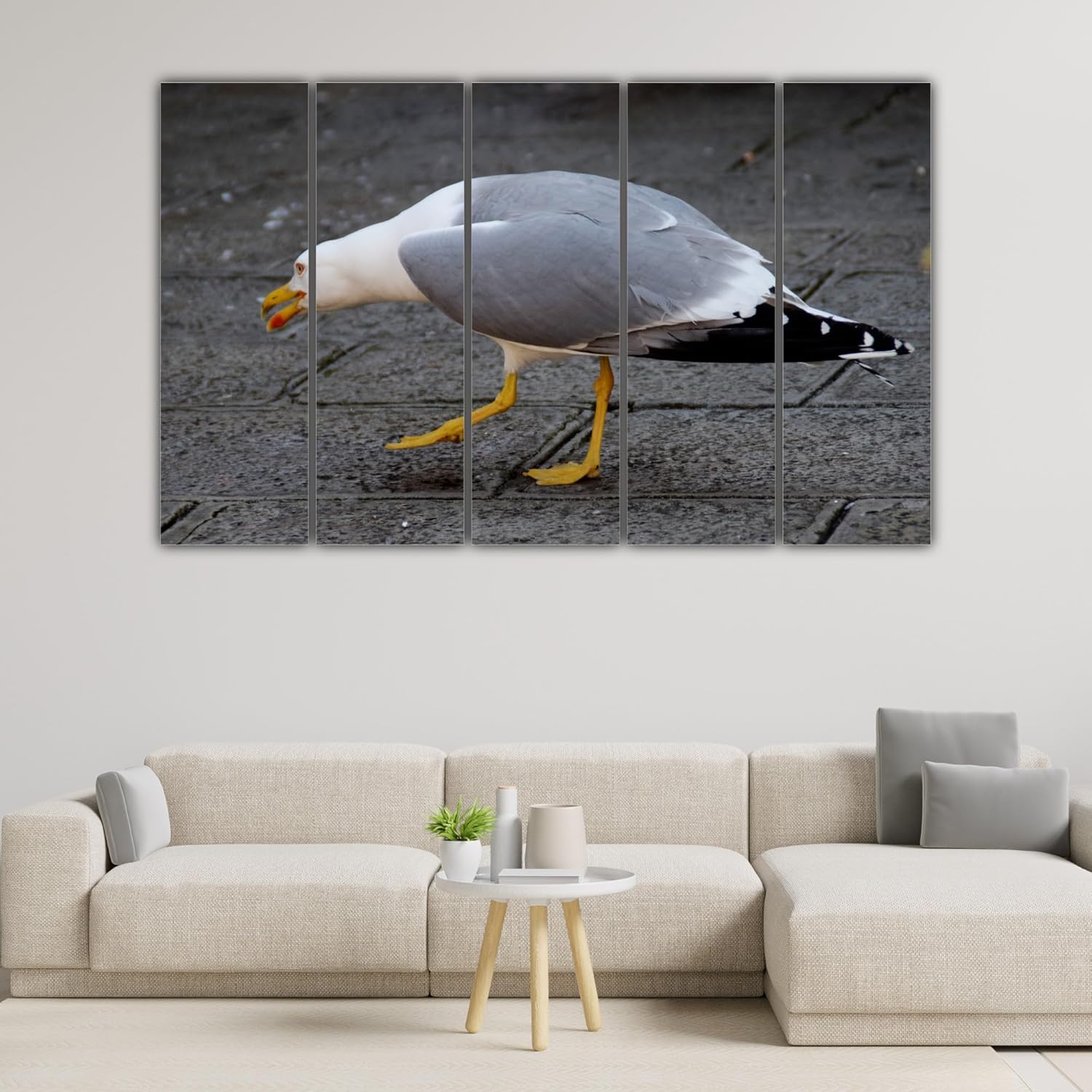
This 5-panel seagull canvas wall art painting spans 127cm across your wall. On a standard 12-foot (360cm) living room wall, that's roughly 35% coverage—leaving about 116cm of breathing space on either side. Not cramped. Not lost. Proportional.
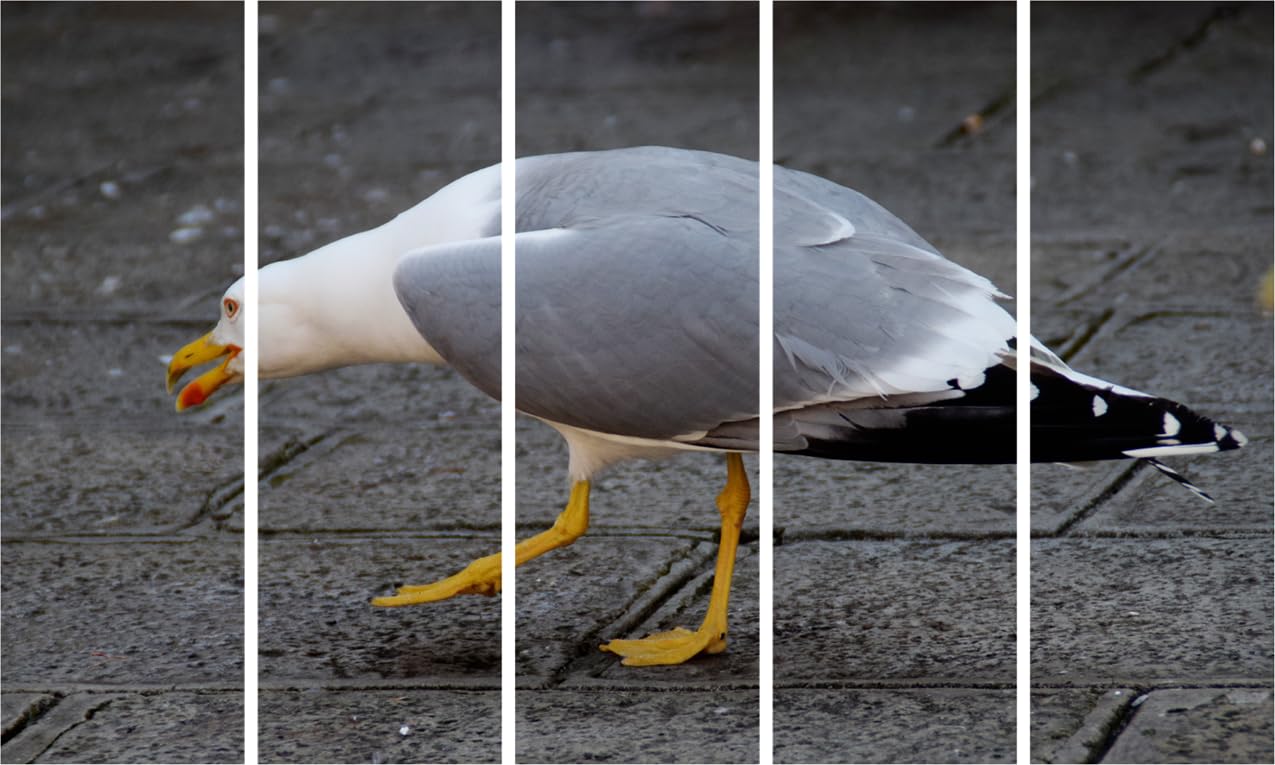
The image itself captures a moment of pure coastal energy: a seagull mid-stride, its yellow beak and legs creating sharp accents against a muted grey stone background. The 5-panel split adds a gallery feel without the gallery price tag—each frame presenting a segment of the bird's motion, creating visual rhythm across your wall.
Why 127cm Works on 12-Foot Walls (and What Happens If You Go Smaller or Bigger)
Your living room wall is probably somewhere between 10 and 14 feet wide. Let's work with a typical 12-foot (360cm) wall, with an 8-foot sofa positioned in front.
At 127cm wide, this canvas wall art painting covers approximately 35% of your wall width. Here's what that means in practical terms: if your sofa is 240cm (8 feet), this artwork extends about 55cm beyond each sofa arm when centred. That's the visual balance interior designers recommend—artwork wider than the sofa's midpoint but not exceeding its full width.
If you went smaller—say, 90cm—you'd cover only 25% of the wall. It would look like an afterthought, something that accidentally ended up there. Go larger—150cm or more—and you risk making the room feel like an art gallery where someone forgot the other exhibits.
The 76cm height positions perfectly between your ceiling and sofa back. With standard 9-10 foot ceilings in Indian apartments, hanging this at eye level (centre at 145-155cm from floor) leaves comfortable visual breathing room above and below.
The Colour Science: How Grey and White Look Against Cream Walls
Indian living rooms typically feature cream, off-white, or light yellow walls—builder favourites across metros and tier-2 cities alike. This seagull canvas uses predominantly grey and white tones with strategic yellow accents.
Against cream walls, the grey tones create subtle contrast without jarring. Unlike high-saturation artwork that fights for attention, this piece complements rather than competes. The white feathers of the seagull pick up your wall's undertones, creating visual harmony. The yellow beak and legs—sharp and bright—add the accent your room probably needs without requiring you to buy matching cushions or rugs.
Morning sunlight will soften the greys slightly. Evening LED light will deepen them. Neither lighting condition makes this look washed out or harsh—the mid-tones are forgiving that way.
Installation Takes 15 Minutes (Even If You're Not Handy)
Five panels. Five hanging points. Sounds complicated? It isn't.
Each panel weighs about 600 grams—light enough that standard picture hooks hold them securely. The total weight of 3kg is distributed across five points, meaning no single point bears more than what a basic nail can handle.
For rental apartments where your ₹50,000 deposit is always at the back of your mind: use adhesive strips rated for 1kg per strip. Three strips per panel, let them cure for 24 hours, and you're set. When you move, warm air from a hairdryer loosens the adhesive, leaving walls unmarked.
Panel spacing matters. Maintain 2-3cm gaps between each frame for the full multi-panel effect. Start from the centre panel, mark its position, then work outward. A ₹50 laser level from any hardware shop ensures your panels don't gradually slope—a problem more common than anyone admits.
How This Compares to Abstract Art and Smaller Sizes You've Been Considering
You've probably looked at abstract art too. Geometric shapes, splattered colours, brushstroke patterns. They're safe choices—no one can say "that bird looks weird" about abstract art. But they're also forgettable. Walk into ten homes with canvas art, and seven will have abstract pieces that look interchangeable.
This seagull image tells a story. It's a frozen moment, a bird in motion, life captured on canvas. Guests notice. They comment. "Where did you get this?" is the reaction you want—not polite silence.
Compared to smaller bird canvases (80-90cm range), this 127cm piece commands attention appropriate for a main living room wall. Smaller pieces work above study desks or in bedrooms. For the wall your guests see first when they enter, 127cm is the minimum that looks intentional.
Setting Realistic Expectations: What This Will Actually Look Like
Online product photos are shot in studio lighting with perfectly styled rooms. Your living room has windows on one side, a tube light on the ceiling, maybe a corner lamp. Here's what to expect:
The grey stone background in the image will appear slightly warmer in incandescent/warm LED lighting (2700-3000K) and slightly cooler in daylight or cool-white LEDs. The seagull's white feathers adapt well to both—they don't yellow under warm light or turn harsh under cool light.
From your sofa—about 2.5-3 metres away—you'll see the complete bird across all five panels. The multi-panel gaps won't feel like interruptions from that distance. Get closer, and you appreciate the canvas texture and print detail. Both viewing experiences work.
The image is photographic realism, not illustration or painting. If you're expecting impressionistic brushstrokes, this isn't that. What you see here is what arrives—detailed, sharp, a photograph printed on quality canvas.
Quick Specifications
- Product: Moolwan 5-Panel Seagull Canvas Wall Art Painting
- Dimensions: 127cm (width) x 76cm (height) x 0.6cm (depth)
- Weight: 3 kg total (approximately 600g per panel)
- Panels: 5-panel multi-frame design
- Canvas: 340 GSM cotton with moisture-resistant coating
- Frame: 1.5-inch kiln-dried pinewood
- Print: Eco-solvent UV-resistant inks
- Style: Photographic realism, coastal bird theme
- Best for: 10-14 ft living room walls, above 6-8 ft sofas
- Delivery: 5-6 days metro cities, 6-8 days tier-2/3 cities