
Bird-tastic Multi-Frame Wall Art That'll Chirp Up Your Walls
You may also like

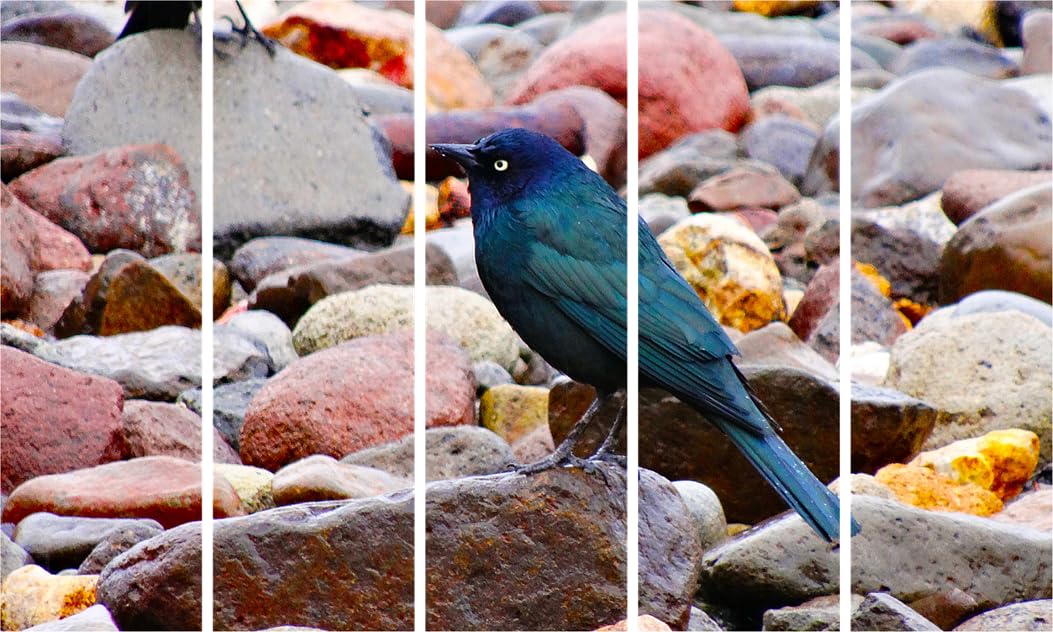
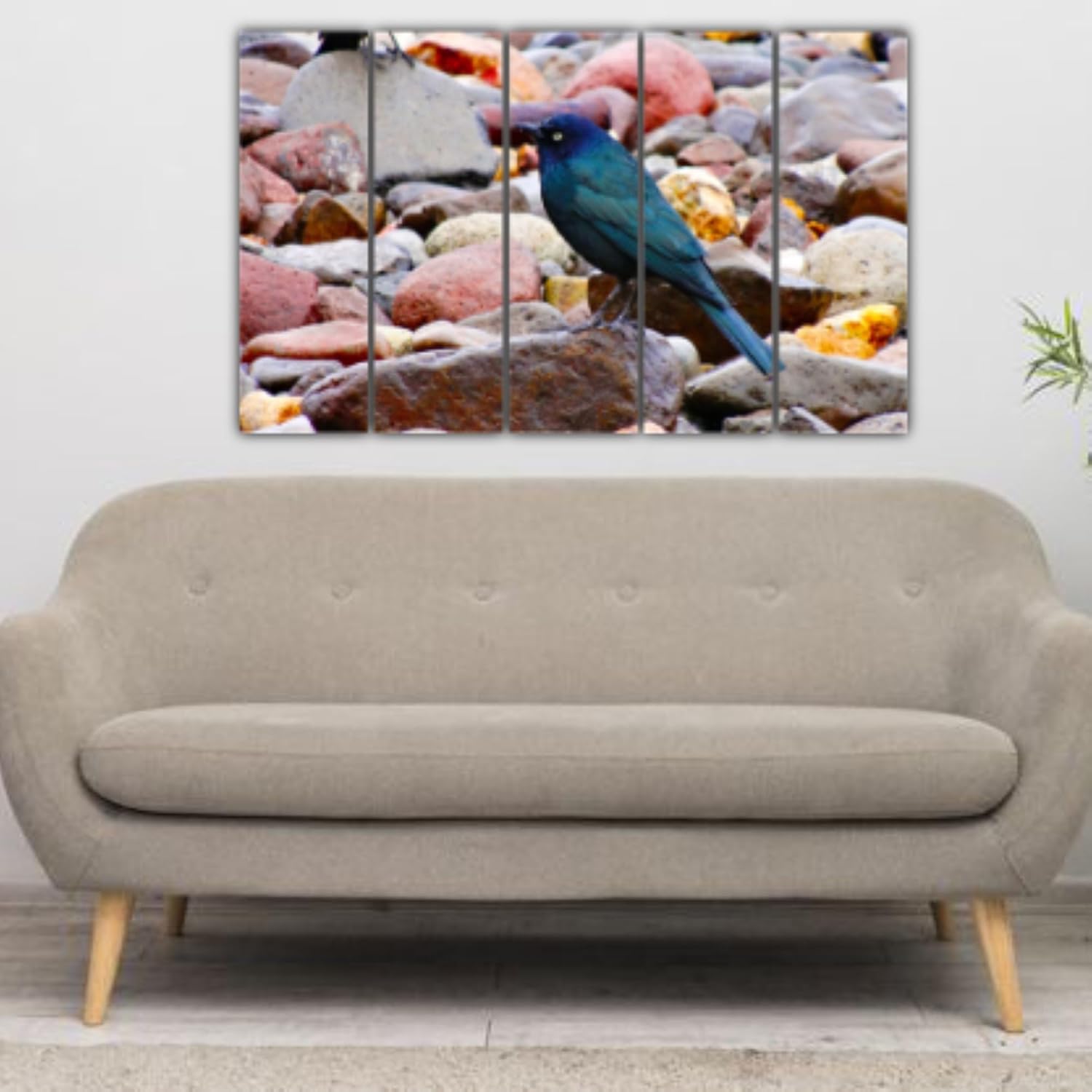
Moolwan 5-Panel Starling Bird on River Stones Vinyl Wall Art on MDF (127x76cm) – Iridescent Teal Plumage Against Earthy Stone Palette
When You Can't Picture How Bird Art Will Actually Look Above Your Sofa
You've seen bird paintings online—bright parrots, generic sparrows, overly stylized silhouettes. But when you try to imagine them on your actual wall, above your actual brown sofa, against your actual cream wall, it doesn't quite click. The colors seem too loud or too flat. The composition feels either too busy or too empty. You can't visualize whether it'll look intentional or just... there.
This starling changes that equation. The bird's iridescent teal-blue plumage reads as sophisticated, not cartoonish. But here's what makes it work in real Indian living rooms: it's perched on river stones in terracotta, ochre, mauve, and olive tones—the exact warm neutrals that already exist in most Indian homes. The cool blue bird bridges to your furniture. The warm stones bridge to your walls. Your eye doesn't have to work to make it fit.
Why 127cm Works on 10–12ft Walls (And What Changes If You Size Differently)
At 127cm wide, this piece covers roughly 35-40% of a 10-foot wall and 28-32% of a 12-foot wall. For a statement piece above an 8-foot sofa, that's the proportion that reads as intentional—substantial enough to anchor the seating area without crowding adjacent elements like floor lamps or side tables.
The five-panel format matters here. Each panel is approximately 25cm wide with slim gaps between them. From your doorway (typical viewing distance of 3-4 meters), the gaps disappear visually—your eye reads it as one continuous image. Up close, the panel divisions add architectural rhythm that a single large canvas wouldn't provide.
Placement math: If your sofa top sits 85cm from the floor, hang the bottom edge of this art at 105-110cm from the floor. The 76cm height means the top edge lands around 180-185cm—well within comfortable viewing range for 8-9 foot ceilings without feeling cramped against the ceiling line.
What These Colors Look Like on Cream Walls (Morning vs LED)
The starling's plumage isn't a single blue—it shifts from deep teal to almost black depending on how light hits the iridescent surface. In morning daylight through east-facing windows, you'll see more green undertones emerge. Under warm LED lighting (the 3000K bulbs most Indian homes use), the blue deepens and the stone colors warm up, pulling more terracotta and ochre forward.
Against cream or off-white walls (the most common Indian wall colors), this palette works because nothing competes. The cool teal becomes the accent; the warm stones echo whatever brown or beige furniture you have. Against light yellow walls, the ochre stones harmonize while the blue provides contrast. Against peach walls, stick with this—the terracotta tones complement, and the blue provides necessary visual relief.
The stones themselves aren't uniform gray—they range from dusty rose to olive to pale mauve. This variety means the art can pick up accent colors from throw pillows, curtains, or rugs without requiring an exact match.
Installation in Indian Walls (Concrete vs Drywall)
Five panels means five hanging points. This sounds more complex than single-canvas installation, but the principle is identical—you're just repeating the process.
For concrete walls (most older Indian apartments): Use the included masonry anchors. Drill 6mm holes, 35mm deep. The combined weight (3kg) distributes across five points, so each anchor bears only about 600 grams—well within capacity.
For drywall (modern high-rises): Use the included plastic anchors. The lightweight MDF panels don't stress drywall the way heavy framed canvas would.
The critical step: Use the hanging template to mark all five points before drilling. Tape it level, mark through the template holes, remove, then drill. This prevents the misalignment that makes multi-panel art look amateur—nothing kills the effect faster than panels hanging at slightly different heights.
Panel spacing: Maintain 2-3cm gaps between panels. The image is designed with this spacing in mind. Closer gaps look cramped; wider gaps break the visual continuity.
Why This Works Where Fabric Tapestries Don't
Fabric tapestries seem like an alternative for wide walls—they're often cheaper, come in large sizes, and don't require drilling. But there's a reason they look like temporary college-dorm solutions rather than permanent decor.
Tapestries sag. Within months, especially in humid conditions, fabric stretches unevenly. The center droops. The edges pull. You end up adjusting, re-pinning, fighting with corners that won't stay flat. The "boho" look becomes "we haven't gotten around to proper art yet."
This vinyl-on-MDF construction stays dimensionally stable. The rigid MDF backing can't warp or sag. The vinyl surface is splash-proof—humidity doesn't affect it. Each panel hangs flat against the wall, maintains its position, and looks the same two years from now as the day you installed it.
The visual presence is different too. Tapestries absorb light and look muted. Vinyl reflects light cleanly, so colors stay vibrant even in corners with indirect lighting. That iridescent starling plumage catches light in a way fabric simply can't reproduce.
What This Will Actually Feel Like in Your Room
From your doorway, you'll see the five panels as a single horizontal band of color. The bird draws your eye first—that iridescent blue is the visual anchor. Then your gaze moves across the stone texture, which provides enough variation to stay interesting without demanding attention.
It doesn't dominate the way a large portrait or dramatic abstract might. It complements. The earthy palette means it recedes slightly, becoming part of the room's overall warmth rather than fighting for attention against your furniture, your TV, your bookshelf.
Up close (standing in front of the sofa), the detail emerges. The individual feathers. The bird's alert posture. The yellow eye that seems to track you. The texture variations in the stones. This is art that rewards both passing glances and deliberate observation.
For adjacent decor: This works well with a floor lamp on one side of the sofa, or with a small side table with a plant. It doesn't need empty wall on either side to breathe—the panel format already provides visual structure.
Moolwan Design Note
The starling is positioned right-of-center, facing left—this creates natural visual flow that leads the eye across the full 127cm span rather than stopping at a centered subject. The river stones aren't backdrop; they're the color bridge that makes this work in warm-toned Indian interiors.
Moolwan Quality Standard
Splash-proof vinyl on MDF construction. Designed for Indian apartments and lighting conditions. Packed for long-distance Indian transit. Quality checked before dispatch. Ships from West Bengal.
Moolwan Fit Guidance for Indian Homes
At 127cm wide, this fits above 7-8 foot sofas on 10-12 foot walls. The 76cm height works with standard 8-9 foot ceilings without crowding. Hang 20-25cm above sofa back for proper visual anchoring.
Quick Specifications
| Specification | Detail |
|---|---|
| Product | Moolwan 5-Panel Starling Bird on River Stones Vinyl Wall Art on MDF (127x76cm) |
| Brand | Moolwan |
| Category | Vinyl Wall Art on MDF |
| Collection | Animal Wall Art Collection |
| Dimensions | 127cm W x 76cm H x 0.6cm D |
| Weight | 3 kg |
| Material & Construction | Splash-proof vinyl print on MDF |
| Panel Count | 5 panels |
| Colors | Iridescent teal-blue, terracotta, ochre, mauve, olive, gray stones |
| Best For | Living room above 7-8ft sofa, 10-12ft walls, 8-9ft ceilings |
| Ships From | West Bengal |
Frequently Asked Questions
Will 127cm be too wide for my wall?
If your wall is 10 feet or wider and your sofa is 7-8 feet, 127cm works well—it's the 60-70% sofa-width ratio that creates proper proportion. For walls under 9 feet or sofas under 6 feet, this may feel oversized.
How will the blue bird look against my cream walls under LED lights?
Under warm LED lighting (3000K), the iridescent teal deepens while the stone colors warm up. Against cream walls, the blue becomes your accent color while the terracotta and ochre tones blend with typical Indian furniture colors.
Is five-panel installation much harder than single canvas?
It takes slightly longer (25-30 minutes versus 15-20), but the process is identical—repeated five times. The hanging template is essential; use it to mark all points before drilling to ensure level alignment across all panels.
Will this warp in Mumbai humidity?
MDF with vinyl facing doesn't absorb moisture the way fabric or untreated wood does. The rigid construction stays flat through monsoon seasons. This is the same material used for kitchen cabinet facing, which handles far more moisture exposure.
How much gap should I leave between panels?
2-3cm gaps between panels. The image is designed with this spacing—closer looks cramped, wider breaks visual continuity. Use a consistent spacer (a book spine works well) while installing.
Product Snapshot
| Attribute | Detail |
|---|---|
| Brand | Moolwan |
| Product | Moolwan 5-Panel Starling Bird on River Stones Vinyl Wall Art on MDF (127x76cm) |
| Category | Vinyl Wall Art on MDF |
| Collection | Animal Wall Art Collection |
| Theme/Type | Bird / Nature Wildlife |
| Best For | Living room above 7-8ft sofa on 10-12ft wall |
| Primary Differentiator | Iridescent teal plumage against earthy stone palette creates natural color bridge between cool and warm tones |
| Secondary Differentiators | Five-panel horizontal span for wide wall coverage; alert bird posture with piercing yellow eye provides subtle focal anchor |
| Material & Construction | Splash-proof vinyl print on MDF, 5 panels |
| Care Instructions | Wipe with dry cloth; avoid water or chemicals |
| Ships From | West Bengal |
| Packing | Long-distance transit ready |
| Quality Check | Before dispatch |