
Bird-tastic Multi-Frame Wall Art to Brighten Your Nest
You may also like

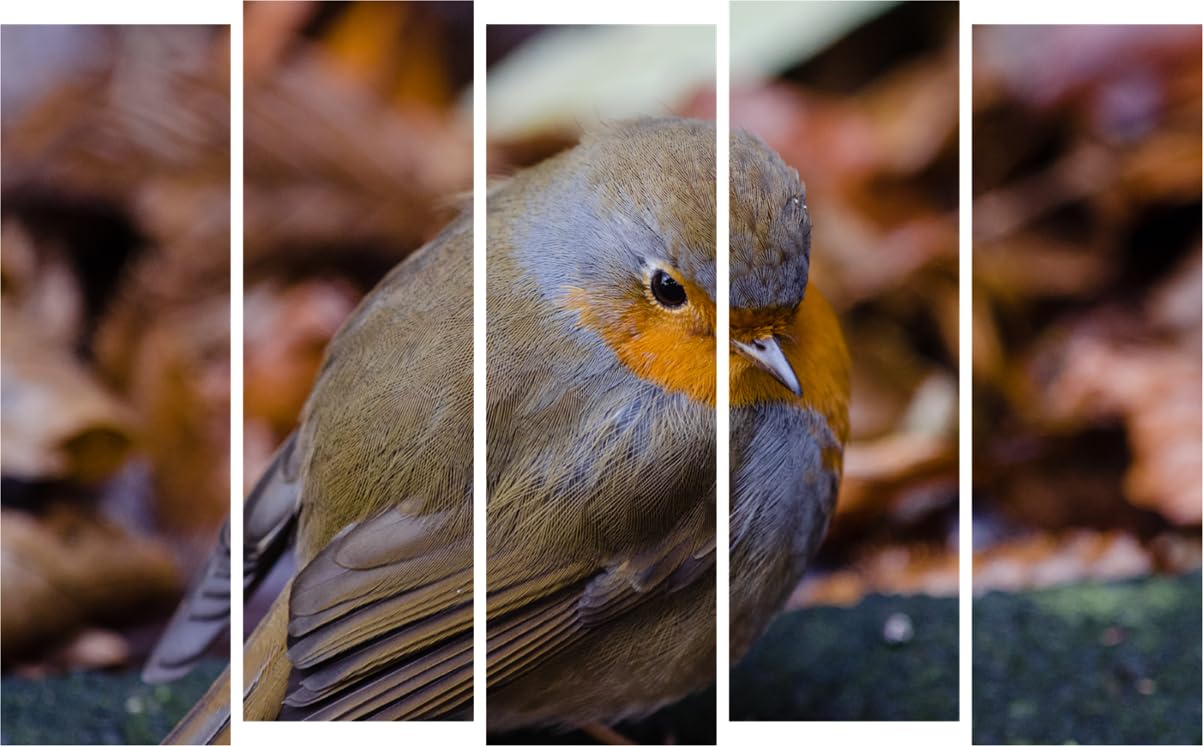
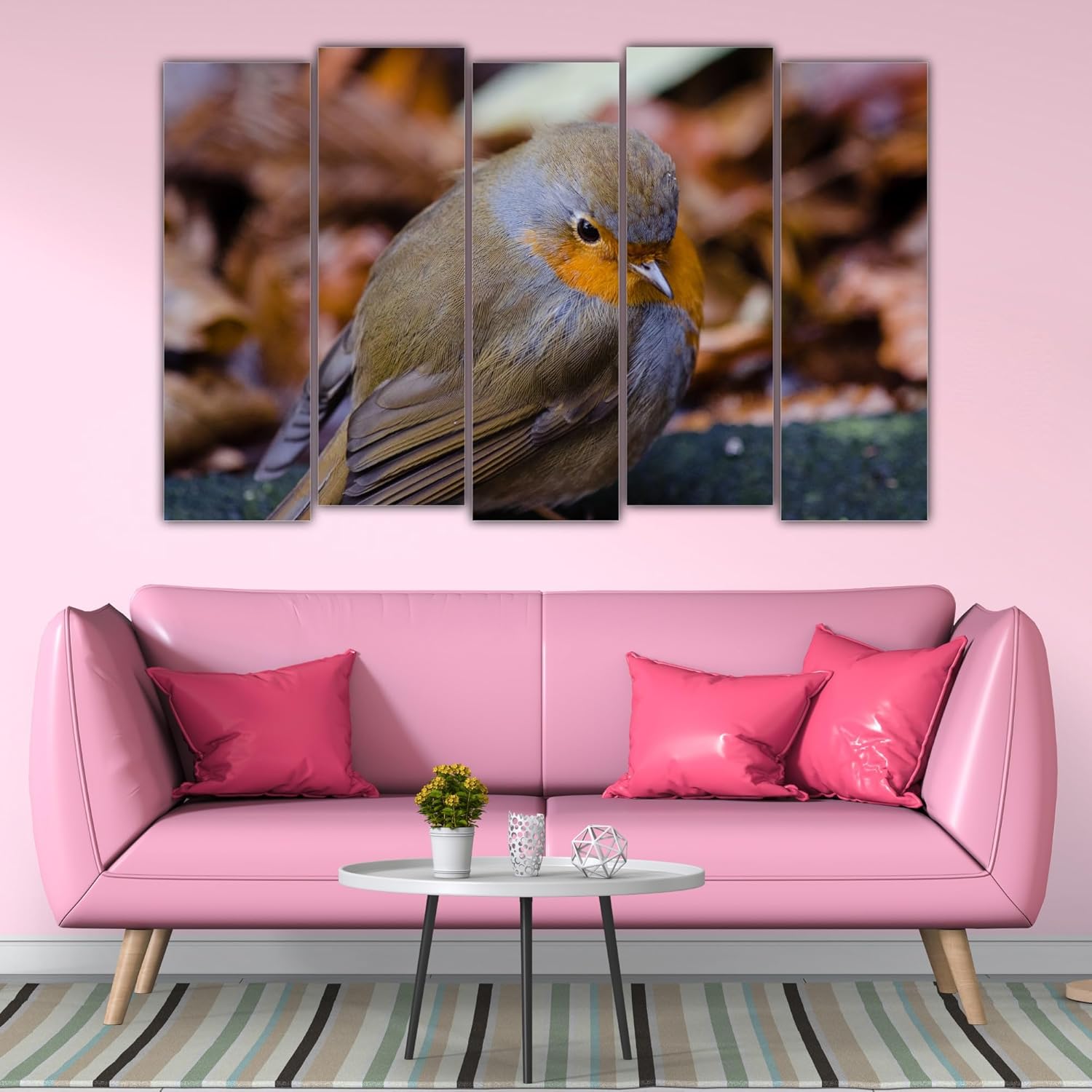
Moolwan 5-Panel Robin Bird Vinyl Wall Art on MDF (127x76cm) – Intimate Wildlife Portrait with Bokeh Depth
When You Can't Picture What Will Actually Fill That Wall
You've measured the space above your sofa at least twice. You know it's roughly 10-11 feet wide. You know the wall is cream or off-white. But every time you look at wall art online, you're trying to mentally project a flat product photo onto a three-dimensional room you're standing in right now—and the translation just doesn't click. Will it look substantial enough? Will the colors work with your curtains, your sofa fabric, the warm LED lighting you installed last year?
This 5-panel robin piece solves that visualization gap in a specific way: the intimate close-up of the bird, captured with shallow depth of field, creates a focal point your eye finds immediately. The soft bokeh background—autumn browns and muted oranges dissolving into cream—doesn't fight for attention. It recedes. The bird's olive-brown plumage and distinctive orange breast become the anchor, and everything else in your room arranges itself around that anchor. At 127cm wide, this spans roughly 60% of a standard 8-foot sofa—the proportional sweet spot where art looks intentional rather than either lost or overwhelming.
Why 127cm Works on 10-12ft Walls (And What Changes If You Size Up)
The math here is straightforward: on a 10-foot wall (roughly 300cm), this piece covers about 42% of the wall width. That leaves enough breathing room on either side for the art to feel centered without cramping against corners or adjacent furniture. On a 12-foot wall (365cm), coverage drops to about 35%—still substantial, but you might want to position it slightly off-center if you have a floor lamp or side table anchoring one end of the seating area.
The 5-panel format adds visual width without requiring a single massive frame. Each panel is approximately 25cm wide with roughly 2cm spacing between them. When mounted, the gaps create a subtle rhythm across your wall—the robin's form flows continuously across all five panels, but the breaks add dimension that a single flat canvas wouldn't achieve.
Viewing distance matters: from your sofa (typically 2-3 feet from the wall), you'll see individual feather texture and the catchlight in the bird's eye. From your doorway or dining area (8-10 feet away), the panels resolve into a cohesive panoramic image. Both perspectives work because the composition was designed for this specific size-to-distance ratio.
Placement reality: at 76cm tall, this hangs comfortably above an 8-foot sofa with standard 8-9 foot ceilings. Position the bottom edge 20-25cm above your sofa back. If your ceilings are 10 feet, you can raise it slightly, but don't exceed 30cm gap—the art needs to feel anchored to the furniture below, not floating randomly on the wall.
What These Colors Look Like on Cream Walls (Morning vs LED)
The palette here is specific: olive-brown (the robin's back), warm orange (the breast patch), muted gray-brown (head and wings), and soft autumn tones in the blurred background—think fallen leaves, dried grass, that particular warmth of late-afternoon October light.
Against cream or off-white walls (the default in most Indian apartments), these colors read as naturally warm without being aggressive. There's no high-contrast drama here—the tones nestle into neutral backgrounds rather than popping off them. This is intentional. Wildlife art that screams "LOOK AT ME" exhausts the eye after six months. This piece sits quietly on your wall, rewarding closer inspection without demanding constant attention.
In morning daylight: the olive and orange tones appear slightly cooler, more muted. The bokeh background lightens. The overall effect is calm, almost meditative.
In warm LED lighting (3000K, which most Indian homes use): the orange breast patch warms up noticeably. The autumn background tones intensify. This is when the piece looks its richest—evenings when you're actually sitting in your living room, guests are over, and the art is doing its job of making the space feel curated rather than empty.
Against colored walls: this works beautifully with sage green, warm beige, or light terracotta. Avoid cool grays or blues—the warm palette will clash rather than complement.
Installation in Indian Walls (Concrete vs Drywall)
Five panels means five mounting points—one per panel, positioned at the top center of each. This sounds more complicated than single-frame art, but it's actually more forgiving: small alignment errors between panels (1-2mm off level) are nearly invisible because your eye reads the continuous image across all five, not the individual panel positions.
For concrete walls (common in older buildings): use the included 6mm masonry anchors. Drill 35mm deep, tap in the anchors, screw in the hooks. The MDF panels weigh approximately 600g each—concrete anchors will hold this without any concern.
For drywall (common in newer apartments): use the included plastic wall anchors. The lightweight MDF doesn't stress drywall the way heavy framed canvas would.
The alignment process: start with the center panel. Level it carefully—this is the only one that needs to be perfect. Then position panels 2 and 4 (immediately adjacent to center) using the image continuity as your guide. Finally, add the outer panels 1 and 5. Total installation time is 25-30 minutes if you're being careful, which you should be.
For rentals: the 6mm holes required are smaller than standard picture hook holes. When you move out, fill with wall putty, sand smooth, touch up with matching paint. Your landlord will never notice.
Why This Instead of Macrame Wall Hangings
Macrame has had its moment. And it works in certain contexts—bohemian bedrooms, meditation corners, spaces where texture matters more than imagery. But for a main living room wall, macrame has limitations that vinyl panel art doesn't.
Visual presence: macrame is about texture and negative space. From across the room, it reads as "something woven hanging there." This robin piece reads as a specific image with emotional content—a moment of stillness captured, a bird pausing in autumn light. There's narrative here, not just material.
Dust and maintenance: macrame traps dust in every knot and fiber. In Indian cities—Mumbai's humidity, Delhi's winter smog, Bangalore's construction dust—that's a cleaning nightmare every few months. Splash-proof vinyl wipes clean with a dry cloth in 30 seconds.
Longevity: macrame fibers weaken and discolor over time, especially in humid climates. The cotton yellows. Knots loosen. After 2-3 years, it looks tired. MDF panels with sealed vinyl don't degrade the same way—no fiber breakdown, no color shift from humidity exposure.
Style evolution: macrame commits you to a specific aesthetic. When you update your sofa or curtains, the macrame may no longer fit. This wildlife piece is thematically neutral enough to work with evolving decor choices.
What This Will Actually Feel Like in Your Room
From the doorway: you'll register the warm tones first, then the bird shape, then the 5-panel format. The immediate impression is "nature photography presented thoughtfully"—not overwhelming, not underwhelming.
From the sofa: you'll see details—the individual feather texture on the robin's back, the subtle gradation in the orange breast patch, the soft blur of autumn leaves behind. This is where the image rewards attention.
As a solo piece: this can anchor a wall by itself above an 8-foot sofa without additional art or decor. The 5-panel width provides enough visual presence. You don't need to add shelves, smaller frames, or decorative objects flanking it.
With adjacent decor: if you have a floor lamp at one end of the sofa or floating shelves nearby, this piece coexists comfortably. The calm palette and horizontal format don't compete with vertical elements.
The emotional register: this is peaceful without being boring. It's nature-themed without being kitschy. Your mother-in-law will approve. Your minimalist friend will appreciate the restraint. Kids will like the bird. It threads the needle of broad appeal without being generic.
Moolwan Design Note
The shallow depth of field in this image isn't accidental—the robin's eye and orange breast stay sharp while autumn leaves dissolve into warm bokeh behind. Across five panels, this creates a sense of depth that flat single-frame art can't achieve. The bird appears to exist in space, not just on your wall.
Moolwan Quality Standard
Designed for Indian apartments and lighting conditions. Packed for long-distance Indian transit with corner protection. Quality checked before dispatch. Printed to resist humidity-related color fading. Ships from West Bengal.
Moolwan Fit Guidance for Indian Homes
At 127cm wide, this fits above 7-9 foot sofas on 10-12 foot walls. The 76cm height works with standard 8-9 foot ceilings. Position bottom edge 20-25cm above sofa back for proper visual anchoring.
Quick Specifications
- Product: Moolwan 5-Panel Robin Bird Vinyl Wall Art on MDF (127x76cm)
- Brand: Moolwan
- Category: Vinyl Wall Art on MDF
- Collection: Animal Wall Art Collection
- Dimensions: 127 cm (W) x 76 cm (H) x 0.6 cm (D)
- Weight: 3000 grams
- Material & Construction: Splash-proof vinyl print on MDF, 5 panels
- Colors: Olive-brown, warm orange, muted gray-brown, autumn bokeh background
- Best For: Living room wall above 7-9ft sofa, hallway feature wall, dining area
- Ships From: West Bengal
Frequently Asked Questions
Will 127cm be too wide for my 8-foot sofa?
No—127cm is approximately 4.2 feet, which is about 70% of an 8-foot sofa's width. This falls within the ideal 60-75% proportion recommended for wall art above seating furniture. It will look balanced, not overwhelming.
How do the warm orange tones look under cool white LED lights?
Under cool white lighting (5000K+), the orange breast patch will appear slightly less saturated, and the overall palette will lean more toward neutral browns. For the richest color presentation, warm white LEDs (2700-3000K) are ideal. The piece still works under cool lighting—just with a more subdued warmth.
Is aligning five panels difficult for someone who hasn't done this before?
It's more forgiving than you'd expect. Start with the center panel and level it carefully. Then use the image continuity (the robin's body flowing across panels) as your visual guide for positioning adjacent panels. Small gaps between panels (2-3cm) are intentional and hide minor alignment variations.
Will the vinyl surface handle Mumbai monsoon humidity?
Yes. The splash-proof vinyl is sealed and non-porous—humidity doesn't penetrate the surface the way it would with paper prints or unsealed canvas. The MDF backing is also more dimensionally stable than solid wood in high-humidity environments.
Can I hang this above a bed instead of a sofa?
At 127cm wide, this exceeds the headboard width of most queen beds (150cm headboard, but the art would extend beyond the visual frame of the bed). It works better above king beds with wider headboards, or in living/dining spaces where the width has room to breathe.
Product Snapshot
- Brand: Moolwan
- Product: Moolwan 5-Panel Robin Bird Vinyl Wall Art on MDF (127x76cm)
- Category: Vinyl Wall Art on MDF
- Collection: Animal Wall Art Collection
- Theme/Type: Wildlife / Bird Portrait
- Best For: Living room above 7-9ft sofa, hallway feature wall, dining area accent
- Primary Differentiator: Intimate wildlife portrait with bokeh depth
- Secondary Differentiators: Autumn-toned palette for warm interiors; 5-panel panoramic continuity
- Material & Construction: Splash-proof vinyl print on MDF, 5 panels with 2cm spacing
- Care Instructions: Dust with dry microfiber cloth; wipe with slightly damp cloth if needed; avoid chemical cleaners
- Ships From: West Bengal
- Packing: Long-distance transit ready with corner protection
- Quality Check: Before dispatch