
Birdie Bonanza: Multi-Frame Feathered Fiesta Framed Wall Art That'll Make Your Walls Sing (127x76cm)
You may also like

Moolwan 6-Panel Bird Canvas Wall Art Painting (127x76cm) - White-Breasted Nuthatch Nature Art
You might have browsed dozens of bird wall art pieces by now. Some were too small—they'd look lost above your sofa. Some were too large—overwhelming for a standard Indian living room. You probably kept coming back to pieces around 120-130cm wide, because intuitively, it feels right for a 10-12 foot wall. But you want to be sure this specific one will work.
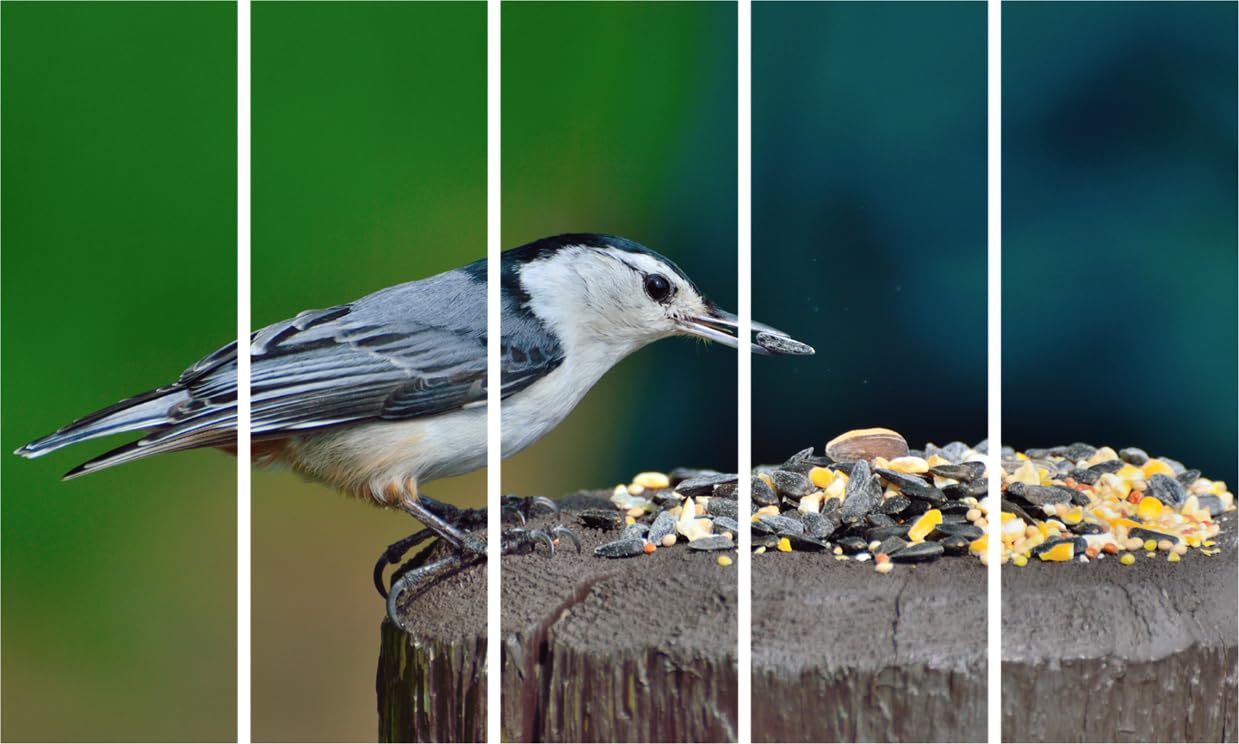
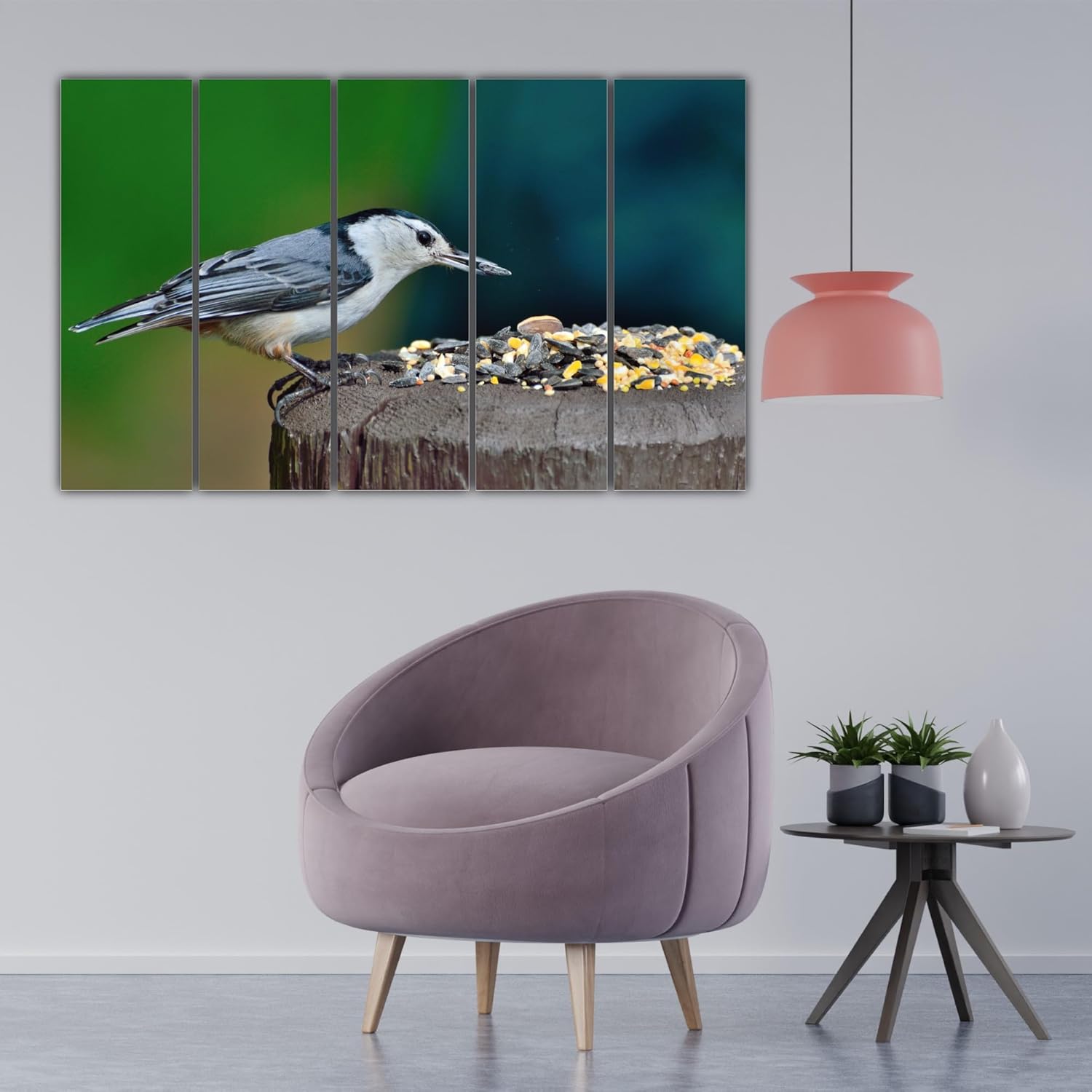
This 127cm Nuthatch bird canvas isn't just "bird art." It's a 6-panel composition showing a White-breasted Nuthatch perched on a weathered wooden post, examining scattered seeds. The gradient background shifts from vibrant green on the left to deep teal on the right—a color transition that adds depth without overwhelming your space. The bird itself, with its grey-blue wings and clean white underparts, provides a focal point that draws the eye naturally across all six panels.
Why 127cm Works on 12-Foot Walls (and What Happens If You Go Smaller or Bigger)
Your living room wall is probably around 10-12 feet wide. Let's do the math for a standard 12-foot (360cm) wall.
This canvas at 127cm covers approximately 35% of a 360cm wall. That leaves roughly 116cm of wall space on each side—enough breathing room for the artwork to feel intentional, not cramped. If you have a 7-foot sofa (210cm) centered below, this canvas extends just slightly beyond the sofa's visual footprint, creating that balanced, "designed" look interior stylists aim for.
Go smaller—say 90cm—and you're looking at 25% coverage. On a 12-foot wall, that often feels underwhelming, like a picture frame rather than a statement piece. Go larger—160cm or above—and you risk that "too much" feeling, especially in rooms with 9-foot ceilings where vertical space is already limited.
At 76cm height, this piece sits comfortably in the standard "art zone" between 150-180cm from floor level, leaving clearance above most sofas (typically 85-90cm seat height) and below ceiling mouldings.
How These Greens and Blues Actually Look Against Cream Walls
Here's what product photos can't show you: how these specific colors interact with typical Indian wall paints.
Your walls are probably cream, off-white, or that builder's beige common in most apartments. The bright green on the left panels will pop against these neutral backgrounds—providing energy without clashing. The transition to deep teal on the right creates natural depth, making the canvas appear almost three-dimensional in certain lighting.
The grey-blue of the bird's plumage offers a cooler contrast that works particularly well if you have wooden furniture (brown tones) or beige fabric sofas. The small accents of white in the bird's throat and the scattered yellow seeds add subtle brightness without competing with the dominant greens.
In morning natural light, expect the greens to appear more vibrant, almost fresh. Under evening warm LEDs (2700K-3000K, typical in Indian homes), the teals deepen and the overall piece takes on a calmer, more sophisticated feel.
Rental-Friendly Mounting: How to Hang Without Risking Your Deposit
At 3kg total weight distributed across 6 panels, each panel carries roughly 500 grams—light enough for standard picture hooks. You won't need wall plugs or heavy-duty anchors that leave large holes.
The 6-panel design requires precise spacing. Each panel is approximately 20cm wide with consistent gaps between them. Pre-measure and mark with painter's tape before drilling. The entire installation takes about 20-25 minutes if you have a basic level and measuring tape.
For rental apartments where you're worried about deposit deductions: the holes required for these lightweight panels are typically under 6mm—the kind most landlords consider normal wear, especially if you fill them with white putty before moving out.
How This Compares to Single-Panel Bird Art You've Been Considering
You've probably seen single-panel bird canvases at similar sizes. Here's the honest difference:
A single 127cm panel shows one continuous image. It's simpler to hang (one piece), but it can feel flat—like an enlarged photograph. This 6-panel version creates visual rhythm. The white spacing between panels adds an almost gallery-like quality, breaking up the image in a way that makes it more interesting to look at over time.
The multi-panel format also creates the illusion of more width. The same 127cm feels more expansive when broken into segments than as a single piece. This matters in Indian living rooms where you want presence without bulk.
Against marketplace alternatives at ₹800-1,200: those typically use 200 GSM canvas (this is 340 GSM), thinner frames (this uses 1.5" pinewood), and water-based inks that fade within 18-24 months. The splash-proof coating here matters if your wall catches indirect humidity during monsoons or if you occasionally use room fresheners.
What to Realistically Expect When This Arrives
The colors will look slightly different in person than on your phone screen. Phone displays tend to oversaturate greens—expect the actual piece to be about 10-15% less vivid but more natural-looking. This is intentional; oversaturated prints look artificial on walls.
From your sofa (typical viewing distance of 8-10 feet), the 6 panels will merge visually into one cohesive image. The panel gaps won't be distracting—they become part of the aesthetic. Up close (under 3 feet), you'll see the canvas texture and the intentional separation.
The wooden post and scattered seeds in the image add textural interest that photographs well from multiple angles if you're the type who photographs your home for social media or video calls.
Quick Specifications
- Product: Moolwan 6-Panel White-Breasted Nuthatch Canvas Wall Art Painting
- Dimensions: 127cm (W) × 76cm (H) × 0.6cm (D)
- Weight: 3000 grams (3kg total)
- Canvas: 340 GSM cotton, moisture-resistant coating
- Frame: 1.5" kiln-dried pinewood, 12% moisture content
- Finish: Splash-proof, UV-resistant eco-solvent inks
- Panel Configuration: 6 vertical panels
- Color Palette: Green gradient, teal, grey-blue, white, brown
- Best For: 10-12 ft walls, living rooms, study areas, offices
- Delivery: 5-6 days (metro), 6-8 days (tier-2/3 cities)