
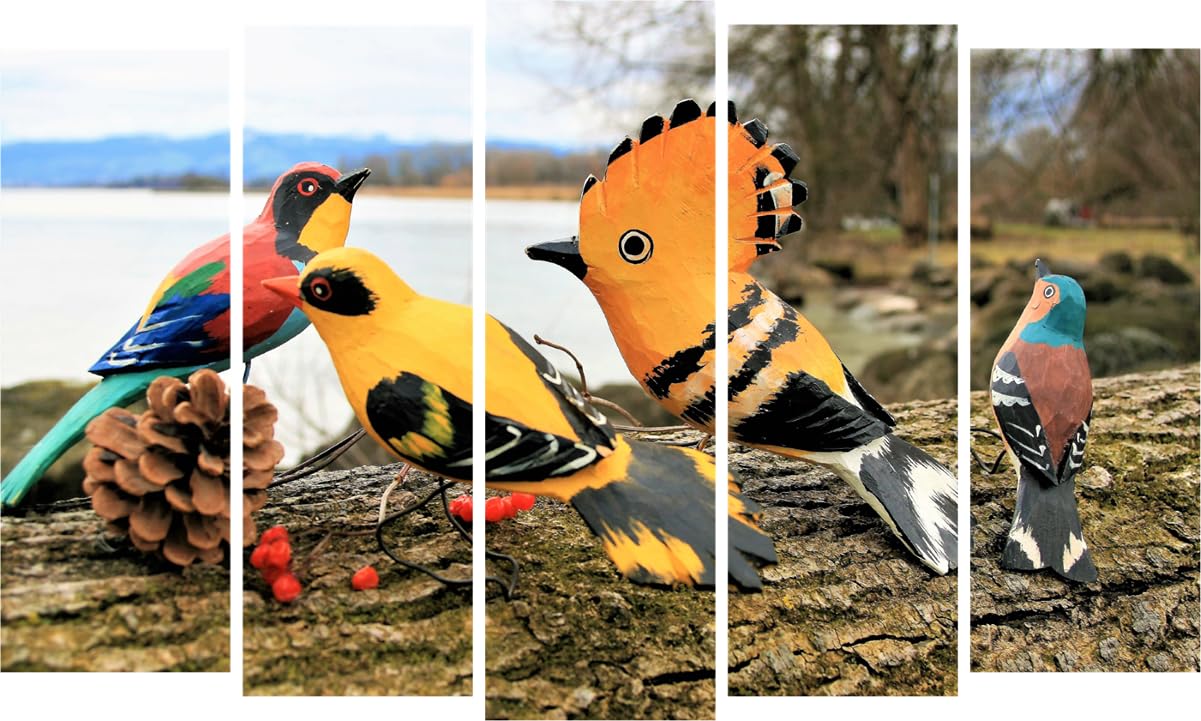
Birds of a Feather Framed Wall Art Flock - 5-Panel Nature Extravaganza (127x76cm)
You may also like

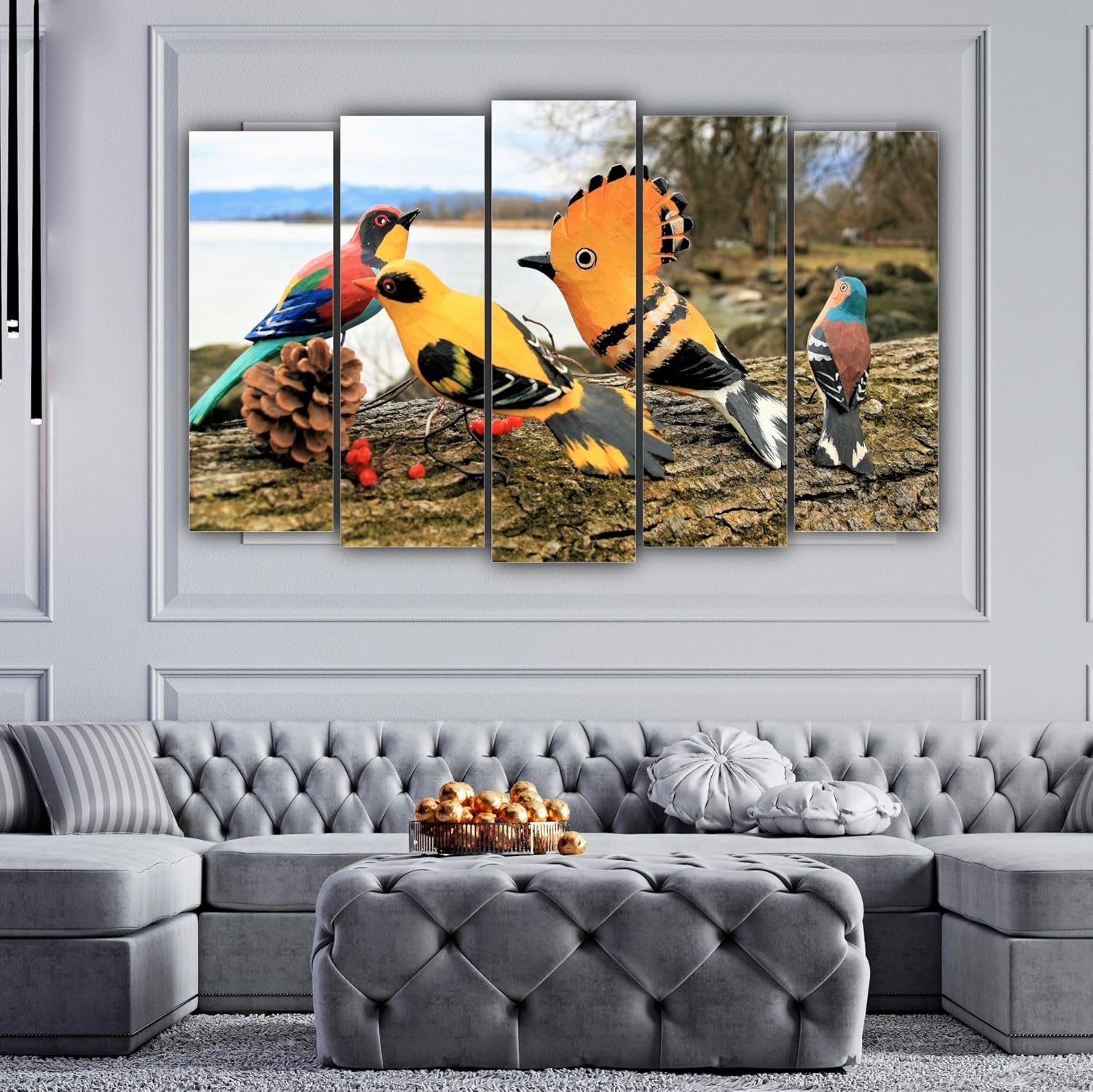
Moolwan 5-Panel Birds of a Feather Canvas Wall Art Painting (127x76cm) - Multi-Frame Nature Collection
You've measured your living room wall three times. Maybe four. The tape measure says 360cm, but you're still not confident because every online guide shows perfectly styled rooms with perfect measurements. Every expert says something different, and none account for your 8-foot sofa sitting 30cm away from the wall, or that window on the left taking up space. You keep second-guessing: is 127cm actually right, or will it look awkwardly small—or worse, cramped?
Here's what matters: your wall is probably around 12 feet (360cm). This 5-panel bird canvas is 127cm wide. That's 35% coverage—which means 116cm of breathing room on each side. Not floating awkwardly. Not overwhelming the sofa. Balanced. If your sofa is 6-8 feet wide (most Indian sofas are), this sits visually centered above it without competing for attention. The five separate panels create horizontal flow that makes your wall feel wider, not cluttered.
The colors are specific: bright orange, sunny yellow, teal blue, coral red, with natural wood-brown tones in the background. These aren't muted pastels. They're vivid, intentional pops of color. If your walls are cream, off-white, or that builder's light yellow, these birds will stand out—but in the way a curated accent should, not like a screaming mismatch. The multicolor palette gives you flexibility: it picks up on wooden furniture (coffee tables, TV units), complements beige or brown sofas, and adds warmth without clashing with most Indian home interiors.
Why 127cm Works on 12-Foot Walls (and What Happens If You Go Smaller or Bigger)
Let's do the math you've been trying to visualize. Your wall: 360cm (12 feet). This canvas: 127cm wide. That leaves 233cm of wall space—116cm on the left, 116cm on the right. Think about it: that's enough space to see the wall color, enough room for the art to breathe, and enough balance to not feel like you bought something too small.
If you went with a 90cm canvas (which you've probably considered), you'd have 135cm on each side. That much blank space makes the art look like an afterthought, like you bought the wrong size. Your eye would keep wandering to the empty wall, not the art itself.
If you went with a 150cm canvas (also tempting), you'd have just 105cm on each side. That's tight—especially if you have side tables, lamps, or anything else near that wall. It starts feeling cramped, like the art is competing with your furniture instead of complementing it.
127cm is the middle ground. It's proportional. The 76cm height is equally strategic: tall enough to anchor the space vertically (especially above a 3-foot-high sofa), but not so tall it overwhelms rooms with standard 8-10 foot ceilings. If your ceiling is 9 feet (270cm), this canvas takes up roughly 28% of vertical space—a focal point without dominating.
The five-panel layout amplifies this. Instead of one big rectangle, you get five frames spread horizontally. Your eye moves across the composition, creating the illusion of more width. It makes a 127cm canvas feel closer to 140cm in visual impact—without actually taking up more wall space.
Why These Colors Work in Indian Living Rooms (Not Just Online Photos)
Orange, yellow, teal, red, coral—these are bright colors. You're probably wondering if they'll clash with your cream walls or brown sofa. They won't, but here's why you need to understand lighting.
In morning light (8-11 AM), natural sunlight will make these colors look softer than they appear on your screen. The orange won't be neon; it'll be warm, like terracotta or marigold. The yellow reads as sunny, not harsh. The teal blue cools the palette down, preventing it from feeling too hot or overwhelming.
In evening LED light (which most Indian homes use—4000-5000K cool white), these colors pop more. The reds and oranges become richer, the blues stay vibrant. This is where the multi-panel design helps: because the birds are spread across five frames, no single color dominates your field of vision. It's balanced—your eye moves across the panels, picking up different colors as focal points.
If your walls are cream or off-white (most are), these colors will contrast without clashing. The birds sit against a natural, soft-focus outdoor background in the canvas itself, which provides visual breathing room. You're not getting five panels of pure bright color; you're getting vibrant subjects on a neutral-toned backdrop. That's why it works with wooden furniture, beige sofas, and even pooja room brass accents—it's colorful but contextual.
One reality check: if your room has very dim lighting (single tubelight, no windows), these colors will look more muted than in the product photo. If your room gets strong afternoon sun (west-facing), they'll look more intense. Most Indian living rooms fall somewhere in between—enough natural light during the day, LED lights at night. In that context, these colors work.
Rental-Friendly Mounting: How to Hang Without Losing Your Deposit
This weighs 3kg across five panels. That's roughly 600 grams per panel—lighter than a bag of rice. You're not drilling into concrete or risking your ₹50,000 rental deposit.
Here's the realistic process: You'll need five hanging points. If you're renting, use 3M Command Picture Hanging Strips (the heavy-duty ones rated for 2kg per set). Each panel gets one set of strips. You stick one half to the wall, one half to the frame's back, press firmly for 30 seconds, wait an hour, then mount. Total time: 20 minutes, including the wait.
If you own your home, use standard picture hooks or nails. The 1.5-inch pinewood frame has pre-installed hanging hardware on the back (standard on Moolwan canvases). You hammer in five small nails or hooks, hang each panel, adjust spacing, done. If you've hung a photo frame before, this is the same process—just repeated five times.
The tricky part is spacing. The five panels need to be evenly spaced horizontally. Most people eyeball it and get it wrong. Here's the fix: use painter's tape to mark the top edge of where each panel will go. Step back, check if it looks level. Adjust the tape. Once you're satisfied, that's where you hang. Tape comes off cleanly, even on rental walls.
One question you probably have: does this come with hanging hardware? Yes—standard sawtooth hangers or D-rings on the back of each frame. You provide the wall hooks or adhesive strips; the frame handles the rest.
How This Compares to 90cm and 150cm Sizes You've Been Considering
You've probably looked at smaller canvases—90cm, maybe 100cm. They're cheaper (₹2,000-2,500 range), and they feel "safe." The problem is they look safe in the wrong way: undersized, like you couldn't commit to a proper statement piece. On a 12-foot wall, a 90cm canvas leaves too much empty space. Guests don't notice the art; they notice the wall around it.
At the other end, 150cm canvases (₹4,500-5,500) feel bold online but often overwhelming in person. If your living room is 12x14 feet—which is standard in most Indian apartments—a 150cm canvas on a 12-foot wall leaves only 105cm on each side. That's tight. It works if you have a massive room with 14-foot walls, but in a typical home, it crowds the space. You'll keep noticing the art is "too big," not in a good way.
127cm is the sweet spot for 12-foot walls in 12x14 foot rooms. It's large enough to be a focal point but proportional enough to let the room breathe. The five-panel design adds visual interest that single-panel canvases can't match—your eye travels across the panels, creating movement and depth. A single-panel 127cm canvas would feel static; five panels feel dynamic.
Price-wise, this sits in the ₹3,500-4,000 range (Moolwan's standard for 5-panel 127cm canvases). You're paying for the multi-panel craftsmanship—five separate frames, precision alignment, coordinated color across panels. Cheaper marketplace canvases (₹1,500-2,000) use thinner frames, lower GSM canvas, and often arrive with color mismatches between panels. You save ₹2,000 upfront; you lose ₹2,000 in regret when it doesn't look right on your wall.
What This Will Look Like in Your Living Room (Not Just Online Photos)
Let's set realistic expectations. The product photo shows vivid, saturated colors—orange that pops, yellow that glows, teal that shimmers. In your home, those colors will be slightly softer. Not dull, but more natural. The canvas uses eco-solvent UV-resistant inks, which prioritize longevity over maximum saturation. That's good: colors that look neon-bright on day one often fade within six months. These will stay consistent.
Viewing distance matters. If you sit 8-10 feet away from this canvas (typical sofa-to-wall distance in Indian living rooms), you'll see the full composition: five birds spread across five panels, cohesive as one piece. Up close (2-3 feet), you'll notice the texture of the 340 GSM canvas, the depth of the 1.5-inch pinewood frame, the individual brushstroke effects in the print. Both perspectives work—it's designed to be seen from across the room and appreciated up close.
Lighting changes everything. In bright afternoon sun, the colors will look lighter, almost pastel-ish, because sunlight washes out saturation. In evening LED light, they'll look richer and more vibrant. In dim lighting (single bulb, no windows), they'll look muted. Most Indian homes have a mix: natural light during the day, LED at night. In that context, this canvas looks closest to the product photo during late afternoon (4-6 PM) when natural light is softer and LEDs haven't kicked in yet.
One thing the photo doesn't show: the frame depth. At 1.5 inches, the canvas sits slightly off the wall, creating a shadow effect that adds dimension. It's not flat against the wall like a poster; it has presence. That depth makes it feel more substantial, more like "real" art, less like a printed image.
Your walls probably aren't gallery white. They're cream, off-white, maybe light yellow. These colors—orange, yellow, teal, red—will contrast more against cream than they would against pure white. That's not bad; it makes the canvas feel more vibrant. But if you're expecting gallery-style minimalism (white walls, black frames, stark contrast), that's not the vibe here. This is colorful, warm, Indian-home-friendly art. It works with wooden furniture and warm wall tones, not against them.
Quick Specifications
- Brand: Moolwan
- Product: 5-Panel Birds of a Feather Canvas Wall Art Painting
- Dimensions: 127cm W x 76cm H x 0.6cm D (per panel depth)
- Weight: 3000g (3kg total, ~600g per panel)
- Frame: 1.5-inch kiln-dried pinewood (12% moisture control)
- Canvas: 340 GSM cotton, moisture-resistant coating
- Inks: Eco-solvent, UV-resistant for color longevity
- Panel Count: 5 separate frames for multi-panel effect
- Colors: Multicolor (orange, yellow, teal, red, coral, natural wood tones)
- Subject: Birds of a Feather nature theme
- Installation: Sawtooth hangers included, 3M strips recommended for rentals
- Ideal For: 12-14 ft walls in living rooms, bedrooms, hallways, offices
- Price Range: ₹3,500-4,000 (Moolwan standard for 5-panel 127cm)
- Delivery: 5-6 days metro cities, 6-8 days tier-2/3 cities
- Climate Suitability: Moisture-resistant coating for 70-85% humidity, stable in 5°C-45°C range