
Bring the Outdoors In: 5-Panel Framed Wall Art That’ll Make Your Walls Jealous
You may also like

Moolwan 5-Panel Mountain Lake Landscape Vinyl Wall Art on MDF (127×76cm) – Sweeping Valley Depth Across Five Continuous Panels
That Blank Wall Above Your Sofa Has Been Empty for Months
You've scrolled past dozens of wall art options. Saved a few. Closed the tabs. The problem isn't finding something you like in a product photo—it's knowing whether it will actually look right once it's up. Will five separate panels line up properly? Will the colors work with your sofa? Will 127cm feel proportional or awkward from across the room?
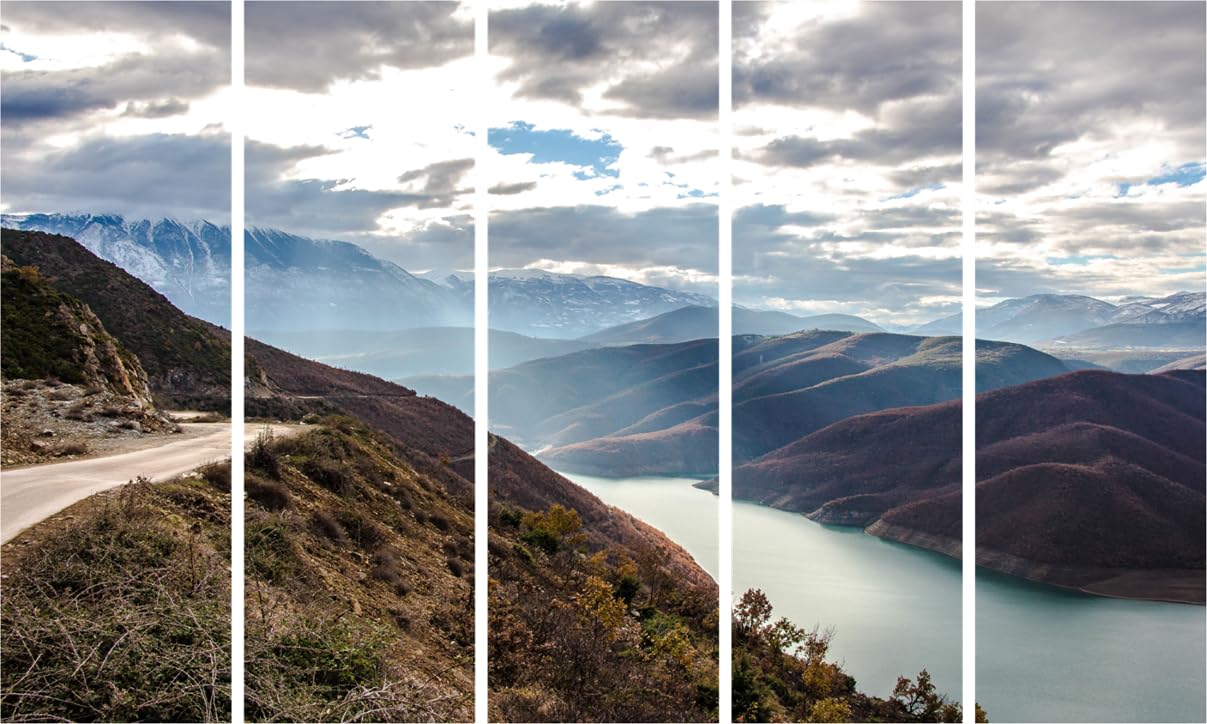
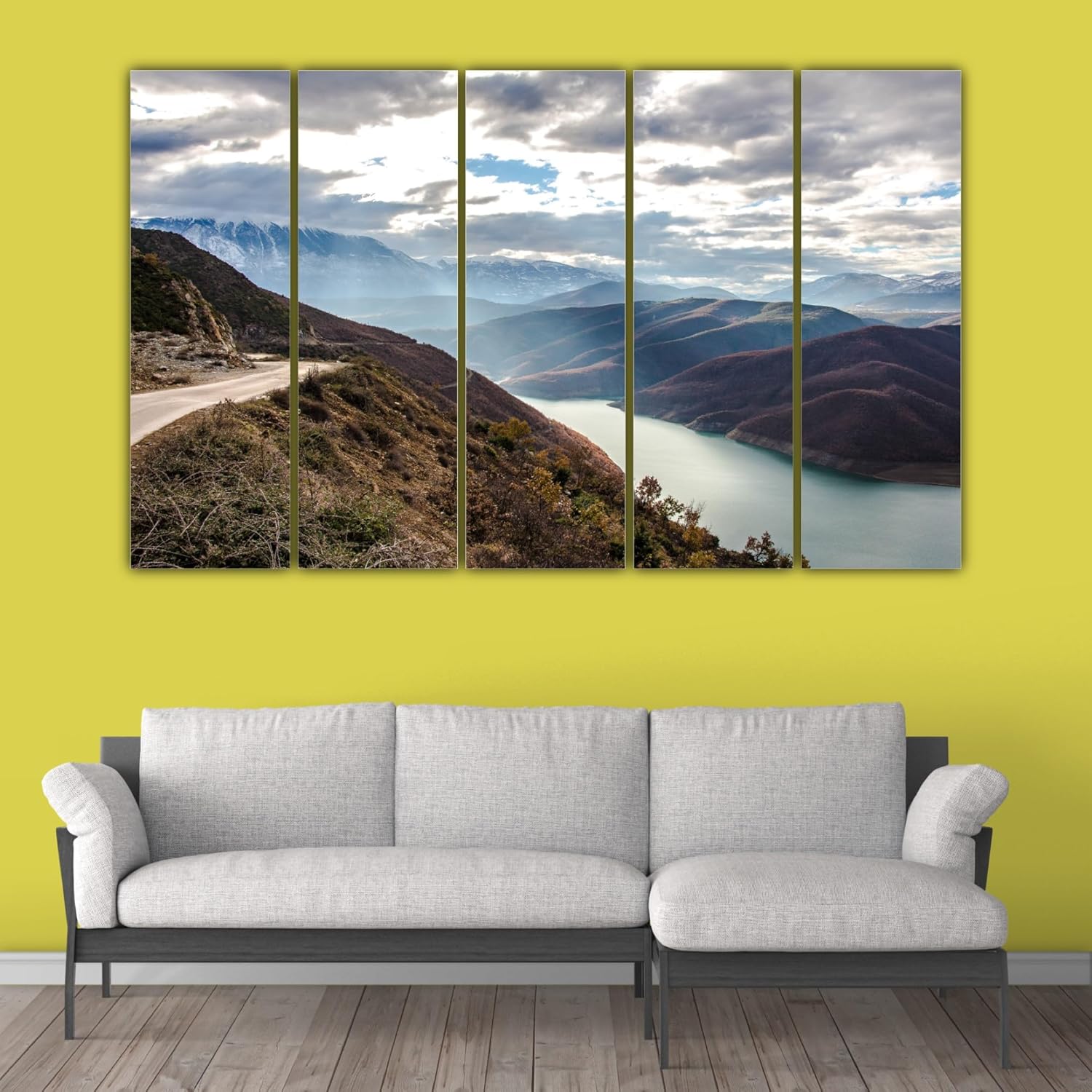
This 5-panel mountain lake scene solves the visualization problem because the composition itself creates continuity. A winding road in the leftmost panel leads your eye through russet autumn hillsides, down to a turquoise alpine lake, and out toward snow-dusted peaks dissolving into atmospheric haze. The five panels don't fragment the image—they extend it, creating a 127cm sweep of uninterrupted depth that makes the wall feel like a window rather than a decorated surface.
Why 127cm Works on 10-12ft Walls (And What Changes If You Size Differently)
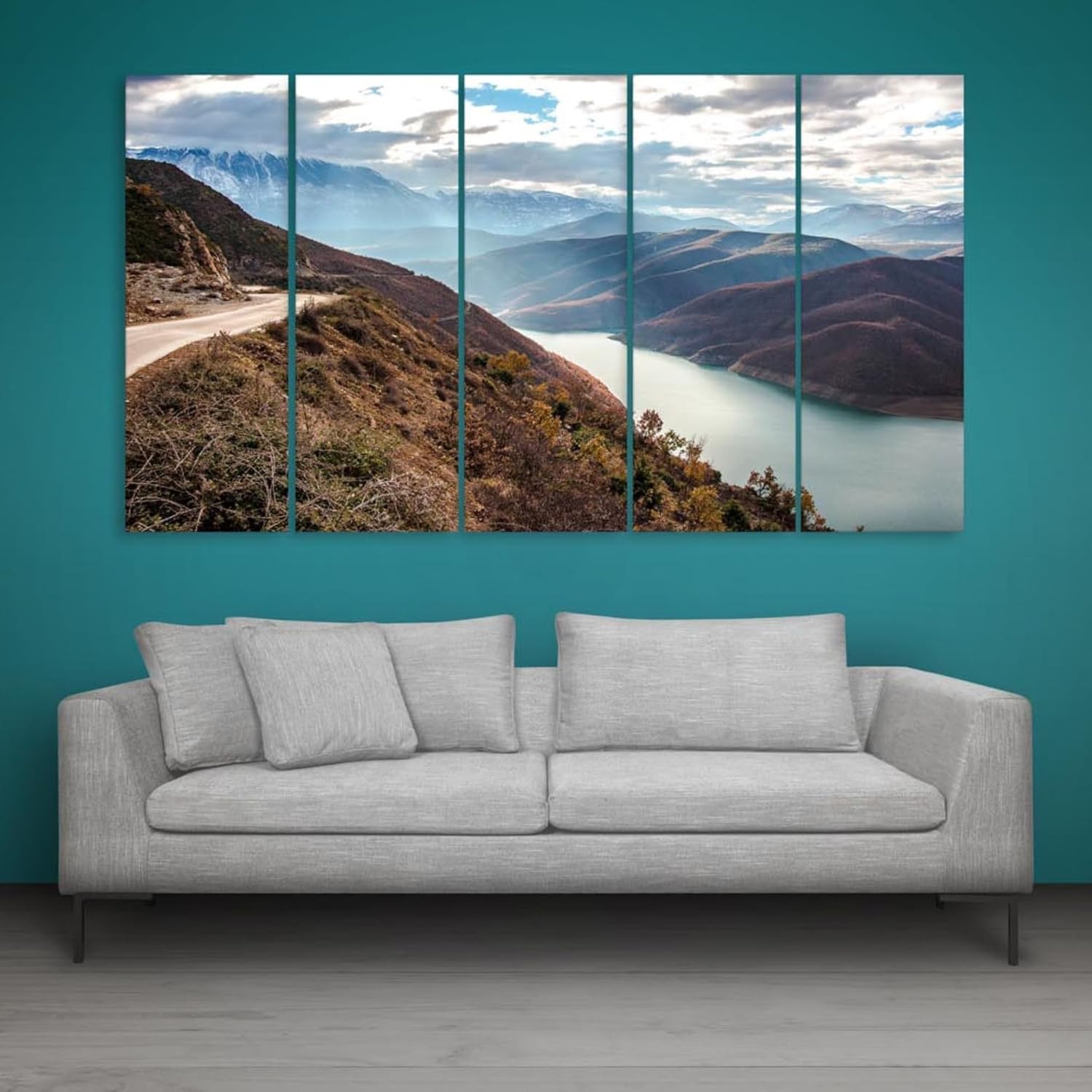
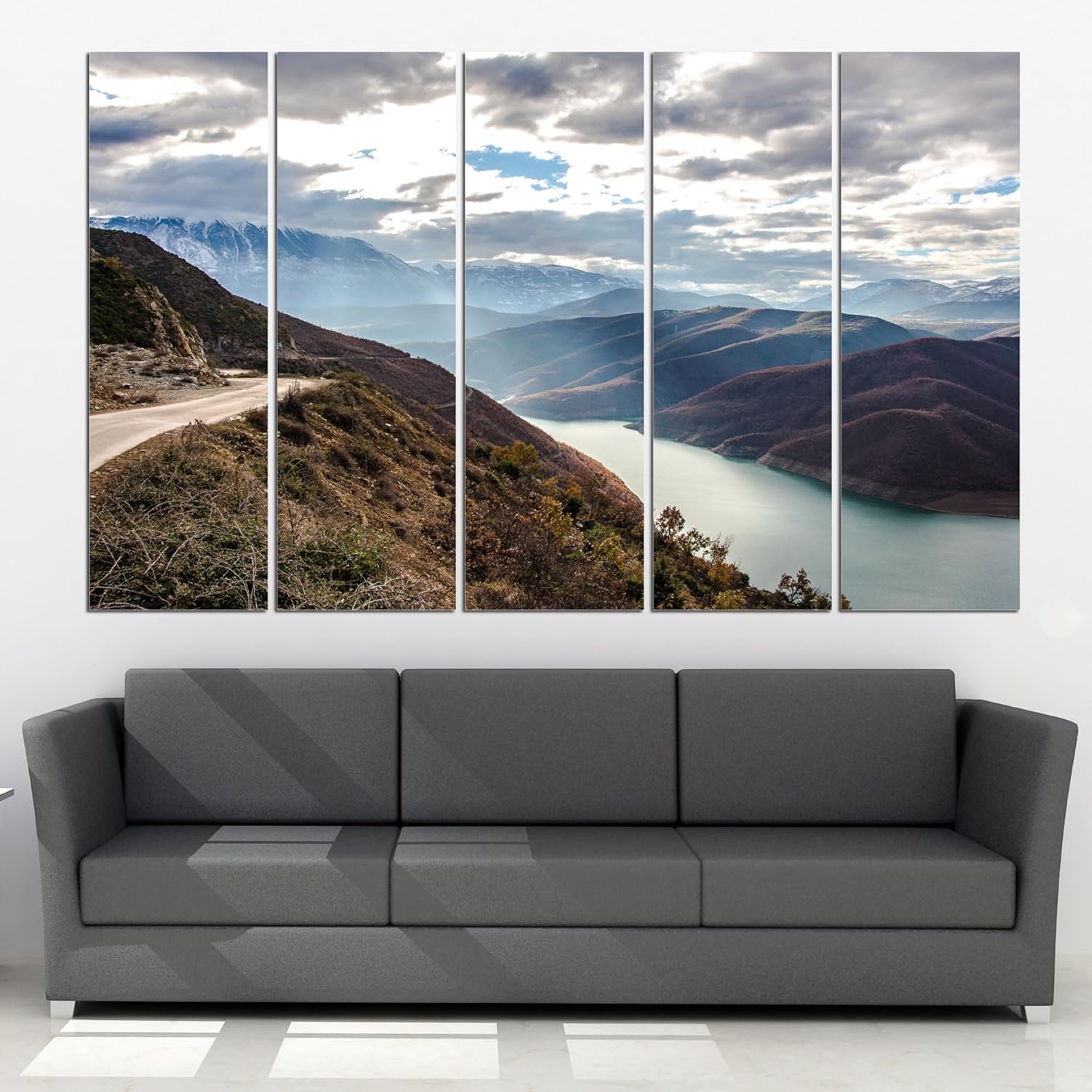
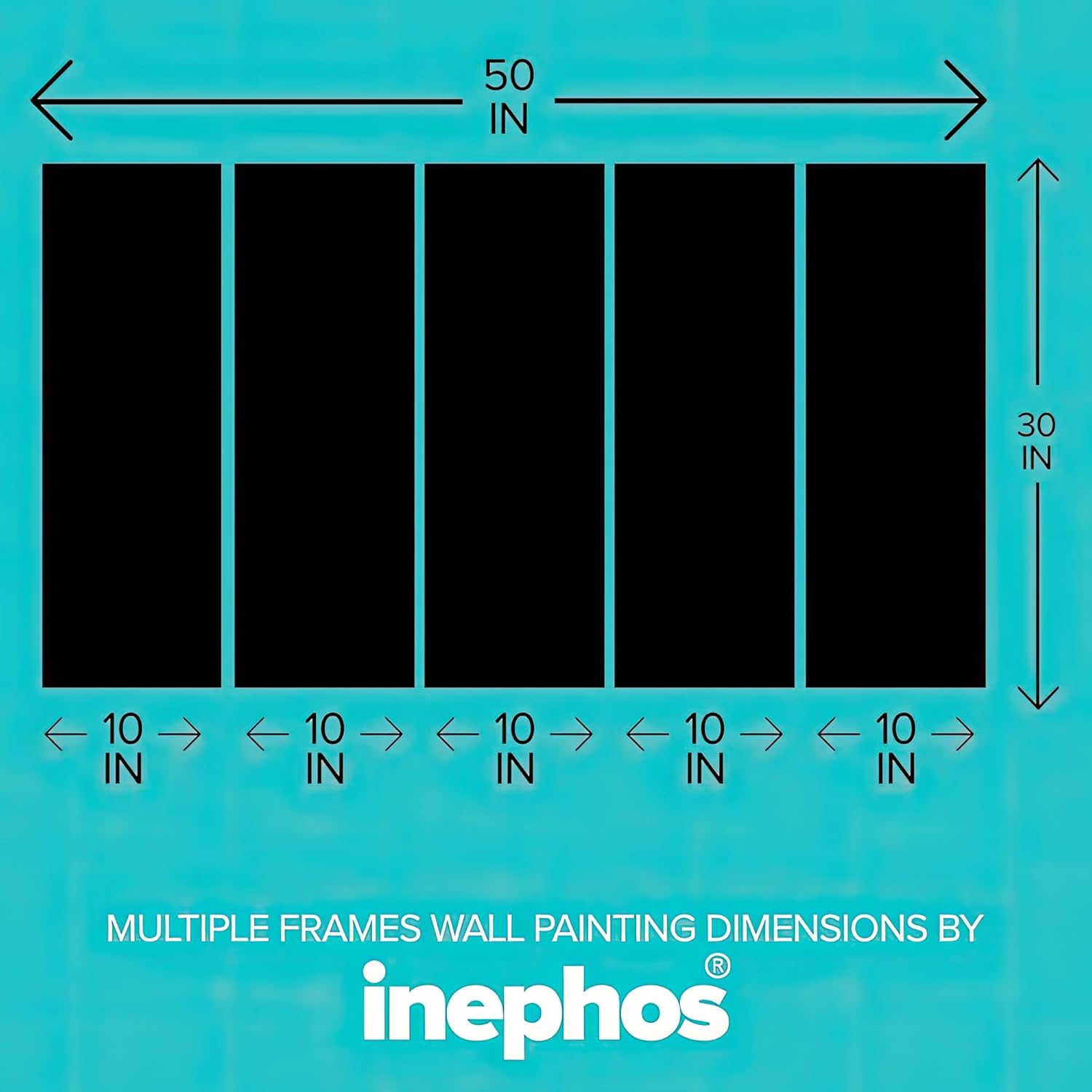
At 127cm wide, this piece covers approximately 40-45% of a 10-foot wall or 35% of a 12-foot wall—substantial enough to anchor the space without crowding it. Above an 8-foot sofa (240cm), the art occupies roughly half the sofa's width, which reads as intentional placement rather than a size mismatch.
The 76cm height sits comfortably within the 60-90cm range ideal for standard 8-foot Indian ceilings. Mounted 20-25cm above your sofa back, the bottom edge lands at roughly eye level when seated—close enough to appreciate the foreground road detail, far enough to take in the full panoramic sweep when standing at the room entrance.
Panel spacing matters here: the five sections are designed to mount with 2-3cm gaps between them. This isn't a limitation—the white space between panels echoes the atmospheric layering in the image itself, where misty valleys separate each mountain ridge.
What These Colors Look Like on Cream Walls (Morning vs LED Evening)
The palette runs cooler than most landscape art: turquoise lake water, grey-blue distant mountains, white cloud breaks. But the foreground anchors it in warmth—russet-brown hillsides, ochre autumn scrub, golden-tan road surface.
On cream or off-white walls (the default in most Indian apartments), this balance works. Morning daylight emphasizes the cool tones: the lake appears more vivid, the snow peaks sharper. Under warm LED lighting (3000K, standard in Indian homes), the russet and ochre foreground comes forward, making the piece feel warmer overall.
Against brown or beige fabric sofas, the earth tones in the lower half of the image create visual continuity. The turquoise lake becomes the accent color—it doesn't clash with your furniture because the composition surrounds it with compatible neutrals.
If your walls lean toward light yellow or peach (common builder choices), the cool blues in this piece provide contrast without conflict. The warm foreground prevents it from reading as disconnected.
Installation on Indian Walls (Concrete vs Drywall)
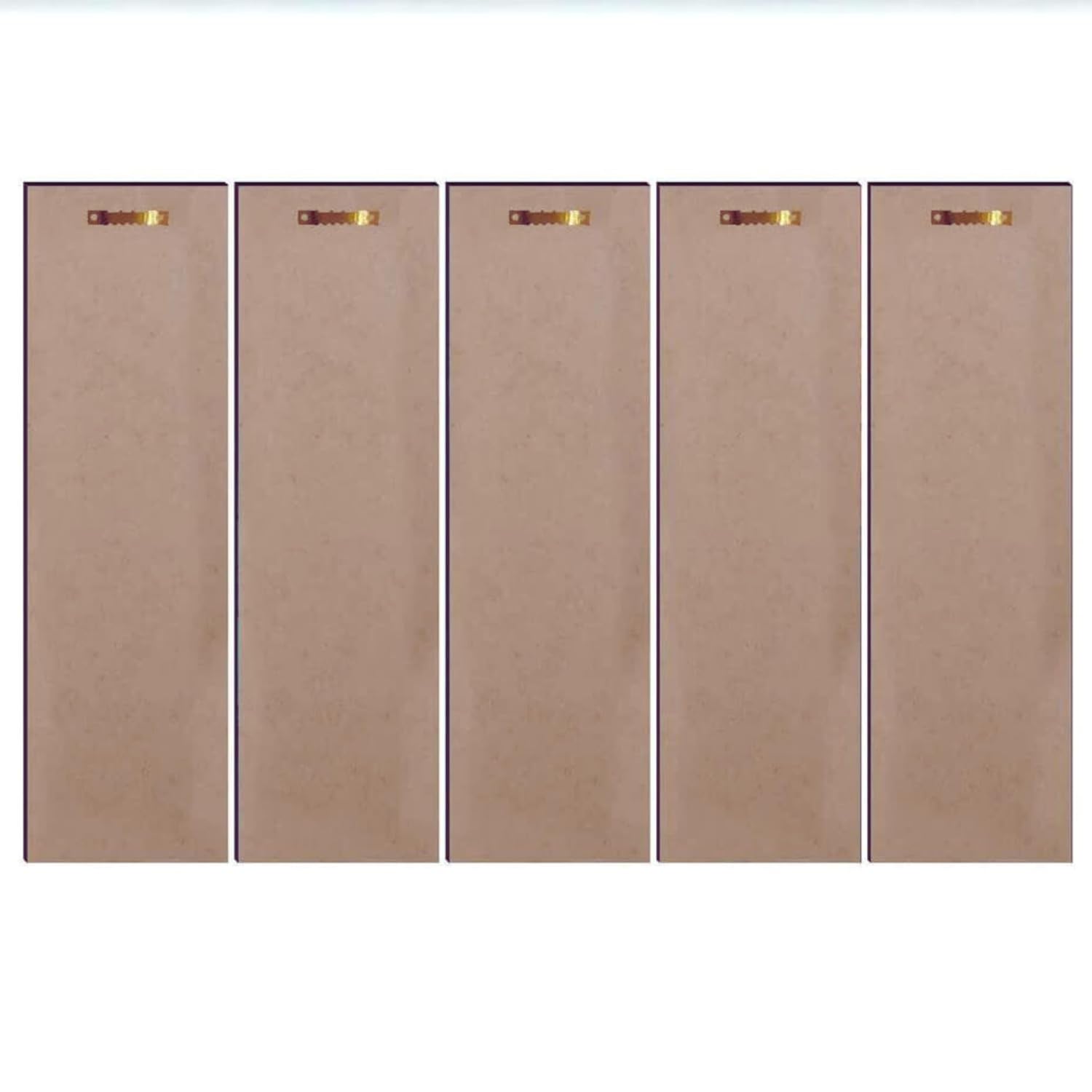
Five panels means ten mounting points—two D-rings per panel. This sounds complicated but actually simplifies alignment: each panel hangs independently, so you can adjust individual pieces without repositioning the entire set.
For concrete walls (older buildings, most construction outside metro high-rises): use the included concrete anchors with a 6mm masonry bit. Drill 35mm deep, tap in anchors, screw hooks. The 3kg total weight distributed across ten points means each anchor bears about 300g—well within tolerance.
For drywall (modern apartments, false ceiling constructions): use the included plastic wall anchors. Same 6mm holes, but only 30mm deep. The lightweight MDF panels won't stress drywall anchors.
Alignment approach: Start with the center panel. Level it, mark the adjacent panel positions using the included template, work outward. Total installation time runs 25-30 minutes for all five panels—longer than single-panel art, but not the hour-long project you might expect.
For rentals: ten 6mm holes sounds concerning, but these are smaller than curtain rod brackets. Standard wall putty fills them invisibly when you move out.
Why This Works Where Fabric Tapestries Don't
Fabric tapestries—macramé hangings, woven wall pieces, printed cloth panels—create a specific aesthetic: bohemian, casual, deliberately imperfect. They drape rather than hang flat. They absorb dust. They fade where sunlight hits and retain color where shadows fall, creating uneven aging within months.
This vinyl-on-MDF construction stays dimensionally flat. The splash-proof surface means dust wipes away rather than embedding in fibers. The panels maintain consistent color across their surface because rigid MDF doesn't flex or sag.
More practically: tapestries work in bedrooms and informal spaces. For a living room wall—especially above a sofa where guests sit, where video calls happen, where the room's visual anchor needs to feel intentional—the clean edges and consistent surface of mounted panels read as curated rather than casual.
What This Will Actually Feel Like in Your Room
From the doorway (3-4 meters away): You'll see the full panoramic sweep first. The five-panel format creates enough visual width that the piece registers as a deliberate focal point, not a small decoration lost on a large wall. The turquoise lake draws the eye naturally—it's the brightest, most saturated element.
From the sofa (1-2 meters away): The foreground detail becomes visible. The texture of the autumn scrub on the hillsides. The winding road's surface. The way clouds break over the peaks. This is where the atmospheric depth becomes apparent—distant mountains genuinely look distant because the image layers multiple planes of recession.
Living with it daily: This is contemplative art, not statement art. It doesn't demand attention—it rewards it when you look. The journey narrative (road leading into valley, valley opening to lake, lake backed by mountains, mountains dissolving into sky) gives the eye somewhere to travel. After a few weeks, you'll have favorite details: the single tree catching golden light in the second panel, the exact point where lake water meets shoreline.
Moolwan Design Note
The road in the leftmost panel isn't incidental—it's compositional strategy. It creates an entry point for the eye, a beginning to the visual journey. Without it, five panels of mountains and water would feel static. With it, the scene has direction.
Moolwan Quality Standard
Designed for Indian apartments and lighting conditions. Packed for long-distance Indian transit with corner protection for all five panels. Quality checked before dispatch—each panel inspected for print alignment and color consistency. Printed to resist humidity-related color fading. Ships from West Bengal.
Moolwan Fit Guidance for Indian Homes
At 127cm wide, this fits above 7-8 foot sofas with balanced proportions—neither too small to anchor the space nor too wide to overwhelm standard seating. The 76cm height works with 8-foot ceilings when mounted 20-25cm above furniture. Earth-tone lower half complements brown and beige upholstery common in Indian living rooms.
Quick Specifications
- Product: Moolwan 5-Panel Mountain Lake Landscape Vinyl Wall Art on MDF (127×76cm)
- Brand: Moolwan
- Category: Vinyl Wall Art on MDF
- Collection: Landscape Wall Art Collection
- Dimensions: 127cm W × 76cm H × 0.6cm D (total spread)
- Weight: 3kg (distributed across 5 panels)
- Material & Construction: Splash-proof vinyl print on MDF, 5 separate panels
- Colors: Turquoise lake, russet-brown hills, grey-blue mountains, white snow peaks, ochre autumn foliage, dramatic grey-white clouds
- Best For: Living room walls 10-12ft wide, above 7-8ft sofas, spaces needing a horizontal panoramic anchor
- Ships From: West Bengal
Frequently Asked Questions
Will 127cm be too wide for my wall?
For a 10-foot wall (300cm), this covers about 42%—substantial but not overwhelming. For walls under 9 feet, consider whether adjacent furniture or doorways limit the available hanging space. The piece needs roughly 140cm of clear wall width accounting for the slight gaps between panels.
How do the colors look under warm LED lighting?
The turquoise lake and grey-blue mountains shift slightly warmer but remain distinctly cool-toned. The russet and ochre foreground intensifies, bringing the earth tones forward. Overall, the piece feels balanced rather than cold under typical 3000K Indian household lighting.
Is five-panel installation difficult for one person?
Manageable but easier with two people. The alignment challenge isn't weight (each panel is under 700g) but leveling five separate pieces consistently. Using the included template and starting from the center panel simplifies the process. Allow 25-30 minutes.
Will the panels warp in Mumbai humidity?
MDF is more dimensionally stable than solid wood in humidity fluctuations. The splash-proof vinyl surface prevents moisture absorption from the front. These panels are manufactured for Indian climate conditions and tested through monsoon-equivalent humidity exposure.
How much gap should I leave between panels?
2-3cm between each panel works visually. This matches the atmospheric spacing in the image itself—where misty air separates mountain ridges. Closer gaps (1cm) work but make alignment errors more visible. Wider gaps (4cm+) start fragmenting the panoramic continuity.
Product Snapshot
- Brand: Moolwan
- Product: Moolwan 5-Panel Mountain Lake Landscape Vinyl Wall Art on MDF (127×76cm)
- Category: Vinyl Wall Art on MDF
- Collection: Landscape Wall Art Collection
- Theme/Type: Mountain lake panoramic landscape
- Best For: Living rooms with 10-12ft walls, above 7-8ft sofas, horizontal focal point placement
- Primary Differentiator: Sweeping depth perspective—five panels create continuous mountain-to-lake recession
- Secondary Differentiators: Earth-tone palette complementing Indian furniture neutrals; atmospheric layering from foreground to misty peaks
- Material & Construction: Splash-proof vinyl print on MDF, 5 individually mounted panels
- Care Instructions: Wipe with dry microfiber cloth; avoid water and cleaning chemicals
- Ships From: West Bengal
- Packing: Long-distance transit ready with individual corner protection per panel
- Quality Check: Before dispatch