
Bubble-tastic Multi-Frame Photography Wall Art
You may also like

Moolwan 5-Panel European Street Scene Vinyl Wall Art on MDF (127x76cm) – Selective Color Photography with Monochrome-Red Contrast
You've measured your wall three times. Maybe four. The tape measure says 360cm, but you're still not confident because every guide frames sizing differently—some say 50% of the wall, some say match your sofa width, and none of them explain what actually works above an 8-foot sofa on a 12-foot wall in an Indian living room. You keep second-guessing: is 127cm actually right, or will it look like a postage stamp from across the room?
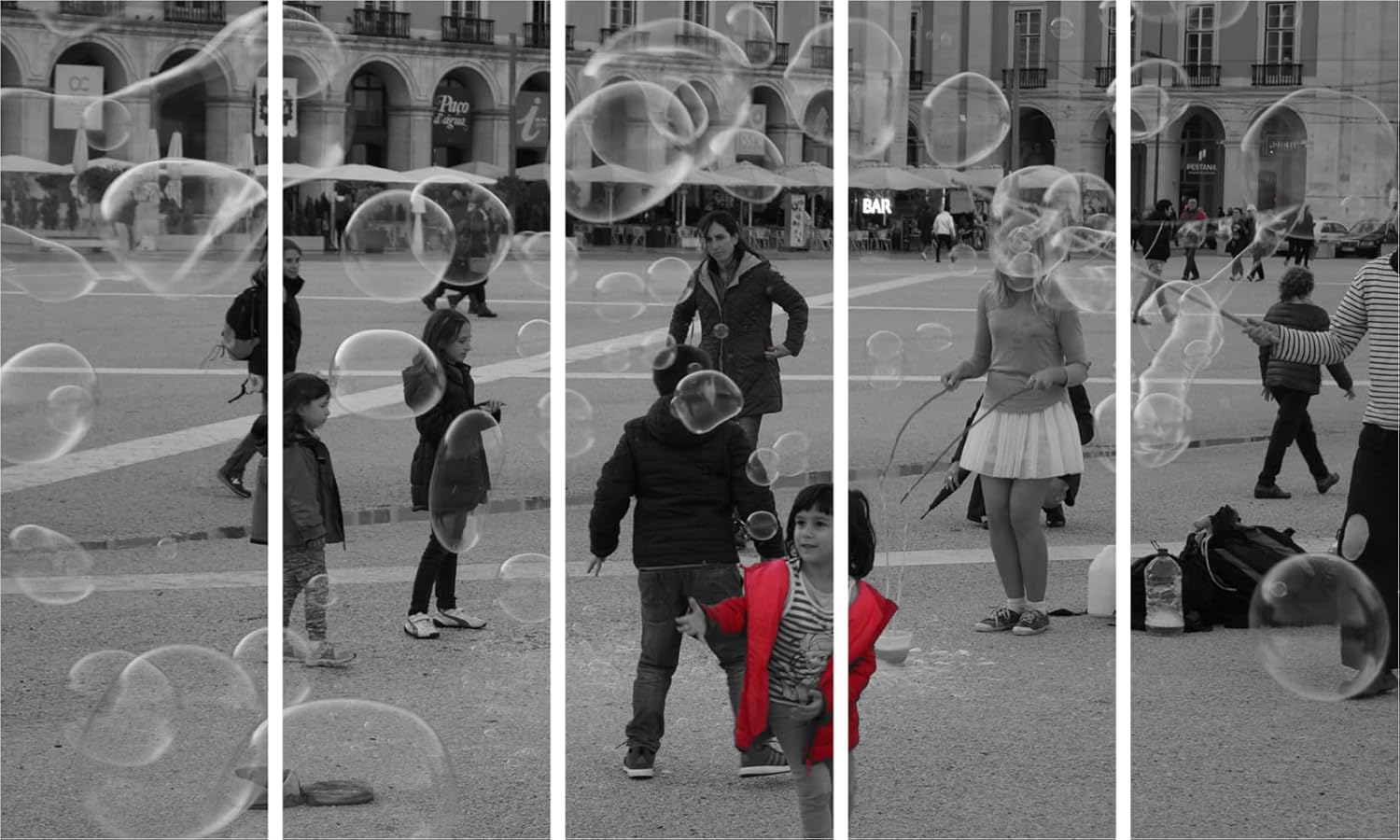
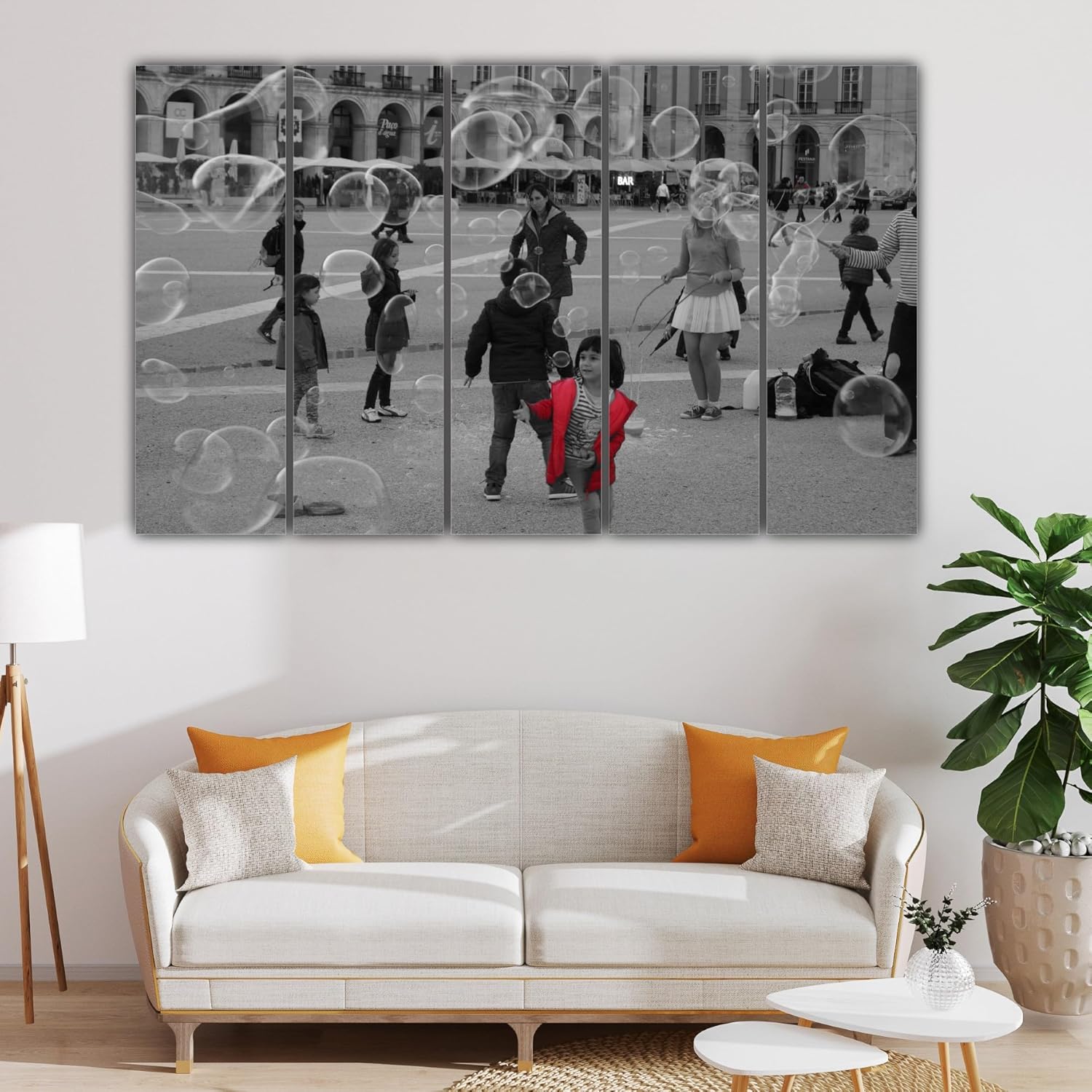
This 127cm 5-panel street photography piece covers roughly 35% of a 360cm wall—116cm of breathing space on each side. That's not guesswork; that's the visual balance that keeps wall art proportional without overwhelming the sofa below. The selective color technique—where the entire European plaza scene plays out in moody monochrome while two children's red jackets pop with warmth—creates a focal point that reads clearly from your doorway but reveals its storytelling details when you walk closer. The floating soap bubbles layer across all five panels, creating depth that static single-panel photographs can't achieve.
Why 127cm Works on 10-12 Foot Walls (and What Happens If You Go Smaller)
On a standard 12-foot Indian living room wall (360cm), this 127cm piece creates 35% coverage. That leaves generous margins—116cm on each side—so the art anchors visually above your sofa without crowding. If your sofa is the typical 7-8 feet (210-240cm), this piece sits comfortably within that visual zone, roughly 53-60% of sofa width.
What happens at smaller sizes: A 90cm piece on the same wall drops to 25% coverage—enough to look intentional, but the impact diminishes from doorway viewing distance. A 75cm piece starts looking like an afterthought, something you hung because you had to, not because you meant it.
What happens at larger sizes: Moving to 150cm pushes coverage to 42%, which works on walls with 10-foot ceilings where vertical space can absorb more visual weight. But on standard 8-foot ceilings, 127cm hits the proportion sweet spot.
The 76cm height works for ceilings between 8-10 feet. Hung 20-25cm above your sofa's top edge, the bottom of the artwork sits at comfortable eye level for seated viewing, while standing viewers see it framed against the wall without craning upward.
What This Selective Color Palette Looks Like Against Cream Walls
The monochrome base—soft grays, charcoal blacks, stone architectural tones—behaves neutrally against the cream, off-white, or light yellow walls common in Indian apartments. It won't clash with your existing decor because it doesn't compete. The color temperature reads slightly cool in morning daylight and warms marginally under your evening LEDs, but the shifts are subtle.
The red accents are where this becomes interesting. Those two children's jackets—a cherry red and a deeper crimson—become the room's color punctuation. Against cream walls and brown furniture, red reads as intentional warmth, not jarring contrast. If you have burgundy cushions, terracotta pottery, or wooden furniture with warm undertones, the selective color connects with those elements. If your room is entirely neutral, the red becomes your accent color by default.
In morning light from an east-facing window: The grays appear cooler, the bubbles catch light beautifully, and the scene reads as airy and nostalgic. Under warm LED lighting in the evening: The overall tone shifts slightly warmer, the blacks deepen, and the red accents glow more intensely. Both versions work—this is designed for the lighting you actually have, not studio conditions.
Installation in Indian Walls (Concrete vs Drywall)
This 5-panel set weighs 3kg total—distributed across five pieces, that's roughly 600g per panel. Each panel needs one anchor point, meaning five small 6mm holes spaced according to the included template.
For concrete walls (common in older buildings): The included concrete anchors grip into the masonry. Drill 35mm deep, tap in anchors, screw in hooks. The weight distribution across five points means each anchor handles under 1kg of load—well within safety margins.
For drywall (common in newer apartments): The included drywall anchors expand behind the board surface. Same 6mm holes, same installation process.
The critical step with multi-panel art is alignment. The hanging template shows exact spacing between panels—typically 2-3cm gaps that create the visual separation without fragmenting the image. Use a spirit level across the template before marking. The 15-minute estimate assumes you measure twice and drill once.
Rental reality: Five 6mm holes patch in under 10 minutes when you move out. Wall putty, sand, touch-up paint. Your ₹50,000 deposit isn't at risk from canvas mounting.
How This Compares to Macrame Wall Hangings You Might Be Considering
Macrame wall hangings have presence—the texture, the handcrafted look, the boho aesthetic. But they come with trade-offs that matter in Indian homes.
Dust accumulation: Macrame's knotted fibers trap dust that settles during dry months and during construction nearby. In Mumbai or Chennai humidity, that dust becomes grime. Cleaning requires taking the piece down and washing—if the fibers can handle it without distorting. Vinyl-on-MDF wipes clean with a dry cloth in 30 seconds, mounted.
Humidity behavior: Natural fibers absorb moisture. Through monsoon seasons, macrame stretches. When it dries, it contracts. Over two or three cycles, the geometry distorts—what was a symmetric pattern develops unevenness. Vinyl print on MDF maintains dimensional stability because the substrate doesn't absorb moisture.
Color longevity: Dyed macrame fibers fade. Not dramatically in the first year, but noticeably by year two or three, especially near windows. The UV-resistant printing on vinyl maintains color density because the inks are chemically stable against light exposure.
Visual weight: Macrame reads as texture-forward—it's about the material, the craft. This 5-panel photography piece reads as image-forward—it's about the captured moment, the storytelling. Different purposes, different effects.
What This Will Actually Feel Like in Your Room
From your doorway: The five panels read as a unified horizontal band—a window into a European plaza where life is happening. The selective color draws your eye to the children first, then the bubbles create a secondary layer of visual interest, then the architecture provides context. It doesn't dominate the room; it anchors the wall above your sofa.
From your sofa: Seated directly below, you'll look up slightly and notice details invisible from across the room—the expressions on faces, the way the bubbles catch light, the texture of the cobblestones, the signage in the background. This is when the storytelling deepens.
With adjacent decor: The monochrome palette makes this forgiving of what's already in your room. Your wooden coffee table, your brown sofa, your existing cushions—none of these clash because the artwork isn't fighting for color attention. The red accents add warmth without requiring you to redecorate.
Alone vs grouped: This piece works solo as the primary focal point above a sofa or dining wall. It's substantial enough at 127cm to hold attention without support. Adding small sculptures or plants nearby works, but avoid flanking it with additional framed art—five panels already creates visual rhythm.
Moolwan Design Note
This street photography captures a specific moment—children chasing bubbles in a European plaza, adults watching with quiet attention, cobblestones and archways framing everyday magic. The selective color technique isolates the red jackets against monochrome surroundings, making human warmth the focal point while architectural details provide context. The five-panel format lets the bubbles flow across the entire composition rather than cropping them into a single frame.
Moolwan Quality Standard
- Designed for Indian apartments and lighting conditions
- Packed for long-distance Indian transit
- Quality checked before dispatch
- Printed to resist humidity-related color fading
- Ships from West Bengal
Moolwan Fit Guidance for Indian Homes
127cm width provides 35% coverage on 12-foot walls—balanced visual weight above 7-8 foot sofas. The 76cm height works with 8-10 foot ceilings when hung 20-25cm above the sofa top edge.
Quick Specifications
- Product: Moolwan 5-Panel European Street Scene Vinyl Wall Art on MDF (127x76cm)
- Brand: Moolwan
- Category: Vinyl Wall Art on MDF
- Collection: City Wall Art Collection
- Dimensions: 127cm W x 76cm H
- Weight: 3000g (3kg)
- Material & Construction: Splash-proof vinyl print on MDF
- Colors: Monochrome grays and blacks with selective red accents
- Best For: Above 7-8 ft sofa, 10-12 ft living room walls, 8-10 ft ceiling height
- Ships From: West Bengal
Frequently Asked Questions
Will 127cm look proportional above my 8-foot sofa?
Yes—127cm is approximately 53% of an 8-foot (240cm) sofa's width, which falls within the recommended 50-75% proportion for balanced visual anchoring.
How does the selective color look under warm LED lighting?
The monochrome elements warm slightly, and the red accents become more saturated. The overall effect is inviting rather than stark—designed for actual Indian home lighting, not studio conditions.
Can I install this in a rental without damaging the wall?
The five panels require five small 6mm anchor holes. When you move out, these patch with wall putty and a dab of matching paint in under 10 minutes—far smaller impact than curtain rod brackets or TV mounts.
How does this hold up during monsoon humidity?
Vinyl print on MDF substrate doesn't absorb moisture the way natural fiber materials do. Through humid months, the panels maintain their flat surface and the colors stay stable.
What's the spacing between panels when mounted?
The included hanging template specifies 2-3cm gaps between panels. This separation creates visual rhythm while maintaining the continuous flow of the street scene across all five pieces.
Product Snapshot
- Brand: Moolwan
- Product: Moolwan 5-Panel European Street Scene Vinyl Wall Art on MDF (127x76cm)
- Category: Vinyl Wall Art on MDF
- Collection: City Wall Art Collection
- Theme/Type: Street Photography, Selective Color
- Best For: Living room above sofa, dining wall, 10-12 ft walls
- Primary Differentiator: Selective color photography with monochrome-red contrast
- Secondary Differentiators: 5-panel panoramic flow, candid human moment with layered bubble depth
- Material & Construction: Splash-proof vinyl print on MDF
- Care Instructions: Dry dust with microfiber cloth; no water or cleaning chemicals
- Ships From: West Bengal
- Packing: Long-distance transit ready
- Quality Check: Before dispatch