
Buddha-bar 4-Panel Framed Wall Art
You may also like

Moolwan 4-Panel Buddha with Lotus Vinyl Wall Art on MDF (85x55cm) – Split-Composition Narrative from Lotus to Enlightenment
You keep opening this product page, trying to mentally place these four panels on your living room wall. But it's difficult to know for sure, isn't it? 85cm sounds reasonable, but your wall has that AC vent on one side, and the sofa doesn't sit perfectly centered. You need to know this works in your specific space—not just in a styled photo where everything aligns perfectly.
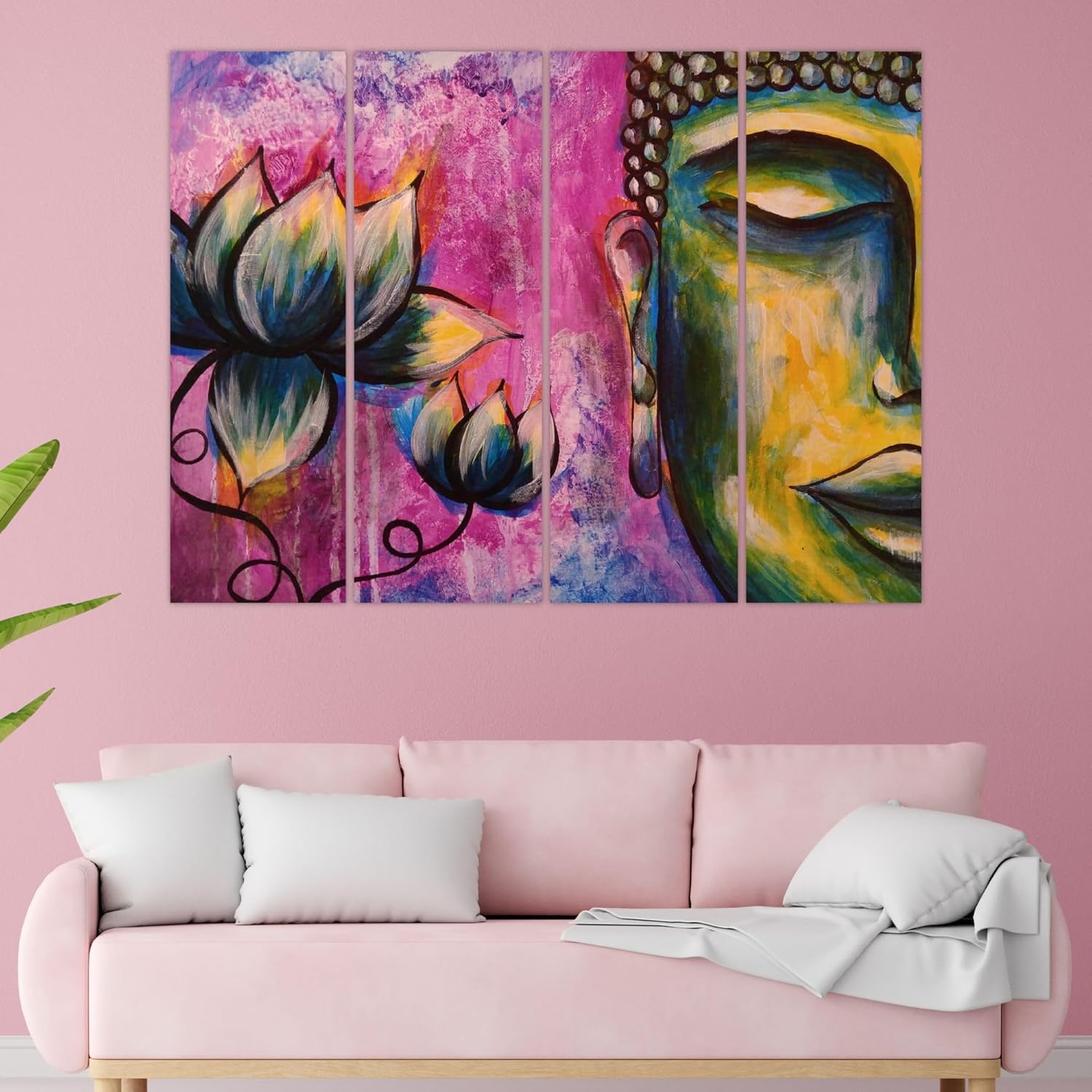
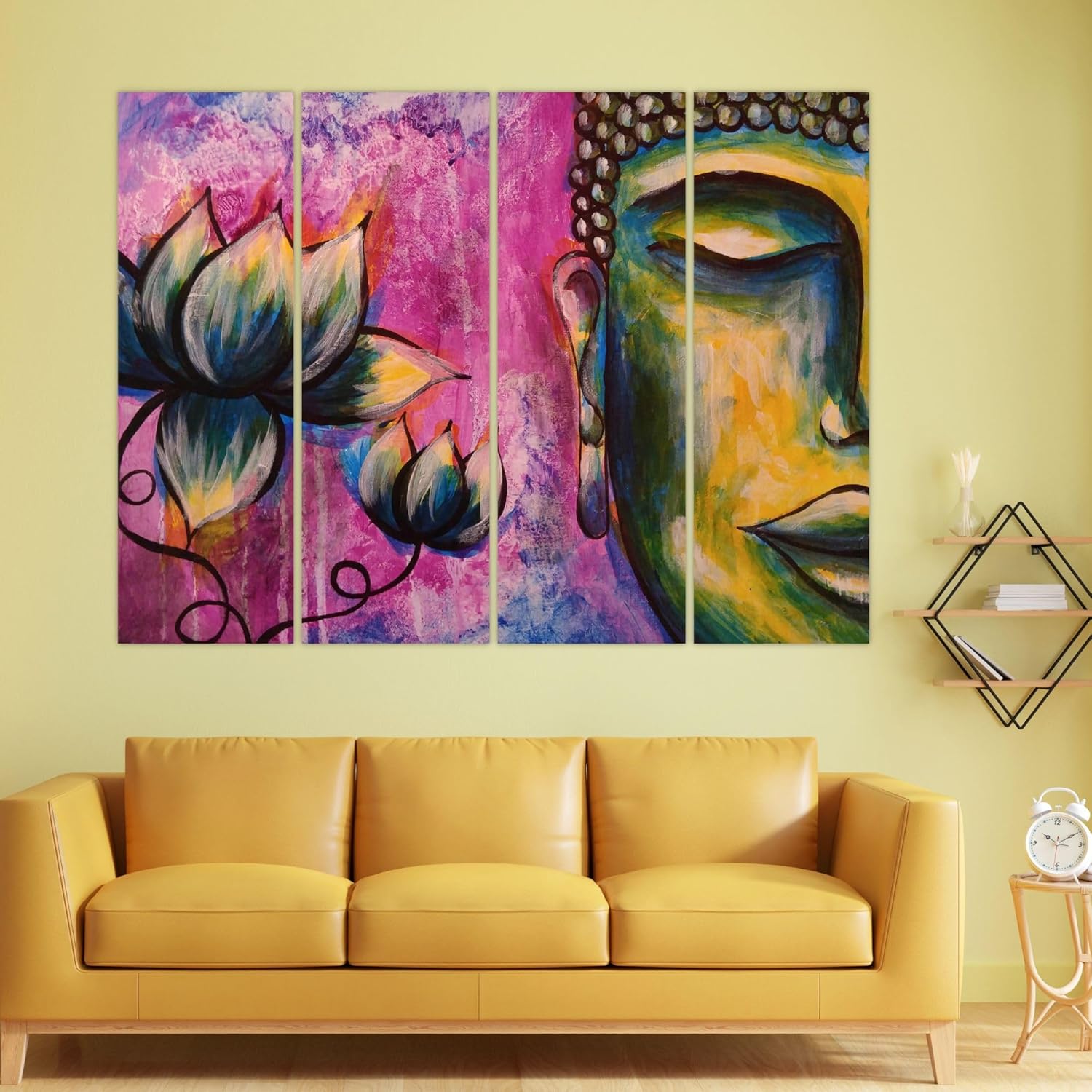
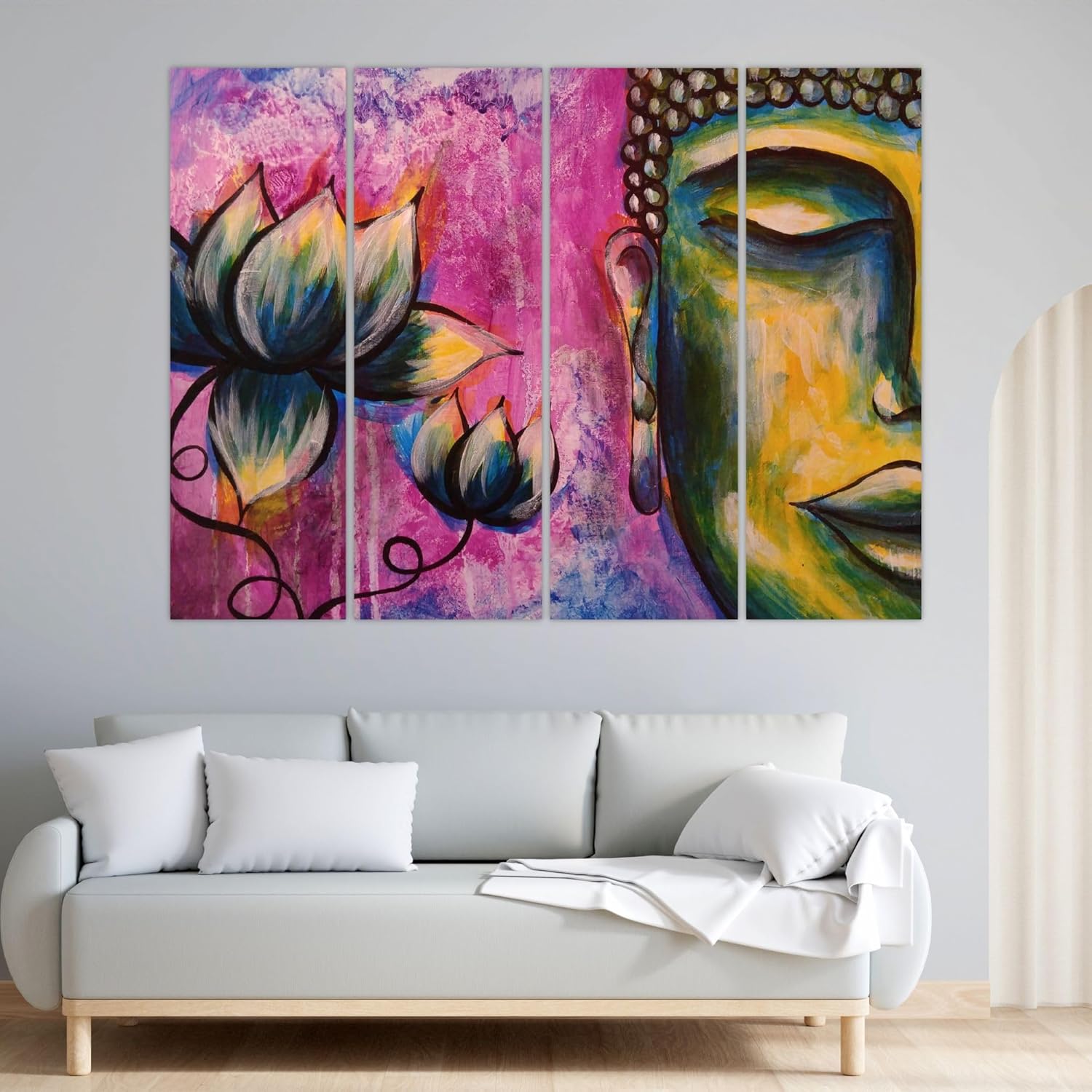
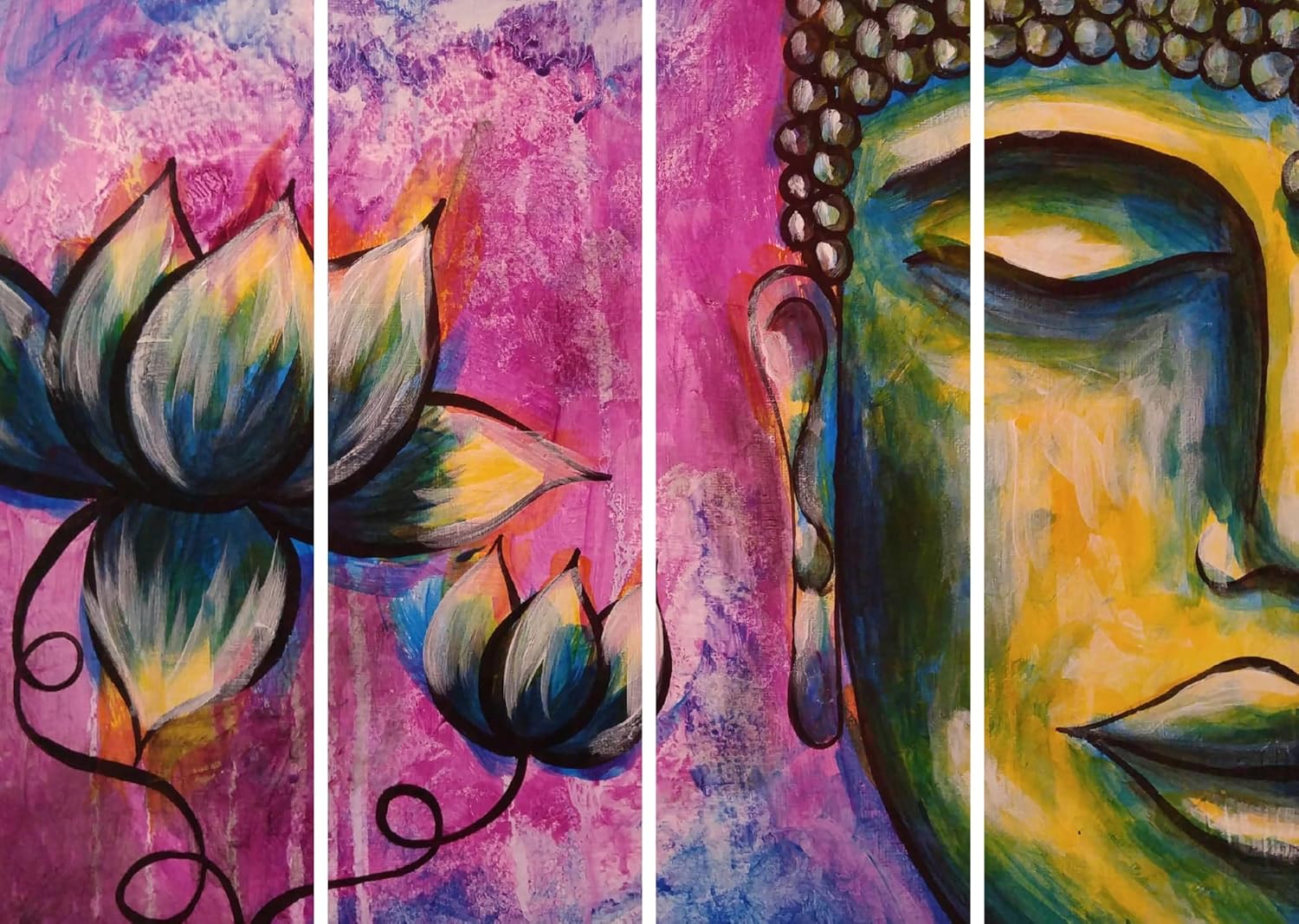
Here's what you're actually working with: 85cm width means this piece spans just under 3 feet. On a typical 10-12 foot living room wall in an Indian apartment, that's roughly 23-28% wall coverage. Not overwhelming. Not underwhelming. The composition itself does something unusual—it reads as a visual story from left to right. The first two panels show lotus blooms rising and opening. The third and fourth panels reveal Buddha's face in meditative repose. Your eye travels across naturally, resting finally on the closed eyes and serene expression. This left-to-right movement means it works above a sofa where you'd naturally scan the wall, or in an entryway where guests would walk past and absorb the narrative.
Why 85cm Works on 10-12 Foot Walls (And What Changes If You Go Larger)
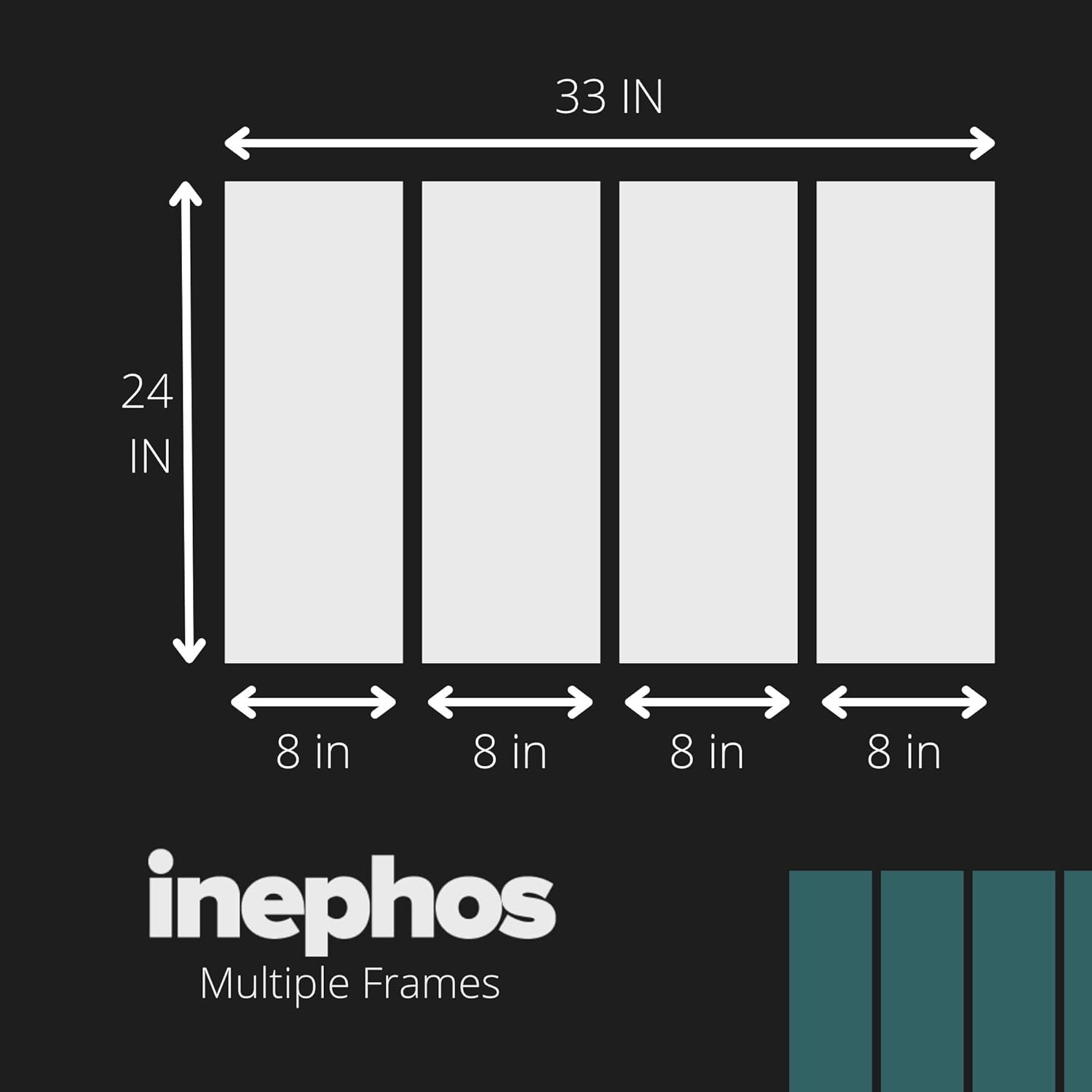
The math works like this: on a 10-foot wall (300cm), an 85cm piece leaves 107cm of space on each side when centered. That's generous breathing room. Above a 6-foot sofa (180cm), this 85cm width hits roughly 47% of the sofa's width—slightly below the 60-75% guideline, but the 4-panel format creates visual expansion. The gaps between panels (typically 2-3cm each) add another 6-9cm of perceived width without actual material.
If you're working with an 8-foot sofa (240cm), this piece sits at 35% coverage—it will look deliberate but not dominant. For a larger 8-foot sofa, you might want this above a side wall, meditation corner, or bedroom headboard where 85cm reads as a focused spiritual statement rather than a living room anchor.
For entryways and hallways, 85cm is close to ideal. Most Indian apartment corridors run 4-5 feet wide. An 85cm piece on a corridor wall creates presence without making the space feel narrower.
What Magenta and Teal Look Like on Cream Walls (Morning vs LED Light)
This isn't the typical Buddha palette. Most Buddha art uses gold, ochre, and earth tones. This piece uses saturated magenta (the textured background), teal-green (Buddha's face and lotus petals), touches of gold-yellow, and deep blue accents. It's visually louder than traditional spiritual art.
On cream walls (the default in most Indian apartments), the magenta reads warm and energetic in morning daylight. It doesn't clash with cream—it creates contrast. The teal and green tones in Buddha's face and the lotus petals balance the warmth, preventing the piece from feeling overwhelming.
Under warm LED lighting (3000K, standard in Indian homes), the magenta deepens to plum tones, and the teal becomes richer. Evening viewing emphasizes the meditative quality—the colors settle rather than vibrate. If your living room has both natural light and evening LED use, this piece will feel different at different times of day. That's not a flaw; spiritual art that shifts with light cycles can feel appropriate.
Against off-white or light yellow walls, the magenta will appear slightly more orange-tinged. Against builder's peach walls, you'll get harmony rather than contrast—the warm tones will blend more than pop. If you want this piece to be a statement, cream or pure white walls work best.
With brown sofas and wooden furniture (coffee tables, TV units), the teal and green elements in the artwork create a nature-adjacent connection. The lotus motif bridges the gap between the bold colors and natural wood tones in your furniture.
Installation in Indian Walls: Aligning Four Panels Evenly
Four panels means four hanging points, which means four chances to get the alignment slightly off. Here's the reality: the panels need to hang level with each other, and the gaps between them need to be consistent. Uneven gaps or a single panel tilting half a centimeter will be visible from across the room.
The piece includes D-ring hangers on each panel. For concrete walls (common in older Indian buildings), you'll need 6mm masonry anchors—four holes total, each 35mm deep. For drywall (common in newer constructions), use the included plastic anchors.
The process: First, decide your center point on the wall. Mark it with removable tape. Measure 42.5cm left and 42.5cm right of center—that's where your outer panel edges will sit. Now work inward, leaving 2-3cm gaps between panels. Use a laser level or a long straightedge to mark a horizontal line. Hang the two middle panels first, then the outer panels. Step back from the doorway after each panel. Adjust before the anchors are fully tightened.
Total installation time: 25-30 minutes if you're being careful with alignment. Rushing this creates crooked panels you'll notice every single day.
For rentals: Four 6mm holes are smaller than a single curtain rod bracket. They fill with wall putty in minutes, sand smooth, touch up with matching paint. Your deposit isn't at risk from proper anchor holes.
How This Compares to Macrame Wall Hangings You Might Have Considered
Macrame has been trending for bohemian and minimalist interiors. But here's what macrame can't do that this Buddha panel set does:
Macrame is monochromatic—usually cream, beige, or white. It adds texture but not color. If your room already has cream walls and beige furniture, macrame adds more of the same. This Buddha piece introduces teal, magenta, gold, and green—colors that don't exist anywhere else in most Indian living rooms. It becomes a focal point rather than blending in.
Macrame collects dust in the fibers. The knotted texture traps particles, and cleaning macrame requires careful hand-washing or professional cleaning. Splash-proof vinyl on MDF wipes clean with a dry cloth. In dusty Indian cities (Delhi's pollution, construction dust in developing areas), this maintenance difference matters within months.
Macrame provides no specific visual focal point—your eye wanders over the texture without landing anywhere. This 4-panel piece has a clear narrative: lotus opening, Buddha's face emerging. There's visual direction and a resting point for the eye.
Macrame is difficult to install evenly and tends to shift over time. The weight distribution in fiber hangings means they droop or twist. MDF panels hang flat and stay flat. What you install is what you'll see two years later.
For a meditation corner or spiritual space, macrame reads as "decoration." A Buddha composition reads as intentional spiritual art. The functional difference depends on whether you want ambiance or meaning.
What This Will Actually Look Like in Your Room
From the doorway (5-6 meters away): You'll see the color impact first—the magenta background registers as a warm focal point. The Buddha face is recognizable but not detailed at this distance. The four-panel structure creates rhythm.
From the sofa (2-3 meters away): The lotus details become visible. You can see the brushstroke texture in the background—it looks painted rather than printed, even though it's a print. Buddha's expression is clear: closed eyes, subtle smile, peaceful.
Up close (1 meter): The vinyl surface is visible as vinyl—you won't mistake it for actual canvas or paint. But the texture and color depth hold up at close viewing. The MDF backing keeps everything flat and stable.
This piece works best as a solo installation on its wall. The color saturation and 4-panel format already create enough visual activity. Adding photo frames, shelves, or other art adjacent to it will create competition rather than composition. If you have a gallery wall in mind, this isn't the right piece—it needs its own wall space to breathe.
In meditation rooms or yoga spaces, the eye naturally rests on Buddha's face during practice. The lotus-to-enlightenment visual narrative supports meditative intention. In living rooms, it's a conversation piece that signals aesthetic confidence—choosing a non-traditional color palette for spiritual art says something about the homeowner's taste.
Moolwan Design Note
The left-to-right composition—lotus blooms transitioning into Buddha's serene profile—creates visual movement that standard centered Buddha art doesn't offer. The magenta-teal palette is deliberately non-traditional, designed for homeowners who want spiritual art without predictable earth tones.
Moolwan Quality Standard
Designed for Indian apartments and lighting conditions. Packed for long-distance Indian transit with corner protection. Quality checked before dispatch. Printed to resist humidity-related color fading. Ships from West Bengal.
Moolwan Fit Guidance for Indian Homes
At 85cm width, this fits best above 6-foot sofas, in meditation corners, entryways, or bedrooms. For 8-foot sofas in large living rooms, consider placing this on an adjacent wall where it can anchor a smaller space rather than competing with furniture scale.
Quick Specifications
- Product: Moolwan 4-Panel Buddha with Lotus Vinyl Wall Art on MDF (85x55cm)
- Brand: Moolwan
- Category: Vinyl Wall Art on MDF
- Collection: Buddha Wall Art Collection
- Dimensions: 85cm (W) x 55cm (H) x 2cm (D)
- Weight: 3000 grams
- Panel Count: 4 panels
- Material & Construction: Splash-proof vinyl print on MDF with brown frames
- Colors: Magenta, teal, green, gold-yellow, blue accents
- Best For: 10-12 ft living room walls, meditation corners, entryways, bedrooms with 6 ft sofas
- Ships From: West Bengal
Frequently Asked Questions
Will 85cm look too small above my 8-foot sofa?
At 85cm, this covers about 35% of an 8-foot sofa's width—deliberate but not dominant. The 4-panel format with gaps adds visual expansion. For 8-foot sofas, this works well if centered or slightly off-center toward a room corner. If you want the piece to anchor the entire wall, consider a larger single piece or place this in a bedroom or meditation corner where 85cm reads as a focused statement.
How will the magenta background look in my room's evening lighting?
Under warm LED lights (3000K, standard in Indian homes), the magenta deepens to plum-wine tones rather than staying bright pink. The teal in Buddha's face and lotus petals becomes richer and more saturated. Evening viewing emphasizes the meditative quality. If your room uses cool white LEDs, the magenta will stay brighter and more vivid.
Can I hang all four panels evenly without professional help?
Yes, but allocate 25-30 minutes and use a level. Hang the two middle panels first, verify they're level, then add the outer panels. The key is consistent 2-3cm gaps between panels. Uneven gaps are visible from across the room. A laser level (₹500-800 on Amazon) makes this significantly easier if you plan to hang multi-panel art again.
Will the colors fade during monsoon season or with AC use?
The vinyl print is splash-proof and designed to resist humidity-related color fading. Air conditioning doesn't affect the colors. However, avoid hanging directly opposite a window that gets 4+ hours of direct afternoon sun—UV exposure over years can affect any printed surface, though eco-solvent inks resist this better than standard inkjet prints.
How do I clean this if dust accumulates?
Wipe with a dry microfiber cloth every 2-3 weeks. Don't use water, cleaning sprays, or furniture polish on the vinyl surface. The splash-proof coating means dust sits on the surface rather than embedding—it wipes away cleanly.
Product Snapshot
- Brand: Moolwan
- Product: Moolwan 4-Panel Buddha with Lotus Vinyl Wall Art on MDF (85x55cm)
- Category: Vinyl Wall Art on MDF
- Collection: Buddha Wall Art Collection
- Theme/Type: Buddha with Lotus, Spiritual Art
- Best For: 10-12 ft walls above 6 ft sofas, meditation corners, entryways, bedrooms
- Primary Differentiator: Split-composition narrative—lotus blooms transition into Buddha's face across four panels
- Secondary Differentiators: Vibrant magenta-teal palette (non-traditional for Buddha art), painterly brushstroke texture
- Material & Construction: Splash-proof vinyl print on MDF, brown frames
- Care Instructions: Dry dust with microfiber cloth; no water or cleaning chemicals
- Ships From: West Bengal
- Packing: Long-distance transit ready with corner protection
- Quality Check: Before dispatch