
Buddha Bliss 4-Panel Framed Wall Art
You may also like

Moolwan 4-Panel Golden Buddha Statues Vinyl Wall Art on MDF (84x61cm) – Layered Depth Photography Creating Sculptural Presence
You've measured that wall space above your sofa three times. The tape says you have roughly 10 feet to work with, and you need something that fills it without overwhelming—something that looks intentional from across the room. But every sizing guide contradicts the last. Is 84cm wide enough for a 10-foot wall, or will it look underwhelming? Is 61cm tall enough with 8-foot ceilings, or should you go bigger? The numbers say one thing; the photos say another. You need to know how this specific piece will actually sit on your specific wall.
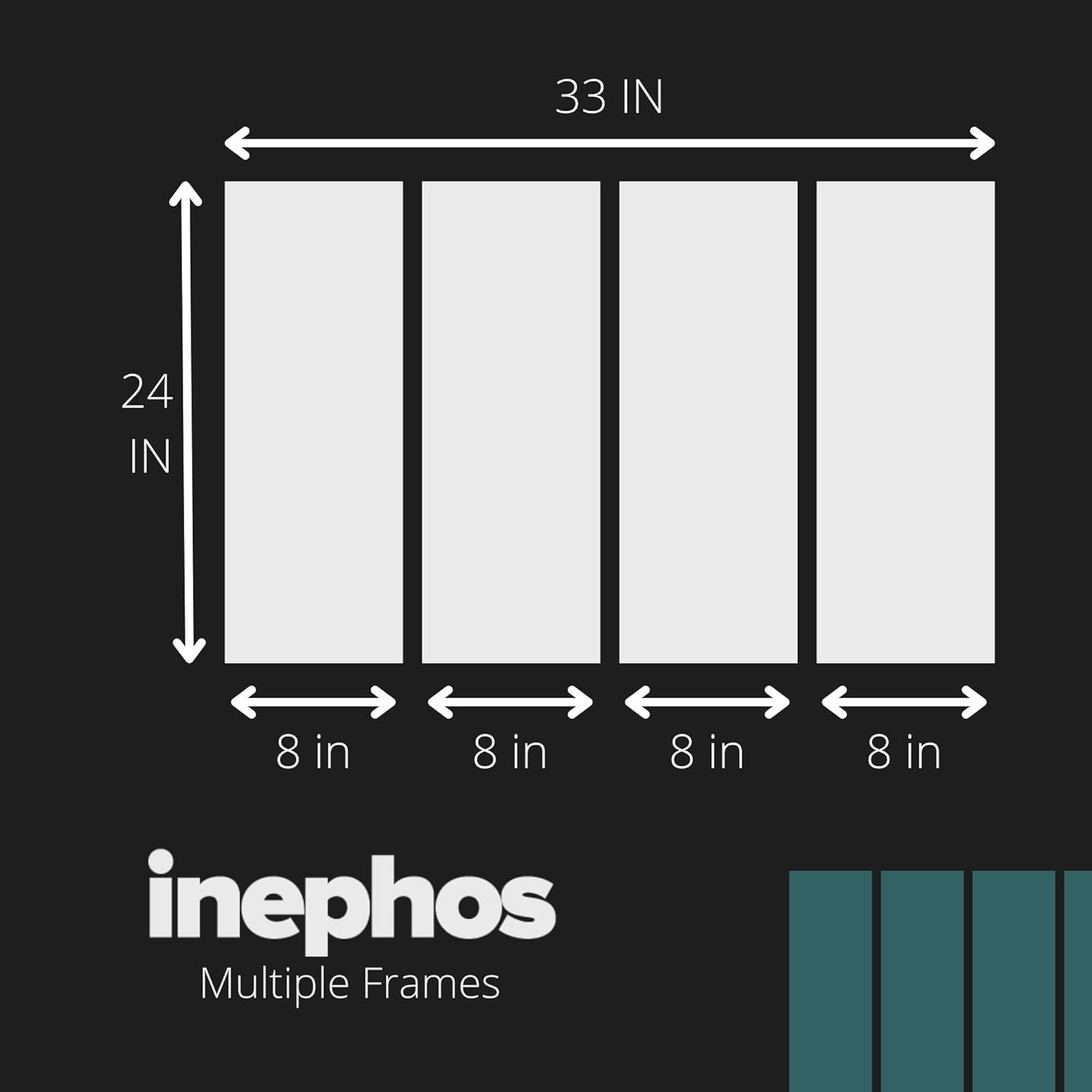
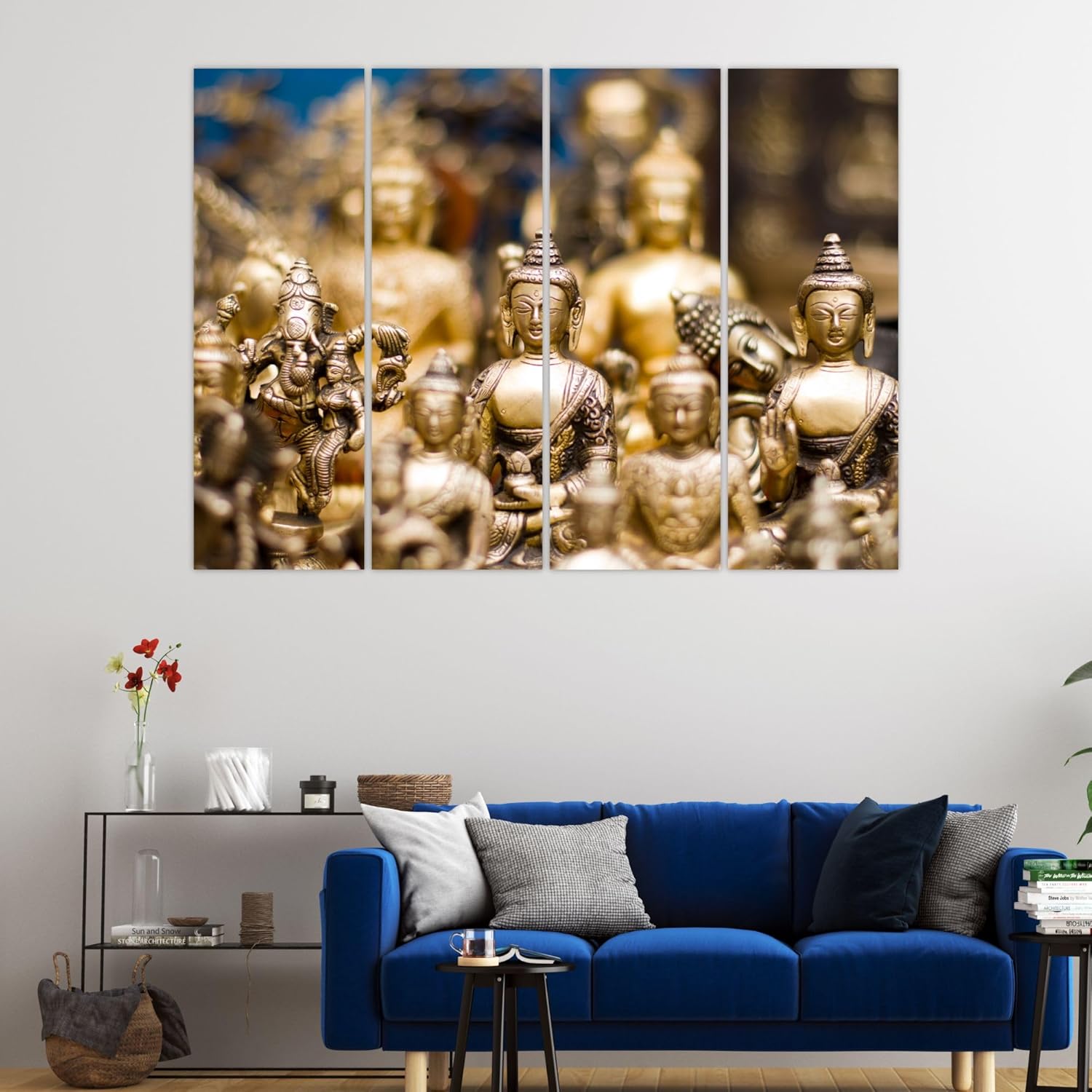
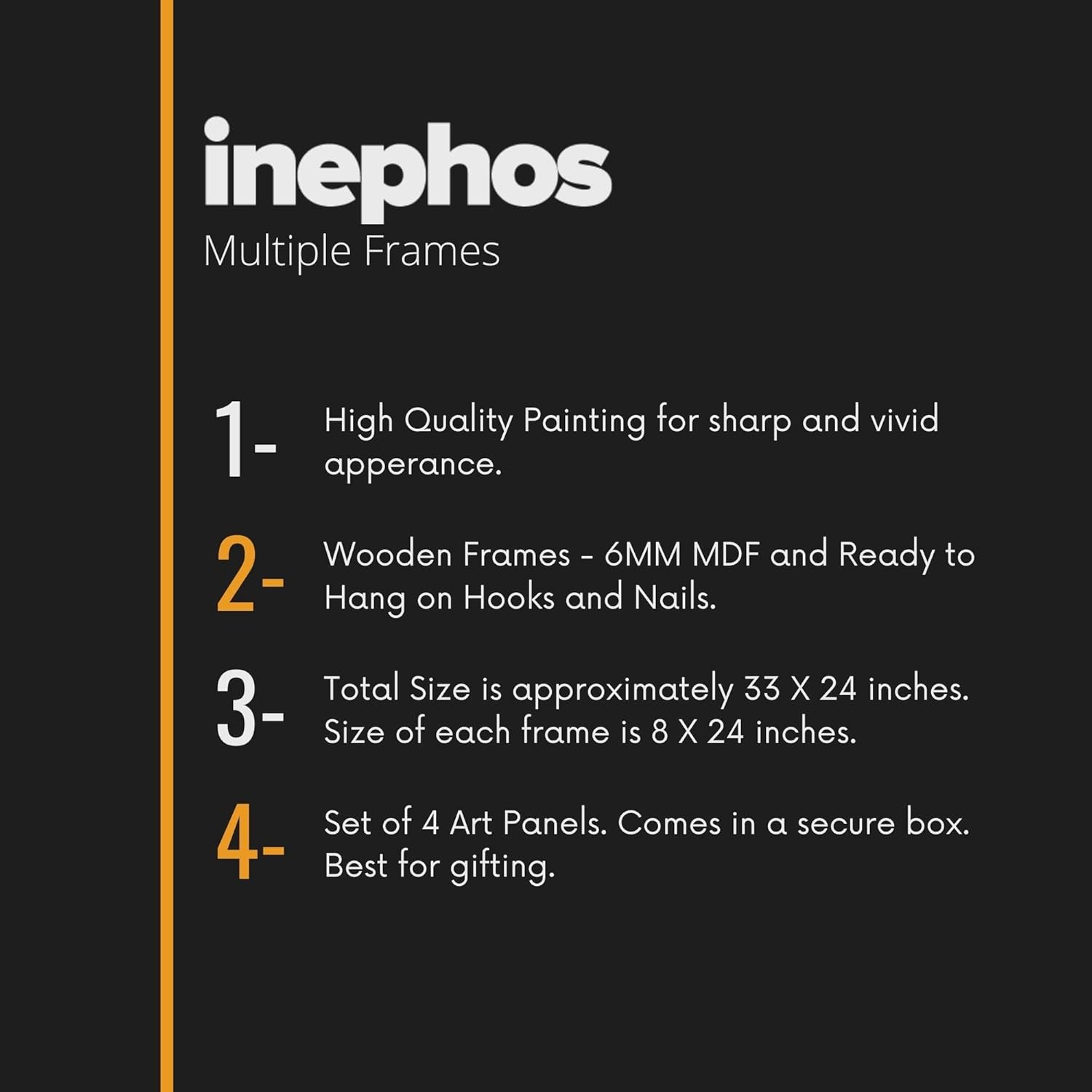
This 4-panel vinyl wall art spans 84cm across and 61cm tall. On a 10-foot wall (roughly 305cm), it covers approximately 27% of the wall width—leaving about 110cm of breathing space on each side. That proportion works. It's substantial enough to anchor the wall without competing with your sofa's visual weight. The 61cm height sits comfortably between sofa top and ceiling, assuming standard 8-foot ceilings and the recommended 20-25cm gap above furniture.
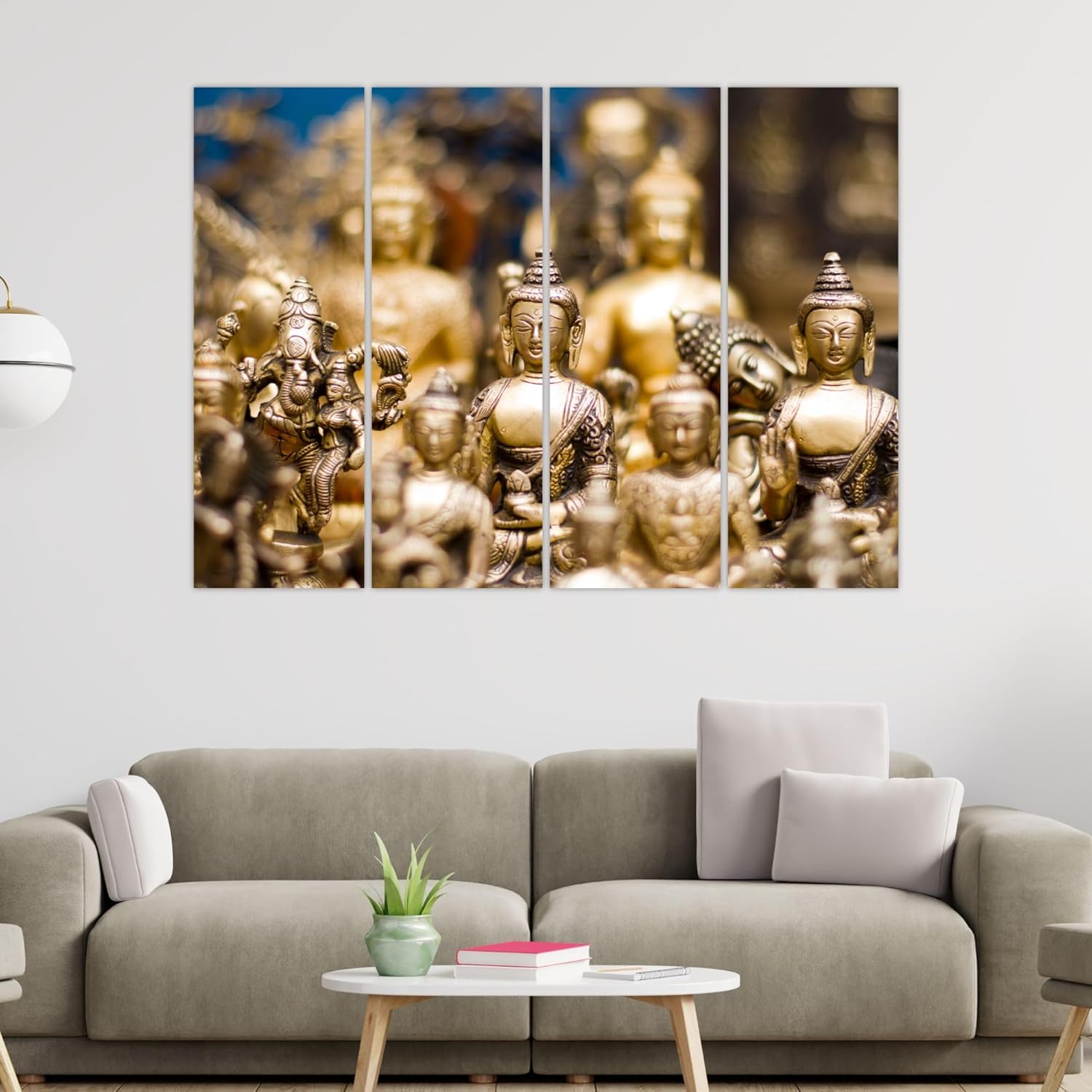
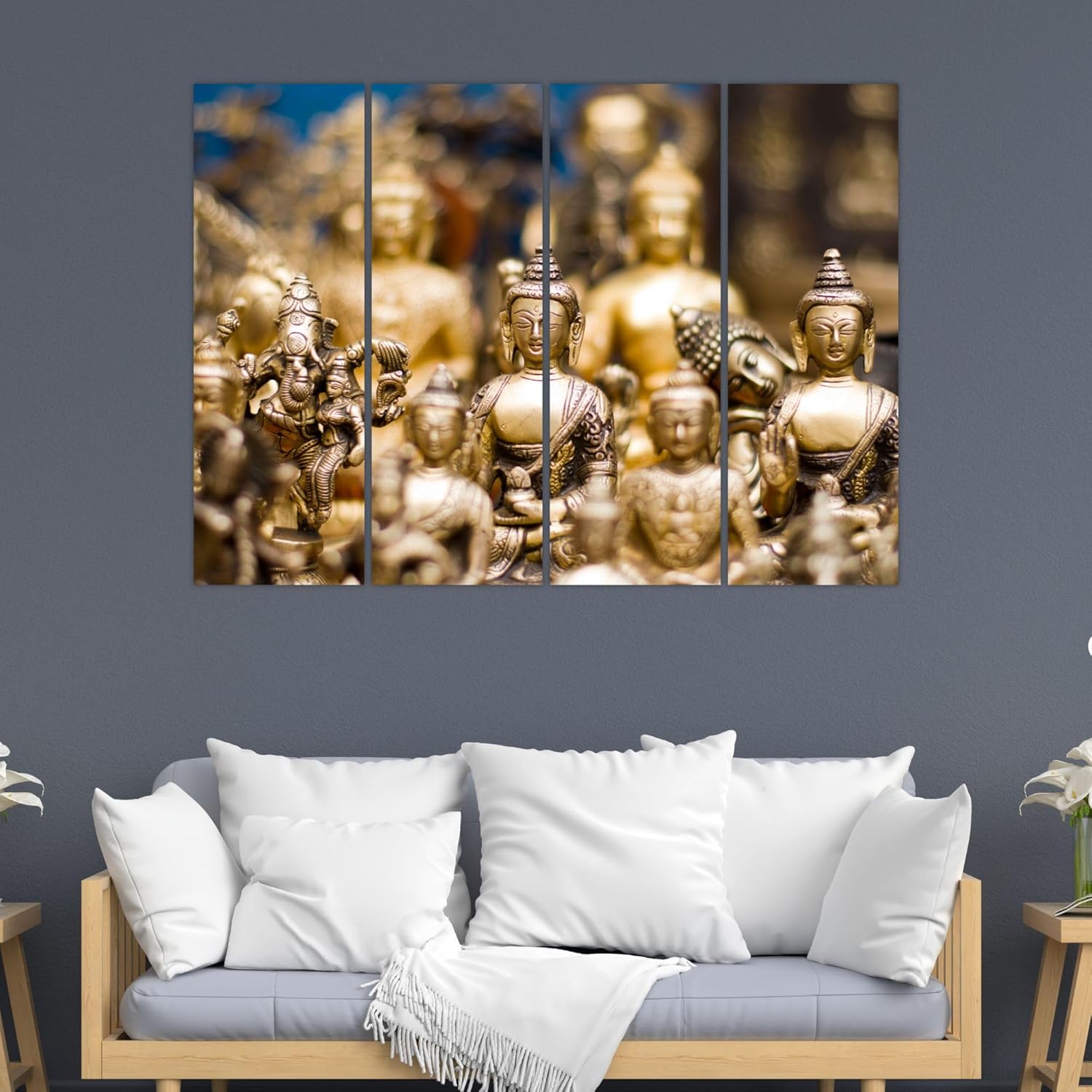
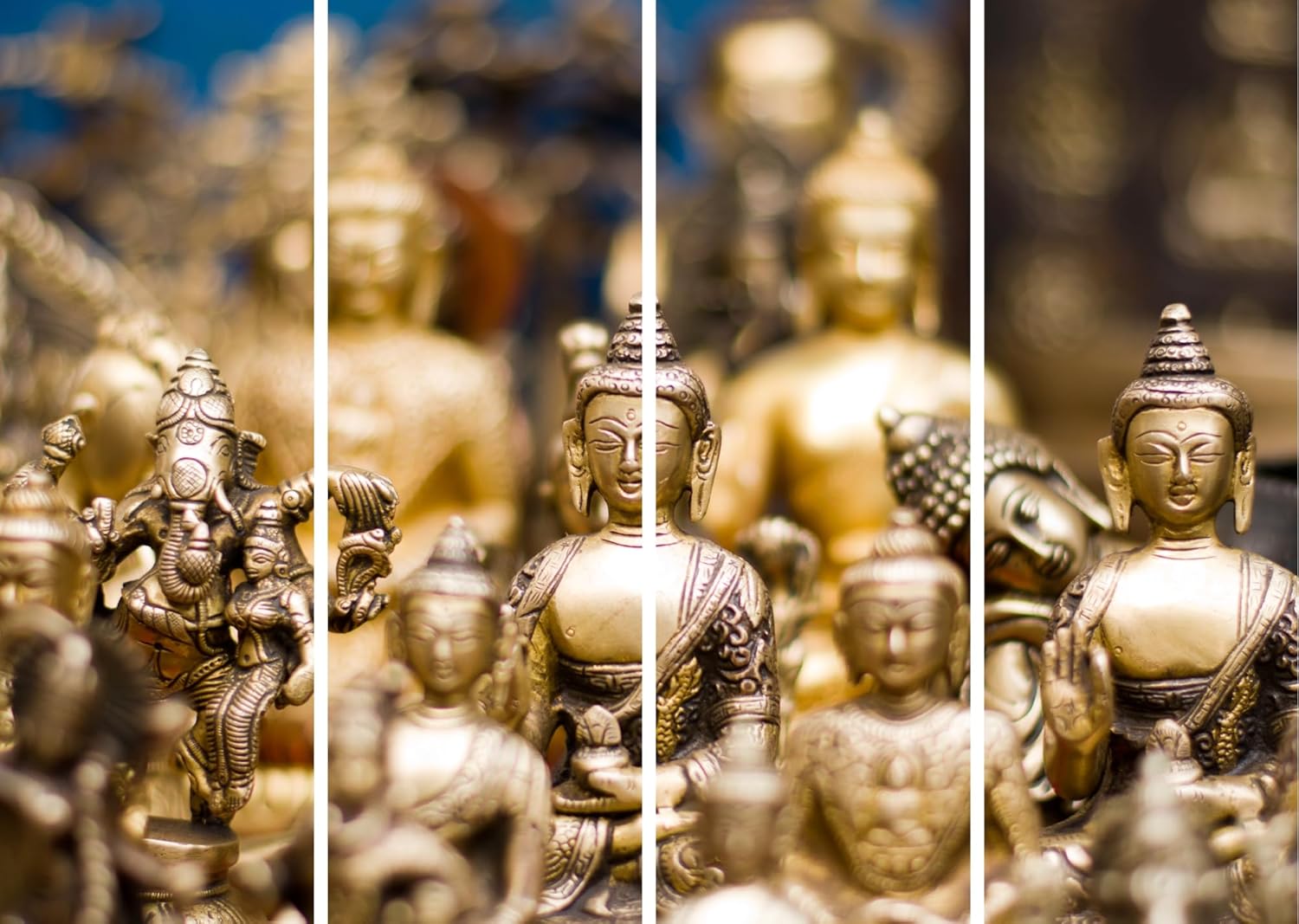
The image itself uses shallow depth-of-field photography—foreground Buddha figures rendered sharp against softly blurred background statues. When split across four MDF panels, this creates a layered, almost three-dimensional effect on your wall. The brass and bronze tones catch light differently as you move through the room.
Why 84cm Works on 10-Foot Walls (and What Changes If You Size Up or Down)
The visual math: 84cm on a 305cm wall means the art occupies just over a quarter of your wall width. If your sofa is 6 feet (183cm), this canvas is roughly 46% of sofa width—tighter than the 60-75% guideline, but the 4-panel spread creates horizontal emphasis that reads larger than a single 84cm frame would.
If you went smaller—say 60cm wide—you'd drop to 20% wall coverage. From across the room, that reads as accent décor rather than a focal point. You'd need flanking elements (wall sconces, plants) to avoid the "lonely frame" effect.
If you went larger—120cm wide—you'd hit 39% coverage. More commanding, but check your sofa-to-wall gap first. If your sofa sits 15-20cm from the wall (common in Indian living rooms to accommodate switches and AC piping), a 120cm piece might visually crowd the furniture below.
For placement above a dining table instead: 84cm works for 4-seater tables. For 6-seaters, consider going larger. The 61cm height matters here too—dining walls often have lower ceiling attachment points, so verify clearance above any buffet or side cabinet.
What These Golden Tones Look Like on Cream Walls (Morning vs Evening Light)
The dominant palette is warm brass—not yellow-gold, but the deeper bronze-gold of aged temple statues. The background carries deep blue undertones that emerge in certain lighting.
Against cream walls (the standard in most Indian apartments), these brass tones read as warm and grounding. They don't fight the wall; they complement it. The blue background—visible in the top portion of the panels—creates subtle contrast without being jarring.
In morning daylight (east-facing rooms), the brass appears lighter, almost honeyed. The blue background becomes more prominent. In evening LED lighting (warm white, 2700-3000K), the brass deepens to bronze, the blue recedes, and the overall piece feels warmer.
Against off-white or light yellow walls, the effect remains coherent—these are neutral-adjacent colors. Against builder's peach (common in Mumbai and Pune apartments), the warm brass complements rather than clashes.
With brown furniture—wooden coffee tables, brown fabric sofas, sheesham TV units—the brass palette creates visual continuity. The Buddha figures echo the warm undertones of wood without matching exactly.
Installation in Indian Walls (Concrete, Brick, and Drywall)
Four panels means four mounting points minimum—two per panel if you want secure, level placement. The included D-ring hangers accommodate both concrete anchors and drywall fixtures.
For concrete walls (most pre-2010 Indian construction): 6mm masonry bit, 35mm depth, tap in concrete anchors, screw hooks. Each panel weighs roughly 750g, so standard picture-hanging hardware handles the load easily.
For drywall over brick (newer apartments, especially Bangalore and Hyderabad gated communities): Plastic wall anchors work. Check by tapping—hollow sound means drywall, solid means concrete behind.
Panel spacing matters with 4-panel art. The template included helps maintain even gaps—typically 2-3cm between panels looks intentional. Less than 2cm and the gaps disappear from viewing distance; more than 4cm and the composition fragments.
For renters: The holes required are 6mm diameter. Standard wall putty (₹50) fills these completely. Touch up with matching paint before moveout. Four panels means eight small holes total if you use two anchors per panel—still smaller than the holes a TV mount leaves.
Total installation time: 25-30 minutes, including time to step back and verify level alignment across all four panels.
How This Compares to Macrame Wall Hangings You've Been Considering
Macrame has its appeal—texture, handcraft aesthetic, bohemian warmth. But here's the practical comparison:
Dust: Macrame's woven cotton traps dust in every knot. In Indian homes—especially in cities with construction dust, or homes near main roads—macrame needs monthly deep cleaning or it turns gray. This splash-proof vinyl wipes clean with a dry cloth.
Humidity: Cotton macrame absorbs monsoon moisture. It can develop musty odors, discoloration, even mold spots in 80%+ humidity. MDF with splash-proof vinyl is dimensionally stable through monsoon cycles.
Visual weight: Large macrame (to fill the same wall space) requires substantial mounting—often into ceiling joists. A 4-panel MDF set weighs 3kg total; macrame of equivalent visual presence often weighs more and hangs differently.
Style flexibility: Macrame reads specifically bohemian/coastal. Buddha imagery on vinyl reads spiritual-contemporary—it works in traditional Indian homes where guests expect spiritual motifs, and in modern apartments where the photography-based approach feels curated rather than religious.
Longevity: Well-made macrame can last years if maintained. But maintenance is active—cleaning, protecting from humidity, checking for pest damage. This vinyl/MDF construction needs only occasional dusting.
What This Will Actually Feel Like in Your Living Room
From the doorway, you'll see the 4-panel spread as a horizontal band of warm gold against your wall. The individual Buddha figures won't be distinctly visible from 15 feet—you'll register "golden, calm, spiritual" as an impression.
From the sofa (3-4 feet viewing distance), the depth-of-field photography becomes apparent. The foreground figures are sharp; the background blurs into warm golden haze. This creates visual depth that single-panel prints can't replicate.
The piece doesn't dominate. At 84x61cm, it's substantial but not overwhelming—it anchors without shouting. If you have a pooja corner elsewhere in the room, this complements rather than competes with it. If you're in a modern apartment without traditional décor, this reads as art-first, spirituality-second.
Adjacent décor considerations: the brass tones work with brass diyas, bronze figurines, or wooden frames nearby. Avoid placing it next to chrome or silver-toned décor—the warm/cool metal clash is visible.
For rooms that get afternoon sun on the wall: the brass tones will warm further. Not a problem—just means the evening-morning color shift is more pronounced.
Moolwan Design Note
The shallow depth-of-field photography—sharp foreground Buddhas against a soft-focused collection in the background—creates dimensionality rare in printed wall art. Across four panels, this layering effect produces a sculptural quality that flat single-panel prints cannot achieve.
Moolwan Quality Standard
Printed to resist humidity-related color fading. Packed for long-distance Indian transit. Quality checked before dispatch. Designed for Indian apartments and lighting conditions. Ships from West Bengal.
Moolwan Fit Guidance for Indian Homes
At 84cm wide, this 4-panel Buddha set works best on 10-12 foot walls—above 6-foot sofas or 4-seater dining tables. The 61cm height suits standard 8-foot ceilings with 20-25cm clearance above furniture.
Quick Specifications
- Product: Moolwan 4-Panel Golden Buddha Statues Vinyl Wall Art on MDF (84x61cm)
- Brand: Moolwan
- Category: Vinyl Wall Art on MDF
- Collection: Buddha Wall Art Collection
- Dimensions: 84cm (W) x 61cm (H) x 5cm (D)
- Weight: 3000 grams
- Material & Construction: Splash-proof vinyl print on MDF panels
- Colors: Golden brass, bronze, deep blue background
- Panel Count: 4 panels
- Best For: 10-12 ft living room walls, above 6-foot sofas, meditation corners
- Ships From: West Bengal
- Ready to Hang: Yes, hardware included
Frequently Asked Questions
Will 84cm look too small above my 8-foot sofa?
At 84cm, you're at about 35% of your sofa's width—below the ideal 60-75% ratio. However, the 4-panel horizontal spread creates visual width beyond the literal measurement. From normal viewing distance, it reads as balanced. If you want more commanding presence, check if larger sizes are available for this design.
How will the golden tones look against my cream walls in different lighting?
In morning daylight, the brass appears lighter with the blue background more visible. In warm LED evening light (2700-3000K), the brass deepens to bronze and feels warmer. Both look intentional—cream walls are neutral enough to adapt.
Can I install this in a rental without losing my deposit?
Yes. Four panels require eight small holes maximum (two per panel). These are 6mm diameter holes—smaller than standard furniture mounting. Fill with wall putty, touch up with matching paint, and they're invisible.
Will this survive Mumbai monsoons?
The splash-proof vinyl coating prevents moisture absorption. MDF panels are dimensionally more stable than stretched canvas in high humidity. The print won't fade or warp through monsoon cycles if kept indoors.
How do I ensure all four panels are evenly spaced and level?
Use the included hanging template. Tape it to the wall, mark all drill points through the template, then remove and drill. This ensures consistent spacing (typically 2-3cm gaps) and level alignment across all panels.
Product Snapshot
- Brand: Moolwan
- Product: Moolwan 4-Panel Golden Buddha Statues Vinyl Wall Art on MDF (84x61cm)
- Category: Vinyl Wall Art on MDF
- Collection: Buddha Wall Art Collection
- Theme/Type: Buddha Statues / Spiritual Art
- Best For: Living room walls 10-12 ft wide, above 6-foot sofas, meditation spaces
- Primary Differentiator: Layered depth photography creating 3D sculptural effect across panels
- Secondary Differentiators: Warm brass tones complementing brown furniture; collection-style composition showing multiple Buddha forms
- Material & Construction: Splash-proof vinyl print on MDF panels with ready-to-hang hardware
- Care Instructions: Wipe with dry microfiber cloth; no water or chemicals needed
- Ships From: West Bengal
- Packing: Long-distance transit ready
- Quality Check: Before dispatch