
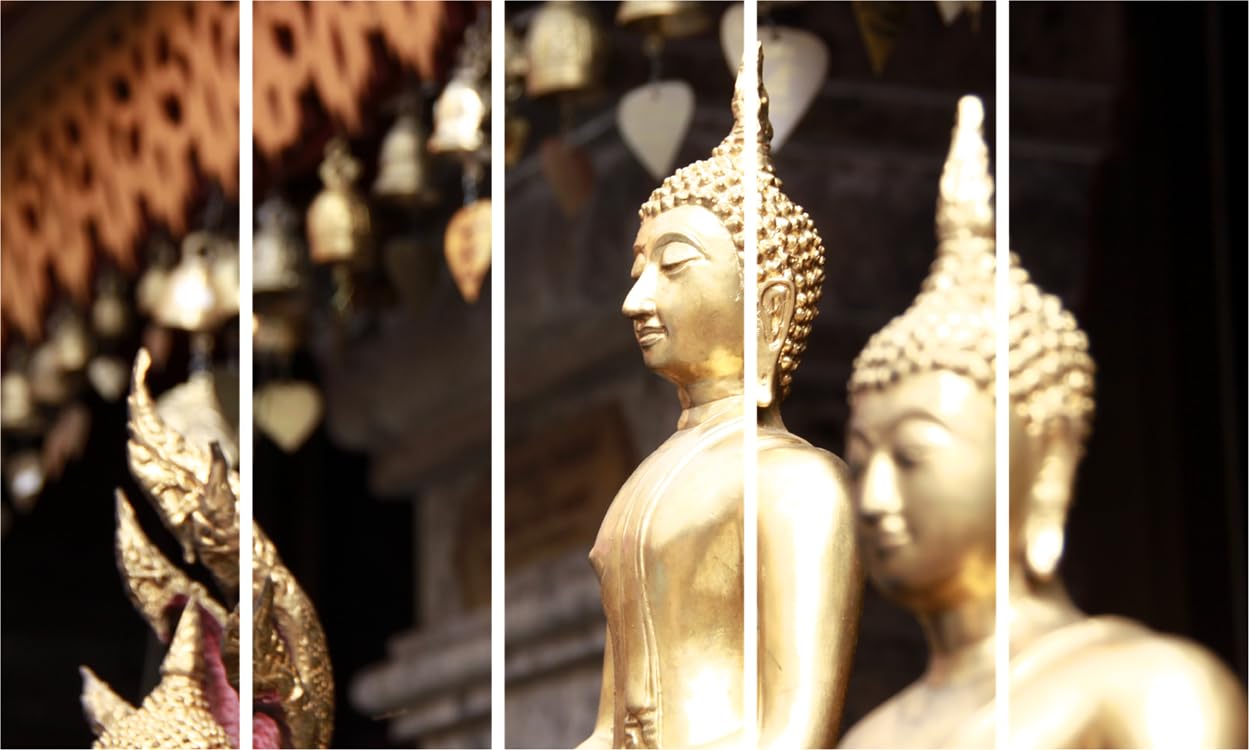
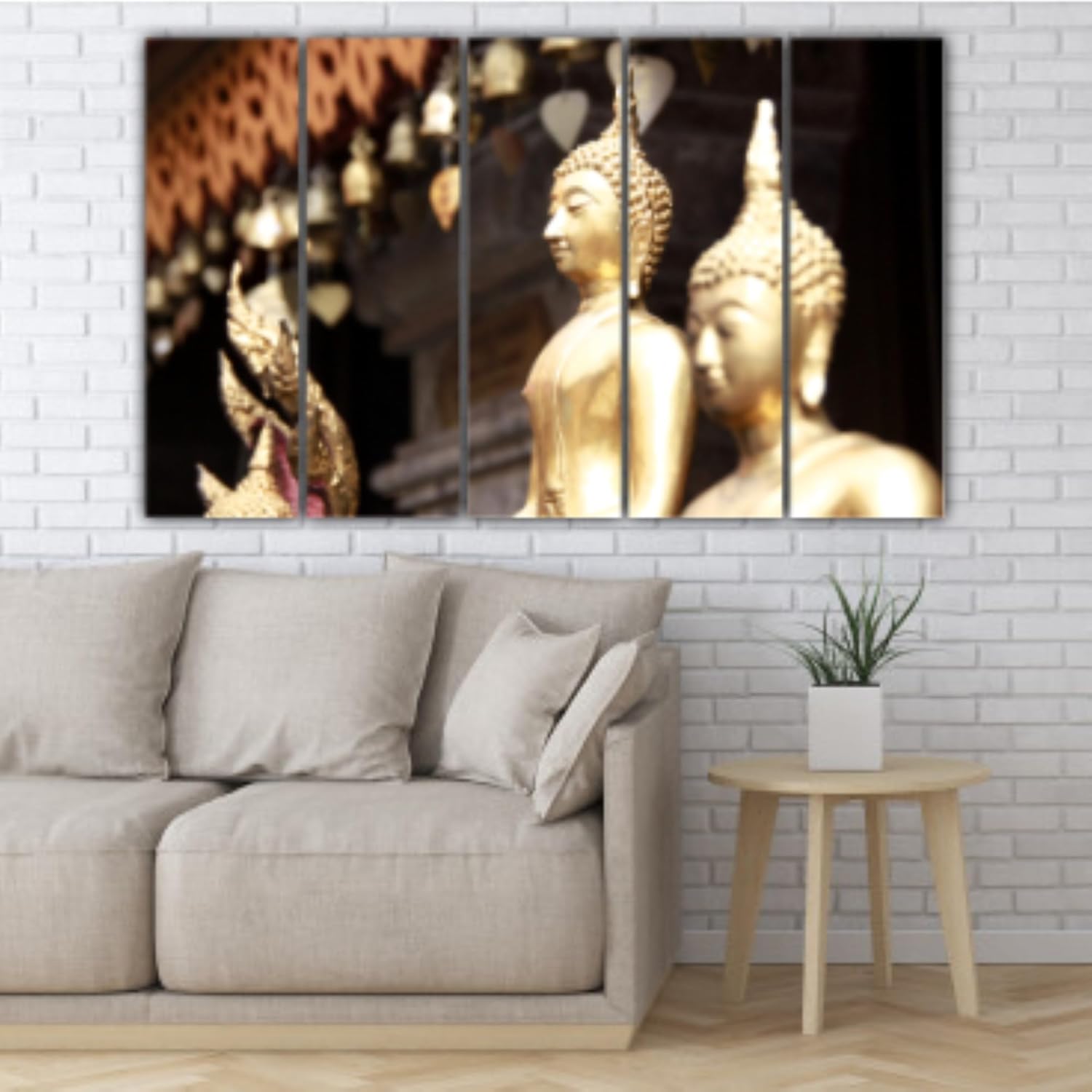
Buddha Bliss 5-Panel Framed Wall Art To Om-Fy Your Walls
You may also like

Moolwan 5-Panel Buddha Temple Canvas Wall Art Painting (127x76cm) - Golden Thai Buddha Multi-Frame Art
You've measured your wall three times. Maybe four. The tape measure says 360cm, but you're still not confident because the sofa below is 200cm and you're not sure how much space to leave on either side. Every guide says something different, and none account for Indian ceilings at 10 feet or the way light falls differently in the afternoon. You keep second-guessing: is 127cm actually right for what you're looking at, or will it look lost above the furniture?
Here's the thing about this 5-panel Buddha temple canvas wall art painting—it's designed for exactly the wall you're probably measuring. At 127cm wide, it covers roughly 35% of a standard 12-foot Indian living room wall. That's not accidental. It's the visual sweet spot where the artwork commands attention without overwhelming your space or fighting with your furniture below.
The Visual Math: How 127cm Fits 12ft Walls in Indian Homes
Let's work through the numbers you've been trying to calculate in your head.
Your wall is probably around 360cm (12 feet). This Buddha canvas wall art painting spans 127cm. That leaves 233cm of wall space—about 116cm on each side if you center it. Above a 200cm sofa, those margins create what designers call "breathing room." The artwork feels intentional, not crammed.
Go smaller—say 90cm—and you're looking at 270cm of empty wall. The canvas will look like it's floating awkwardly, lost in all that space. Your eyes won't know where to settle. Go larger—160cm—and suddenly you've got only 100cm on each side. With a sofa eating into the lower portion of the wall, the room starts feeling crowded, even if there's technically space.
At 127cm, this 5-panel arrangement hits 35% wall coverage. That's the percentage where most people stop second-guessing their choice after installation.
Why These Gold Tones Work in Indian Living Rooms (Not Just Online Photos)
Your walls are probably cream, off-white, or that light yellow shade builders love. Here's what happens when golden Buddha artwork meets those backgrounds: the warm tones don't clash—they complement. Unlike stark white or cool grey artwork that can look sterile against Indian wall paints, gold creates what colorists call "tonal harmony."
The deep burgundy temple background in this canvas wall art painting does something clever too. It grounds the composition so the gold doesn't feel overwhelming. Against your cream walls, the burgundy recedes slightly while the golden Buddha figures come forward. The result is depth that you'll notice from across the room.
Morning sunlight will warm the golds further. Evening LED lighting will pick up the metallic quality in the Buddha robes. Neither condition makes this artwork look washed out or too intense—a common problem with bright colors or stark contrasts in Indian home lighting.
Installation Takes 15 Minutes (Even If You're Not Handy)
At 3000 grams total—that's 600 grams per panel—this canvas wall art painting won't test your walls or your patience.
Each panel comes with mounting hardware. The 5-panel design actually makes installation easier than single large canvases because you can adjust spacing as you go. Most people use 1-2cm gaps between panels, but you have flexibility to account for your specific wall features—outlets, light switches, that corner that's slightly closer than you'd like.
If you're renting and worried about your ₹50,000 deposit, here's what matters: each panel needs two small picture hooks. That's ten holes total, but they're nail-sized, not wall-anchor craters. Standard rental agreements account for reasonable wall art. A tube of wall filler (₹150 at any hardware store) fixes everything when you move.
How This Compares to Smaller Sizes You've Been Considering
You've probably saved a few 90cm and 100cm options in your comparison list. Here's the honest difference:
A 90cm canvas wall art painting on your 360cm wall gives you 25% coverage. Visually, that's closer to "accent piece" than "focal point." If your sofa is substantial—and most Indian living room sofas are 6-8 feet—the artwork may look disproportionate. Not wrong, exactly, but not the statement you're imagining.
At 127cm, you're in statement territory without crossing into "too much." The 5-panel format adds to this—the segmented design creates visual interest across the full width, which a single 127cm canvas wouldn't achieve.
Larger options—say 150cm—work if your wall is 14+ feet or your ceiling is higher than 10 feet. In standard Indian living rooms, though, 150cm starts competing with the wall itself rather than decorating it.
What This Will Look Like in Your Living Room (Morning vs. Evening)
No product photo shows your specific room at 4 PM when the sun hits that particular angle, or at 9 PM under your ceiling lights. Here's what to actually expect:
In morning natural light, the golden Buddha figures will appear brighter, almost luminous. The burgundy temple background will show its depth—you'll notice the small bells and architectural details more clearly. This is when guests commenting on your decor will notice the craftsmanship.
Under evening LED lighting (especially warm white bulbs common in Indian homes), the composition gets moodier. The gold tones become richer, less bright. The overall effect shifts from "temple in sunlight" to "meditation space at dusk." Both are intentional qualities of this color palette.
What won't change: the proportions. The 127x76cm dimensions look the same at any hour. The coverage math doesn't shift with lighting. That's the part you can be confident about before purchasing.
Quick Specifications
- Product: Moolwan 5-Panel Buddha Temple Canvas Wall Art Painting
- Dimensions: 127cm (W) x 76cm (H) x 0.6cm (D)
- Weight: 3000 grams (600g per panel)
- Material: 340 GSM cotton canvas, moisture-resistant coating
- Frame: 1.5" kiln-dried pinewood (12% moisture content)
- Inks: Eco-solvent, UV-resistant
- Colors: Golden Buddha figures, burgundy temple background, brass bells
- Panels: 5 individual framed sections
- Mounting: Picture hooks included, rental-friendly installation
- Delivery: 5-6 days (metro), 6-8 days (tier-2/3 cities)
- Ideal for: 12ft walls, 12x14 ft living rooms, meditation spaces, lobbies