
Buddha Blossom Bonanza: 5-Panel Framed Floral Wall Art That's Blooming Zen (50x30in)
You may also like

Moolwan 5-Panel Buddha with Lotus Vinyl Wall Art on MDF (127x76cm) – Teal Buddha Profile with Warm Amber Glow
You've probably measured your living room wall twice by now. Maybe three times. The tape measure confirms 10 or 12 feet, but the real question keeps circling: will 127cm of Buddha actually anchor that space properly, or will it float awkwardly like so many wall art pieces you've seen in friends' homes? Every sizing guide online seems designed for Western apartments with different proportions. Your wall has that cream paint every builder uses, your sofa is probably brown or beige fabric, and your mother-in-law will definitely notice if the proportions feel off during her next visit. You're not being indecisive—you're being careful. Because this will be the first thing anyone sees when they enter your living room.
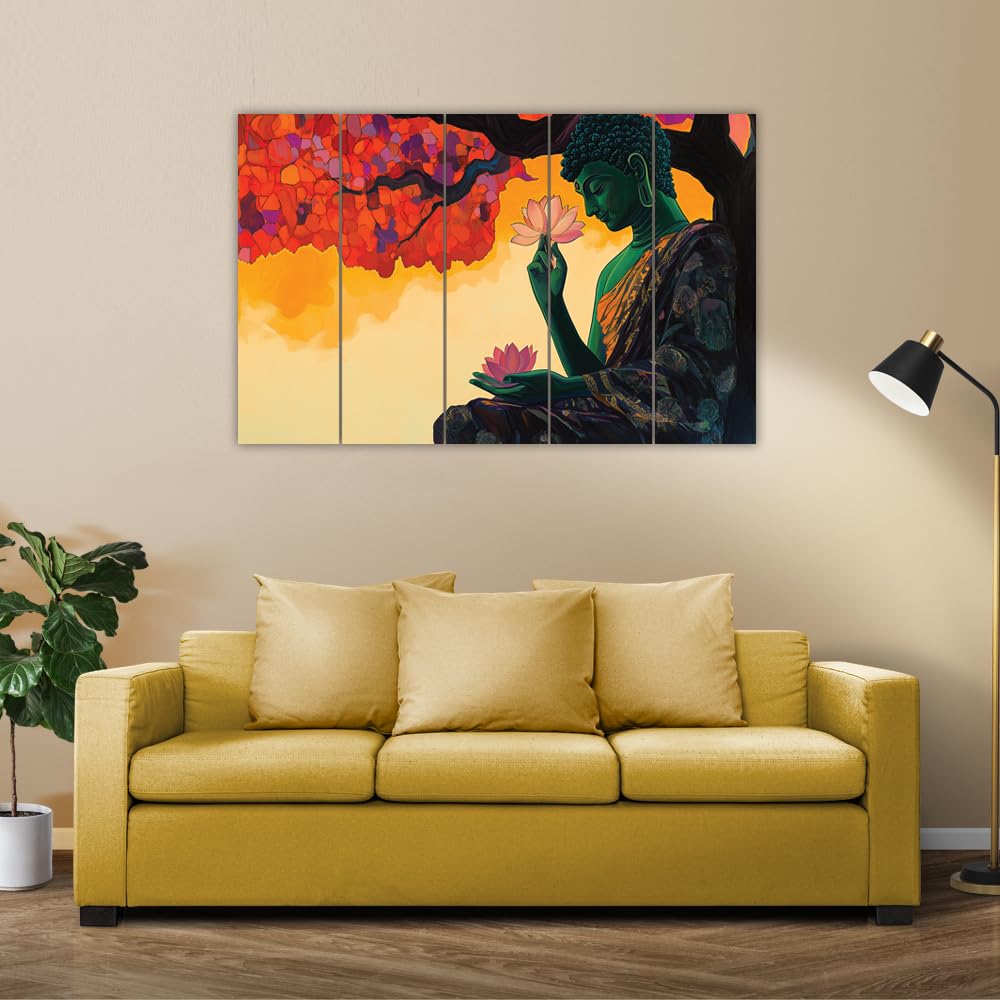
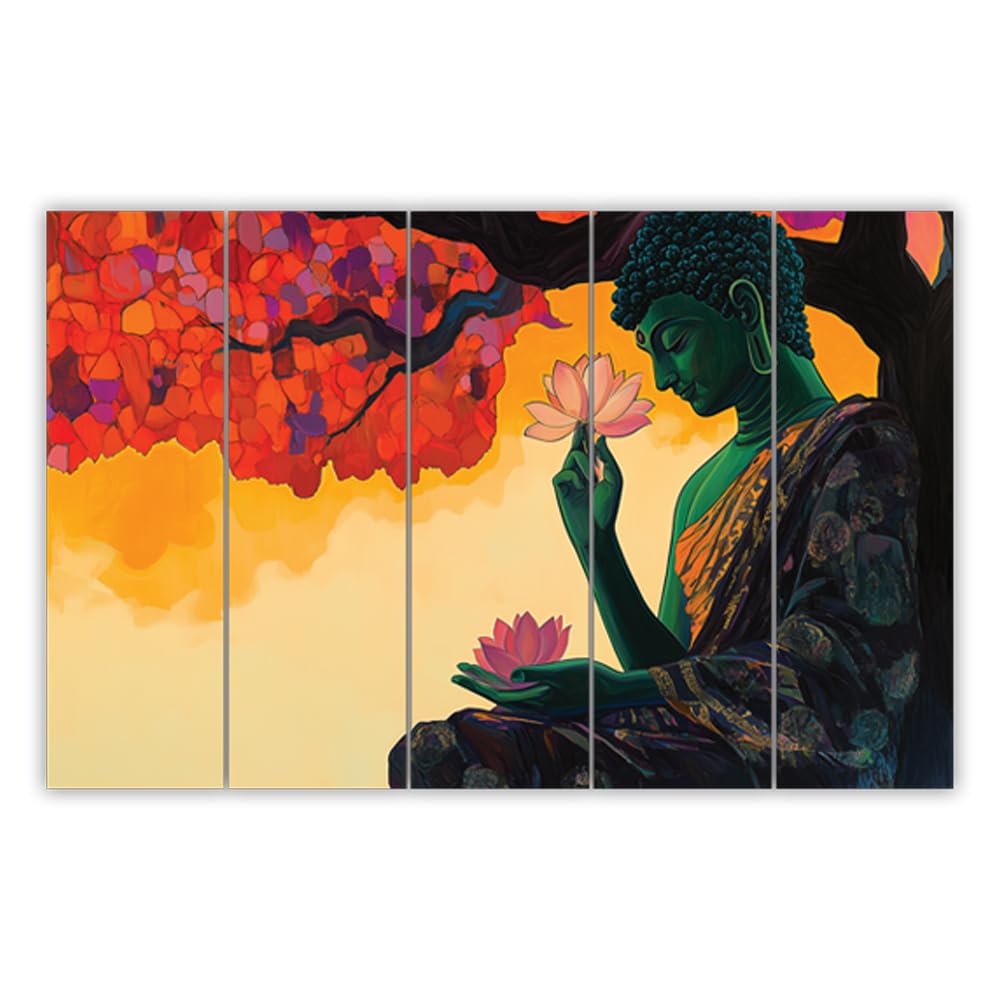
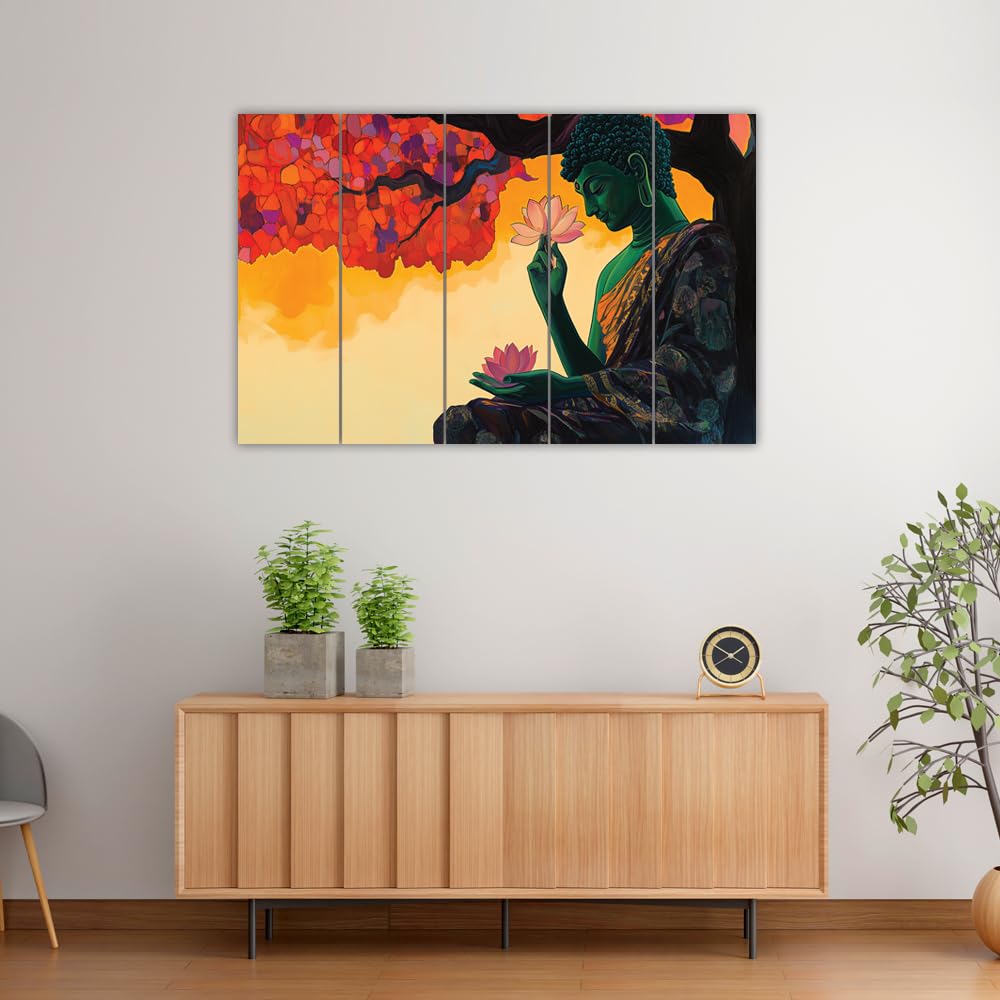
This 5-panel Buddha composition solves the specific visual problem of long Indian walls. At 127cm wide, it covers roughly 35% of a 12-foot wall—enough presence to anchor the space without overwhelming it. The teal-green Buddha figure in profile holds two lotus flowers against a warm amber background, creating a color temperature contrast that reads from across the room. The flowing red-coral blossom canopy on the left balances the dark tree trunk on the right, drawing the eye in a natural arc across all five panels. This isn't generic spiritual décor—it's a specific composition designed to work above 8-foot sofas in rooms with 8-10 foot ceilings.
Why 127cm Works on 10-12 Foot Walls (and What Happens If You Go Smaller or Bigger)
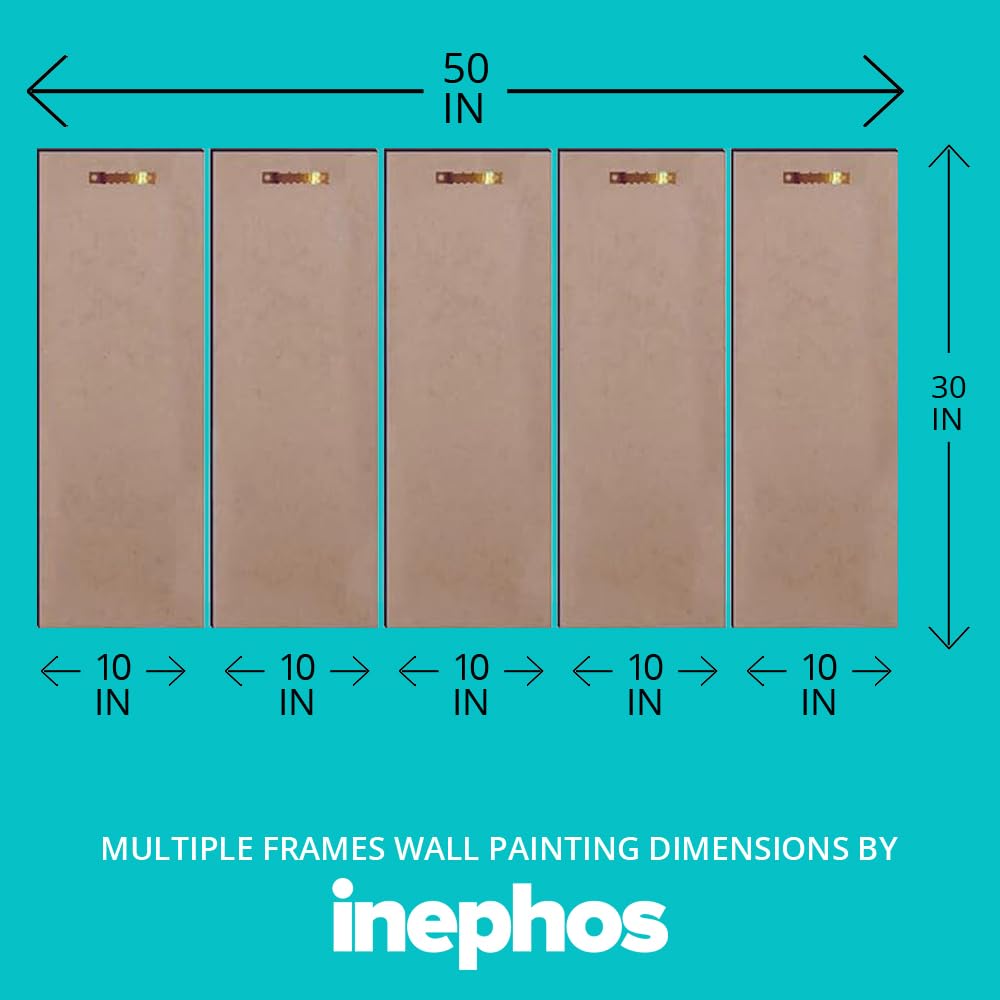
Your wall is probably somewhere between 10 and 12 feet wide—standard for Indian 2BHK and 3BHK living rooms. At 127cm (50 inches), this Buddha piece covers approximately 35% of a 12-foot wall and 42% of a 10-foot wall. Both percentages fall within the ideal range for wall art that feels intentional rather than cramped or overwhelming.
Here's the spatial math: on a 12-foot (365cm) wall, you'll have roughly 119cm of space on each side of the art. That's enough room for a floor lamp on one side or breathing space that lets the composition feel placed rather than squeezed. On a 10-foot (305cm) wall, the side margins drop to about 89cm each—still comfortable, though you'd want to center it precisely above your sofa.
If you went smaller—say, 90cm—you'd cover only 25-30% of the wall. Buddha spiritual art at that coverage often looks like an afterthought rather than a focal point, especially from across a 12x14 foot room. The five-panel flow would compress, losing the panoramic effect. If you went larger—150cm—you'd hit 41-49% coverage, which works but leaves less margin for error in positioning. The 127cm dimension hits the practical sweet spot for typical Indian living room proportions.
The 76cm height sits comfortably below 8-foot ceilings when mounted 20-25cm above sofa cushions. Your eye naturally rests on Buddha's contemplative profile without craning upward.
What These Colors Look Like on Cream Walls (Morning vs Evening Light)
The teal-green Buddha figure against amber-gold background creates a specific visual effect you won't fully see in product photos: warmth and coolness in the same frame. The teal reads as calming, almost jade-like in morning light when natural daylight is cooler. By evening under warm LED lighting (most Indian homes use 3000K bulbs), the amber background intensifies while the teal softens, creating a more meditative glow.
Against cream or off-white walls—the default in most builder-finished apartments—the warm amber tones connect naturally. They're from the same color family as the wall, which prevents the jarring "floating art" effect you get with cool-toned pieces on warm walls. The red-coral blossom canopy adds visual interest without clashing; these terracotta-adjacent tones complement wooden coffee tables and the brown fabric sofas common in Indian living rooms.
The pink lotus flowers provide subtle accent points that catch light throughout the day. In homes with pooja areas nearby, this Buddha composition reads as spiritually coherent—contemplative rather than decorative. It's the kind of piece your mother-in-law notices approvingly rather than with that slight pause.
Installation in Indian Walls (Concrete vs Drywall)
Five panels means five hanging points—which sounds complicated until you understand the actual process. Each panel is lightweight, and the included template shows exact spacing. You're looking at 20-25 minutes total, not the multi-hour ordeal some people imagine.
For concrete walls (common in older Indian buildings), you'll use the included masonry anchors with a 6mm drill bit. The holes are small—6mm diameter, about 35mm deep. When you eventually move out, these fill completely with wall putty and touch-up paint. Your landlord won't notice, and your ₹50,000 deposit stays safe.
For newer apartments with drywall, the drywall anchors in the kit handle the weight easily. Each panel weighs around 600 grams—the full 3kg is distributed across five points, meaning each anchor holds roughly half a kilogram. Standard drywall anchors handle five times that weight.
The spacing between panels matters for the visual flow. The template provides exact measurements, but the general principle: 2-3cm gaps between panels maintain the panoramic continuity while showing each frame's edge. Too close and it looks cramped; too far and the composition fragments.
How This Compares to Macrame and Fabric Tapestries You've Been Considering
You've probably looked at macrame wall hangings—they're everywhere in home décor feeds. Here's the honest comparison: macrame creates texture but not visual weight. On a 12-foot wall, even a large macrame piece reads as "filler" rather than focal point. It doesn't anchor a sofa the way dimensional art does.
Fabric tapestries face a different problem: they absorb dust. In Indian cities with high particulate matter—Delhi, Mumbai, Bangalore during construction season—tapestries gray out within months. They also sag. Humidity during monsoons loosens the weave, and by your second year, they drape rather than hang.
This vinyl-on-MDF construction handles both issues. The splash-proof vinyl surface wipes clean with a dry cloth. The MDF backing maintains dimensional stability through humidity swings. Three years from now, these panels will hang exactly as flat as they do today—no sagging, no dust-embedded fibers.
The five-panel format also creates visual depth that flat tapestries can't match. From across the room, the panel gaps create subtle shadow lines that make the composition appear three-dimensional. Buddha seems to sit forward from the wall rather than printed directly on it.
What This Will Actually Feel Like in Your Room
From the doorway of your living room—the first view guests get—you'll see a horizontal band of warm color above your sofa. The teal Buddha figure registers as the focal point, with the amber glow and red-coral blossoms creating a frame around it. This is deliberate: the composition is designed to read from 10-15 feet away, not just up close.
Walking closer, the detail emerges: the texture of Buddha's robe (dark green with gold patterns), the delicate pink lotus petals, the stained-glass effect of the blossom canopy. There's visual reward at multiple distances, which is the difference between art and decoration.
The spiritual element is present but not overwhelming. This isn't a temple replica or a highly traditional portrayal—the teal skin and contemporary color palette make it appropriate for modern Indian homes that honor tradition without replicating it literally. It fits the living room without making guests feel they've walked into a meditation center.
In the evening, when you're sitting on your sofa facing the TV, this composition sits in your peripheral vision. The warm amber creates ambient warmth without demanding attention. It feels like part of the room rather than an addition to it—which is exactly what wall art should accomplish.
Moolwan Design Note
The teal Buddha profile facing left creates a natural visual entry point from room doorways—guests' eyes follow the gaze toward the lotus, across the amber field, through all five panels. This directional flow is calibrated for Indian living room layouts where sofas face entertainment units.
Moolwan Quality Standard
- Designed for Indian apartments and lighting conditions
- Packed for long-distance Indian transit
- Quality checked before dispatch
- Splash-proof vinyl resists humidity-related damage
- Ships from West Bengal
Moolwan Fit Guidance for Indian Homes
At 127cm, this fits 10-12 foot walls with 35-42% coverage—the proportional range that anchors without overwhelming. Mount 20-25cm above your sofa cushions for correct visual weight. Works best on cream, off-white, or light peach walls common in builder apartments.
Quick Specifications
- Product: Moolwan 5-Panel Buddha with Lotus Vinyl Wall Art on MDF (127x76cm)
- Brand: Moolwan
- Category: Vinyl Wall Art on MDF
- Collection: Buddha Wall Art Collection
- Dimensions: 127cm (W) × 76cm (H) × 0.6cm (D)
- Weight: 3000 grams
- Material & Construction: Splash-proof vinyl print on MDF panels
- Colors: Teal-green Buddha, amber-gold background, red-coral blossoms, pink lotus, dark green-gold robe
- Best For: 10-12 foot living room walls, above 6-8 foot sofas, meditation corners, entryways
- Ships From: West Bengal
Frequently Asked Questions
Will 127cm look proportional above my 8-foot sofa?
Yes—at 127cm, this piece is 70% of an 8-foot (183cm) sofa width, which falls within the ideal 60-75% ratio. The five-panel spread creates horizontal presence that anchors the furniture below without overhanging awkwardly on either side.
How do the teal and amber tones look against cream walls under LED lighting?
Under warm white LED (3000K, standard in Indian homes), the amber background intensifies and glows, while the teal Buddha takes on a cooler jade quality. This creates visual depth. The warm tones connect naturally with cream walls—they're in the same color family, so the art integrates rather than clashing.
How do I align five panels correctly without professional help?
The included hanging template shows exact spacing for all five panels. Tape it to your wall at your chosen height, mark through the template, remove it, and drill. The template eliminates measuring errors—just follow the marked points. Total installation: 20-25 minutes.
Will this vinyl surface hold up through Mumbai or Chennai monsoons?
The splash-proof vinyl construction handles high humidity (70-85% during monsoons) without absorbing moisture. Unlike canvas, vinyl doesn't expand and contract with humidity cycles—panels stay dimensionally stable through multiple monsoon seasons. The MDF backing is sealed against moisture penetration from behind.
What spacing should I leave between the five panels?
2-3cm gaps maintain the panoramic flow while showing each panel's edges clearly. The template provides exact measurements. Smaller gaps make the composition feel cramped; larger gaps fragment the image. The included spacing guides ensure visual continuity across all five sections.
Product Snapshot
- Brand: Moolwan
- Product: Moolwan 5-Panel Buddha with Lotus Vinyl Wall Art on MDF (127x76cm)
- Category: Vinyl Wall Art on MDF
- Collection: Buddha Wall Art Collection
- Theme/Type: Spiritual, Buddha, Lotus, Floral
- Best For: 10-12ft living room walls, above 6-8ft sofas, meditation spaces
- Primary Differentiator: Teal Buddha profile with warm amber glow—unusual color palette for spiritual art
- Secondary Differentiators: Red-coral stained-glass style blossom canopy, directional composition designed for room entry views
- Material & Construction: Splash-proof vinyl on MDF panels
- Care Instructions: Dust with dry microfiber cloth; wipe surface with slightly damp cloth if needed
- Ships From: West Bengal
- Packing: Long-distance transit ready
- Quality Check: Before dispatch