
Buddha Box Quartet: Framed Wall Art to Zen Your Den
You may also like

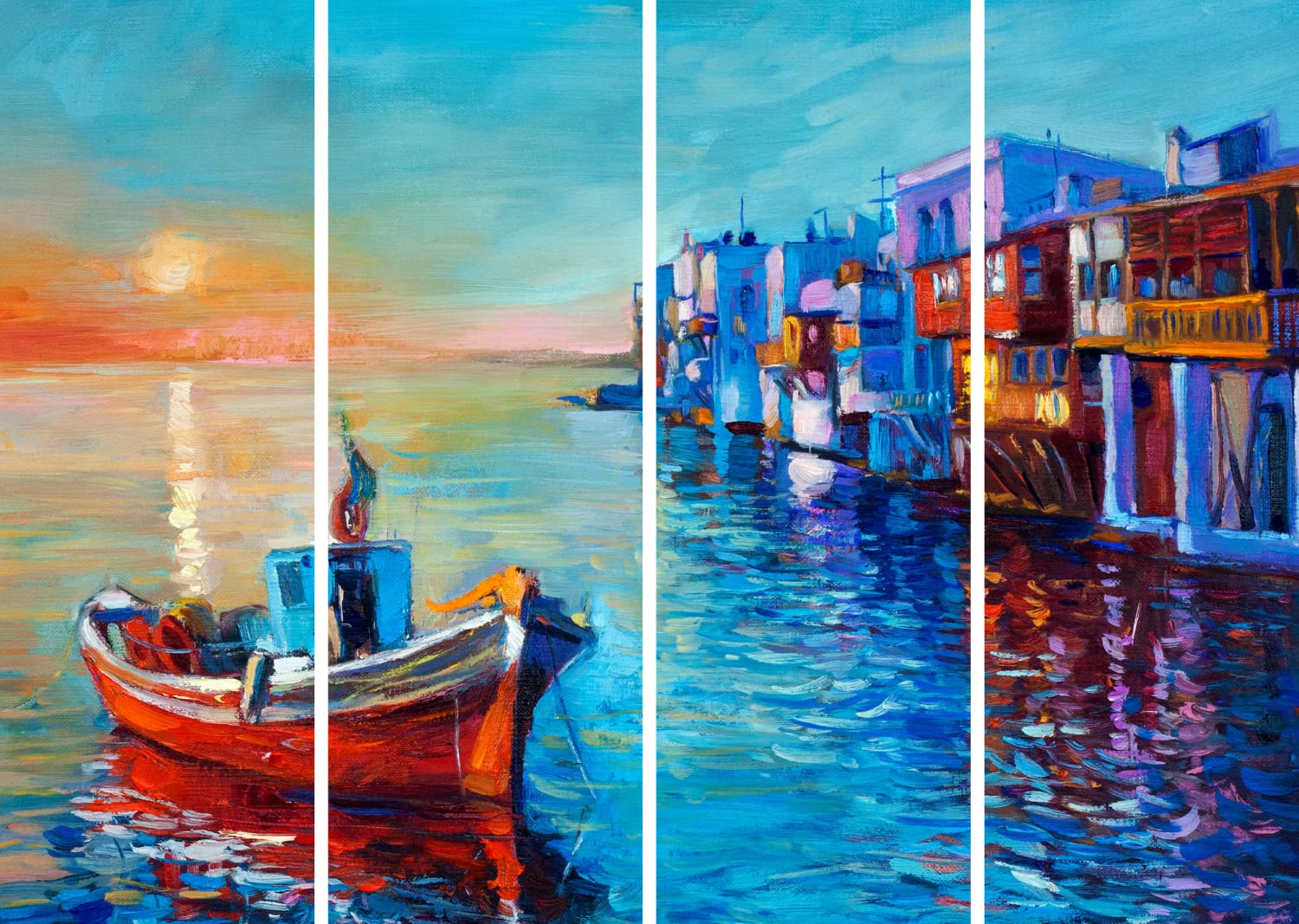
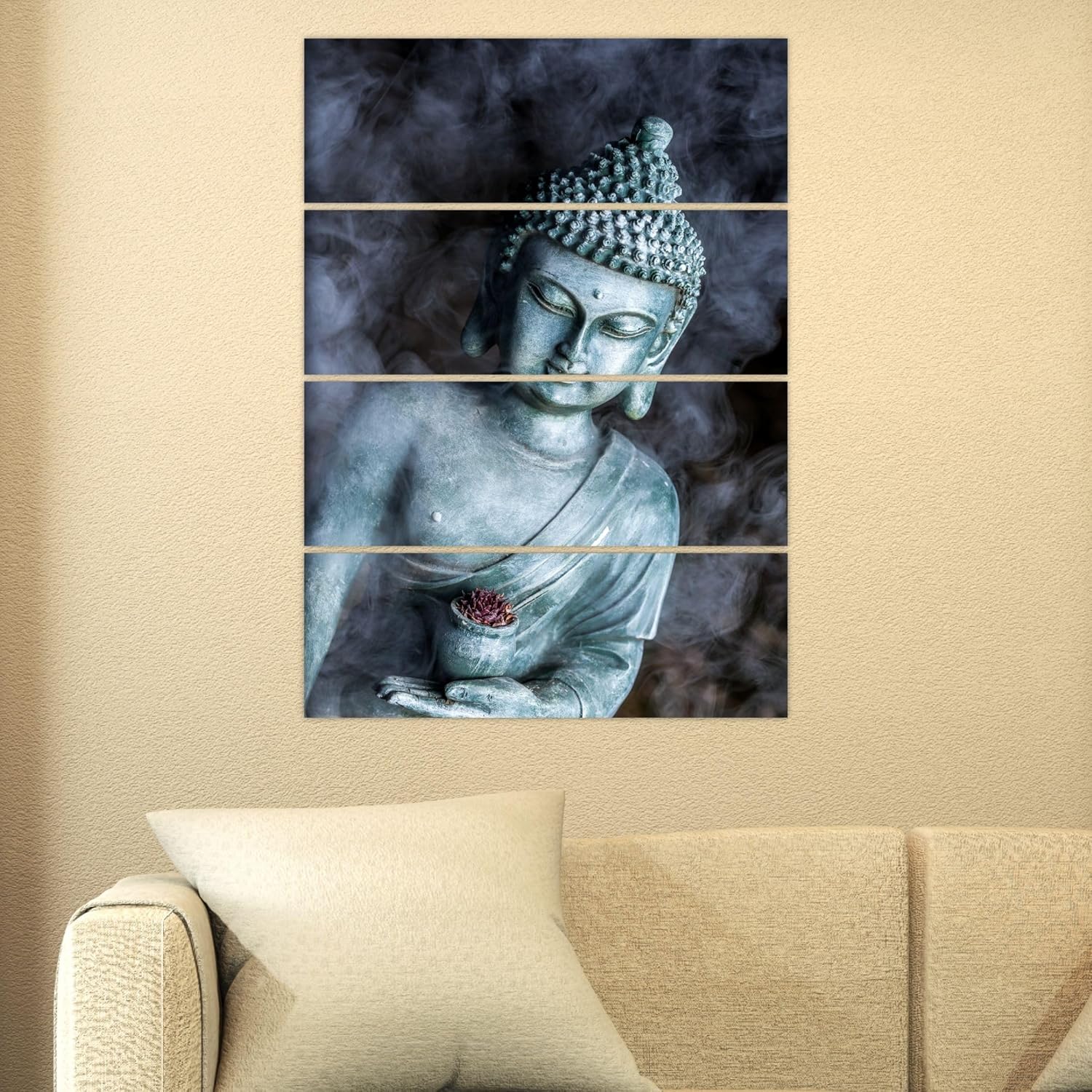
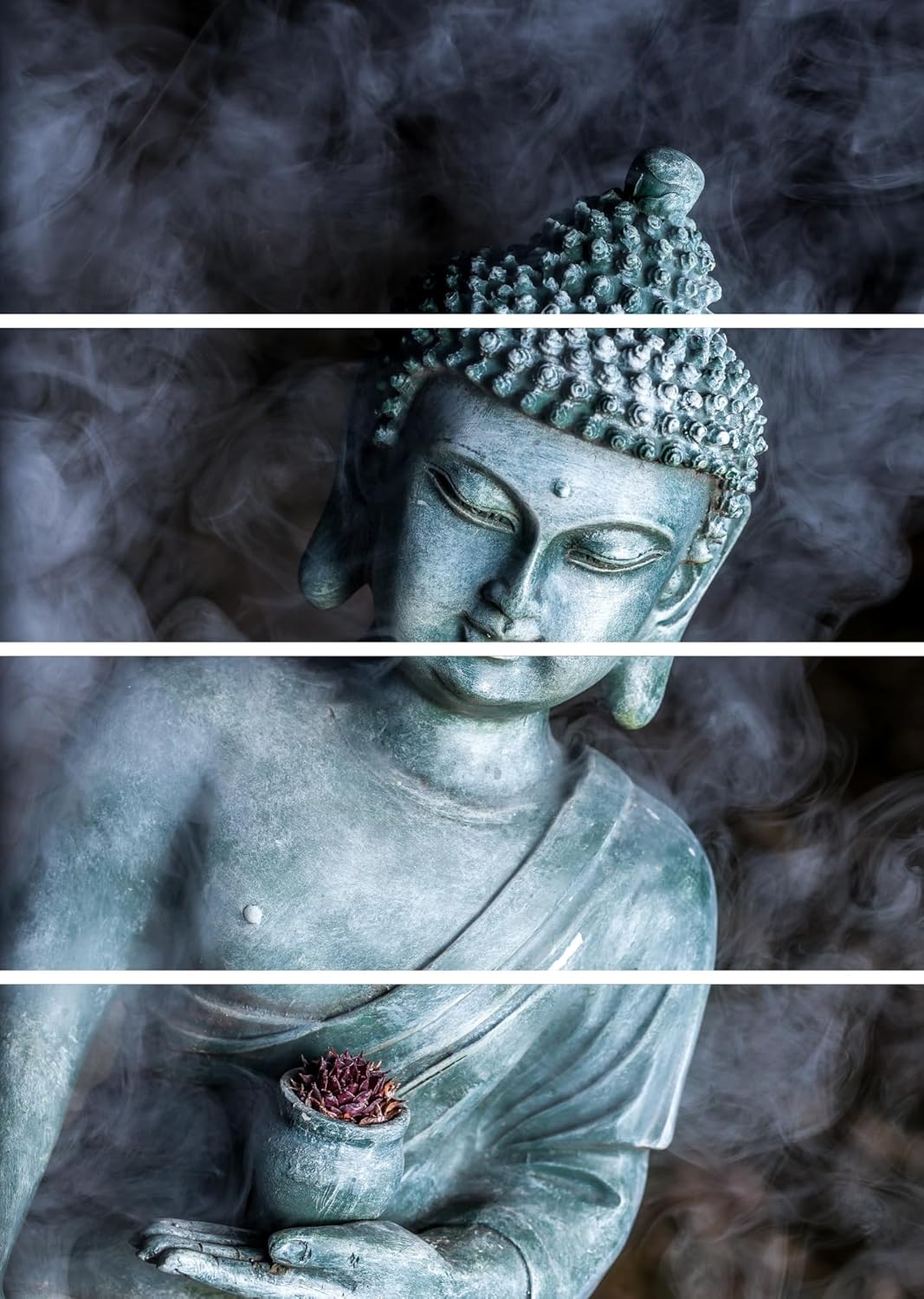
Moolwan 4-Panel Buddha Vinyl Wall Art on MDF (85x55cm) – Teal-Jade Buddha with Smoke Mist Composition
You keep opening the product page, trying to mentally place this on your living room wall. But it's impossible to know for sure, isn't it? 85cm looks right in these photos, but your wall has that AC vent on one side and the switch panel on the other. You need to know this works in your specific space, not just styled mockups. The good news: 85cm is calculated for Indian rooms where walls typically run 10-12 feet and 8-foot sofas are standard. The 4-panel layout at 55cm height creates a naturally horizontal spread that anchors to furniture without crowding adjacent elements.
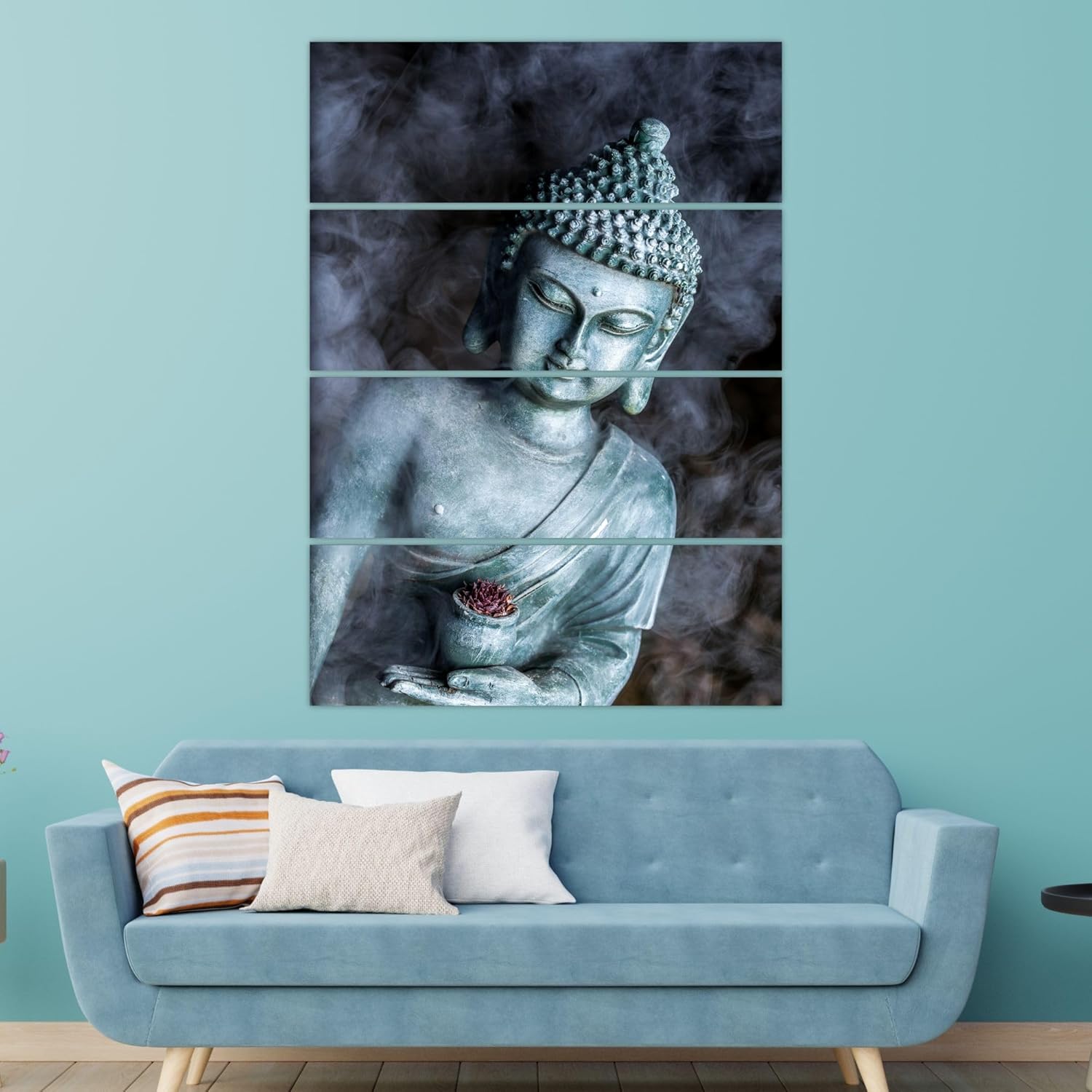
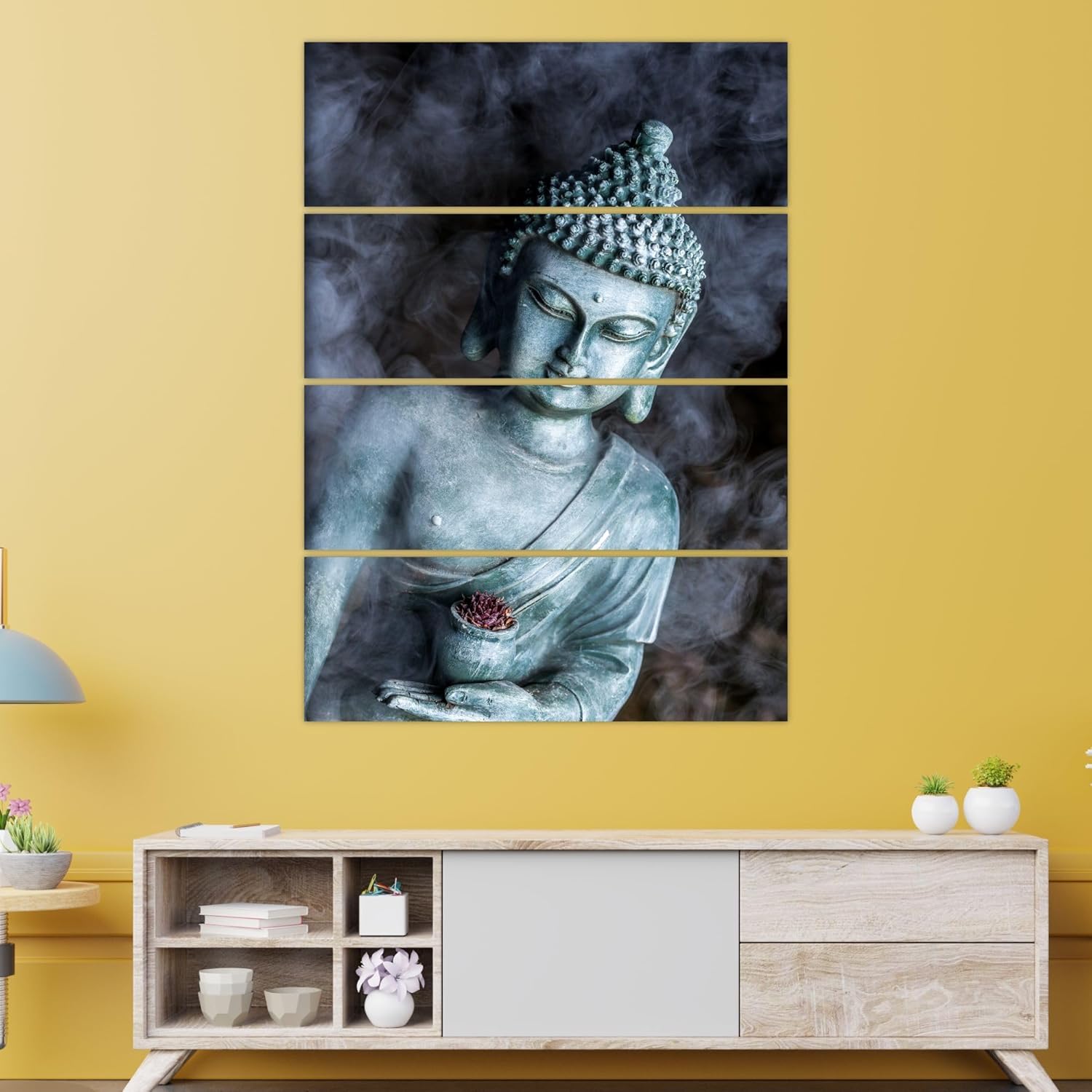
What separates this Buddha composition from the dozens you've probably scrolled past: the teal-jade Buddha figure holds visual weight against a swirling charcoal smoke background without competing with everything else in your room. The smoke mist creates movement around a still center—the Buddha's lowered eyes, the lotus offering vessel with burgundy dried flowers—so the composition breathes rather than stares.
Why 85cm Width Works on 10-12 Foot Indian Walls (And What Changes If You Size Up or Down)
For a 10-foot wall (300cm), this 85cm width covers approximately 28% of the horizontal space. That leaves roughly 107cm on either side—enough room for your side table on one end and clear wall on the other without the art looking cramped or lost.
Above an 8-foot sofa (240cm), 85cm width means the art spans about 35% of your sofa's length. This falls within the 30-40% range that keeps Buddha art feeling intentional rather than overwhelming. If you're placing this above a 6-foot sofa, coverage increases to around 47%—still balanced, though closer to the upper limit.
At 55cm height, the 4-panel configuration creates natural horizontal emphasis. Each panel's proportions guide the eye across rather than up, which works for standard 8-9 foot ceilings where vertical space needs careful management. The 2cm depth ensures the panels sit cleanly against the wall without casting heavy shadows.
If you went smaller (60cm width), you'd risk the Buddha figure appearing fragmented across panels rather than unified. If you went larger (120cm+), the smoke composition could dominate rather than complement the room.
What Teal-Jade and Charcoal Look Like Against Cream Walls (Morning Light vs Evening LED)
The teal-jade tones in this Buddha figure occupy a specific color territory: cooler than gold or bronze Buddha representations, warmer than silver or stone-gray interpretations. Against cream or off-white walls (the default in most Indian apartments), this teal reads as intentional contrast rather than accidental mismatch.
In morning daylight through east-facing windows, the jade undertones become more apparent—the Buddha figure appears mineral-like, almost like patinated copper. The charcoal smoke background stays muted, letting the figure remain the focal point.
Under warm LED lighting (3000K, typical of Indian homes), the teal shifts slightly warmer. The burgundy dried flowers in the lotus vessel pick up richness. The overall effect leans more mystical than austere.
Against light yellow or builder's peach walls, the cool teal creates stronger contrast—this works if you want the art to stand apart. Against sage or gray walls, the tones harmonize more quietly, though the smoke background may blend partially with gray walls, reducing definition.
The smoke-mist background serves a specific function: it creates visual breathing room around the Buddha figure. In multi-panel Buddha art, solid backgrounds can make panel divisions feel choppy. The continuous smoke flow across all four panels unifies the composition while the figure itself anchors attention.
Installation in Indian Walls (Concrete vs Drywall) for 4-Panel Alignment
Four panels at 3kg total weight means each panel weighs approximately 750 grams—light enough that standard wall anchors handle the load comfortably. The challenge isn't weight; it's alignment.
Four horizontal panels need to hang at identical heights with consistent spacing between them (typically 1-2cm gaps, visible as white lines in the image). MDF-backed vinyl panels come with pre-attached hanging hardware on the back—usually D-rings or keyhole slots positioned for level mounting.
For concrete walls (most older Indian buildings): 6mm masonry drill bit, concrete anchors, 35mm deep holes. Mark all four hanging points using the panels themselves as templates before drilling. Check level after the first two panels; adjust the remaining two if needed.
For drywall (modern apartments): Plastic wall anchors work fine at this weight. Same process—mark, drill, mount, level.
In rentals, the four anchor holes per panel (16 total maximum) are easily patched with wall putty when you move out. At 6mm diameter each, these are smaller than the holes left by standard curtain rod brackets.
Installation time: 25-30 minutes for all four panels, including the alignment checking. Work left to right if you're right-handed; this keeps your dominant hand free for adjustments as you move across.
How This Compares to Macrame Buddha Wall Hangings You've Probably Considered
Macrame wall hangings occupy a different category than panel art, but they compete for the same wall space—and for Buddha-themed décor, the comparison is worth addressing.
Macrame Buddha hangings typically feature a woven background with a Buddha silhouette or image attached. They're textile-soft, which creates a different visual texture than the flat matte surface of vinyl-on-MDF panels.
The practical difference: macrame collects dust in the woven fibers. In Indian homes where ceiling fans run constantly and windows stay open during non-AC months, dust accumulation becomes visible within weeks. Cleaning macrame requires removal, gentle washing, and drying—a process most people do once, then never again.
Vinyl panels wipe clean with a dry cloth. The splash-proof surface means accidental spray from ceiling fan cleaning or nearby window rain doesn't mark the surface.
The visual difference: macrame has bohemian associations—casual, textured, handmade aesthetic. Panel art reads more structured—intentional placement, gallery-style presentation. The 4-panel format here creates a modern-traditional hybrid that works in spaces where pure boho feels too informal but conventional framed art feels too stiff.
Longevity: MDF panels with vinyl printing don't sag, stretch, or lose shape. Macrame fibers relax over time, especially in humid climates. After two monsoon seasons, macrame often hangs differently than when first mounted.
What This 4-Panel Buddha Will Actually Feel Like in Your Room
From your doorway—the first view as you enter: the four panels register as a single horizontal band. The teal Buddha figure draws attention, the smoke background keeps it from feeling heavy. At 85cm width, it's substantial enough to notice immediately but not so large that it dominates the room's first impression.
At conversational distance—seated on your sofa 2-3 meters away: the panel divisions become more apparent. The composition reveals its structure: each panel holds a portion of the image that makes sense on its own (crown/hair, face, shoulders/hands, lotus vessel) while connecting to the whole. The Buddha's closed eyes and serene expression read clearly at this distance.
Up close—standing before it: the texture of the vinyl print becomes visible. The smoke mist shows subtle tonal gradations. The burgundy dried flowers in the lotus vessel add unexpected warmth to the cool teal palette. The MDF backing sits flat; no canvas sag or warping.
This composition works solo. It doesn't need flanking elements—side tables with matching Buddha figurines or coordinated candle holders. The smoke mist background already creates visual breathing room. Adding more to the wall around it may crowd the meditative effect.
In rooms with existing spiritual elements—pooja shelves, other deity art, meditation corners—this Buddha panel set establishes a complementary presence rather than competing focus. The contemporary rendering (teal-jade rather than gold, smoke rather than lotus mandala) bridges traditional subject matter with modern aesthetics.
Moolwan Design Note
The swirling smoke mist in this composition isn't decorative filler—it creates continuous visual flow across all four panel divisions, preventing the choppy disconnected look common in split-panel Buddha art where solid backgrounds make panel gaps jarring.
Moolwan Quality Standard
Splash-proof vinyl print on MDF designed for Indian apartments and lighting conditions. Packed for long-distance transit, quality checked before dispatch. Ships from West Bengal.
Moolwan Fit Guidance for Indian Homes
At 85cm width, this 4-panel set fits 10-12 foot walls with 28-35% coverage. Position 20-25cm above sofa top in living rooms, or at eye level (150cm center height) in hallways or meditation corners where no furniture anchors the placement.
Quick Specifications
- Product: Moolwan 4-Panel Buddha Vinyl Wall Art on MDF (85x55cm)
- Brand: Moolwan
- Category: Vinyl Wall Art on MDF
- Collection: Buddha Wall Art Collection
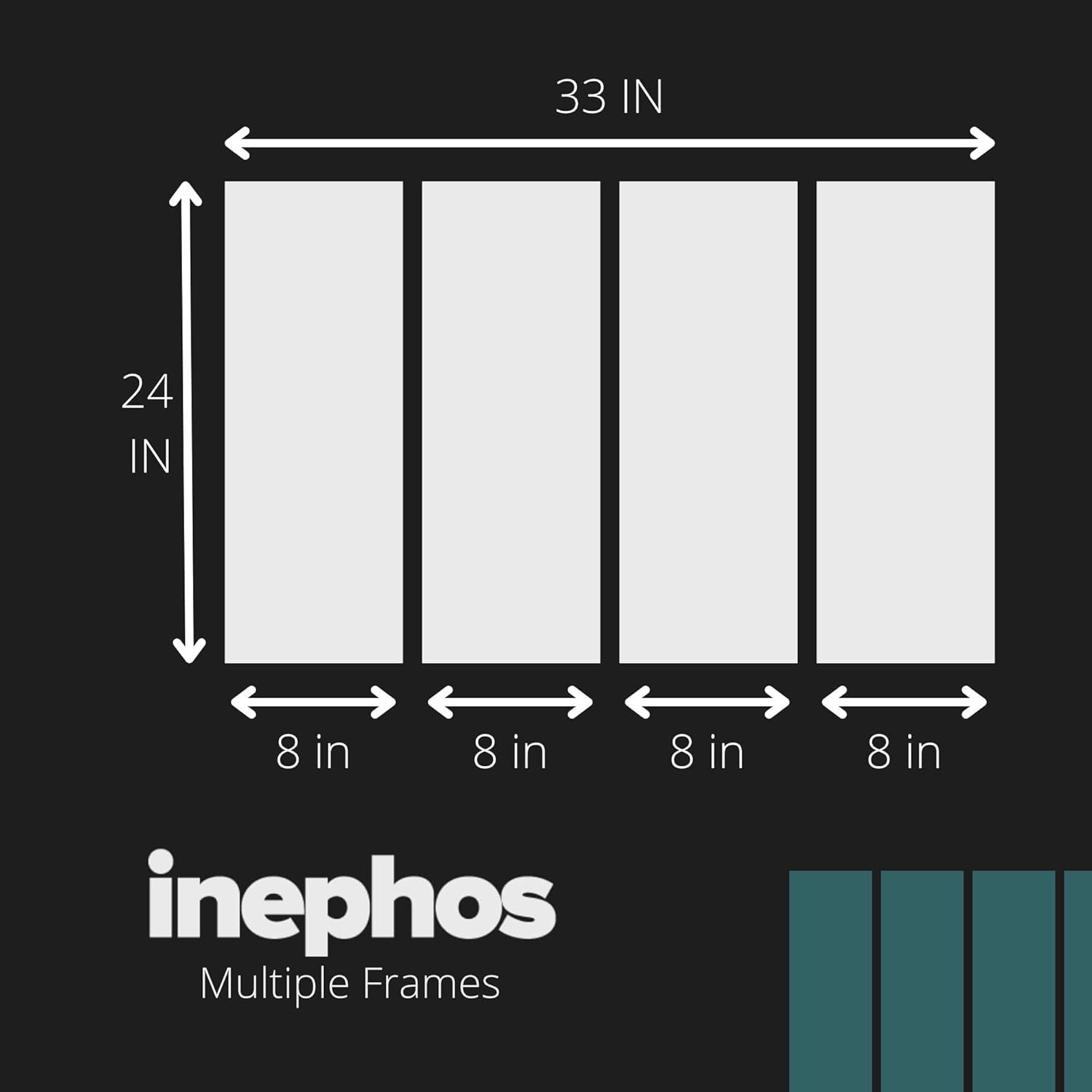
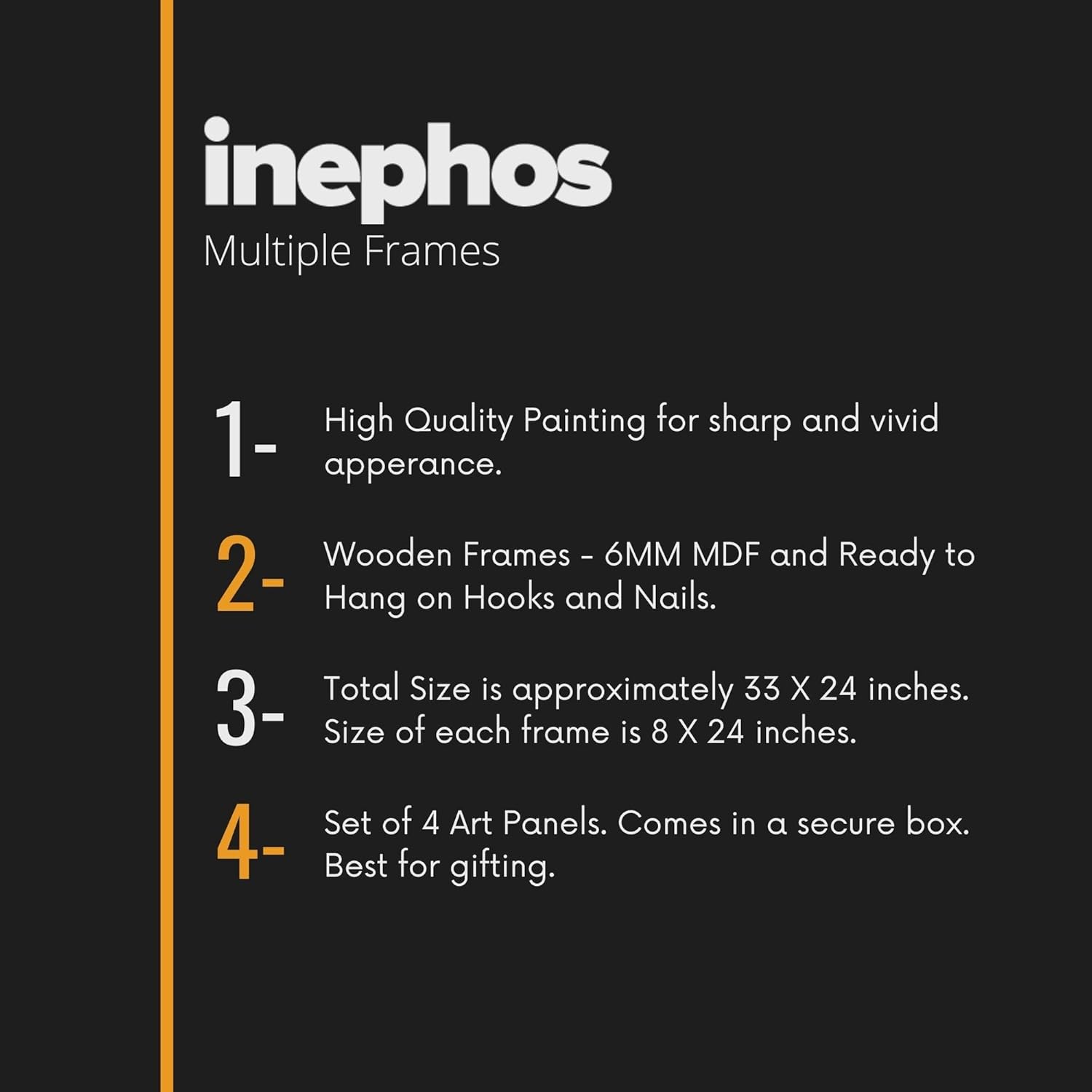
- Dimensions: 85cm W × 55cm H × 2cm D
- Weight: 3000 grams (3 kg)
- Panel Count: 4 panels
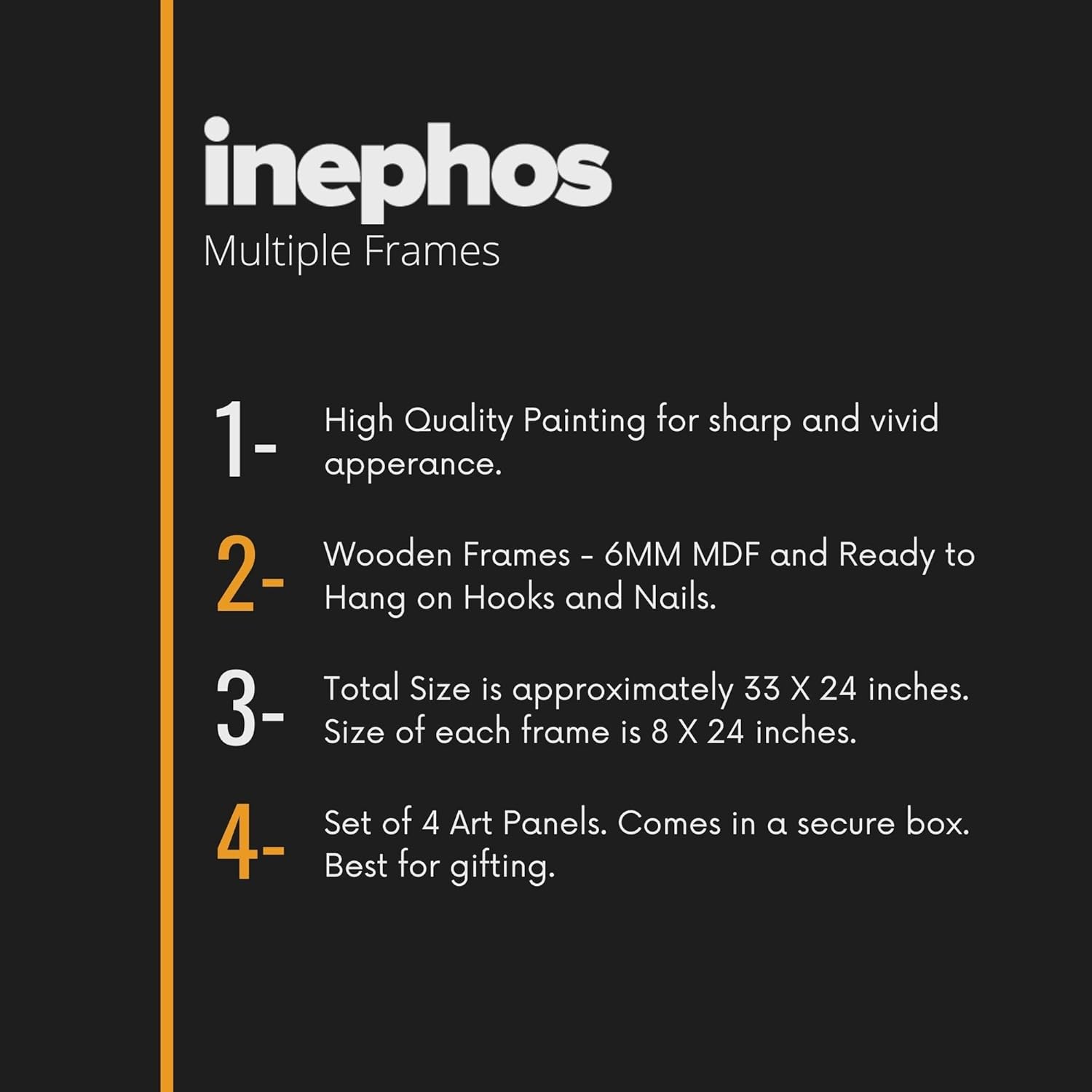
- Material & Construction: Splash-proof vinyl print on MDF with matte finish
- Colors: Teal-jade Buddha figure, charcoal-black smoke background, gray-white mist, burgundy dried flowers
- Frame: Black frame
- Best For: Living room walls 10-12 ft, above 6-8 ft sofas, meditation corners, hallway feature walls
- Ships From: West Bengal
- Delivery: 5-6 days metro cities, 6-8 days tier-2/3 cities
Frequently Asked Questions
Will 85cm width look proportional above my 8-foot sofa?
At 85cm, this panel set spans approximately 35% of an 8-foot (240cm) sofa—within the balanced 30-40% range. It won't look undersized or overwhelming. If your sofa is 6 feet, coverage increases to 47%, which works but sits closer to the upper comfort zone for Buddha art that you want to feel serene rather than dominant.
How will the teal-jade Buddha tones look against my cream walls under LED lighting?
Warm LED (3000K, standard in Indian homes) shifts the teal slightly warmer while the jade undertones remain visible. The contrast against cream walls stays intentional—cool subject against warm wall—without clashing. The burgundy flower accents pick up richness under artificial light.
Can I install these four panels in a rental without losing my deposit?
Yes. Each panel requires 2-4 small anchor holes (6mm diameter). For all four panels, you'll have 8-16 holes maximum—smaller than curtain rod brackets and easily filled with standard wall putty when you move out. Total repair time: 30 minutes with a ₹50 putty tube.
How does the splash-proof vinyl hold up during monsoon humidity?
The vinyl surface is moisture-resistant, meaning 70-85% humidity during monsoons won't cause warping, bubbling, or color bleeding. MDF backing is more stable than wood frames in humidity fluctuations. The panels will look the same after three monsoon seasons as they do at installation.
How do I keep the four panels aligned over time?
MDF doesn't expand/contract with humidity like wood, so panel alignment stays stable once installed. If panels shift from wall vibration (trains nearby, heavy traffic), simply lift and rehang using the same anchor points—no re-drilling needed.
Product Snapshot
- Brand: Moolwan
- Product: Moolwan 4-Panel Buddha Vinyl Wall Art on MDF (85x55cm)
- Category: Vinyl Wall Art on MDF
- Collection: Buddha Wall Art Collection
- Theme/Type: Meditating Buddha with lotus offering, smoke mist composition
- Best For: 10-12 ft living room walls, above 6-8 ft sofas, meditation corners, hallway feature walls
- Primary Differentiator: Teal-jade Buddha with continuous smoke flow across 4 panels creating unified meditative composition
- Secondary Differentiators: Cool-warm color balance (jade figure, burgundy flower accent), contemporary color interpretation of traditional subject
- Material & Construction: Splash-proof vinyl print on MDF, black frame, matte finish
- Care Instructions: Wipe with dry microfiber cloth; avoid water and cleaning chemicals
- Ships From: West Bengal
- Packing: Long-distance transit ready
- Quality Check: Before dispatch