
Buddha-fied Blues: Framed Wall Art That'll Zen-tertain Your Space
You may also like

Moolwan 6-Panel Buddha Lotus Vinyl Wall Art on MDF (150×76cm) – Stone Buddha Merging into Soft Lotus Bloom
When You Can Picture the Wall But Not What Goes On It
You know exactly which wall needs something. You've walked past it dozens of times, imagined different things there, but nothing in your saved folders quite translates from phone screen to actual room. The mental gap between "this looks nice online" and "this will work above my sofa" keeps stalling the decision.
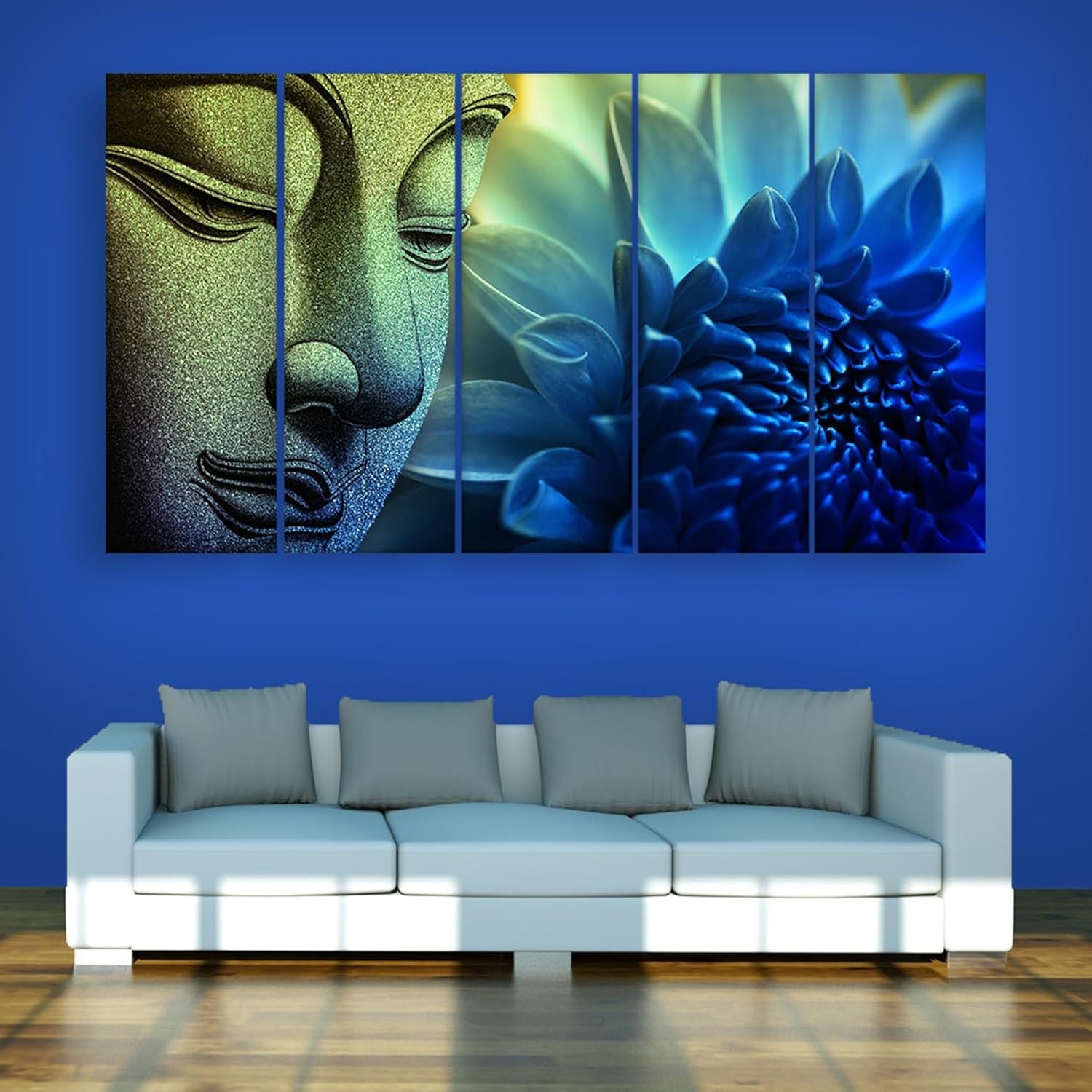
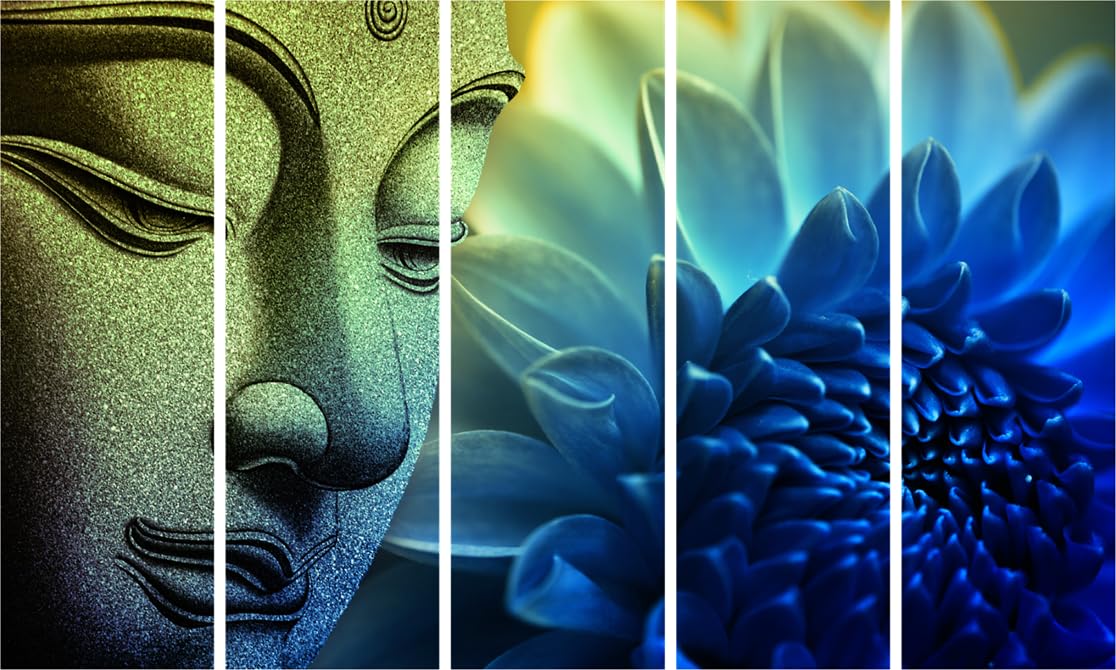
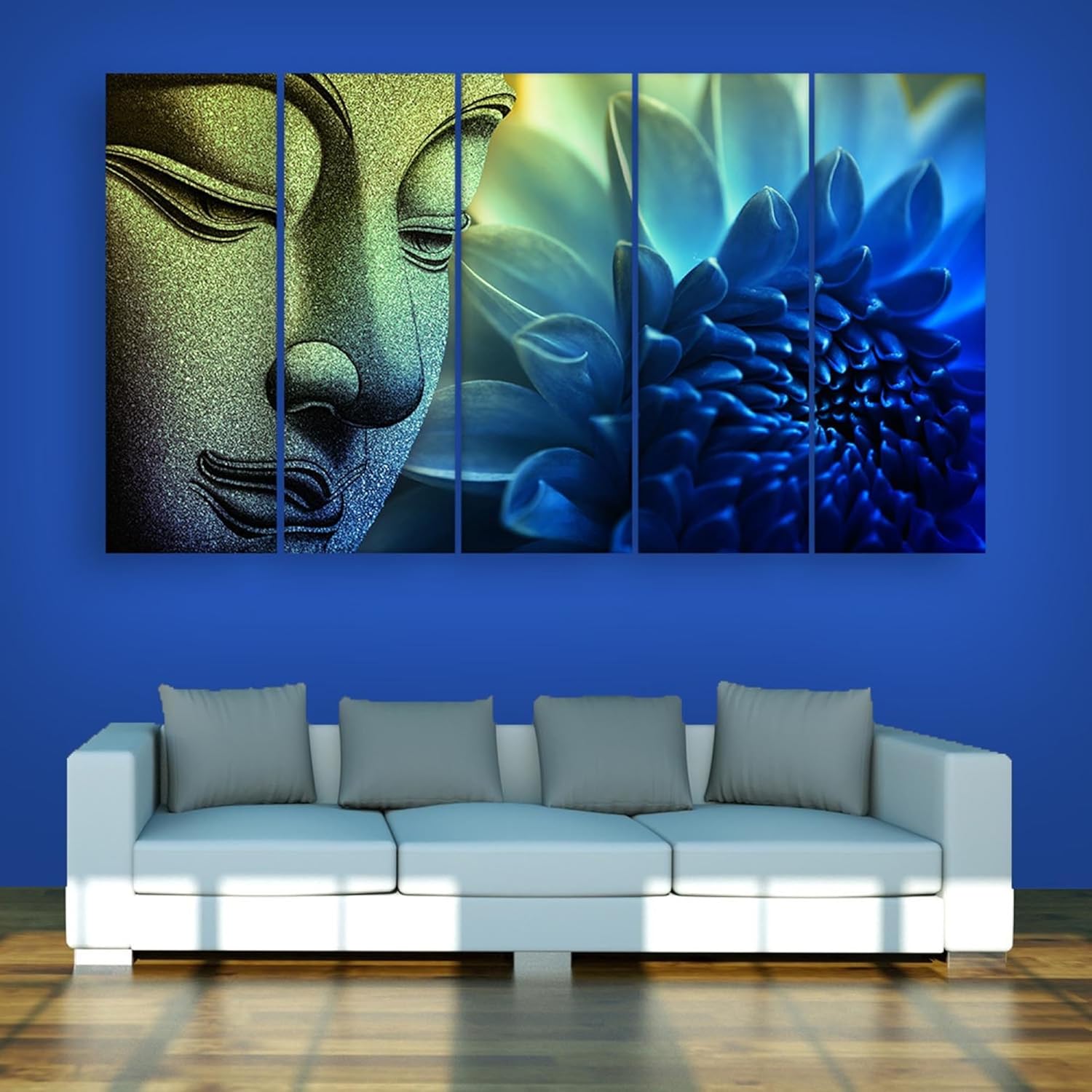
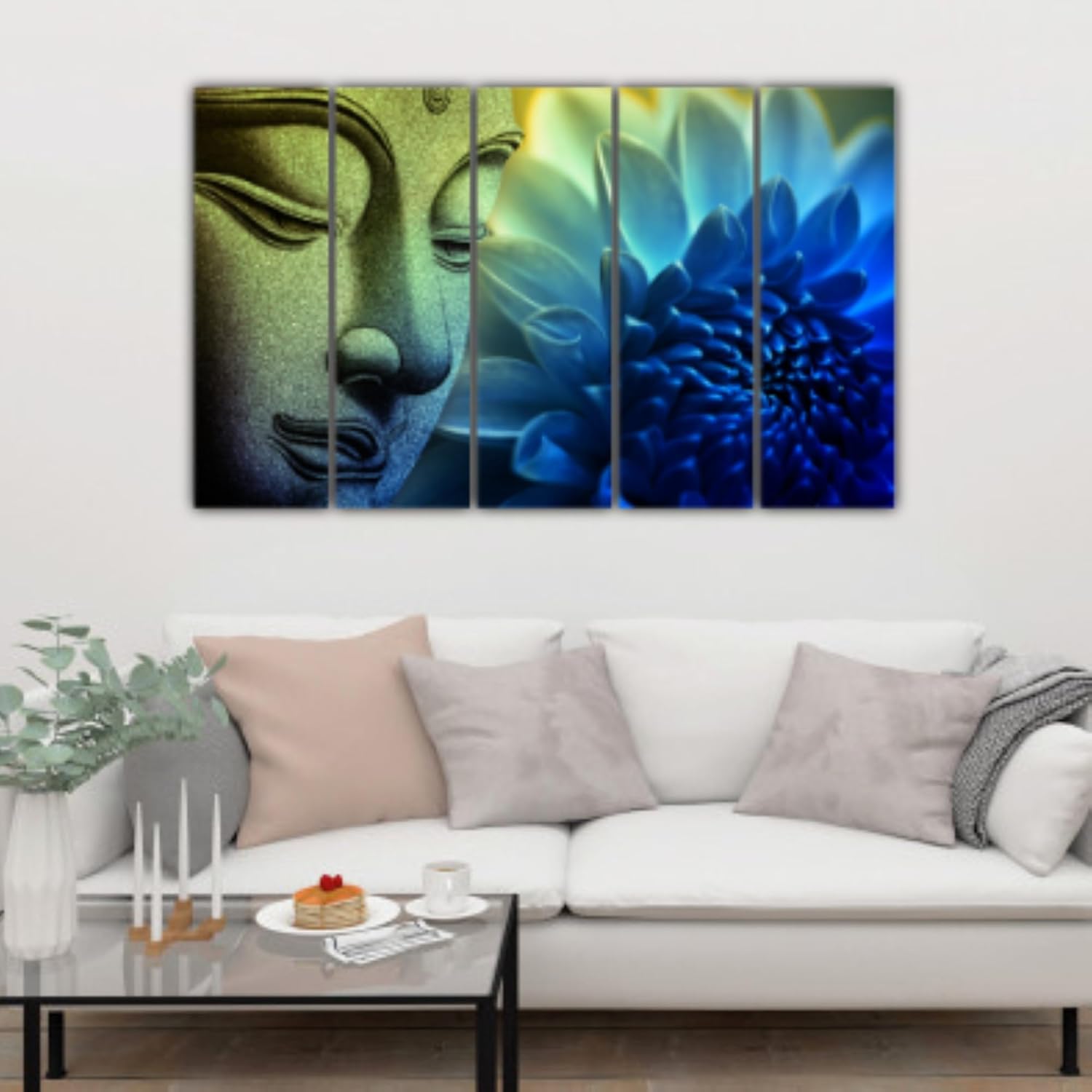
This 150cm Buddha lotus piece bridges that gap through something most wall art doesn't attempt: two completely different visual textures unified in a single horizontal flow. The left three panels show Buddha's face rendered in stone-like texture—grainy, sculptural, with visible surface detail that reads as dimensional even in flat print. The right three panels shift into soft lotus petals, smooth and organic, deepening from pale yellow-green into rich cobalt blue. Your eye travels naturally from contemplation to bloom, left to right, without the composition ever feeling split or disjointed.
At 150cm wide across six panels, this covers approximately 60-65% of a standard 8-foot sofa's width—the proportion where wall art anchors furniture without overwhelming it. The 76cm height sits comfortably below standard 8-foot ceilings with proper clearance above the sofa.
Why 150cm Works on 10–12 Foot Walls (And What Changes If You Size Differently)
A 10-foot wall (300cm) with an 8-foot sofa (240cm) centered on it leaves roughly 30cm of wall visible on each side of the sofa. At 150cm wide, this piece covers 62.5% of your sofa width—directly within the 60-75% range where wall art looks proportional rather than awkward.
From your doorway (typical viewing distance of 3-4 meters), the six-panel spread reads as a continuous image. The white gaps between panels create vertical rhythm that prevents the 150cm width from feeling like a single heavy block. Walk closer and the Buddha's stone texture becomes more apparent—the grainy surface detail that looked smooth from across the room reveals itself as sculptural.
If your sofa is closer to 6 feet (180cm), this 150cm piece will appear to match the sofa width almost exactly. That's not wrong, but it loses the "anchored below" effect and starts feeling like the art and sofa are competing rather than collaborating. For 6-foot sofas, a 90-120cm option would create better proportion.
Panel spacing matters for installation: you'll want 2-3cm gaps between each of the six panels to maintain the visual rhythm shown in the product image. Uneven spacing—even by 1cm—becomes noticeable across 150cm and breaks the gradient flow.
What These Colors Actually Look Like Against Cream Walls in Warm LED Light
The gradient moves through four distinct color zones: golden-olive green on the Buddha's face, transitioning through pale yellow-green, then soft teal, finally settling into deep cobalt blue at the lotus center. Against cream or off-white walls (the most common in Indian apartments), this palette does something useful—the warm golden-green tones on the left connect with the wall's warmth, while the cool blues on the right create deliberate contrast.
In morning daylight, the Buddha's stone texture appears more olive, almost bronze. The blues look brighter, more saturated. In warm LED lighting (3000K, standard in most Indian homes), the golden tones intensify and the blues soften toward teal. Neither lighting condition makes the piece look wrong—the gradient simply shifts its emphasis.
If your room has brown wooden furniture (coffee tables, TV units, side tables), the golden-olive Buddha tones will echo that warmth. The blue lotus provides contrast without clashing. If your sofa is beige or gray fabric, the entire piece works as a color anchor—you're not matching the art to your furniture but letting the art define the room's accent color.
The transition zone where gold meets blue is where your eye will naturally rest. This is where the composition finds its resolution—not in either extreme but in the passage between them.
Installation in Indian Walls (Concrete vs Drywall)
Six panels means twelve mounting points—two per panel for stability. This sounds complicated but follows the same logic as single-panel installation, repeated six times with spacing attention.
For concrete walls (most older Indian apartments): use the included masonry anchors, 6mm drill bit, 35mm depth. Mark all twelve points before drilling using a level and measuring tape. The hanging template helps, but with six panels you'll need to extend the template or mark spacing manually.
For drywall (common in newer constructions): plastic wall anchors work fine since each panel is lightweight. The 3kg total weight distributed across six panels means roughly 500 grams per panel—well within what standard anchors handle.
The alignment challenge: getting six panels level across 150cm requires patience. Start with the center two panels, confirm they're level, then work outward. Rushing this step creates a visible tilt that your eye will catch every time you enter the room.
For rentals: twelve 6mm holes are still repairable with standard wall putty when you move out. The holes are no larger than what picture frame nails leave. Document with photos before drilling if you're concerned about deposit disputes.
Installation time: 30-40 minutes for six panels if you measure carefully. This is longer than single-panel installation—account for the spacing and leveling requirements.
Why This Instead of Macrame Wall Hangings
Macrame works for certain aesthetics—bohemian, textured, craft-forward spaces where the handmade look is intentional. But macrame has practical limitations that vinyl panel art doesn't share.
Macrame collects dust in every knot and loop. In Indian cities with construction dust and seasonal pollution, that beige cotton rope turns gray within months. Cleaning means removing it from the wall, soaking, drying flat, rehanging—or accepting the gradual dinginess.
Macrame provides texture but not image. If you want visual narrative—a Buddha face, a gradient, a composition that draws the eye through a journey—macrame offers abstract pattern at best. It decorates the wall without giving the eye a destination.
Macrame dimensions are harder to control. A 150cm wide macrame piece sags, shifts, and never hangs with the crisp horizontal line that mounted panels maintain. The "organic" draping that looks intentional in photos often just looks droopy in person.
Splash-proof vinyl on MDF wipes clean with a dry cloth. It maintains dimensional stability through humidity changes. The image remains exactly as printed—no fading knots, no dust accumulation in fibers, no gradual graying.
What This Will Actually Feel Like in Your Room
From your sofa, looking up at the wall where this hangs: the Buddha's face appears contemplative, not stern. The downcast eyes and soft expression read as peaceful rather than imposing. You're not being watched by your wall art—you're sharing the room with something calm.
The lotus bloom provides visual relief. If the entire piece were Buddha's face across 150cm, it might feel too intense for daily living. The transition to floral abstraction softens the spiritual presence. Guests who aren't specifically drawn to Buddhist imagery will see "a nice gradient piece with interesting texture" before they register the Buddha element.
From the doorway entering the room: the six-panel spread establishes the wall as intentional. Empty walls read as unfinished; single small pieces read as token efforts. A 150cm coordinated installation signals that someone thought about this space.
The panels don't dominate the room—they anchor one wall and let the rest of your furniture and décor breathe. Adjacent pieces (side tables, floor lamps, plants) should be kept simple if placed near this wall. Competing visual interest fragments the room's focus.
Moolwan Design Note
The stone-to-petal transition works because it doesn't force a single material language. Buddha rendered in soft brushstrokes would lose the sculptural weight that makes the left side feel grounded. Lotus rendered in stone texture would lose the organic softness that makes the right side feel alive. Two textures, one composition, continuous gradient.
Moolwan Quality Standard
Designed for Indian apartments and lighting conditions. Packed for long-distance Indian transit. Quality checked before dispatch. Printed to resist humidity-related color fading. Ships from West Bengal.
Moolwan Fit Guidance for Indian Homes
At 150cm wide, this fits above 8-foot sofas with ideal 60-65% coverage. For 10-foot sectionals, consider flanking with simple décor rather than sizing up. The 76cm height works with standard 8-foot ceilings when mounted 20-25cm above sofa back.
Quick Specifications
Product: Moolwan 6-Panel Buddha Lotus Vinyl Wall Art on MDF (150×76cm)
Brand: Moolwan
Category: Vinyl Wall Art on MDF
Collection: Buddha Wall Art Collection
Panel Configuration: 6 panels, each 26cm W × 76cm H
Total Dimensions: 150cm W × 76cm H (assembled with standard spacing)
Weight: 3kg total
Material & Construction: Splash-proof vinyl print on MDF panels
Colors: Golden-olive green, pale yellow-green, soft teal, cobalt blue
Best For: Living room above 8ft sofa, dining wall, entryway feature wall, meditation space
Ships From: West Bengal
Frequently Asked Questions
Will 150cm be too wide for my 10-foot wall?
At 150cm, this piece covers 50% of a 10-foot (300cm) wall—well within proportional range. It reads as substantial without overwhelming the space. The six-panel format with gaps between panels also visually lightens the footprint compared to a solid 150cm canvas.
How will the golden-green tones look against my cream walls?
The golden-olive section of the Buddha face shares undertones with cream walls, creating warmth without matching exactly. In warm LED lighting, this connection intensifies—the Buddha appears to glow slightly against the wall rather than sitting flatly on it.
Can I install this in a rental without losing my deposit?
Yes. Twelve 6mm anchor holes (two per panel) are smaller than standard picture frame nail holes. Fill with wall putty, sand smooth, touch up with matching paint when you move out. Document the wall condition before installation with photos.
Will the colors fade near my east-facing window?
Vinyl print is more UV-stable than canvas ink printing. Direct morning sun for 2-3 hours daily won't cause noticeable fading within typical ownership periods. The splash-proof coating also provides a barrier layer that protects the printed surface.
How precise does the panel spacing need to be?
Aim for 2-3cm gaps between each panel, consistent across all five gaps. Variations of more than 0.5cm become noticeable and disrupt the gradient flow. Use a spacer (a book spine or piece of cardboard cut to your chosen gap width) when installing.
Product Snapshot
Brand: Moolwan
Product: Moolwan 6-Panel Buddha Lotus Vinyl Wall Art on MDF (150×76cm)
Category: Vinyl Wall Art on MDF
Collection: Buddha Wall Art Collection
Theme/Type: Buddha face with lotus bloom, gradient composition
Best For: Living room above sofa, dining wall, entryway, meditation space
Primary Differentiator: Stone-textured Buddha merging into soft lotus bloom—two visual languages unified in horizontal flow
Secondary Differentiators: Golden-to-cobalt gradient across 150cm; six-panel vertical rhythm without losing image continuity
Material & Construction: Splash-proof vinyl print on MDF panels
Care Instructions: Wipe with dry microfiber cloth; no water or cleaning chemicals needed
Ships From: West Bengal
Packing: Long-distance transit ready
Quality Check: Before dispatch