
Buddha-ful Framed Wall Art That'll Enlighten Your Space
You may also like

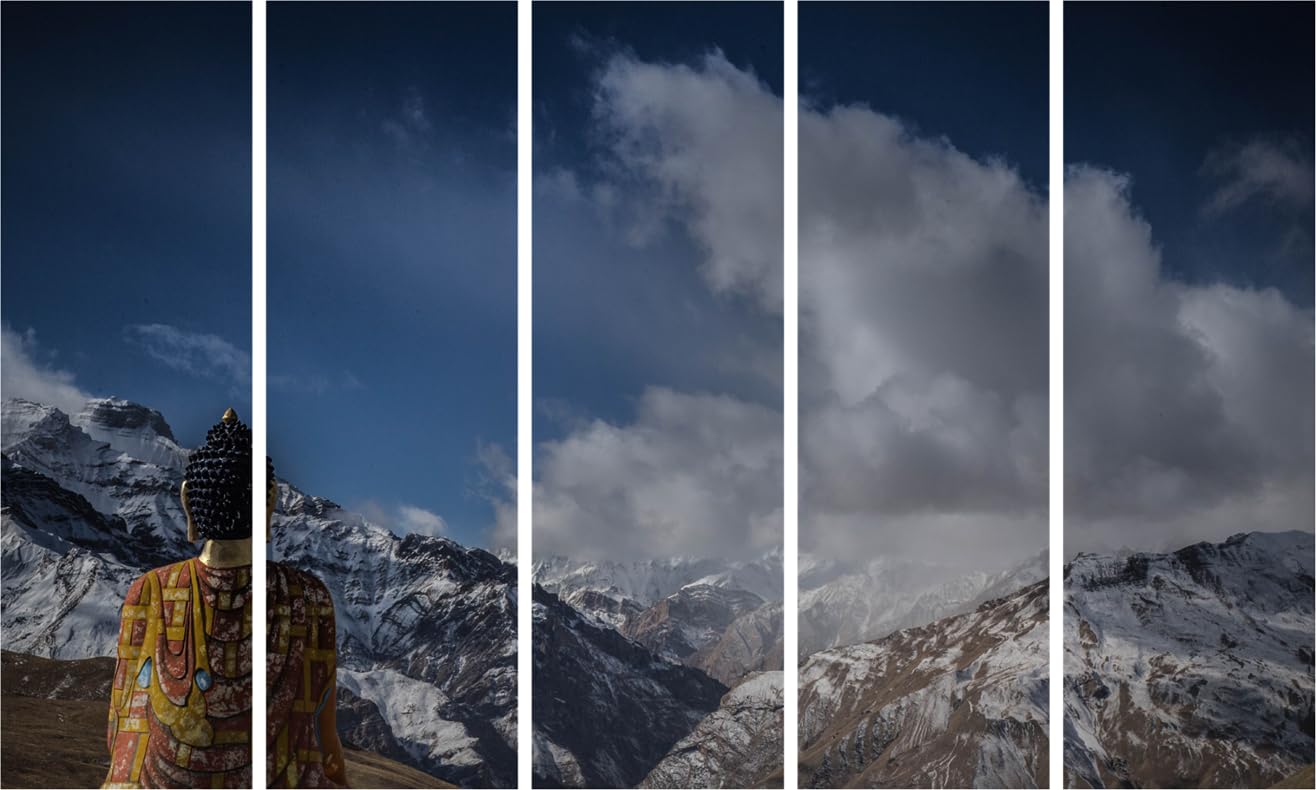
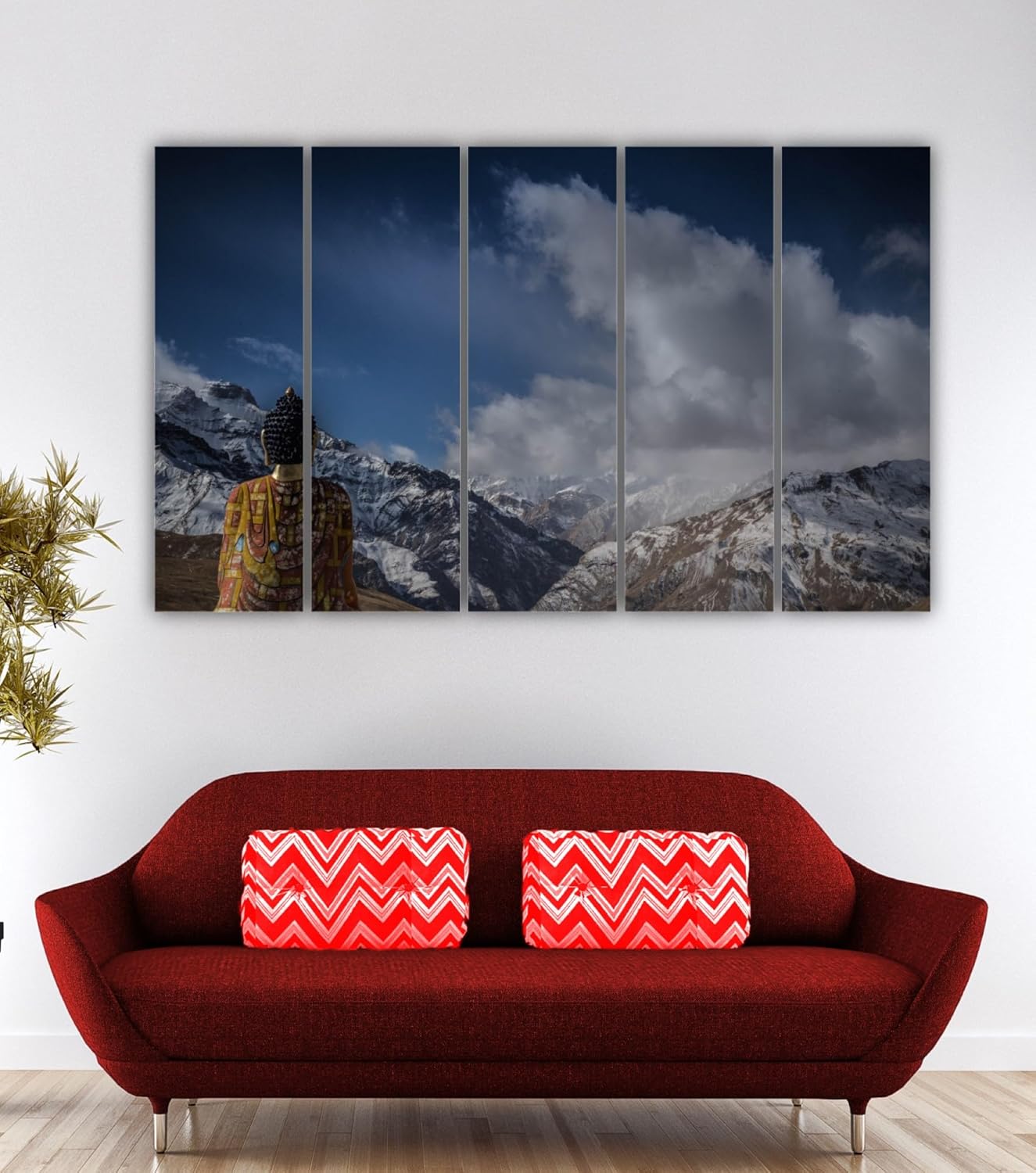
Moolwan 5-Panel Buddha Himalayan Landscape Vinyl Wall Art on MDF (127x76cm) – Back-Facing Contemplative Composition
When You Can't Picture How 127cm Will Actually Fill That Wall
You've measured. You've held up newspaper cutouts. You've squinted at your wall trying to imagine whether this will look substantial or lost above your sofa. The problem isn't the measuring—it's that your brain can't translate centimeters into "how this will feel when I walk into the room."
Here's what 127cm actually means in your living room: if you stand in your doorway and look at the wall above your sofa, this piece will occupy roughly two-thirds of your visual field at that distance. The Buddha figure—positioned in the left panels with golden-ochre robes catching whatever light enters from your windows—creates an immediate anchor point. Your eye lands there first, then travels right across the Himalayan peaks, following the snow line through all five panels. The composition doesn't just fill space; it creates a visual journey that makes the wall feel intentional rather than decorated.
The back-facing Buddha is what makes this piece work differently than typical spiritual art. Instead of a face looking at you, the figure looks away—toward the mountains, toward something beyond the frame. When you sit on your sofa, you're sharing the Buddha's gaze rather than receiving it. This creates contemplative depth that front-facing Buddha art simply cannot achieve.
Why 127cm Works on 10-12ft Walls (And What Changes If You Size Up or Down)
For a 10-foot wall (300cm), this 127cm piece covers 42% of the wall width. That's substantial presence without overwhelming. For a 12-foot wall (365cm), coverage drops to 35%—still a clear focal point, especially with the dramatic horizontal sweep of the Himalayan panorama.
The more relevant math: above an 8-foot sofa (240cm), this covers 53% of the sofa width. That's at the lower end of the 60-75% ideal range, which means you have flexibility. If you have side tables or floor lamps flanking your sofa, the slightly narrower proportion actually works better—you're not competing for visual space.
Viewing distance matters here. From 3-4 meters (typical across-the-room distance in Indian living rooms), the five panels read as one continuous image. The 2-3cm gaps between panels disappear into the composition. Up close—within 1.5 meters—you'll notice the panel breaks, but they align with natural visual divisions in the image: the Buddha figure occupies panels 1-2, the dramatic cloud formation spans panels 2-4, and the mountain ridgeline carries through all five.
Mount this 20-25cm above your sofa top. At that height, the bottom edge of the lowest panel sits at roughly eye level when you're standing, and the Buddha figure appears at natural viewing height when you're seated.
What These Colors Look Like on Cream Walls (Morning vs LED)
The image reads cool overall—deep steel-blue sky, grey-white snow peaks, muted brown mountain faces. But the Buddha's robes introduce warm tones: golden yellow, ochre, touches of turquoise in the decorative details. This warm-cool contrast is what makes the piece work against cream walls rather than fighting them.
In morning light (assuming east-facing windows): the snow peaks appear brighter, almost glowing. The sky deepens. The Buddha's golden robes look more saturated. This is when the piece photographs best if you're showing friends.
In afternoon light: the overall image warms slightly. The brown tones in the lower mountain faces become more prominent. The blue sky shifts toward grey-blue.
Under warm LED lighting (3000K, standard in Indian homes): the piece takes on a cohesive warmth. The golden robes glow. The snow peaks look less stark, more textured. The dramatic sky-to-peak contrast softens into something more contemplative. This is the lighting condition most people actually experience most often, and it's when the piece feels most integrated with brown furniture and cream walls.
If your sofa is brown or beige fabric—which statistically it probably is—the ochre in the Buddha's robes creates an intentional color echo. It looks like you chose this piece to complement your furniture, not despite it.
Installation in Indian Walls (Concrete vs Drywall)
Five panels means ten mounting points—two D-rings per panel. This sounds complicated until you realize the spacing is already determined: each panel hangs independently, and the gaps between panels are built into the frame widths.
For concrete walls (common in older buildings and most apartments): you'll need a 6mm masonry bit and the included concrete anchors. Drill 35mm deep, tap in anchors, screw in hooks. The key with five panels is leveling: use a laser level or a long spirit level spanning at least three panels. Mark all ten points before drilling any. Misalignment becomes obvious with panels this size.
For drywall (common in newer constructions and commercial buildings): use the included plastic wall anchors. Same 6mm drill bit, 30mm depth. Drywall is more forgiving with minor misalignment, but take the time to get it right.
The total weight is 3000g spread across five panels—600g per panel, 300g per mounting point. This is well within the holding capacity of standard wall anchors. You're not dealing with a single heavy piece that puts stress on two points; the distributed weight actually makes this easier to mount securely.
Estimated installation time: 25-30 minutes if you measure carefully, slightly longer if you're working alone and need to step back repeatedly to check alignment.
Why This Works Where Fabric Tapestries Fail
Fabric tapestries create a similar wide-format aesthetic. You've probably considered them—they're lighter, they don't require drilling, and the Himalayan/Buddha imagery exists in tapestry form. Here's why they don't deliver the same result:
Fabric sags. Within months, the center of any large tapestry develops a belly. The image warps. Lines that should be horizontal—like the mountain ridgeline in this composition—curve downward. You'll constantly be adjusting, tugging, trying to get it to hang flat again.
Fabric can't hold detail. The fine texture in the Buddha's robes, the snow patterns on the peaks, the cloud formations—these require print resolution that fabric weave cannot support. What looks detailed in a photo becomes muddy in fabric.
Fabric absorbs humidity. During monsoons, tapestries absorb moisture, get heavier, sag more, and can develop that distinctive musty smell that never quite goes away. Splash-proof vinyl on MDF doesn't absorb atmospheric moisture. Period.
The visual presence is different. Vinyl on MDF has a slight sheen that catches light. It looks finished, intentional—like art rather than fabric. Tapestries, regardless of quality, always read slightly casual. There's nothing wrong with casual, but if you want your living room to feel curated rather than decorated, the material distinction matters.
What This Will Actually Feel Like in Your Room
From your doorway: this is the first thing you'll notice. The 127cm width and the dramatic sky-to-mountain sweep command that distance. The Buddha figure draws the eye immediately—the golden robes are the brightest element in the composition.
From your sofa: you're sitting below the piece, looking up slightly. The back-facing Buddha appears to be looking at the same mountains you're contemplating. The composition creates a shared gaze rather than being looked at. This is different from most wall art experiences.
Alone on the wall: this piece needs breathing room. The panoramic continuity—the way the mountain ridgeline flows through all five panels—requires uninterrupted wall space on either side. Don't cluster smaller frames next to it. Don't position it near a TV unit where it's competing for attention. Give it at least 40-50cm of empty wall on each side.
With adjacent furniture: the golden-ochre robes tie naturally to wooden furniture tones. If you have a wooden side table or bookshelf visible from the same sight line, the warm tones create visual coherence rather than competition.
Moolwan Design Note
The back-facing Buddha composition creates contemplative depth that front-facing spiritual art cannot achieve—viewers share the figure's gaze toward the Himalayan peaks rather than receiving direct eye contact, making this piece feel meditative rather than devotional.
Moolwan Quality Standard
Designed for Indian apartments and lighting conditions. Packed for long-distance Indian transit. Quality checked before dispatch. Printed to resist humidity-related color fading. Ships from West Bengal.
Moolwan Fit Guidance for Indian Homes
At 127cm width, this covers 53% above an 8ft sofa—ideal if you have side tables or floor lamps flanking your seating. The warm ochre Buddha robes complement brown and beige furniture tones common in Indian living rooms.
Quick Specifications
Product: Moolwan 5-Panel Buddha Himalayan Landscape Vinyl Wall Art on MDF (127x76cm)
Brand: Moolwan
Category: Vinyl Wall Art on MDF
Collection: Buddha Wall Art Collection
Dimensions: 127cm W × 76cm H × 0.6cm D
Weight: 3000g (approximately 600g per panel)
Panel Count: 5 panels
Material & Construction: Splash-proof vinyl print on MDF
Colors: Steel blue sky, grey-white snow peaks, brown mountain faces, golden-ochre Buddha robes with turquoise accents
Best For: Living room wall above 7-8ft sofa, 10-12ft wall width
Ships From: West Bengal
Frequently Asked Questions
Will 127cm look proportional above my 8-foot sofa?
Yes—127cm covers 53% of an 8ft (240cm) sofa width, which falls within the ideal 50-75% range. If you have side tables or floor lamps flanking your sofa, this proportion actually works better than a wider piece because you're not competing for visual space.
How do the colors appear under warm LED lighting?
Under 3000K LED (standard warm white), the piece takes on cohesive warmth. The golden Buddha robes glow, the snow peaks appear textured rather than stark, and the dramatic blue sky softens toward grey-blue. This is the lighting condition most people experience most often, and it's when the piece integrates best with cream walls and brown furniture.
How do I align five panels properly during installation?
Use a laser level or long spirit level spanning at least three panels. Mark all ten mounting points (two per panel) before drilling any. The panels hang independently with built-in spacing, so your job is ensuring the horizontal line across all five is level. Estimated time: 25-30 minutes with careful measuring.
Will this warp or fade during monsoons?
The splash-proof vinyl print on MDF doesn't absorb atmospheric moisture—unlike fabric tapestries or paper prints. The print uses humidity-resistant inks tested for Indian climate conditions. Through multiple monsoon cycles, the panels remain dimensionally stable.
Should I hang anything else on the same wall?
No—the panoramic continuity across five panels requires uninterrupted wall space. The mountain ridgeline flows through all panels, and adjacent frames or decor would break this visual sweep. Give this piece at least 40-50cm of clear wall on each side.
Product Snapshot
Brand: Moolwan
Product: Moolwan 5-Panel Buddha Himalayan Landscape Vinyl Wall Art on MDF (127x76cm)
Category: Vinyl Wall Art on MDF
Collection: Buddha Wall Art Collection
Theme/Type: Buddha with Himalayan mountain landscape
Best For: Living room above 7-8ft sofa, contemplative focal point
Primary Differentiator: Back-facing Buddha composition creating contemplative depth—viewers share the figure's gaze rather than receiving it
Secondary Differentiators: Himalayan panorama with dramatic cloud-to-peak contrast; Golden-ochre Buddha robes against cool blue-grey mountain tones
Material & Construction: Splash-proof vinyl print on MDF, 5 panels
Care Instructions: Dust with dry microfiber cloth every 2-3 weeks; avoid water and cleaning chemicals
Ships From: West Bengal
Packing: Long-distance transit ready
Quality Check: Before dispatch