
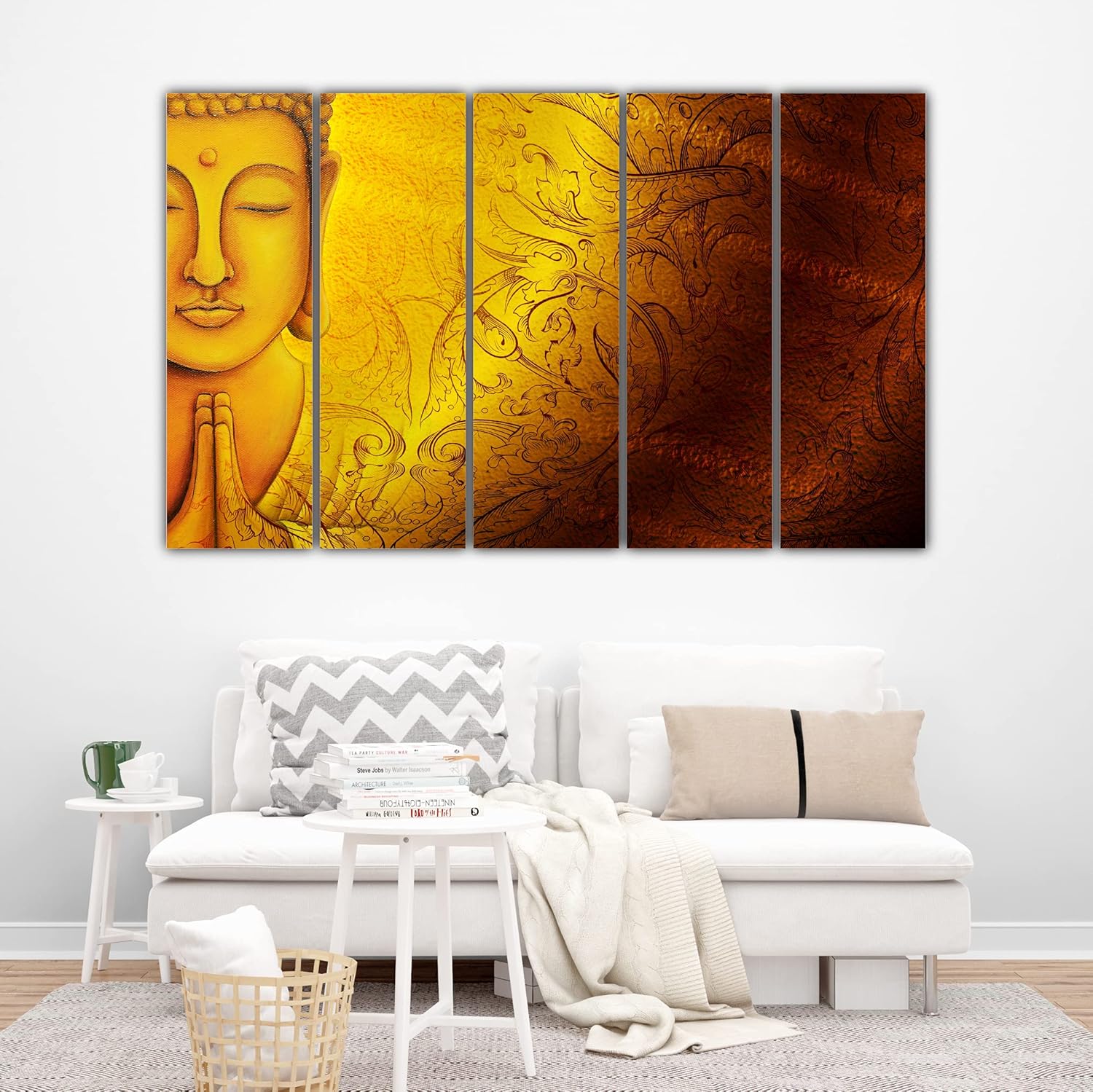
Buddha-licious Multi-Frame Framed Wall Art That'll Make Your Stress Say 'Om' (50x30in)
You may also like

Buy the Buddha-licious Multi-Frame Framed Wall Art That'll Make Your StressMoolwan 5-Panel Praying Buddha Vinyl Wall Art on MDF (127x76cm) – Golden-to-Copper Gradient Across Five Panels
When You Can't Picture How It'll Actually Look on Your Wall
You've measured your wall. You've held up tape to mark 127cm. But you still can't see it—not really. The mockup photos show white walls and Scandinavian furniture, and your living room has cream walls, a brown fabric sofa, and warm LED lighting. Will this Buddha piece look spiritual and grounded, or will it feel like you hung something from a Pinterest board that doesn't belong?
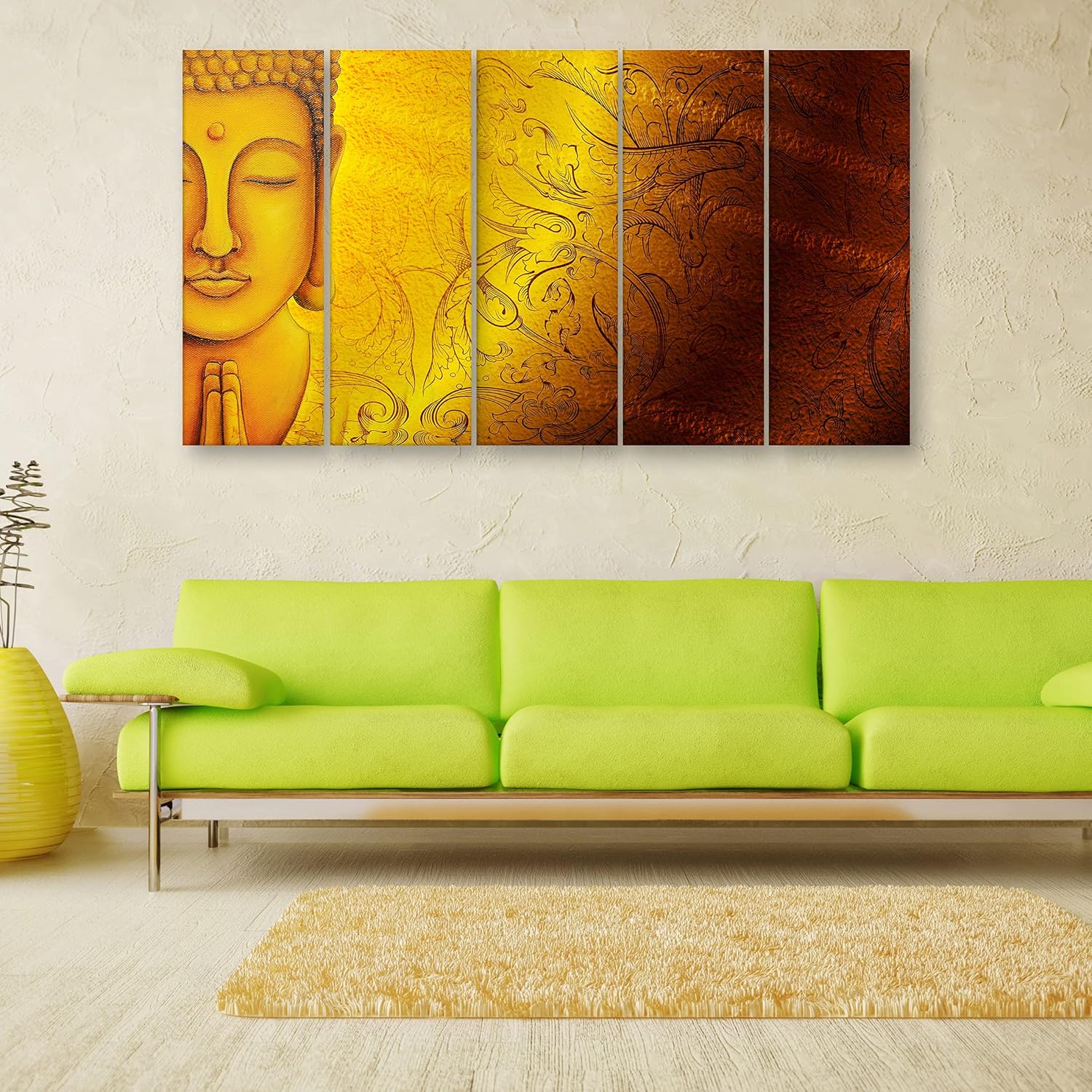
This is the visualization problem. And this particular piece solves it in a specific way: the color gradient moves from bright golden yellow on the left (where the Buddha figure sits in prayer mudra) to deep burnt copper on the right. That transition means the artwork adapts to your room's existing warmth rather than fighting it. Against cream walls, the golden tones lift. Against the brown furniture, the copper tones anchor. The 127cm horizontal span reads as a deliberate installation, not a random rectangle on a blank wall.
Why 127cm Works on 10-12ft Walls (And What Happens If You Size Up or Down)
Your wall is probably 10-12 feet wide if you're in a standard 2BHK or 3BHK living room. A 127cm piece covers roughly 35-40% of that width—enough to establish a focal point without overwhelming adjacent furniture or wall switches.
Above a 7-8ft sofa (210-240cm), this 127cm width hits the 53-60% ratio that makes wall art feel anchored to the seating rather than floating randomly. The 76cm height sits comfortably between sofa top and ceiling in rooms with 8-10ft ceiling heights, leaving 20-25cm above the sofa and adequate breathing room below the ceiling line.
If your sofa is smaller (6ft/180cm), this piece will feel slightly dominant—not wrong, but the sofa will read as secondary furniture. If your sofa is larger (9ft+), you might want the 150cm option to maintain visual balance.
The five-panel format adds another consideration: panel gaps. Each panel is separated by approximately 2-3cm of wall showing through. This means you need a wall section that's actually closer to 135cm clear width to accommodate the full spread without panels crowding into corners or light switches.
What These Colors Look Like on Cream Walls (Morning vs Evening Light)
The gradient runs from a warm golden yellow (panels 1-2) through amber (panel 3) to burnt sienna and deep copper (panels 4-5). In practical terms:
Morning light (east-facing rooms): The golden sections catch natural light and appear almost luminous. The copper sections stay rich without looking muddy. The overall effect is warm but not overwhelming.
Afternoon light (west-facing rooms): Direct sun intensifies the amber mid-tones. The gradient appears more dramatic. If you have afternoon sun hitting this wall directly, the rightmost panels may appear slightly darker than expected—this isn't a defect, it's how copper tones behave in strong warm light.
Evening/warm LED light: This is when the piece looks most cohesive. The golden and copper tones both fall within the warm spectrum, so standard 3000K LED bulbs make the entire gradient feel intentional. Against cream or off-white walls, the colors add depth without clashing.
Against colored walls: On light yellow walls, the golden sections blend rather than contrast—consider whether you want the Buddha figure to pop or harmonize. On sage or light green walls, the copper tones create complementary warmth. On darker walls (terracotta, maroon), the golden sections will stand out dramatically.
The ornate floral scrollwork etched into the background adds a layer of visual texture that reads differently at different distances. From across the room (3-4 meters), you see the Buddha figure and the color gradient. Up close, the intricate paisley-style flourishes become visible—a detail that rewards closer inspection without overwhelming the overall composition.
Installation in Indian Walls (Concrete vs Drywall)
Five panels means five separate hanging points. This is both a challenge and an advantage.
The challenge: You need to align five panels horizontally with consistent spacing. Unlike a single canvas where one or two hooks handle everything, panel alignment requires measuring twice and marking all five positions before drilling.
The advantage: Five smaller panels are lighter individually than one large piece. Each panel can be adjusted independently if your wall isn't perfectly level (and most Indian walls aren't). If one panel gets damaged, you can potentially replace just that panel rather than the entire piece.
For concrete walls (most Indian apartments): Use the included masonry anchors. Mark your five positions using the hanging template, maintain 2-3cm gaps between panels, and drill 35mm deep holes. A 6mm masonry bit is essential—don't try to use a wood bit on concrete.
For brick with plaster (older buildings): Same process as concrete. The plaster layer is thin; your anchor will seat in the brick behind it.
For drywall (modern high-rises, commercial spaces): Use the included drywall anchors. These expand behind the drywall surface and hold the weight without pulling through.
Rental considerations: Ten small anchor holes (two per panel for stability) sounds like more damage than a single canvas, but the holes are the same 6mm diameter. Fill with wall putty when you move out. The repair is identical in effort—just spread across more spots on the wall.
Alignment tip: Hang the center panel first (panel 3). Use a level. Then work outward—panel 2, then panel 4, then the outer panels. This approach lets you adjust spacing symmetrically rather than discovering at the end that your gaps are uneven.
Why This Works Better Than Macrame Wall Hangings
Macrame has had a moment. You've probably considered it—the boho texture, the handcrafted feel, the Pinterest-friendly aesthetic. Here's why Buddha vinyl panels solve a different problem:
Dust and maintenance: Macrame accumulates dust in every knot and weave. In Indian cities with construction dust, pollution, and monsoon humidity, macrame needs washing every 2-3 months. Vinyl panels wipe clean with a dry cloth.
Visual presence: Macrame creates texture but not imagery. It's decorative but not focal. A Buddha figure with this level of detail—the closed eyes, the prayer hands, the ornate background flourishes—gives your wall actual visual content that guests notice and respond to.
Longevity in humidity: Macrame cord absorbs moisture. In 70-80% monsoon humidity, the fibers swell, the knots loosen, the shape distorts. Over two monsoon seasons, macrame sags. Vinyl on MDF is splash-proof and dimensionally stable—no swelling, no sagging, no seasonal shape changes.
Color consistency: Macrame is typically off-white or natural cord colors. If you want golden and copper tones on your wall, macrame can't deliver that. Dyed macrame fades unevenly and quickly.
This isn't about macrame being bad—it serves a different purpose. But if you want a statement piece with spiritual imagery, defined colors, and low-maintenance durability, vinyl panels outperform woven alternatives.
What This Will Actually Feel Like in Your Room
From the doorway, you'll see five panels with a golden figure on the left and warm copper tones extending right. The Buddha's prayer pose registers as spiritual and calming. The ornate background reads as traditional without being temple-heavy.
Up close, the floral scrollwork becomes the secondary visual experience. The paisley-influenced flourishes are etched into the gradient background, adding visual depth that casual observation misses.
Solo or with adjacent decor? This piece is wide enough (127cm including gaps) to anchor a wall by itself. Adding items on either side risks visual crowding. If you want adjacent elements, keep them minimal—a single floor lamp to one side, a small plant stand on the other. Avoid flanking with additional wall art; the five-panel format already fills horizontal space.
Dominance level: In a typical Indian living room, this piece will be the primary visual element on its wall. The golden tones and the Buddha figure command attention. If you prefer wall art that blends into the background, this isn't it. This is for rooms where you want guests to notice and comment.
Family acceptance factor: Buddha imagery in Indian homes reads as spiritual, cultured, and acceptable across most family contexts. The warm earth tones (gold, amber, copper) align with traditional color preferences. This isn't edgy modern art that requires explanation—it's recognizable, meaningful, and conversation-appropriate.
Moolwan Design Note
The gradient direction—golden on left, copper on right—follows the natural reading direction. Your eye enters at the Buddha figure and travels across the decorative field. Reversing this (dark-to-light) would create visual tension; this orientation creates visual flow.
Moolwan Quality Standard
Splash-proof vinyl printing on MDF panels. Designed for Indian apartments and lighting conditions. Packed for long-distance Indian transit. Quality checked before dispatch. Printed to resist humidity-related color fading. Ships from West Bengal.
Moolwan Fit Guidance for Indian Homes
127cm total width suits walls of 10-12 feet with a 7-8ft sofa below. For smaller sofas (6ft), this piece will visually dominate. For larger sofas (9ft+), consider sizing up to maintain proportional balance.
Quick Specifications
| Attribute | Detail |
|---|---|
| Product | Moolwan 5-Panel Praying Buddha Vinyl Wall Art on MDF (127x76cm) |
| Brand | Moolwan |
| Category | Vinyl Wall Art on MDF |
| Collection | Buddha Wall Art Collection |
| Dimensions | 127cm W x 76cm H x 0.6cm D (total span including panel gaps) |
| Weight | 3000 grams (total) |
| Material & Construction | Splash-proof vinyl print on MDF panels |
| Panel Configuration | 5 panels with 2-3cm spacing |
| Colors | Golden yellow, amber, burnt sienna, deep copper; ornate floral scrollwork in darker tones |
| Best For | Living room walls 10-12ft wide, above sofas 7-8ft wide |
| Ships From | West Bengal |
Frequently Asked Questions
Will 127cm be too wide for my wall if I have furniture on both sides of my sofa?
Measure the clear wall space above your sofa, not the total wall width. You need approximately 135cm of unobstructed wall (127cm artwork plus 2-3cm panel gaps plus breathing room). If side tables or lamps visually intrude into this space at sofa-back height, the piece may feel cramped. Above 7-8ft sofas centered on 10-12ft walls, 127cm typically fits without issue.
How will the golden-copper gradient look if my walls are light yellow instead of cream?
The golden sections (left panels) will appear less contrasty—they'll harmonize rather than pop. The copper sections (right panels) will still provide visual weight. If you want the Buddha figure to stand out distinctly, cream or off-white walls work better than yellow walls.
Do I need to align all five panels perfectly level, or is there forgiveness?
Panel alignment matters. Uneven panels create a visual distraction that undermines the gradient effect. Use a level on the center panel, then work outward. The included hanging template marks positions for consistent spacing. Budget 25-30 minutes for careful installation rather than rushing.
Will the vinyl surface hold up during monsoons without warping?
Vinyl on MDF is splash-proof and doesn't absorb humidity like canvas or fabric alternatives. The MDF substrate is more dimensionally stable in humid conditions than raw wood. Through multiple monsoon seasons, panels maintain their shape without the swelling-shrinking cycle that affects moisture-absorbing materials.
Can I hang this in a bedroom, or is it too large/too spiritual for that space?
127cm width works in bedrooms with walls of 10ft or wider. Buddha imagery in bedrooms is a personal preference—many find it calming for sleep spaces. The warm gradient tones suit bedroom environments well. Just ensure your bed's headboard wall can accommodate the full panel spread without crowding into corners or windows.
Product Snapshot
| Attribute | Detail |
|---|---|
| Brand | Moolwan |
| Product | Moolwan 5-Panel Praying Buddha Vinyl Wall Art on MDF (127x76cm) |
| Category | Vinyl Wall Art on MDF |
| Collection | Buddha Wall Art Collection |
| Theme/Type | Praying Buddha with ornate floral scrollwork |
| Best For | Living room walls 10-12ft wide, above 7-8ft sofas, spiritual/meditative spaces |
| Primary Differentiator | Golden-to-copper gradient that shifts visual warmth across a 127cm span |
| Secondary Differentiators | Buddha's prayer mudra anchored on left panels creates asymmetric visual weight; ornate floral scrollwork adds traditional decorative language |
| Material & Construction | Splash-proof vinyl print on MDF panels |
| Care Instructions | Wipe with dry microfiber cloth; no water or cleaning chemicals |
| Ships From | West Bengal |
| Packing | Long-distance transit ready |
| Quality Check | Before dispatch |
Say 'Om' (50x30in) Perfect Wall Art from Moolwan
Why Shopping for the Buddha-licious Wall Art from Moolwan is the Most Elegant Choice for Wall Decor!
Looking to add a serene, soothing vibe to your room with a single statement piece that doubles as spiritual therapy? Choosing the Buddha-licious Multi-Frame Framed Wall Art That'll Make Your Stress Say 'Om' (50x30in) from Moolwan is the ultimate way to elevate your Wall Decor effortlessly. Crafted with majestic care, this multi-frame masterpiece is elegantly spread over 127 cm in length and 76 cm in height, making it the ideal sized centerpiece for a living room, office, or meditation nook.
With brilliantly vivid HD printing, this Wall Art features a calming Buddha motif in harmonious shades of tranquil brown and peaceful yellowa color blend known for inducing mental stillness and warmth. Its alluring multi-panel design with a minimal 0.6 cm depth adds an ultra-modern flair while keeping your Wall Decor looking uncluttered and breezy. Weighing just 3000 grams, it's lightweight enough to display with ease yet substantial enough to showcase grandeur.
Whether you're creating a zen corner or just want your space to exhale elegance, this exceptional piece of Wall Art makes your walls breathe. And thanks to its high-definition detailing and architectural styling, its not just a decor itemits a mood, a vibe, and clearly, a conversation starter.
Explore the Alluring Features of Buddha-licious Multi-Frame Wall Art Designed to Impress!
Looking for the key features that make this Wall Art simply irresistible for transforming your Wall Decor? Heres an elegant breakdown:
| Feature | Description |
|---|---|
| Product Name | Buddha-licious Multi-Frame Framed Wall Art That'll Make Your Stress Say 'Om' |
| Dimensions (cm) | 127 Length x 76 Height x 0.6 Depth An ideal focal piece for accent walls |
| Weight | 3000 grams Lightweight for easy, damage-free installation |
| Color Theme | Zen-inspired Brown and Yellow Highlighting Spiritual Harmony |
| Design Type | Multi-frame high-definition canvas - Modern, Modular, Majestic |
| Special Feature | Superb Vivid HD Print for Enhanced Visual Appeal in Any Room |
Creative Ways to Use Buddha-licious Wall Art for Your Wall Decor
Wondering how to bring out the best look using this elegant piece of Wall Art? With its modular design and graceful Buddha symbolism, you can curate a luxury spa vibe right in your home. Place it just above a minimal floating shelf with delicate incense holders or candles for an exquisitely calm setting.
In your office or meeting area, this Wall Art acts as a serene focal point that gently reduces stress and subtly elevates the aesthetic. Thanks to its neutral yet warm color palette, it fits perfectly with everything from earthy tones to Scandinavian minimalism. Whether placed in a modern loft or a yoga studio, this stylish Wall Art encourages balance, focus, and refined taste in your overall Wall Decor.
Why Shoppers Prefer Moolwans Wall Art for Stylish Wall Decor
Still curious why Wall Art from Moolwan stands out from the crowd? Why not choose the most graceful and intentionally designed work that truly speaks to the soul? At Moolwan, we combine artistic integrity with commercial sophistication, bringing you not just home accessoriesbut energy enhancers!
Each Buddha-licious Multi-Frame Framed Wall Art piece is exquisitely crafted with intense attention to detail and superb durability. Our cutting-edge HD print techniques capture the nuances of emotion, enlightenment, and elegance in a way that mass-market products simply can't replicate. Plus, every artwork is carefully curated to align with interior design trends that increase both mood and market value of your space.
So when you buy from Moolwan, you're not just updating your décor; youre making an inspiring investment in ambiance.
Frequently Asked Questions (FAQs)
What are some modern canvas art ideas for hotel room walls?
Modern Wall Art ideas for hotel rooms include multi-panel serene artworks like Buddha-themed canvases, abstract impressions, or cityscapes in soft color tones. Wall Art from Moolwan enhances the atmosphere while offering visual calm that guests truly appreciate.
What are popular subjects for large wall portraits in modern décor?
In large modern Wall Art, popular themes include Buddha portraits, modern abstracts, wildlife close-ups, and architectural sketches. At Moolwan, our Buddha-inspired multi-frame Wall Art pieces are among the top choices for dramatic visual impact.
How to safely hang large canvas art on concrete walls?
For hanging large Wall Art on concrete walls, its best to use wall anchors or masonry screws with a reliable drill. Lightweight yet sturdy pieces like our Buddha-licious Wall Art from Moolwan make the process easier and stress-free.
Can I use velcro strips for hanging canvas in the office?
Yes, Velcro strips are a convenient choice for lightweight Wall Art installs in offices. Our Buddha-licious Multi-Frame Wall Art weighs just 3kg and can securely adhere with industrial-grade Velcro solutions.
How to choose a 3 panel canvas print that complements light wall colors?
Look for warm-toned or earthy multi-panel Wall Art such as our Buddha-themed canvas in brown and yellow. These colors add depth and contrast without overwhelming soft-colored walls, making for visually pleasing Wall Decor.
Whats the depth of an 8x10 canvas when framed for office decor?
Typically, an 8x10 framed canvas has a depth of approximately 1-2 cm. While smaller than our 0.6 cm depth Buddha-licious Wall Art, both offer sleek profiles perfect for modern office Wall Decor without visual bulk.
Is abstract canvas suitable for oversized decor on a tall wall?
Absolutely! Abstract Wall Art excels in tall spaces due to its visual fluidity. Combine it with spiritual themes like our multi-frame Buddha art from Moolwan, and you get a tasteful blend of meaning and minimalism.
Do interior designers always follow the 2/3 wall art rule for oversized pieces?
While many designers follow the 2/3 rule, choosing impactful Wall Art like our Buddha-licious canvas often becomes a delightful exception that commands the wall confidently, creating stunning focal points even beyond guideline norms.