

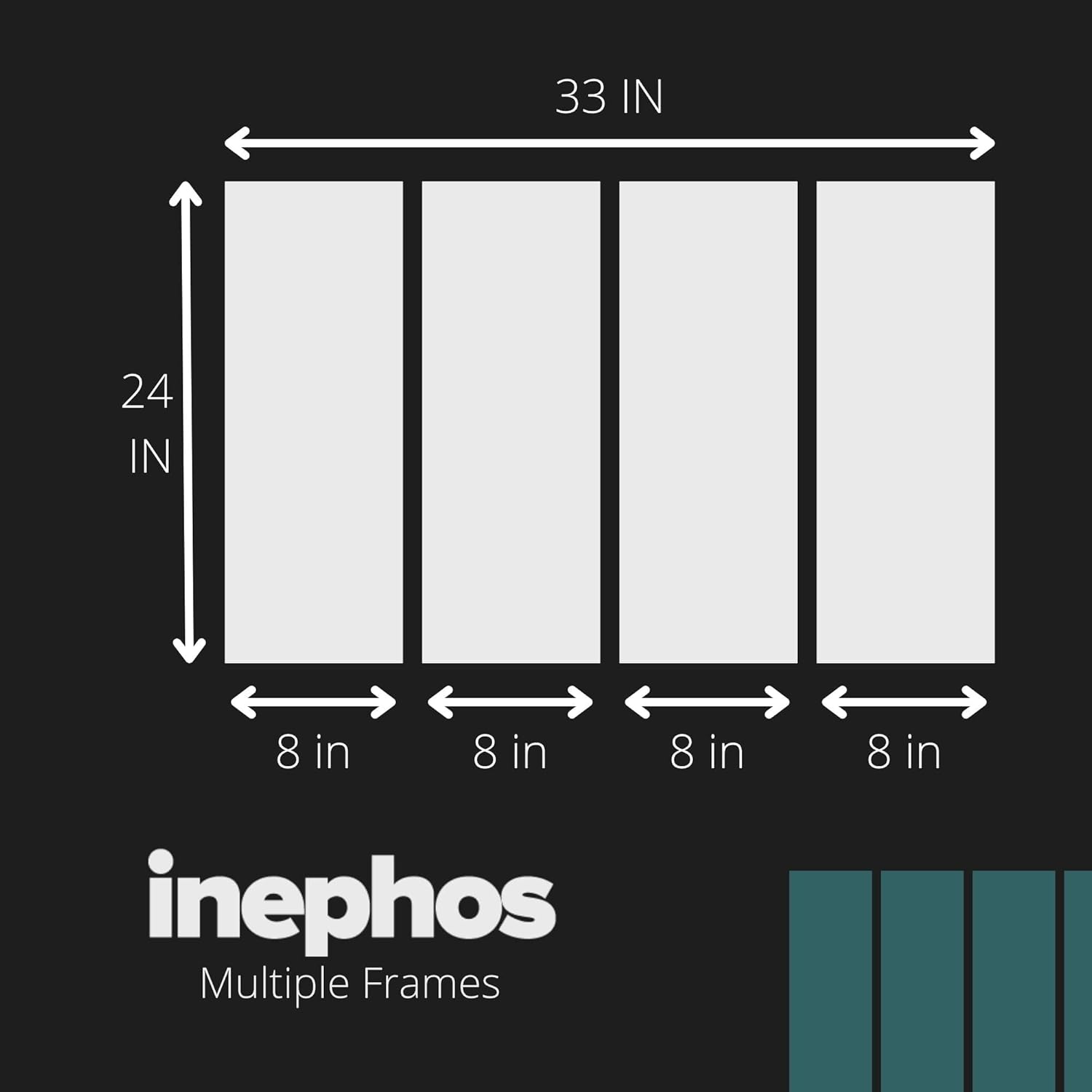
Buddha-licious Multi-Frame Framed Wall Art That'll Make Your Walls Chant 'Om!'
You may also like

Moolwan 4-Panel Buddha with Bodhi Leaves Vinyl Wall Art on MDF (84x54cm) – Stone-Textured Face Emerging Through Cascading Foliage
That Empty Wall Above Your Sofa Needs Something Specific
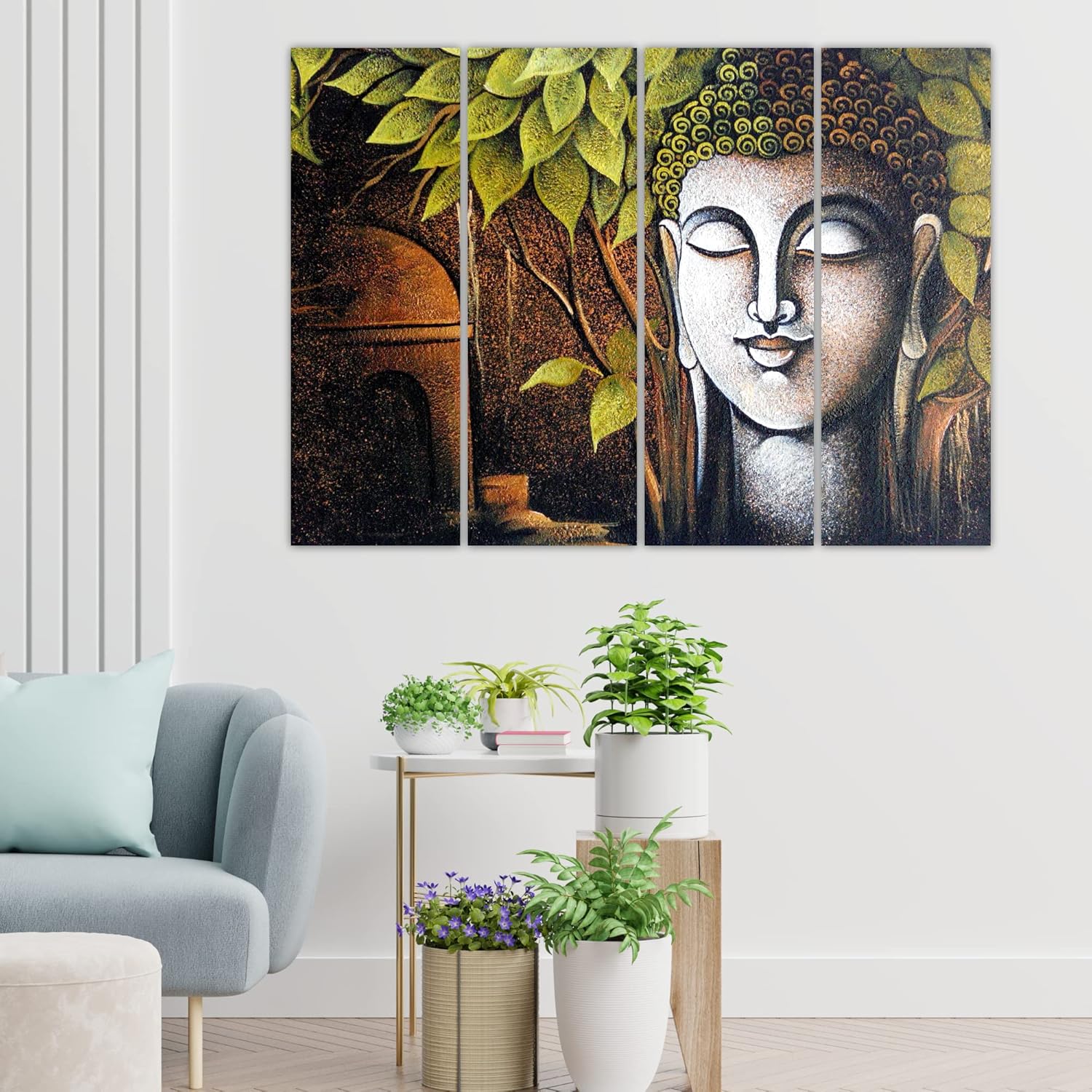
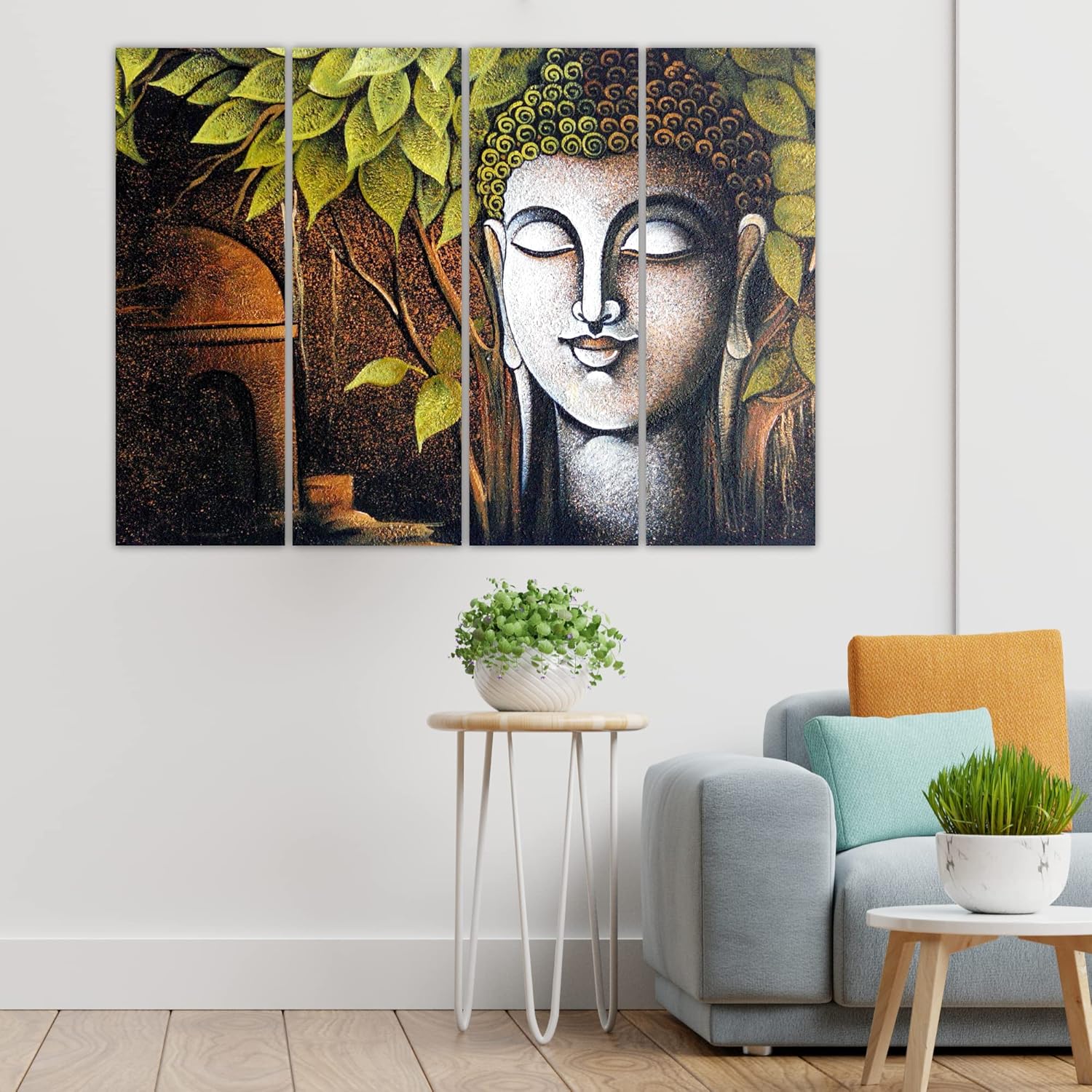
You've walked past that blank wall dozens of times, mentally placing different things there—a mirror, maybe some floating shelves, possibly art. But every time you browse online, you hit the same problem: you can see the product clearly enough, but you can't see it on your wall, in your lighting, against your cream paint and brown sofa. This 4-panel Buddha composition solves that visualization gap because its color palette—earthy sage greens, warm copper-browns, and stone grays—already exists in most Indian living rooms. The Bodhi leaves cascading across the top third mirror the tones of wooden furniture. The Buddha's meditative face, rendered with a distinctive stone-like texture across the two center panels, provides a focal point that reads as calm rather than demanding. What you're looking at isn't an imported aesthetic hoping to fit—it's a piece designed around the browns, creams, and warm LEDs that already define your space.
Why 84cm Width Works on 8-10ft Living Room Walls
An 84cm wide piece covers approximately 23-28% of a standard 10-12ft Indian living room wall—enough presence to anchor the space without competing with your sofa or TV unit. At 54cm height, the vertical proportion sits comfortably in the zone between a 6-foot sofa top and an 8-foot ceiling, leaving the standard 20-25cm gap above your sofa and still clearing any wall-mounted AC or switchboards.
The 4-panel format matters here: each panel is roughly 21cm wide, creating natural visual breaks that prevent the piece from reading as a single heavy block. From your doorway—where guests first see your living room—the panels create a sense of width without overwhelming the wall. From your sofa, where you'll see it most often, the Buddha face centered across panels three and four becomes the resting point for your eye.
If your sofa is 6 feet (180cm), this 84cm piece hits 47% of sofa width—slightly below the ideal 60-75% range, which means it works better as a focused statement piece rather than a wall-spanning installation. For 8-foot sofas, it reads as a deliberate, curated choice rather than an attempt to fill maximum space.
What These Greens and Browns Look Like Against Cream Walls
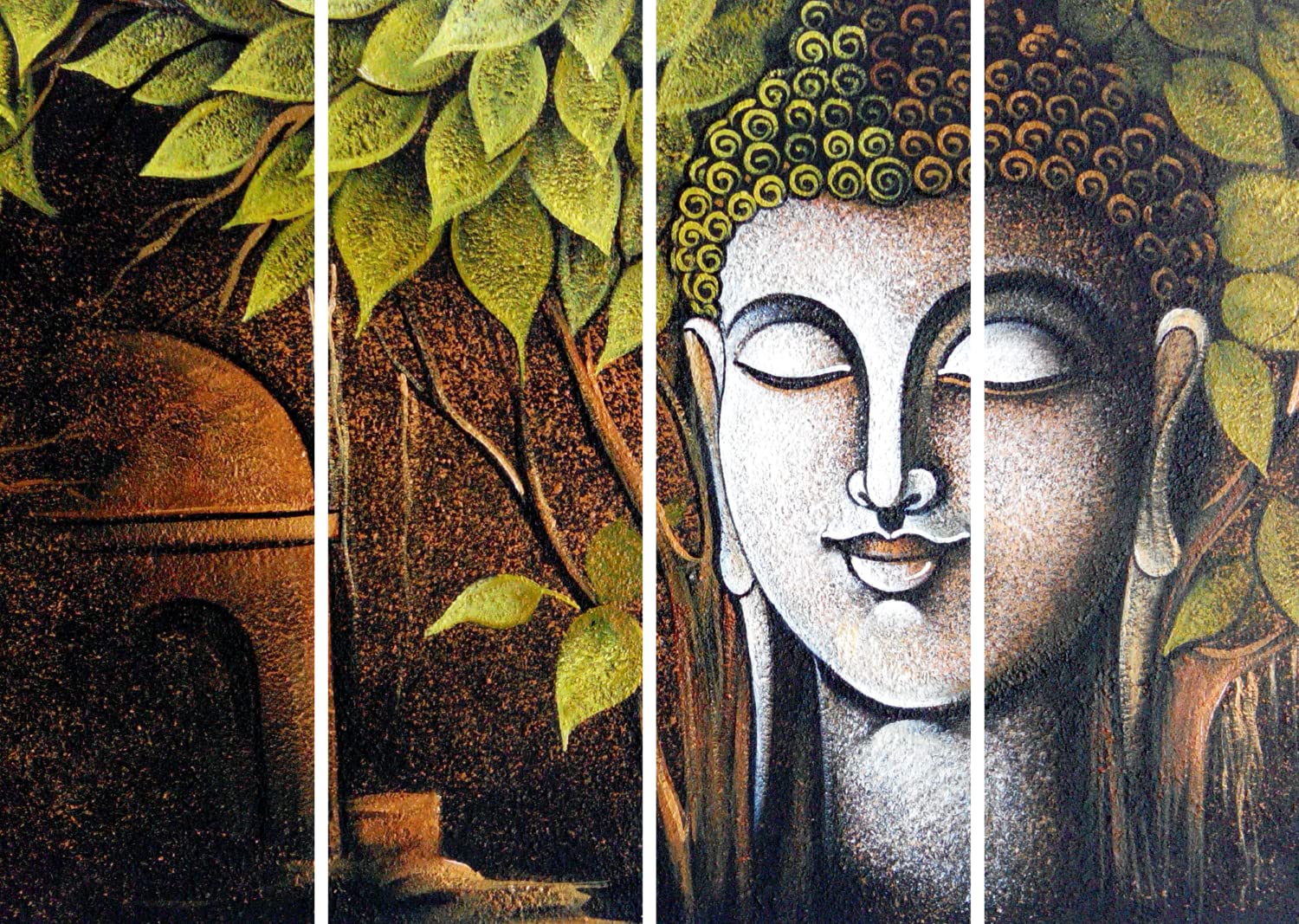
The Bodhi leaves in this piece aren't the bright, saturated greens you see in tropical prints. They're sage-olive tones with golden undertones—the kind of green that appears in afternoon light filtering through curtains, not the artificial green of stock photography. Against cream or off-white walls (standard in most Indian apartments), these muted greens create contrast without jarring.
In morning daylight through east-facing windows, the stone-gray Buddha face appears cooler, almost silver-toned. The leaves look fresher, more alive. By evening under warm LED lighting (3000K, which most Indian homes have), the entire piece shifts warmer—the bronze and copper background tones intensify, the Buddha face takes on a golden cast, and the greens recede slightly. This isn't a piece that looks good only in product photography; the earthy palette was chosen because it responds well to the specific lighting conditions in Indian homes.
The left portion—where a stupa silhouette emerges from textured brown-bronze tones—anchors visually to wooden coffee tables, TV units, and door frames. If your furniture has warm wood tones (teak, sheesham, or the brown laminates common in modular furniture), the background of this piece will feel like it belongs in the same family.
Installing Four Panels on Indian Concrete Walls
Four panels means four separate mounting points, and on Indian concrete walls, this requires attention to spacing and level. The panels are designed to hang with approximately 2-3cm gaps between them—this spacing allows the image to read as continuous while giving each panel visual breathing room.
Here's the practical process: mark the center point of where you want the full piece. Measure 42cm left and 42cm right to find your outer edges. Each panel needs its own anchor point, so you're drilling four holes total. On concrete walls (common in apartments built before 2010), use the included concrete anchors with a 6mm masonry bit. On newer drywall or gypsum board walls, the drywall anchors work without the masonry bit.
The weight—3kg total distributed across four panels—means each panel carries roughly 750g. This is well within the capacity of standard wall anchors. The 0.6cm depth keeps the panels nearly flush against the wall, eliminating the floating-shadow effect that thicker frames create.
For rentals: four 6mm holes are patchable with standard wall putty in under ten minutes. The holes are smaller than typical curtain rod brackets or picture frame hooks your landlord has probably already accepted in other units.
Why Vinyl on MDF Instead of Macrame Wall Hangings
Macrame wall hangings were everywhere two years ago, and you've probably considered one—they're textured, they're trendy, they fill wall space. But here's what macrame doesn't do: it doesn't create a focal point. Your eye wanders across the knots and tassels without landing anywhere specific. In a room with existing visual complexity (furniture, curtains, cushions, the general clutter of daily life), macrame adds more texture without adding resolution.
This Buddha piece does the opposite. The face—centered, calm, eyes closed—gives your eye somewhere to rest. The Bodhi leaves provide visual interest around the focal point without competing with it. When you walk into the room, you see the Buddha first, then notice the foliage, then take in the overall warmth of the composition. Macrame doesn't offer that hierarchy.
Practically, macrame collects dust in the weave, fades unevenly in sunlight, and sags over time as the fibers stretch. Splash-proof vinyl on MDF wipes clean with a dry cloth, maintains color consistency across seasons, and stays dimensionally stable regardless of humidity. After two monsoons, your macrame would need replacing. This piece will look identical.
What This Actually Feels Like in Your Room
From your main doorway, this piece reads as a warm, earthy anchor on the wall—not a statement demanding attention, but a presence that makes the room feel considered. The greens and browns blend into the overall palette rather than popping out of it.
From your sofa (where you'll see it during TV watching, conversations, morning tea), the Buddha's face becomes more prominent. The stone texture in the rendering—visible in the face and robe details—adds depth that flat prints lack. You'll notice new details over weeks: the way the Bodhi leaves overlap in the upper left, the subtle glow effect behind the Buddha's head, the architectural suggestion of a stupa that grounds the left panel.
This piece works alone—it doesn't need adjacent decor to feel complete. If you have existing spiritual elements in your room (a small pooja shelf, other religious imagery), this integrates as part of that visual language rather than competing. If your aesthetic is otherwise secular-modern, the Buddha reads as art rather than explicitly devotional—the composition and color work make it appropriate for living rooms, offices, and bedrooms where overtly religious imagery might feel misplaced.
Moolwan Design Note
The Bodhi leaves aren't randomly scattered—they follow the natural growth pattern of a tree canopy, denser at the top and thinning toward the Buddha's face. This guides the eye downward toward the meditative expression, creating the same visual journey you'd experience standing beneath an actual Bodhi tree.
Moolwan Quality Standard
Designed for Indian apartments and lighting conditions. Packed for long-distance Indian transit with panel-specific protection. Quality checked before dispatch. Printed to resist humidity-related color fading. Ships from West Bengal.
Moolwan Fit Guidance for Indian Homes
At 84x54cm, this 4-panel set suits 8-10ft walls behind 6-foot sofas or above bedroom headboards. The earthy palette complements cream walls and brown furniture without requiring accent coordination.
Quick Specifications
Product: Moolwan 4-Panel Buddha with Bodhi Leaves Vinyl Wall Art on MDF (84x54cm)
Brand: Moolwan
Category: Vinyl Wall Art on MDF
Collection: Buddha Wall Art Collection
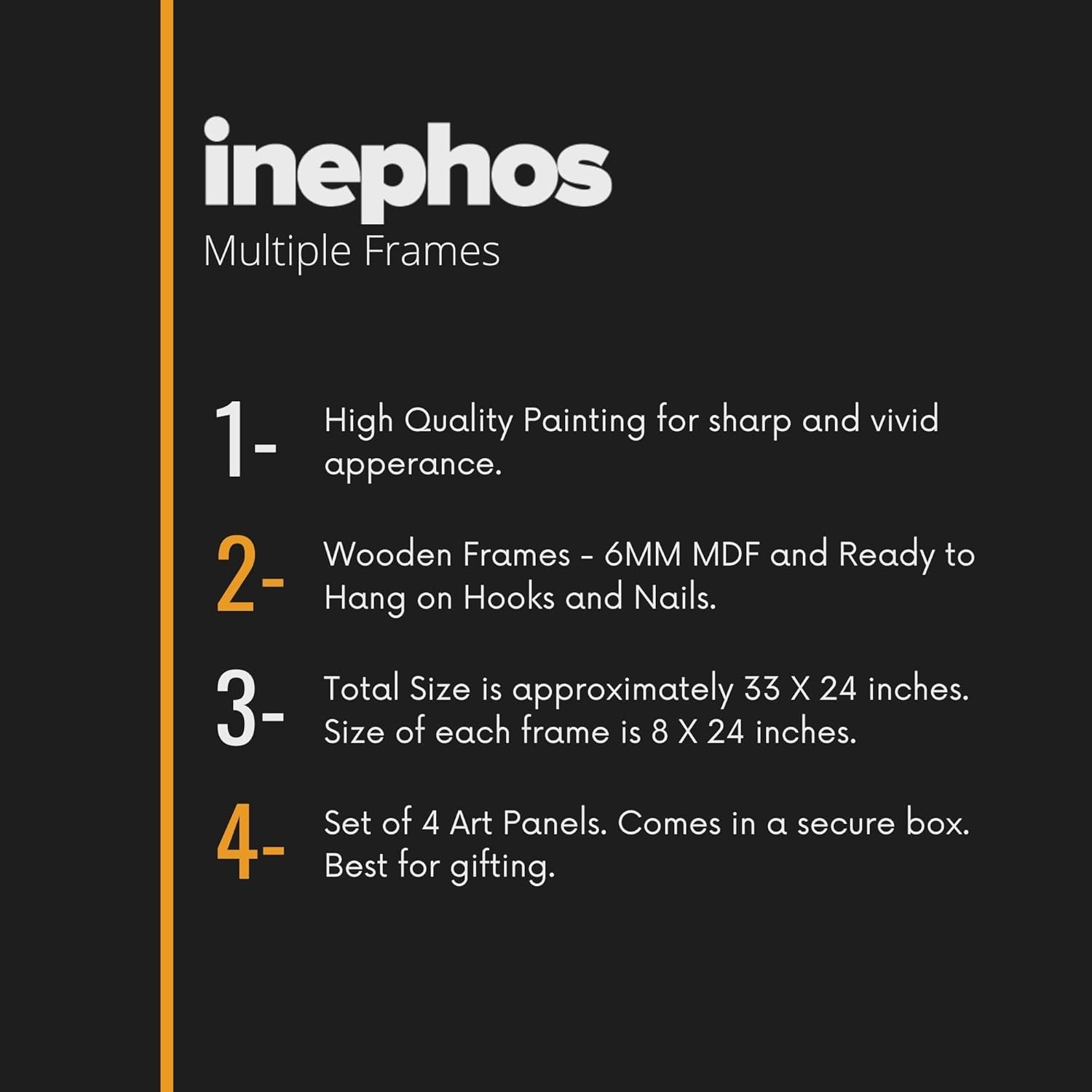
Dimensions: 84cm W x 54cm H x 0.6cm D (total installed)
Weight: 3000g (approximately 750g per panel)
Panel Count: 4 panels
Material & Construction: Splash-proof, scratch-resistant vinyl print on MDF substrate
Colors: Sage-olive greens, copper-bronze, stone gray, warm brown, golden accents
Best For: Living room walls (8-10ft), bedroom above headboard, meditation corners, office reception areas
Ships From: West Bengal
Frequently Asked Questions
Will 84cm be too small for my 10-foot living room wall?
At 84cm width, this piece covers roughly 23-28% of a 10-12ft wall. It works as a focused statement piece rather than wall-spanning coverage. If your sofa is 6 feet wide, this sits at 47% of sofa width—appropriate for a curated look. For larger walls with 8-foot sofas, consider whether you want a single focal point (this works) or broader coverage (you'd need a larger piece or a gallery arrangement).
How do the greens look under warm LED lighting versus daylight?
Under warm LEDs (3000K, standard in most Indian homes), the sage-olive greens shift toward yellow-green, becoming warmer and more muted. The bronze background intensifies. In daylight, especially morning light, the greens appear fresher and the Buddha face reads cooler, almost silver-toned. Both conditions work—the palette was selected for this range of lighting.
How difficult is it to align four separate panels?
The key is measuring once, carefully. Find your center point, mark 42cm in each direction for the outer edges, then divide the inner space equally for panel placement. Use a level (phone apps work fine) for the first panel, then align subsequent panels to that reference. Allow 2-3cm gaps between panels. Total installation: 25-30 minutes if you're being meticulous.
Will splash-proof vinyl hold up during monsoon humidity?
The vinyl surface doesn't absorb moisture—humidity beads on the surface rather than penetrating. The MDF substrate is sealed, preventing the warping that affects untreated wood products. After two monsoon seasons, you won't see the rippling or edge separation that occurs with cheaper materials.
Is this appropriate for an office or is it too spiritual?
The composition reads as art first, spiritual imagery second. The muted earth tones and textured rendering style make it suitable for professional spaces—offices, waiting rooms, conference areas—where overtly religious imagery might feel inappropriate. The Buddha face registers as contemplative rather than devotional in this context.
Product Snapshot
Brand: Moolwan
Product: Moolwan 4-Panel Buddha with Bodhi Leaves Vinyl Wall Art on MDF (84x54cm)
Category: Vinyl Wall Art on MDF
Collection: Buddha Wall Art Collection
Theme/Type: Buddha with Bodhi Tree
Best For: 8-10ft living room walls, bedroom headboard walls, meditation spaces, office reception
Primary Differentiator: Stone-textured Buddha face emerging through cascading Bodhi leaves
Secondary Differentiators: Earth-tone palette anchoring to brown furniture; asymmetric temple silhouette creating depth
Material & Construction: Splash-proof, scratch-resistant vinyl print on MDF (0.6cm depth)
Care Instructions: Dust with dry microfiber cloth; avoid water and cleaning chemicals
Ships From: West Bengal
Packing: Long-distance transit ready with individual panel protection
Quality Check: Before dispatch