
Buddha-mazing 5-Panel Framed Wall Art to Zen Your Space
You may also like

Moolwan 5-Panel Buddha Vinyl Wall Art on MDF (127×76cm) – Teal-Blue Buddha Face with Golden Leaf Framing
You've been staring at that wall behind your sofa for months. You know roughly what you want—something peaceful, something that makes the room feel intentional—but every time you look at options online, you can't quite picture how they'll actually look in your space. The mockups show white walls and minimal furniture. Your walls are cream. Your sofa is brown. Your lighting is warm LED.
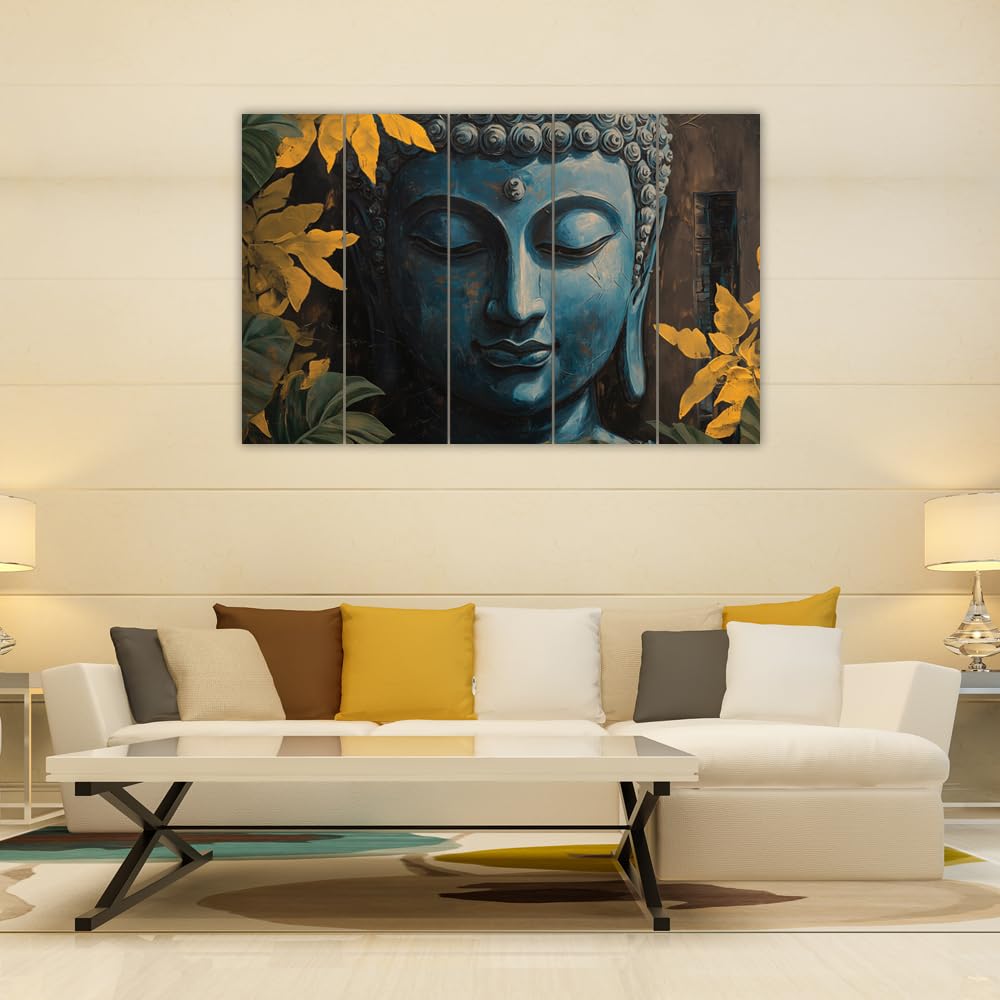
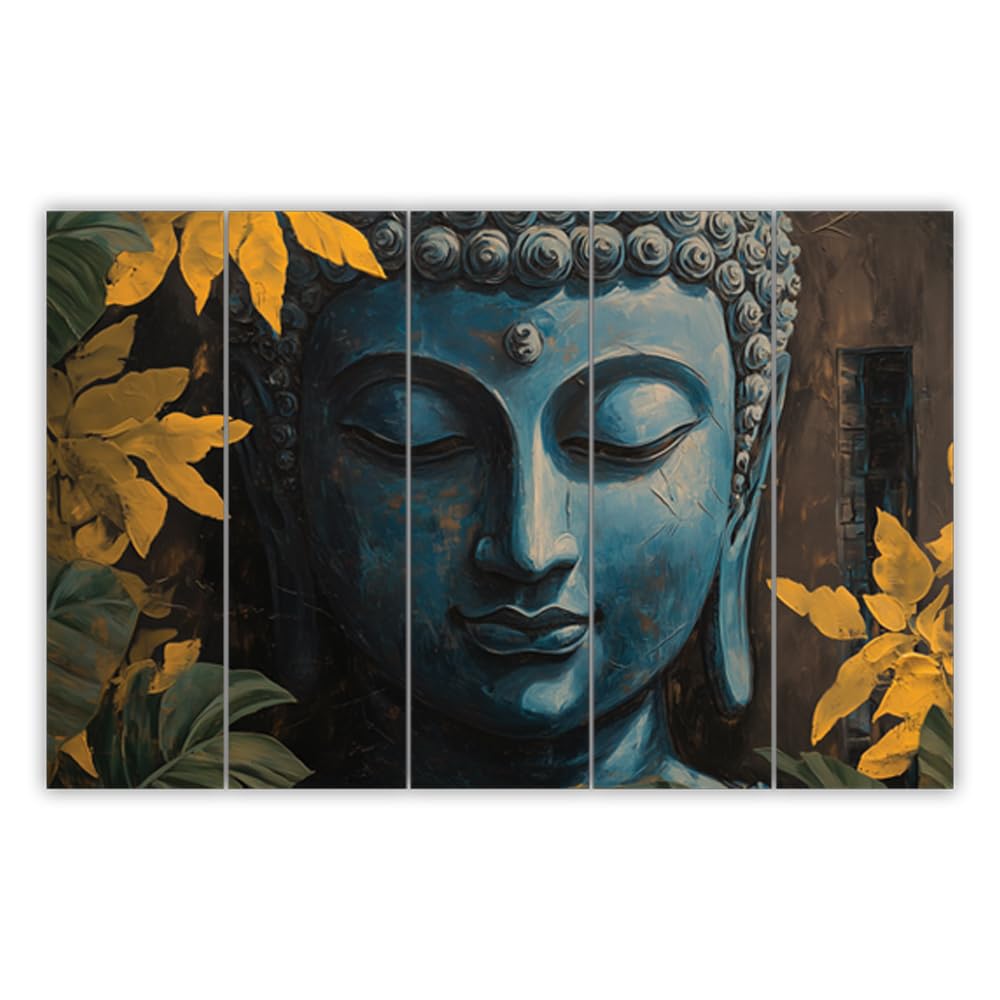
This Buddha piece solves that visualization problem because its color story was designed for exactly those conditions. The teal-blue Buddha face isn't the cool, sterile blue you see in Scandinavian interiors—it's a saturated, almost oxidized blue with warm undertones that sits comfortably against cream and off-white walls. The golden-yellow leaves framing the Buddha pick up the warmth of brown leather and wooden furniture. Under your evening LEDs, the gold intensifies. In morning daylight, the teal reads as serene depth.
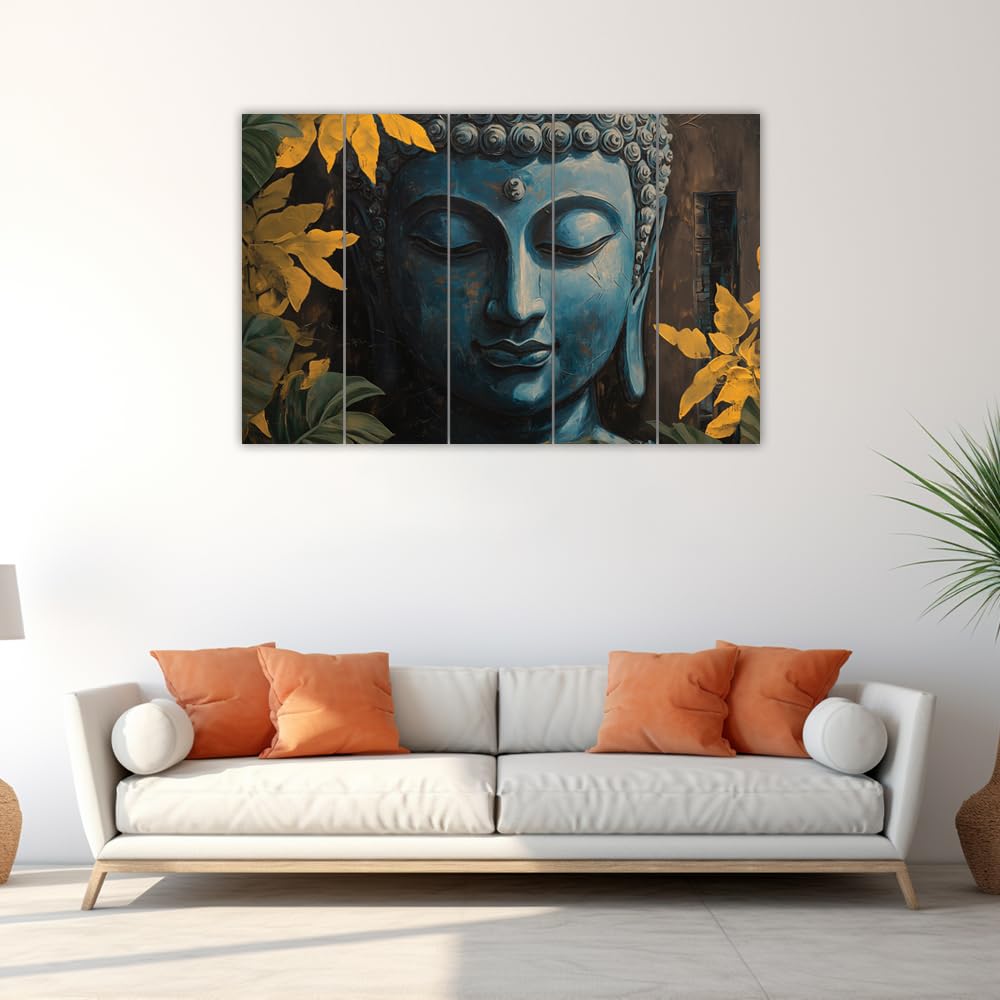
The 127cm width spans the visual weight of a standard 8-foot Indian sofa. The centered Buddha face—split across the three middle panels with foliage framing on the outer two—creates symmetry that anchors the wall without cluttering it with multiple focal points.
Why 127cm Works on 10-12ft Walls (And What Changes If You Size Up or Down)
Your wall is probably 10-12 feet wide if you're in a 2BHK or 3BHK. Your sofa is probably 6-8 feet. The 127cm width hits 53-63% of an 8-foot sofa—right in the proportional sweet spot where the art feels anchored to the furniture rather than floating randomly above it.
From your doorway (typical viewing distance of 3-4 meters), the Buddha face reads as a clear focal point. The five panels create horizontal rhythm without feeling fragmented—the image flows continuously across the gaps. The 76cm height leaves comfortable breathing room between sofa top and ceiling at standard 8-foot ceiling heights: 60cm sofa back + 20cm gap + 76cm art = 156cm, leaving 88cm to the ceiling.
If your sofa is only 6 feet, this piece will feel substantial—not overwhelming, but definitely the room's statement. If you have a 10-foot sectional, consider whether flanking elements (floor lamps, side tables) will balance the visual weight.
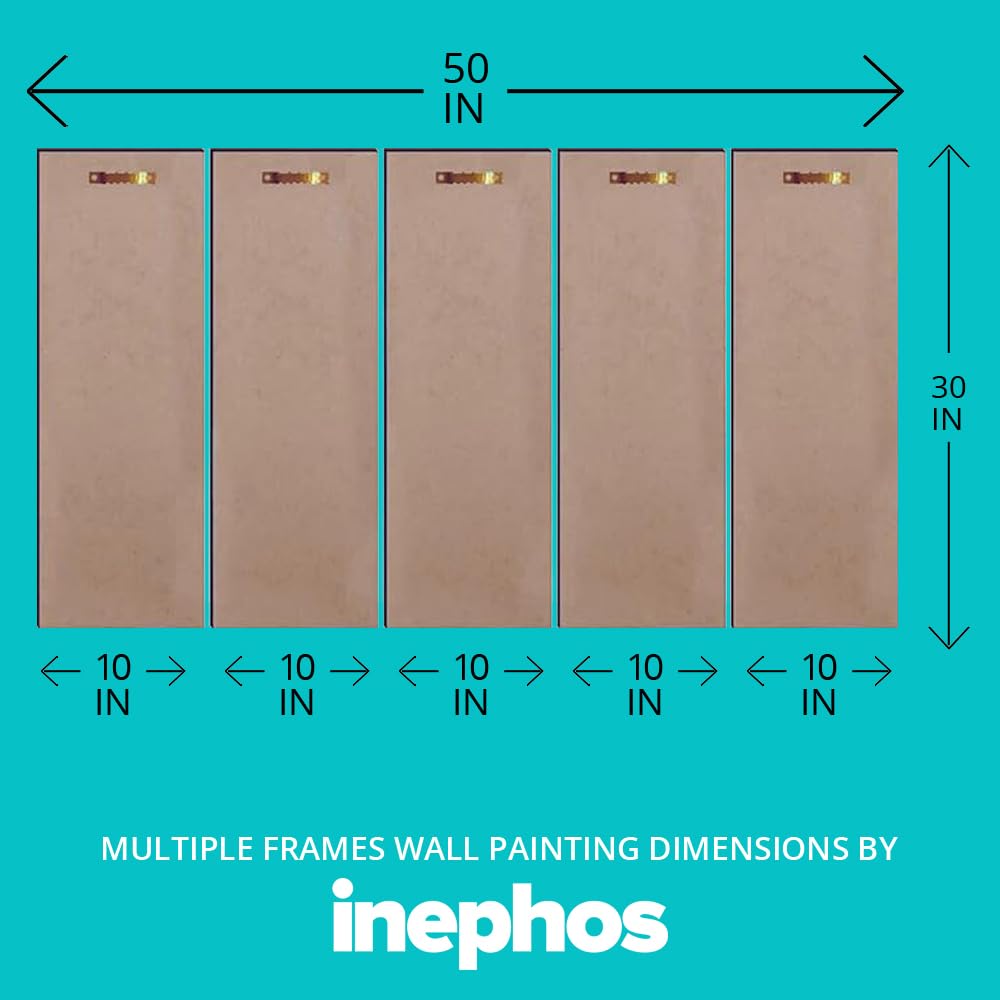
Panel spacing note: The five MDF panels align with approximately 1-2cm gaps between them. This isn't a flaw—it's how the piece breathes. When mounting, keep these gaps consistent by measuring from the hanging points rather than eyeballing panel positions.
What These Colors Look Like on Cream Walls (Morning vs LED)
The teal-blue Buddha face uses a specific blue-green with warm gray undertones—not the icy blue that clashes with Indian interiors. Against cream or off-white walls (builder standard across most Indian apartments), this teal creates contrast without feeling cold.
Morning light (east-facing windows): The blue reads as calm, meditative, slightly more green. The golden leaves appear bright, almost luminous.
Afternoon light (west-facing): The blue deepens, the gold warms to amber. This is when the piece looks most dramatic.
Evening LED (3000K warm white, standard in Indian homes): The teal-blue recedes slightly while the golden-yellow leaves intensify. The overall effect is warm and inviting—the spiritual subject matter feels welcoming rather than austere.
The forest-green foliage in the corners bridges the teal Buddha and golden leaves, preventing the warm-cool contrast from feeling jarring. If you have wooden furniture (coffee table, TV unit), the brown-umber background visible on the right panel echoes those tones.
What doesn't work: This piece will feel out of place against bright white walls (too much contrast), orange or peach walls (the gold competes), or rooms with predominantly cool-gray furniture (the warm tones won't integrate).
Installation in Indian Walls (Concrete vs Drywall)
Five panels means ten hanging points—two per panel. This sounds complicated but actually simplifies alignment: each panel hangs independently, so you can micro-adjust level without affecting the others.
For concrete walls (most older Indian buildings): Use the included concrete anchors. Drill 6mm holes, 35mm deep. Mark all ten points using a level and measuring tape before drilling. The panels are lightweight MDF—standard anchors handle them easily.
For drywall (newer apartments): Plastic wall anchors in the same 6mm holes. The combined weight of all five panels (approximately 3kg total) distributes across ten anchor points—each point bears only 300g, well within drywall anchor limits.
Alignment reality: Start with the center panel. Level it precisely—this is your reference. Then work outward, maintaining consistent 1-2cm gaps. If one panel looks slightly off, you can adjust its individual hanging points without rehang everything.
Rental considerations: Ten small 6mm holes fill easily with wall putty. The distributed weight means you're not creating stress points that crack plaster. When you move out, fifteen minutes of putty work and touch-up paint makes them invisible.
Why This Works Where Macrame Wall Hangings Don't
Macrame has had its moment. If you bought one two years ago, you've probably noticed: it collects dust in the weave (impossible to clean without damaging the knots), the cotton yellows over time (especially in humid cities), and the boho aesthetic that felt fresh in 2021 now reads as dated in 2024-2025 interiors.
This Buddha piece offers what macrame promised but couldn't deliver: texture and presence without maintenance problems. The vinyl surface wipes clean with a dry cloth. The colors don't yellow—they're printed with UV-stable inks. The spiritual subject matter provides the "intentional calm" that drew you to macrame, but in a format that's actually practical for Indian humidity and dust.
Visual presence comparison: Macrame creates an unstructured, flowing shape that's hard to balance with structured furniture. This 5-panel Buddha creates defined edges and clear symmetry—it anchors the wall rather than softening it.
And practically: macrame can't be cleaned, fades in sunlight, and goes limp in monsoon humidity. Splash-proof vinyl on MDF handles all three.
What This Will Actually Feel Like in Your Room
From the doorway: The Buddha face registers immediately. The teal-blue is unusual enough to catch attention, the golden foliage frames it without competing. You notice it as you enter—which is exactly what statement wall art should do.
From the sofa (sitting beneath it): You don't see the art directly—you feel its presence above and behind you. Guests sitting across from you see it as the backdrop to the seating area. This is how the piece functions in daily life: as environmental context, not something you stare at.
As a solo piece: This is designed to stand alone. The symmetry and scale don't need supporting elements. Don't add small frames on either side—they'll look like afterthoughts.
Adjacent décor guidance: If you have floor lamps at sofa ends, they'll frame the art nicely. If you're considering adding floating shelves nearby—don't. The Buddha face is the focal point; competing elements fragment the visual calm that makes this piece work.
The closed eyes matter: Unlike Buddha art where eyes are open or looking downward, this meditative closed-eye expression creates a specific feeling—inward focus, calm, stillness. This works in spaces where you want to decompress: living rooms where you unwind after work, meditation corners, home offices where you need mental quiet.
Moolwan Design Note
The teal-blue treatment on this Buddha face isn't decorative accident—it's a deliberate departure from the ubiquitous gold/bronze Buddha imagery that dominates Indian home décor. The color creates spiritual presence without the traditional temple aesthetic, making it appropriate for contemporary interiors where overtly religious décor might feel out of place.
Moolwan Quality Standard
Splash-proof vinyl print on MDF construction. Designed for Indian apartments and lighting conditions. Packed for long-distance Indian transit. Quality checked before dispatch. Printed to resist humidity-related color fading. Ships from West Bengal.
Moolwan Fit Guidance for Indian Homes
At 127cm wide, this piece fits the proportional logic of 7-8 foot sofas on 10-12 foot walls. Mount 20-25cm above sofa back, centered on the seating area—not the wall. The horizontal span means this works above sofas and dining setups but not narrow hallway walls.
Quick Specifications
- Product: Moolwan 5-Panel Buddha Vinyl Wall Art on MDF (127×76cm)
- Brand: Moolwan
- Category: Vinyl Wall Art on MDF
- Collection: Buddha Wall Art Collection
- Dimensions: 127cm W × 76cm H (5 panels)
- Weight: 3 kg (total for all panels)
- Material & Construction: Splash-proof vinyl print on MDF
- Colors: Teal-blue (Buddha face), golden-yellow (leaves), forest green (foliage), warm brown/umber (background)
- Best For: Living room above sofa, meditation corner, home office, foyer statement wall
- Ships From: West Bengal
Frequently Asked Questions
Will 127cm be too wide for my 6-foot sofa?
At 127cm (approximately 4.2 feet), this piece will extend slightly beyond a 6-foot sofa's visual footprint. It won't look wrong—it'll look substantial, like a deliberate statement. If you have side tables or floor lamps at sofa ends, they'll help balance the visual weight. For smaller sofas (5 feet or under), consider whether you want the art to dominate or complement.
How will the teal-blue look against my cream walls under LED lighting?
Warmer than you might expect. The teal in this piece isn't a cold blue—it has warm gray and green undertones that prevent it from clashing with cream walls. Under 3000K warm LED (standard in Indian homes), the blue recedes slightly while the golden leaves intensify. The overall effect is warm and cohesive, not sterile.
How do I align five separate panels evenly?
Start with the center panel—level it precisely using a spirit level. This becomes your reference point. Work outward, maintaining 1-2cm gaps between panels (measure from edge to edge, not eyeball). Each panel hangs independently, so you can micro-adjust individual positions without affecting others. The included hanging template marks all ten anchor points.
Will this fade or warp in Mumbai/Chennai humidity?
The vinyl surface is splash-proof and sealed—humidity doesn't penetrate. The MDF backing is more dimensionally stable than canvas in humidity fluctuations. Through monsoon cycles, you won't see the warping or rippling that affects stretched canvas. The UV-resistant inks maintain color consistency even with afternoon sun exposure.
Can I hang this in a rental without losing my deposit?
Ten 6mm holes across five panels sounds like a lot, but each hole is smaller than a standard picture nail. Fill with wall putty (₹50 at any hardware store), sand smooth, touch up with paint. Twenty minutes of work when you move out. The distributed weight (300g per anchor point) means you're not creating stress cracks in plaster.
Product Snapshot
- Brand: Moolwan
- Product: Moolwan 5-Panel Buddha Vinyl Wall Art on MDF (127×76cm)
- Category: Vinyl Wall Art on MDF
- Collection: Buddha Wall Art Collection
- Theme/Type: Meditative Buddha face with botanical framing
- Best For: Living room statement wall above 7-8ft sofa, meditation corner, home office, foyer
- Primary Differentiator: Teal-blue Buddha face with golden leaf framing—contemporary spiritual aesthetic
- Secondary Differentiators: Symmetrical 5-panel composition centering meditation iconography; warm-cool color contrast (teal/gold) that adapts to both daylight and warm LED
- Material & Construction: Splash-proof vinyl print on MDF (5 panels)
- Care Instructions: Dry dust with microfiber cloth every 2-3 weeks; no water or cleaning chemicals
- Ships From: West Bengal
- Packing: Long-distance transit ready
- Quality Check: Before dispatch