
Buddha-nificent 5-Panel Framed Wall Art for Zen-Sational Spaces
You may also like

Moolwan 5-Panel Buddha Temple Canvas Wall Art Painting (127x76cm) - Spiritual Multi-Frame Décor
Three weekends of browsing. Probably a dozen saved items. Several open tabs still waiting. And you're still here because every time you get close to buying, the same question stops you: will this actually look proportional on my wall, or will it seem awkward once it's up? You're not indecisive—you're careful. Because once this is on your living room wall, you'll see it daily. It needs to be right.
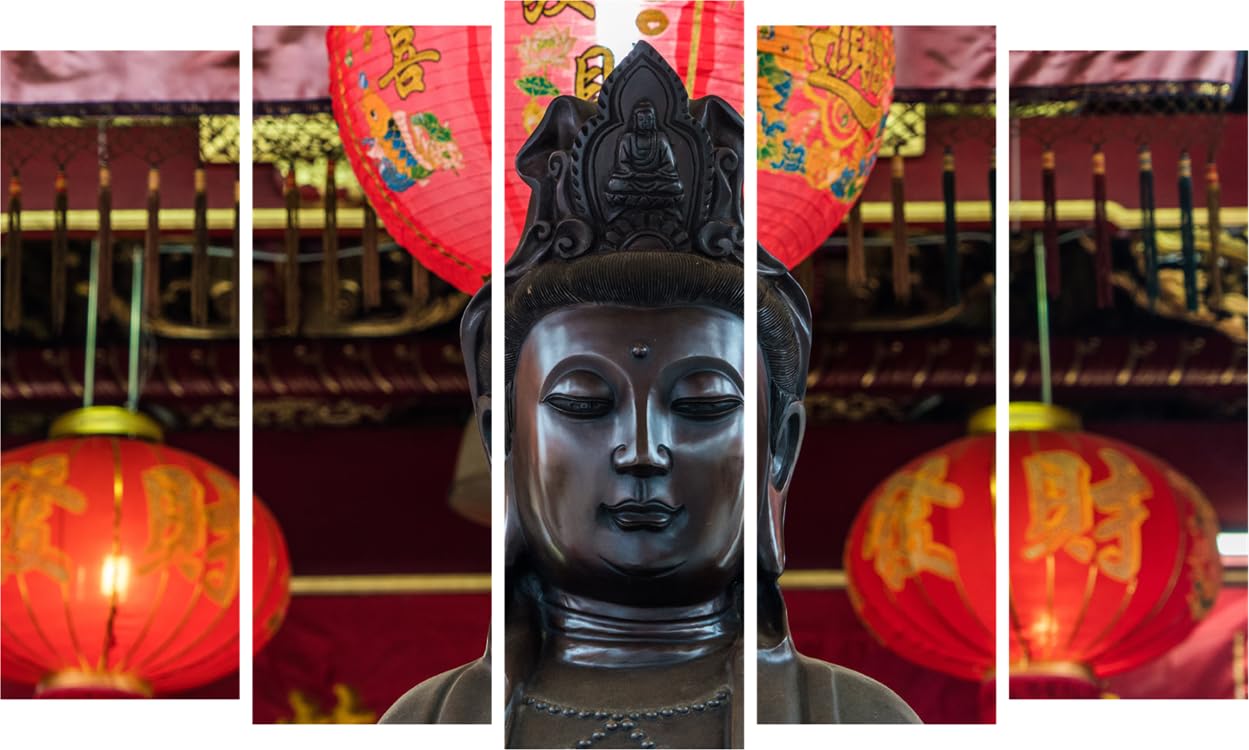
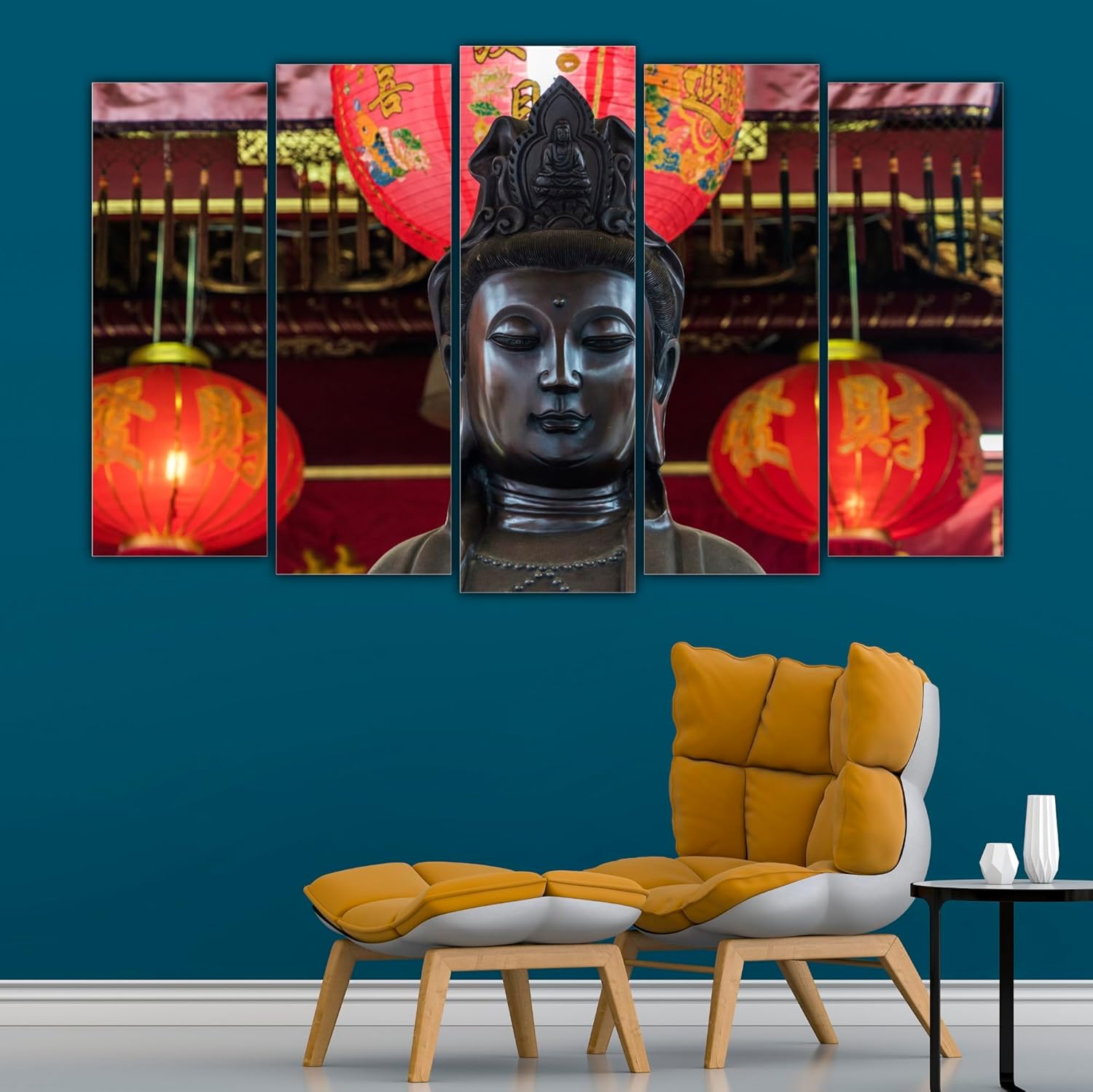
This 127cm Buddha temple canvas exists precisely for that moment of hesitation. At five panels spanning just over four feet, it's designed for the 10-12 foot walls common in Indian apartments—not too commanding, not lost in space. The bronze Guanyin figure with traditional red lanterns brings temple serenity without overwhelming a room where you also watch TV and host chai sessions.
Why 127cm Works on 12-Foot Walls (and What Happens If You Go Smaller or Bigger)
Let's do the math your brain has been trying to calculate. A standard Indian living room wall runs 10-12 feet (300-360cm). This canvas at 127cm covers roughly 35-42% of that width—leaving 116cm of breathing room on each side for a 360cm wall, or 86cm each side for a 300cm wall.
Go smaller—say 90cm—and you're looking at 25% coverage. The art starts floating, disconnected from your 6-8 foot sofa below. Go larger—150cm or more—and you're pushing 50%+ coverage, which can feel imposing in rooms with windows cutting into wall space.
At 76cm height, the canvas occupies comfortable visual territory between eye level and ceiling, even with standard 9-10 foot ceilings. The 5-panel format creates horizontal emphasis that echoes the width of seating furniture rather than competing with vertical elements like doors or windows.
The Color Science: How Bronze and Red Look Against Cream Walls
Your walls are probably cream, off-white, or that builder's standard light yellow. The bronze-gold Guanyin statue in this piece reads as warm neutral against these backgrounds—neither stark nor invisible. It picks up the undertones already present in most Indian wall paint.
The red Chinese lanterns with gold calligraphy add vibrancy without aggression. Red in temple context reads as auspicious rather than bold—it carries cultural weight that guests recognize, even subconsciously. Against cream walls, these reds appear rich but grounded.
If you have wooden furniture—a coffee table, TV unit, or pooja shelf—the bronze tones create dialogue with those warm wood surfaces. Brown leather or fabric sofas (common in Indian homes) share the same warm family as the statue's coloring.
Morning natural light will emphasize the golden highlights in the statue's crown and ornaments. Evening LED lighting (warm white, which most Indian homes use) deepens the bronze and makes the red lanterns glow.
Rental-Friendly Mounting: How to Hang Without Losing Your Deposit
Five panels means five hanging points, but here's what matters: at 3kg total weight (600g per panel average), each panel needs only a small nail or adhesive hook—not the heavy-duty anchors that leave ₹5,000 holes in rental walls.
Each frame arrives with pre-attached hardware. You'll need a measuring tape, a pencil, and 15-20 minutes. The panels hang with 2-3cm gaps between them—close enough to read as unified, spaced enough that minor alignment variations disappear visually.
The 1.5" deep pinewood frames mean this piece sits away from the wall, creating shadow depth that makes the temple scene feel more dimensional. The kiln-dried wood (12% moisture content) won't warp in Mumbai monsoons or Delhi summers.
How This Compares to Smaller Sizes You've Been Considering
You've probably seen similar spiritual canvas art at 90cm or 100cm. Here's the honest difference:
At 90cm on a 12-foot wall, you're at 25% coverage. The Buddha figure becomes a focal accent rather than a statement. This works if you want subtle spirituality, but guests might need to approach the wall to appreciate details like the lantern calligraphy or the smaller Buddha figure in the crown.
At 127cm, the Guanyin's serene expression is readable from your sofa—typically 8-10 feet away. The five-panel format emphasizes horizontal presence, making the piece feel substantial without requiring a larger single canvas that might overwhelm.
Marketplace canvas at ₹800-1,200? Usually single-panel prints on thinner material without the moisture-resistant coating. In 70-85% humidity monsoon months, cheaper canvas can develop waviness. This piece uses 340 GSM cotton with eco-solvent UV-resistant inks—the kind that still looks right after three years of afternoon sun exposure.
Setting Realistic Expectations: What You'll Actually See
When this arrives and you position it above your sofa or console table, here's what to expect:
The bronze statue has subtle texture variations—highlights on the forehead, deeper shadows in the crown details—that photograph well but look even better with the dimensionality of physical panels. The red lanterns carry soft gradients that screens compress.
Viewing distance matters. From 8-10 feet (normal sofa-to-wall distance), the five panels merge into a cohesive temple scene. The Guanyin's peaceful expression becomes the natural focal point, with lanterns framing rather than competing.
The splash-proof coating means you can dust with a slightly damp cloth—practical for Indian homes where kitchen-adjacent living rooms accumulate more than usual. It's not waterproof (don't hang it in a bathroom), but resistant to the humidity and occasional chai spatter of real life.
Quick Specifications
- Dimensions: 127cm (W) × 76cm (H) × 1.5" (D)
- Weight: 3000 grams (3kg total across 5 panels)
- Panels: 5-piece multi-frame design
- Canvas: 340 GSM cotton with moisture-resistant coating
- Frame: Kiln-dried pinewood, gallery-wrapped
- Inks: Eco-solvent, UV-resistant
- Finish: Splash-proof
- Subject: Guanyin/Buddha statue with traditional Chinese temple lanterns
- Colors: Bronze, gold, red, with gold calligraphy accents
- Ideal wall width: 10-12 feet (300-360cm)
- Delivery: 5-6 days metro cities, 6-8 days tier-2/3 cities