
.jpg)

.jpg)
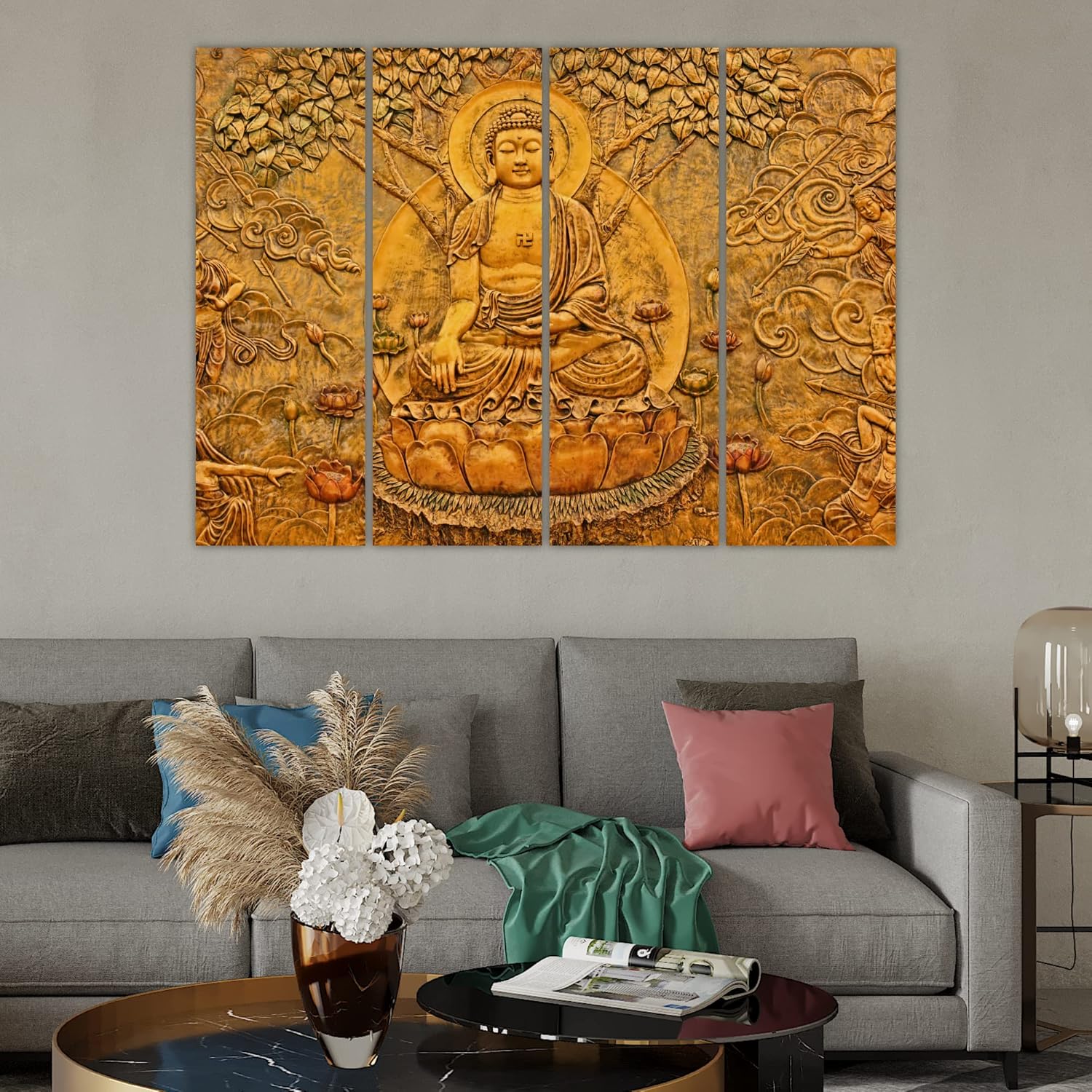
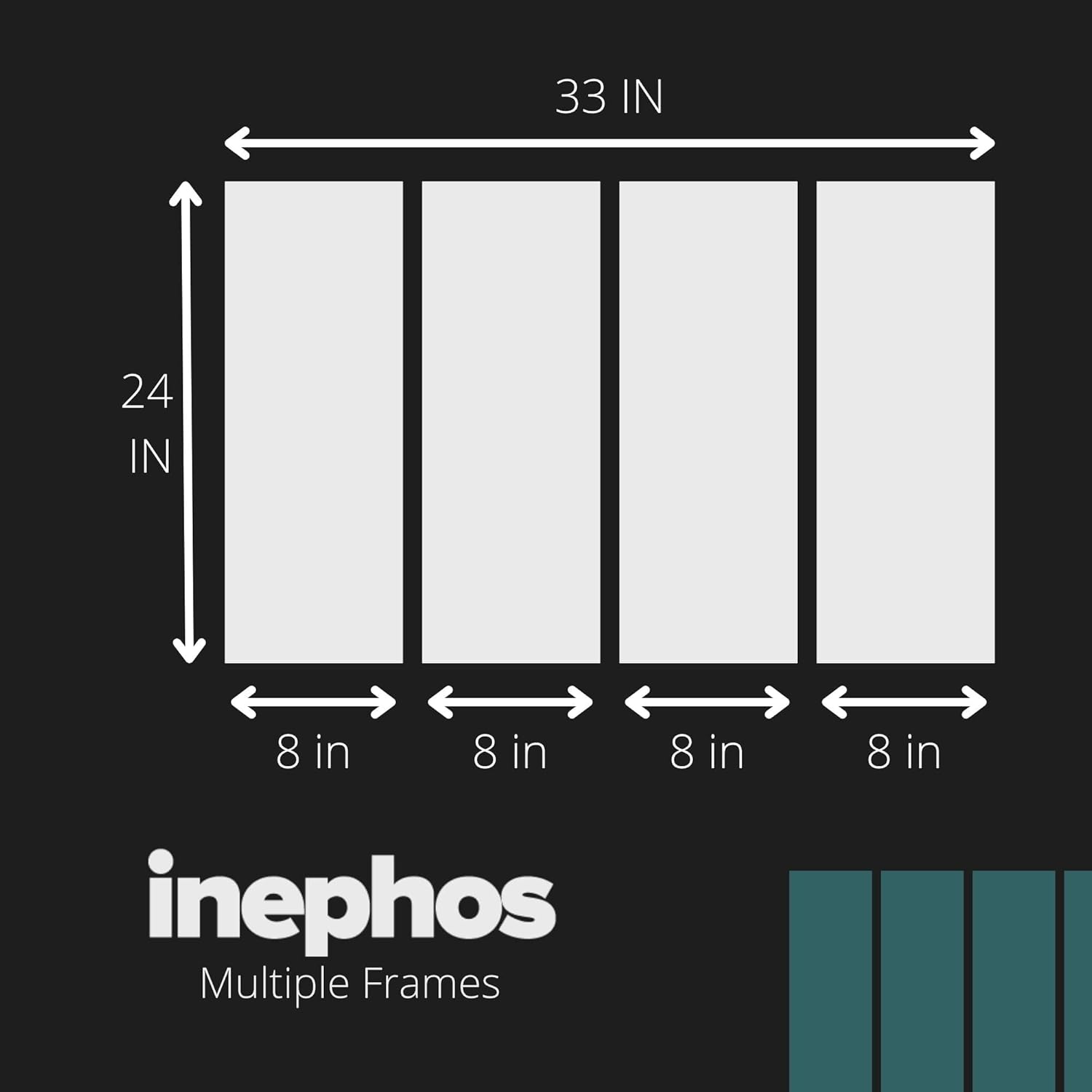
Buddha-rific 4-Panel Zen Wall Art That Evicts Stress - Framed Multi-Frame Masterpiece (33x24in)
You may also like

Moolwan 4-Panel Buddha Bas-Relief Vinyl Wall Art on MDF (84×54cm) – Sculptural Depth Without Dimension
What 84cm of Golden Buddha Actually Looks Like Above Your Sofa
You've measured your wall. You've imagined art there. But imagination keeps failing you—every time you try to picture how a Buddha piece will actually sit above your sofa, your mind defaults to those thin, flat prints that look spiritual in product photos and cheap in real rooms.
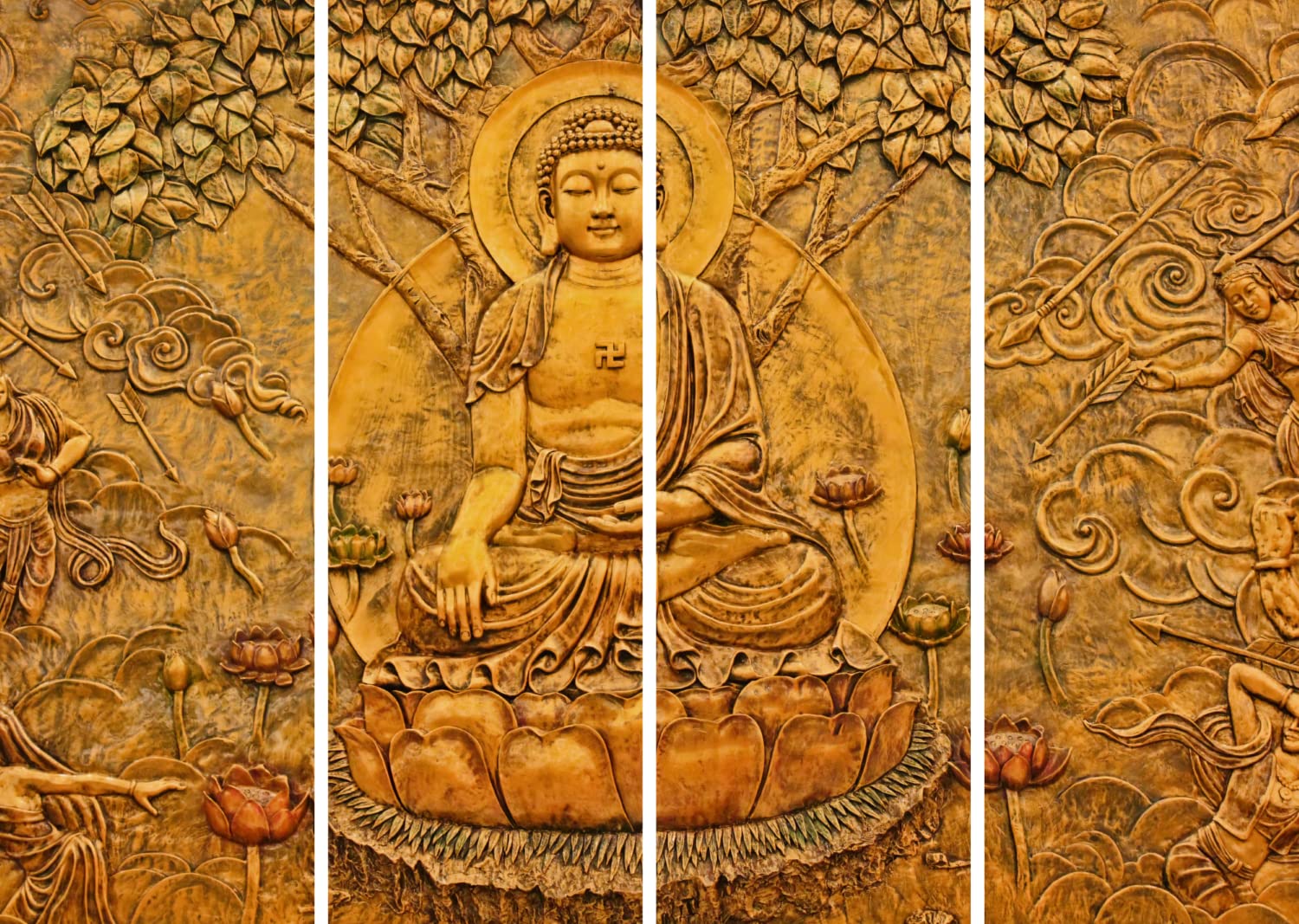
This piece solves that specific problem. The sculptural bas-relief style creates the illusion of carved depth—shadows fall between the lotus petals, the Buddha's robes appear to fold, the Bodhi tree branches seem to extend forward from the surface. From across the room, this reads as three-dimensional temple art. Up close, you see it's a flat vinyl surface achieving that effect through skilled tonal gradation.
The 84cm width spans almost precisely the visual center of a 6-foot sofa when hung with standard 20-25cm clearance above the backrest. Four panels create natural rhythm across the wall without requiring you to align a single massive frame.
Why 84cm Width Works on 10-12ft Living Room Walls
Your living room wall is probably 10-12 feet wide if you're in a standard 2BHK or 3BHK. Your sofa is likely 6-8 feet. Here's the math that matters:
An 84cm piece covers roughly 28% of a 10ft wall and 23% of a 12ft wall. This is deliberate—wide enough to anchor the space, narrow enough to leave breathing room for a floor lamp on one side or a side table arrangement. If you have a 6-foot (180cm) sofa, this 84cm width hits the 46% ratio—slightly under the ideal 50-60%, which actually works better for multi-panel pieces because the gaps between panels add perceived width.
The 54cm height sits comfortably between sofa top and ceiling on standard 8-foot ceilings. With 25cm clearance above your sofa and 54cm of art, you still have roughly 140cm to the ceiling—proportional, not cramped.
If your wall is narrower (8-9 feet) or you have a 5-foot loveseat instead, this piece will feel more dominant. Not wrong—but you'll want to avoid additional wall decor flanking it. Let it command the space alone.
What This Golden-Ochre Palette Looks Like Against Indian Wall Colors
The dominant tones here are antique gold, warm bronze, and amber—with soft sage-green accents in the lotus leaves and subtle pink in the lotus buds.
Against cream or off-white walls (the default in most Indian apartments): The golden tones warm up the wall without clashing. In morning light, the palette appears muted and temple-like. Under warm LED lighting (3000K, standard in Indian living rooms), the bronze highlights intensify—this is when the sculptural illusion looks most convincing, as the artificial shadows in the print align with actual light direction.
Against peach or light yellow walls (common in builder flats): The warm-on-warm combination works because the art's tones are deeper than typical wall colors. The Buddha piece becomes a grounding focal point rather than blending into the background.
Against light gray or cool-toned walls: Proceed with caution. The golden palette will create strong contrast—dramatic if intentional, jarring if your room has cool-toned furniture. Check whether your sofa and curtains lean warm or cool before committing.
With brown or beige fabric sofas and wooden furniture: This is the ideal pairing. The ochre-bronze tones echo wood grain naturally. Your grandmother will approve.
Installation Reality for This 4-Panel Set
Four panels means four alignment decisions. Here's how to not overthink this:
The panels are designed to hang with 1-2cm gaps between them. This gap is aesthetic, not structural—it separates the panels visually while the image continues across them. Use the included hanging template to mark all eight anchor points (two per panel) before drilling anything.
For concrete walls (most older Indian buildings): Use the included masonry anchors. Drill 35mm deep with a 6mm bit. The combined weight is 3kg, distributed across eight anchor points—each anchor bears under 400 grams, well within capacity.
For drywall (common in newer apartments): Plastic wall anchors work fine. Same 6mm holes, shallower depth.
The alignment challenge is horizontal leveling across all four panels. Use a spirit level across the top edge of panels 1 and 4 after hanging panels 2 and 3. Slight adjustments are easier before all four are secured.
For rentals: Eight 6mm holes sound like a lot, but they're the same size as standard picture frame nail holes. Wall putty, sand, touch-up paint—your deposit survives.
Why Vinyl on MDF Instead of Macrame or Fabric Hangings
If you've considered macrame wall hangings or fabric tapestries for this wall, here's the trade-off you're making:
Macrame and fabric move. Every time the fan runs, every time someone walks past, every time you open the balcony door—they shift, sway, collect dust in their fibers. Within six months in Mumbai's humidity or Chennai's heat, fabric wall hangings absorb moisture, develop that slightly musty smell, and require washing that they're not designed to survive intact.
Splash-proof vinyl on MDF doesn't move, doesn't absorb moisture, doesn't require maintenance beyond occasional dry dusting. The surface wipes clean. Monsoon humidity beads up instead of soaking in.
The visual difference is equally stark: fabric hangings read as bohemian, temporary, student-apartment decor. This sculptural Buddha piece reads as permanent, intentional, grown-up-home decor. The bass-relief illusion creates visual weight that fabric simply cannot achieve.
What This Will Actually Feel Like in Your Room
From your doorway, across 12-15 feet of living room: The golden halo draws the eye first. The Buddha figure registers as a grounding presence. You won't notice the lotus details or the celestial figures in the corners—those reward closer viewing.
From your sofa, 3-4 feet away: The sculptural illusion becomes apparent. The shadows between lotus petals, the folds in the robes, the texture of the Bodhi tree bark—these details create visual interest during quiet moments.
Does this piece dominate or complement? At 84cm wide, it dominates a small wall and complements a large one. Above a 6-foot sofa on a 10-foot wall, it anchors without overwhelming. In a smaller meditation corner or bedroom, it becomes the room's defining feature—which may be exactly what you want, or may feel like too much spiritual intensity for a space where you also watch Netflix.
Guests will notice it. Your parents will approve of it. People who practice meditation will comment on the bhumisparsha mudra (the earth-touching gesture). People who don't will simply register "Buddha, looks nice, looks expensive."
Moolwan Design Note
The bas-relief sculptural style uses tonal gradation rather than actual texture to create depth illusion—lighter gold on raised surfaces, deeper bronze in recesses. This technique references classical temple art while remaining flat enough to hang flush against modern apartment walls.
Moolwan Quality Standard
Designed for Indian apartments and lighting conditions. Splash-proof vinyl resists humidity-related warping. Printed to resist UV-driven color fading. Packed for long-distance Indian transit with corner protection. Quality checked before dispatch. Ships from West Bengal.
Moolwan Fit Guidance for Indian Homes
At 84×54cm, this piece fits above 6-foot sofas on 10-12ft walls with room to breathe. The warm golden-ochre palette works with cream, off-white, peach, or yellow walls and complements wooden furniture tones common in Indian living rooms.
Quick Specifications
- Product: Moolwan 4-Panel Buddha Bas-Relief Vinyl Wall Art on MDF (84×54cm)
- Brand: Moolwan
- Category: Vinyl Wall Art on MDF
- Collection: Buddha Wall Art Collection
- Dimensions: 84cm W × 54cm H × 0.6cm D
- Weight: 3000 grams (total for all 4 panels)
- Material & Construction: Splash-proof vinyl print on MDF panels
- Colors: Golden-ochre, antique bronze, amber, sage-green accents, soft pink lotus accents
- Best For: Living room walls above 6-foot sofas, meditation spaces, entryways
- Ships From: West Bengal
Frequently Asked Questions
Will 84cm look too small above my 8-foot sofa?
At 84cm, this piece covers roughly 35% of an 8-foot sofa's width—on the smaller end of ideal proportions. If your wall has no competing elements (no flanking shelves or side tables), it will anchor the space adequately. If you want stronger visual presence above an 8-foot sofa, consider whether a larger piece or adding complementary smaller pieces beside it suits your room better.
How do the golden tones look under tube lights vs LED?
Under warm LED (3000K-4000K), the bronze and gold tones intensify and the sculptural illusion looks most convincing. Under cool white tube lights (5000K+), the palette appears slightly flatter and more yellow. If your living room uses tube lights, the piece still works but loses some of its warmth.
How do I align four panels evenly without professional help?
Use the included paper template. Tape it to the wall at your desired height, mark all eight anchor points through the template, remove it, then drill. Hang the two center panels first, verify they're level, then hang the outer panels. Total time: 25-30 minutes working alone.
Will the vinyl surface survive monsoon humidity in Mumbai?
The splash-proof vinyl coating prevents moisture absorption. Humidity beads on the surface rather than soaking into the material. MDF panels are more dimensionally stable than canvas in high humidity—they won't warp or ripple through monsoon cycles the way stretched fabric can.
What's the correct gap between panels when hanging?
Maintain 1-2cm gaps between panels for the intended visual effect. The image continues across panels, so the gaps create visual rhythm without breaking the composition. Wider gaps (3cm+) will make the panels look disconnected; narrower gaps may make the seams between panels too prominent.
Product Snapshot
- Brand: Moolwan
- Product: Moolwan 4-Panel Buddha Bas-Relief Vinyl Wall Art on MDF (84×54cm)
- Category: Vinyl Wall Art on MDF
- Collection: Buddha Wall Art Collection
- Theme/Type: Meditating Buddha with lotus and Bodhi tree motifs
- Best For: Living room walls above sofas (10-12ft walls), meditation corners, entryways
- Primary Differentiator: Sculptural bas-relief illusion that creates depth without actual dimension
- Secondary Differentiators: Warm golden-ochre palette that complements Indian interiors; symmetrical 4-panel span that anchors wide walls
- Material & Construction: Splash-proof vinyl print on MDF panels
- Care Instructions: Dry dust with microfiber cloth; wipe surface with slightly damp cloth if needed; avoid chemical cleaners
- Ships From: West Bengal
- Packing: Long-distance transit ready with corner protection
- Quality Check: Before dispatch