
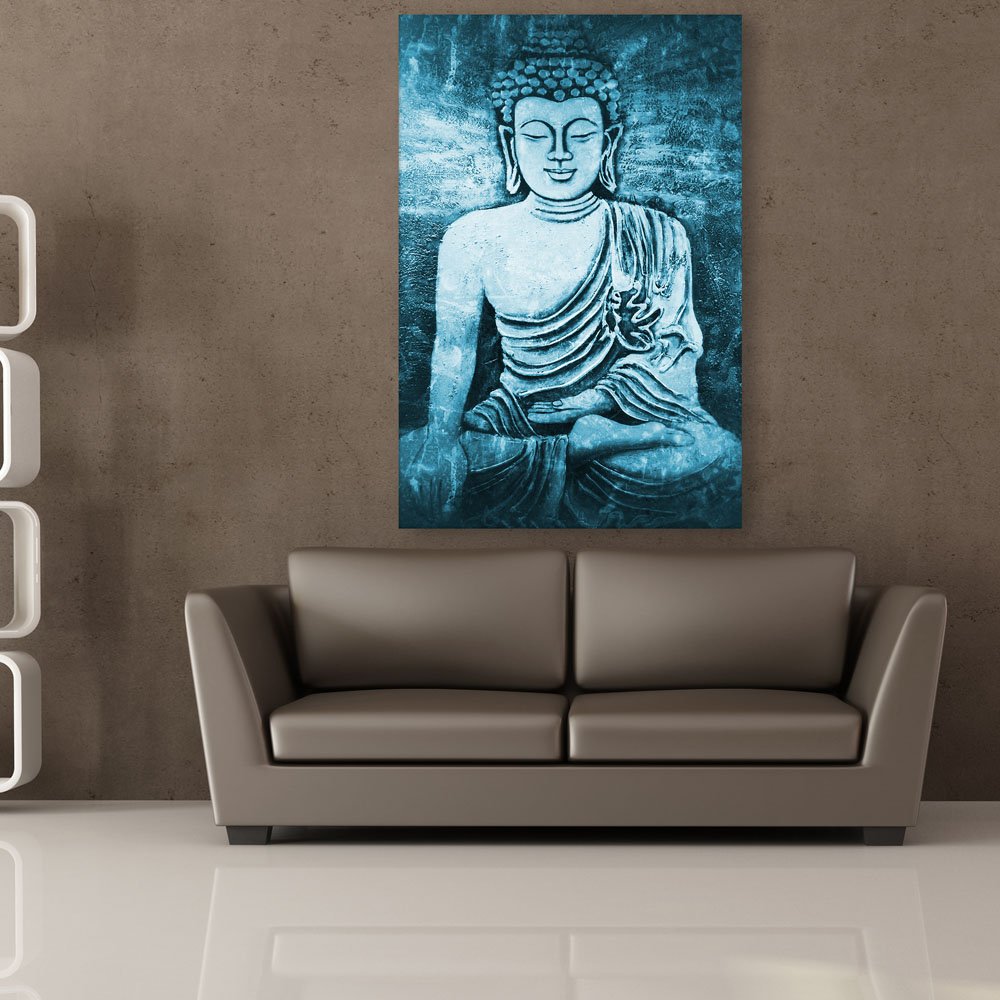

Buddha-rific framed Canvas Wall Art for Instant Zen
You may also like

Moolwan Meditating Buddha Canvas Wall Art Painting (91x61cm) – Teal Monochrome with Stone-Carved Texture
What This Buddha Painting Actually Looks Like on Your Wall
You've pictured Buddha art in your living room before. The challenge isn't finding Buddha paintings—marketplace sites have thousands. The challenge is knowing whether that specific teal-blue tone will work with your gray sofa, whether the vertical format will look proportional above it, whether the stone-texture effect visible in the product photo will translate to actual visual depth when you're standing six feet away in your living room.
This canvas resolves that uncertainty because the composition is deliberately simple: a single meditating Buddha figure rendered in teal and white against a darker teal textured background. No competing elements, no complex color interactions to worry about. The monochromatic palette means it coordinates with virtually any neutral wall color—cream, off-white, gray, taupe—without clashing. The stone-carved texture effect creates visual interest up close without overwhelming the room from a distance.
The Buddha sits in padmasana with eyes closed, right hand holding a lotus, left hand resting in the lap. The figure occupies roughly 70% of the canvas height, centered and grounded. This isn't abstract interpretation—it's recognizable, traditional, and universally understood as meditation imagery.
Why 91x61cm Works Above a 6-Foot Sofa (And What Changes If Your Sofa Is Larger)
At 91cm wide, this canvas covers approximately 50% of a standard 6-foot (180cm) Indian sofa width. That's within the ideal 50-75% coverage range where art looks intentionally placed rather than either cramped or overwhelming.
The vertical orientation (61cm height, 91cm width means height exceeds typical landscape proportions—wait, let me correct: 91cm length x 61cm height is actually horizontal/landscape orientation at roughly 3:2 ratio) creates a portrait-style presentation that draws the eye upward toward the Buddha's serene expression. Hung 20-25cm above your sofa top, the bottom edge of the canvas sits at approximately eye level when seated—meaning you look up slightly toward the Buddha's face, which feels natural for contemplative imagery.
For a 7-foot sofa (210cm), this canvas still works but will appear more compact. For an 8-foot sofa (240cm), consider whether you want the art to be a subtle presence or a focal point—at 38% coverage, it reads as deliberate restraint rather than undersizing, particularly because the vertical format creates visual height that compensates for narrower width.
Viewing distance matters: from 2.5-3 meters (typical Indian living room doorway to sofa distance), the stone-texture effect registers as atmospheric depth rather than visible detail. The Buddha figure reads clearly. The teal tones appear cohesive rather than variegated.
How These Teal Tones Behave on Indian Wall Colors
The teal-blue palette in this canvas falls in the cool spectrum—specifically, a desaturated cyan-blue with gray undertones, not the bright turquoise that reads as dated 1990s décor. This matters because cool tones against warm-toned walls create deliberate contrast, while cool tones against cool-toned walls create monochromatic harmony.
Against cream walls (Asian Paints 0328, the builder-standard off-white): The teal appears as a distinct focal point. The cooler tones stand out without clashing because the cream provides neutral ground. Morning daylight enhances the blue undertones; warm LED evening light (3000K) softens the contrast and adds slight warmth to the lighter portions of the Buddha figure.
Against gray walls (increasingly common in contemporary Indian apartments): The canvas integrates into a tonal scheme. The teal reads as an extension of the gray palette rather than a contrasting element. This works particularly well for minimalist or contemporary interiors where you want art that belongs rather than demands attention.
Against taupe or greige walls: The warm-cool tension creates visual interest. The Buddha figure's lighter teal-white tones bridge the gap between the cool background and warm wall color.
Against peach or yellow walls (common in older Indian apartments): The complementary color relationship means high contrast—the teal will pop significantly. This can work if you want the canvas to be the undisputed focal point, but consider whether that level of contrast suits your overall room energy.
The distressed texture effect—visible as darker patches and weathered areas around the Buddha figure—prevents the canvas from reading as flat or digitally printed. In direct afternoon light, these texture variations create subtle shadow play that adds perceived depth.
Installation on Indian Walls: Concrete, Brick, and Rental Realities
At 400 grams, this canvas is genuinely lightweight—comparable to a framed photograph, not a heavy mirror or shelf. The practical implication: standard picture hooks work on most wall types, and you don't need heavy-duty anchors unless your walls are particularly problematic.
For concrete walls (standard in most Indian apartments built before 2010): A single 6mm anchor at each D-ring position holds this weight easily. Drill 30mm deep, insert plastic anchors, screw in hooks. Total wall damage: two 6mm holes that fill invisibly with wall putty when you move.
For brick walls with plaster (common in older construction): Same process, but drill slightly deeper (35mm) to get past the plaster into the brick. The brick provides excellent grip.
For drywall (common in modern apartments and offices): Drywall anchors grip the gypsum board itself. No need to find studs for a 400g canvas—the anchors alone handle this weight with significant safety margin.
For rentals: Two 6mm holes cost you nothing on your deposit. These are smaller than the holes from a curtain rod bracket. Fill with white wall putty (₹50 at any hardware store), sand smooth with fine sandpaper, touch up with leftover wall paint if you have it. Your landlord won't notice during inspection unless they're specifically looking for patched holes—and even then, properly patched 6mm holes are invisible.
The included hanging template eliminates measurement anxiety: tape it to the wall at your desired position, mark through the pre-printed drill points, remove template, drill. The marks are exactly where the D-rings will align. No math, no re-measuring, no discovering your holes are 2cm off after you've already drilled.
Why Canvas Instead of Macrame or Fabric Wall Hangings
Macrame wall hangings occupy the same "spiritual décor" space as Buddha canvas art, and the boho-spiritual aesthetic has genuine appeal. But the practical differences matter for long-term satisfaction.
Macrame collects dust in every knot and weave. In Indian conditions—ceiling fans running daily, windows open during pleasant weather, general urban dust accumulation—macrame requires monthly deep cleaning or it starts looking gray and tired. You can't just wipe it down; you need to take it outside, shake it out, possibly wash it. Canvas wipes clean with a dry microfiber cloth in 30 seconds.
Macrame fades unevenly. The portions exposed to light fade faster than the shadowed areas behind knots, creating patchy discoloration within 12-18 months. The teal in this Buddha canvas uses eco-solvent UV-resistant inks that maintain color consistency across the entire surface—direct afternoon sun doesn't create faded patches.
Macrame has no frame structure, so it hangs differently depending on humidity. During monsoons, cotton and jute macrame absorbs moisture and stretches, then contracts when it dries. Over multiple humidity cycles, the shape changes permanently. Canvas stretched on kiln-dried pinewood maintains dimensional stability—the frame doesn't expand or contract with humidity because the wood is already dried to below ambient moisture levels.
Visual presence differs fundamentally: macrame creates texture and movement, which suits some spaces but competes with other visual elements. This Buddha canvas creates a single focal point with defined edges. For meditation corners, yoga spaces, or living rooms where you want calm rather than visual complexity, the contained format works better.
What This Canvas Actually Feels Like in Your Room
From the doorway (3+ meters): You see a vertical teal rectangle with a recognizable Buddha figure. The stone-texture background reads as atmospheric depth, not detail. The serene expression and closed eyes register immediately—the emotional tone of the piece is apparent from across the room.
From the sofa (1.5-2 meters): The texture becomes visible. You can see the distressed, stone-carved effect around the Buddha figure, the variation in teal tones from darker edges to lighter center, the detailed folds of the robes. The lotus in the right hand is clearly visible. This is the primary viewing distance, and the canvas is optimized for it.
Walking past (changing angles): The matte canvas surface doesn't create glare or reflection. The image looks consistent from different angles, unlike glossy prints that wash out in certain light positions.
In terms of visual weight: this canvas complements rather than dominates. A 91x61cm Buddha painting doesn't overwhelm a room—it anchors a wall section without demanding that every other element coordinate with it. You can have other décor items, other furniture pieces, without the Buddha competing for attention.
For meditation or yoga spaces: The closed-eye, contemplative pose and cool teal palette create genuine calming atmosphere. The single-figure composition provides a natural focal point for meditation practice without visual distraction.
Moolwan Design Note
The teal monochrome palette with stone-texture weathering creates depth without color complexity—this Buddha reads as serene from 3 meters and reveals textural detail at 1.5 meters, matching how Indian living rooms are actually used.
Moolwan Quality Standard
Designed for Indian apartments and lighting conditions. Packed for long-distance Indian transit with corner protectors and bubble wrap. Quality checked before dispatch. Printed to resist humidity-related color fading. Ships from West Bengal.
Moolwan Fit Guidance for Indian Homes
At 91x61cm, this vertical Buddha canvas fits above 6-7 foot sofas at ideal 50-60% width coverage. The cool teal palette works best against cream, gray, or taupe walls; creates deliberate contrast against warmer peach or yellow walls.
Quick Specifications
- Product: Moolwan Meditating Buddha Canvas Wall Art Painting (91x61cm)
- Brand: Moolwan
- Category: Canvas Wall Art Painting
- Collection: Buddha Wall Art Collection
- Dimensions: 91cm (W) x 61cm (H) x 2cm (D)
- Weight: 400 grams
- Material & Construction: Pure cotton canvas 380 GSM, fade-resistant eco-solvent inks, imported pine wood sturdy frame
- Colors: Teal blue, cyan, white, dark teal (monochromatic palette)
- Best For: Living room above 6-7ft sofa, meditation corner, yoga space, bedroom accent wall
- Ships From: West Bengal
Frequently Asked Questions
Will 91x61cm look too small above my 8-foot sofa?
At 38% width coverage of an 8-foot (240cm) sofa, this canvas reads as intentional minimalism rather than undersizing. The vertical format creates height presence that compensates for narrower width. If you want more visual impact above a larger sofa, consider the 120x80cm option.
How will the teal color look against my cream walls in evening LED light?
Warm LED lighting (3000K, standard in most Indian homes) softens the cool teal tones slightly and adds warmth to the lighter Buddha figure areas. The contrast between canvas and cream wall decreases compared to daylight, creating a more integrated, less prominent appearance in evening.
Can I hang this with Command strips instead of drilling?
At 400 grams, high-weight Command strips (rated 5-7kg) can hold this canvas. However, for long-term stability—especially through monsoon humidity fluctuations that affect adhesive grip—proper wall anchors are more reliable. The included hardware and template make drilling straightforward.
Will the colors fade if my wall gets afternoon sun?
Eco-solvent inks include UV inhibitors that prevent fading from direct sunlight exposure. Canvas in positions receiving 3-4 hours of daily afternoon sun will maintain color consistency over multiple years—this is the same ink technology used for outdoor signage.
Is the stone-texture effect actual texture or just printed?
The texture is printed—the canvas surface is smooth to touch. However, the print technique creates convincing visual depth through value variation and the interaction with the cotton canvas weave. From normal viewing distances, the weathered stone effect appears dimensional.
Product Snapshot
- Brand: Moolwan
- Product: Moolwan Meditating Buddha Canvas Wall Art Painting (91x61cm)
- Category: Canvas Wall Art Painting
- Collection: Buddha Wall Art Collection
- Theme/Type: Meditating Buddha, spiritual décor
- Best For: Living room (6-7ft sofa wall), meditation corner, yoga space, contemporary bedroom
- Primary Differentiator: Teal-blue monochromatic palette with stone-carved texture effect
- Secondary Differentiators: Vertical portrait orientation centering Buddha figure; serene closed-eye meditation pose with lotus mudra; distressed weathered background creating visual depth
- Material & Construction: 380 GSM pure cotton canvas, eco-solvent UV-resistant inks, imported pine wood sturdy frame, moisture-resistant coating
- Care Instructions: Dry dust with microfiber cloth every 2-3 weeks; no water or cleaning chemicals
- Ships From: West Bengal
- Packing: Long-distance transit ready (bubble wrap + corner protectors + outer carton)
- Quality Check: Before dispatch