
Buddha-rious Framed Wall Art Quartet That'll Make Your Walls Say Namaste
You may also like

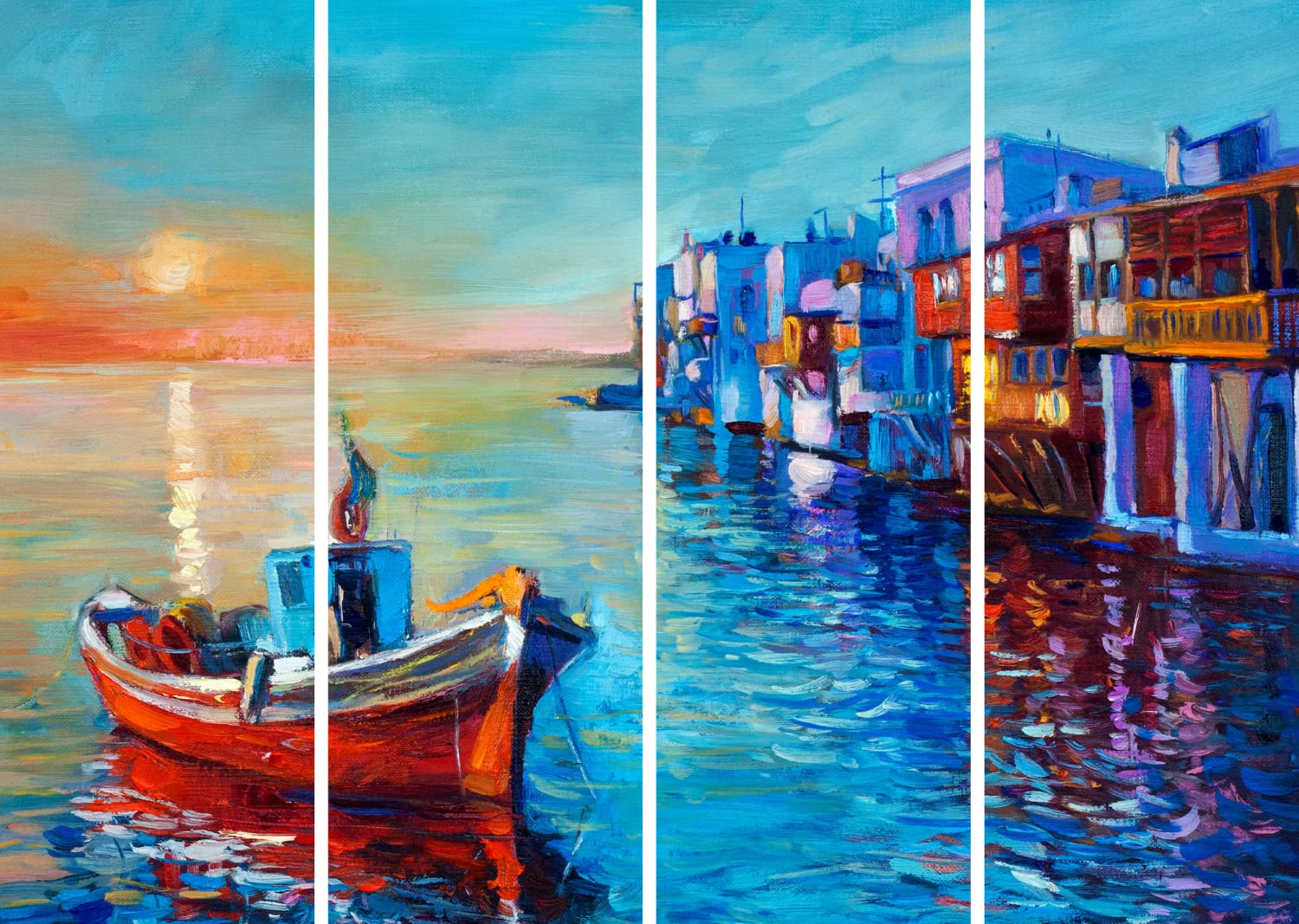
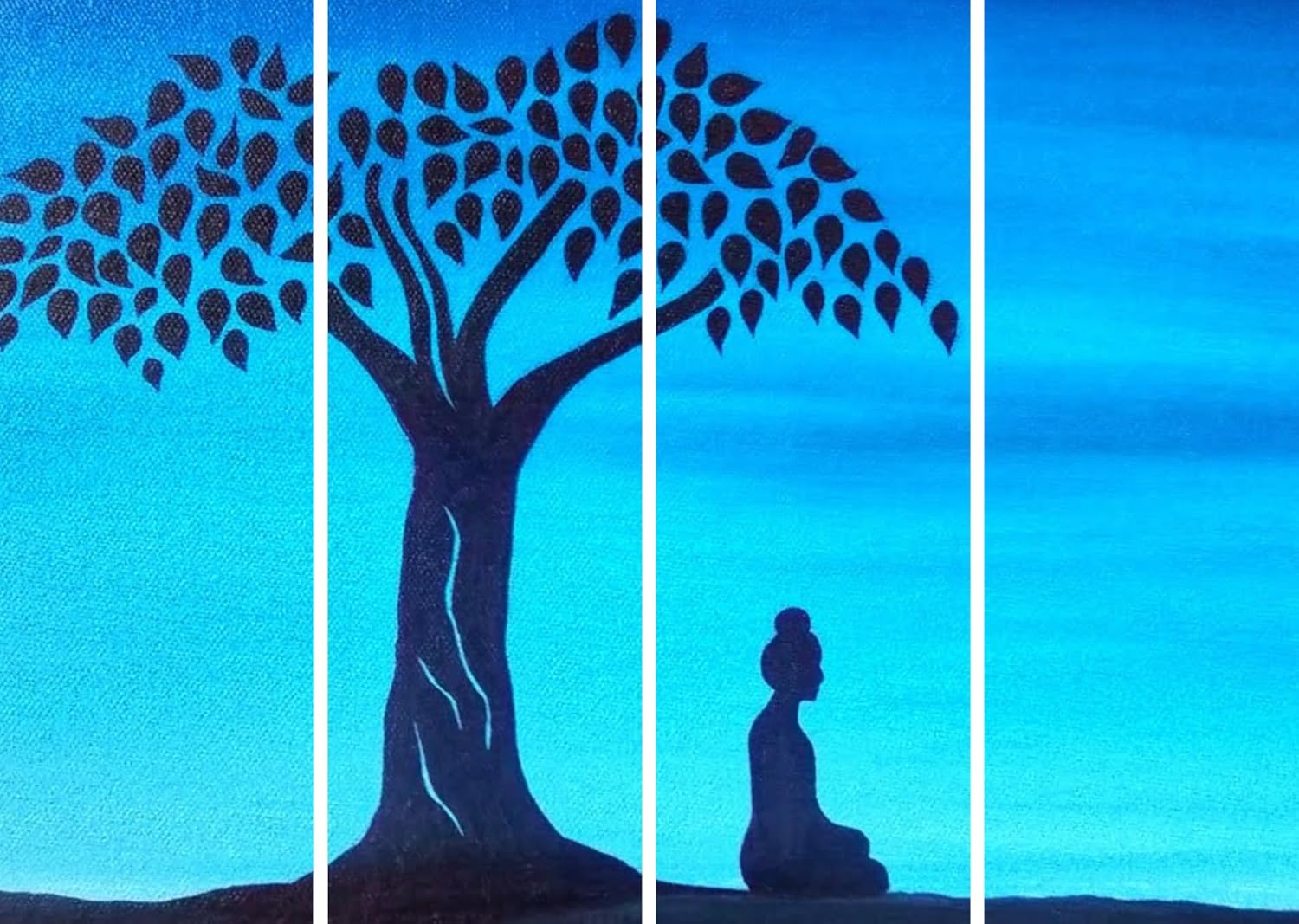
Moolwan 4-Panel Buddha Under Bodhi Tree Vinyl Wall Art on MDF (85x55cm) – Silhouette Narrative That Unfolds Across Your Wall
When You Can't Picture How Wall Art Will Actually Look in Your Room
You've seen this piece online. The cyan gradient, the black silhouettes, the meditative composition. But here's what's stopping you: you can't visualize it on your actual wall. Your wall isn't a white studio backdrop. It's cream-colored, maybe off-white, with an AC vent in the corner and warm LED lighting after 6pm. Will this bright cyan look jarring? Will the Buddha silhouette even be visible from across your living room, or will it blur into a dark smudge?
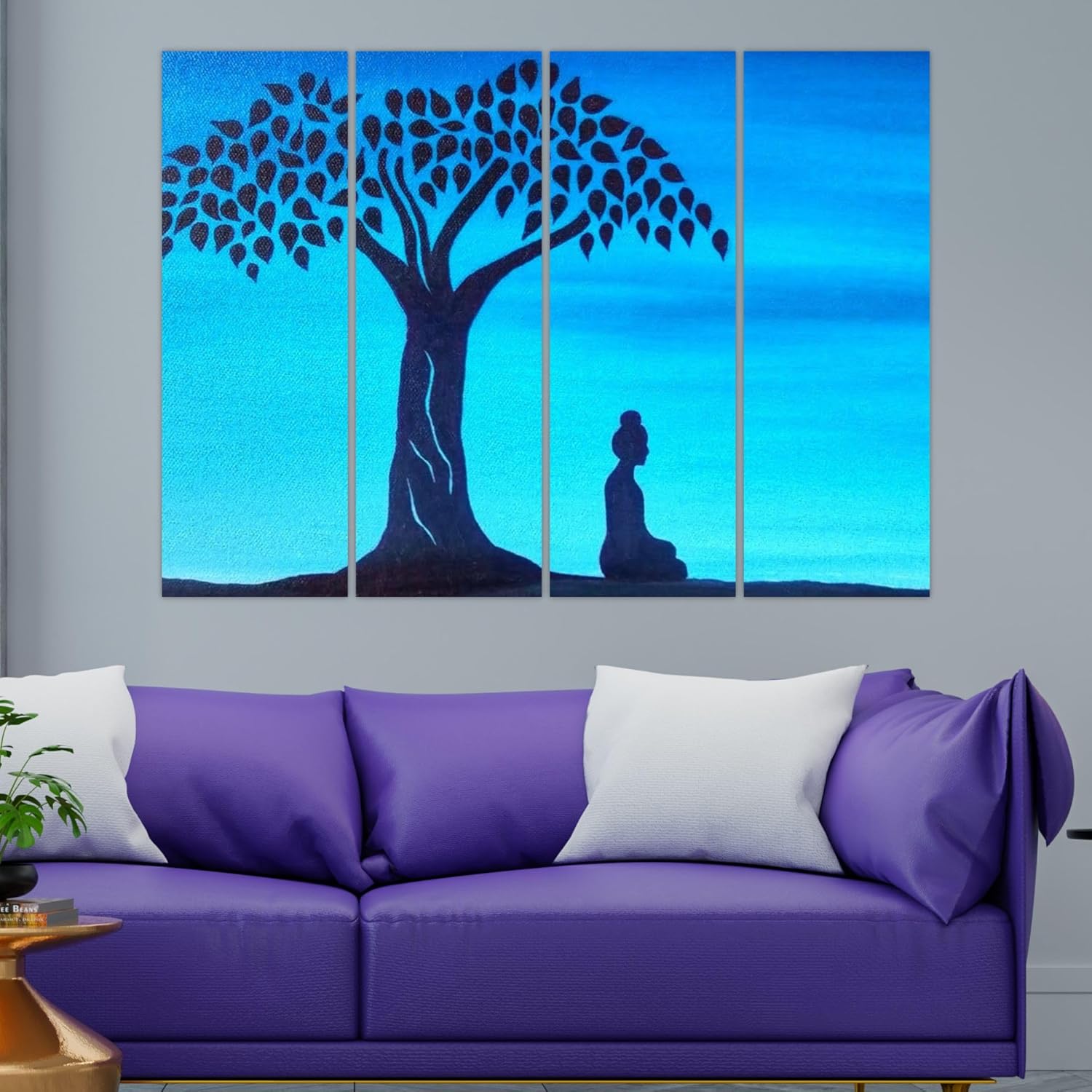
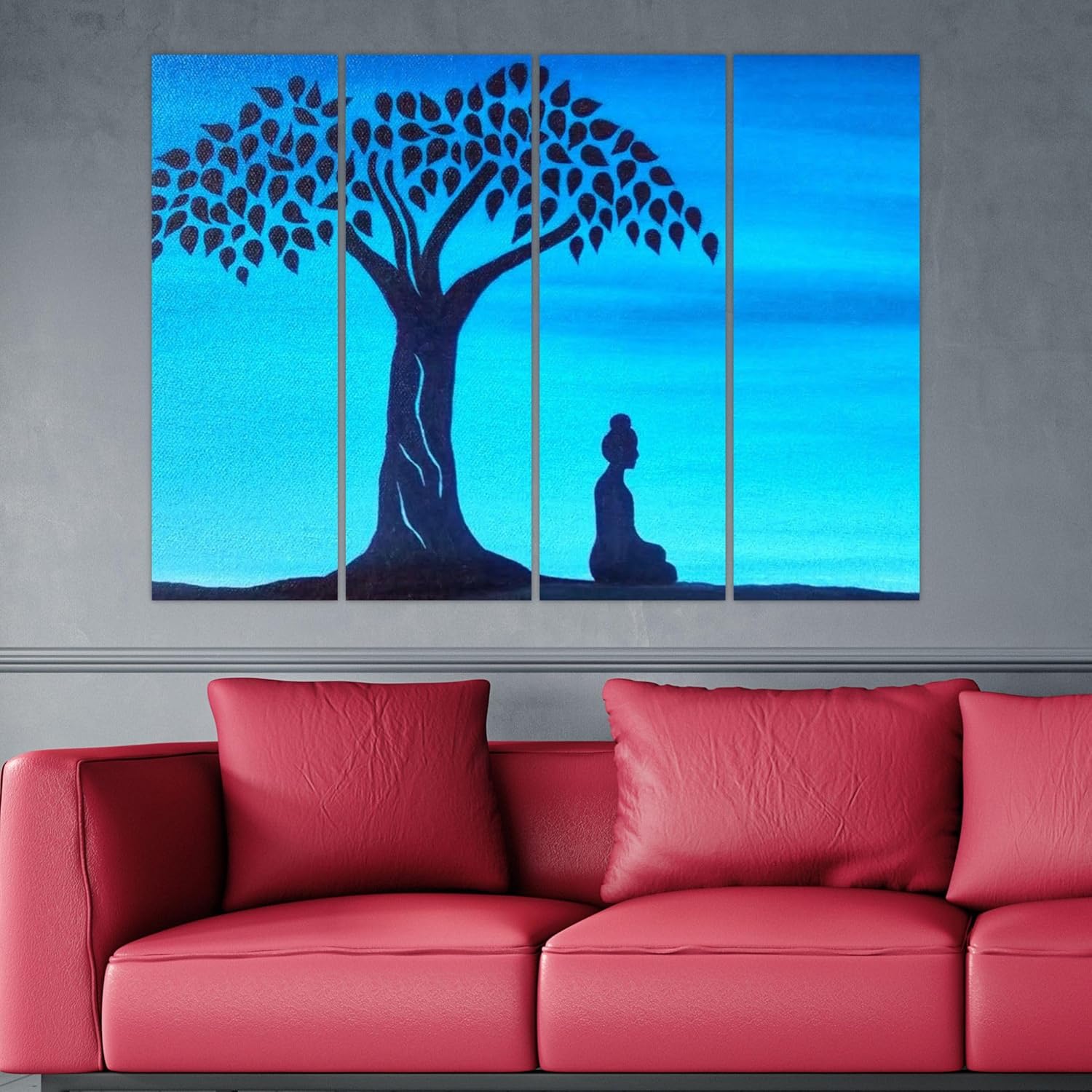
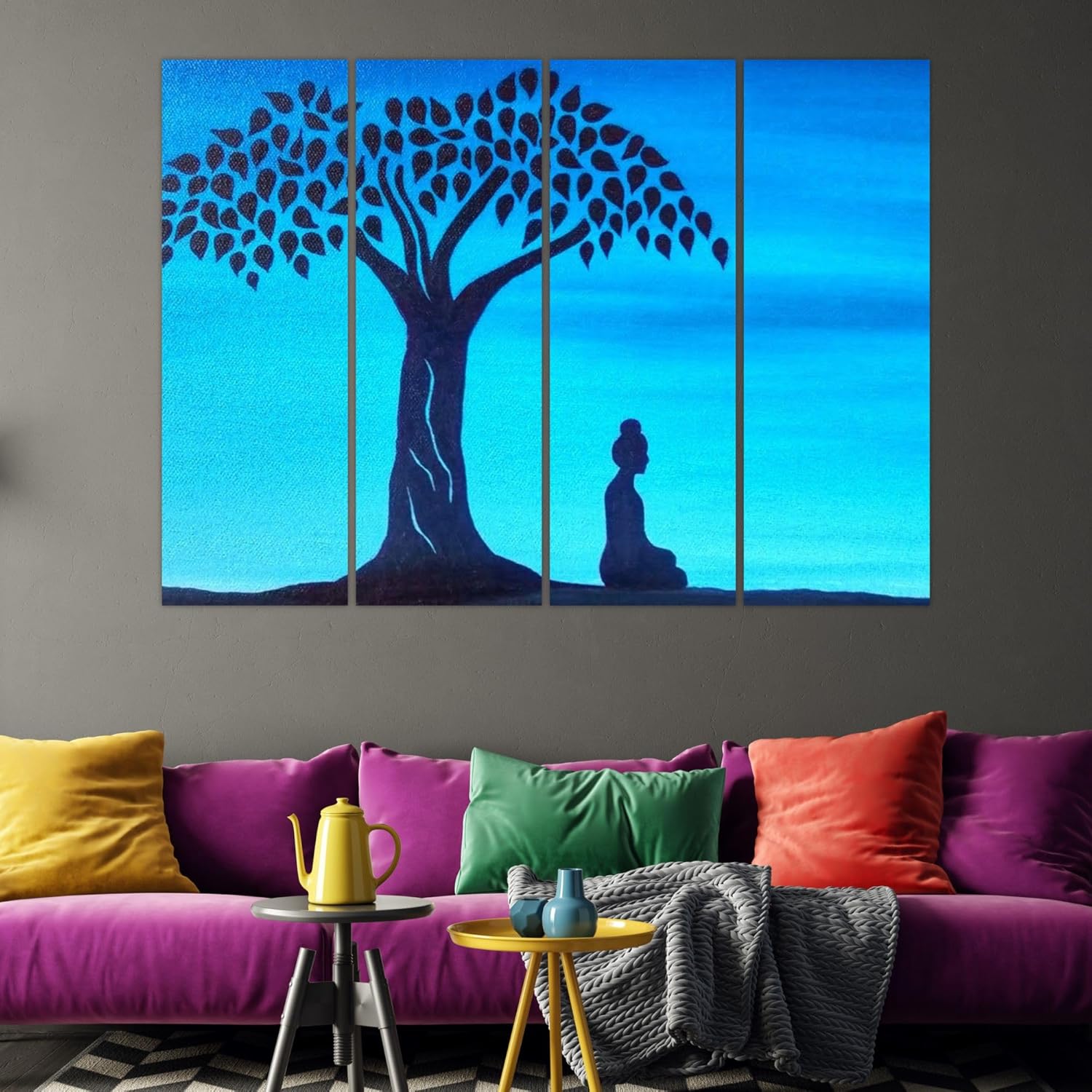
This is the visualization gap that makes wall art purchases feel risky. The 85cm x 55cm horizontal spread of this 4-panel set solves a specific problem: it's wide enough to anchor a 10-12ft wall without overwhelming it, and the silhouette technique—black figures against gradient blue—creates contrast that reads clearly from your doorway, not just up close. The composition tells a story across four panels: Bodhi tree canopy on the left, trunk in the second panel, meditating Buddha in the third, open sky in the fourth. Your eye moves through the narrative naturally, left to right, the way you'd read a sentence.
Why 85cm Width Works on 10-12ft Walls (And What Changes If You Size Up)
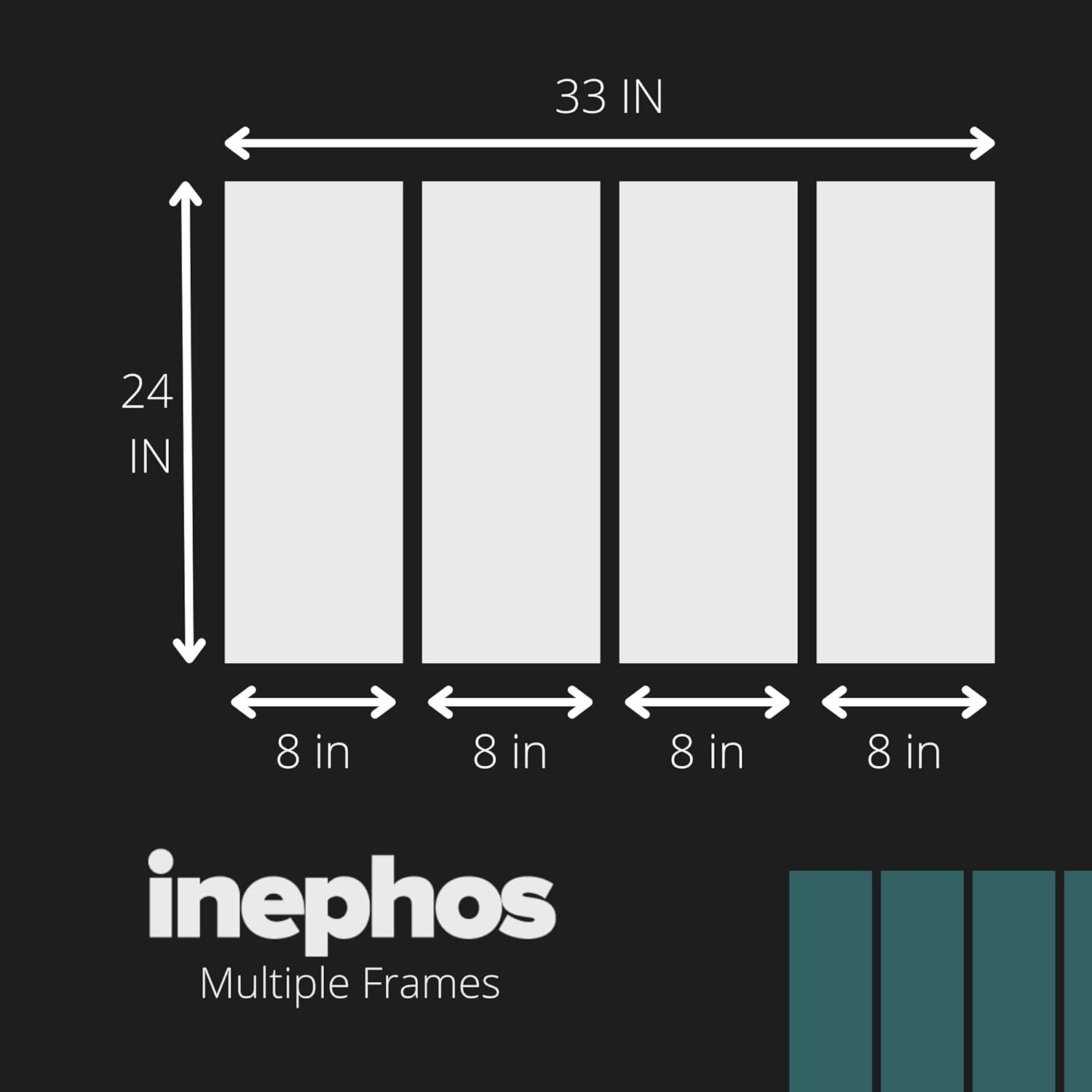
An 85cm wide piece covers approximately 25-30% of a 10-foot wall (300cm). This is deliberate restraint—not a statement piece that dominates, but a focal point that anchors. Above an 8-foot sofa (240cm), this creates comfortable visual breathing room on either side: roughly 75-80cm of wall space flanking the art.
The 55cm height positions the composition at eye level when mounted 20-25cm above your sofa back. From a seated position on the sofa, you're looking slightly up at the Buddha figure—the natural viewing angle for contemplative art. From the room's entrance (typically 3-4 meters away), the four panels read as a unified horizontal band, the silhouettes distinct against the gradient.
If your wall is closer to 8 feet wide, this piece will feel more dominant—covering nearly 35% of the wall width. That's not wrong, but it changes the room's visual weight. The Buddha becomes the first thing anyone notices when they enter. For some spaces (meditation corners, dedicated reading nooks), that's exactly right. For a living room where the TV is the primary focus, you might want the art slightly less commanding.
What This Cyan-Blue Gradient Looks Like on Cream Walls (Morning vs Evening)
The gradient runs from bright cyan at the bottom edge through turquoise in the mid-tones to a deeper, almost twilight blue at the top. Against cream or off-white walls (the most common in Indian apartments), this creates a cool-toned contrast that makes the art visually "pop" forward from the wall plane.
In morning light, especially if your wall faces east or north, the cyan tones will appear at their brightest—almost luminous. The black silhouettes will have crisp edges. This is when the piece looks most vibrant.
Under warm LED lighting (3000K, standard in most Indian living rooms), the cyan shifts slightly warmer—less electric, more teal. The deep blue at the top becomes richer, more saturated. The overall effect is calmer, less bright, more suitable for evening viewing. The silhouettes maintain their contrast because black doesn't shift with color temperature the way the blues do.
If your walls are painted in warm tones (peach, light yellow, terracotta), the cool blue will create stronger contrast. This isn't necessarily bad—it makes the art more of a deliberate statement—but you'll want to ensure you have some blue or teal accent elsewhere in the room (cushions, a rug border, curtain trim) to tie it together.
Installation Reality for Indian Walls (Concrete, Brick, and Rentals)
Four panels means four separate hanging points. The alignment matters: uneven panels create a visual disturbance that your eye will catch every time you enter the room.
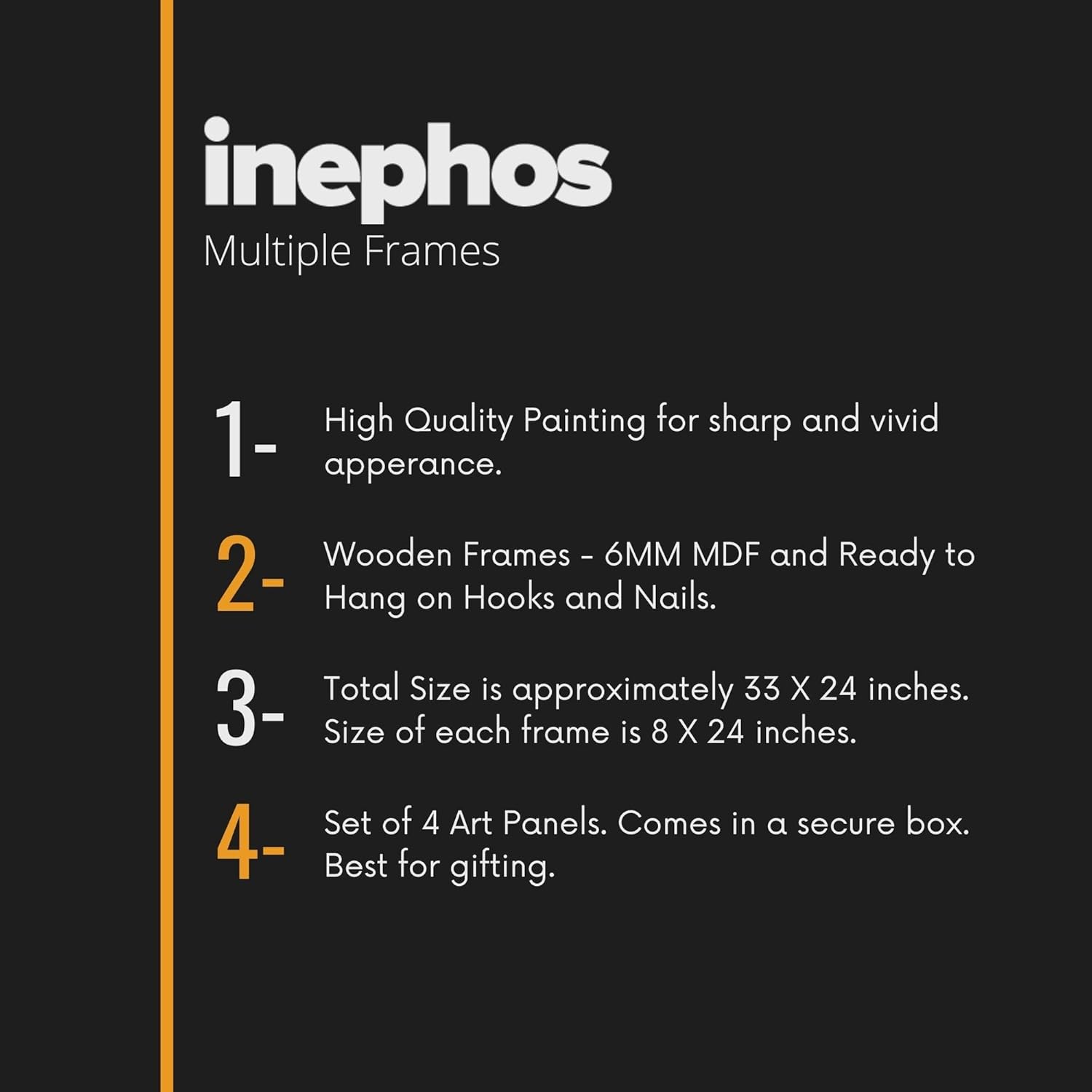
For concrete walls (most pre-2010 Indian construction): Use the included concrete anchors. Drill 6mm holes, 35mm deep. The splash-proof MDF panels are lighter than framed canvas—the total 3kg weight distributed across four hanging points means each anchor bears less than 1kg. Standard plastic anchors handle this easily.
For newer drywall/gypsum board construction: Switch to the drywall anchors. The hollow wall can't grip concrete anchors properly—you'll pull them out when you hang the weight.
The installation sequence that prevents alignment errors: Start with the second panel from the left (the tree trunk panel). This is your anchor point. Level it precisely using a spirit level or your phone's level app. Then mount the first panel, using a spacer (a folded piece of cardboard works) to maintain consistent 2-3cm gaps between panels. Work outward: third panel, then fourth.
For rentals: Four 6mm holes per panel is sixteen total holes when you move out. That sounds like a lot, but these are small holes—smaller than what a curtain rod requires. Wall putty covers them in minutes. Your deposit isn't at risk from this installation.
Why This Works Where Macrame Wall Hangings Don't
Macrame has had its moment in Indian home décor. The woven cotton, the boho aesthetic, the textural interest. But here's what happens to macrame in Indian conditions:
Dust accumulation is permanent. The woven texture traps particulate matter that no amount of shaking or vacuuming fully removes. After one monsoon season, white macrame looks grayish. After two, it's visibly dingy.
Humidity warps the shape. Cotton fibers absorb moisture during monsoons and release it during dry months. The hanging stretches unevenly. The geometric patterns lose their crispness. You'll find yourself re-adjusting knots every few months.
The visual presence is soft. Macrame reads as texture, not as imagery. From across the room, it's a beige-ish mass on the wall. There's no focal point, no narrative, nothing that draws the eye and holds attention.
This vinyl-on-MDF construction offers the opposite trade-offs: the splash-proof surface wipes clean with a dry cloth, the rigid MDF maintains its shape through humidity cycles, and the high-contrast silhouettes create a clear visual statement that reads from any distance in the room.
What This Will Actually Feel Like in Your Room
Stand in your doorway and look at your wall. This piece, when installed, will occupy a horizontal band roughly 85cm wide and 55cm tall, positioned above your sofa. The cyan gradient will be the brightest element on that wall—brighter than your wall paint, brighter than your sofa fabric, brighter than most wooden furniture.
From the doorway (3-4 meters), you'll see four distinct panels with a clear silhouette story: tree canopy with individual leaves visible, solid trunk, seated Buddha in meditation posture, empty sky. The gradient will read as a unified background color, the panel divisions as intentional breaks in the narrative.
Up close (within 1 meter), the texture of the vinyl print becomes visible. The gradient will show smooth tonal transitions. The black silhouettes will have clean edges without pixelation. The MDF edges are finished—no visible raw board material.
This is a piece that works alone. The composition is complete: it doesn't need adjacent décor, gallery wall companions, or accent pieces to feel finished. If anything, surrounding it with other wall art will dilute its contemplative quality. Let it breathe. Let the empty wall space on either side be part of the design.
Moolwan Design Note
The leftward lean of the Bodhi tree canopy balanced against the rightward-facing Buddha creates compositional tension that resolves in the fourth panel's empty sky—a visual metaphor for meditation's journey from mental activity to stillness.
Moolwan Quality Standard
Splash-proof vinyl print on MDF, designed for Indian apartments and lighting conditions. Packed for long-distance Indian transit with panel-separating cushioning. Quality checked before dispatch. Ships from West Bengal.
Moolwan Fit Guidance for Indian Homes
At 85cm width, this 4-panel set fits walls between 10-14 feet without overwhelming the space. Position 20-25cm above sofa back, maintaining 2-3cm gaps between panels for the intended segmented-narrative effect.
Quick Specifications
| Attribute | Detail |
|---|---|
| Product | Moolwan 4-Panel Buddha Under Bodhi Tree Vinyl Wall Art on MDF (85x55cm) |
| Brand | Moolwan |
| Category | Vinyl Wall Art on MDF |
| Collection | Buddha Wall Art Collection |
| Dimensions | 85cm W x 55cm H (total span across 4 panels) |
| Weight | 3000 grams |
| Material & Construction | Splash-proof vinyl print on MDF panels |
| Colors | Cyan to deep blue gradient background, black silhouettes |
| Best For | Living room walls 10-14ft wide, meditation corners, home office accent walls |
| Ships From | West Bengal |
| Price | ₹2,696 |
Frequently Asked Questions
Will 85cm be too small for my 12-foot living room wall?
At 85cm width on a 12-foot (365cm) wall, the art covers approximately 23% of the wall width. This is a balanced focal point, not an overwhelming statement. If you want the Buddha to dominate the space, consider whether a larger piece would better suit your intent. For most living rooms where the sofa and TV share visual attention, 85cm provides presence without competition.
How will the bright cyan look against my cream walls under tube lights vs LED?
Under cool white tube lights (5000K+), the cyan will appear true to the product image—vibrant and slightly electric. Under warm LEDs (2700-3000K), the cyan shifts toward teal, becoming more muted and sophisticated. Both work; it's a matter of preference. The black silhouettes maintain contrast under either lighting.
How do I ensure all four panels are level during installation?
Start with the second panel (tree trunk) as your anchor. Level it precisely using a spirit level app on your phone. Use a consistent spacer (folded cardboard, 2-3cm thickness) between panels as you mount each subsequent piece. Work outward from the center. The eye forgives minor vertical misalignment more than it forgives uneven gaps.
Will the MDF warp in Mumbai humidity?
The splash-proof vinyl layer seals the MDF surface against moisture penetration from the front. Unlike raw MDF or untreated wood frames, this construction resists the expansion-contraction cycles that cause warping. Through monsoon seasons, the panels maintain their flat profile.
Can I hang this in a bathroom or kitchen?
The splash-proof feature handles occasional moisture exposure and high humidity. However, direct water contact (splashes from a sink, steam condensation dripping down the surface) over time may compromise the vinyl adhesion. For bathrooms, position away from direct splash zones. For kitchens, avoid walls directly adjacent to cooking areas where oil vapor accumulates.
Product Snapshot
| Field | Value |
|---|---|
| Brand | Moolwan |
| Product | Moolwan 4-Panel Buddha Under Bodhi Tree Vinyl Wall Art on MDF (85x55cm) |
| Category | Vinyl Wall Art on MDF |
| Collection | Buddha Wall Art Collection |
| Theme/Type | Buddha meditation under Bodhi tree silhouette |
| Best For | 10-14ft living room walls, meditation spaces, home offices |
| Primary Differentiator | Four-panel silhouette narrative that unfolds left-to-right |
| Secondary Differentiators | Cyan-to-deep-blue gradient that shifts with lighting; high-contrast black silhouettes readable from across the room |
| Material & Construction | Splash-proof vinyl print on MDF |
| Care Instructions | Dry dust with microfiber cloth; wipe splashes immediately; no chemical cleaners |
| Ships From | West Bengal |
| Packing | Long-distance transit ready with panel-separating cushioning |
| Quality Check | Before dispatch |
| Price | ₹2,696 |