
Buddha-tastic 4-Frame Framed Wall Art for Instant Zen
You may also like

Moolwan 4-Panel Buddha Vinyl Wall Art on MDF (85x55cm) – Left-Weighted Composition with Bokeh Flow
When You Can't Picture How It Actually Looks Above Your Sofa
You've seen Buddha wall art in photos—centered, symmetrical, floating on impossibly white walls in rooms that look nothing like yours. And you're stuck trying to mentally project how a 4-panel piece would actually appear on your cream wall, above your brown fabric sofa, with your warm LED lighting and that AC vent in the corner.
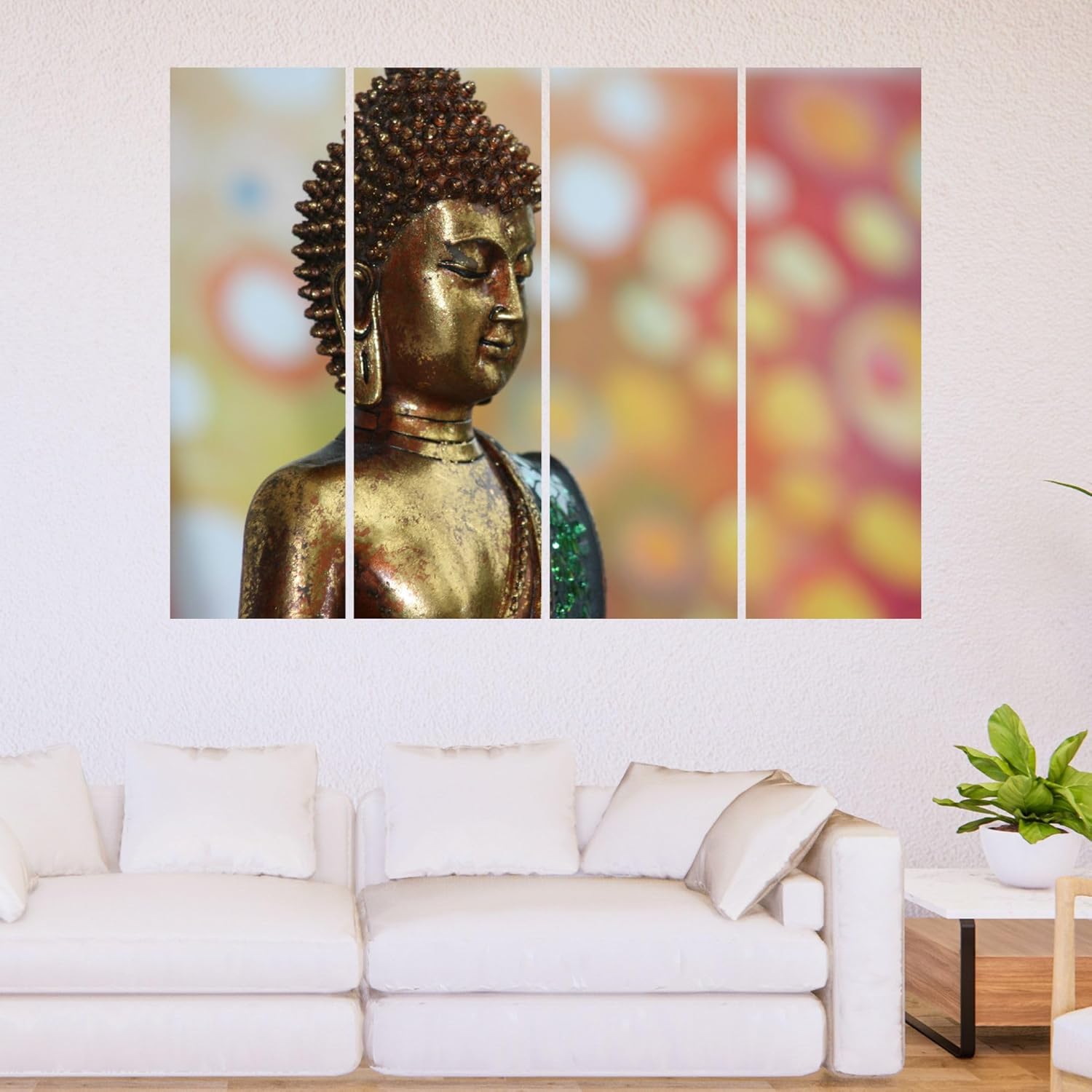
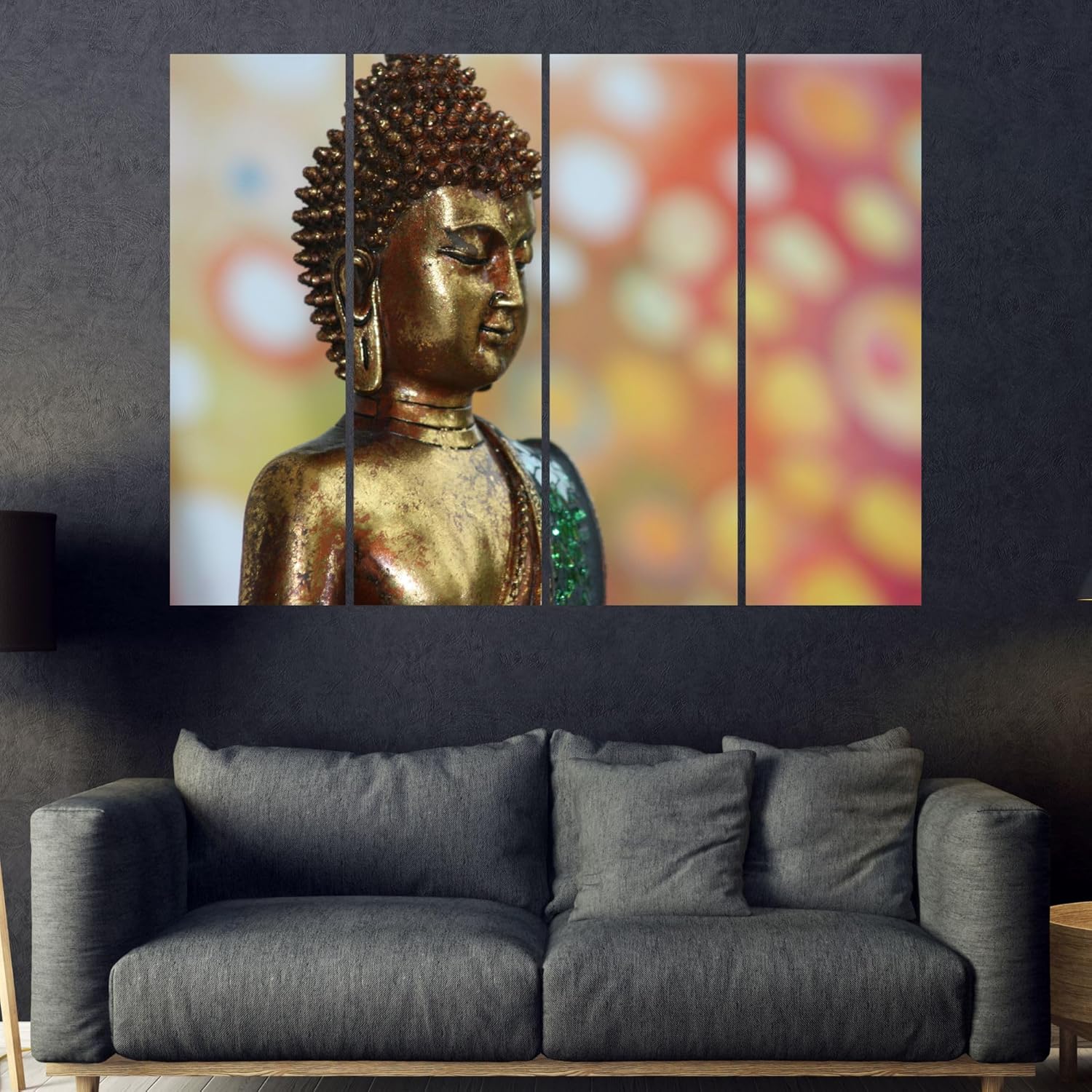
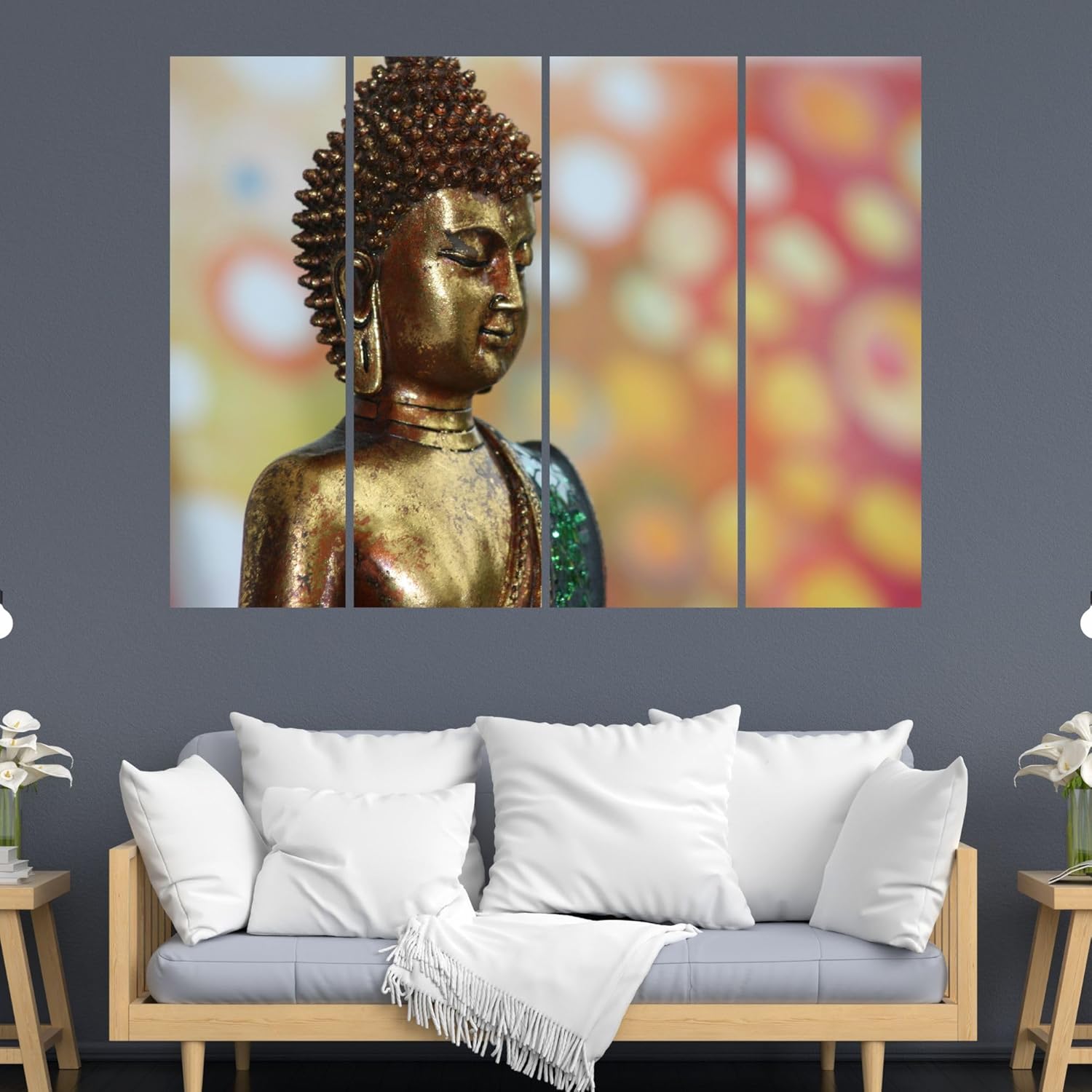
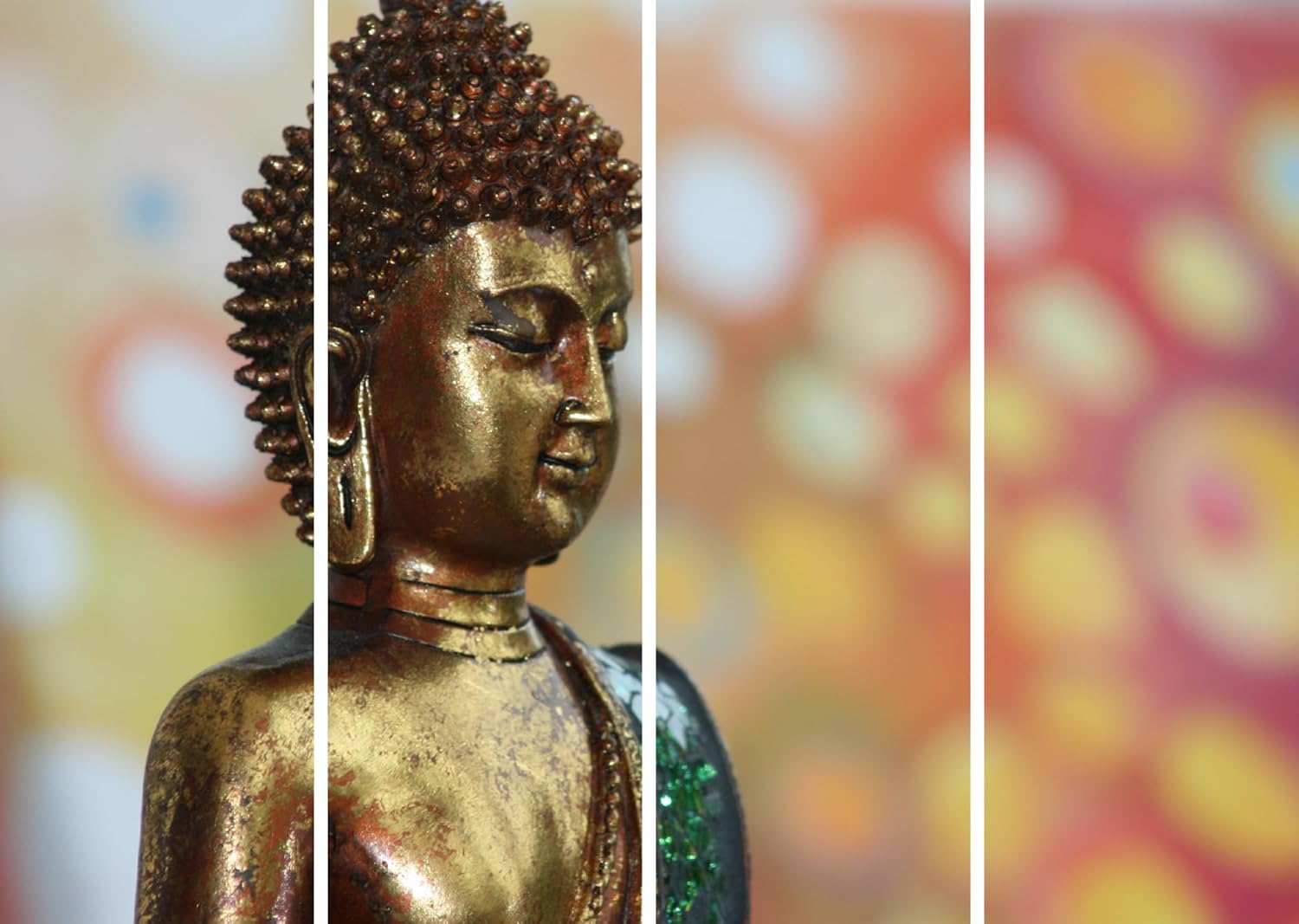
This particular composition solves that visualization problem because it doesn't demand center-stage dominance. The Buddha figure occupies the left two panels—face in serene profile, golden patina catching light—while the right two panels carry a soft bokeh gradient in coral, peach, and gold. The visual weight sits left, which means your eye lands on the Buddha first, then drifts into the abstract warmth. Above a sofa, this creates a grounded focal point without the "floating spiritual poster" effect that plagues centered compositions.
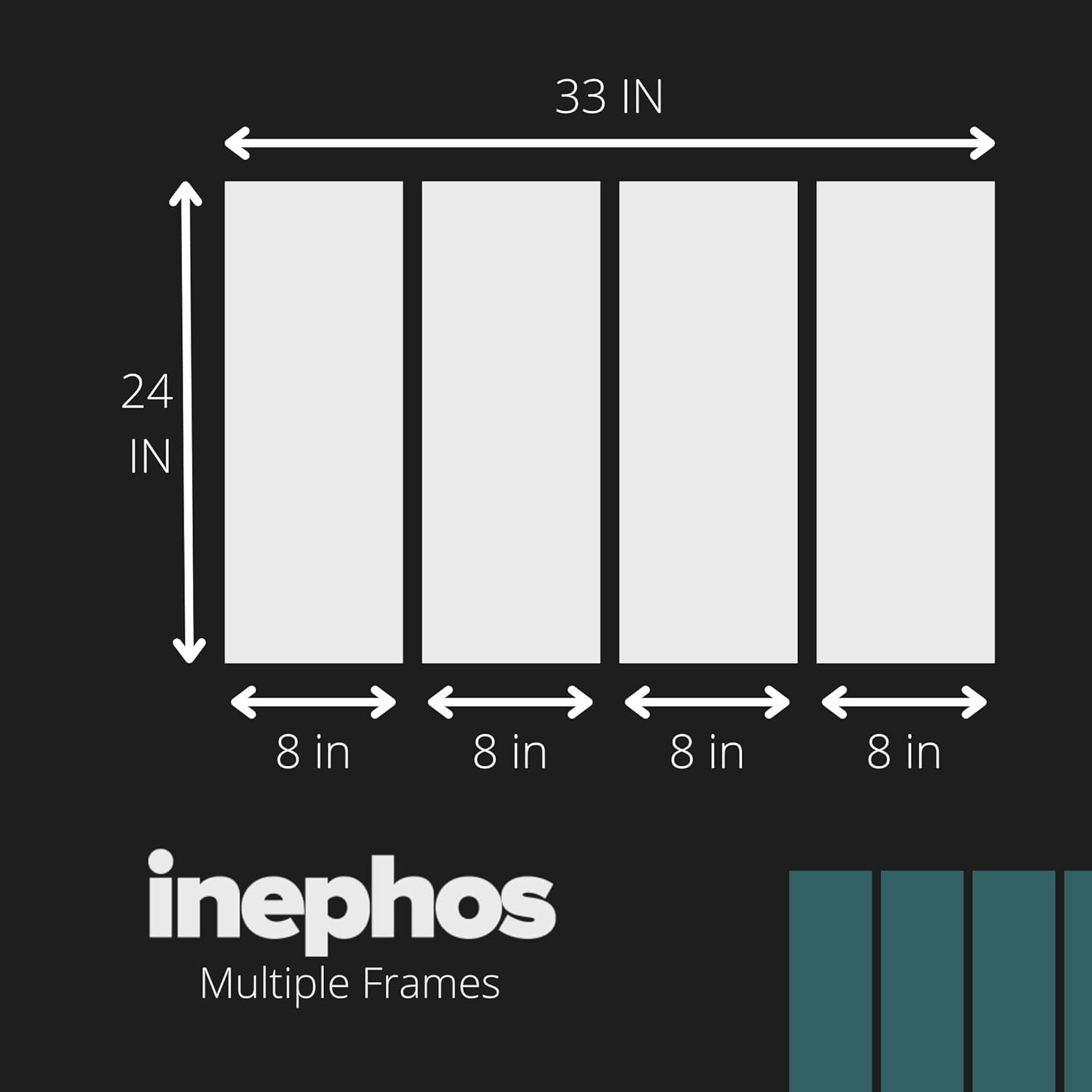
At 85cm wide and 55cm tall, this fits the 60-75% proportion rule for 6-foot sofas (180cm). The 4-panel split—each panel roughly 21cm wide with small gaps—creates visual rhythm that makes the piece feel intentional, not like a single image arbitrarily sliced.
Why 85cm Width Works on 10-12ft Walls (And What Changes If You Size Up)
An 85cm-wide piece on a 10ft (300cm) wall covers roughly 28% of wall width. This is deliberately restrained—the kind of proportion that reads as "considered choice" rather than "filled the space." For living rooms where the sofa sits against a 10-12ft wall with side tables or floor lamps flanking, this sizing leaves breathing room.
The math for your setup: if your sofa is 6 feet wide (typical Indian 3-seater), 85cm represents 47% of sofa width—slightly under the ideal 60-75% range. This means the art won't anchor the sofa visually on its own. You'll want either a taller placement (25-30cm above sofa top instead of standard 20cm) or complementary elements like a floor lamp to balance visual weight.
If your sofa is 7-8 feet, the proportions improve to 40-48% of sofa width, which works well for pieces with strong visual presence like this Buddha composition.
Viewing distance matters: at 3 meters (typical living room depth from opposite seating), the 4-panel split is visible but doesn't fragment the image. The Buddha reads as unified. Closer than 2 meters, you notice individual panel edges—which some buyers prefer for the gallery-style segmentation effect.
What These Golds and Corals Look Like Against Cream Walls
The dominant tones: antique gold on the Buddha figure (not bright yellow-gold, but the muted brass-bronze of aged temple statuary), coral-peach in the bokeh, and soft cream-white highlights where the background diffuses.
On cream or off-white walls (the default in most Indian apartments), these warm tones recede rather than pop. The piece won't scream for attention from across the room—it reveals itself as you approach. This is deliberate: spiritual art that demands attention often feels performative. Art that rewards closer viewing feels considered.
In morning daylight, the gold appears cooler, more bronze. Under warm LED lighting (3000K, standard in Indian homes), the gold warms to almost copper, and the coral background intensifies. If your living room faces west and gets afternoon sun, expect the Buddha's face to catch light dramatically—the texture in the original image suggests a metallic patina effect that responds to directional light.
Against colored walls (sage, light yellow, peach), the coral bokeh might blend too closely. This piece works best against true neutrals—white, cream, off-white, light gray.
Installation in Indian Walls: 4-Panel Alignment Reality
Four panels means four separate hanging points. This isn't harder than single-panel installation—it's actually more forgiving because small leveling errors across panels are less noticeable than a single crooked frame.
For concrete walls (most Indian apartments built pre-2015): you'll drill 6mm holes, 35mm deep, at each panel's hanging point. Use the included concrete anchors. The total weight is 3000 grams distributed across four panels—roughly 750 grams per panel, which any standard wall anchor handles easily.
For drywall (newer apartments, especially gated communities): use the included drywall anchors. Same 6mm holes, but only 30mm deep.
The alignment process: start with the leftmost panel (the one with the Buddha's face). Get this level and at correct height (25-30cm above sofa top for this specific piece). Then use a laser level or a straight edge to position the remaining three panels with consistent 1-2cm gaps between frames. Most buyers complete this in 25-30 minutes.
In rentals, the eight small anchor holes (two per panel) fill with standard wall putty in five minutes. Touch up with matching wall paint. Your landlord won't notice.
Why This Works Better Than Macrame for Spiritual Decor
Macrame wall hangings have become the default "spiritual corner" choice—knotted cotton, bohemian associations, that craft-market aesthetic. But macrame has specific limitations that become obvious over time.
Macrame collects dust in every knot and fiber. In Indian cities with construction dust, traffic pollution, and monsoon humidity, macrame yellows and grays within 6-8 months. You can't wipe it clean—you have to wash it, which often distorts the shape.
Macrame has no fixed boundaries. It sways slightly in AC airflow, catches on furniture edges if hung too low, and the visual "weight" is ambiguous. This Buddha piece has defined edges: 85cm x 55cm, full stop. It occupies exactly the space you intend.
Macrame fades in sunlight because natural cotton has no UV protection. The splash-proof vinyl on MDF in this piece resists both UV fade and humidity damage. Two monsoon seasons from now, the gold will still be gold.
And frankly, macrame in a living room reads as decorative effort. A Buddha composition on quality panels reads as intentional curation—the difference between "I bought something spiritual" and "I live with art that matters to me."
What This Will Actually Feel Like in Your Room
From the doorway, you'll see warm gold tones against your wall before you register the Buddha figure. The left-weighted composition draws the eye to the focal point without demanding immediate attention—guests notice it, then approach to examine.
Up close (within 1 meter), the bokeh panels reveal their purpose: they're not just filler, they're visual exhale. The Buddha's meditative stillness anchors; the soft coral-gold diffusion on the right provides balance without competing.
This piece doesn't dominate a room. It establishes a contemplative zone. Above a sofa, it suggests "this is where we sit, this is the view we've chosen." In a meditation corner, it provides focus without the intensity of centered, staring-forward Buddha imagery.
If you have adjacent décor (side tables with lamps, plants, other wall elements), the left-weighted Buddha composition accommodates asymmetry. You can place a floor plant to the right of the sofa without creating visual conflict—the art's own asymmetry already accounts for it.
Moolwan Design Note
The left-weighted composition places the Buddha in serene three-quarter profile rather than direct frontal gaze—a deliberate choice that creates contemplative presence without the confrontational intensity of centered spiritual imagery. The bokeh gradient flowing right provides visual resolution, letting the eye rest rather than search for balance.
Moolwan Quality Standard
Designed for Indian apartments and lighting conditions. Packed for long-distance Indian transit with corner protection. Quality checked before dispatch—each panel inspected for print alignment and MDF edge finish. Printed to resist humidity-related color fading. Ships from West Bengal.
Moolwan Fit Guidance for Indian Homes
At 85cm wide, this piece fits 6-7ft sofas in standard Indian living rooms (10-12ft walls). The 55cm height maintains comfortable proportion under 8ft ceilings. For best visual anchoring, mount 25-30cm above sofa top—slightly higher than standard to account for the moderate width.
Quick Specifications
Product: Moolwan 4-Panel Buddha Vinyl Wall Art on MDF (85x55cm)
Brand: Moolwan
Category: Vinyl Wall Art on MDF
Collection: Buddha Wall Art Collection
Dimensions: 85cm (W) x 55cm (H) x 2cm (D)
Weight: 3000 grams
Material & Construction: Splash-proof vinyl print on MDF, 4-panel configuration
Colors: Antique gold, bronze, coral, peach, cream bokeh highlights
Best For: Living rooms with 6-7ft sofas, meditation corners, entryways
Ships From: West Bengal
Frequently Asked Questions
Will 85cm width look proportional above my 6-foot sofa?
At 47% of a 6-foot (180cm) sofa's width, this piece sits slightly below the ideal 60-75% range. It will look intentional rather than dominant. For stronger visual anchoring, mount it 25-30cm above the sofa (higher than standard 20cm) or add a floor lamp beside the sofa to balance visual weight.
How do the gold tones appear under warm LED lighting?
Under 3000K warm LEDs (standard in Indian homes), the Buddha's gold shifts from bronze toward copper, and the coral bokeh intensifies slightly. The effect is warmer and richer than in daylight—most buyers prefer evening viewing for this reason.
Is aligning 4 panels difficult during installation?
No. Start with the leftmost panel (Buddha's face), level it carefully, then use a straight edge or laser level to position the remaining three with 1-2cm gaps. Most buyers complete installation in 25-30 minutes. Small alignment variations across panels are less noticeable than a single crooked frame.
Will this fade or warp during monsoons?
The splash-proof vinyl surface resists moisture absorption, and MDF with sealed edges handles humidity better than raw wood frames. In Mumbai or Chennai monsoon conditions (70-85% humidity), you won't see the rippling or warping common in cheap canvas. The UV-resistant print maintains color through multiple monsoon cycles.
Can I hang this in an entryway or foyer?
Yes—the 85x55cm size works well in entryways where guests encounter it first. The left-weighted Buddha composition creates an immediate focal point without dominating narrow spaces. Ensure the wall width accommodates the piece with at least 30cm clearance on each side.
Product Snapshot
Brand: Moolwan
Product: Moolwan 4-Panel Buddha Vinyl Wall Art on MDF (85x55cm)
Category: Vinyl Wall Art on MDF
Collection: Buddha Wall Art Collection
Theme/Type: Buddha, Spiritual, Meditative
Best For: Living rooms with 6-7ft sofas, meditation spaces, entryways in Indian apartments
Primary Differentiator: Left-weighted Buddha composition with bokeh gradient flow
Secondary Differentiators: Warm gold-coral palette complementing Indian neutral walls; 4-panel visual rhythm without overwhelming width
Material & Construction: Splash-proof vinyl print on MDF, 4-panel configuration
Care Instructions: Dust with dry microfiber cloth; wipe surface gently if needed; avoid chemical cleaners
Ships From: West Bengal
Packing: Long-distance transit ready with corner protection
Quality Check: Before dispatch