
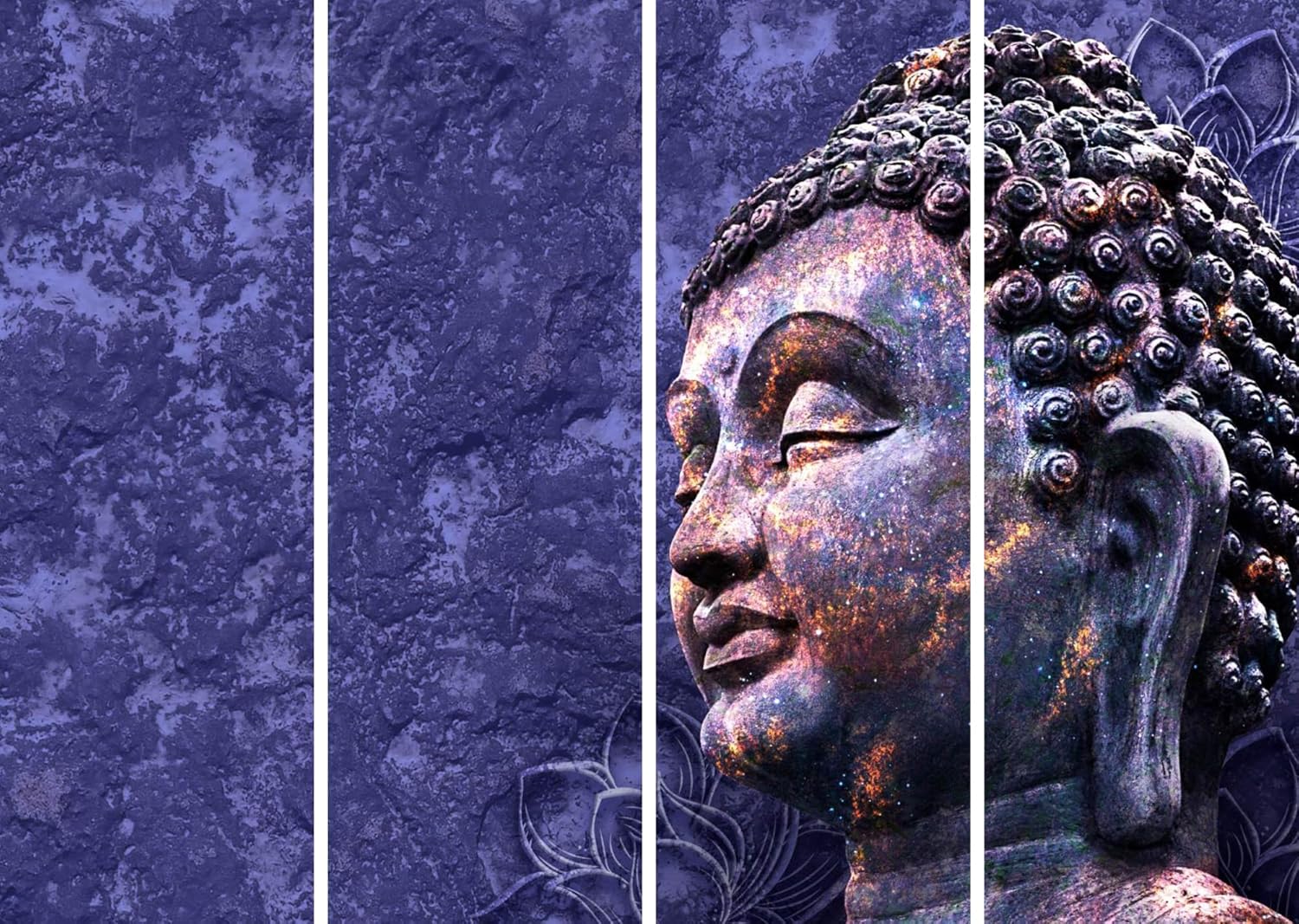
Buddha-tastic 4-Panel Framed Wall Art That'll Kick Stress to the Curb (33×24 inches Ready to Hang)
You may also like

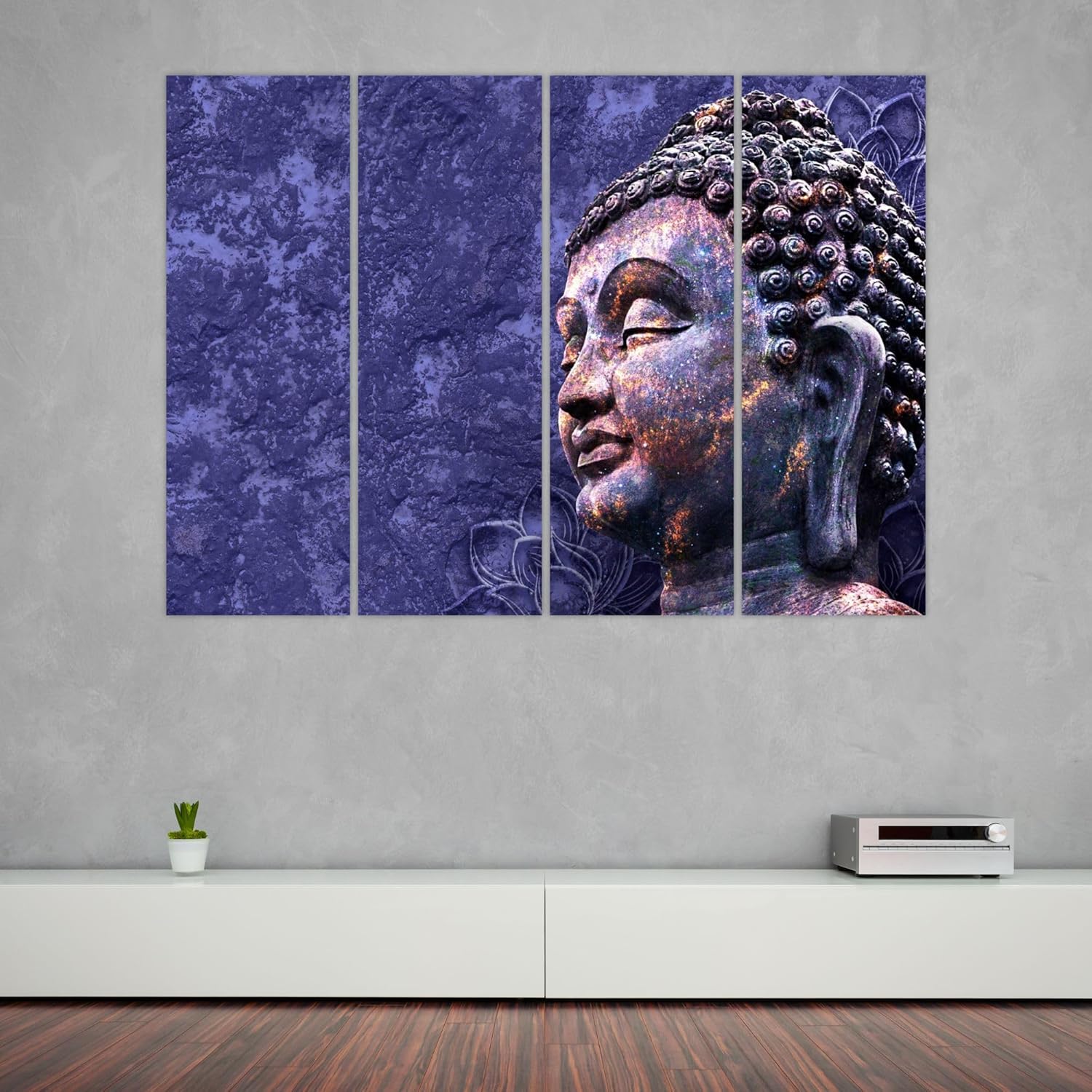
Moolwan 4-Panel Buddha Vinyl Wall Art on MDF (85x55cm) – Asymmetric Composition with Rightward Visual Weight
You keep opening this page, trying to mentally place these four panels on your living room wall. But it's impossible to know for sure, isn't it? 85cm looks balanced in mockups, but your wall has that AC unit on one side, the window on the other, and the sofa taking up visual space below. You need to know this works in your specific space—not just styled photos with perfect blank walls and no furniture.
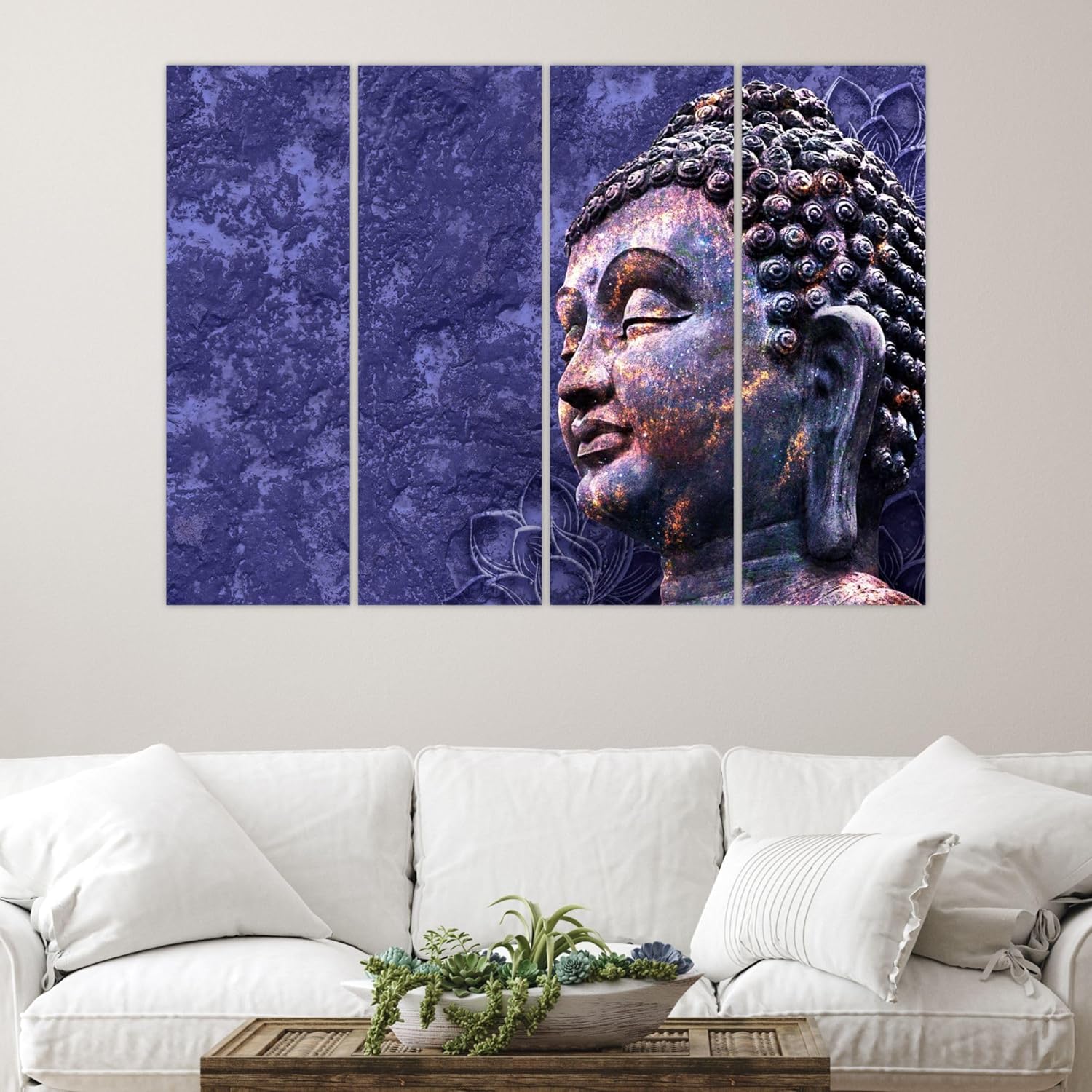
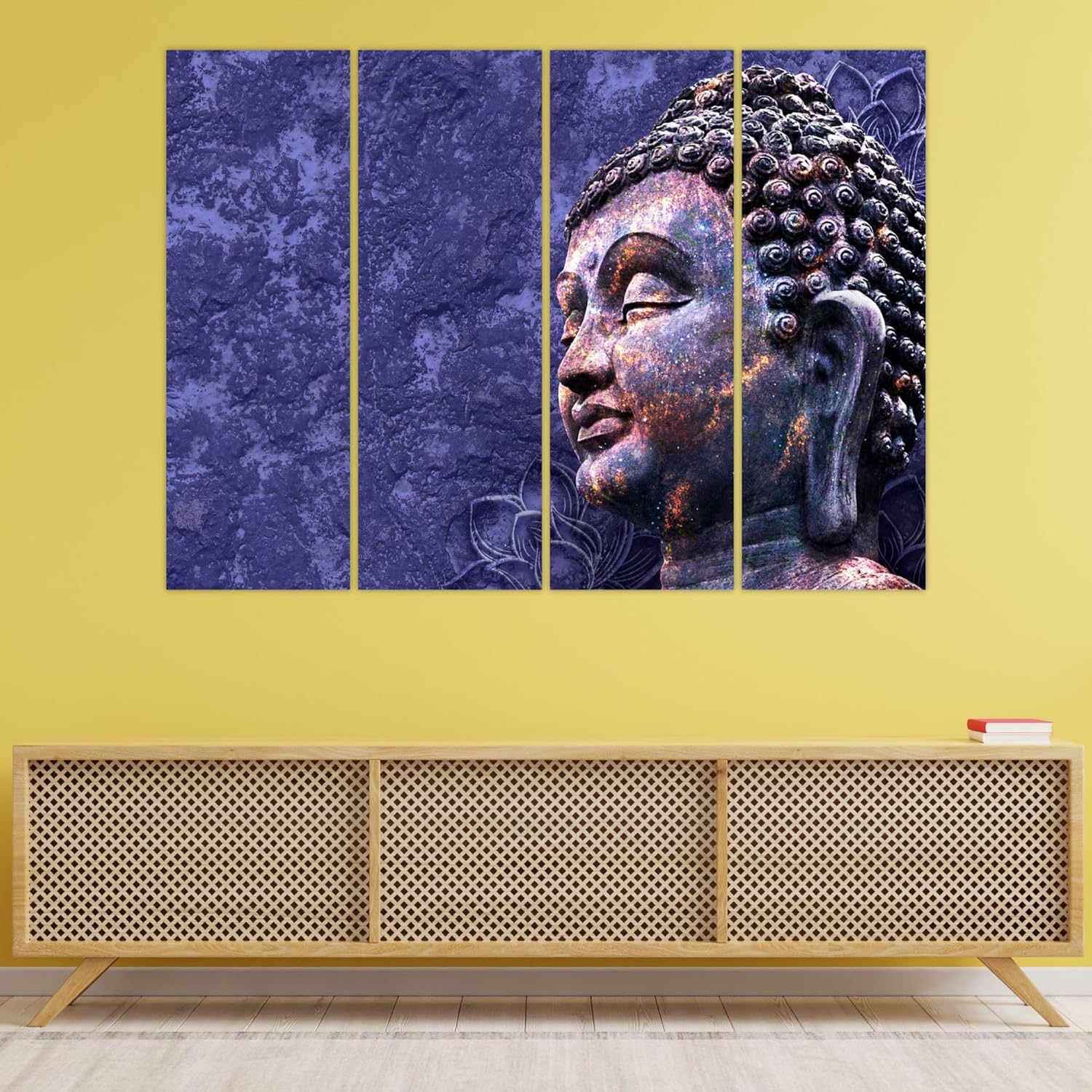
Here's what the image actually shows you: Buddha's face positioned deliberately on the right two panels, with textured indigo negative space on the left. This isn't centered composition. It's weighted asymmetry—which means you have flexibility in placement. If your wall has an element on one side (window, doorway, bookshelf), you can position this so the visual weight balances against it rather than competing with it.
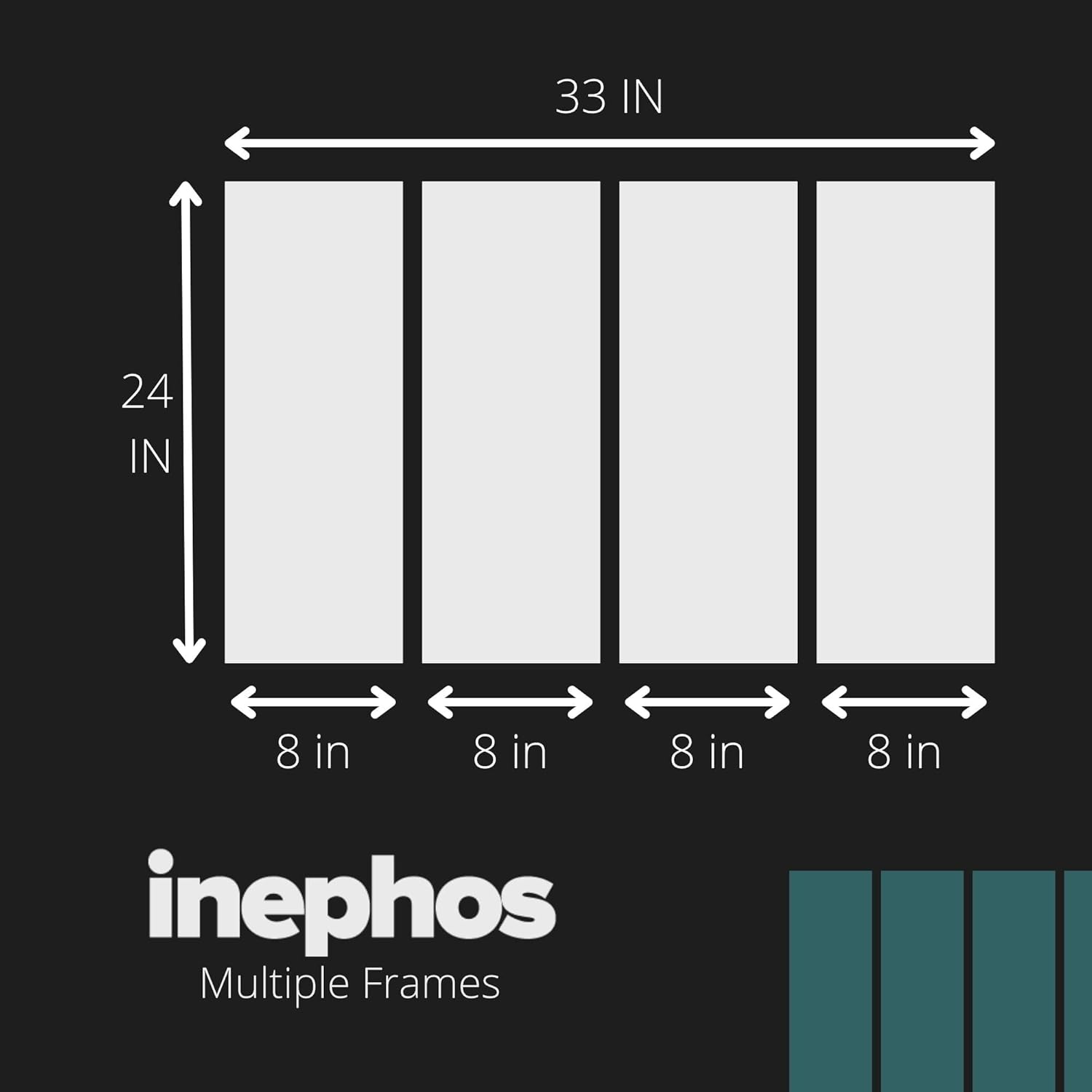
The four panels create a horizontal spread of 85cm including gaps. At 55cm tall, this sits comfortably between a sofa top and ceiling without feeling cramped. The cosmic golden highlights on Buddha's face catch attention from across the room, while the deep indigo background recedes—making this feel anchored rather than floating.
Why 85cm Works on 10-12 Foot Walls (And What Changes If You Go Wider)
Your wall is probably 10-12 feet (300-365cm). At 85cm wide, these four panels cover roughly 23-28% of that width. This leaves 107-140cm on each side—enough breathing room that the art doesn't dominate, but substantial enough to be a clear focal point.
The math against your sofa: if your three-seater is 6 feet (180cm), this 85cm piece is about 47% of sofa width. Slightly under the 60-75% guideline for centered art, but deliberately so—because asymmetric compositions don't need to match sofa width exactly. The rightward visual weight creates its own balance.
What if you went larger? A 120cm version would cover 33-40% of wall width and feel more commanding. But 85cm works for walls with side elements—windows, doorways, display shelves—where you need the art to share space rather than claim it entirely.
Viewing distance matters here: from 8-10 feet away (typical sofa-to-wall in Indian living rooms), the four-panel format reads as one continuous image. The gaps between panels (standard 2-3cm) are visible but don't fragment the Buddha's face—his features flow across the right two panels seamlessly.
What These Colors Look Like on Cream Walls (Morning LED vs. Evening Light)
The dominant color here isn't blue—it's deep indigo with violet undertones. This matters because pure blue against cream walls can look cold and disconnected. Indigo-violet sits warmer on the spectrum. Against cream or off-white walls (standard in Indian apartments), this creates depth without stark contrast.
Morning light: The golden-copper highlights on Buddha's face catch early sun. If your wall faces east, expect these iridescent accents to shift subtly—more golden at 8am, more copper-bronze by 10am. The indigo background will read slightly lighter, more violet-leaning.
Warm LED evening: The golden highlights become richer, almost amber. The indigo deepens toward purple-navy. This is when the cosmic effect on Buddha's skin—those scattered glitter-like particles—becomes most visible under direct downlighting.
Against brown furniture: The warm golden tones on Buddha's face echo wood furniture tones without matching them exactly. The indigo acts as a cool complement, creating visual separation between your sofa and the wall behind it.
One consideration: if your walls are builder's peach (common in Indian apartments) rather than cream, the indigo-violet may intensify the peach tone slightly. Test this mentally—does a cool-toned accent work in your space, or do you need warmer wall art?
Installing 4 Panels in Indian Walls (Alignment and Spacing Reality)
Four panels means eight mounting points—two per panel. The included hardware works for both concrete walls (older buildings) and drywall (modern apartments), but here's what installation actually involves:
Start with the paper template. It shows exact spacing between all four panels. Tape it to your wall at your chosen height (20-25cm above sofa top for standard placement). Mark all eight points through the template. Remove template. Drill.
Concrete walls: Use the 6mm masonry bit. Drill 35mm deep per mark. Tap in concrete anchors. Screw in hooks.
Drywall: Use the 6mm standard bit. Drill 30mm deep. Insert plastic anchors. Screw in hooks.
The alignment challenge with multi-panel art: if one panel sits even 5mm higher than its neighbor, the Buddha's face looks fractured. The template solves this if you follow it exactly. Use a spirit level after marking—before drilling—to verify all marks are truly horizontal.
Total installation time: 25-30 minutes for four panels, versus 15 minutes for single-panel art. The extra time is in verification, not drilling.
For rentals: Eight small holes (6mm diameter) fill with standard wall putty for less than ₹300 when you move out. The deposit concern is real, but these aren't bracket-sized holes—they're smaller than typical picture frame nails.
How This Compares to Macrame Wall Hangings You've Been Considering
You may have looked at macrame wall hangings in this price range. The appeal is obvious—textured, handcrafted, bohemian aesthetic that feels softer than rigid panels. But here's the trade-off:
Dust collection: Macrame's woven fibers trap dust. In Indian cities—particularly during pre-monsoon months when dust levels spike—you'll notice graying within weeks. Cleaning requires vacuuming on low suction or outdoor beating. The vinyl surface on MDF? Wipe with dry cloth. Done.
Visual presence: Macrame creates texture but not imagery. This Buddha piece gives you both—the four-panel format adds dimensionality while the image itself provides a focal point. Macrame works as accent; this works as statement.
Humidity behavior: Macrame absorbs moisture. During monsoons, cotton fibers expand, and the hanging may droop or stretch. Splash-proof vinyl on MDF maintains its shape regardless of humidity fluctuations.
Longevity in Indian conditions: Expect quality macrame to last 2-3 years before fibers loosen or discolor. Vinyl on MDF maintains appearance for 5+ years with basic dusting.
The honest consideration: if your room already has hard-edged furniture (glass tables, metal frames), macrame adds textural contrast that this vinyl panel won't. But if your space has wooden furniture and fabric sofas—typical Indian living rooms—the Buddha panel complements rather than conflicts.
What This Will Actually Feel Like in Your Living Room
From the doorway: Your eye goes to Buddha's face first—specifically the closed eyes and golden highlights. The asymmetric positioning means there's visual "entry space" on the left before you reach the focal point. This is intentional composition, not accidental cropping.
From the sofa: Sitting directly below, you'll notice the texture in the indigo background more clearly. The lotus motifs in the corners—subtle in photographs—become more apparent at this angle and distance. The four-panel gaps are visible but don't distract.
The emotional effect: This is contemplative, not decorative. Buddha's closed eyes and calm expression set a specific mood. If you want energetic, stimulating wall art, this isn't it. If you want something that makes the room feel calmer when you walk in after work, this does that effectively.
Alone versus with adjacent décor: The asymmetric composition means this works next to a bookshelf or window on the left side—the visual weight balances. Avoid placing busy décor immediately to the right, where it would compete with Buddha's face.
Guest perception: Spiritual art reads as intentional in Indian homes. There's no "explaining" required—guests understand immediately why a Buddha piece hangs in a living room. The cosmic effect on his face will generate comments; it's unusual enough to notice but not so unusual that it looks like imported trendy art.
Moolwan Design Note
The iridescent golden-copper effect on Buddha's face creates depth without overwhelming the contemplative mood. The deliberate asymmetry—weighted right rather than centered—gives placement flexibility for walls with side elements.
Moolwan Quality Standard
Splash-proof vinyl print on MDF panels. Designed for Indian apartment lighting conditions. Packed for long-distance Indian transit. Quality checked before dispatch. Ships from West Bengal.
Moolwan Fit Guidance for Indian Homes
At 85cm wide, this 4-panel set works above 6-7 foot sofas on 10-12 foot walls. The rightward visual weight means you can offset placement if your wall has a window or doorway on one side.
Quick Specifications
- Product: Moolwan 4-Panel Buddha Vinyl Wall Art on MDF (85x55cm)
- Brand: Moolwan
- Category: Vinyl Wall Art on MDF
- Collection: Buddha Wall Art Collection
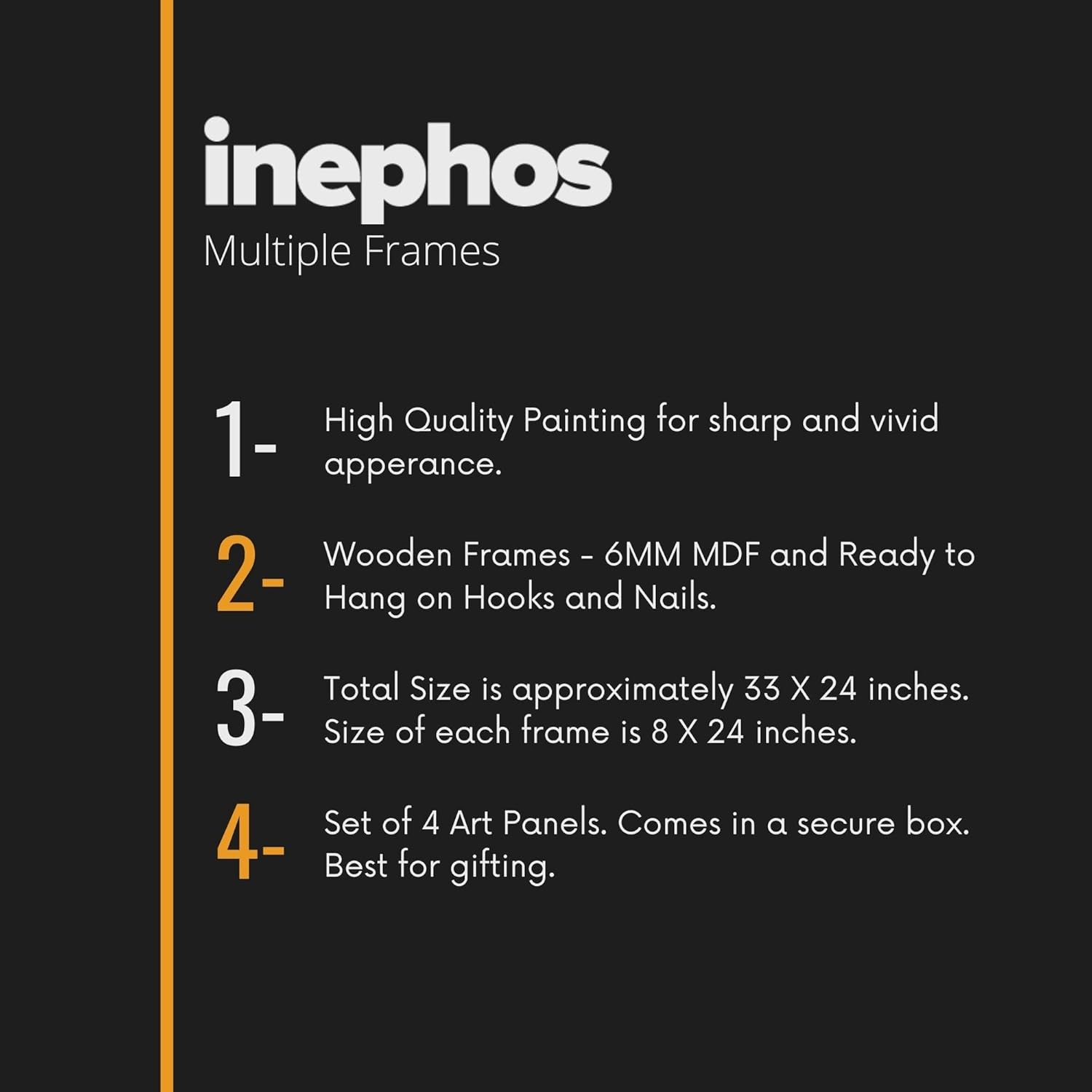
- Dimensions: 85cm (W) x 55cm (H) x 2cm (D)
- Weight: 3000g (3 kg)
- Panel Count: 4 panels
- Material & Construction: Splash-proof vinyl print on MDF
- Colors: Deep indigo-violet background, golden-copper-orange highlights, blue-gray Buddha features
- Best For: Living rooms with 10-12ft walls, above 6-7ft sofas; meditation spaces; entryways
- Ships From: West Bengal
Frequently Asked Questions
Will 85cm look too small above my 8-foot sofa?
At 85cm, this covers about 35% of an 8-foot (240cm) sofa width—below the standard 60-75% guideline for centered art. However, the asymmetric composition with rightward visual weight creates its own balance. If your wall has elements on one side (window, bookshelf), this placement flexibility actually works better than strictly proportional art.
How will the deep indigo look against my cream walls in artificial light?
Under warm LED lighting (3000K, standard in Indian homes), the indigo shifts toward purple-navy while the golden highlights on Buddha's face become richer and more amber-toned. The contrast against cream walls softens compared to daylight—dramatic but not jarring.
How do I align four panels so Buddha's face doesn't look fractured?
Use the included paper template exactly. It marks spacing between all panels. Tape it to your wall, mark through the template, verify with a spirit level before drilling. Even 5mm misalignment is visible on faces—the template prevents this if followed precisely.
Is splash-proof vinyl durable during Mumbai monsoons?
The vinyl surface doesn't absorb moisture. During 70-85% humidity, water vapor beads on the surface rather than penetrating. MDF backing is more stable than canvas stretcher bars in humidity fluctuations—no warping or rippling across monsoon seasons.
How much gap should I leave between panels?
Standard spacing is 2-3cm between panels. The template shows exact positioning. Too little gap (under 1cm) makes panels look like they're touching; too much (over 5cm) fragments the Buddha image. Follow the template for intended visual flow.
Product Snapshot
- Brand: Moolwan
- Product: Moolwan 4-Panel Buddha Vinyl Wall Art on MDF (85x55cm)
- Category: Vinyl Wall Art on MDF
- Collection: Buddha Wall Art Collection
- Theme/Type: Buddha, Spiritual, Contemplative
- Best For: Living rooms above 6-7ft sofas on 10-12ft walls; meditation corners; entryways
- Primary Differentiator: Asymmetric composition with Buddha positioned right—visual progression from textured negative space to detailed focal point
- Secondary Differentiators: Cosmic iridescent effect on Buddha's face (golden-copper highlights); lotus motifs in background
- Material & Construction: Splash-proof vinyl print on MDF panels
- Care Instructions: Dust with dry microfiber cloth; no water or chemicals needed
- Ships From: West Bengal
- Packing: Long-distance transit ready
- Quality Check: Before dispatch