
Buddha-tastic 4-Panel Wall Art to Make Your Walls Om-azing (33x24in Framed)
You may also like

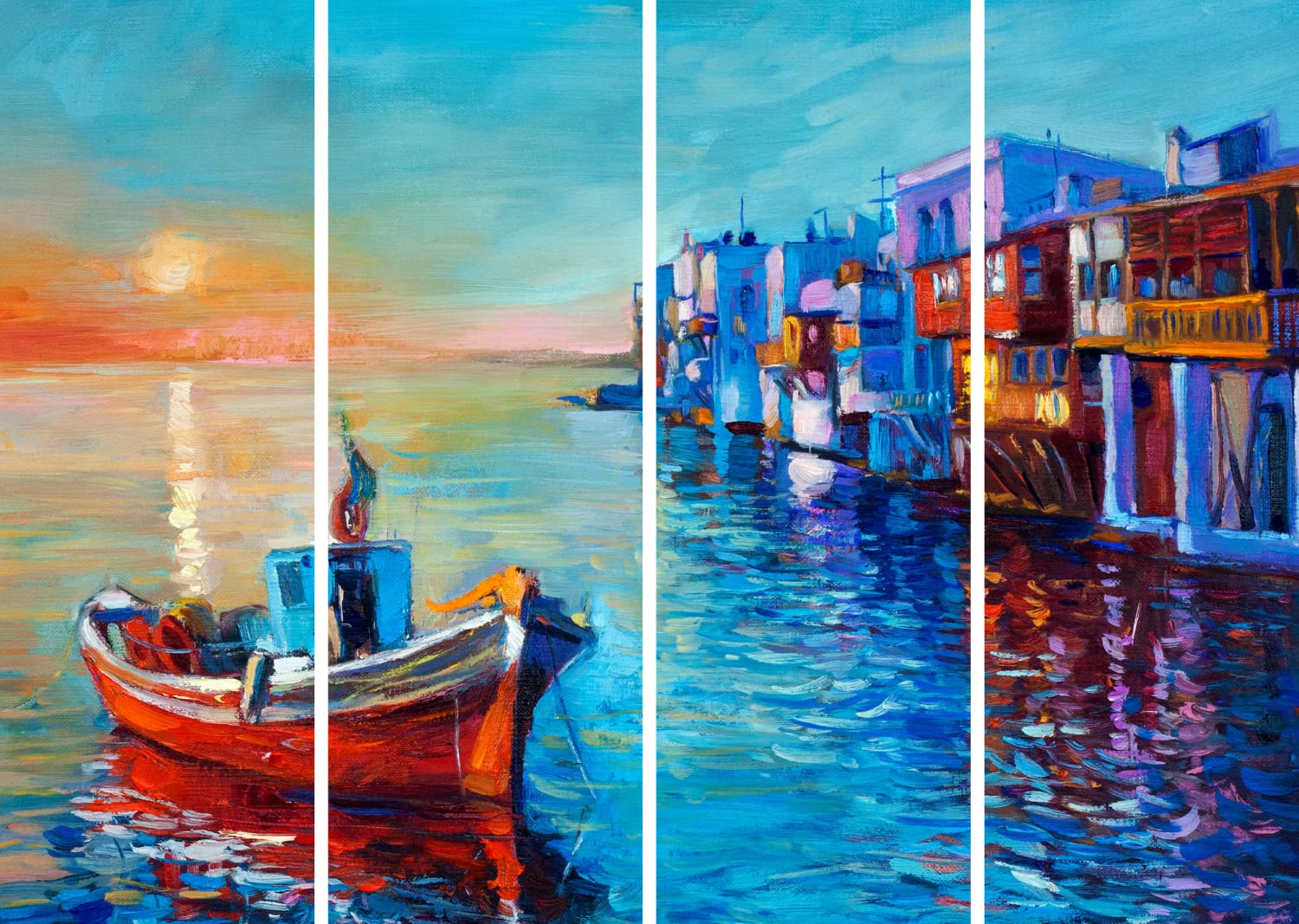
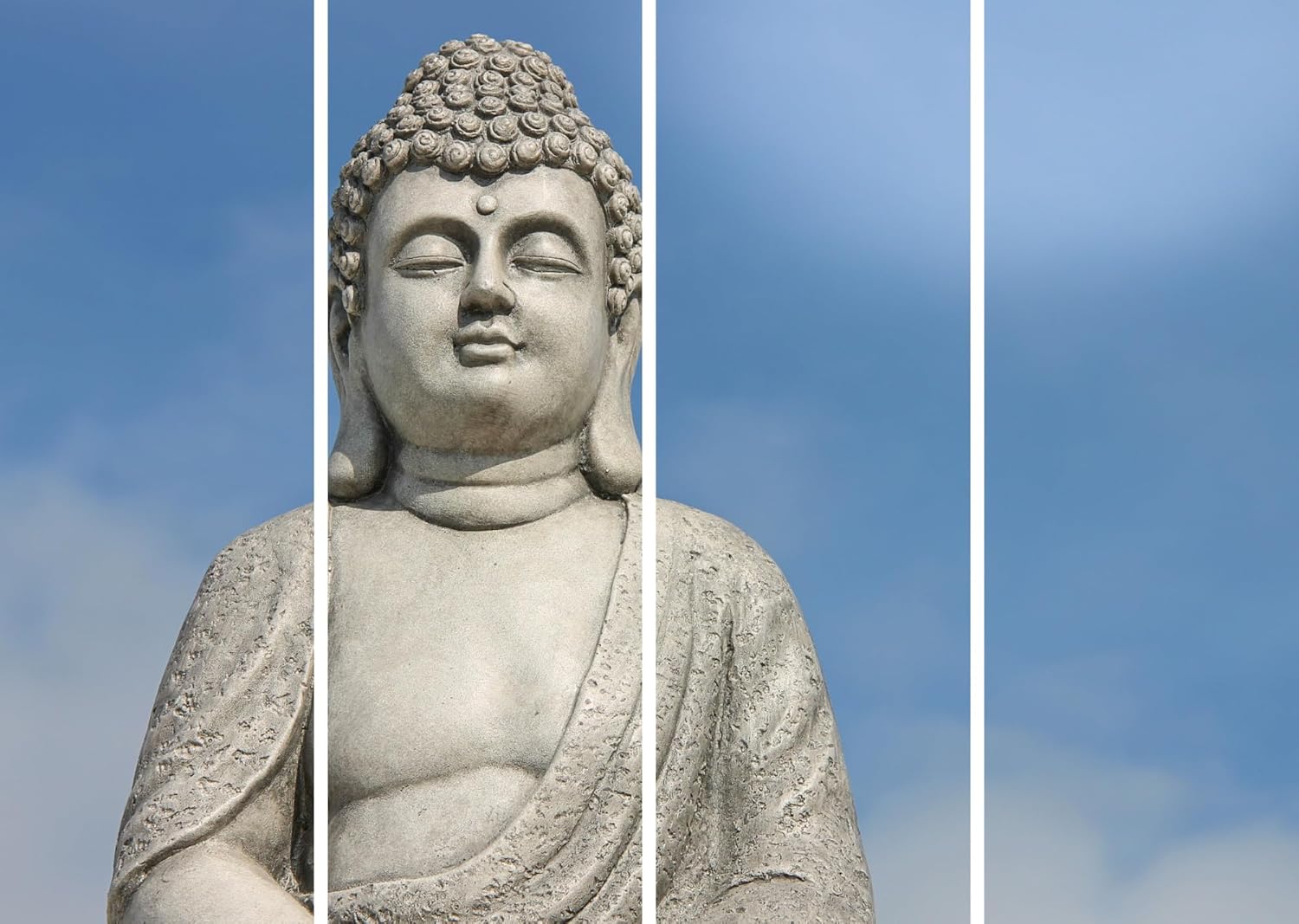
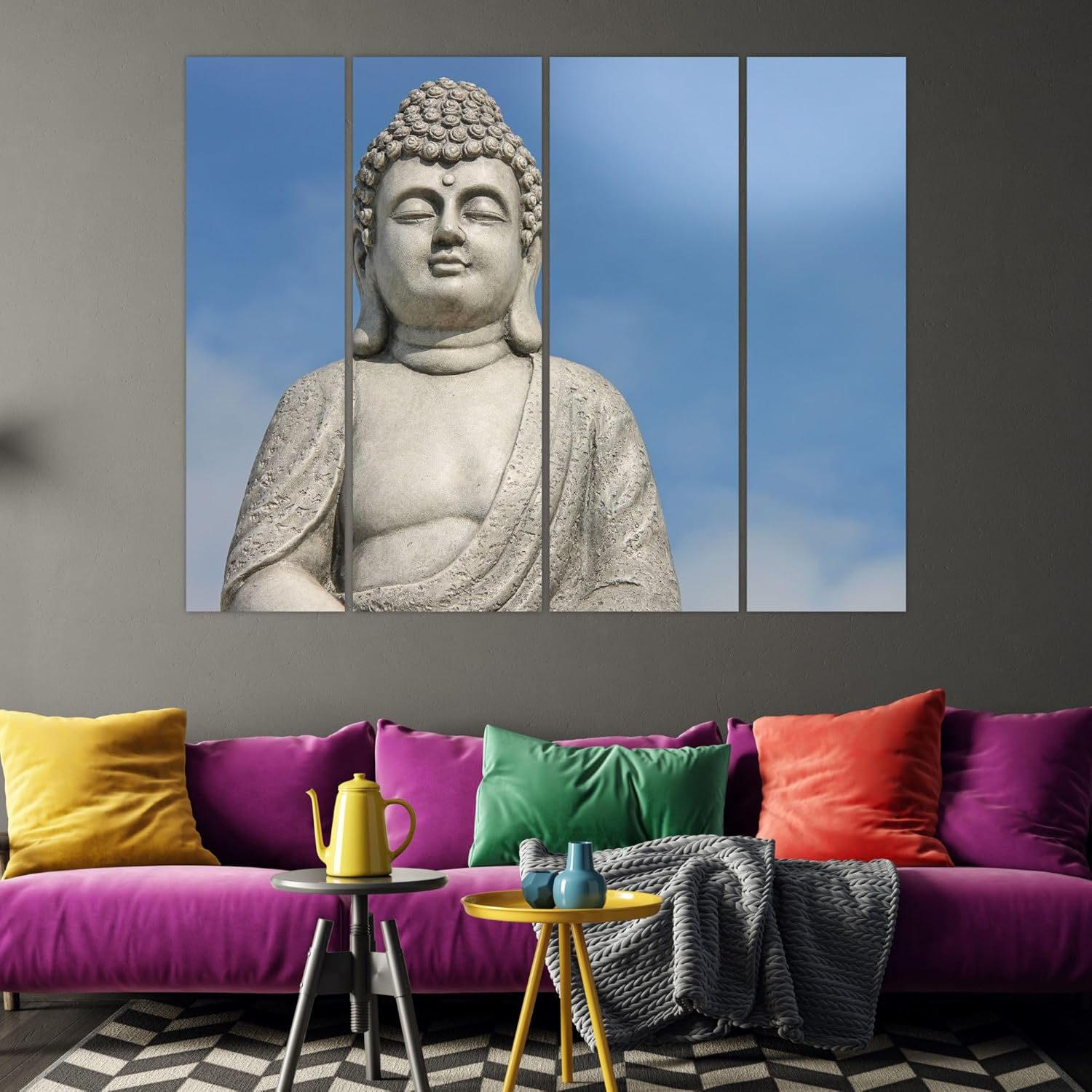
Moolwan 4-Panel Buddha Vinyl Wall Art on MDF (85×55cm) – Stone-Grey Buddha with Open Sky Composition
Why This Specific Buddha Piece Works Where Others Feel Crowded
You've looked at Buddha wall art before. Most of it fills the entire frame edge-to-edge — golden Buddhas against busy backgrounds, close-cropped faces that feel intense rather than peaceful, compositions so detailed they compete with everything else on your wall. You're trying to picture how it would actually look above your sofa, and you keep coming back to the same question: will this calm my room down, or will it just add more visual noise?
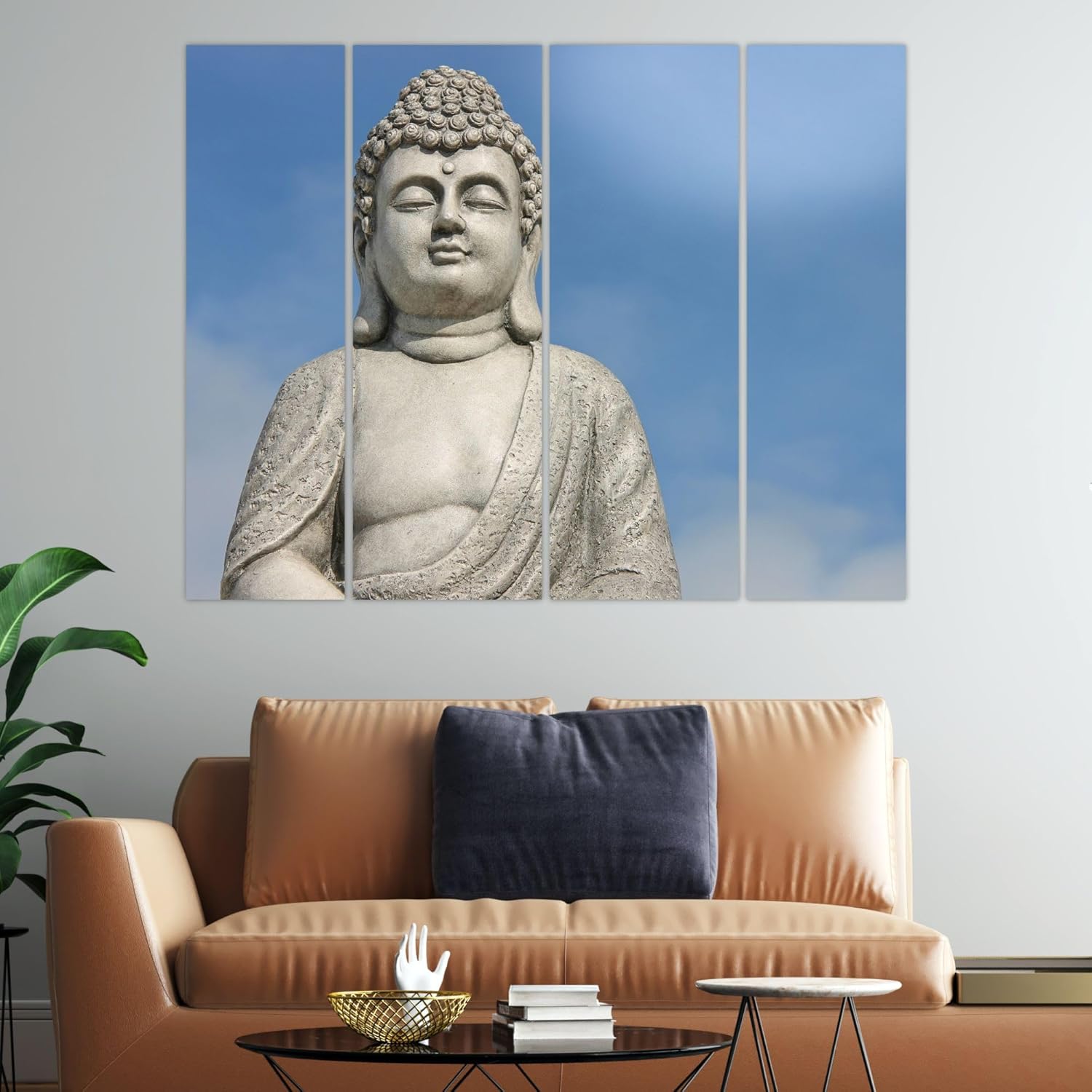
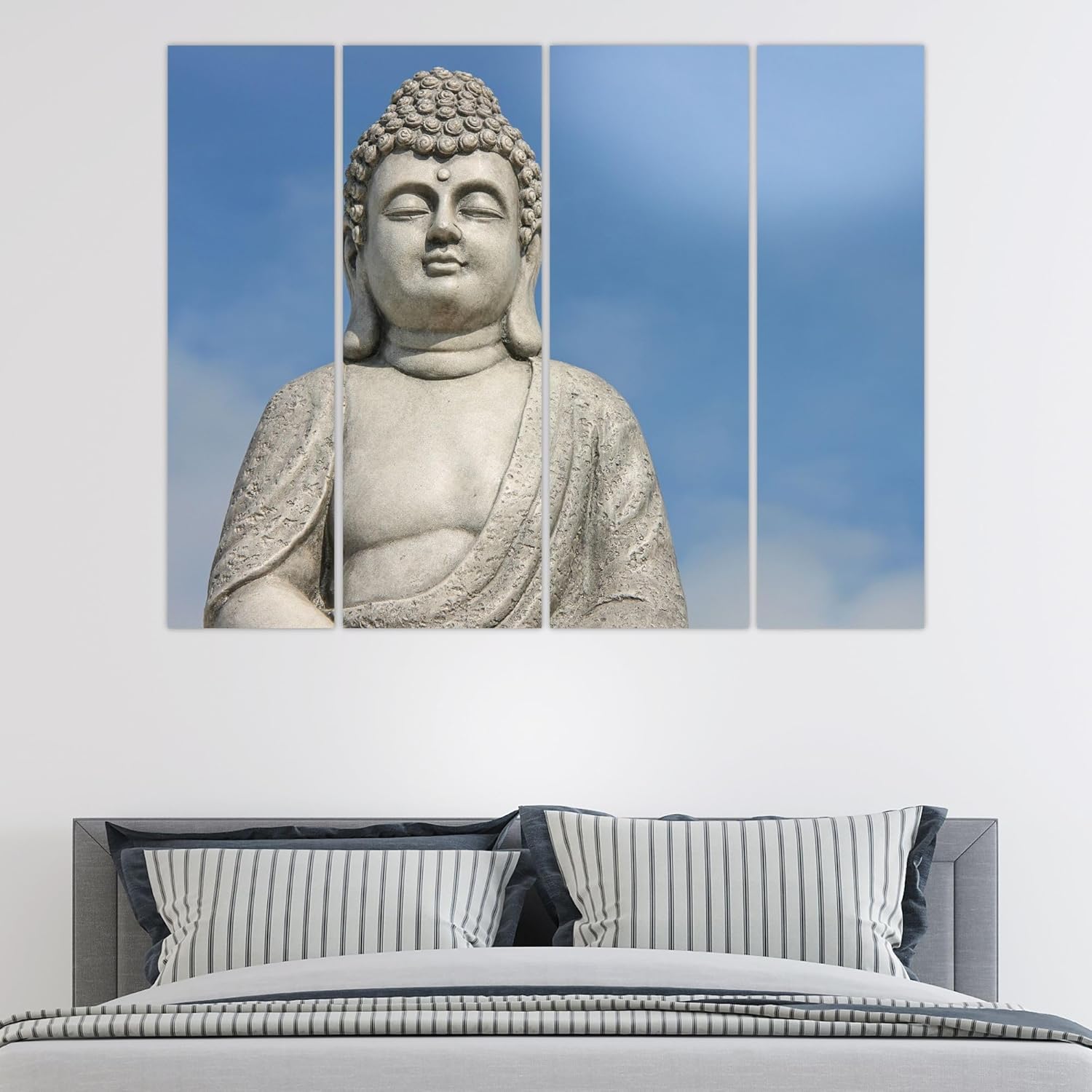
This 4-panel piece solves that specific problem. The Buddha figure occupies roughly 60% of the composition, positioned slightly left of center. The remaining space is soft blue sky with gentle cloud wisps — actual visual breathing room. When you look at it from across the room, your eye lands on the serene stone-grey face, rests there, and then has somewhere quiet to move. The composition creates calm because it contains calm, not because it depicts calm while simultaneously overwhelming you with detail.
The stone-grey Buddha treatment is deliberate. Unlike golden or bronze Buddha depictions that demand attention and can clash with existing warm-toned furniture, this grey-toned figure recedes slightly into the space. It anchors without dominating. Against cream walls with brown sofas — the reality of most Indian living rooms — this reads as intentional restraint, not as something you're still deciding whether you like.
Why 85cm Width Works on 8-10ft Walls (And What Changes If You Size Up)
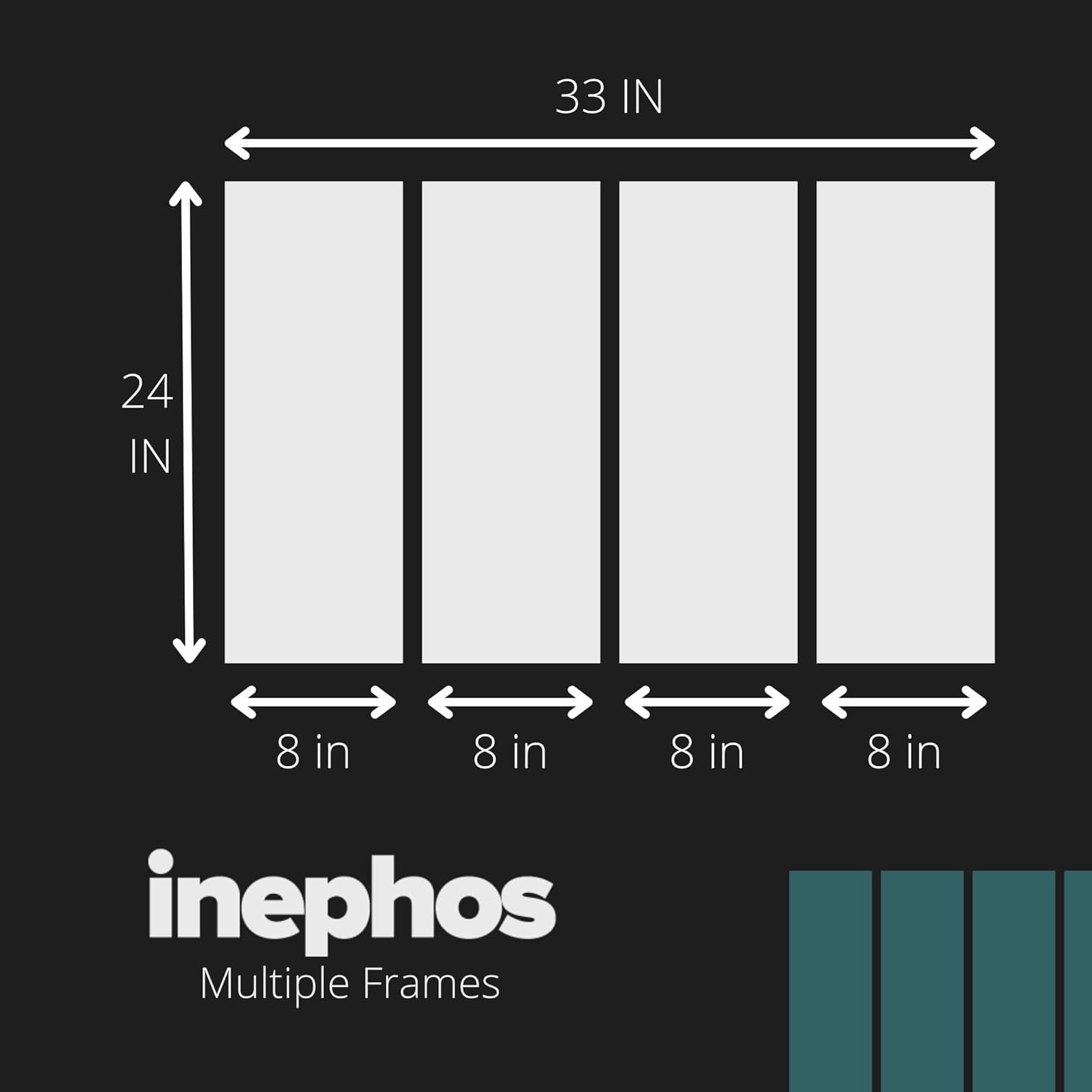
Your wall is probably 10-12 feet wide. Your sofa is probably 6-7 feet. The math: 85cm (roughly 33 inches) is approximately 47% of a 6-foot sofa's width — slightly below the ideal 60-75% range, which means this piece works as a complementary element rather than a dominant statement.
What this means practically: if your living room already has visual activity — patterned curtains, a TV unit with decorations, family photos on adjacent walls — this size integrates without competing. If your wall is relatively bare and you want the Buddha to be the primary focal point, you'd want to go larger (120cm+). At 85cm, this piece says "I chose something meaningful" rather than "look at my wall art."
Wall coverage calculation: On a 10-foot (300cm) wall, 85cm covers about 28% of the width. This is gallery-style proportion — the art has clear negative space on either side, which lets the composition's internal breathing room extend into your actual room.
Viewing distance matters: At 3 meters (typical across-the-room distance in Indian living rooms), the four panels read as a cohesive image. The 2-3cm gaps between panels become nearly invisible. At 1.5 meters, you notice the panel divisions, which adds a contemporary gallery quality to what is otherwise traditional subject matter.
What These Colors Look Like on Cream Walls (Morning vs LED)
The palette is limited and deliberate: stone grey (the Buddha figure), soft sky blue (background), and white (cloud wisps and panel gaps). No gold. No red. No saffron. This is an unusually restrained color choice for Buddha art.
Against cream or off-white walls (90% of Indian apartments): The cool blue-grey creates gentle contrast without jarring. In morning light from east-facing windows, the sky portion appears slightly brighter, almost luminous. The stone-grey Buddha stays consistent. The overall effect is cooler, more meditative.
Under warm LED lighting (3000K, standard in Indian homes): The blue shifts slightly warmer, closer to a soft teal. The grey Buddha takes on subtle warm undertones. The piece integrates more completely with brown furniture and wooden coffee tables — the warm lighting bridges the cool artwork and warm furnishings.
Afternoon direct sunlight: If your wall catches 2-3 hours of direct sun, the splash-proof vinyl surface won't fade the way printed canvas would. The colors remain stable. You might see slight glare at certain angles, but the matte vinyl finish minimizes this.
The practical implication: This color palette works in Indian homes because it doesn't fight the existing warm tones — it provides contrast that feels intentional, like you chose something to balance your room rather than match it.
Installation in Indian Walls (Concrete vs Drywall)
Four panels means eight mounting points — two D-rings per panel. This sounds complicated until you understand the actual process.
The panels arrive with D-ring hangers already attached to the back. Each panel weighs approximately 750 grams. You're not supporting 3kg at one point; you're distributing that weight across eight contact points with the wall, each bearing less than 400 grams.
For concrete walls (most older Indian buildings): 6mm masonry bit, 35mm deep holes, plastic anchors, screws. Total drilling time: about 10 minutes if you work methodically. The hanging template marks exact positions. Measure once from center, mark all eight points, drill, anchor, hang.
For drywall (newer apartments, especially gated communities): Standard drywall anchors work fine at this weight. You don't need toggle bolts or specialized heavy-duty hardware.
The alignment reality: Four panels need to hang level with each other and maintain consistent gaps (2-3cm typically works). Start with the two center panels, get them perfectly level using a spirit level or phone app, then position the outer panels relative to them. Allow 30 minutes total for first-time installers who want it perfect.
Rental consideration: Eight 6mm holes are patchable in under 30 minutes when you move out. Wall putty, sand smooth, touch-up paint. Your landlord will not notice.
Why Wall Art Instead of Macrame (The Practical Difference)
Macrame wall hangings have had a moment. They're textured, bohemian, Instagram-friendly. But there's a reason Buddha imagery rarely works in macrame form, and it's not just aesthetic.
Macrame is dimensional. It catches dust in every knot and fiber. In Indian apartments — especially in cities with construction dust, during monsoon humidity, with windows open for ventilation — macrame requires cleaning every 2-3 weeks to avoid looking dingy. The fibers absorb cooking odors if your living room is open to your kitchen. After one monsoon season, the cotton/jute darkens unevenly.
Flat vinyl on MDF solves all of this. Dust wipes off with a dry cloth. The splash-proof surface resists humidity absorption. No fibers to trap odors. Two monsoon seasons from now, this piece will look exactly as it does today.
Visual weight is different too. Macrame has physical depth and shadow — it reads as craft object, as decorative texture. This Buddha piece reads as art, as image, as contemplative focal point. In a meditation corner or above a sofa where you want visual calm, the flat presentation creates less distraction than dimensional hanging textiles.
What This Will Actually Feel Like in Your Room
From your doorway: The Buddha figure registers immediately — the stone-grey against blue creates enough contrast to draw the eye across the room. The four-panel format reads as contemporary even though the subject is traditional. First impression: "someone chose that deliberately."
From your sofa (if it's across from the art): The face is at comfortable viewing height if you've mounted it 20-25cm above furniture or at eye level on an empty wall. The serene expression and closed eyes create a resting point for your gaze. Unlike art that rewards detailed examination, this composition rewards unfocused looking — the kind of visual rest you want in a room where you decompress.
Adjacent decor guidance: The cool palette means you can place warm-toned items nearby without clash. A wooden side table, terracotta planters, even a brass diya — these complement rather than compete. What to avoid: placing other blue-toned items directly adjacent, which creates unintentional matching rather than intentional contrast.
Solo vs grouped: This piece works best alone on its wall section. The four-panel format already has internal structure. Adding smaller frames around it fragments attention and defeats the breathing-room quality of the composition.
Moolwan Design Note
The asymmetric composition — Buddha left-weighted with open sky extending right — creates natural visual flow toward room corners. When placed on the left portion of a long wall, the sky section leads the eye toward adjacent furniture or architectural features.
Moolwan Quality Standard
Designed for Indian apartments and lighting conditions. Printed to resist humidity-related color fading. Packed for long-distance Indian transit. Quality checked before dispatch. Ships from West Bengal.
Moolwan Fit Guidance for Indian Homes
At 85×55cm, this piece suits walls 8-10 feet wide where complementary (not dominant) art is the goal. For 6-foot sofas, mount centered with 20cm clearance above cushion tops. For empty walls, mount at 150cm from floor to center.
Quick Specifications
- Product: Moolwan 4-Panel Buddha Vinyl Wall Art on MDF (85×55cm)
- Brand: Moolwan
- Category: Vinyl Wall Art on MDF
- Collection: Buddha Wall Art Collection
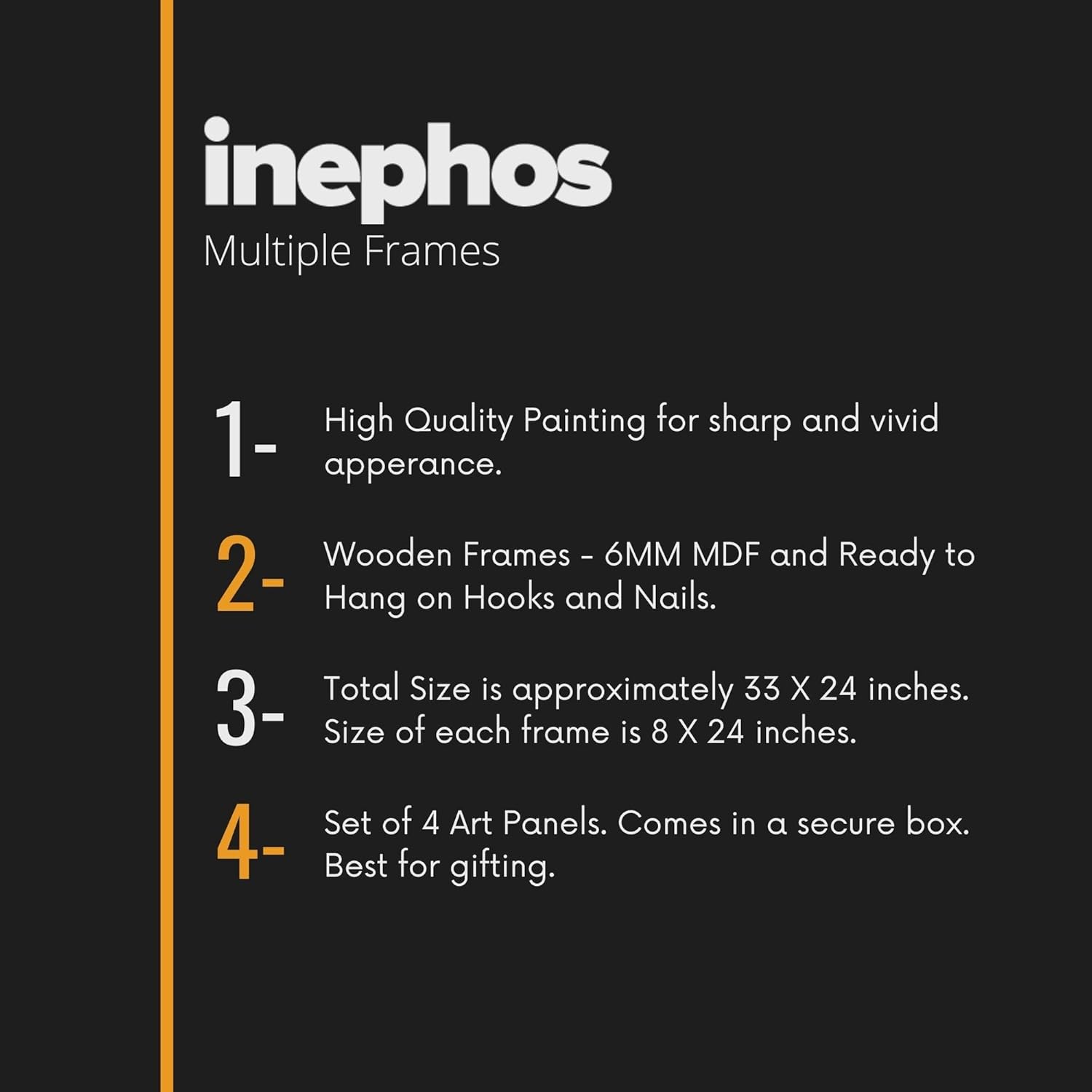
- Dimensions: 85cm W × 55cm H × 2cm D (total assembled)
- Weight: 3000 grams (approximately 750g per panel)
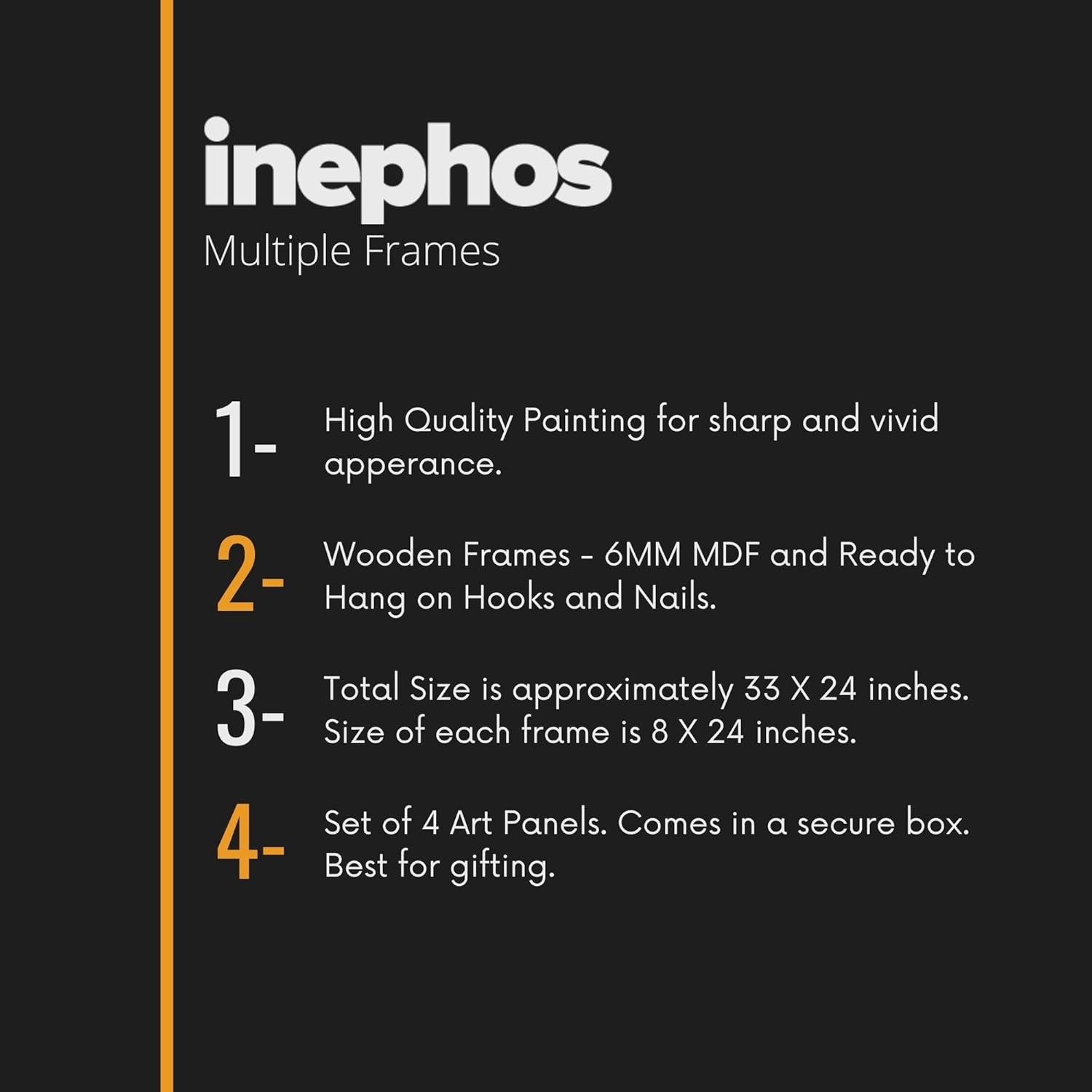
- Material & Construction: Splash-proof vinyl print on 6mm MDF, black frame finish
- Colors: Stone grey (Buddha figure), soft sky blue (background), white (cloud accents)
- Best For: Living rooms with 8-10ft walls, above 6-7ft sofas, meditation corners, entryways
- Ships From: West Bengal
Frequently Asked Questions
Will 85cm width look too small above my 7-foot sofa?
At 85cm, this piece covers about 40% of a 7-foot sofa's width — on the smaller end of ideal proportions. It will look intentionally restrained rather than undersized, best suited if you prefer art that complements rather than dominates. If you want the Buddha to be a commanding focal point, consider sizing up to 120cm for a 7-foot sofa.
How does the blue background look with warm LED lighting?
Under 3000K warm white LEDs (standard in most Indian homes), the sky blue shifts slightly toward teal while remaining distinctly cool-toned. This actually helps it integrate with brown and beige furniture — the warm lighting bridges cool art and warm furnishings.
How do I align four panels evenly during installation?
Start with the two center panels. Use a spirit level (or phone level app) to ensure they're perfectly horizontal. Position them with 2-3cm gap between. Then mount outer panels using the inner edges as reference, maintaining the same gap width. Total installation: 25-30 minutes for careful first-time alignment.
Will the colors fade near a window that gets afternoon sun?
The splash-proof vinyl surface includes UV-resistant properties. Direct afternoon sun for 2-3 hours daily will not cause visible fading over typical 3-5 year ownership periods. Moolwan's printing process is tested for Indian climate conditions including high UV exposure.
Can I use adhesive strips instead of drilling for this weight?
At 3kg total, this piece is at the upper limit of what heavy-duty adhesive strips can hold. We recommend proper wall anchors for reliability — the 6mm holes required are smaller than picture nail holes and patch invisibly when you move.
Product Snapshot
- Brand: Moolwan
- Product: Moolwan 4-Panel Buddha Vinyl Wall Art on MDF (85×55cm)
- Category: Vinyl Wall Art on MDF
- Collection: Buddha Wall Art Collection
- Theme/Type: Buddha, Spiritual, Zen
- Best For: Living rooms 8-10ft wide, above medium sofas, meditation spaces, entryways seeking calm focal point
- Primary Differentiator: Stone-grey Buddha against open sky composition creates visual breathing room
- Secondary Differentiators: Asymmetric left-weighted placement, cool blue-grey palette suited for warm Indian interiors
- Material & Construction: Splash-proof vinyl print on 6mm MDF with black frame finish
- Care Instructions: Dust with dry microfiber cloth; wipe surface with slightly damp cloth if needed; avoid chemical cleaners
- Ships From: West Bengal
- Packing: Long-distance transit ready
- Quality Check: Before dispatch