
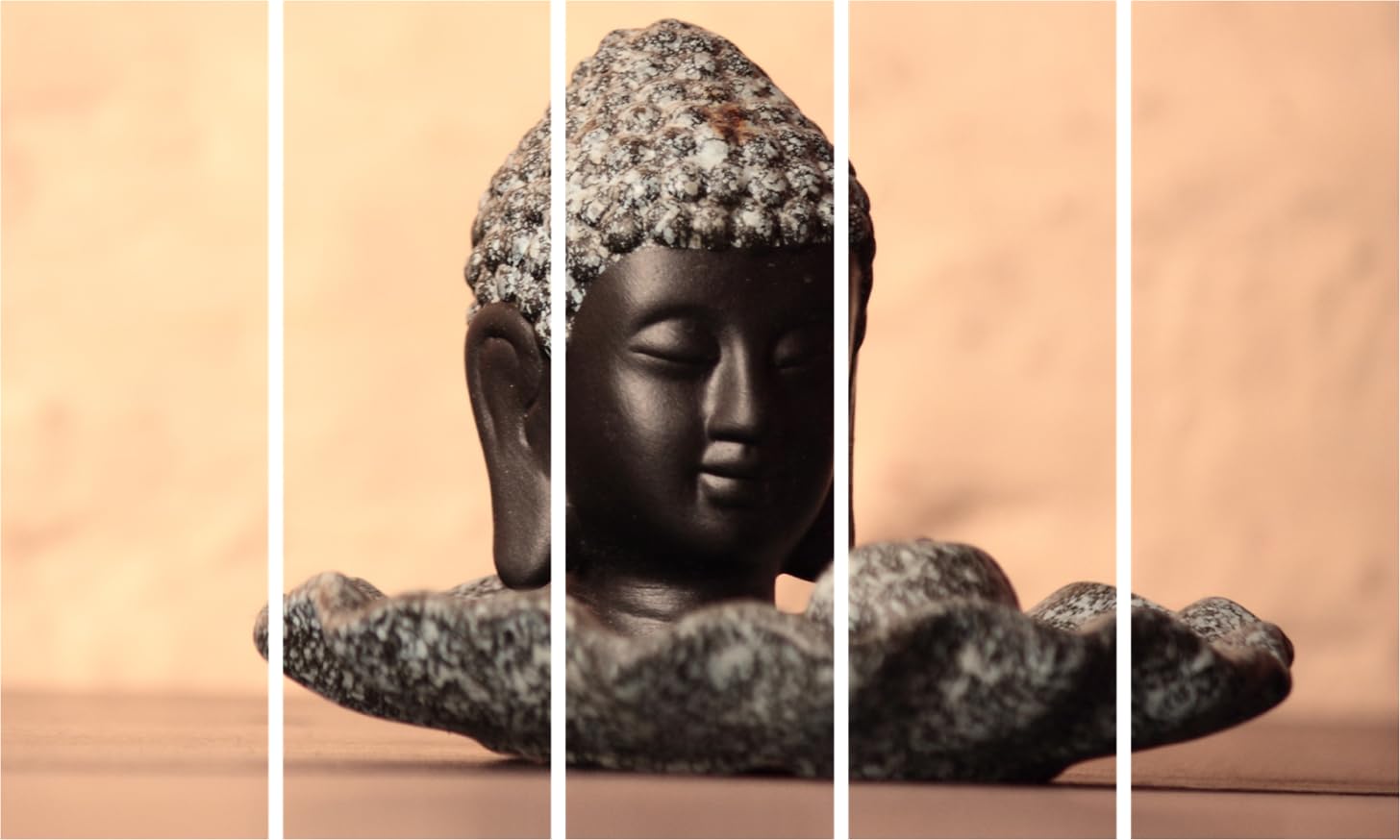
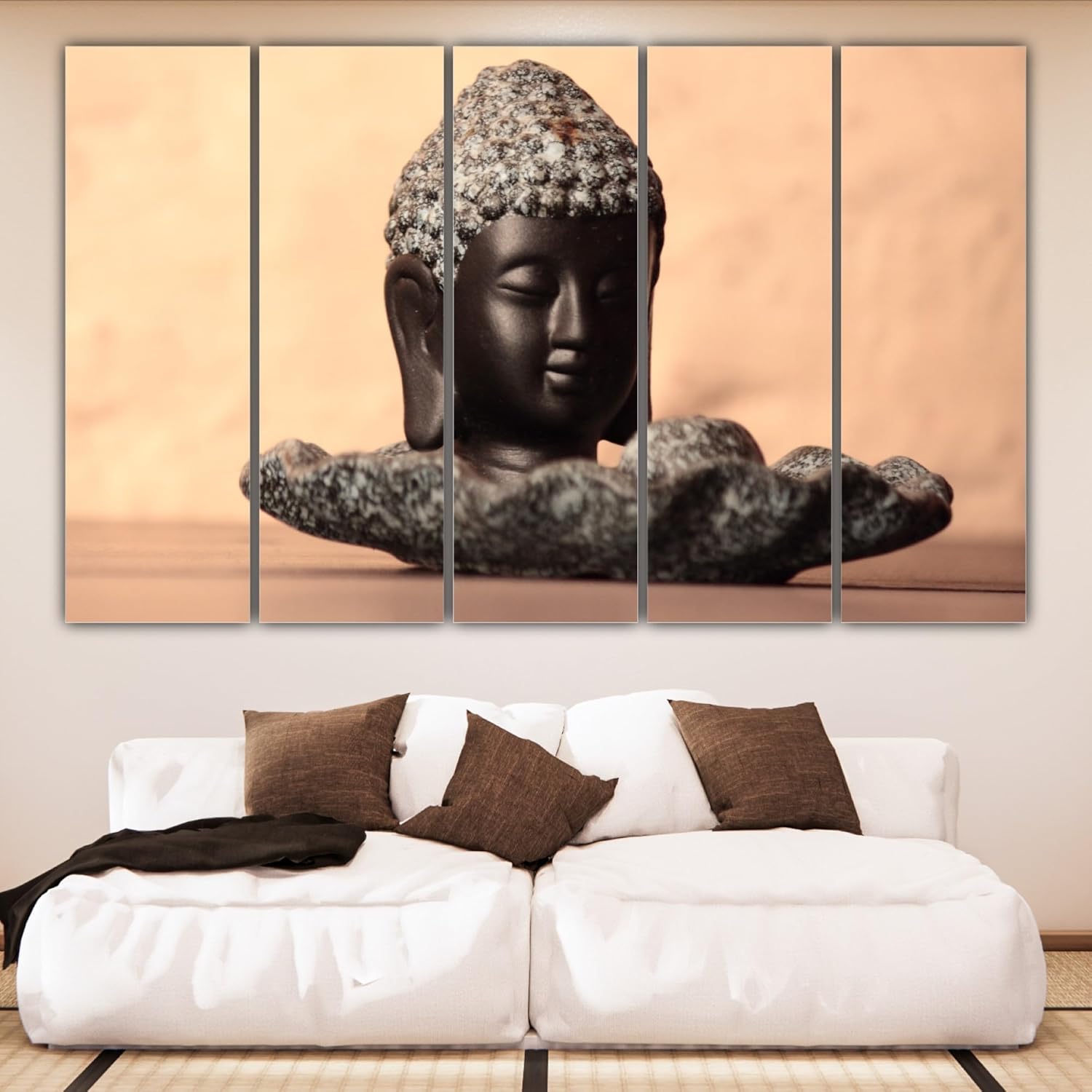
Buddha-tastic 5-Panel Framed Wall Art to Make Your Walls Go Om (127x76cm)
You may also like

Moolwan 5-Panel Buddha Canvas Wall Art Painting (127x76cm) - Framed Meditation Wall Decor
You might have browsed dozens of Buddha wall art pieces by now. Some were too small—those 60cm canvases that looked perfect online but disappeared against your 12-foot wall like a postage stamp. Some were too large—those 150cm+ pieces that would overwhelm your space and leave no breathing room. You probably kept coming back to something around 127cm—because intuitively, it feels right. But you want to be sure.
This 5-panel Buddha canvas spans 127cm across your wall. On a standard 12-foot (360cm) Indian living room wall, that's roughly 35% coverage—leaving 116cm of wall space on either side. That proportion isn't random. Interior designers call it the "anchor without overwhelm" zone: substantial enough to command attention, restrained enough to let your wall breathe.
The black Buddha figure against warm cream-peach tones creates natural contrast without fighting your existing décor. If your walls are the typical Indian builder's cream or off-white, these warm background tones will blend rather than clash. The textured grey-white ushnisha (Buddha's crown) adds visual interest without introducing competing colors.
Why 127cm Works on 12-Foot Walls (and What Happens If You Go Smaller or Bigger)
Here's the math you've probably been trying to figure out:
Your wall is likely 10-12 feet wide (300-360cm). This 127cm piece covers approximately 35-42% of that width. The golden rule for focal-point art? 30-50% wall coverage. You're right in the sweet spot.
Go smaller—say 90cm—and you drop to 25% coverage. The Buddha floats awkwardly, looking like an afterthought. Your eye keeps searching for something more substantial.
Go larger—say 150cm—and you hit 50%+ coverage. Now the art dominates rather than anchors. There's no visual breathing room, and the serene Buddha starts feeling imposing rather than peaceful.
At 127cm width and 76cm height, this piece sits comfortably above a standard 6-8 foot sofa with proper clearance. If your ceiling is the typical 9-10 feet, you'll have balanced vertical proportions too.
What These Colors Will Actually Look Like (Morning vs. Evening Light)
The product image shows deep black, textured grey-white, and warm peach-cream. In your home, expect these shifts:
Morning natural light: The cream background warms up, the black Buddha figure shows its subtle surface texture. This is when the piece looks most three-dimensional.
Afternoon direct sunlight: If sunlight hits the canvas directly, expect some glare. Position away from windows or use curtains during peak sun hours.
Evening LED/tube light: Most Indian homes use cool-white LEDs. The cream tones will appear slightly cooler, more neutral. The black remains deep. The overall effect becomes more graphic and modern.
Warm yellow bulbs: The peach tones intensify, creating a more meditative, golden-hour feel that many people prefer for spiritual artwork.
The splash-proof canvas coating means you won't see fading or color shift from humidity—important during monsoon months when indoor humidity hits 70-85%.
Rental-Friendly Mounting: How to Hang Without Losing Your Deposit
Five panels mean ten mounting points—but don't panic. Here's what's involved:
Each panel weighs approximately 600g (total 3kg distributed across five frames). That's light enough for standard picture hooks. You won't need heavy-duty wall anchors or masonry drilling for most walls.
Spacing matters: Keep 2-3cm gaps between panels. Measure once on the floor, mark your wall with painter's tape, then hang. Total installation time: 20-30 minutes if you're methodical.
Rental deposit concern: Standard picture nails leave small holes easily filled with wall putty (₹50 at any hardware store). The holes from hanging this piece are no different from hanging a single frame—you'll just have a few more of them.
The 0.6cm depth means panels sit nearly flush against the wall. No awkward shadows or tilting forward.
How This Compares to Single-Panel Buddha Art You've Been Considering
Single-panel Buddha art at 127cm width exists, but consider what you're trading:
Single panel: One large, heavy piece (often 4-5kg). If it's not perfectly level, it's obviously crooked. Damage means replacing the entire piece.
5-panel design: Weight distributed across five frames. Minor level adjustments are less visible. If one panel gets damaged (unlikely with the splash-proof canvas), you replace only that panel.
The 5-panel format also creates visual rhythm. Your eye moves across the composition—left panels showing the Buddha's shoulders and robe, center panels featuring the serene face, right panels completing the peaceful tableau. This movement adds depth that single-panel art can't replicate.
Compared to marketplace Buddha canvases at ₹800-1,200, expect these differences: thinner canvas (typically 200-250 GSM vs. this 340 GSM), plastic or MDF frames instead of kiln-dried pinewood, and no moisture-resistant coating. In Indian humidity, cheaper canvases often warp or develop mold spots within 18-24 months.
Setting Realistic Expectations: This Won't Transform Your Room Overnight
Let's be honest about what wall art can and cannot do:
It can: Create a focal point, add intentional design to an empty wall, introduce a calming visual element, give guests something to notice in the right way.
It cannot: Fix poor furniture arrangement, compensate for cluttered spaces, or make a cramped room feel spacious.
If your wall currently has nothing, this 127cm Buddha piece will feel like a significant upgrade. If you're replacing existing art, the change will be proportional to what you're replacing.
The meditation theme works in living rooms, bedrooms, home offices, yoga corners, and even pooja room adjacent walls. It's explicitly spiritual without being religious-denomination-specific—suitable whether you're Buddhist, Hindu, or simply appreciate contemplative imagery.
Quick Specifications
- Dimensions: 127cm (W) × 76cm (H) × 0.6cm (D)
- Weight: 3000g (3kg total, ~600g per panel)
- Panels: 5 framed canvases
- Canvas: 340 GSM cotton, splash-proof coating
- Frame: 1.5" kiln-dried pinewood
- Colors: Black Buddha figure, grey-white textured crown, warm cream-peach background
- Mounting: Standard picture hooks (included mounting guide)
- Delivery: 5-6 days metro cities, 6-8 days tier-2/3 cities
- Brand: Moolwan