
Buddha-tastic Framed Wall Art That Evicts Stress
You may also like

Moolwan 5-Panel Buddha Meditation Vinyl Wall Art on MDF (127x76cm) – Left-to-Right Gradient Creating Directed Visual Meditation Flow
Several weekends of research. Buddha wall art for bedroom, spiritual décor ideas, meditation corner options — you've saved more variations than you'll remember. You keep returning to this one because something about it settles the eye. Then the same hesitation stops you: "Will five separate panels actually read as one composition from across the room, or will it look like fragments on a wall?"
That question isn't overthinking. It's exactly what separates art you'll be satisfied with from art you'll second-guess every morning.
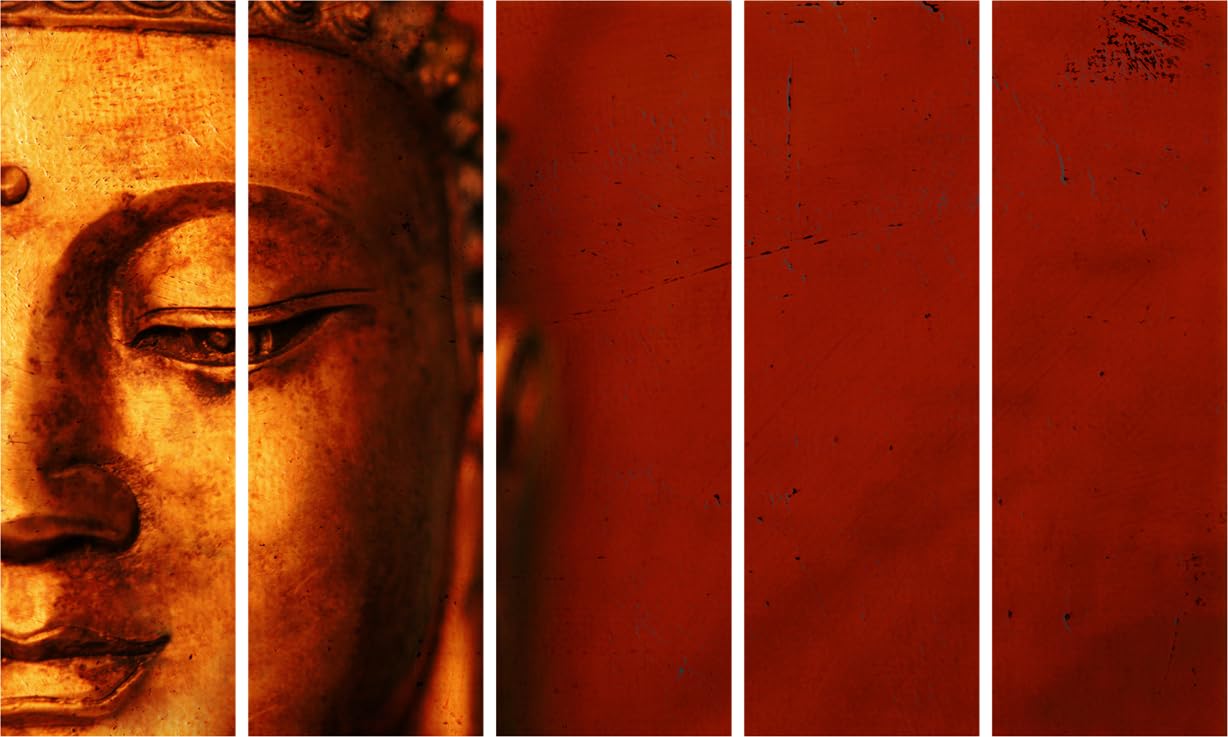
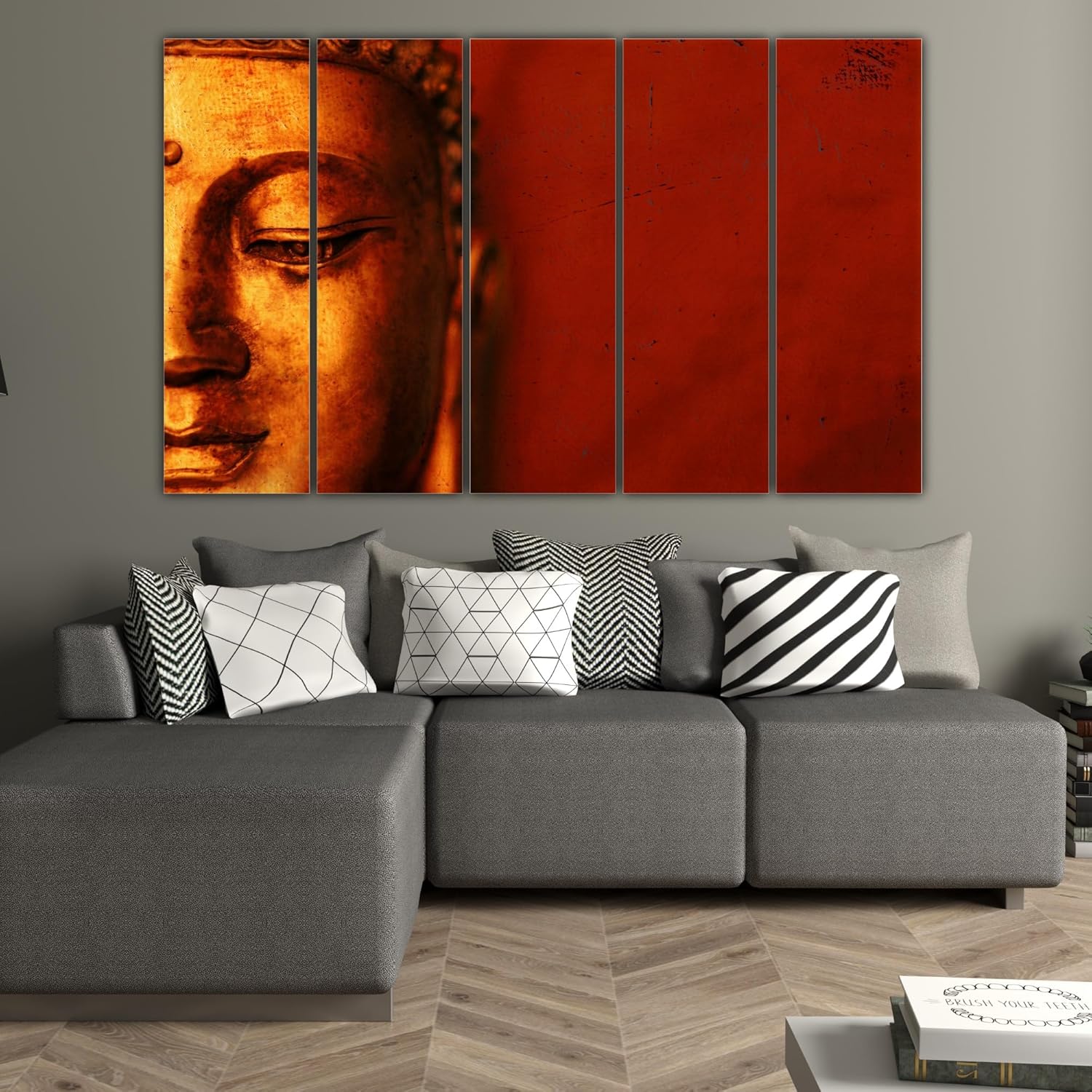
Here's what this composition actually does: the five panels don't divide the subject — they create a left-to-right gradient that directs where your eye moves. Buddha's golden face occupies the left two panels, a natural anchor for attention. The third panel transitions from amber into rust. The right two panels open into deep terracotta — no subject detail, no visual demand, just warm color that lets your eye release. From your bedroom doorway, this reads as one deliberate horizontal band, not five separate rectangles.
The gradient movement is the composition's defining function: it gives your eye a path, not just a destination.
Why 127cm Works on 10–12ft Bedroom Walls (and What Changes If You Size Up or Down)
Your bedroom wall is probably 300–360cm wide. A queen-size bed runs 150cm; a king 180cm. Bedside tables add 40–50cm per side. The 127cm width sits in the proportional range where the art anchors the sleep zone without crowding bedside furniture or a small pooja shelf nearby.
Coverage math: 127cm on a 360cm wall = 35% wall coverage. Above a 150cm queen bed, this canvas provides 85% bed-width coverage — substantial presence without overwhelming the bed as furniture. Interior proportions generally recommend 50–75% furniture-width coverage as a starting point; 85% creates anchoring presence rather than a decorative accent.
From your doorway (roughly 3–4 meters), the five-panel format reads as a single horizontal composition. The 2cm gaps between panels create subtle visual rhythm — your eye processes the piece as intentional rather than assembled. Up close, from your bed, you see the texture gradient and the detail in Buddha's half-closed expression. The composition functions at both distances.
If you sized down to 90cm, you'd get approximately 60% bed-width coverage — visually adequate but lacking the weight that makes art feel anchored rather than placed. At 150cm, you'd need to verify bedside furniture doesn't crowd the edges and that your wall can carry 42% coverage without feeling dense.
The five-panel arrangement also reads slightly wider than its measurement suggests. Your eye processes the rhythm of panels with gaps, extending the perceived visual footprint — a practical advantage for horizontal walls where you want presence without a single solid rectangle dominating.
What These Colors Actually Look Like Against Cream Walls
The composition moves from warm golden amber — left two panels, where Buddha's face is rendered in detail — through transitional rust at the center, into deep terracotta on the right two panels. No cool tones anywhere in this palette. The gradient stays within the warm family throughout.
Against cream or off-white walls, the most common finish in Indian apartments, the amber tones glow without creating hard visual edges. Morning light from east-facing windows picks up the golden detail in the left panels. Afternoon and evening light deepens the rust tones, making the gradient more visible and the overall warmth more pronounced. Under standard warm-white LED lighting (2700–3000K), the entire piece reads as cohesive and grounded — not glowing, not receding.
Against light yellow or peach walls, the earth tones share the same warm family. Rather than competing, they layer — your wall color becomes part of the composition's palette rather than fighting it.
With teak, sheesham, or rosewood furniture: these woods carry natural amber and brown undertones that echo this palette. The visual result is cohesion — as if the art and furniture were selected together rather than accumulated over time. Warm earth tones do this reliably in rooms that already have wooden furniture and neutral walls.
The asymmetric composition also serves a practical function in bedroom spaces. Buddha's detailed face on the left provides a natural focal point for morning attention — somewhere your eye settles rather than roams. The open terracotta panels on the right provide visual release appropriate for sleep spaces: warmth without demand.
Installation in Indian Walls (Concrete vs Drywall)
Five panels means five separate hanging points, which provides more stability than single-panel mounting. Each panel is individually lighter, distributing weight across multiple anchors rather than concentrating it.
For drywall in modern apartments: plastic anchors at each panel position. Mark positions using the included hanging template, ensuring consistent height across all five panels. Drill 6mm holes approximately 30mm deep. Insert anchors, attach hooks, hang panels on pre-installed D-rings.
For concrete walls in older buildings: masonry anchors at 35mm depth with a 6mm masonry bit. Concrete takes slightly more effort but provides secure long-term mounting.
The critical detail for multi-panel installation is level alignment across all five panels. A 5mm height variation between panels is visible and makes the composition look unfinished. Use a spirit level or laser level across your template before marking drill points — two extra minutes before drilling prevents something you'd notice every day.
Rental consideration: five 6mm holes are no more consequential than two. At lease end, fill with standard wall putty, sand smooth, touch up with matching paint. Total repair: approximately 20 minutes and ₹100 in materials.
Why Vinyl on MDF Instead of Macrame Wall Hangings
Macrame has been popular for bedroom walls — woven textile hangings with soft textural presence. The practical differences matter for long-term satisfaction in Indian conditions.
Macrame collects dust in every woven fiber. With ceiling fans running daily, accumulation becomes visible within weeks. Cleaning requires removing the piece, careful washing or vacuuming, complete drying — which in humid conditions means overnight minimum — and rehanging. In practice, most households don't maintain this cycle, and macrame gradually looks dingy rather than decorative.
Vinyl print on MDF wipes clean with a dry microfiber cloth. Dust sits on the smooth surface rather than embedding in fibers. Maintenance is 30 seconds every few weeks, not a project every few months.
Macrame also responds to humidity. Cotton or jute fibers absorb moisture during monsoons, with potential for stretching or developing a musty quality in poorly ventilated bedrooms. MDF with sealed edges and vinyl surface maintains dimensional stability through humidity cycles.
There is also a visual difference that matters here specifically. Macrame creates soft textural interest but lacks color intensity or detailed imagery. For a meditation space where you want a focal point with specific visual content — Buddha's expression, the gradient composition — vinyl printing delivers clarity that woven textile cannot.
What This Will Actually Feel Like in Your Room
From your bedroom doorway: the five panels read as a single horizontal composition. The gradient draws your eye left to right — from Buddha's golden face into warm, undemanding terracotta. At this distance, you perceive overall warmth and horizontal flow, not individual panel edges.
From your bed: you see the gradation between amber and rust, the texture of the print surface, the serene quality of Buddha's half-closed eyes. The warm palette feels calming rather than stimulating — appropriate for a sleep space and morning transition.
The asymmetric composition has visual weight on the left side where the subject detail is concentrated. If your bedroom's natural weight already sits left — door, closet, window — you might position the panels to place Buddha toward the room's lighter side for balance. The composition works in either orientation, but room-specific balance is worth considering before you mark drill points.
This will not dominate your bedroom. The gradient release toward open terracotta prevents the visual intensity that makes some art feel demanding. Guests will notice — the five-panel format and Buddha subject are distinctive — but the impression will be "calm and considered" rather than "that's a lot of wall art."
Moolwan Design Note
The five-panel gradient — golden Buddha face on the left transitioning to open terracotta on the right — creates directed visual movement rather than static imagery. Your eye enters at the expression and releases into warm, quiet space. This is how contemplative art functions: it gives attention a path, not just a place to land.
Moolwan Quality Standard
Designed for Indian apartments and lighting conditions
Packed for long-distance Indian transit
Quality checked before dispatch
Printed to resist humidity-related color fading
Ships from West Bengal
Moolwan Fit Guidance for Indian Homes
At 127cm wide, this spans 85% of a queen bed and 71% of a king — anchoring presence without overwhelming standard Indian bedroom proportions. The 76cm height clears 8-foot ceilings with appropriate headroom above headboards.
Quick Specifications
Product: Moolwan 5-Panel Buddha Meditation Vinyl Wall Art on MDF (127x76cm)
Brand: Moolwan
Category: Vinyl Wall Art on MDF
Collection: Buddha Wall Art Collection
Dimensions: 127cm (W) × 76cm (H) × 0.6cm (D)
Weight: 3kg
Panel Configuration: 5 panels with 2cm gaps
Material & Construction: Splash-proof vinyl print on MDF
Colors: Golden amber, transitional rust, deep terracotta
Best For: Bedrooms with 10–12ft walls, meditation corners, living room spiritual spaces above low seating
Ships From: West Bengal
Price: ₹2,496
Frequently Asked Questions
Will 127cm look proportional above my queen-size bed?
A queen bed is typically 150cm wide; this canvas provides 85% bed-width coverage. Interior proportions generally recommend 50–75% furniture-width as a starting point — 85% creates deliberate anchoring presence without overwhelming the bed. On a 12-foot wall, you retain approximately 116cm of space on each side.
How will the golden amber and rust tones look under LED lighting in my bedroom?
Under warm-white LEDs (2700–3000K, standard in Indian bedrooms), the amber tones glow softly and the rust panels deepen to rich terracotta. This palette is designed for warm artificial light — no cool tones that would look washed out or conflict with typical Indian interior lighting.
How do I ensure all five panels hang level with each other?
Use the included hanging template with a spirit level before marking drill points. Verify the template is level across all five panel positions before drilling. A 5mm height variation between panels is visible from normal viewing distance, so take the extra two minutes in alignment verification before committing to holes.
Will the vinyl surface handle monsoon humidity?
Vinyl print on sealed MDF doesn't absorb atmospheric moisture the way textile alternatives do. The surface maintains dimensional stability through humidity cycles. Splash-proof vinyl means incidental moisture wipes away without penetrating or causing warping.
Can I hang this in a rental without risking my security deposit?
The five mounting points require 6mm diameter holes — smaller than standard curtain rod brackets. At lease end, fill with wall putty, sand smooth, touch up with matching paint. Total repair: approximately 20 minutes and ₹100 in materials. The patches won't be visible after proper touch-up.
Product Snapshot
Brand: Moolwan
Product: Moolwan 5-Panel Buddha Meditation Vinyl Wall Art on MDF (127x76cm)
Category: Vinyl Wall Art on MDF
Collection: Buddha Wall Art Collection
Theme/Type: Buddha meditation, spiritual décor
Best For: Bedrooms 10–12ft wide, meditation corners, living room spiritual spaces above low seating
Primary Differentiator: Left-to-right gradient composition — detailed golden Buddha face releasing into open terracotta — creating directed visual meditation flow
Secondary Differentiators: Warm earth-tone palette (golden amber to deep rust) naturally layering with cream walls and wooden furniture; five-panel horizontal rhythm that reads visually wider than the 127cm measurement
Material & Construction: Splash-proof vinyl print on MDF, 5 panels with 2cm gaps
Care Instructions: Dry dust with microfiber cloth every 2–3 weeks; no water or cleaning chemicals
Ships From: West Bengal
Packing: Long-distance transit ready
Quality Check: Before dispatch