
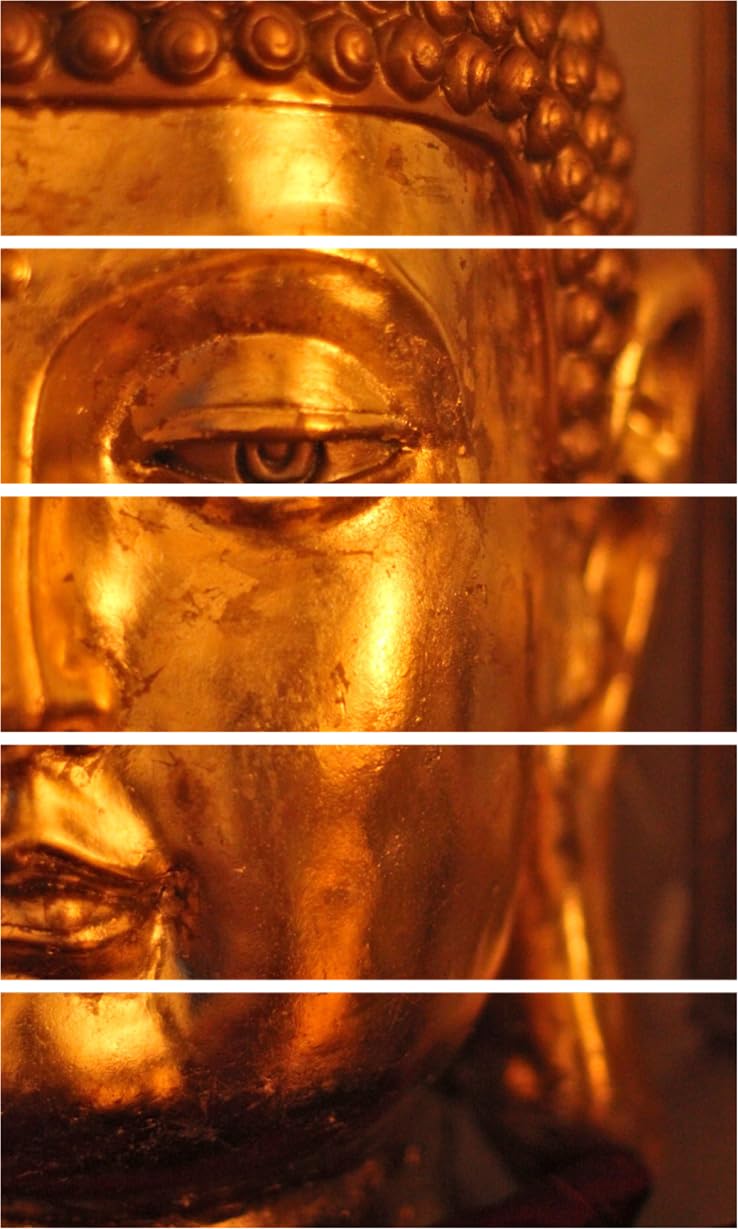
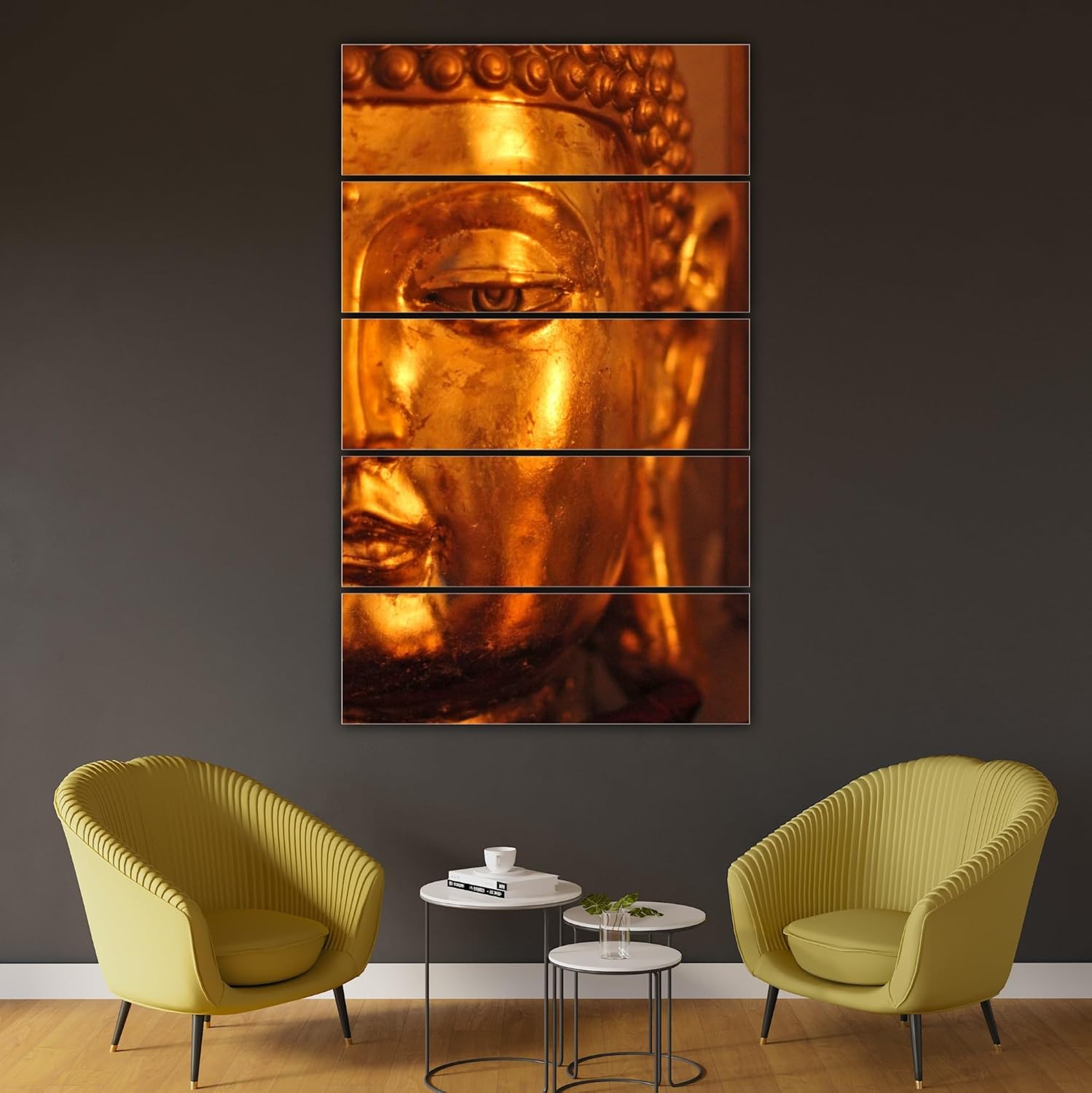
Buddha-tastic Multi-Frame Framed Wall Art
You may also like

Moolwan 5-Panel Golden Buddha Canvas Wall Art Painting (127×76cm) - Meditative Multi-Frame Spiritual Art
Three weekends of browsing. Probably a dozen saved items. Maybe more open tabs than you'd admit. And you're still here because every time you get close to buying, the same question stops you: will this actually look right on my wall, or will it feel too big, too small, too something? You're not indecisive—you're careful. Because once this is above your sofa, you'll see it daily. It needs to be right.
This 127×76cm Buddha canvas was designed for exactly this moment of decision. The five-panel format creates visual weight without overwhelming, while the golden palette brings warmth that works with the cream and off-white walls most Indian homes already have. At 127cm wide, it covers roughly 35% of a standard 12-foot living room wall—enough presence to anchor the room, enough breathing space to feel intentional rather than cramped.
The Buddha's serene expression, captured in rich amber and bronze tones, provides something unexpected: a focal point that calms rather than demands attention. Guests notice it. But they notice it the right way—with that slight pause that means appreciation, not confusion about size.
The Visual Math: How 127cm Fits 12ft Walls in Indian Homes
Your living room wall is probably around 12 feet (360cm). This 127cm canvas covers 35% of that width—the proportion designers recommend for a statement piece that doesn't overwhelm.
Here's what that looks like spatially: with 127cm of art centered on a 360cm wall, you have approximately 116cm of wall space on each side. If your sofa is the typical 6-8 feet (180-240cm), this canvas extends slightly beyond the sofa's visual frame—creating intentional presence without floating awkwardly.
What if you went smaller? A 90cm canvas on the same wall covers only 25%—it can look like an afterthought, something placed rather than designed. What if you went larger? At 150cm+, you start competing with the wall itself, especially in rooms with 8-9 foot ceilings where vertical space is already limited.
At 76cm tall, this piece sits comfortably in that sweet spot: high enough above the sofa to breathe (60-70cm is standard), low enough that the Buddha's downcast eyes remain visible without craning your neck.
What These Golden Tones Will Actually Look Like (Morning vs. Evening Light)
The product photos show rich gold and bronze. But you're wondering: will this look the same against my actual walls?
The warm amber palette in this Buddha canvas works particularly well in Indian homes because most walls run cream, off-white, or builder's peach—all warm undertones. Gold doesn't fight these colors; it harmonizes with them. Against a cream wall, the bronze shadows appear deeper. Against off-white, the highlights seem to glow.
Morning natural light from east-facing windows will brighten the golden tones, making the Buddha's features more pronounced. Evening LED light (the warm white most households use) will shift the palette slightly amber—still beautiful, perhaps even more meditative.
What doesn't work: pure white walls with cool undertones, or heavily blue-toned lighting. The gold can appear muddy. But if your walls are the standard warm Indian palette, this piece was essentially designed for your space.
From Box to Wall in 20 Minutes: What Installation Involves
You're probably in a rented flat. That deposit—maybe ₹50,000 or more—matters. You need to know this won't require extensive wall damage.
Each of the five panels weighs approximately 600 grams (total 3kg). Standard picture hooks handle this easily—no heavy-duty anchors required. The panels come with pre-installed hanging hardware, so you're not drilling into the canvas frame itself.
Total wall impact: 5-10 small nail holes, easily filled with white toothpaste or wall filler when you move. Takes 20 minutes if you're methodical, 15 if you've hung art before. The key is getting the first panel level (use your phone's level app), then spacing the remaining four panels 2-3cm apart for that intentional multi-panel effect.
The splash-resistant coating means you can hang this in spaces with mild humidity—near kitchen-adjacent dining areas, or in living rooms with attached balconies where monsoon moisture occasionally drifts in.
How This Compares to Other Buddha Art You've Been Considering
You've likely seen Buddha canvas at every price point. Here's what differentiates this specific piece:
vs. Marketplace canvas at ₹800-1,200: The cheap options use 180-220 GSM canvas that wrinkles within months, especially during monsoon humidity swings. This uses 340 GSM cotton canvas with moisture-resistant coating—the kind that stays taut through 70-85% humidity seasons.
vs. Single-panel Buddha art: A single 127cm panel can feel flat, like a poster. The five-panel format creates depth and visual rhythm—your eye moves across the Buddha's features rather than taking it in all at once.
vs. Smaller multi-panel sets (90cm): Less impact on 12ft walls. Proportionally, 90cm works better on 8-10ft walls. If your wall is larger, the smaller set can look timid.
vs. Larger sets (150cm+): More presence, but also more risk. Above 150cm, you need walls of 14ft+ to maintain balanced proportions. In a standard Indian living room, 127cm hits the sweet spot.
Setting Realistic Expectations: Colors, Lighting, and Your Space
What you should expect: Rich golden tones that warm up cream or beige walls. A meditative focal point that draws the eye without demanding it. Five panels that create intentional gallery-style presentation.
What you shouldn't expect: Exact color match to screen. All monitors display warm tones differently. The actual art will likely appear slightly deeper in gold saturation than your laptop screen suggests. In person, the texture of the canvas and the dimensional quality of multiple panels creates depth that flat screens can't convey.
Viewing distance matters: Stand 6-8 feet back (the typical distance from sofa to wall art), and the five panels merge into a unified Buddha portrait. Up close, you appreciate the individual panel composition and the texture of the canvas weave.
This piece works best as a singular statement. Avoid clustering it with other wall art—the multi-panel format provides enough visual complexity. Pair it with simple surroundings: a solid-colored sofa, minimal shelf clutter, perhaps a single plant.
Quick Specifications
- Dimensions: 127cm (W) × 76cm (H) × 0.6cm (D)
- Weight: 3000 grams (3 kg total, ~600g per panel)
- Panels: 5-panel horizontal arrangement
- Canvas: 340 GSM cotton with moisture-resistant coating
- Frame: 1.5" kiln-dried pinewood (12% moisture content)
- Finish: Splash-resistant surface coating
- Inks: Eco-solvent, UV-resistant
- Subject: Golden Buddha face with traditional curled hair motif
- Colors: Amber, bronze, gold, warm brown shadows
- Price: ₹3,296
- Delivery: 5-6 days (metro), 6-8 days (tier-2/3 cities)