
Buddha-tastic Multi-Frame Framed Wall Art to Kick Stress to the Curb
You may also like

Moolwan 4-Panel Golden Buddha Vinyl Wall Art on MDF (85x55cm) – Lotus Throne with Bodhi Tree Framing
You've measured your wall three times. Maybe four. The tape measure says 10 feet, but you're still not confident because every guide talks about sofas and furniture ratios instead of what actually matters—how the art will anchor that specific wall space. You keep second-guessing: is 85cm actually right for spiritual art, or will it look too small above an 8-foot sofa? Too decorative rather than intentional?
Here's what the spatial logic actually shows: 85cm width on a 10-foot (305cm) wall creates 23% coverage. That leaves roughly 110cm of wall space on each side. For Buddha art specifically, this isn't sparse—it's deliberate. Spiritual pieces work differently than landscapes or abstracts. They need breathing room. The empty wall space around them becomes part of the composition, creating visual stillness rather than competing with furniture or windows.
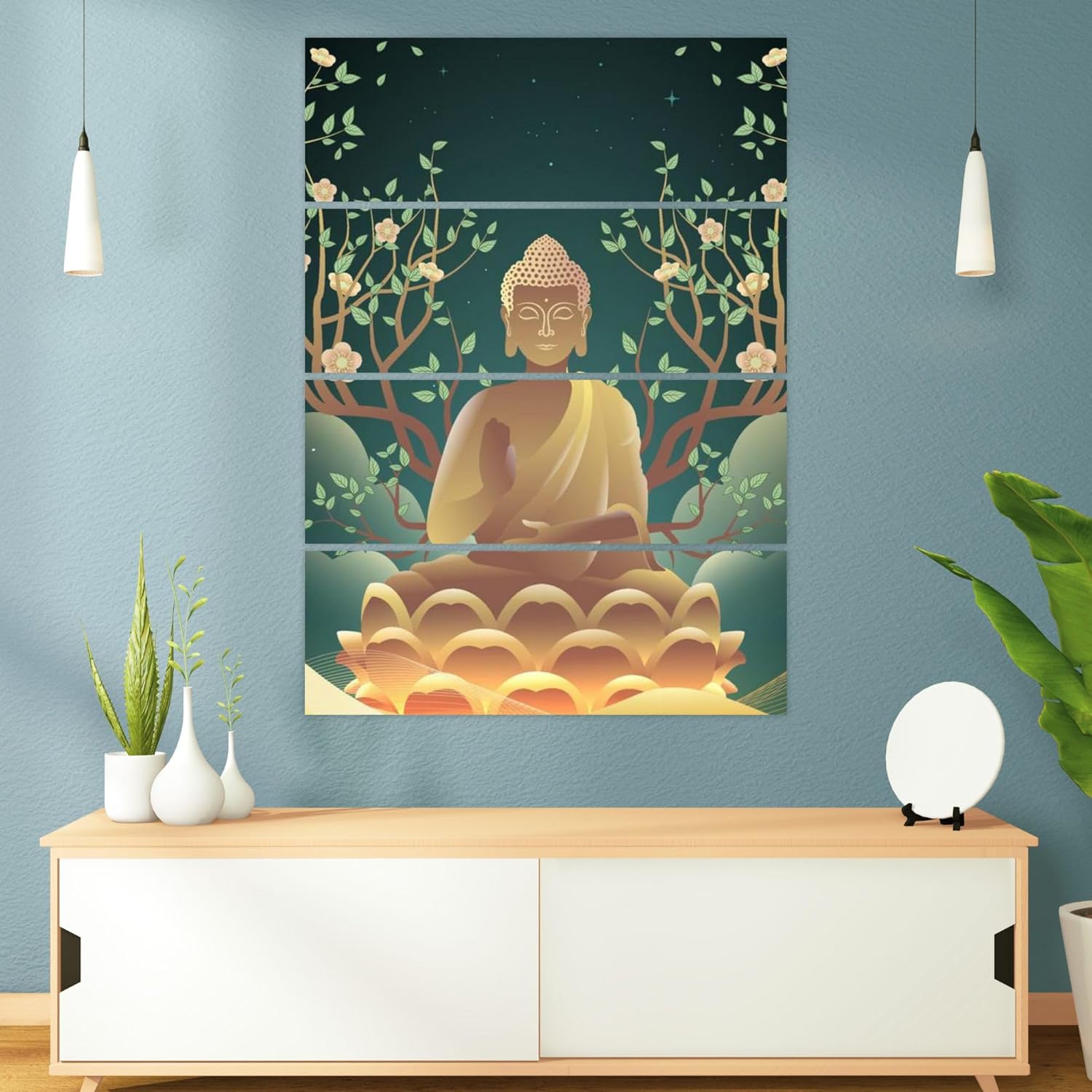
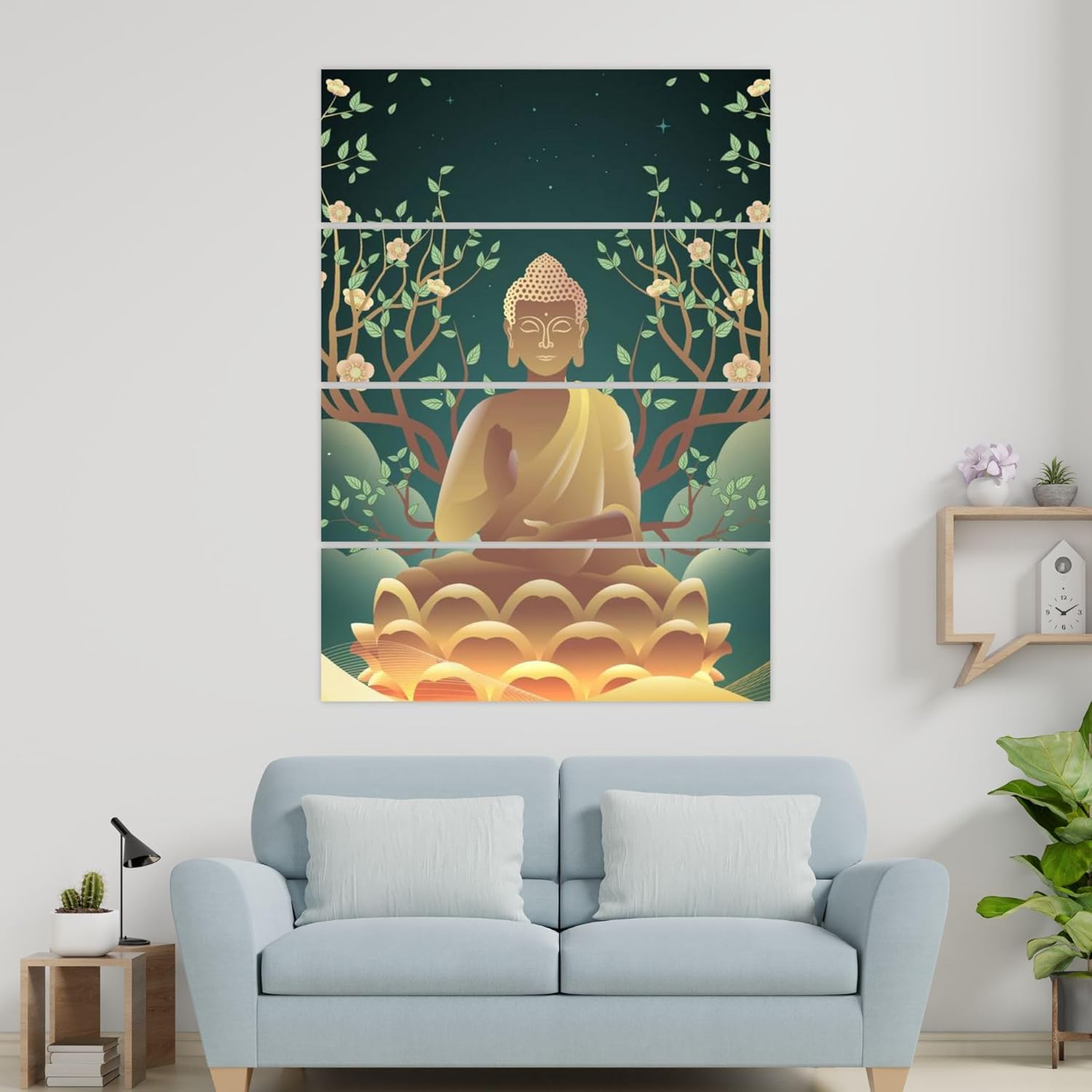
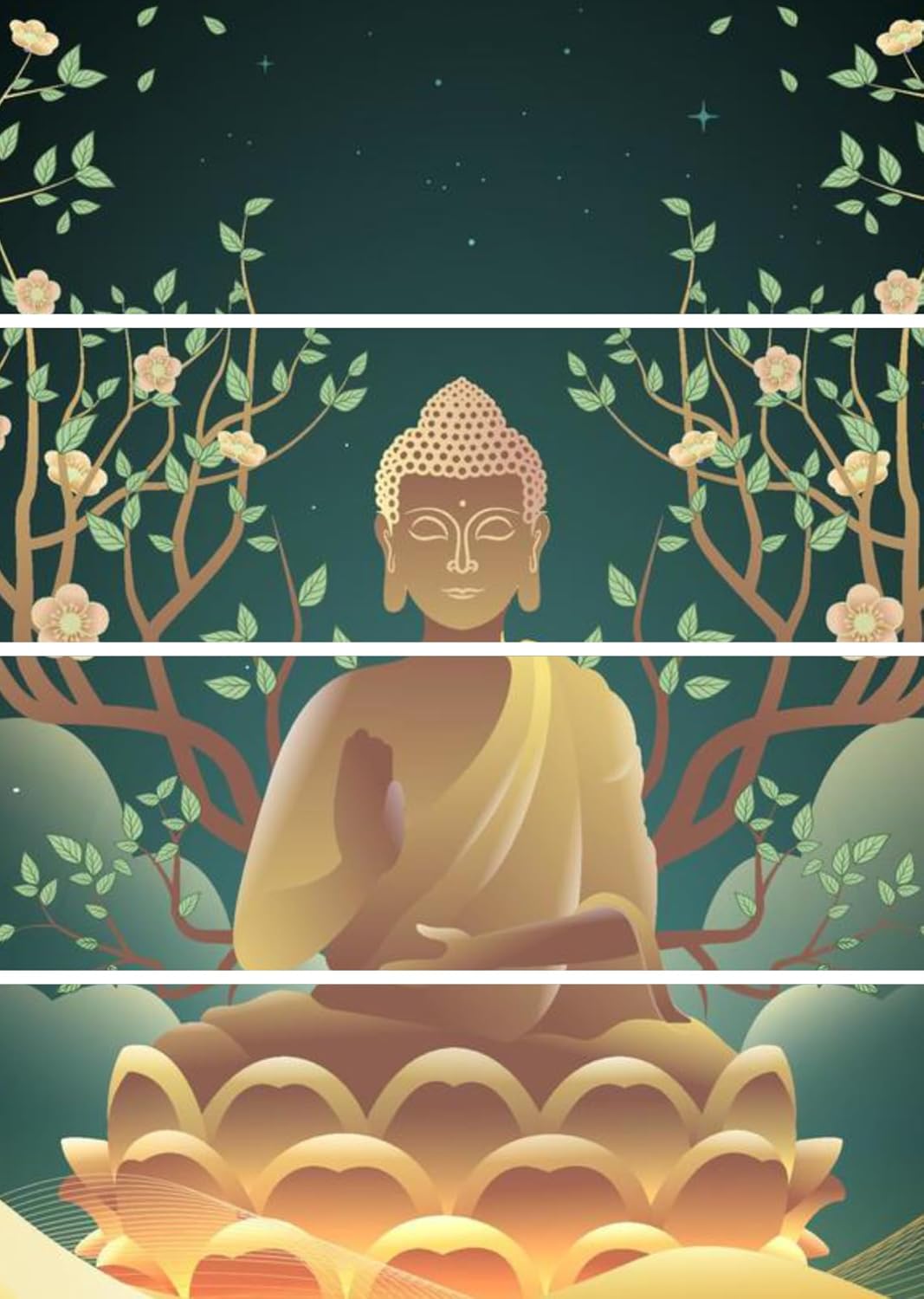
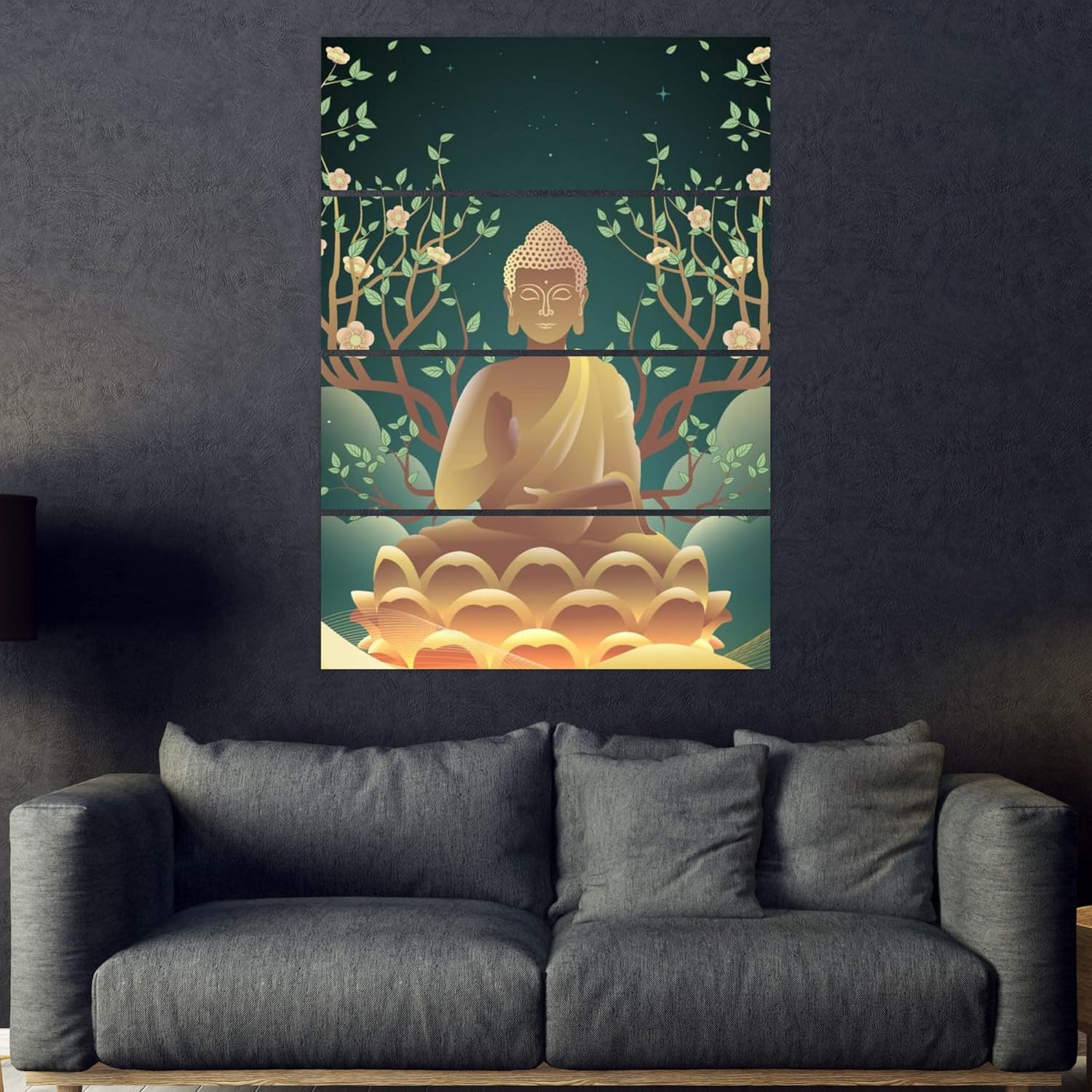
This particular piece solves a specific problem with multi-panel Buddha art: the 4-panel division follows the composition naturally. The first panel captures the starlit sky and flowering branches. The second frames the Buddha's head and upper body. The third shows the blessing mudra and meditation posture. The fourth anchors with the golden lotus throne. Each panel tells part of the story while the 2-3mm gaps between them create a gallery-wall effect without requiring you to align five or seven separate pieces yourself.
Why 85cm Works on 10-12 Foot Walls (And What Changes If You Size Up)
The 85cm width isn't arbitrary. On a standard 10-foot (305cm) Indian living room wall, 85cm provides 28% coverage—enough presence to register as intentional décor, not enough to dominate the space or compete with your TV unit, window, or pooja corner that might share that wall.
Above an 8-foot sofa: 85cm sits comfortably within the sofa's visual footprint. Your sofa is probably 240cm wide. This piece at 85cm creates that "floating gallery" effect—clearly related to the seating area but not trying to match it inch-for-inch.
Above a 6-foot sofa: 85cm becomes the dominant element in that arrangement, which works for spiritual art. The Buddha becomes a focal point, not a background accent.
For bedrooms: 55cm height works above headboards without feeling oppressive. You're looking up at it while lying down—taller pieces can create a looming effect that undermines the meditative quality.
If you're considering larger: 100-120cm Buddha pieces demand walls with fewer competing elements. If your wall has an AC unit, a window edge, or a TV nearby, 85cm allows coexistence. Larger pieces need dedicated feature walls with nothing else within 50cm on either side.
What Teal, Gold, and Pink Actually Look Like Against Indian Walls
The dominant color here is deep teal—not the bright turquoise that clashes with everything, but a sophisticated dark teal that reads almost as a neutral in evening light. Against cream walls (the default in most Indian apartments), this creates deliberate contrast without harshness.
The golden Buddha and lotus occupy roughly 40% of the visual field. This warm metallic tone picks up on brass décor elements you might already have—diyas, temple bells, pooja accessories. In warm LED lighting (3000K, standard in Indian homes), the gold intensifies slightly, creating that traditional temple-lamp glow.
The soft pink blossoms add unexpected warmth. They're not saccharine pink—more like a muted rose that softens the teal-gold combination. If your living room has brown or beige upholstery (most do), these pink accents prevent the piece from reading as too masculine or severe.
Morning light (east-facing windows): The teal appears slightly blue-green, fresher. Good for meditation corners used in morning practice.
Afternoon light: Teal darkens, gold warms. The piece recedes slightly, becoming ambient rather than focal.
Evening LED: The gold comes forward, the teal provides depth. This is when guests notice it most.
Against colored walls: If your walls are light yellow (common builder choice), the teal provides welcome contrast. Against peach walls, it works but creates a warmer overall impression. Against sage green walls, you lose some of the teal's impact—the colors blend rather than contrast.
Installation in Indian Walls: What 3 Kilograms Actually Requires
At 3 kilograms spread across 4 panels, each panel weighs approximately 750 grams. This is lighter than a medium-sized wall clock, heavier than a photo frame. The weight category matters for choosing your mounting approach.
For concrete walls (most Indian apartments): Standard 6mm plastic anchors work. You'll need 4-8 mounting points depending on whether each panel has single or dual hanging hardware. Drill depth: 35mm. Time investment: 20-25 minutes for all four panels.
For brick walls with plaster: Same approach as concrete. Test first by tapping—a solid sound means drill into the brick itself, not just the plaster layer.
For drywall (newer constructions, accent walls): Use drywall anchors rated for 5kg. The lighter individual panel weight means standard anchors hold securely without toggle bolts.
The alignment reality nobody mentions: 4 panels need to be level with each other, not just individually level. Use a laser level (₹500 on Amazon) or tape a string across your marks before drilling. A 2mm height difference between panels creates a visible "stair-step" effect that undermines the composition. Measure the gap between panels before marking—2-3mm creates continuity, 5mm+ makes them look like separate pieces.
Rental consideration: 4 small anchor holes per panel (potentially 16 total) sounds significant, but these are 6mm holes. When you move out, fill with wall putty, sand smooth, touch up with paint. Total repair time: 30 minutes. Total cost: ₹200 for supplies.
How This Compares to Macrame Wall Hangings and Fabric Tapestries
If you've been considering textile alternatives for that "spiritual corner" aesthetic, here's the honest comparison:
Macrame Buddha-themed hangings: They exist, they're trendy, and they collect dust within two weeks. The fibers trap particulate matter, and in Indian cities, that means visible graying within a month. You can't wipe them clean—washing risks stretching the fibers. They also move with air currents from fans and AC, creating constant subtle motion that some find distracting in meditation spaces.
Fabric tapestries: More affordable upfront (₹500-1,200), but the colors fade faster. Unframed edges curl in humidity. They need tensioning hardware to hang flat, and even then, they develop waves and wrinkles over time. The "bohemian" aesthetic works for some spaces, but tapestries rarely look intentional—they look like you're still in your college hostel.
Canvas vs. vinyl on MDF: Traditional canvas Buddha paintings in this size range cost ₹3,500-5,000 and require more careful humidity management. Vinyl on MDF with splash-proof lamination tolerates bathroom-adjacent moisture, kitchen humidity, and monsoon conditions without warping or color shift. The matte lamination also eliminates glare from windows and LED fixtures that make glossy prints unviewable from certain angles.
The permanence question: Macrame and tapestries say "temporary décor." Framed panel art says "this is intentional." When your mother-in-law visits, she reads the difference immediately.
What This Will Actually Feel Like in Your Living Room
From the doorway (3-4 meters): The Buddha registers as a golden figure against teal. The panel divisions aren't immediately obvious—they read as subtle vertical lines. The overall impression is "substantial spiritual art," not "four separate pieces."
From the sofa (1.5-2 meters): The details become clear. The Bodhi tree branches, the individual blossoms, the texture of the Buddha's robe. This is the primary viewing distance, and the composition rewards it. The centered Buddha at eye level creates a natural focal point.
Up close (under 1 meter): The vinyl print quality becomes visible. With quality printing, you'll see clean lines and consistent color saturation. With poor quality, you'd see pixelation and banding—this piece's resolution holds up to close inspection.
Alone vs. with adjacent décor: This piece works best with minimal surrounding elements. A small plant on a side table below it creates grounding. A brass lamp provides warm reflection. But don't flank it with photo frames or other art—the symmetry of the Buddha composition needs clean wall space to work.
Sound psychology (often ignored): Guests often lower their voices slightly when entering a room with Buddha art. It's not conscious—it's conditioned response to spiritual imagery. If you're creating a space for actual meditation or calm, this matters more than aesthetics.
Moolwan Design Note
The 4-panel division specifically follows the Bodhi tree composition—branches arching above, Buddha centered, lotus anchoring below. The gaps between panels create natural visual "breaths" that echo meditation practice: pause, presence, pause, presence.
Moolwan Quality Standard
Designed for Indian apartments and lighting conditions. Printed to resist humidity-related color fading—the matte vinyl lamination prevents moisture penetration during monsoons. Quality checked before dispatch. Packed for long-distance Indian transit with corner protection and bubble wrap. Ships from West Bengal.
Moolwan Fit Guidance for Indian Homes
85x55cm suits 10-12 foot walls in living rooms or bedrooms, positioned 20-25cm above sofa tops or 150cm from floor to bottom edge in standalone placement. The 4-panel format works above 6-8 foot sofas without overwhelming—proportional rather than dominant.
Quick Specifications
- Product: Moolwan 4-Panel Golden Buddha Vinyl Wall Art on MDF (85x55cm)
- Brand: Moolwan
- Category: Vinyl Wall Art on MDF
- Collection: Buddha Wall Art Collection
- Theme: Golden Buddha on lotus with Bodhi tree branches
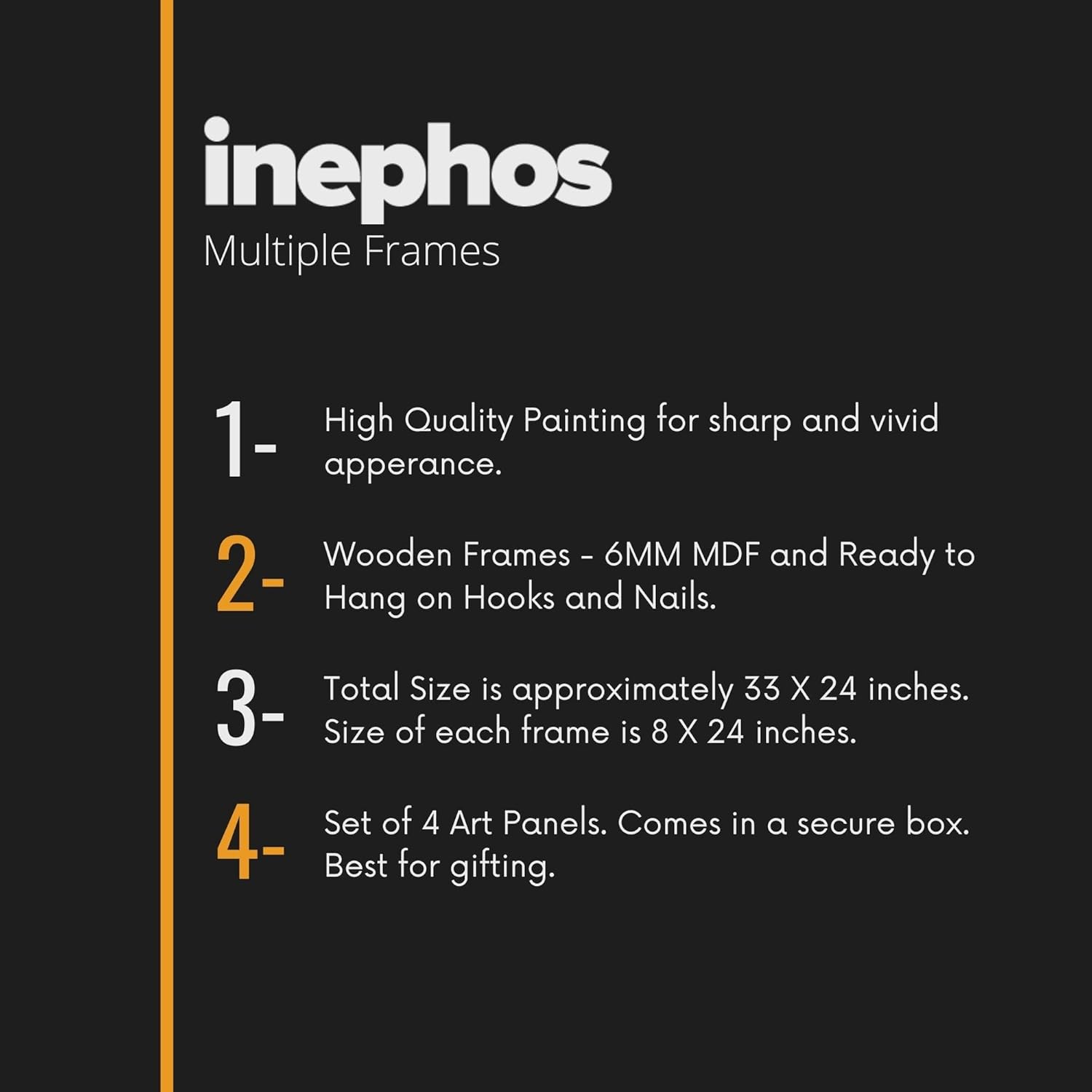
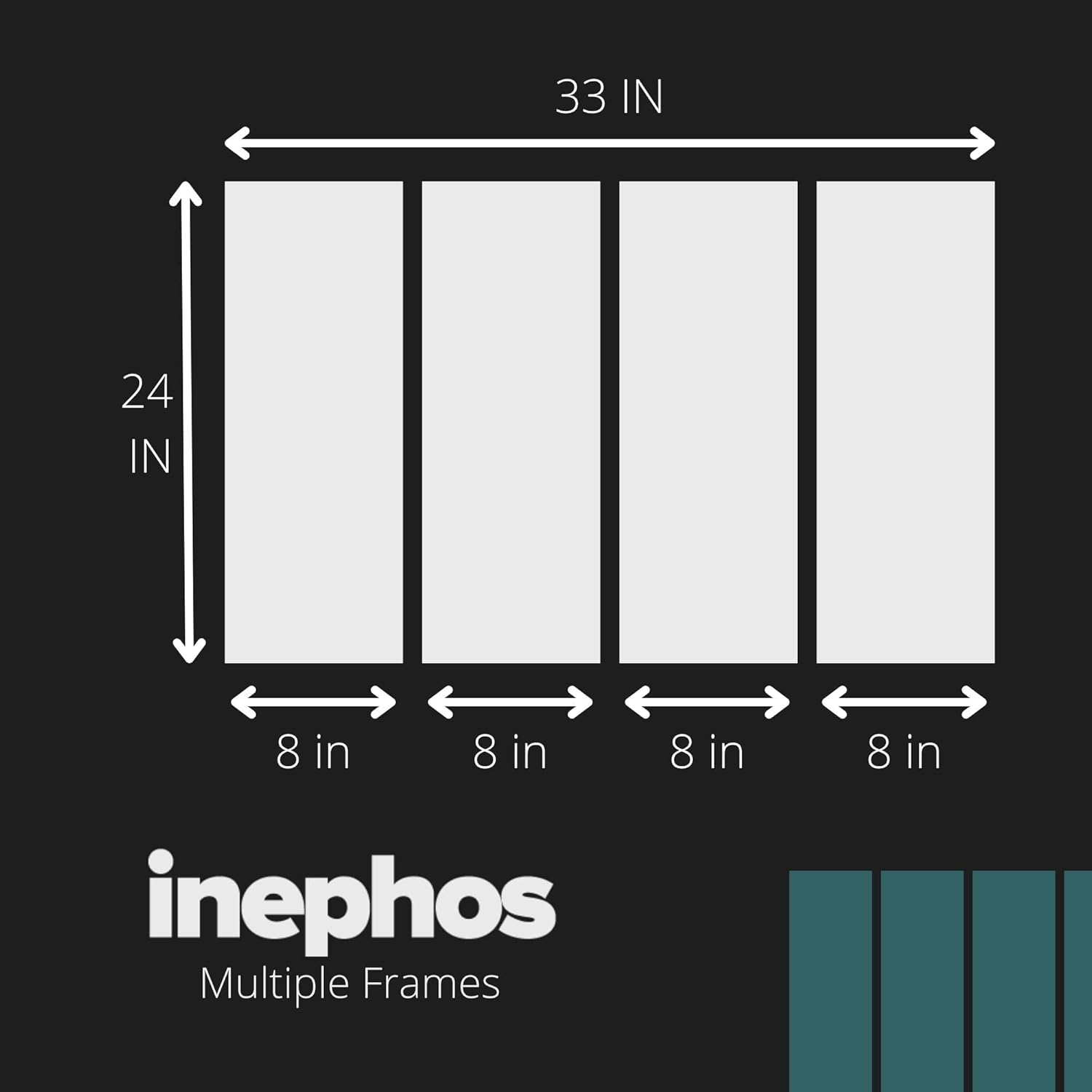
- Dimensions: 85cm W × 55cm H × 2cm D
- Weight: 3,000 grams (3 kg)
- Panel Count: 4 panels
- Material & Construction: Splash-proof vinyl print on MDF with matte lamination, wooden frames
- Colors: Deep teal background, golden Buddha and lotus, soft pink blossoms, brown branches, sage green leaves
- Best For: Living room walls 10-12 ft wide, bedroom walls above headboards, meditation corners, entryways
- Ships From: West Bengal
- Packing: Corner-protected, bubble-wrapped for long-distance transit
- Quality Check: Inspected before dispatch
Frequently Asked Questions
Will 85cm look too small above my 8-foot sofa?
85cm creates intentional proportion rather than matching your sofa width. For Buddha art specifically, the breathing room on either side (roughly 77cm per side on a 240cm sofa arrangement) enhances the meditative quality. If you want wall art that fills the space above your sofa more completely, look at 120cm+ pieces—but those work better for landscapes and abstracts than spiritual subjects.
How will the teal and gold look in warm LED lighting?
In 3000K warm white LED (standard Indian home lighting), the teal deepens slightly and the gold intensifies. The overall effect is warmer and more traditional—closer to temple lighting than the daylight-balanced photos suggest. If your living room uses cool white LEDs (5000K+), the teal will appear slightly greener and the gold less warm.
How do I align 4 panels so they look like one piece?
Mark all four panel positions before drilling any holes. Use a laser level or string line to ensure the top edges align perfectly. Maintain consistent 2-3mm gaps between panels—use coins as spacers if needed. Start with the center-left panel, then center-right, then outer panels. This prevents alignment drift.
Will monsoon humidity affect the vinyl and MDF?
The splash-proof matte lamination seals the vinyl print surface against moisture penetration. MDF (medium-density fiberboard) is denser than solid wood and less prone to humidity-related expansion and contraction. Through typical Indian monsoon conditions (70-85% humidity), properly laminated vinyl on MDF maintains dimensional stability and color consistency.
Can I hang this in a bathroom-adjacent space or near a kitchen?
Yes, with caveats. The splash-proof lamination handles ambient humidity from nearby bathrooms and cooking steam. Direct water contact (splashes, condensation dripping on the surface) should be wiped promptly. Avoid hanging directly above stovetops where grease vapor concentrates, or in enclosed bathrooms with poor ventilation.
Product Snapshot
- Brand: Moolwan
- Product: Moolwan 4-Panel Golden Buddha Vinyl Wall Art on MDF (85x55cm)
- Category: Vinyl Wall Art on MDF
- Collection: Buddha Wall Art Collection
- Theme/Type: Golden Buddha with Bodhi tree and lotus throne
- Best For: 10-12 ft living room walls, bedroom walls, meditation corners, entryways
- Primary Differentiator: 4-panel composition following natural Bodhi tree framing with gallery-wall effect
- Secondary Differentiators: Deep teal-gold-pink palette with temple-aesthetic warmth; centered meditation posture with blessing mudra
- Material & Construction: Splash-proof vinyl print on MDF with matte lamination, wooden frames
- Care Instructions: Dry dust with microfiber cloth; avoid water and cleaning chemicals
- Ships From: West Bengal
- Packing: Long-distance transit ready with corner protection
- Quality Check: Before dispatch