
Buddha-tastic Multi-Frame Vinyl Wall Art
You may also like

Moolwan 5-Panel Buddha Vinyl Wall Art on MDF (127x76cm) – Golden-Amber Gradient with Traditional Scroll Motifs
You've measured your wall three times. Maybe four. The tape measure says 10 feet, but you're still not confident because every sizing guide seems written for Western homes with different proportions. Your wall has that cream paint the builder used, your sofa is probably a brown fabric 3-seater around 7 feet wide, and you keep second-guessing: is 127cm actually right for a Buddha piece, or will it look either lost on the wall or overwhelming for a spiritual subject?
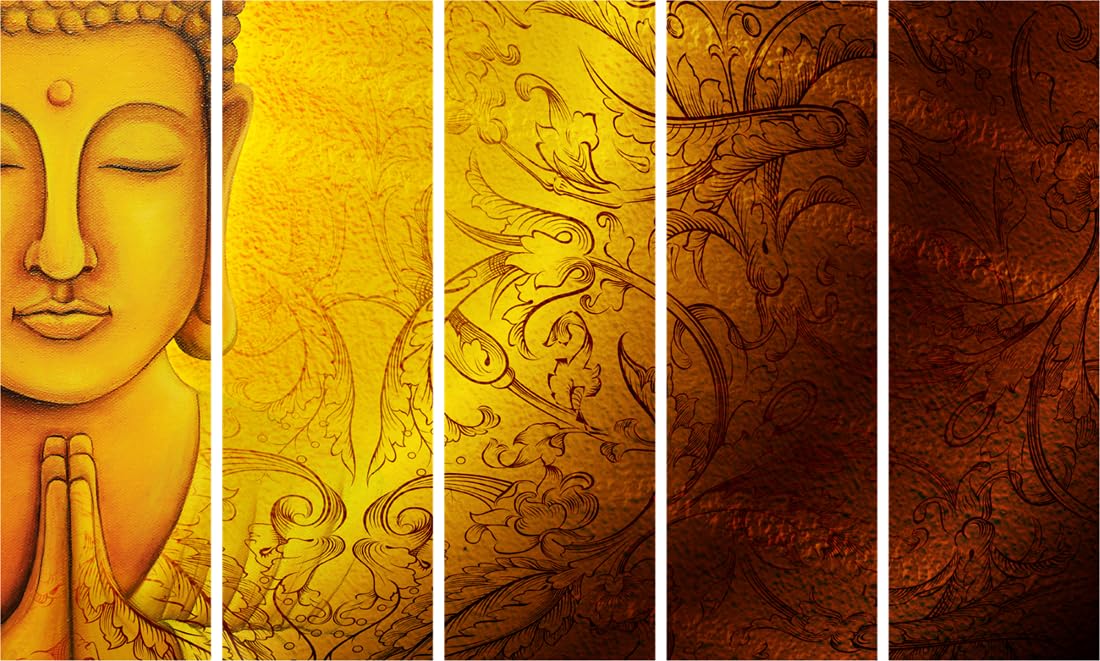
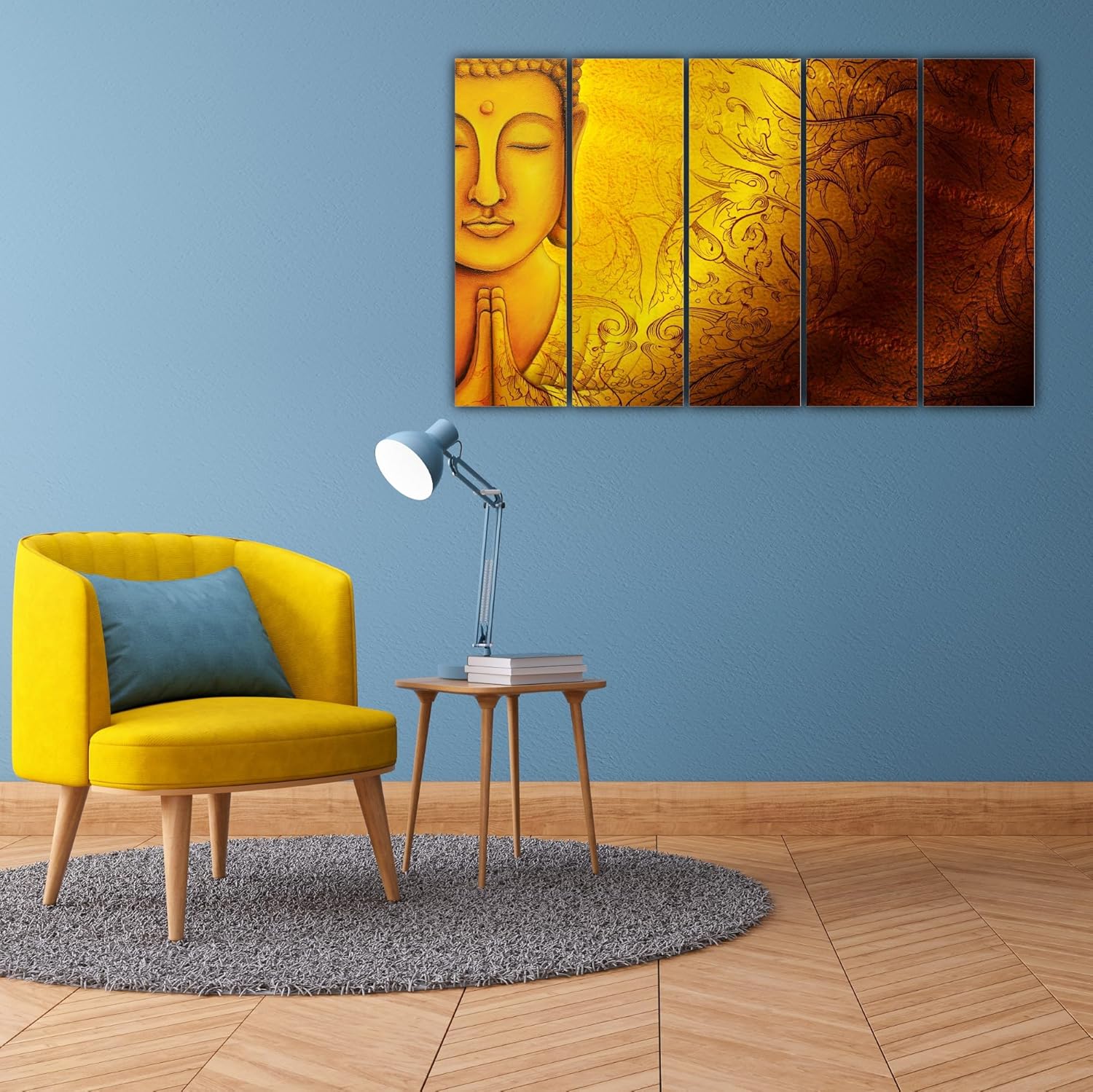
This 127cm Buddha vinyl art spans five panels that flow from golden yellow on the left—where Buddha's profile rests in prayer—through intricate scroll motifs into deep amber on the right. The gradient creates visual movement without disruption. On a 10-foot wall, this covers roughly 42% of the horizontal space, leaving balanced margins on either side. The warm palette reads as intentional against cream or off-white walls, not imported or mismatched. The spiritual subject sits at a scale that commands attention without dominating—your pooja corner and this piece can coexist without competing.
Why 127cm Works on 10-12 Foot Walls (And What Changes If You Size Down)
On a standard 10-foot wall (305cm), this 127cm piece leaves approximately 89cm on each side. That's enough breathing room for the art to feel anchored rather than cramped, but substantial enough to be a focal point from across the room.
If your sofa is 7 feet wide (213cm), this art covers about 60% of the sofa width—within the ideal 60-75% range. The five panels create horizontal rhythm that echoes the sofa's length without overwhelming it.
Sizing down to 90cm would cover only 29% of the same wall—often too small for a Buddha piece that's meant to establish presence. You'd find yourself wondering if it looks like an afterthought. Sizing up to 150cm works if your wall is 12 feet or longer, but on a 10-foot wall, 150cm leaves only 77cm total margin, making the space feel tighter than most Indian living rooms can handle comfortably.
Hang the bottom edge 20-25cm above your sofa back. For 8-foot ceilings, the 76cm height keeps the top of the art well below ceiling level, avoiding that cramped feeling where art seems to push against the ceiling.
What These Golden-Amber Tones Look Like on Cream Walls (Morning vs Evening)
The color progression—bright gold through ochre to deep amber-brown—behaves differently throughout the day, and this matters for where you place it.
In morning light from east-facing windows, the golden panels appear lighter, almost luminous. The Buddha's face catches softer highlights. By afternoon, as light shifts warmer, the entire piece settles into richer tones. Under evening LED lighting (warm white, 3000K, which most Indian homes use), the amber sections deepen while the golden areas maintain warmth. The piece never looks washed out or muddy because the gradient already incorporates warm tones that match typical Indian lighting.
Against cream walls—the most common in Indian apartments—the golden tones create enough contrast to stand out without clashing. Against builder's peach or light yellow walls, the piece reads as coordinated rather than competing. If your furniture includes wooden pieces (coffee tables, TV units, side tables), the amber-brown sections echo those tones naturally.
The traditional scroll motifs etched across the panels add texture that catches light at different angles. From the doorway, you see the overall Buddha silhouette and gradient. Up close, the scrollwork reveals itself—a detail that rewards closer viewing without being visually busy from across the room.
Installation in Indian Walls: Concrete vs Drywall
Five-panel arrangements need level alignment across all frames. The spacing between panels matters—typically 2-3cm between each panel creates visual flow without gaps that look accidental.
For concrete walls (common in older Indian buildings): Use the included concrete anchors. Drill 35mm deep holes with a 6mm masonry bit. The 3kg total weight distributes across multiple mounting points, so no single anchor bears excessive load.
For drywall (common in modern apartments): Use drywall anchors. The same 6mm holes, 30mm depth. Each panel hangs independently, allowing you to adjust spacing during installation.
The hanging template included helps you mark all five mounting points before drilling. Tape the template to your wall at your desired height, mark through the guide holes, remove the template, then drill. This prevents the frustration of panels at slightly different heights that creates an uneven appearance.
For rentals: The holes you'll create (five 6mm holes) are smaller than typical picture hanging holes. Wall putty and touch-up paint when you move out takes 30 minutes and less than ₹200 in materials. Your deposit remains secure.
How This Compares to Macrame Wall Hangings for Spiritual Spaces
Macrame wall hangings have become popular for meditation corners and living rooms. They're affordable, no drilling required, and have that handcrafted appeal. But they come with trade-offs worth considering.
Macrame collects dust in every knot and weave. In Indian homes, especially during construction season or in dusty cities, you'll notice graying within months. Cleaning requires either careful vacuuming (time-consuming) or washing (which can stretch or misshape the fibers). This vinyl surface wipes clean with a dry cloth.
Macrame offers texture but limited visual interest. From across the room, it reads as a beige or off-white shape. This Buddha piece offers both texture (the scroll motifs) and visual narrative (the gradient, the Buddha figure, the composition that draws the eye left to right).
Macrame tends to look casual. For a spiritual space that feels intentional and serene rather than bohemian, a structured piece with actual imagery creates a different presence. The Buddha in meditation posture sets a tone that a knotted hanging cannot.
Weight and stability also differ. Macrame sways with air currents—ceiling fans, open windows, people walking by. This vinyl-on-MDF construction stays fixed, creating a stable focal point.
What This Will Actually Feel Like in Your Room
From your doorway, you'll notice the golden tones first, then the Buddha profile. The five-panel format creates horizontal emphasis that makes walls feel wider. The gradient draws the eye naturally left to right, creating subtle movement.
Up close, the scroll motifs become visible—traditional botanical and paisley-inspired patterns etched into the gradient background. This rewards closer inspection without being visually noisy from normal viewing distance.
This piece works alone on a wall. Adding adjacent décor risks competing with the spiritual subject—a Buddha in meditation doesn't need flanking plants or smaller frames. The gradient provides enough visual interest. If you have a pooja shelf in the same room, ensure it's not directly adjacent; spiritual elements need their own visual space.
The warm palette means this piece doesn't feel cold or stark. In Indian homes where warmth and welcome are valued, the golden-amber tones contribute to that feeling rather than working against it. Guests will notice it, and the traditional motifs combined with the Buddha subject translate well across generations—your mother-in-law won't question whether it "belongs."
Moolwan Design Note
This five-panel Buddha composition uses a golden-to-amber gradient that mirrors traditional temple art color progressions—light representing enlightenment flowing into earthy tones representing grounding. The scroll motifs reference classical Indian decorative patterns without literal religious imagery beyond the Buddha figure itself.
Moolwan Quality Standard
Designed for Indian apartments and lighting conditions. Packed for long-distance Indian transit. Quality checked before dispatch. Printed to resist humidity-related color fading. Ships from West Bengal.
Moolwan Fit Guidance for Indian Homes
At 127cm wide, this piece fits 10-12 foot walls in typical 12x14 ft Indian living rooms. The 76cm height works under 8-10 foot ceilings without crowding. Position 20-25cm above a 6-7 foot sofa for proper visual anchoring.
Quick Specifications
- Product: Moolwan 5-Panel Buddha Vinyl Wall Art on MDF (127x76cm)
- Brand: Moolwan
- Category: Vinyl Wall Art on MDF
- Collection: Buddha Wall Art Collection
- Dimensions: 127cm (W) x 76cm (H) x 0.6cm (D)
- Weight: 3000 grams (3kg)
- Material: Splash-proof vinyl print on MDF
- Colors: Golden yellow, ochre, amber, deep brown
- Best For: 10-12ft living room walls, meditation spaces, entryways
- Ships From: West Bengal
Frequently Asked Questions
Will 127cm look proportional above my 7-foot sofa?
Yes. At 127cm, this piece covers approximately 60% of a 7-foot (213cm) sofa's width—within the ideal 60-75% range for visual balance. The five-panel format creates horizontal rhythm that echoes the sofa's length without overwhelming it.
How will the golden-amber colors look in my cream-walled living room?
The warm tones complement cream walls without clashing. Under morning light, the golden sections appear brighter and more luminous. Under evening LED lighting (warm white), the amber sections deepen while maintaining warmth. The piece never looks washed out because the gradient already incorporates warm tones that match typical Indian interior lighting.
Can I install this in a rental without losing my deposit?
Yes. The five 6mm anchor holes required are smaller than standard picture hanging holes. When you move out, fill with wall putty, sand smooth, and touch up with paint. Total repair: 30 minutes, under ₹200. Your landlord likely won't notice.
Will this warp during monsoon season?
The vinyl-on-MDF construction handles humidity better than canvas. MDF is dimensionally stable, and the splash-proof vinyl surface prevents moisture penetration. In 70-85% monsoon humidity, this material remains flat where stretched canvas might ripple.
How do I align all five panels evenly?
Use the included hanging template. Tape it to your wall at your desired height, mark all five mounting points through the guide holes, remove the template, then drill. Keep 2-3cm spacing between panels for visual flow. A level helps verify alignment across all panels before final installation.
Product Snapshot
- Brand: Moolwan
- Product: Moolwan 5-Panel Buddha Vinyl Wall Art on MDF (127x76cm)
- Category: Vinyl Wall Art on MDF
- Collection: Buddha Wall Art Collection
- Theme/Type: Buddha, Spiritual, Meditative
- Best For: 10-12ft living room walls, meditation corners, entryways
- Primary Differentiator: Golden-amber gradient with traditional scroll motifs
- Secondary Differentiators: Meditative Buddha profile, warm palette harmony with Indian interiors
- Material & Construction: Splash-proof vinyl print on MDF, 0.6cm depth
- Care Instructions: Dust with dry microfiber cloth; no water or chemicals needed
- Ships From: West Bengal
- Packing: Long-distance transit ready
- Quality Check: Before dispatch