

Buddha-tastic Multi-Frame Wall Art That'll Enlighten Your Space
You may also like

Moolwan 4-Panel Sleeping Buddha Vinyl Wall Art on MDF (85x55cm) – Close-Up Intimacy That Creates a Meditative Focal Point
When You Can't Picture How Buddha Art Will Actually Feel in Your Room
You've looked at dozens of Buddha wall art pieces online. Full-figure meditation poses. Ornate golden frames. Lotus backgrounds. They all look spiritual enough in product photos, but you can't quite picture how they'll feel when you're actually sitting on your sofa at 9pm, work stress still clinging to your shoulders, trying to decompress. Will it feel peaceful? Or will it feel like you hung a poster from a gift shop?
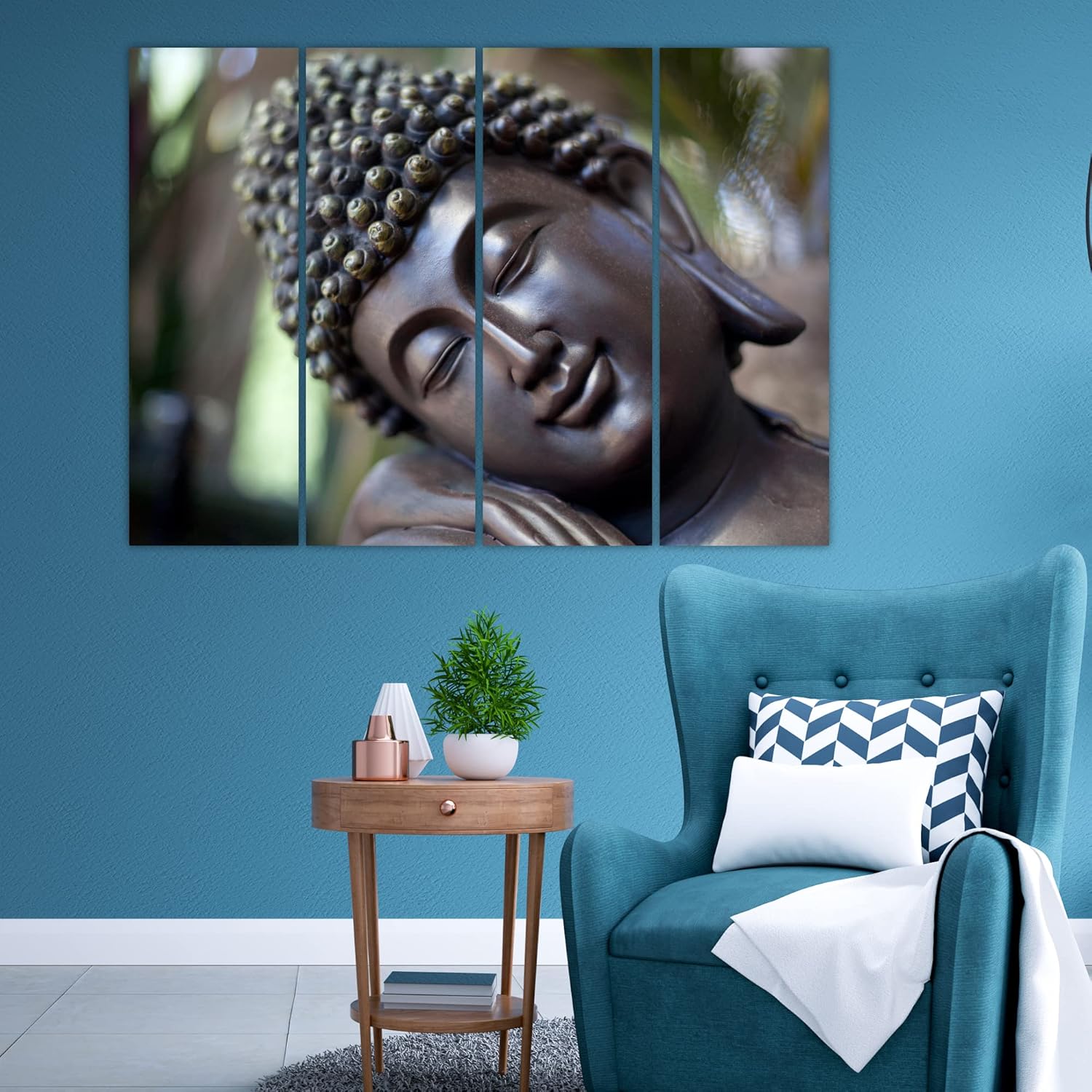
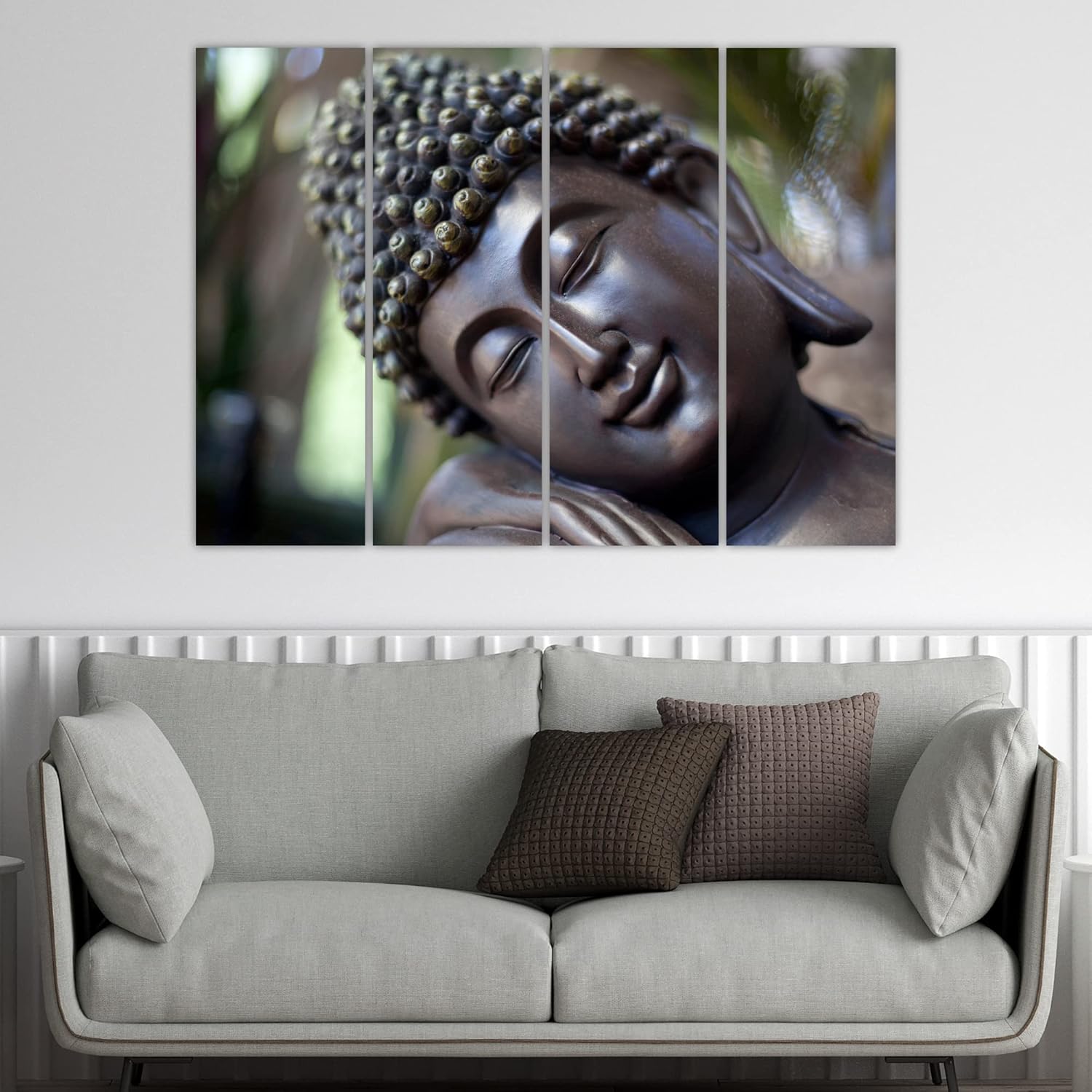
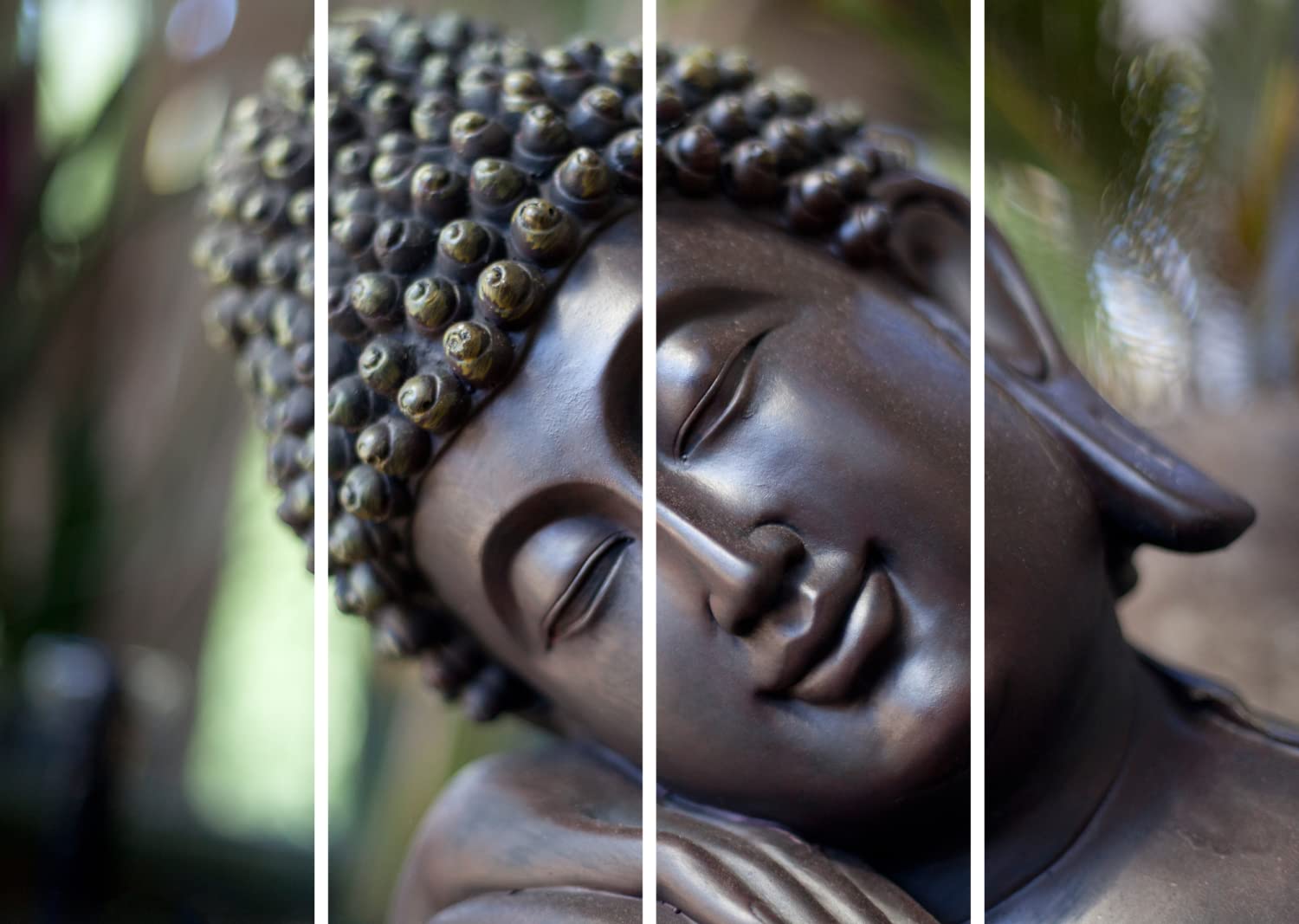
This piece works differently because of what it doesn't show. No full figure. No lotus. No ornate symbolism competing for attention. Just the sleeping Buddha's face — eyes closed, expression settled into complete stillness, bronze skin catching light the way actual sculpture does. The 4-panel split creates visual rhythm without fragmenting the face. When you sit across the room, you're not looking at wall art. You're looking at stillness itself, held in place.
The soft green bokeh behind the figure isn't decorative filler — it creates depth that pulls the face forward, making the bronze tones feel three-dimensional against your wall rather than flat-printed.
Why 85cm Width Works on 7-10ft Walls (And What Changes If You Size Up)
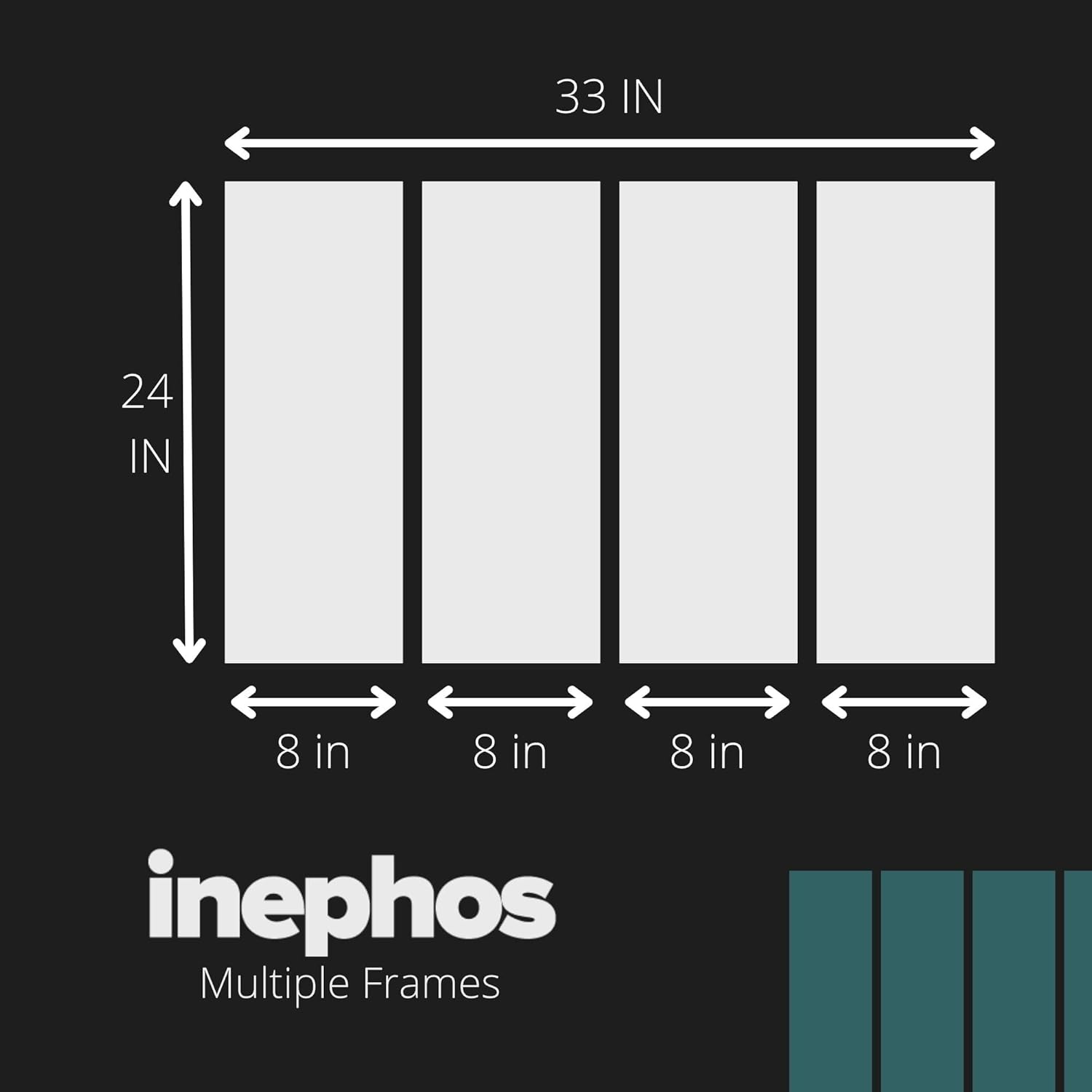
At 85cm wide by 55cm tall, this piece covers roughly 45-50% of a typical 6-foot sofa's width — comfortably within the proportional range that reads as intentional rather than undersized or overwhelming.
For walls between 7-10 feet wide (common in Indian 2BHK/3BHK living rooms), 85cm creates presence without domination. The horizontal orientation sits naturally above sofas or console tables. From a typical viewing distance of 8-10 feet (doorway to opposite wall), the sleeping Buddha face remains recognizable, the green background creating a soft halo effect.
If your wall is wider than 10 feet, consider whether you want this as a statement piece (centered, with breathing room on either side) or paired with complementary elements (a small shelf with a meditation bowl, a single plant). The intimate scale of this piece means it anchors a vignette rather than commanding an entire wall.
The 4-panel format means you'll space panels approximately 2-3cm apart during installation. This gap is intentional — it creates the visual rhythm that makes multi-panel art feel composed rather than like a single image arbitrarily chopped up.
What These Bronze and Green Tones Look Like Against Indian Walls
The color story here is bronze-brown Buddha figure against soft green background — both muted, neither demanding attention through brightness.
Against cream or off-white walls (the default in most Indian apartments), the bronze tones warm the space without overwhelming it. The green reads as subtle nature-adjacent depth rather than a bold color statement. In morning light through east-facing windows, the greens appear slightly cooler and more prominent. In evening warm LED light (3000K, standard in most Indian homes), the bronze warms further and the green recedes into shadow, making the Buddha face the undisputed focal point.
Against light yellow or peach walls (common builder defaults), the bronze tones harmonize naturally — they're in the same warm family. The green provides just enough contrast to prevent the piece from blending invisibly into warm-toned rooms.
With brown or beige sofas and wooden furniture (the most common Indian living room setup), this piece feels like it belongs. The bronze echoes wood tones without matching them. It reads as curated rather than coincidental.
What wouldn't work as well: stark white minimalist rooms with chrome furniture (the warm bronze would feel out of place), or rooms with cool blue/gray color schemes (the warm tones would clash rather than complement).
Installation in Indian Walls (Concrete vs Drywall)
Multi-panel installation requires more precision than single-piece hanging, but the actual work remains straightforward.
For this 4-panel set, you'll mark positions for all four panels before drilling anything. The included hanging template shows exact spacing. Tape the template at your desired height (20-25cm above sofa top is standard), step back to the doorway and confirm alignment, then mark through the template.
For concrete walls (common in older buildings): Use the included concrete anchors with a 6mm masonry bit. Drill 35mm deep, tap in anchors, screw in hooks.
For drywall (common in newer apartments): Use the included plastic wall anchors with a 6mm standard bit. Drill 30mm deep, insert anchors, screw in hooks.
At 3kg total weight distributed across 4 panels, each panel carries approximately 750 grams — well within the capacity of standard wall anchors. No toggle bolts or special hardware needed.
Level check matters more with multi-panel art. Use a spirit level (or phone level app) across the top edge of all four panels before finalizing. A 2-3 degree tilt that's invisible on a single piece becomes obvious when panels create a visual line together.
For rentals: You're making 4-8 small holes (6mm each, depending on hanging hardware per panel). Total wall impact is less than what a single curtain rod creates. Fill with wall putty when you move out — your deposit isn't at risk.
Why This Works Better Than Macrame or Fabric Buddha Wall Hangings
Macrame Buddha wall hangings and woven fabric tapestries are the common alternatives at this price point. Here's the practical difference:
Macrame and fabric collect dust in their texture. In Indian conditions — ceiling fans running daily, windows open for ventilation, monsoon humidity followed by dry spells — dust embeds in woven fibers within weeks. You can't wipe it clean; you have to take it down, shake it out, potentially wash it (which risks shape distortion). After a year, most fabric wall hangings look dingy regardless of how carefully you maintain them.
Splash-proof vinyl on MDF wipes clean with a dry cloth. Dust sits on the surface rather than embedding in texture. The material doesn't absorb humidity or release it, so it doesn't develop that slightly musty smell fabric hangings acquire in monsoon months.
Visual presence differs too. Fabric hangings move with air currents — charming in theory, visually restless in practice. They catch and diffuse light rather than reflecting it, which can make Buddha imagery look flat or washed out. The vinyl surface on this piece has enough sheen to catch light directionally, giving the bronze Buddha face dimensional presence that changes subtly as room lighting shifts through the day.
Longevity comparison: Well-made vinyl on MDF maintains appearance for 3-5+ years. Fabric hangings typically need replacement or deep cleaning within 12-18 months in Indian conditions.
What This Will Actually Feel Like in Your Room
From the doorway, you'll see the horizontal band of the 4-panel composition first — a warm bronze shape against whatever wall color you have. The sleeping Buddha face reads clearly from this distance, the closed eyes and serene expression recognizable without being literal or obvious.
From your sofa, 3-4 feet away, the intimacy of the close-up becomes apparent. You're not looking at a full meditation scene with lotus flowers and golden halos. You're looking at a face at rest — the kind of stillness you're probably hoping to feel more of in your own life. The green bokeh background keeps peripheral vision soft rather than demanding attention.
This piece doesn't dominate a room. It anchors a mood. It works alone on a wall, or above a console table with a small plant or meditation bowl beneath. It doesn't demand matching Buddha elements elsewhere in the room — in fact, that would probably feel heavy-handed. One point of stillness is enough.
For living rooms: Works best on the wall facing your main seating, so you see it when you sit down. Above the TV creates competition; adjacent to the TV (on a perpendicular wall) creates balance.
For bedrooms: Works above the bed if you have a wall that's at least 6 feet wide. The sleeping Buddha imagery suits a space meant for rest.
For meditation corners or pooja rooms: This intimate scale fits without overwhelming. The muted colors won't compete with existing spiritual elements.
Moolwan Design Note
The close-up composition here isn't just aesthetic choice — it's functional. Most Buddha wall art shows full figures with symbolic elements, which reads as decorative from across a room. This sleeping face, cropped tight, creates presence without illustration. The bronze-against-green palette emerged from real considerations: colors that warm under LED light, recede in daylight, and complement the brown-beige furniture palette most Indian homes already have.
Moolwan Quality Standard
Designed for Indian apartments and lighting conditions. Printed to resist humidity-related color fading. Quality checked before dispatch. Packed for long-distance Indian transit. Ships from West Bengal.
Moolwan Fit Guidance for Indian Homes
At 85x55cm, this piece fits above 6-7ft sofas or as a focal point in entryways and meditation corners. The horizontal orientation suits walls at least 7ft wide. For 10ft+ walls, center it with breathing room rather than trying to fill the space — the intimate scale is intentional.
Quick Specifications
Product: Moolwan 4-Panel Sleeping Buddha Vinyl Wall Art on MDF (85x55cm)
Brand: Moolwan
Category: Vinyl Wall Art on MDF
Collection: Buddha Wall Art Collection
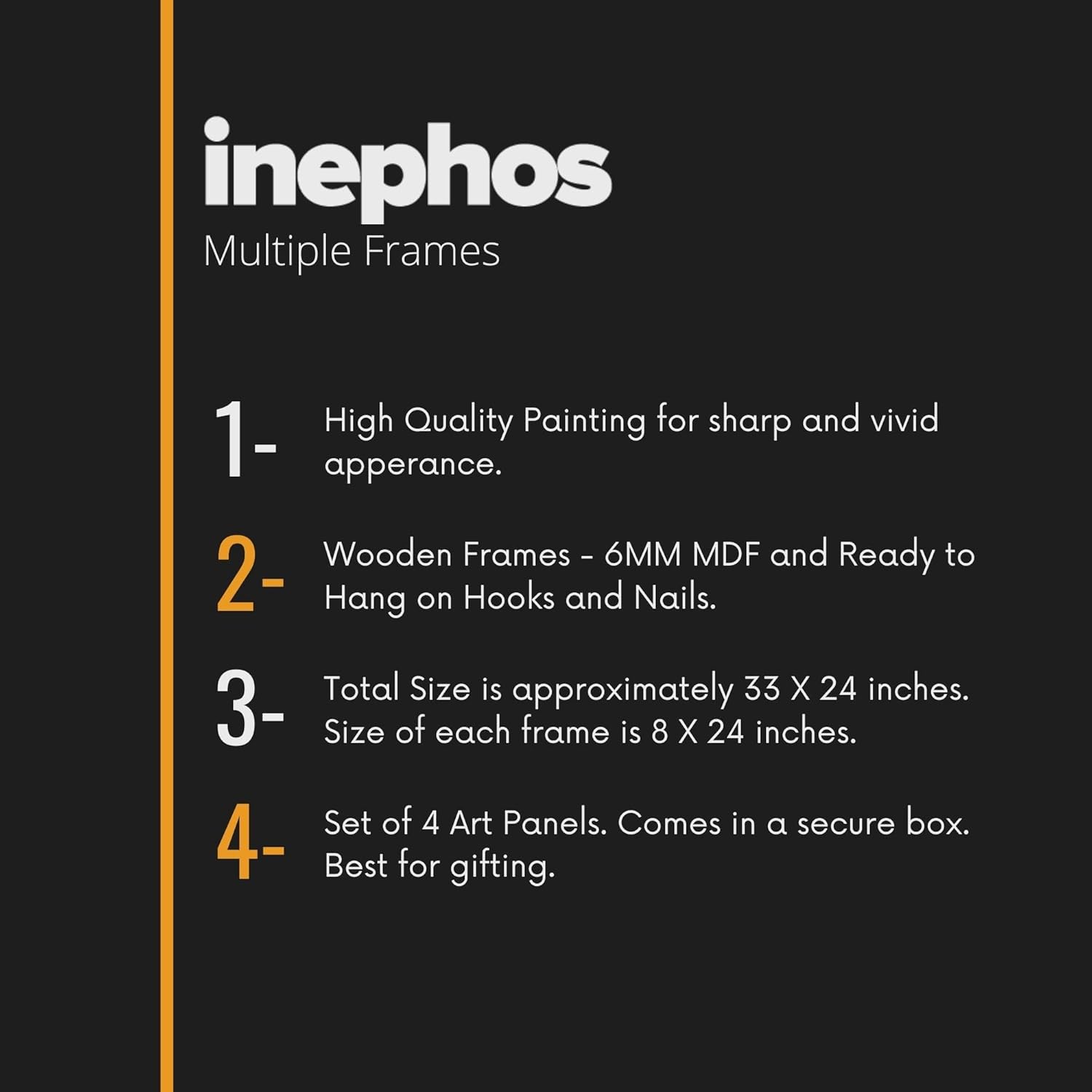
Dimensions: 85cm W x 55cm H x 2cm D
Weight: 3kg
Material & Construction: Splash-proof vinyl print on MDF panels
Colors: Bronze/brown Buddha figure, soft green bokeh background, warm earth tones
Panel Count: 4 panels
Best For: Living rooms (above 6-7ft sofas), meditation corners, bedrooms, entryways
Ships From: West Bengal
Frequently Asked Questions
Will 85x55cm look proportional above my 7-foot sofa?
Yes. At 85cm wide, this piece sits at roughly 40% of a 7-foot (210cm) sofa's width — within the range that reads as intentional. You'll have visual breathing room on either side. If your sofa is smaller (6 feet), the proportion increases to about 47%, which still works. The horizontal orientation matches how sofas read visually.
How do the bronze tones look in warm LED lighting vs daylight?
In daylight (especially morning light), the green background appears more prominent, and the bronze reads slightly cooler. In warm LED light (evening), the bronze warms significantly, the green recedes, and the Buddha face becomes the dominant visual element. Both conditions work — the piece just shifts emphasis depending on lighting.
How do I align 4 panels evenly on my wall?
Use the included hanging template. Tape it at your desired height, step back to check level and position from across the room, mark through the template, then drill. The template accounts for panel spacing (2-3cm gaps between panels). A phone level app helps verify horizontal alignment across all four panels before final installation.
Will the vinyl surface handle Mumbai/Chennai humidity?
Vinyl on MDF doesn't absorb moisture the way canvas or fabric does. During monsoon months (70-85% humidity), the material remains dimensionally stable — no warping, no expansion and contraction cycles. The splash-proof surface means condensation beads up rather than absorbing. Wipe with a dry cloth if needed.
Can I hang this in a rental without losing my deposit?
Yes. Each panel requires 1-2 anchor holes (6mm diameter). Total: 4-8 small holes, significantly less wall impact than a curtain rod or TV mount. When you move out, fill holes with standard wall putty (₹50 at any hardware store), sand smooth, touch up with paint if needed. Invisible repair, deposit intact.
Product Snapshot
Brand: Moolwan
Product: Moolwan 4-Panel Sleeping Buddha Vinyl Wall Art on MDF (85x55cm)
Category: Vinyl Wall Art on MDF
Collection: Buddha Wall Art Collection
Theme/Type: Sleeping Buddha close-up
Best For: Living rooms above 6-7ft sofas, meditation corners, bedrooms, entryways with 7-10ft walls
Primary Differentiator: Close-up intimacy that creates meditative focal point
Secondary Differentiators: Soft bokeh green background creates natural depth; bronze-brown tonal harmony with Indian wood furniture
Material & Construction: Splash-proof vinyl print on MDF, 4 panels
Care Instructions: Wipe with dry microfiber cloth; avoid water and cleaning chemicals
Ships From: West Bengal
Packing: Long-distance transit ready
Quality Check: Before dispatch