
Buddha-tiful 3D Framed Wall Art That'll Om-press Your Space
You may also like

Moolwan 5-Panel Buddha Silhouette Vinyl Wall Art on MDF (130×76cm) – Golden-Ochre Tonal Palette with Contemplative Close-Up Composition
You've measured your wall three times. Maybe four. The tape measure says 10 or 11 feet, but you're still not confident because every online guide calculates things differently—some tell you to measure against the sofa, others against the wall, and none of them account for where your AC unit sits or how far your sofa actually is from the wall. You keep second-guessing: is 130cm actually right, or will it look either cramped or overwhelming?
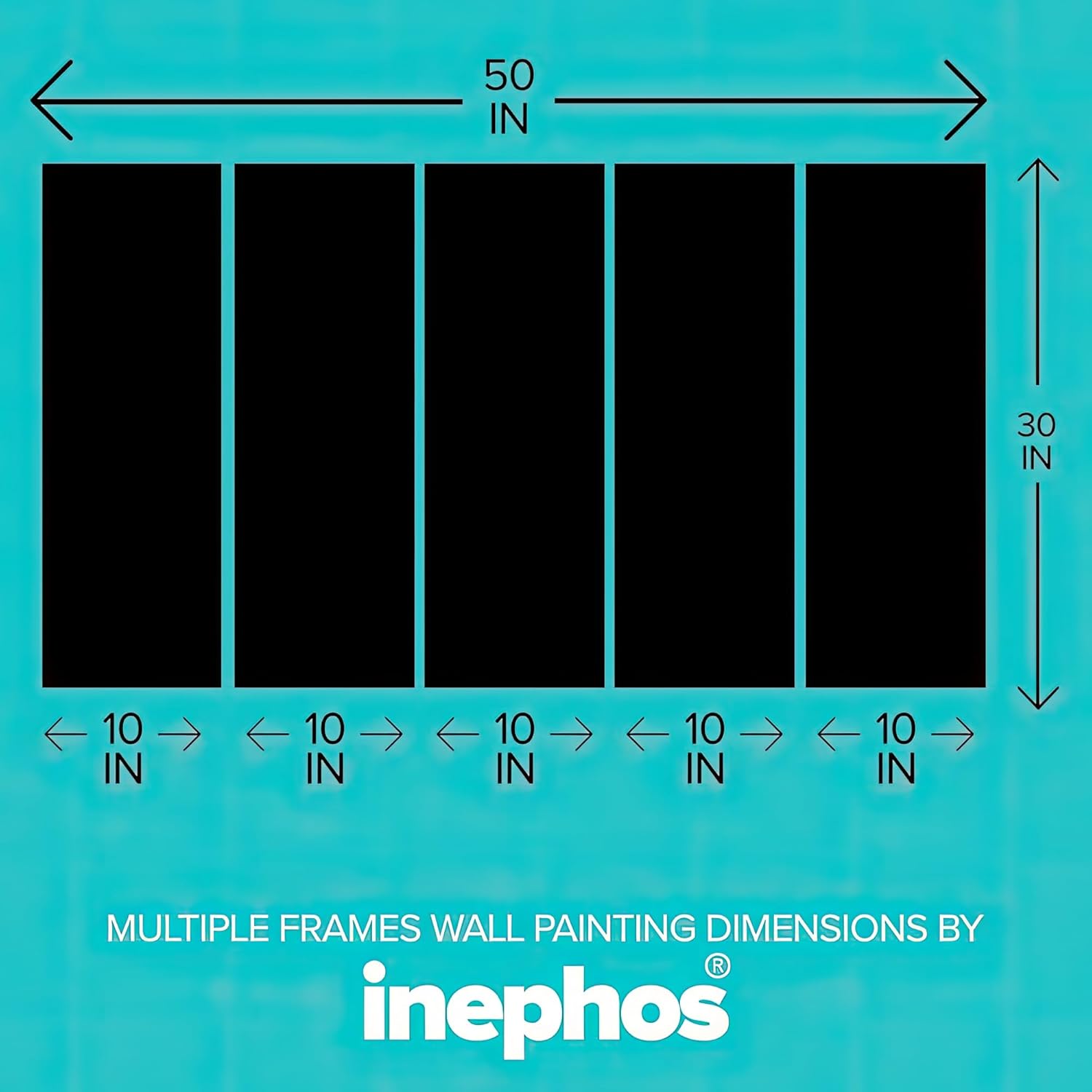
This 5-panel Buddha art spans 130cm wide and 76cm tall. On a 10-foot wall (305cm), it covers approximately 43% of the width—leaving 87cm of breathing room on each side. On a 12-foot wall (366cm), coverage drops to 35%, with 118cm of space on either side. Both scenarios fall within the visual balance zone where the art anchors the wall without dominating it.
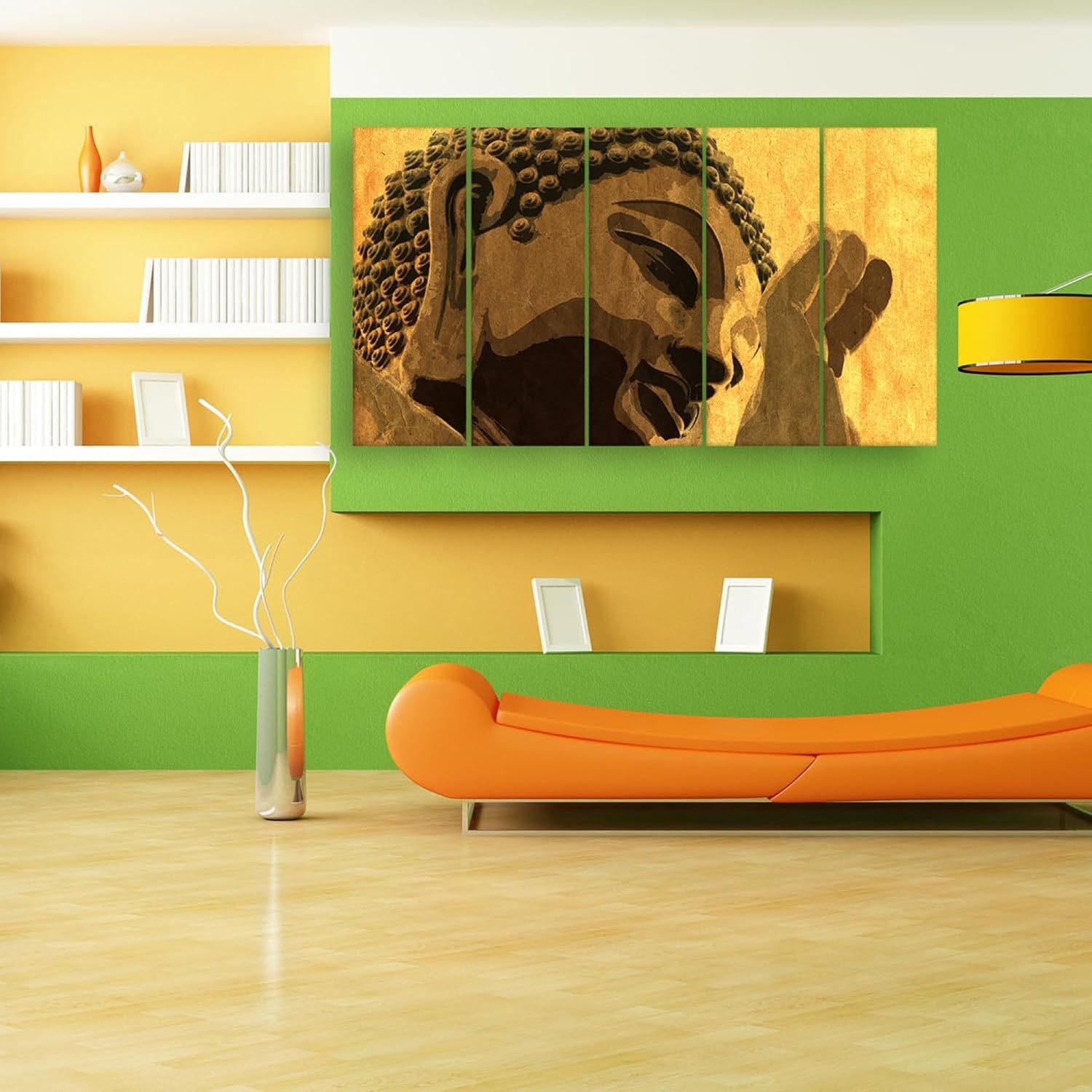
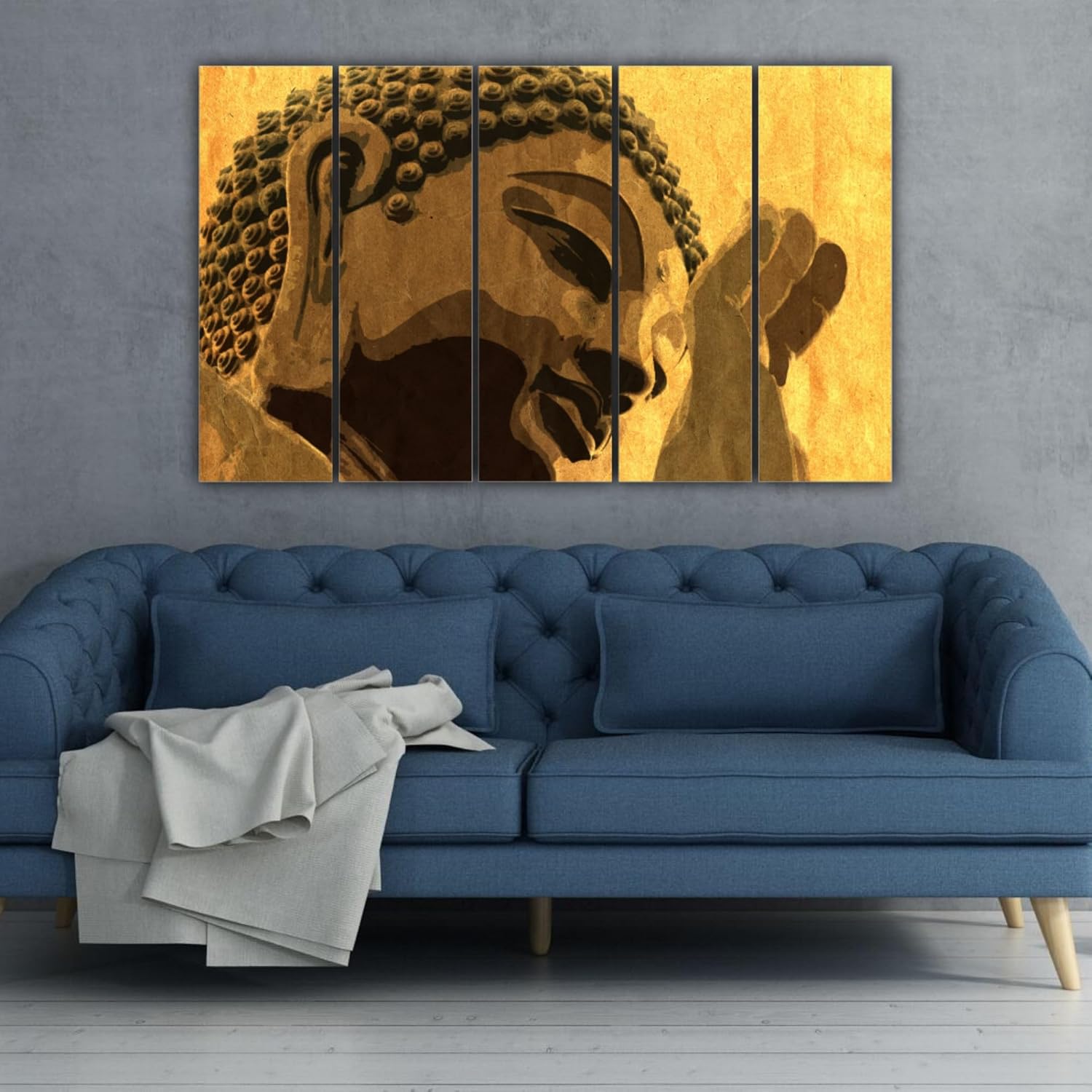
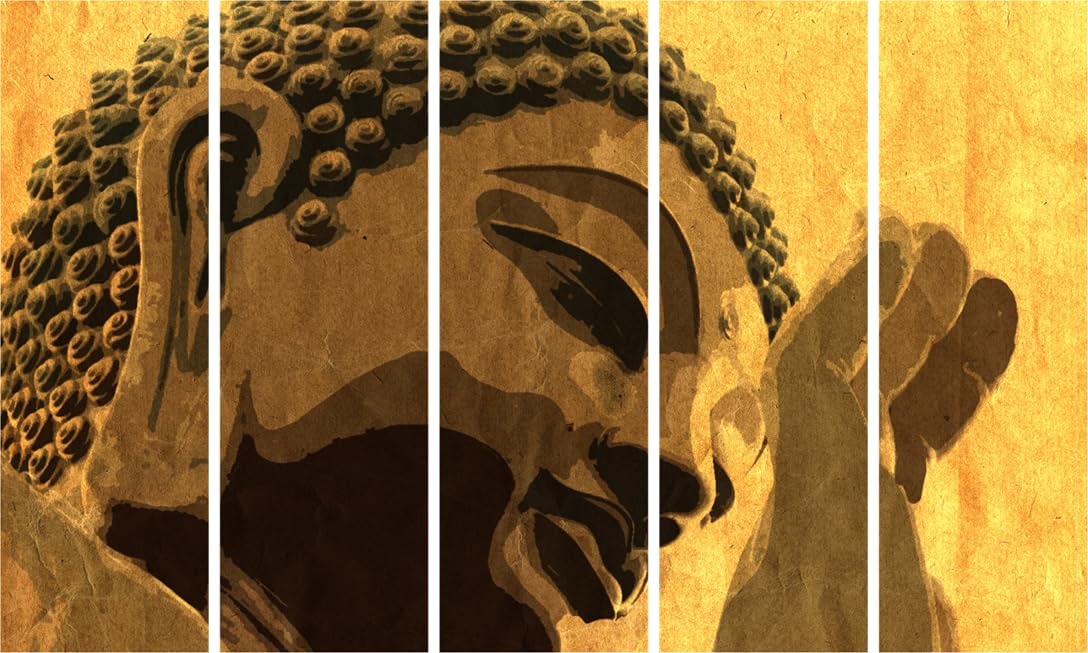
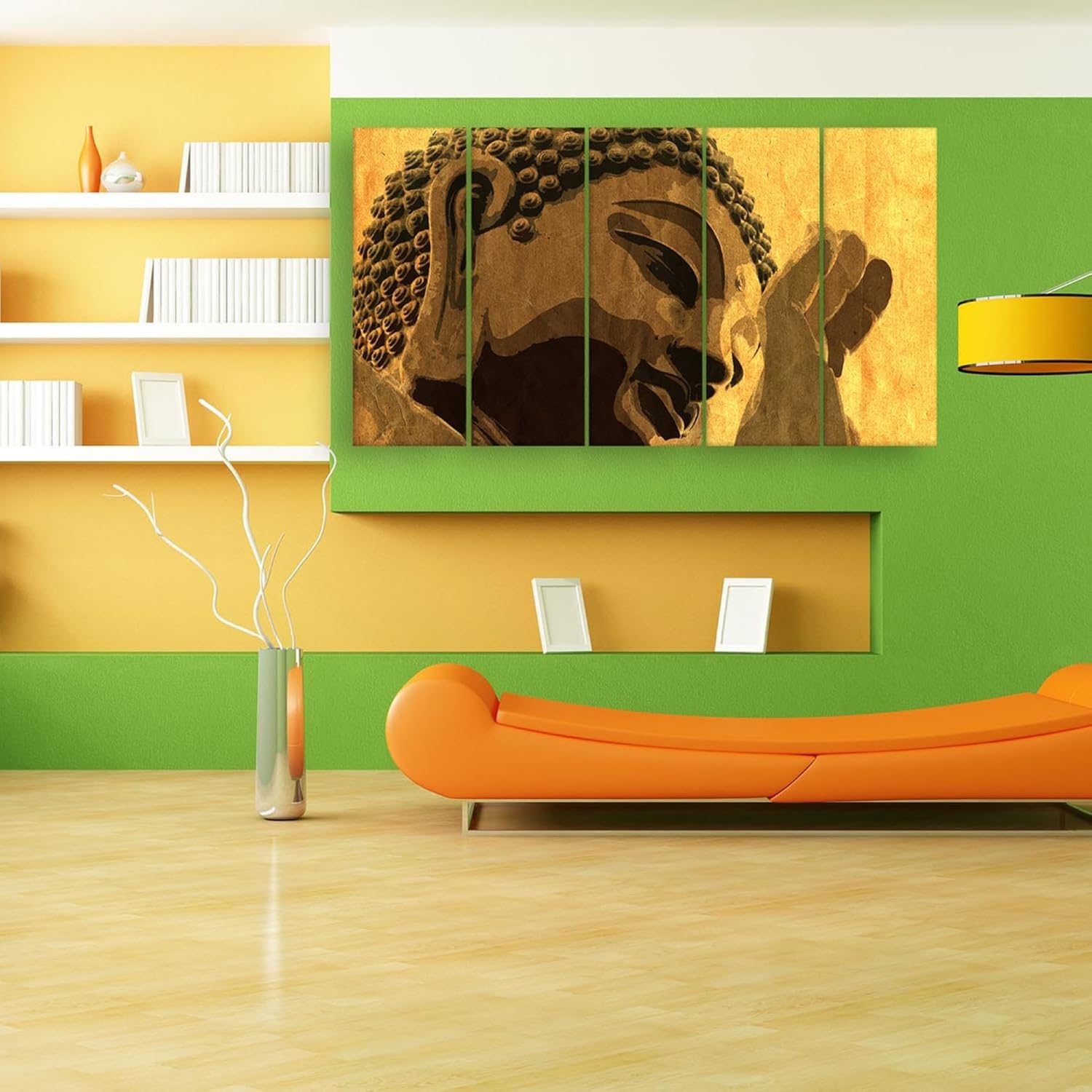
The composition here is what makes the proportions work: a close-up Buddha face fragmented across five vertical panels, each panel continuing the silhouette. The warm golden-ochre palette—amber, sepia, burnt sienna—reads as a cohesive tonal statement rather than five separate pieces. From across your living room doorway, the Buddha's serene profile registers as a single meditative presence. Up close, the panel divisions create rhythm and visual interest.
Why 130cm Works on 10-12 Foot Walls (and What Changes If You Size Up or Down)
The mathematics: your sofa is probably 6-8 feet wide (180-240cm). A 130cm canvas represents 54-72% of that sofa width—within the recommended 60-75% proportion that keeps art visually anchored to the furniture below it.
On a 10-foot wall with an 8-foot sofa centered: 130cm of art, with 62cm of wall space on each side of the sofa, leaves the panels looking intentional and balanced. The Buddha's profile starts roughly above one armrest and ends above the other.
If you went smaller—say 90cm: coverage drops to 29% of the wall. The Buddha would appear to float, disconnected from the furniture arrangement below. The five panels would look like they're trying to fill space they can't.
If you went larger—say 150cm: on an 8-foot sofa, you'd hit 83% coverage of sofa width, which starts to overwhelm. The art would command attention rather than complement it. Buddha wall art traditionally works best when it invites contemplation rather than demanding it.
The 76cm height works with standard 8-10 foot ceilings in Indian apartments. Hang it 20-25cm above your sofa top, and the bottom edge sits at roughly 100-110cm from floor level—natural eye height when seated, and the Buddha's eyes align approximately where your own gaze naturally falls when you're relaxing on the sofa.
What This Golden-Ochre Palette Looks Like Against Cream Walls (Morning vs Evening Light)
The color range here is specific: not the bright saffron yellows of traditional Buddha prints, but weathered golden ochre transitioning to deep sepia in the shadows. The background has an aged parchment quality—amber with subtle texture variation.
Against cream or off-white walls (the most common in Indian apartments): the warm tones create a natural extension rather than contrast. In morning light from east-facing windows, the amber sections will appear lighter, almost honey-colored, while the brown Buddha silhouette maintains depth. The panels won't look washed out because the darkest tones in the silhouette provide anchor points.
Under warm LED lighting in evenings (the 3000K bulbs most Indian homes use): the entire palette warms further. The golden backgrounds will glow slightly amber, the shadows will deepen to chocolate brown. This is when Buddha art typically looks its best—the meditative atmosphere intensifies as artificial light softens the contrasts.
Against light yellow or builder's peach walls: the ochre tones will harmonize rather than clash. These are complementary warm ranges. If your walls lean toward cooler whites or grays, the warm palette will stand out more distinctly—still works, but reads as a deliberate statement piece rather than integrated décor.
With brown or beige sofas and wooden furniture: the sepia tones in the Buddha silhouette echo furniture colors. This creates visual coherence across the room—wall art that looks like it belongs with what's already there, not something imported from a different aesthetic universe.
Installation on Indian Walls (5 Panels, Concrete or Drywall)
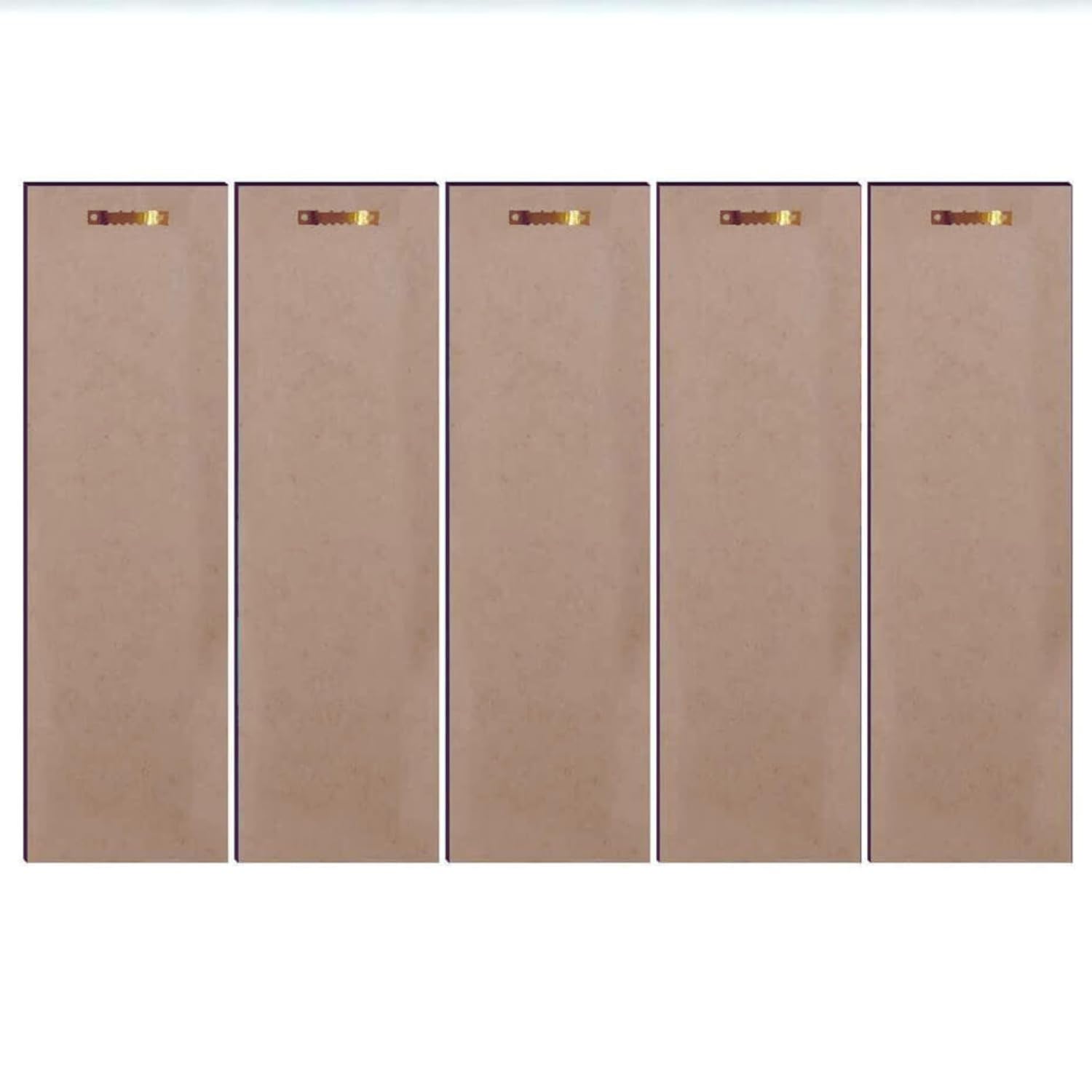
Five panels means five mounting points—but you're not aligning five separate artworks. The panels are designed to hang with consistent 2-3cm gaps between them, creating the fragmented Buddha effect you see in the product image.
The practical reality: you'll need to mark all five positions before drilling anything. The hanging template included shows exact spacing. On concrete walls (common in older buildings and many newer ones), you'll use the concrete anchors provided—6mm holes, 35mm deep. On drywall (common in modern apartments with false ceilings), drywall anchors and 30mm holes.
Total installation time: 25-30 minutes if you're methodical about leveling. The first panel position determines everything, so spend extra time getting that one right. Use a spirit level across all five before finalizing—even 2mm of height variation between panels becomes visible once you step back.
For rentals: five 6mm holes are still minor. When you move out, fill with wall putty (₹50 at any hardware store), sand smooth, touch up with matching paint. Your landlord's inspection won't flag holes this small—they're smaller than standard picture frame nail holes. Your ₹50,000 deposit stays safe.
The 3kg total weight distributes across five mounting points, so each anchor holds roughly 600g—well within safety margins for standard wall anchors in any wall type.
How This Compares to Macrame Wall Hangings You Might Have Considered
Macrame wall hangings have had their moment. And in certain contexts—bohemian bedrooms, informal spaces—they work. But there are specific trade-offs when comparing to vinyl panel art like this:
Visual precision: Macrame creates organic, somewhat unpredictable shapes. The Buddha silhouette here delivers exact visual lines—the contemplative profile, the detailed curled hair, the specific tonal gradations. There's no ambiguity about what you're displaying.
Dust and maintenance: Macrame collects dust in every fiber intersection. In Indian homes with open windows during non-monsoon months, dust accumulation becomes visible within weeks. Vinyl on MDF wipes clean with a dry cloth. The surface doesn't trap particles.
Humidity behavior: Macrame absorbs moisture. During monsoons, cotton macrame can feel damp, develop musty odors, and even grow mildew in coastal cities. Splash-proof vinyl is impervious to humidity fluctuation—it won't absorb atmospheric moisture regardless of season.
Visual weight: A 130cm macrame hanging reads as "decorative craft piece." A 130cm Buddha panel art reads as "intentional wall statement." The perceived value and visual authority differ substantially, which affects how guests perceive your space.
Longevity: Macrame fibers degrade under UV exposure—the cotton yellows, the texture becomes brittle. Vinyl maintains appearance through years of exposure to whatever light conditions your wall experiences.
What This Will Actually Look Like in Your Living Room
From your living room doorway—the first view when you or guests enter—the five panels will register as a single golden-brown presence on the wall. The Buddha profile is recognizable immediately. The warm palette will draw the eye without demanding attention.
From the sofa, looking up: you'll see the panel gaps more distinctly. The fragmented Buddha face creates a contemplative effect—the silhouette continues across divisions, suggesting wholeness despite separation. The detailed curled hair texture becomes visible at this distance.
In morning light: the lighter amber panels will brighten, creating more contrast with the darker Buddha silhouette sections. The overall impression lightens.
In evening LED light: warmth intensifies across all panels. The sepia shadows deepen. This is typically when Buddha wall art has its strongest atmospheric effect.
The composition here is inherently calm. There's no dynamic energy, no bright color bursts competing for attention. The Buddha's eyes are closed in the silhouette—the entire piece suggests stillness. This works well as a living room backdrop where you want visual presence without visual noise. It complements rather than competes with conversations, television, or daily life happening in front of it.
If you have an active, colorful living room (bright cushions, patterned curtains, multiple decorative objects), this neutral-warm palette provides visual rest for the eye. If your living room is minimalist and neutral, the Buddha becomes a focal point that defines the space's character.
Moolwan Design Note
The close-up Buddha composition is deliberately unconventional—where most Buddha art shows full figures in meditation poses, this focuses on the contemplative face in profile. The fragmentation across five panels transforms a single image into a spatial experience. The weathered parchment background texture prevents the golden tones from reading as flat or poster-like.
Moolwan Quality Standard
Designed for Indian apartments and lighting conditions. Packed for long-distance Indian transit. Quality checked before dispatch. Printed to resist humidity-related color fading. Ships from West Bengal.
Moolwan Fit Guidance for Indian Homes
130cm width optimized for 10-12 foot walls above 6-8 foot sofas. The horizontal 5-panel format works best in living rooms and meditation spaces where wall width exceeds height. Vertical placement (stacking panels) not recommended—the Buddha profile is designed for horizontal reading.
Quick Specifications
- Product: Moolwan 5-Panel Buddha Silhouette Vinyl Wall Art on MDF (130×76cm)
- Brand: Moolwan
- Category: Vinyl Wall Art on MDF
- Collection: Buddha Wall Art Collection
- Dimensions: 130cm W × 76cm H × 2cm D
- Weight: 3000g (3kg)
- Panel Count: 5 panels
- Material & Construction: Splash-proof vinyl print on MDF
- Colors: Golden ochre, amber, sepia brown, burnt sienna
- Best For: 10-12 foot living room walls above 6-8 foot sofas; meditation rooms; entryways
- Ships From: West Bengal
Frequently Asked Questions
Will 130cm look proportional on my 10-foot wall?
On a 10-foot (305cm) wall, 130cm provides 43% coverage—leaving about 87cm of space on each side. This is well within the balanced proportion zone. If your sofa is centered on the wall and measures 6-8 feet, the Buddha panels will align naturally above the seating area without overwhelming or underwhelming the space.
How will the golden ochre tones look under my warm LED lights?
Warm LED lighting (3000K, common in Indian homes) will intensify the amber and golden sections while deepening the brown shadows. The overall palette becomes richer and more atmospheric in evening light. This is typically when Buddha art looks its most contemplative.
Can I install five panels myself, and how long will it take?
Yes—expect 25-30 minutes total. The key is marking all five positions using the included template before drilling anything. Use a spirit level across all panels to ensure even alignment. On concrete walls, use the concrete anchors; on drywall, use the drywall anchors. Both are included.
Will this survive Mumbai/Chennai monsoon humidity?
The vinyl surface is splash-proof and doesn't absorb moisture. Unlike cotton canvas or fabric hangings, vinyl won't warp, develop musty odors, or show moisture damage through monsoon seasons. The MDF backing is more stable than stretched canvas in high-humidity environments.
What if my panel spacing looks uneven after installation?
The gaps between panels should be 2-3cm consistently. If one gap appears wider or narrower, it's usually because one panel's mounting height is slightly off. Check with a spirit level and adjust the anchor position for the misaligned panel. The small hole left behind fills easily with wall putty.
Product Snapshot
- Brand: Moolwan
- Product: Moolwan 5-Panel Buddha Silhouette Vinyl Wall Art on MDF (130×76cm)
- Category: Vinyl Wall Art on MDF
- Collection: Buddha Wall Art Collection
- Theme/Type: Buddha profile silhouette
- Best For: 10-12 ft living room walls; meditation spaces; above 6-8 ft sofas
- Primary Differentiator: Golden-ochre tonal palette with contemplative close-up composition
- Secondary Differentiators: Fragmented Buddha profile creates visual flow across panels; warm amber tones complement Indian home neutrals
- Material & Construction: Splash-proof vinyl print on MDF, 5 panels
- Care Instructions: Wipe with dry microfiber cloth; no water or cleaning chemicals needed
- Ships From: West Bengal
- Packing: Long-distance transit ready
- Quality Check: Before dispatch